


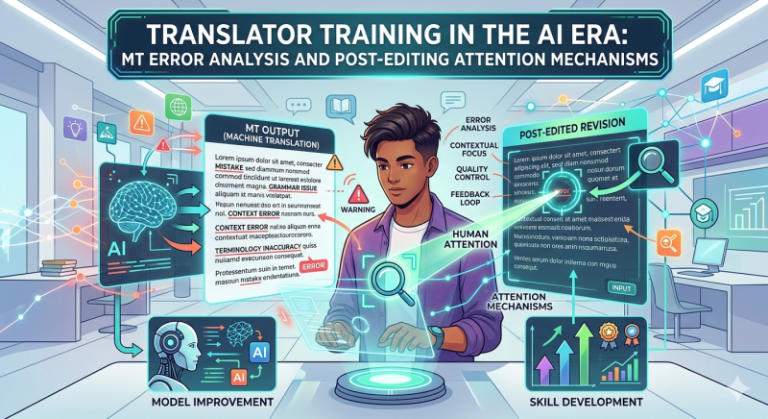
Developing Translator Skills in the Age of Artificial Intelligence: Training in Machine Translation Error Analysis and Attention Mechanisms in the Post-editing Process
Author: Griroek Gruaythong
28 May 2026, Bangkok – The rapid development of Neural Machine Translation (NMT) systems has significantly transformed the landscape of the translation profession. Translators are no longer solely responsible for transferring meaning directly from source texts into target languages, but increasingly serve as evaluators, editors, and quality assessors of outputs generated by artificial intelligence. Although NMT systems are capable of producing more fluent and natural-sounding language, semantic errors have become considerably more difficult to detect, particularly among translation students who lack experience in critical analysis. This article aims to analyze shared tendencies in contemporary research on translation pedagogy and post-editing in the era of artificial intelligence, focusing on the development of skills related to machine translation error detection, semantic distortion assessment, and attention mechanisms used to identify errors that “appear correct” on the surface. The findings indicate that current research consistently emphasizes that translation training should not focus solely on linguistic competence, but must also cultivate quality assessment skills, analytical thinking, and critical awareness of hidden semantic errors in artificial intelligence outputs. Furthermore, this article argues that post-editing training should be designed as a process of developing critical thinking rather than merely correcting superficial language issues, in order to prepare translators to collaborate effectively and professionally with artificial intelligence technologies.
Introduction
Artificial intelligence in language translation has rapidly become an essential component of the language industry, particularly following the development of Neural Machine Translation systems, which produce outputs that are more fluent and natural than those generated by Statistical Machine Translation (SMT) systems in the past. This transition has profoundly affected both professional translation practices and approaches to translation pedagogy, as translators increasingly shift from being “language producers” to “evaluators and editors” of artificial intelligence outputs.
Although NMT systems reduce grammatical errors and improve linguistic fluency, a major problem remains semantic distortion, in which mistranslations are presented in forms that appear grammatically correct and highly convincing. As a result, many translation students fail to identify such errors effectively. Yamada (2019) found that although students using NMT systems worked with higher-quality outputs than those using SMT systems, they corrected fewer errors because NMT errors appeared more “human-like,” leading students to trust the system excessively and reduce their level of critical evaluation.
In this context, translation pedagogy must reconsider its traditional foundations. Instead of focusing primarily on language production and transfer of meaning, translation training must increasingly emphasize error analysis, quality evaluation, and critical awareness of the limitations of artificial intelligence. In particular, attention mechanisms, or the process of noticing potentially distorted meanings hidden beneath fluent language, have become increasingly important.
This article therefore examines common trends in research on post-editing and translation education in the age of artificial intelligence in order to explain which competencies are becoming essential for contemporary translators and how educational institutions should adapt their pedagogical approaches accordingly.
Literature Review
Post-editing has become a major topic within Translation Studies following the continuous development of machine translation technologies. Earlier studies primarily focused on productivity and time efficiency, finding that post-editing could reduce translation time compared with translating directly from source texts. However, recent studies suggest that reduced translation time does not necessarily correspond to reduced cognitive effort, especially as machine translation systems become more sophisticated and natural-sounding (Daems et al., 2015).
Yamada (2019) explained that NMT systems have transformed the nature of translation errors. Unlike SMT systems, where errors were often obvious and grammatical in nature, NMT systems produce semantic errors hidden within fluent and natural language. Consequently, students frequently fail to detect mistranslations despite the apparent fluency of the text. One example involved the word “credited” being mistranslated as “applied for membership,” a translation that was grammatically acceptable but semantically incorrect. Such findings demonstrate that linguistic competence alone is no longer sufficient for translators in the age of artificial intelligence.
Furthermore, Onishi, Yamada, Fujita, and Kageura (2017) proposed the concept of attention mechanisms in translation processes. They argued that mistranslations categorized as X3 errors do not arise merely from lack of knowledge, but from failures in noticing problematic elements within source texts. Some translators fail to notice errors entirely, while others recognize problems but cannot produce correct solutions. This perspective highlights translation as a complex cognitive activity and suggests that translator training should focus on developing awareness and error-detection abilities rather than solely memorizing vocabulary and grammatical structures.
Daems, Vandepitte, Hartsuiker, and Macken (2015) supported this argument through research on cognitive effort in post-editing. Their findings showed that semantic and structural errors required substantially greater cognitive effort than surface-level corrections such as spelling or grammar adjustments. This suggests that post-editing pedagogy must cultivate analytical thinking and quality evaluation skills rather than emphasizing superficial language correction alone.
At the professional level, ISO 18587 (2017) clearly states that post-editors must understand common machine translation errors and possess the ability to evaluate translation quality appropriately. Such standards indicate that post-editing is not merely a technical activity but a process requiring translation competence, critical thinking, and domain-specific knowledge.
Taken together, these studies suggest that translation education in the era of artificial intelligence is shifting from an emphasis on “language production” toward “language evaluation.” Translators increasingly require the ability to analyze errors, verify semantic accuracy, and critically assess outputs generated by artificial intelligence systems, particularly as these technologies continue to achieve increasingly human-like fluency.
Research Methodology
This article employs a qualitative research approach through documentary research and thematic synthesis. The study investigates developments in translation pedagogy in the era of artificial intelligence by analyzing research related to Machine Translation (MT), Neural Machine Translation (NMT), post-editing, and cognitive effort in translation education contexts. The selected studies were collected from academic databases in Translation Studies and Applied Linguistics, with inclusion criteria focusing specifically on research examining the effects of NMT on learning processes, error detection, and translator competence.
Data analysis was conducted using thematic analysis to identify recurring patterns across the selected studies. The findings were subsequently categorized into three primary themes: 1) transformations in the nature of errors within NMT systems, 2) the impact of such errors on cognitive effort and post-editing quality, and 3) pedagogical approaches for preparing translators in the age of artificial intelligence.
Particular attention was given to the concepts of attention mechanisms and semantic distortion because these themes repeatedly appeared across multiple contemporary studies, especially in the works of Yamada (2019) and Onishi et al. (2017). These studies consistently suggested that the major problem among translation students was not merely insufficient linguistic competence, but rather the inability to identify “errors that appear correct” within NMT outputs.
The synthesis process involved comparing findings across studies in order to identify common tendencies regarding essential translator competencies in the age of artificial intelligence. The analysis was then used to formulate conceptual recommendations for contemporary translation curriculum design. The results are presented through academic discussion linking concepts of translation competence, post-editing competence, and critical evaluation.
Discussion
The findings clearly demonstrate that the development of Neural Machine Translation systems has not reduced the importance of human translators in translation processes. Rather, it has fundamentally transformed the types of skills translators require. Whereas translators in the past were primarily evaluated according to their ability to produce accurate and natural target-language texts, translators in the era of artificial intelligence increasingly face the challenge of identifying hidden errors beneath fluent and convincing language.
These findings correspond with Yamada (2019), who observed that although NMT systems reduced the overall number of translation errors, students corrected fewer mistakes than when using SMT systems because NMT errors appeared more human-like. Consequently, many learners failed to recognize semantic inaccuracies. This phenomenon reveals a significant problem associated with dependence on artificial intelligence in translation: the more fluent the system becomes, the more likely humans are to trust its outputs uncritically.
From a pedagogical perspective, these findings challenge traditional approaches to translator training centered on grammar, vocabulary, and stylistic accuracy. Although such skills remain important, they are insufficient in contexts where artificial intelligence can already produce grammatically correct and natural-sounding language. What translators increasingly require is the ability to read critically, evaluate deeper meanings, and examine relationships between source texts and target texts.
The concept of attention mechanisms proposed by Onishi et al. (2017) is therefore highly significant for contemporary translation education because it explains that many student errors arise not from lack of knowledge but from failure to notice problems. In other words, some translators possess adequate linguistic competence to understand source texts but fail to pay attention to mistranslations because NMT outputs appear natural and contextually appropriate at the surface level. As a result, post-editing becomes an activity requiring high levels of cognitive vigilance.
From a theoretical perspective, this phenomenon reflects a transition from translation competence toward evaluative competence. Translators in the age of artificial intelligence are no longer responsible only for “producing language,” but also for “evaluating language” accurately. Such abilities are closely associated with critical thinking and metacognitive awareness because translators must recognize that apparently correct outputs may contain hidden semantic distortions.
Another important issue concerns human-computer interaction. Several studies suggest that effective machine translation systems should complement human translators by reducing common human errors. However, NMT systems increasingly produce errors resembling those made by humans themselves, resulting in overlapping weaknesses between humans and machines. Consequently, many learners struggle to function effectively as quality evaluators because both humans and artificial intelligence systems share similar blind spots.
Therefore, post-editing pedagogy should not be viewed merely as training in “language correction.” Instead, it should be regarded as training in analytical literacy and deep textual evaluation. Students should consistently be encouraged to question artificial intelligence outputs by asking whether meanings are accurate, whether important implications have been distorted, and whether target texts truly reflect source-text intentions.
Furthermore, assessment practices in translation education should evolve accordingly. Rather than evaluating only the correctness of final outputs, educators should also assess students’ reasoning processes, including how they detect errors, justify revisions, and explain translation decisions. Such pedagogical changes would help translators collaborate effectively with artificial intelligence rather than passively accepting machine-generated outputs without critical evaluation.
Directions for Future Research
Although contemporary research on machine translation and post-editing has significantly improved understanding of the impact of NMT on translation education, several issues still require further investigation. One important direction involves examining the cognitive processes of learners during post-editing activities, particularly attention mechanisms in authentic translation environments. Most existing studies rely primarily on questionnaires, translation-quality assessments, or retrospective interviews. Future studies employing eye-tracking technology, keystroke logging, or neurocognitive approaches could provide more detailed insights into how learners attend to machine translation errors and why certain errors remain unnoticed despite adequate linguistic competence.
Another important issue concerns the development of pedagogical models suitable for the age of artificial intelligence. Many translation programs still emphasize direct translation from source texts, while training in machine translation evaluation remains limited. Future research should therefore experiment with new pedagogical models integrating critical evaluation, error analysis, and AI literacy to determine which instructional approaches best improve learners’ ability to identify semantic distortions.
Additionally, comparative studies involving learners at different proficiency levels, including students, trainee translators, and professional translators, would help clarify how translation experience affects the detection of artificial intelligence errors. Such research could contribute to the development of competency frameworks specifically designed for translators working in AI-assisted environments.
Further research should also investigate ethical issues and trust in artificial intelligence. One major problem associated with NMT systems is their ability to produce convincing yet semantically distorted outputs, leading many learners to trust the system excessively. Future studies should therefore examine how levels of trust influence post-editing quality and whether pedagogical approaches can cultivate “critical trust” toward artificial intelligence systems.
Finally, the emergence of Generative AI and Large Language Models is once again transforming the nature of translation. Future research should investigate how errors generated by newer AI systems differ from those produced by conventional NMT systems and how such developments may influence the long-term role of translators. As artificial intelligence increasingly approximates human language production, the importance of critical thinking and quality evaluation skills will continue to grow.
Conclusion
The development of Neural Machine Translation systems has profoundly transformed both the role of translators and approaches to translation pedagogy. Although artificial intelligence systems can now generate more fluent and natural language, semantic errors have become increasingly complex and difficult to detect. The studies analyzed in this article collectively demonstrate that the primary challenge facing translators in the age of artificial intelligence is no longer merely language production, but rather the ability to analyze, evaluate, and critically assess machine-generated outputs.
Another major finding is that NMT errors frequently “appear correct,” causing many learners to overlook semantic distortions. This problem indicates that linguistic competence alone is no longer sufficient for translator training in the era of artificial intelligence. Instead, attention mechanisms, critical thinking, and evaluative competence must be developed simultaneously.
From a pedagogical perspective, post-editing should therefore be viewed as a process of analytical training rather than superficial language correction. Students should be trained to question artificial intelligence outputs continuously and to explain their translation decisions systematically. Such approaches would allow translators to collaborate effectively with artificial intelligence while avoiding uncritical dependence on machine-generated outputs.
Ultimately, regardless of how rapidly artificial intelligence technologies continue to develop, the studies discussed in this article consistently demonstrate that translation education remains necessary and may become even more important in the future. What artificial intelligence still cannot fully replace is the uniquely human capacity to interpret meaning, evaluate context, and exercise judgment in cross-linguistic and cross-cultural communication.
References
- Daems, J., Vandepitte, S., Hartsuiker, R., & Macken, L. (2015). The impact of machine translation error types on post-editing effort indicators. In S. O’Brien, M. Simard, & J. Moorkens (Eds.), Proceedings of the Fourth Workshop on Post-Editing Technology and Practice (pp. 31–45).
- ISO 18587. (2017). Translation services — Post-editing of machine translation output — Requirements. International Organization for Standardization.
- Onishi, N., Yamada, M., Fujita, A., & Kageura, K. (2017). Causes of mistranslations made by student translators: Investigation into X3 in the MNH-TT revision category through retrospective interviews. Interpreting and Translation Studies, 18, 88–106.
- Yamada, M. (2019). The impact of Google neural machine translation on post-editing by student translators. The Journal of Specialised Translation, 31, 87–106.
For professional services, please visit: https://www.seaproti.org/practitioners/
About certified translators, translation certifiers, and certified interpreters associated with SEAProTI. The Southeast Asian Association of Professional Translators and Interpreters (SEAProTI) has officially shared the qualifications and requirements for becoming Certified Translators, Translation Certification Providers, and Certified Interpreters in Sections 9 and 10 of the Royal Gazette, which was published by the Prime Minister’s Office in Thailand on July 25, 2024. Certified Translators, Translation Certification Providers, and Certified Interpreters
The Council of State has proposed the enactment of a Royal Decree, granting registered translators and recognised translation certifiers from professional associations or accredited language institutions the authority to provide legally valid translation certification (Letter to SEAProTI dated April 28, 2025)
SEAProTI is the first professional association in Thailand and Southeast Asia to implement a comprehensive certification system for translators, certifiers, and interpreters.
Head Office: Baan Ratchakru Building, No. 33, Room 402, Soi Phahonyothin 5, Phahonyothin Road, Phaya Thai District, Bangkok 10400, Thailand
Email: hello@seaproti.com | Tel.: (+66) 2-114-3128 (Office hours: Mon–Fri, 09:00–17:00)
การพัฒนาทักษะนักแปลยุคปัญญาประดิษฐ์: การฝึกวิเคราะห์ข้อผิดพลาดของการแปลด้วยเครื่องและกลไกการใส่ใจในกระบวนการหลังการแปลแก้
ผู้เขียน: ไกรฤกษ์ กรวยทอง
28 พฤษภาคม 2569, กรุงเทพมหานคร – การพัฒนาอย่างรวดเร็วของระบบแปลภาษาอัตโนมัติแบบโครงข่ายประสาทเทียม (Neural Machine Translation: NMT) ได้เปลี่ยนแปลงภูมิทัศน์ของวิชาชีพการแปลอย่างมีนัยสำคัญ จากเดิมที่นักแปลทำหน้าที่ถ่ายทอดสารจากต้นฉบับสู่ภาษาปลายทางโดยตรง สู่บทบาทใหม่ในฐานะผู้ตรวจสอบ แก้ไข และประเมินคุณภาพของผลลัพธ์ที่สร้างโดยปัญญาประดิษฐ์ อย่างไรก็ตาม แม้ NMT จะสามารถสร้างภาษาที่มีความลื่นไหลและเป็นธรรมชาติมากขึ้น แต่ข้อผิดพลาดเชิงความหมายกลับกลายเป็นปัญหาที่ตรวจจับได้ยากยิ่งขึ้น โดยเฉพาะในกลุ่มผู้เรียนแปลที่ยังขาดประสบการณ์ด้านการวิเคราะห์เชิงวิพากษ์ บทความนี้มีวัตถุประสงค์เพื่อวิเคราะห์แนวโน้มร่วมของงานวิจัยด้านการสอนการแปลและกระบวนการหลังการแปลแก้ (post-editing) ในยุคปัญญาประดิษฐ์ โดยมุ่งเน้นประเด็นการพัฒนาความสามารถในการตรวจจับข้อผิดพลาดของการแปลด้วยเครื่อง การประเมินความคลาดเคลื่อนของความหมาย และการฝึกกลไกการใส่ใจ (attention mechanism) หรือกระบวนการสังเกตจุดผิดพลาดที่ “ดูเหมือนถูกต้อง” ผลการวิเคราะห์พบว่า งานวิจัยร่วมสมัยมีแนวโน้มสอดคล้องกันว่าการเรียนการสอนการแปลไม่ควรจำกัดอยู่เพียงการพัฒนาทักษะภาษา แต่ต้องเสริมสร้างทักษะการประเมินคุณภาพ การคิดเชิงวิเคราะห์ และความสามารถในการตระหนักรู้ต่อข้อผิดพลาดเชิงความหมายที่ซ่อนอยู่ในผลลัพธ์ของปัญญาประดิษฐ์ นอกจากนี้ บทความยังเสนอว่าการฝึกกระบวนการหลังการแปลแก้ควรถูกออกแบบในฐานะกระบวนการพัฒนาความคิดเชิงวิพากษ์ มากกว่าการแก้ไขภาษาเพียงผิวเผิน เพื่อเตรียมนักแปลให้สามารถทำงานร่วมกับเทคโนโลยีปัญญาประดิษฐ์ได้อย่างมีประสิทธิภาพและเป็นมืออาชีพ
บทนำ
ปัญญาประดิษฐ์ด้านการแปลภาษาได้เข้ามามีบทบาทสำคัญในอุตสาหกรรมภาษาอย่างรวดเร็ว โดยเฉพาะหลังการพัฒนาระบบแปลภาษาอัตโนมัติแบบโครงข่ายประสาทเทียม ซึ่งสามารถสร้างผลลัพธ์ที่มีความลื่นไหลและเป็นธรรมชาติใกล้เคียงภาษามนุษย์มากกว่าระบบแปลภาษาอัตโนมัติแบบสถิติ (Statistical Machine Translation: SMT) ในอดีต การเปลี่ยนผ่านดังกล่าวส่งผลต่อทั้งกระบวนการทำงานของนักแปลและแนวทางการจัดการเรียนการสอนด้านการแปลอย่างลึกซึ้ง เนื่องจากบทบาทของนักแปลเริ่มเปลี่ยนจาก “ผู้แปล” ไปสู่ “ผู้ประเมินและแก้ไขผลลัพธ์จากปัญญาประดิษฐ์” มากขึ้น
แม้ระบบ NMT จะช่วยลดข้อผิดพลาดด้านไวยากรณ์ ความลื่นไหล และความเป็นธรรมชาติของภาษา แต่ปัญหาสำคัญที่เกิดขึ้นคือข้อผิดพลาดเชิงความหมาย (semantic distortion) หรือการแปลผิดความหมายที่ถูกนำเสนอในรูปแบบภาษาที่ดูสมบูรณ์และน่าเชื่อถือ ทำให้ผู้เรียนแปลจำนวนมากไม่สามารถตรวจจับข้อผิดพลาดดังกล่าวได้อย่างมีประสิทธิภาพ ยามาดะ (2562) พบว่า นักศึกษาแม้จะใช้ NMT ที่มีคุณภาพสูงกว่า SMT แต่กลับมีอัตราการแก้ไขข้อผิดพลาดต่ำลง เนื่องจากข้อผิดพลาดของ NMT มีลักษณะ “คล้ายมนุษย์” มากขึ้น ส่งผลให้ผู้เรียนเชื่อถือผลลัพธ์ของระบบมากเกินไปและลดระดับการตรวจสอบเชิงวิพากษ์
ในบริบทดังกล่าว การเรียนการสอนการแปลจึงจำเป็นต้องปรับเปลี่ยนแนวคิดพื้นฐาน จากเดิมที่มุ่งเน้นการพัฒนาทักษะภาษาและการถ่ายทอดความหมาย ไปสู่การสร้างทักษะการวิเคราะห์ข้อผิดพลาด การประเมินคุณภาพ และการตระหนักรู้เชิงวิพากษ์ต่อข้อจำกัดของปัญญาประดิษฐ์ โดยเฉพาะการฝึกกลไกการใส่ใจ หรือกระบวนการสังเกตและให้ความสนใจต่อจุดที่อาจเกิดความผิดเพี้ยน แม้ผลลัพธ์จะดูถูกต้องในระดับผิวเผินก็ตาม
บทความนี้มุ่งวิเคราะห์แนวโน้มร่วมของงานวิจัยด้านกระบวนการหลังการแปลแก้และการศึกษาการแปลในยุคปัญญาประดิษฐ์ เพื่ออธิบายว่าทักษะใดกำลังกลายเป็นสมรรถนะสำคัญของนักแปลร่วมสมัย และสถาบันการศึกษาควรปรับรูปแบบการเรียนการสอนอย่างไรเพื่อรองรับบริบทดังกล่าว
ทบทวนวรรณกรรม
แนวคิดเรื่องกระบวนการหลังการแปลแก้ได้กลายเป็นประเด็นสำคัญในการศึกษาการแปล (Translation Studies) ภายหลังการพัฒนาเทคโนโลยีการแปลด้วยเครื่องอย่างต่อเนื่อง งานวิจัยยุคแรกมักมุ่งศึกษาประสิทธิภาพด้านเวลาและผลิตภาพของการใช้ระบบแปลอัตโนมัติร่วมกับมนุษย์ โดยพบว่าการหลังการแปลแก้สามารถลดเวลาในการแปลได้เมื่อเทียบกับการแปลจากต้นฉบับทั้งหมด อย่างไรก็ตาม งานวิจัยร่วมสมัยเริ่มชี้ให้เห็นว่าการลดเวลาไม่ได้หมายความว่าภาระทางปัญญา (cognitive effort) จะลดลงเสมอไป โดยเฉพาะเมื่อระบบแปลอัตโนมัติมีความซับซ้อนและมีความเป็นธรรมชาติสูงขึ้น (ดาเอมส์ และคณะ, 2558)
ยามาดะ (2562) อธิบายว่า NMT ได้เปลี่ยนลักษณะของข้อผิดพลาดจากเดิมที่เห็นได้ชัดในระบบ SMT เช่น ข้อผิดพลาดด้านไวยากรณ์หรือการแปลตรงตัว ไปสู่ข้อผิดพลาดเชิงความหมายที่แฝงอยู่ในประโยคที่มีความลื่นไหล ส่งผลให้นักศึกษาจำนวนมากไม่สามารถตรวจพบความผิดพลาดได้ แม้จะอ่านแล้วดูเป็นธรรมชาติ ตัวอย่างสำคัญคือกรณีที่คำว่า credited ถูกแปลเป็น “สมัครเข้าเป็นสมาชิก” ซึ่งมีความถูกต้องด้านไวยากรณ์ แต่ผิดจากความหมายต้นฉบับอย่างสิ้นเชิง ปัญหาดังกล่าวสะท้อนว่า ความสามารถด้านภาษาเพียงอย่างเดียวไม่เพียงพออีกต่อไปสำหรับนักแปลในยุคปัญญาประดิษฐ์
นอกจากนี้ โอนิชิ ยามาดะ ฟูจิตะ และคาเงอุระ (2560) ได้เสนอแนวคิดกลไกการใส่ใจในกระบวนการแปล โดยอธิบายว่าข้อผิดพลาดประเภทการแปลผิดความหมาย (mistranslation) หรือ X3 ไม่ได้เกิดจากความไม่รู้เพียงอย่างเดียว แต่เกี่ยวข้องกับกระบวนการ “ใส่ใจ” ต่อปัญหาในข้อความต้นฉบับ นักแปลบางคนไม่สามารถสังเกตจุดผิดพลาดได้เลย ขณะที่บางคนสังเกตเห็นแต่ไม่สามารถหาคำตอบที่ถูกต้องได้ กลไกดังกล่าวสะท้อนว่าการแปลเป็นกระบวนการทางปัญญาที่ซับซ้อน และการฝึกนักแปลควรมุ่งพัฒนาความสามารถในการตระหนักรู้และตรวจจับปัญหา มากกว่าการจดจำคำศัพท์หรือโครงสร้างภาษาเพียงอย่างเดียว
ดาเอมส์ แวนเดอพิตต์ ฮาร์ตซูเกอร์ และแมคเคน (2558) สนับสนุนแนวคิดดังกล่าวผ่านการศึกษาภาระทางปัญญาในการหลังการแปลแก้ โดยพบว่าประเภทของข้อผิดพลาดในการแปลด้วยเครื่องมีผลโดยตรงต่อระดับภาระทางปัญญา ข้อผิดพลาดด้านความหมายและโครงสร้างเชิงลึกมักใช้พลังทางปัญญาสูงกว่าการแก้ไขด้านผิวภาษา เช่น การสะกดหรือไวยากรณ์ งานวิจัยนี้จึงชี้ให้เห็นว่าการเรียนการสอนกระบวนการหลังการแปลแก้จำเป็นต้องสร้างทักษะการคิดเชิงวิเคราะห์และการประเมินคุณภาพ มากกว่าการแก้ไขเชิงภาษาเพียงอย่างเดียว
ในระดับมาตรฐานวิชาชีพ องค์การระหว่างประเทศว่าด้วยการมาตรฐาน (ISO 18587, 2560) ได้ระบุชัดเจนว่าผู้ทำกระบวนการหลังการแปลแก้ต้องมีความเข้าใจเกี่ยวกับข้อผิดพลาดทั่วไปของระบบแปลด้วยเครื่อง และสามารถประเมินคุณภาพผลลัพธ์ได้อย่างเหมาะสม ข้อกำหนดดังกล่าวสะท้อนว่า กระบวนการหลังการแปลแก้ไม่ใช่เพียงทักษะเชิงเทคนิค แต่เป็นกระบวนการที่ต้องอาศัยสมรรถนะด้านการแปล (translation competence) การคิดเชิงวิพากษ์ และความรู้เฉพาะด้านควบคู่กัน
จากงานวิจัยทั้งหมดสามารถสังเคราะห์ได้ว่า แนวโน้มของการศึกษาการแปลในยุคปัญญาประดิษฐ์กำลังเปลี่ยนจากการเน้น “การผลิตภาษา” ไปสู่ “การประเมินภาษา” กล่าวคือ นักแปลจำเป็นต้องมีทักษะในการวิเคราะห์ข้อผิดพลาด ตรวจสอบความถูกต้องเชิงความหมาย และตัดสินคุณภาพของข้อความที่สร้างโดยปัญญาประดิษฐ์มากขึ้นเรื่อย ๆ โดยเฉพาะเมื่อเทคโนโลยีมีความสามารถด้านความลื่นไหลของภาษาใกล้เคียงมนุษย์มากขึ้นทุกปี
ระเบียบวิธีการวิจัย
บทความนี้เป็นการวิจัยเชิงคุณภาพในลักษณะการวิเคราะห์และสังเคราะห์เอกสาร (documentary research and thematic synthesis) โดยมุ่งศึกษาพัฒนาการของแนวคิดด้านการเรียนการสอนการแปลในยุคปัญญาประดิษฐ์ ผ่านการวิเคราะห์งานวิจัยที่เกี่ยวข้องกับการแปลด้วยเครื่อง (Machine Translation: MT) ระบบแปลภาษาอัตโนมัติแบบโครงข่ายประสาทเทียม กระบวนการหลังการแปลแก้ และภาระทางปัญญาในบริบทการศึกษาการแปล งานวิจัยที่นำมาศึกษาถูกคัดเลือกจากฐานข้อมูลวิชาการด้านการศึกษาการแปลและภาษาศาสตร์ประยุกต์ โดยกำหนดเกณฑ์คัดเลือกเฉพาะงานที่ศึกษาเกี่ยวกับผลกระทบของ NMT ต่อกระบวนการเรียนรู้ การตรวจจับข้อผิดพลาด และสมรรถนะของนักแปล
การวิเคราะห์ข้อมูลใช้แนวทางการวิเคราะห์เชิงประเด็น (thematic analysis) โดยมุ่งค้นหารูปแบบร่วมของข้อค้นพบในงานวิจัยต่าง ๆ จากนั้นจึงจัดกลุ่มประเด็นสำคัญออกเป็นสามด้าน ได้แก่ 1) การเปลี่ยนแปลงลักษณะของข้อผิดพลาดในระบบแปลด้วยเครื่องยุค NMT 2) ผลกระทบของข้อผิดพลาดดังกล่าวต่อภาระทางปัญญาและคุณภาพของกระบวนการหลังการแปลแก้ และ 3) แนวทางการพัฒนาการเรียนการสอนเพื่อเตรียมนักแปลในยุคปัญญาประดิษฐ์
ในกระบวนการวิเคราะห์ ผู้วิจัยให้ความสำคัญกับแนวคิดเรื่องกลไกการใส่ใจและความผิดเพี้ยนเชิงความหมาย เนื่องจากเป็นประเด็นที่ปรากฏซ้ำในงานวิจัยร่วมสมัยหลายชิ้น โดยเฉพาะงานของยามาดะ (2562) และโอนิชิ ยามาดะ ฟูจิตะ และคาเงอุระ (2560) ซึ่งชี้ให้เห็นว่าปัญหาหลักของผู้เรียนไม่ใช่การขาดทักษะภาษาเพียงอย่างเดียว แต่เป็นความล้มเหลวในการตรวจจับ “ข้อผิดพลาดที่ดูเหมือนถูกต้อง” ของระบบแปลภาษาอัตโนมัติแบบโครงข่ายประสาทเทียม
การสังเคราะห์ข้อมูลดำเนินการผ่านการเปรียบเทียบข้อค้นพบระหว่างงานวิจัย เพื่อระบุแนวโน้มร่วมเกี่ยวกับสมรรถนะที่จำเป็นของนักแปลในยุคปัญญาประดิษฐ์ และเพื่อสร้างข้อเสนอเชิงแนวคิดสำหรับการออกแบบหลักสูตรการแปลร่วมสมัย ผลการวิเคราะห์ถูกนำเสนอในลักษณะการอภิปรายเชิงวิชาการ โดยเชื่อมโยงแนวคิดด้านสมรรถนะการแปล สมรรถนะด้านกระบวนการหลังการแปลแก้ และการประเมินเชิงวิพากษ์เข้าด้วยกัน
อภิปราย
ผลการวิเคราะห์แสดงให้เห็นอย่างชัดเจนว่า การพัฒนาระบบแปลภาษาอัตโนมัติแบบโครงข่ายประสาทเทียมไม่ได้ลดความสำคัญของมนุษย์ในกระบวนการแปล แต่กลับเปลี่ยนลักษณะของทักษะที่จำเป็นสำหรับนักแปลอย่างมีนัยสำคัญ กล่าวคือ หากในอดีตนักแปลถูกประเมินจากความสามารถในการสร้างข้อความปลายทางที่ถูกต้องและเป็นธรรมชาติ ในยุคปัญญาประดิษฐ์ นักแปลกลับต้องเผชิญกับความท้าทายใหม่ คือการตรวจจับข้อผิดพลาดที่ซ่อนอยู่ภายใต้ภาษาที่ลื่นไหลและดูน่าเชื่อถือ
ข้อค้นพบดังกล่าวสอดคล้องกับยามาดะ (2562) ที่พบว่า แม้ NMT จะลดจำนวนข้อผิดพลาดโดยรวม แต่ผู้เรียนกลับมีอัตราการแก้ไขข้อผิดพลาดต่ำลงเมื่อเทียบกับระบบแปลภาษาอัตโนมัติแบบสถิติ เนื่องจากข้อผิดพลาดของ NMT มีลักษณะคล้ายมนุษย์มากขึ้น จนผู้เรียนจำนวนมากไม่สามารถสังเกตเห็นความคลาดเคลื่อนเชิงความหมายได้ ปรากฏการณ์นี้สะท้อนปัญหาสำคัญของการพึ่งพาปัญญาประดิษฐ์ในงานแปล กล่าวคือ ยิ่งระบบมีความลื่นไหลมากเท่าใด มนุษย์ก็ยิ่งมีแนวโน้มเชื่อถือผลลัพธ์ของระบบมากขึ้นเท่านั้น
ในมิติของการเรียนการสอน ข้อค้นพบนี้นำไปสู่การตั้งคำถามต่อแนวคิดดั้งเดิมของการฝึกนักแปลที่เน้นไวยากรณ์ คำศัพท์ และความถูกต้องเชิงรูปแบบเป็นศูนย์กลาง แม้ทักษะเหล่านี้ยังคงมีความสำคัญ แต่ไม่เพียงพอสำหรับบริบทที่ปัญญาประดิษฐ์สามารถสร้างภาษาที่ถูกต้องในระดับผิวภาษาได้อยู่แล้ว สิ่งที่นักแปลจำเป็นต้องมีมากขึ้นคือความสามารถในการอ่านอย่างวิพากษ์ การตรวจสอบความหมายเชิงลึก และการประเมินความสัมพันธ์ระหว่างต้นฉบับกับข้อความปลายทาง
แนวคิดกลไกการใส่ใจที่ปรากฏในงานของโอนิชิ ยามาดะ ฟูจิตะ และคาเงอุระ (2560) จึงมีความสำคัญอย่างยิ่งต่อการศึกษาการแปลร่วมสมัย เพราะช่วยอธิบายว่าความผิดพลาดของผู้เรียนจำนวนมากไม่ได้เกิดจากการ “ไม่รู้” แต่เกิดจากการ “ไม่สังเกต” กล่าวอีกนัยหนึ่ง นักแปลบางคนมีความสามารถทางภาษาเพียงพอที่จะเข้าใจต้นฉบับ แต่ไม่ได้ให้ความสนใจกับจุดที่ระบบแปลผิด เนื่องจากผลลัพธ์ของ NMT ดูเป็นธรรมชาติและสอดคล้องกับบริบทในระดับผิวเผิน ปัญหานี้ทำให้กระบวนการหลังการแปลแก้กลายเป็นกิจกรรมที่ต้องใช้ความตื่นตัวทางปัญญาในระดับสูง
เมื่อพิจารณาในเชิงทฤษฎี ปรากฏการณ์ดังกล่าวสะท้อนการเปลี่ยนผ่านจากสมรรถนะด้านการแปล ไปสู่สมรรถนะด้านการประเมิน กล่าวคือ นักแปลยุคปัญญาประดิษฐ์ไม่ได้มีหน้าที่เพียง “ผลิตภาษา” แต่ต้องสามารถ “ประเมินภาษา” ได้อย่างแม่นยำด้วย ความสามารถดังกล่าวเกี่ยวข้องโดยตรงกับการคิดเชิงวิพากษ์และการตระหนักรู้กระบวนการคิดของตนเอง (metacognitive awareness) เพราะผู้แปลต้องตระหนักว่าผลลัพธ์ที่ดูถูกต้องอาจมีความผิดเพี้ยนเชิงความหมายซ่อนอยู่
อีกประเด็นสำคัญคือความสัมพันธ์ระหว่างมนุษย์กับปัญญาประดิษฐ์ในฐานะปฏิสัมพันธ์ระหว่างมนุษย์กับคอมพิวเตอร์ (human-computer interaction) งานวิจัยหลายชิ้นเสนอว่าระบบแปลด้วยเครื่องที่ดีควรมีลักษณะเกื้อหนุนมนุษย์ กล่าวคือ ระบบควรช่วยลดข้อผิดพลาดที่มนุษย์มักทำ แต่ในกรณีของ NMT กลับพบว่าระบบเริ่มสร้างข้อผิดพลาดในลักษณะเดียวกับมนุษย์มากขึ้น จนเกิดการซ้อนทับของจุดอ่อนระหว่างมนุษย์กับเครื่องจักร ผลที่เกิดขึ้นคือผู้เรียนจำนวนมากไม่สามารถทำหน้าที่เป็นผู้ตรวจสอบคุณภาพได้อย่างมีประสิทธิภาพ เพราะทั้งมนุษย์และปัญญาประดิษฐ์ต่างมีจุดบอดใกล้เคียงกัน
ดังนั้น การเรียนการสอนกระบวนการหลังการแปลแก้ในอนาคตจึงไม่ควรถูกมองว่าเป็นเพียงการฝึก “แก้ภาษา” แต่ควรเป็นการฝึกความสามารถในการอ่าน วิเคราะห์ และประเมินข้อความอย่างลึกซึ้ง ผู้เรียนควรได้รับการฝึกให้ตั้งคำถามต่อผลลัพธ์ของปัญญาประดิษฐ์อยู่เสมอ เช่น ความหมายถูกต้องหรือไม่ มีการบิดเบือนนัยสำคัญหรือไม่ และข้อความปลายทางสะท้อนเจตนาของต้นฉบับครบถ้วนเพียงใด
นอกจากนี้ การประเมินผลการเรียนการสอนการแปลก็ควรเปลี่ยนแปลงตามไปด้วย จากเดิมที่มุ่งวัดความถูกต้องของผลลัพธ์เพียงอย่างเดียว ไปสู่การประเมินกระบวนการคิดของผู้เรียน เช่น วิธีตรวจจับข้อผิดพลาด เหตุผลในการแก้ไข และความสามารถในการอธิบายการตัดสินใจเชิงการแปล การเปลี่ยนแปลงดังกล่าวจะช่วยพัฒนานักแปลให้สามารถทำงานร่วมกับปัญญาประดิษฐ์ได้อย่างมีประสิทธิภาพ แทนที่จะกลายเป็นเพียงผู้ยอมรับผลลัพธ์ของระบบโดยปราศจากการตรวจสอบเชิงวิพากษ์
แนวทางของงานวิจัยในอนาคต
แม้งานวิจัยร่วมสมัยด้านการแปลด้วยเครื่องและกระบวนการหลังการแปลแก้จะช่วยอธิบายผลกระทบของระบบแปลภาษาอัตโนมัติแบบโครงข่ายประสาทเทียมต่อการเรียนการสอนการแปลได้อย่างชัดเจนมากขึ้น แต่ยังมีประเด็นอีกหลายด้านที่ควรได้รับการศึกษาต่อในอนาคต ประเด็นแรกคือการศึกษากลไกทางปัญญาของผู้เรียนระหว่างกระบวนการหลังการแปลแก้ โดยเฉพาะกระบวนการกลไกการใส่ใจในสถานการณ์จริง งานวิจัยส่วนใหญ่ในปัจจุบันยังคงอาศัยแบบสอบถาม การประเมินคุณภาพงานแปล หรือการสัมภาษณ์ย้อนหลังเป็นหลัก ดังนั้น การใช้เทคนิคการติดตามการเคลื่อนไหวของสายตา (eye-tracking) การบันทึกจังหวะการพิมพ์ (keystroke logging) หรือแนวทางประสาทวิทยาการรู้คิด (neurocognitive approaches) อาจช่วยอธิบายได้ละเอียดมากขึ้นว่าผู้เรียนให้ความสนใจต่อข้อผิดพลาดของระบบแปลอัตโนมัติอย่างไร และเหตุใดบางข้อผิดพลาดจึงถูกมองข้าม แม้ผู้เรียนจะมีความสามารถทางภาษาเพียงพอ
อีกประเด็นสำคัญคือการพัฒนารูปแบบการเรียนการสอนกระบวนการหลังการแปลแก้ที่เหมาะสมกับยุคปัญญาประดิษฐ์ ปัจจุบันหลักสูตรการแปลจำนวนมากยังคงเน้นการแปลจากต้นฉบับเป็นหลัก ขณะที่การฝึกวิเคราะห์คุณภาพของการแปลด้วยเครื่องยังมีพื้นที่จำกัด งานวิจัยในอนาคตควรทดลองออกแบบรูปแบบการสอนใหม่ที่ผสมผสานการประเมินเชิงวิพากษ์ การวิเคราะห์ข้อผิดพลาด และความรู้เท่าทันปัญญาประดิษฐ์ (AI literacy) เข้าด้วยกัน เพื่อศึกษาว่ารูปแบบการสอนใดสามารถช่วยพัฒนาความสามารถในการตรวจจับความผิดเพี้ยนเชิงความหมายได้ดีที่สุด
นอกจากนี้ ควรมีการศึกษาเปรียบเทียบระหว่างผู้เรียนในระดับความสามารถที่แตกต่างกัน เช่น นักศึกษา ผู้ฝึกงานแปล และนักแปลมืออาชีพ เพื่อวิเคราะห์ว่าประสบการณ์ด้านการแปลส่งผลต่อการตรวจจับข้อผิดพลาดของปัญญาประดิษฐ์อย่างไร การศึกษาลักษณะดังกล่าวจะช่วยระบุสมรรถนะสำคัญที่ควรได้รับการพัฒนาในแต่ละระดับการเรียนรู้ และอาจนำไปสู่การออกแบบกรอบสมรรถนะสำหรับนักแปลยุคปัญญาประดิษฐ์โดยเฉพาะ
อีกแนวทางหนึ่งที่มีความสำคัญคือการศึกษาปฏิสัมพันธ์ระหว่างมนุษย์กับปัญญาประดิษฐ์ในมิติด้านจริยธรรมและความเชื่อมั่นต่อปัญญาประดิษฐ์ เนื่องจากหนึ่งในปัญหาหลักของระบบแปลภาษาอัตโนมัติแบบโครงข่ายประสาทเทียมคือการสร้างข้อความที่ดูน่าเชื่อถือ แม้มีความผิดเพี้ยนเชิงความหมาย ผู้เรียนจำนวนมากจึงมีแนวโน้มเชื่อถือระบบมากเกินไป งานวิจัยในอนาคตจึงควรสำรวจว่าระดับความเชื่อมั่นต่อปัญญาประดิษฐ์ส่งผลต่อคุณภาพของกระบวนการหลังการแปลแก้อย่างไร และจะสามารถพัฒนากระบวนการเรียนรู้ที่สร้าง “ความไว้วางใจเชิงวิพากษ์” ได้หรือไม่
ท้ายที่สุด การพัฒนาเทคโนโลยีปัญญาประดิษฐ์เชิงสร้างสรรค์ (Generative AI) และแบบจำลองภาษาขนาดใหญ่ (Large Language Models) กำลังเปลี่ยนลักษณะของการแปลอีกครั้ง งานวิจัยในอนาคตจึงควรศึกษาว่าข้อผิดพลาดของปัญญาประดิษฐ์รุ่นใหม่แตกต่างจากระบบแปลภาษาอัตโนมัติแบบเดิมอย่างไร รวมถึงผลกระทบต่อบทบาทของนักแปลในระยะยาว เพราะยิ่งระบบมีความสามารถในการสร้างภาษาใกล้เคียงมนุษย์มากขึ้นเท่าใด ความสำคัญของทักษะการคิดเชิงวิพากษ์และการประเมินคุณภาพก็ยิ่งเพิ่มสูงขึ้นเท่านั้น
สรุป
การพัฒนาของระบบแปลภาษาอัตโนมัติแบบโครงข่ายประสาทเทียมได้เปลี่ยนแปลงบทบาทของนักแปลและแนวคิดด้านการเรียนการสอนการแปลอย่างลึกซึ้ง แม้ระบบปัญญาประดิษฐ์จะสามารถสร้างข้อความที่มีความลื่นไหลและเป็นธรรมชาติมากขึ้น แต่ข้อผิดพลาดเชิงความหมายกลับกลายเป็นปัญหาที่ซับซ้อนและตรวจจับได้ยากกว่าเดิม งานวิจัยที่นำมาวิเคราะห์ในบทความนี้มีข้อค้นพบร่วมกันว่า ความท้าทายสำคัญของนักแปลยุคปัญญาประดิษฐ์ไม่ใช่เพียงการผลิตภาษา แต่คือความสามารถในการวิเคราะห์ ประเมิน และตรวจสอบผลลัพธ์ของระบบอย่างมีวิจารณญาณ
ข้อค้นพบสำคัญอีกประการคือ ความผิดพลาดของระบบแปลภาษาอัตโนมัติแบบโครงข่ายประสาทเทียมมักมีลักษณะ “ดูถูกต้อง” จนผู้เรียนจำนวนมากไม่สามารถสังเกตเห็นความผิดเพี้ยนเชิงความหมายได้ ปัญหาดังกล่าวสะท้อนว่าทักษะทางภาษาเพียงอย่างเดียวไม่เพียงพออีกต่อไปสำหรับการฝึกนักแปลในยุคปัญญาประดิษฐ์ แต่จำเป็นต้องเสริมสร้างกลไกการใส่ใจ การคิดเชิงวิพากษ์ และสมรรถนะด้านการประเมินควบคู่กันไป
ในมิติของการเรียนการสอน กระบวนการหลังการแปลแก้จึงควรถูกมองว่าเป็นกระบวนการฝึกการคิดเชิงวิเคราะห์ มากกว่าการแก้ไขข้อความเชิงผิวภาษา ผู้เรียนควรถูกฝึกให้ตั้งคำถามต่อผลลัพธ์ของปัญญาประดิษฐ์อยู่เสมอ รวมถึงสามารถอธิบายเหตุผลของการตัดสินใจเชิงการแปลได้อย่างเป็นระบบ แนวทางดังกล่าวจะช่วยให้นักแปลสามารถทำงานร่วมกับปัญญาประดิษฐ์ได้อย่างมีประสิทธิภาพ โดยไม่ตกอยู่ภายใต้การพึ่งพาระบบโดยปราศจากการตรวจสอบเชิงวิพากษ์
ท้ายที่สุด แม้เทคโนโลยีปัญญาประดิษฐ์จะพัฒนาอย่างรวดเร็วเพียงใด งานวิจัยทั้งหมดสะท้อนตรงกันว่า ความจำเป็นของการศึกษาด้านการแปลยังคงมีอยู่ และอาจยิ่งมีความสำคัญมากขึ้นในอนาคต เพราะสิ่งที่ปัญญาประดิษฐ์ยังไม่สามารถทดแทนได้อย่างสมบูรณ์ คือความสามารถของมนุษย์ในการตีความ ประเมินความหมาย และใช้วิจารณญาณเชิงบริบทในการสื่อสารข้ามภาษาและวัฒนธรรม
บรรณานุกรม
- บาบีช, บี., ฮาร์ตลีย์, เอ., คาเงอุระ, เค., โทมัส, เอ็ม., และ อุทิยามะ, เอ็ม. (2555). MNH-TT: A collaborative platform for translator training. Proceedings of Translation and the Computer 34, 1–18.
- แดมส์, เจ., วันเดอพิตต์, เอส., ฮาร์ตซุยเกอร์, อาร์., และ แมกเคน, แอล. (2558). The impact of machine translation error types on post-editing effort indicators. ใน เอส. โอไบรอัน, เอ็ม. ซิมาร์ด, และ เจ. มัวร์เคนส์ (บ.ก.), Proceedings of the Fourth Workshop on Post-Editing Technology and Practice (น. 31–45).
- ISO 18587. (2560). Translation services — Post-editing of machine translation output — Requirements. International Organization for Standardization.
- โอนิชิ, เอ็น., ยามาดะ, เอ็ม., ฟูจิตะ, เอ., และ คาเงอุระ, เค. (2560). Causes of mistranslations made by student translators: Investigation into X3 in the MNH-TT revision category through retrospective interviews. Interpreting and Translation Studies, 18, 88–106.
- ยามาดะ, เอ็ม. (2562). The impact of Google neural machine translation on post-editing by student translators. The Journal of Specialised Translation, 31, 87–106.
สมาคมวิชาชีพนักแปลและล่ามแห่งเอเชียตะวันออกเฉียงใต้ (SEAProTI) ได้ประกาศหลักเกณฑ์และคุณสมบัติของผู้ที่ขึ้นทะเบียนเป็น “นักแปลรับรอง (Certified Translators) และผู้รับรองการแปล (Translation Certification Providers) และล่ามรับรอง (Certified Interpreters)” ของสมาคม หมวดที่ 9 และหมวดที่ 10 ในราชกิจจานุเบกษา ของสำนักเลขาธิการคณะรัฐมนตรี ในสำนักนายกรัฐมนตรี แห่งราชอาณาจักรไทย ลงวันที่ 25 ก.ค. 2567 เล่มที่ 141 ตอนที่ 66 ง หน้า 100 อ่านฉบับเต็มได้ที่: นักแปลรับรอง ผู้รับรองการแปล และล่ามรับรอง
สำนักคณะกรรมการกฤษฎีกาเสนอให้ตราเป็นพระราชกฤษฎีกา โดยกำหนดให้นักแปลที่ขึ้นทะเบียน รวมถึงผู้รับรองการแปลจากสมาคมวิชาชีพหรือสถาบันสอนภาษาที่มีการอบรมและขึ้นทะเบียน สามารถรับรองคำแปลได้ (จดหมายถึงสมาคม SEAProTI ลงวันที่ 28 เม.ย. 2568)
สมาคมวิชาชีพนักแปลและล่ามแห่งเอเชียตะวันออกเฉียงใต้เป็นสมาคมวิชาชีพแห่งแรกและแห่งเดียวในประเทศไทยและภูมิภาคเอเชียตะวันออกเฉียงใต้ที่มีระบบรับรองนักแปลรับรอง ผู้รับรองการแปล และล่ามรับรอง
สำนักงานใหญ่: อาคารบ้านราชครู เลขที่ 33 ห้อง 402 ซอยพหลโยธิน 5 ถนนพหลโยธิน แขวงพญาไท เขตพญาไท กรุงเทพมหานคร 10400 ประเทศไทย