


Right to Support after Divorce in Thailand: Legal Dimensions, Humanitarian Considerations, and
the Role of Certified Translators and Certified Interpreters
Author: Griroek Gruaythong
22 May 2026, Bangkok – This article examines the right to post-divorce support in Thailand through the perspectives of family law, humanitarian considerations, and compensatory justice arising from the dissolution of marriage. The study finds that Thai law does not recognize spousal support or alimony as an automatic entitlement following divorce. Nevertheless, Thai courts may exercise judicial discretion in awarding maintenance on a case-by-case basis, particularly where one spouse has sacrificed economic opportunities for family responsibilities or has suffered harm caused by the conduct of the other spouse. The article further discusses the role of prenuptial agreements in determining support obligations and highlights the importance of Certified Translators, Translation Certification Providers, and Certified Interpreters affiliated with the Southeast Asian Association of Professional Translators and Interpreters in translating legal documents, certifying translations, and facilitating intercultural communication in international family disputes. These professionals play a significant role in ensuring access to justice for foreign spouses involved in divorce proceedings in Thailand.
Keywords: divorce, post-divorce support, Thai family law, prenuptial agreements, certified translators, certified interpreters
Introduction
Divorce in contemporary society represents not merely the termination of a marital relationship but also a complex legal, economic, and social process. One of the most significant issues arising from divorce concerns the right to post-divorce support, particularly where one spouse experiences economic hardship as a consequence of marital dissolution.
Under Thai law, post-divorce spousal support is not mandatory in the same manner as in certain Western legal systems. However, Thai courts retain discretionary authority to determine whether maintenance should be awarded according to the circumstances of each case. This principle reflects broader notions of fairness, marital responsibility, and the protection of spouses adversely affected by the breakdown of family life (Kittay, 1999).
In the context of globalization, international marriages in Thailand have increased substantially, leading to a corresponding rise in cross-border family disputes. Legal documents such as marriage certificates, prenuptial agreements, foreign court judgments, and financial evidence frequently require accurate translation and legal certification. Consequently, Certified Translators and Certified Interpreters have become essential actors in facilitating access to justice for foreign spouses in Thailand.
The Right to Post-Divorce Support under Thai Law
According to the Thai Civil and Commercial Code, divorce may occur either by mutual consent or through judicial proceedings. However, the granting of post-divorce support is not an automatic legal entitlement but depends upon the facts of each case and the discretion of the court.
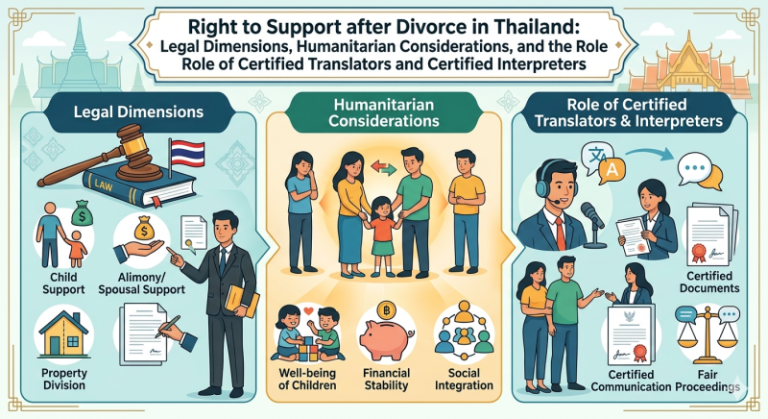
In most instances, post-divorce support is associated with child maintenance, which constitutes a legal obligation of both parents. Nevertheless, Thai courts may also order one spouse to provide financial support to the other if the requesting spouse is economically disadvantaged or has suffered substantial hardship resulting from the dissolution of the marriage.
This approach is consistent with theories of family justice and feminist critiques of patriarchal family structures, which recognize that domestic labor, childcare, and emotional support within marriage possess economic value despite the absence of direct monetary compensation (Okin, 1989; Walby, 1990).
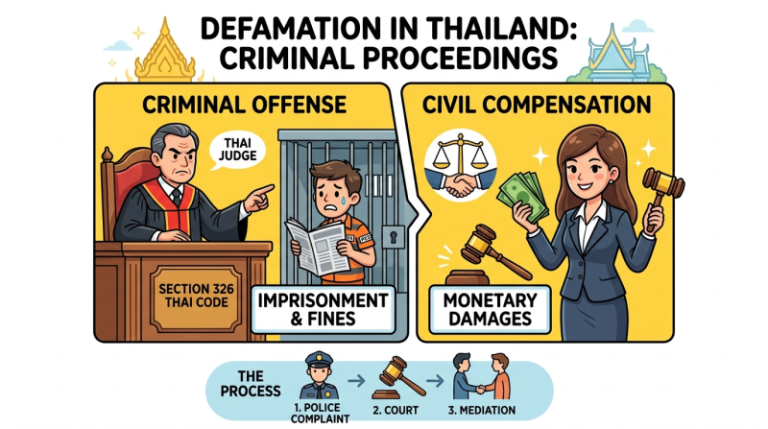
For example, a wife who leaves a promising career in order to care for the family may lose professional opportunities and future earning capacity. Where the marriage ends because of marital misconduct, such as adultery or domestic violence, courts may consider awarding alimony or compensatory damages. In such circumstances, support functions not merely as a humanitarian measure but also as compensation for sacrifices and suffering endured during the marriage.
Prenuptial Agreements and Support Arrangements
Prenuptial agreements play an important role in defining property rights and financial obligations between spouses, including arrangements concerning post-divorce support. Establishing such terms in advance may reduce conflict and provide legal certainty in the event of marital breakdown.
However, support provisions in prenuptial agreements must remain reasonable and consistent with public order and good morals under Thai law. Courts may decline to enforce contractual terms deemed excessively unfair or oppressive toward one party.
In international marriages, prenuptial agreements are often drafted bilingually and require precise legal translation to ensure that both parties fully understand their legal rights and obligations. Inaccurate translation may result in disputes regarding contractual intent and enforceability. Furthermore, the establishment of economic conditions within prenuptial agreements reflects broader dimensions of bargaining power and economic interests within marital relationships, consistent with law-and-economics perspectives on family and gender relations (Posner, 1992).
The Role of Certified Translators and Certified Interpreters in International Divorce Cases
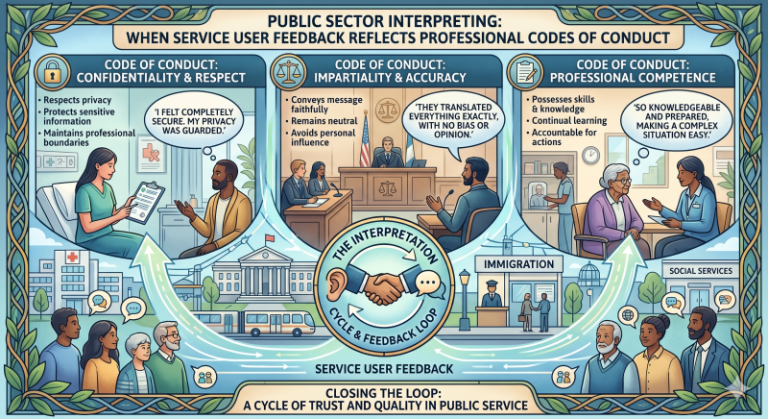
In international family disputes, translation and interpreting services constitute essential components of the legal process. Documents relating to divorce proceedings—such as prenuptial agreements, foreign judgments, property records, financial statements, and child custody documents—must often be translated accurately and certified according to professional standards.
Certified Translators are responsible for producing legally accurate translations while preserving the original meaning, structure, and legal intent of source documents. Translation Certification Providers verify the authenticity and accuracy of translated documents for legal use, while Certified Interpreters facilitate communication among litigants, lawyers, and courts to prevent misunderstandings that could adversely affect legal rights.
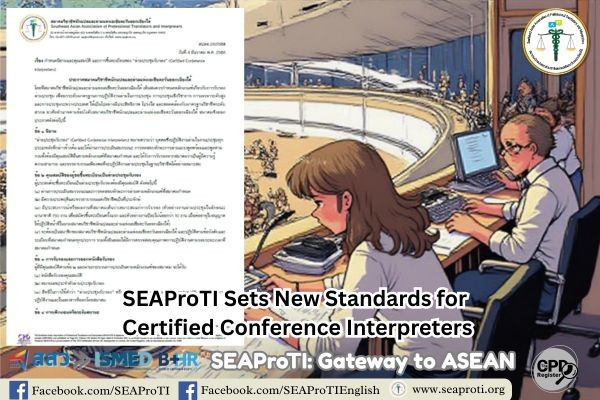
Professional organizations such as the Southeast Asian Association of Professional Translators and Interpreters contribute significantly to establishing professional standards, ethical guidelines, and specialized training for translators and interpreters throughout Southeast Asia. Their role is particularly important in international family law disputes that require expertise in language, culture, and comparative legal systems.
Moreover, Certified Interpreters perform an important human rights function. Equal access to justice constitutes a fundamental principle of international human rights law (United Nations, 1948). Accurate and fair communication is therefore an indispensable component of judicial proceedings. If foreign spouses cannot adequately understand the language used in court, their ability to exercise procedural rights and make informed decisions regarding their future and the welfare of their children may be severely compromised.
Conclusion
The right to post-divorce support in Thailand reflects the intersection of law, fairness, and the social realities of family relationships. Although Thai law does not automatically guarantee alimony following divorce, courts may exercise discretion to protect spouses who have suffered economic disadvantage or personal harm resulting from marital dissolution.
Within the framework of international marriages and cross-border family disputes, Certified Translators, Translation Certification Providers, and Certified Interpreters play a crucial role in ensuring access to justice, safeguarding legal rights, and minimizing linguistic and cultural misunderstandings. The continued development of professional translation and interpreting standards therefore constitutes an important element of contemporary family justice in an increasingly globalized world.
References
- Kittay, E. F. (1999). Love’s labor: Essays on women, equality, and dependency. Routledge.
- Okin, S. M. (1989). Justice, gender, and the family. Basic Books.
- Posner, R. A. (1992). Sex and reason. Harvard University Press.
- United Nations. (1948). Universal Declaration of Human Rights. United Nations.
- Walby, S. (1990). Theorizing patriarchy. Basil Blackwell.
For professional services, please visit: https://www.seaproti.org/practitioners/
About certified translators, translation certifiers, and certified interpreters associated with SEAProTI. The Southeast Asian Association of Professional Translators and Interpreters (SEAProTI) has officially shared the qualifications and requirements for becoming Certified Translators, Translation Certification Providers, and Certified Interpreters in Sections 9 and 10 of the Royal Gazette, which was published by the Prime Minister’s Office in Thailand on July 25, 2024. Certified Translators, Translation Certification Providers, and Certified Interpreters
The Council of State has proposed the enactment of a Royal Decree, granting registered translators and recognised translation certifiers from professional associations or accredited language institutions the authority to provide legally valid translation certification (Letter to SEAProTI dated April 28, 2025)
SEAProTI is the first professional association in Thailand and Southeast Asia to implement a comprehensive certification system for translators, certifiers, and interpreters.
Head Office: Baan Ratchakru Building, No. 33, Room 402, Soi Phahonyothin 5, Phahonyothin Road, Phaya Thai District, Bangkok 10400, Thailand
Email: hello@seaproti.com | Tel.: (+66) 2-114-3128 (Office hours: Mon–Fri, 09:00–17:00)
สิทธิในการได้รับการอุปการะหลังการหย่าในประเทศไทย: มิติทางกฎหมาย หลักมนุษยธรรม และบทบาทของนักแปลรับรองและล่ามรับรอง
ผู้เขียน: ไกรฤกษ์ กรวยทอง
22 พฤษภาคม 2569, กรุงเทพมหานคร – บทความนี้มุ่งศึกษาสิทธิในการได้รับการอุปการะเลี้ยงดูภายหลังการหย่าในประเทศไทย โดยวิเคราะห์ทั้งในมิติของกฎหมายครอบครัว หลักมนุษยธรรม และการชดเชยความเสียหายอันเกิดจากความสัมพันธ์สมรสที่สิ้นสุดลง การศึกษาพบว่า แม้กฎหมายไทยมิได้กำหนดให้การจ่ายค่าอุปการะคู่สมรสภายหลังการหย่า (spousal support หรือ alimony) เป็นสิทธิที่เกิดขึ้นโดยอัตโนมัติ แต่ศาลอาจพิจารณากำหนดค่าอุปการะได้ตามข้อเท็จจริงเฉพาะราย โดยเฉพาะในกรณีที่คู่สมรสฝ่ายหนึ่งเสียสละโอกาสทางเศรษฐกิจเพื่อครอบครัว หรือได้รับความเสียหายจากการกระทำของอีกฝ่ายหนึ่ง บทความยังอภิปรายบทบาทของสัญญาก่อนสมรส (prenuptial agreement) ในการกำหนดเงื่อนไขเกี่ยวกับค่าอุปการะ รวมถึงความสำคัญของนักแปลรับรอง (Certified Translators) ผู้รับรองการแปล (Translation Certification Providers) และล่ามรับรอง (Certified Interpreters) ของ Southeast Asian Association of Professional Translators and Interpreters ในการแปลเอกสารทางกฎหมาย การรับรองความถูกต้องของเอกสาร และการสื่อสารข้ามวัฒนธรรมในคดีครอบครัวระหว่างประเทศ อันมีบทบาทสำคัญต่อการเข้าถึงกระบวนการยุติธรรมของคู่สมรสต่างชาติในประเทศไทย
คำสำคัญ: การหย่า, ค่าอุปการะหลังการหย่า, กฎหมายครอบครัวไทย, สัญญาก่อนสมรส, นักแปลรับรอง, ล่ามรับรอง
บทนำ
การหย่าในสังคมร่วมสมัยไม่ได้เป็นเพียงการสิ้นสุดของความสัมพันธ์ฉันสามีภรรยา หากแต่ยังเกี่ยวข้องกับผลทางกฎหมาย เศรษฐกิจ และสังคมที่ซับซ้อน หนึ่งในประเด็นสำคัญที่มักก่อให้เกิดข้อพิพาทคือสิทธิในการได้รับการอุปการะเลี้ยงดูภายหลังการหย่า โดยเฉพาะในกรณีที่คู่สมรสฝ่ายหนึ่งต้องเผชิญกับความยากลำบากทางเศรษฐกิจอันเป็นผลมาจากการยุติชีวิตสมรส
ภายใต้กฎหมายไทย การจ่ายค่าอุปการะหลังการหย่าไม่ได้เป็นหลักการบังคับทั่วไปเช่นเดียวกับระบบกฎหมายบางประเทศในตะวันตก แต่ศาลสามารถใช้ดุลพินิจในการกำหนดค่าอุปการะได้ตามพฤติการณ์แห่งคดี ทั้งนี้ หลักการดังกล่าวสะท้อนแนวคิดเรื่องความเป็นธรรม ความรับผิดชอบระหว่างคู่สมรส และการคุ้มครองผู้ที่ได้รับผลกระทบจากการแตกสลายของครอบครัว (คิทเทย์, 2542)
ในยุคโลกาภิวัตน์ การสมรสระหว่างบุคคลต่างสัญชาติในประเทศไทยเพิ่มจำนวนมากขึ้น ส่งผลให้คดีหย่ามีลักษณะข้ามพรมแดน (cross-border family disputes) มากขึ้นเช่นกัน เอกสารทางกฎหมาย เช่น ทะเบียนสมรส สัญญาก่อนสมรส คำพิพากษาศาลต่างประเทศ หรือหลักฐานทางการเงิน จำเป็นต้องได้รับการแปลและรับรองอย่างถูกต้องตามกฎหมาย ด้วยเหตุนี้ นักแปลรับรองและล่ามรับรองจึงกลายเป็นกลไกสำคัญในการอำนวยความยุติธรรมแก่คู่ความต่างชาติ
สิทธิในการได้รับการอุปการะหลังการหย่าในกฎหมายไทย
ตามประมวลกฎหมายแพ่งและพาณิชย์ของไทย การหย่าสามารถเกิดขึ้นได้ทั้งโดยความยินยอมของคู่สมรสและโดยคำพิพากษาของศาล อย่างไรก็ตาม การกำหนดค่าอุปการะหลังการหย่าไม่ได้ถือเป็นสิทธิที่เกิดขึ้นโดยอัตโนมัติ หากแต่ขึ้นอยู่กับข้อเท็จจริงและดุลพินิจของศาลในแต่ละกรณี
โดยทั่วไป ค่าอุปการะหลังการหย่ามักเกี่ยวข้องกับการเลี้ยงดูบุตรซึ่งถือเป็นหน้าที่ตามกฎหมายของบิดามารดา แต่ในบางกรณี ศาลอาจกำหนดให้คู่สมรสฝ่ายหนึ่งต้องจ่ายค่าอุปการะแก่อีกฝ่ายหนึ่ง หากปรากฏว่าฝ่ายที่ร้องขออยู่ในภาวะเสียเปรียบทางเศรษฐกิจ หรือได้รับผลกระทบอย่างร้ายแรงจากการสิ้นสุดของชีวิตสมรส
แนวคิดดังกล่าวสอดคล้องกับทฤษฎีความเป็นธรรมในครอบครัว (family justice theory) และแนวคิดสตรีนิยมเกี่ยวกับโครงสร้างปิตาธิปไตยในสถาบันครอบครัว ซึ่งมองว่าการทำงานภายในครอบครัว เช่น การเลี้ยงดูบุตร การดูแลบ้าน หรือการสนับสนุนอาชีพของคู่สมรสอีกฝ่ายหนึ่ง ล้วนมีคุณค่าทางเศรษฐกิจ แม้จะไม่ได้รับค่าตอบแทนโดยตรง (โอกิน, 2532; วอลบี, 2533)
ตัวอย่างเช่น ภรรยาที่ลาออกจากงานเพื่อดูแลครอบครัวเป็นเวลานาน อาจสูญเสียโอกาสทางอาชีพและรายได้ในอนาคต หากการสมรสสิ้นสุดลงเนื่องจากการกระทำผิดของสามี เช่น การมีชู้หรือการใช้ความรุนแรงในครอบครัว ศาลอาจพิจารณาให้ค่าอุปการะหรือค่าสินไหมทดแทนในฐานะการเยียวยาความเสียหายทั้งในเชิงเศรษฐกิจและจิตใจ
สัญญาก่อนสมรสและการกำหนดค่าอุปการะ
สัญญาก่อนสมรส (prenuptial agreement) มีบทบาทสำคัญในการกำหนดสิทธิและหน้าที่ทางทรัพย์สินของคู่สมรส รวมถึงเงื่อนไขเกี่ยวกับค่าอุปการะหลังการหย่า การกำหนดเงื่อนไขล่วงหน้าช่วยลดข้อพิพาทและสร้างความชัดเจนในกรณีที่ชีวิตสมรสสิ้นสุดลง
อย่างไรก็ตาม การบังคับใช้เงื่อนไขเกี่ยวกับค่าอุปการะต้องอยู่ภายใต้หลักความสมเหตุสมผลและไม่ขัดต่อความสงบเรียบร้อยหรือศีลธรรมอันดีของประชาชน หากข้อตกลงกำหนดภาระเกินสมควรแก่คู่สมรสฝ่ายใดฝ่ายหนึ่ง ศาลอาจใช้ดุลพินิจไม่บังคับตามสัญญาได้
ในบริบทของการสมรสระหว่างประเทศ สัญญาก่อนสมรสมักจัดทำเป็นสองภาษา และต้องได้รับการแปลอย่างถูกต้องเพื่อให้คู่สมรสทั้งสองฝ่ายเข้าใจเนื้อหาโดยแท้จริง ความคลาดเคลื่อนในการแปลอาจนำไปสู่ข้อพิพาทเกี่ยวกับเจตนาของคู่สัญญาและความสมบูรณ์ของสัญญาในภายหลัง การกำหนดเงื่อนไขทางเศรษฐกิจในสัญญาก่อนสมรสยังสะท้อนมิติของการต่อรองอำนาจและผลประโยชน์ภายในความสัมพันธ์สมรส ซึ่งมีความเกี่ยวข้องกับแนวคิดเศรษฐศาสตร์กฎหมายเกี่ยวกับครอบครัวและเพศสภาพ (พอสเนอร์, 2535)
บทบาทของนักแปลรับรองและล่ามรับรองในคดีหย่าระหว่างประเทศ
ในคดีครอบครัวที่มีคู่สมรสต่างชาติ การแปลและการล่ามถือเป็นองค์ประกอบสำคัญของกระบวนการยุติธรรม เอกสารที่เกี่ยวข้องกับการหย่า เช่น สัญญาก่อนสมรส คำพิพากษาศาลต่างประเทศ รายการทรัพย์สิน หลักฐานทางการเงิน และเอกสารเกี่ยวกับสิทธิการเลี้ยงดูบุตร จำเป็นต้องได้รับการแปลอย่างถูกต้องและได้รับการรับรองตามมาตรฐานวิชาชีพ
นักแปลรับรอง (Certified Translators) มีหน้าที่แปลเอกสารทางกฎหมายโดยรักษาความถูกต้องของเนื้อหา รูปแบบ และเจตนารมณ์ทางกฎหมายของต้นฉบับ ขณะที่ผู้รับรองการแปล (Translation Certification Providers) ทำหน้าที่รับรองว่าเอกสารแปลมีความถูกต้องครบถ้วนและสามารถใช้ในกระบวนการทางกฎหมายได้ ส่วนล่ามรับรอง (Certified Interpreters) มีบทบาทสำคัญในการสื่อสารระหว่างคู่ความ ทนายความ และศาล เพื่อป้องกันความเข้าใจคลาดเคลื่อนที่อาจกระทบต่อสิทธิของคู่ความ
องค์กรวิชาชีพอย่าง Southeast Asian Association of Professional Translators and Interpreters มีบทบาทในการกำหนดมาตรฐานวิชาชีพ การอบรมจริยธรรม และการพัฒนาศักยภาพของนักแปลและล่ามในภูมิภาคเอเชียตะวันออกเฉียงใต้ โดยเฉพาะในคดีครอบครัวระหว่างประเทศที่ต้องอาศัยความเข้าใจทั้งด้านภาษา วัฒนธรรม และกฎหมายเปรียบเทียบ
นอกจากนี้ ล่ามรับรองยังมีบทบาทเชิงสิทธิมนุษยชน เนื่องจากการเข้าถึงกระบวนการยุติธรรมอย่างเท่าเทียมถือเป็นหลักการพื้นฐานของสิทธิมนุษยชนสากล (องค์การสหประชาชาติ, 2491) การสื่อสารที่ถูกต้องและเป็นธรรมจึงเป็นองค์ประกอบสำคัญของกระบวนการยุติธรรม หากคู่ความไม่สามารถเข้าใจภาษาที่ใช้ในศาลได้อย่างเพียงพอ ย่อมส่งผลกระทบโดยตรงต่อสิทธิในการต่อสู้คดีและการตัดสินใจเกี่ยวกับอนาคตของตนเองและบุตร
บทสรุป
สิทธิในการได้รับการอุปการะหลังการหย่าในประเทศไทยสะท้อนความสัมพันธ์ระหว่างกฎหมาย ความเป็นธรรม และมิติทางสังคมของสถาบันครอบครัว แม้กฎหมายไทยมิได้กำหนดให้ค่าอุปการะเป็นสิทธิที่เกิดขึ้นโดยอัตโนมัติ แต่ศาลสามารถใช้ดุลพินิจเพื่อคุ้มครองคู่สมรสที่ได้รับผลกระทบจากการสิ้นสุดของชีวิตสมรส โดยเฉพาะในกรณีที่มีการเสียสละทางเศรษฐกิจหรือได้รับความเสียหายจากพฤติกรรมของอีกฝ่ายหนึ่ง
ในบริบทของการสมรสระหว่างประเทศ นักแปลรับรอง ผู้รับรองการแปล และล่ามรับรองมีบทบาทสำคัญอย่างยิ่งต่อการเข้าถึงความยุติธรรม การบังคับใช้สิทธิ และการลดความคลาดเคลื่อนในการสื่อสารข้ามภาษาและวัฒนธรรม การพัฒนามาตรฐานวิชาชีพด้านการแปลและการล่ามจึงเป็นส่วนสำคัญของกระบวนการยุติธรรมครอบครัวในโลกยุคโลกาภิวัตน์
เอกสารอ้างอิง
- คิทเทย์, อี. เอฟ. (2542). Love’s labor: Essays on women, equality, and dependency. Routledge.
- โอกิน, เอส. เอ็ม. (2532). Justice, gender, and the family. Basic Books.
- พอสเนอร์, อาร์. เอ. (2535). Sex and reason. Harvard University Press.
- องค์การสหประชาชาติ. (2491). Universal Declaration of Human Rights. United Nations.
- วอลบี, เอส. (2533). Theorizing patriarchy. Basil Blackwell.
สมาคมวิชาชีพนักแปลและล่ามแห่งเอเชียตะวันออกเฉียงใต้ (SEAProTI) ได้ประกาศหลักเกณฑ์และคุณสมบัติของผู้ที่ขึ้นทะเบียนเป็น “นักแปลรับรอง (Certified Translators) และผู้รับรองการแปล (Translation Certification Providers) และล่ามรับรอง (Certified Interpreters)” ของสมาคม หมวดที่ 9 และหมวดที่ 10 ในราชกิจจานุเบกษา ของสำนักเลขาธิการคณะรัฐมนตรี ในสำนักนายกรัฐมนตรี แห่งราชอาณาจักรไทย ลงวันที่ 25 ก.ค. 2567 เล่มที่ 141 ตอนที่ 66 ง หน้า 100 อ่านฉบับเต็มได้ที่: นักแปลรับรอง ผู้รับรองการแปล และล่ามรับรอง
สำนักคณะกรรมการกฤษฎีกาเสนอให้ตราเป็นพระราชกฤษฎีกา โดยกำหนดให้นักแปลที่ขึ้นทะเบียน รวมถึงผู้รับรองการแปลจากสมาคมวิชาชีพหรือสถาบันสอนภาษาที่มีการอบรมและขึ้นทะเบียน สามารถรับรองคำแปลได้ (จดหมายถึงสมาคม SEAProTI ลงวันที่ 28 เม.ย. 2568)
สมาคมวิชาชีพนักแปลและล่ามแห่งเอเชียตะวันออกเฉียงใต้เป็นสมาคมวิชาชีพแห่งแรกและแห่งเดียวในประเทศไทยและภูมิภาคเอเชียตะวันออกเฉียงใต้ที่มีระบบรับรองนักแปลรับรอง ผู้รับรองการแปล และล่ามรับรอง
สำนักงานใหญ่: อาคารบ้านราชครู เลขที่ 33 ห้อง 402 ซอยพหลโยธิน 5 ถนนพหลโยธิน แขวงพญาไท เขตพญาไท กรุงเทพมหานคร 10400 ประเทศไทย