


Public Sector Interpreting: When Service User Feedback Reflects Professional Codes of Conduct
Keywords: Public Service Interpreting, professional ethics, impartiality, accuracy, confidentiality
Introduction
Communication between individuals who do not share the same language is a critical issue in the delivery of public services and the protection of human rights. In contexts such as legal proceedings, healthcare, immigration services, and law enforcement, effective communication can directly affect an individual’s rights, safety, and well-being. Public Service Interpreting (PSI), therefore, extends far beyond simple language translation; it serves as a bridge enabling mutual understanding between public service providers and linguistically diverse service users.
Public service interpreters often work in highly sensitive environments where misunderstandings may lead to severe legal, medical, or social consequences. As a result, linguistic competence alone is insufficient. Interpreters are also required to adhere strictly to professional ethical standards to ensure fairness, accuracy, and reliability in communication. Colley and Guéry (2015) describe public service interpreting as a “hybrid profession” in which interpreters must navigate complex interactions among professionals, institutions, and vulnerable service users.
Within this context, feedback from both service providers and service users becomes an important indicator of whether interpreters are meeting professional standards and ethical expectations. This article explores how such feedback reflects and reinforces the core principles embedded in professional codes of conduct for public service interpreters.
Professional Standards and Codes of Conduct in Public Service Interpreting
International professional organizations such as the National Register of Public Service Interpreters (NRPSI) and the Chartered Institute of Linguists (CIOL) in the United Kingdom have established comprehensive codes of conduct to regulate professional interpreting practice. These ethical frameworks aim to ensure quality, consistency, and public trust in interpreting services.
The codes generally emphasize several core principles, including accuracy, impartiality, confidentiality, professional competence, and accountability. Drugan (2017) argues that ethics and social responsibility are fundamental to the professional identity of interpreters and translators. Adherence to ethical guidelines enables interpreters to respond appropriately to morally complex situations while maintaining public confidence in the institutions they serve.
Rather than functioning merely as restrictive rules, these professional standards operate as safeguards that protect service users, public institutions, and interpreters themselves.
Alignment Between Service User Feedback and Professional Ethical Principles
1. Accuracy and Completeness
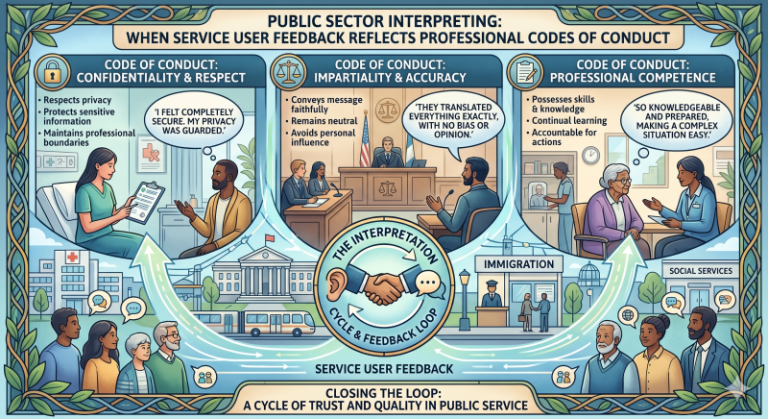
Accuracy is widely regarded as the foundation of professional interpreting, particularly in legal and medical settings where errors may have significant consequences. Feedback from public service providers frequently highlights the importance of interpreters conveying messages fully and precisely without distortion.
The principle commonly summarized as “No Omissions, No Additions, No Changes of Meaning” lies at the core of both NRPSI and CIOL ethical standards. Interpreters are expected to reproduce the speaker’s message faithfully and completely, preserving both meaning and intent.
Research in healthcare settings further supports the importance of professional accuracy. Heath, Hvass, and Wejse (2023) found that the use of qualified professional interpreters resulted in higher levels of patient satisfaction and better healthcare outcomes compared to the use of untrained or uncertified interpreters. Their findings demonstrate that ethical interpreting practice contributes directly to effective service delivery and improved institutional trust.
2. Impartiality and Awareness of Role Boundaries
Another recurring theme in feedback from public service professionals concerns interpreters who overstep their professional role by offering personal opinions, additional explanations, or advocacy on behalf of service users. Such actions may compromise the neutrality of communication and create confusion regarding the interpreter’s role.
Professional codes of conduct emphasize that interpreters must remain impartial at all times. Their role is to facilitate communication rather than to advocate, advise, or make decisions for either party. Maintaining clear professional boundaries allows direct and transparent interaction between service providers and service users.
However, interpreters frequently encounter ethical dilemmas commonly referred to as the “Interpreter’s Paradox.” In practice, interpreters may feel pressured to intervene in situations where service users appear confused, distressed, or disadvantaged. Balancing professional neutrality with human empathy can therefore become one of the most challenging aspects of public service interpreting.
3. Confidentiality and Trust
Public service interpreting often involves highly sensitive information, including medical histories, legal matters, immigration status, and personal trauma. Consequently, confidentiality represents one of the most essential ethical obligations of the profession.
Feedback from service users frequently reflects concerns regarding privacy and data protection. Without confidence that their information will remain confidential, individuals may hesitate to disclose critical information necessary for medical treatment or legal proceedings.
Professional codes established by organizations such as NRPSI and CIOL clearly require interpreters to maintain confidentiality in all circumstances unless disclosure is legally mandated, such as through a court order. Confidentiality is therefore not only a professional duty but also a fundamental condition for building trust between public institutions and the communities they serve.
Public service interpreting is a profession that requires both linguistic expertise and a strong commitment to ethical practice. Feedback from service users and public service providers demonstrates that societal expectations closely align with the core ethical principles established by professional organizations such as NRPSI and CIOL. Accuracy, impartiality, and confidentiality consistently emerge as the qualities most valued in interpreting practice.
Professional codes of conduct should therefore be understood not merely as theoretical frameworks but as practical mechanisms that safeguard justice, human rights, and public confidence in state institutions. By listening to service user feedback and adhering rigorously to professional ethics, interpreters play an indispensable role in promoting equality, accessibility, and fairness within multicultural societies.
References
- Colley, H., & Guéry, F. (2015). Understanding new hybrid professions: Bourdieu, illusio, and the case of public service interpreters. Cambridge Journal of Education, 45(1), 113–131. https://doi.org/10.1080/0305764X.2014.991277
- Drugan, J. (2017). Ethics and social responsibility in practice: interpreters and translators engaging with and beyond the professions. The Translator, 23(2), 126–142. https://doi.org/10.1080/13556509.2017.1281204
- Heath, M., Hvass, A. M. F., & Wejse, C. M. (2023). Interpreter services and effect on healthcare: A systematic review of the impact of different types of interpreters on patient outcomes. Journal of Migration and Health, 7, 100162. https://doi.org/10.1016/j.jmh.2023.100162
For professional services, please visit https://www.seaproti.org/practitioners/
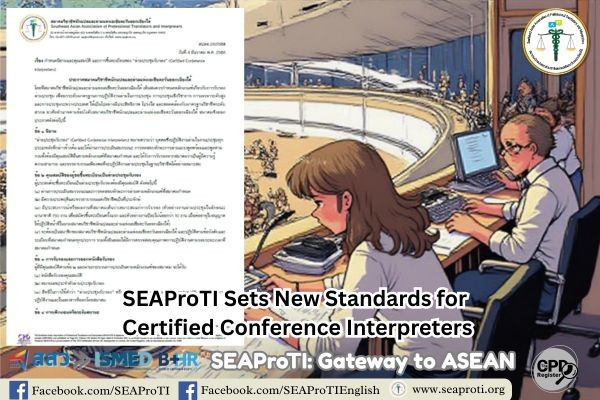
About certified translators, translation certifiers, and certified interpreters associated with SEAProTI. The Southeast Asian Association of Professional Translators and Interpreters (SEAProTI) has officially shared the qualifications and requirements for becoming certified translators, translation certification providers, and certified interpreters in Sections 9 and 10 of the Royal Gazette, which was published by the Prime Minister’s Office in Thailand on July 25, 2024. Certified Translators, Translation Certification Providers, and Certified Interpreters
The Council of State has proposed the enactment of a Royal Decree, granting registered translators and recognised translation certifiers from professional associations or accredited language institutions the authority to provide legally valid translation certification (Letter to SEAProTI dated April 28, 2025)
SEAProTI is the first professional association in Thailand and Southeast Asia to implement a comprehensive certification system for translators, certifiers, and interpreters.
Head Office: Baan Ratchakru Building, No. 33, Room 402, Soi Phahonyothin 5, Phahonyothin Road, Phaya Thai District, Bangkok 10400, Thailand
Email: hello@seaproti.com | Tel.: (+66) 2-114-3128 (Office hours: Mon–Fri, 09:00–17:00).
การล่ามในภาครัฐ (Public Sector Interpreting): เมื่อเสียงสะท้อนจากผู้รับบริการสอดคล้องกับจรรยาบรรณวิชาชีพ
บทนำ
การสื่อสารระหว่างบุคคลที่ใช้ภาษาต่างกันในบริบทของรัฐถือเป็นประเด็นที่มีความสำคัญต่อความเสมอภาคทางสังคมและการคุ้มครองสิทธิมนุษยชน โดยเฉพาะในสถานการณ์ที่เกี่ยวข้องกับกระบวนการยุติธรรม การรักษาพยาบาล และการให้บริการสาธารณะ การล่ามในภาครัฐ หรือ Public Service Interpreting (PSI) จึงมิได้หมายถึงเพียงการถ่ายทอดคำพูดจากภาษาหนึ่งไปสู่อีกภาษาหนึ่งเท่านั้น แต่ยังเป็นกระบวนการสร้างความเข้าใจร่วมกันระหว่างผู้ให้บริการของรัฐและผู้รับบริการที่มีพื้นฐานทางภาษาและวัฒนธรรมแตกต่างกัน
ล่ามในภาครัฐต้องปฏิบัติงานในบริบทที่มีความเปราะบางและมีผลกระทบต่อสิทธิของบุคคลโดยตรง ทั้งในด้านเสรีภาพ ความปลอดภัย และการเข้าถึงการรักษาพยาบาล ดังนั้น ความสามารถทางภาษาเพียงอย่างเดียวจึงไม่เพียงพอ แต่ล่ามจำเป็นต้องยึดถือจรรยาบรรณวิชาชีพอย่างเคร่งครัด เพื่อให้การสื่อสารเป็นธรรม ถูกต้อง และน่าเชื่อถือ Colley และ Guéry (2015) อธิบายว่า วิชาชีพล่ามในภาครัฐเป็น “วิชาชีพลูกผสม” (Hybrid Profession) ที่ต้องเผชิญกับความท้าทายจากการทำงานร่วมกับผู้เชี่ยวชาญสาขาอื่นและการจัดการความคาดหวังจากหลายฝ่ายพร้อมกัน
ในบริบทดังกล่าว เสียงสะท้อน (Feedback) จากผู้รับบริการและผู้ให้บริการของรัฐจึงเป็นข้อมูลสำคัญที่สะท้อนให้เห็นว่า การปฏิบัติงานของล่ามสามารถตอบสนองต่อมาตรฐานทางวิชาชีพและความต้องการของสังคมได้มากน้อยเพียงใด บทความนี้จึงมุ่งวิเคราะห์ความสอดคล้องระหว่างเสียงสะท้อนจากผู้ใช้บริการกับหลักจรรยาบรรณวิชาชีพล่ามในภาครัฐ
มาตรฐานและจรรยาบรรณวิชาชีพของล่ามภาครัฐ
องค์กรวิชาชีพระดับสากล เช่น National Register of Public Service Interpreters (NRPSI) และ Chartered Institute of Linguists (CIOL) ของสหราชอาณาจักร ได้กำหนดจรรยาบรรณวิชาชีพสำหรับล่ามไว้อย่างชัดเจน เพื่อสร้างมาตรฐานในการปฏิบัติงานและรักษาความเชื่อมั่นของสาธารณชน หลักจรรยาบรรณดังกล่าวครอบคลุมทั้งด้านความถูกต้อง ความเป็นกลาง การรักษาความลับ และความรับผิดชอบต่อสังคม
Drugan (2017) ชี้ให้เห็นว่า จริยธรรมและความรับผิดชอบต่อสังคมเป็นองค์ประกอบสำคัญที่ทำให้วิชาชีพล่ามได้รับการยอมรับในฐานะกลไกสนับสนุนความยุติธรรมและสิทธิมนุษยชน การยึดมั่นในจรรยาบรรณมิใช่เพียงข้อบังคับเชิงองค์กร แต่เป็นเครื่องมือที่ช่วยให้ล่ามสามารถรับมือกับสถานการณ์ที่มีความซับซ้อนทางจริยธรรมได้อย่างเหมาะสม
ความสอดคล้องระหว่างเสียงสะท้อนจากผู้รับบริการและหลักจรรยาบรรณวิชาชีพ
1. ความถูกต้องแม่นยำและการคงความหมาย
ความถูกต้องในการถ่ายทอดสารเป็นหลักการพื้นฐานที่สุดของการล่ามในภาครัฐ โดยเฉพาะในบริบทของศาล การสอบสวน และการรักษาพยาบาล ซึ่งข้อมูลที่ผิดพลาดอาจส่งผลกระทบต่อสิทธิ เสรีภาพ หรือชีวิตของบุคคลได้โดยตรง
เสียงสะท้อนจากผู้ใช้บริการมักให้ความสำคัญกับความครบถ้วนและความแม่นยำในการล่าม หลักการ “No Omissions, No Additions, No Changes of Meaning” ซึ่งหมายถึง “ไม่ลดทอน ไม่เพิ่มเติม และไม่เปลี่ยนแปลงความหมาย” จึงกลายเป็นหัวใจสำคัญของวิชาชีพ จรรยาบรรณของ NRPSI และ CIOL กำหนดไว้อย่างชัดเจนว่า ล่ามต้องถ่ายทอดข้อความทั้งหมดตามเจตนาของผู้พูดโดยไม่บิดเบือน
งานวิจัยของ Heath, Hvass และ Wejse (2023) สนับสนุนประเด็นดังกล่าว โดยพบว่าการใช้ล่ามมืออาชีพที่ได้รับการรับรองและปฏิบัติตามมาตรฐานวิชาชีพ ส่งผลให้ผู้ป่วยมีระดับความพึงพอใจและผลลัพธ์ทางสุขภาพที่ดีกว่าการใช้ล่ามที่ไม่มีการรับรอง
2. ความเป็นกลางและการตระหนักถึงขอบเขตบทบาท
อีกหนึ่งประเด็นสำคัญที่มักปรากฏในเสียงสะท้อนจากเจ้าหน้าที่รัฐ คือ ความกังวลเมื่อล่ามพยายามเข้าไปแทรกแซงการสนทนา อธิบายเพิ่มเติม หรือแสดงความคิดเห็นส่วนตัว ซึ่งอาจส่งผลให้เกิดความสับสนเกี่ยวกับบทบาทของล่าม
จรรยาบรรณวิชาชีพกำหนดให้ล่ามต้องรักษาความเป็นกลางอย่างเคร่งครัด โดยล่ามมีหน้าที่เป็น “ผู้อำนวยความสะดวกในการสื่อสาร” ไม่ใช่ผู้สนับสนุนฝ่ายใดฝ่ายหนึ่ง (Advocate) หรือผู้ตัดสินใจแทนผู้รับบริการ ความเป็นกลางดังกล่าวช่วยให้ผู้ให้บริการและผู้รับบริการสามารถสื่อสารกันได้โดยตรงและลดความคลาดเคลื่อนในการตีความ
อย่างไรก็ตาม ในทางปฏิบัติ ล่ามจำนวนมากต้องเผชิญกับภาวะที่เรียกว่า “Interpreter’s Paradox” กล่าวคือ ความคาดหวังจากบางฝ่ายอาจผลักดันให้ล่ามต้องแสดงบทบาทเกินขอบเขตหน้าที่ เช่น การช่วยอธิบายขั้นตอนทางกฎหมายหรือการให้คำแนะนำแก่ผู้รับบริการ ซึ่งอาจนำไปสู่ความขัดแย้งทางจริยธรรมได้
3. การรักษาความลับและความไว้วางใจ
การล่ามในภาครัฐเกี่ยวข้องกับข้อมูลส่วนบุคคลและข้อมูลที่มีความอ่อนไหวสูง ไม่ว่าจะเป็นประวัติทางการแพทย์ ข้อมูลทางคดี หรือสถานะทางกฎหมายของผู้รับบริการ ดังนั้น การรักษาความลับจึงเป็นหลักจรรยาบรรณที่สำคัญอย่างยิ่ง
เสียงสะท้อนจากผู้รับบริการจำนวนมากสะท้อนถึงความกังวลเรื่องความเป็นส่วนตัวและความปลอดภัยของข้อมูล หากผู้รับบริการไม่เชื่อมั่นว่าข้อมูลของตนจะได้รับการปกป้อง ก็อาจส่งผลให้ไม่กล้าเปิดเผยข้อเท็จจริงที่จำเป็นต่อกระบวนการยุติธรรมหรือการรักษาพยาบาล
จรรยาบรรณขององค์กรวิชาชีพ เช่น NRPSI และ CIOL ระบุชัดเจนว่า ล่ามต้องรักษาความลับของข้อมูลทุกกรณี เว้นแต่มีข้อกำหนดทางกฎหมายหรือคำสั่งศาล การรักษาความลับจึงมิใช่เพียงหน้าที่ทางวิชาชีพ แต่เป็นปัจจัยพื้นฐานในการสร้างความไว้วางใจระหว่างรัฐและประชาชน
บทสรุป
การล่ามในภาครัฐเป็นวิชาชีพที่มีความสำคัญต่อการสร้างความเสมอภาคในการเข้าถึงบริการของรัฐ และมีบทบาทโดยตรงต่อการคุ้มครองสิทธิมนุษยชน เสียงสะท้อนจากผู้รับบริการและผู้ให้บริการของรัฐสะท้อนให้เห็นอย่างชัดเจนว่า ความคาดหวังของสังคมมีความสอดคล้องกับหลักจรรยาบรรณวิชาชีพในด้านความถูกต้อง ความเป็นกลาง และการรักษาความลับ
จรรยาบรรณวิชาชีพขององค์กรอย่าง NRPSI และ CIOL จึงมิใช่เพียงแนวทางเชิงทฤษฎี แต่เป็นกลไกสำคัญที่ช่วยรักษาคุณภาพของการสื่อสารในภาครัฐ ปกป้องสิทธิของผู้รับบริการ และสร้างความเชื่อมั่นต่อระบบบริการสาธารณะ การรับฟังเสียงสะท้อนจากผู้ใช้บริการและการปฏิบัติงานภายใต้กรอบจริยธรรมอย่างเคร่งครัด จึงเป็นปัจจัยสำคัญที่ทำให้ล่ามภาครัฐสามารถปฏิบัติหน้าที่ได้อย่างมืออาชีพและยั่งยืน
เอกสารอ้างอิง
- Colley, H., & Guéry, F. (2015). Understanding new hybrid professions: Bourdieu, illusio and the case of public service interpreters. Cambridge Journal of Education, 45(1), 113–131. https://doi.org/10.1080/0305764X.2014.991277
- Drugan, J. (2017). Ethics and social responsibility in practice: interpreters and translators engaging with and beyond the professions. The Translator, 23(2), 126–142. https://doi.org/10.1080/13556509.2017.1281204
Heath, M., Hvass, A. M. F., & Wejse, C. M. (2023). Interpreter services and effect on healthcare: A systematic review of the impact of different types of interpreters on patient outcome. Journal of Migration and Health, 7, 100162. https://doi.org/10.1016/j.jmh.2023.100162
สมาคมวิชาชีพนักแปลและล่ามแห่งเอเชียตะวันออกเฉียงใต้ (SEAProTI) ได้ประกาศหลักเกณฑ์และคุณสมบัติของผู้ที่ขึ้นทะเบียนเป็น “นักแปลรับรอง (Certified Translators) และผู้รับรองการแปล (Translation Certification Providers) และล่ามรับรอง (Certified Interpreters)” ของสมาคม หมวดที่ 9 และหมวดที่ 10 ในราชกิจจานุเบกษา ของสำนักเลขาธิการคณะรัฐมนตรี ในสำนักนายกรัฐมนตรี แห่งราชอาณาจักรไทย ลงวันที่ 25 ก.ค. 2567 เล่มที่ 141 ตอนที่ 66 ง หน้า 100 อ่านฉบับเต็มได้ที่: นักแปลรับรอง ผู้รับรองการแปล และล่ามรับรอง
สำนักคณะกรรมการกฤษฎีกาเสนอให้ตราเป็นพระราชกฤษฎีกา โดยกำหนดให้นักแปลที่ขึ้นทะเบียน รวมถึงผู้รับรองการแปลจากสมาคมวิชาชีพหรือสถาบันสอนภาษาที่มีการอบรมและขึ้นทะเบียน สามารถรับรองคำแปลได้ (จดหมายถึงสมาคม SEAProTI ลงวันที่ 28 เม.ย. 2568)
สมาคมวิชาชีพนักแปลและล่ามแห่งเอเชียตะวันออกเฉียงใต้เป็นสมาคมวิชาชีพแห่งแรกและแห่งเดียวในประเทศไทยและภูมิภาคเอเชียตะวันออกเฉียงใต้ที่มีระบบรับรองนักแปลรับรอง ผู้รับรองการแปล และล่ามรับรอง
สำนักงานใหญ่: อาคารบ้านราชครู เลขที่ 33 ห้อง 402 ซอยพหลโยธิน 5 ถนนพหลโยธิน แขวงพญาไท เขตพญาไท กรุงเทพมหานคร 10400 ประเทศไทย