


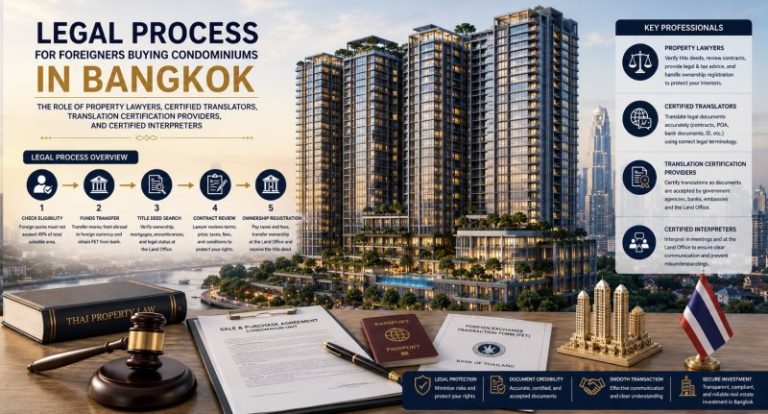
Legal Process for Foreigners Buying Condominiums in Bangkok: The Role of Property Lawyers, Certified Translators, Translation Certification Providers, and Certified Interpreters in Protecting International Real Estate Transactions
Author: Phakaporn Tanjararak
29 May 2026, Bangkok – This article aims to examine the legal process for foreigners purchasing condominiums in Bangkok, including an analysis of legal restrictions concerning foreign ownership, title deed verification, foreign currency transfers, and ownership registration procedures at the Land Office. Furthermore, the article investigates the role of property lawyers, certified translators, translation certification providers, and certified interpreters affiliated with the Southeast Asian Association of Professional Translators and Interpreters in facilitating legal communication, certifying documents, and minimizing risks in transactions involving parties from different linguistic and legal backgrounds.
The study finds that although Thai law permits foreigners to own condominium units under specific legal conditions, the process remains legally complex and requires accurate legal documentation, translation, and interpretation. The involvement of legal and linguistic professionals enhances document credibility, prevents disputes, and strengthens the security of international real estate transactions effectively.
Introduction
Bangkok has become one of the most significant economic and investment centers in Thailand, resulting in continuous growth in the real estate sector, particularly the condominium market, which attracts a large number of foreign investors and residents. Nevertheless, the purchase of condominiums in Thailand by foreigners must strictly comply with Thai legal regulations because Thai law imposes restrictions on foreign ownership of immovable property, especially land ownership, which is tightly regulated under the Land Code and the Condominium Act (1979) and its amendments (Office of the Council of State, 1979).
Although foreigners are legally permitted to own condominium units, Thai law stipulates that foreign ownership within a condominium project must not exceed 49 percent of the total saleable area of the project. In addition, the funds used to purchase a condominium must be transferred from abroad in foreign currency and exchanged into Thai baht through a financial institution in Thailand. This process allows the bank to issue a Foreign Exchange Transaction Form, which is a crucial document required for ownership registration at the Land Office (Bank of Thailand, 2024).
Consequently, purchasing a condominium in Thailand as a foreigner is not merely a financial transaction but also involves title deed verification, contract examination, tax compliance, and various legal procedures that are relatively complex. Furthermore, these transactions frequently involve parties who communicate in different languages, thereby making the role of lawyers, certified translators, translation certification providers, and certified interpreters highly important in ensuring the accuracy and security of the transaction.
Legal Procedures for Foreigners Purchasing Condominiums
The first step in purchasing a condominium in Thailand as a foreigner is verifying eligibility for ownership. The purchaser must confirm that the condominium project still has remaining foreign ownership quota under the legal limit. If the foreign ownership quota has already reached the statutory ceiling of 49 percent, foreigners cannot legally register ownership in that condominium project (Prateep Yoothaworn, 2022).
Furthermore, Thai law requires that the money used for purchasing the condominium must be transferred into Thailand in foreign currency through a Thai commercial bank. The bank subsequently issues a Foreign Exchange Transaction Form, which serves as essential evidence for ownership registration at the Land Office. Without this document, ownership registration may not be legally completed (Bank of Thailand, 2024).
Afterward, the purchaser must conduct a title deed search at the Land Office to confirm that the seller is the lawful owner of the property and that the condominium is free from mortgages, legal claims, or disputes. Failure to conduct such verification may result in fraud or ownership disputes in the future (Surasak Wilawan, 2021).
Regarding the sales contract, the terms and conditions must be reviewed carefully, especially those related to the purchase price, payment schedule, tax obligations, transfer fees, delivery conditions, and penalties for breach of contract. Certain contracts may disproportionately favor the seller; therefore, having a property lawyer review the agreement serves as a significant mechanism for reducing legal risks (Chanchai Sawaengsak, 2020).
Once all procedures are completed, both parties must proceed to the Land Office to register the ownership transfer and pay all related fees and taxes, including transfer fees, stamp duty, specific business tax, and withholding income tax. Upon successful registration, the purchaser receives an updated condominium title deed indicating lawful ownership.
Types of Title Deeds and the Importance of Verification
Title deeds constitute one of the most essential elements in real estate transactions in Thailand. The most secure type of title deed is the Chanote or Nor Sor 4 Jor, which provides full ownership rights with officially surveyed land boundaries. In contrast, the Nor Sor 3 Gor title deed grants possessory rights but still contains certain survey limitations that may lead to boundary disputes. Meanwhile, the Nor Sor 3 document merely certifies possession and requires additional verification before a transaction can proceed (Department of Lands, 2023).
Accordingly, title deed verification is critically important for reducing risks associated with real estate transactions, particularly for foreign purchasers who may lack familiarity with the Thai legal system. Verification conducted at the Land Office confirms the legal status of the property and helps prevent future disputes and legal complications.
The Role of Property Lawyers, Certified Translators, Translation Certification Providers, and Certified Interpreters
In international real estate transactions, property lawyers play an essential role in protecting the rights and interests of purchasers. Their responsibilities include verifying title deeds, reviewing contractual terms, providing legal and tax consultation, and handling ownership registration procedures in compliance with Thai law (Chanchai Sawaengsak, 2020).
In addition to legal professionals, certified translators affiliated with the Southeast Asian Association of Professional Translators and Interpreters play a significant role in translating legal documents related to real estate transactions, including sales agreements, powers of attorney, bank certification documents, and identification documents of foreign purchasers. Such translations require accuracy in legal terminology and international legal context because even minor translation inaccuracies may affect the legal validity of documents and potentially result in future disputes.
At the same time, translation certification providers are responsible for verifying and certifying the accuracy of translated documents so that such documents may be submitted to government agencies, Land Offices, banks, or embassies in accordance with professional and international standards. Translation certification enhances document credibility and minimizes the risk of document rejection by relevant authorities.
Certified interpreters also perform a crucial function in facilitating
communication among purchasers, sellers, lawyers, Land Office officials, and financial institutions. This role becomes particularly important when foreign purchasers are unable to communicate effectively in Thai. Certified interpreters ensure accurate explanations of contractual terms, legal procedures, and obligations of the parties involved, thereby reducing risks arising from linguistic and cultural misunderstandings (Supattra Sriwan, 2022).
Therefore, the role of certified translators, translation certification providers, and certified interpreters extends beyond linguistic conversion. These professionals serve as vital mechanisms connecting legal systems, cultures, and international communication, directly contributing to the accuracy, transparency, and security of international real estate transactions.
Conclusion
The purchase of condominiums in Bangkok by foreigners involves numerous legal requirements, including verification of ownership eligibility, compliance with foreign currency transfer regulations, title deed examination, and ownership registration at the Land Office. Although Thai law permits foreigners to own condominium units under certain legal conditions, the process remains legally complex and involves multiple legal risks.
Consequently, the involvement of property lawyers, certified translators, translation certification providers, and certified interpreters is essential in safeguarding purchasers’ interests, minimizing communication errors, and enhancing the credibility of legal documents and transactions. Such professional assistance ultimately contributes to more secure, transparent, and efficient international real estate transactions.
References
- Bank of Thailand. (2024). Regulations concerning foreign currency transfers for purchasing real estate in Thailand. Bangkok: Bank of Thailand.
- Chanchai Sawaengsak. (2020). Real estate law and condominium transactions in Thailand. Bangkok: Winyuchon Publishing House.
- Office of the Council of State. (1979). Condominium Act B.E. 2522 (1979) and amendments. Bangkok: Office of the Council of State.
- Supattra Sriwan. (2022). The role of translators and interpreters in international legal transactions. Journal of Language and Legal Communication, 8(1), 77-95.
- Surasak Wilawan. (2021). Title deed verification in Thai real estate transactions. Journal of Real Estate Law, 10(3), 112-130.
For professional services, please visit: https://www.seaproti.org/practitioners/
About certified translators, translation certifiers, and certified interpreters associated with SEAProTI. The Southeast Asian Association of Professional Translators and Interpreters (SEAProTI) has officially shared the qualifications and requirements for becoming Certified Translators, Translation Certification Providers, and Certified Interpreters in Sections 9 and 10 of the Royal Gazette, which was published by the Prime Minister’s Office in Thailand on July 25, 2024. Certified Translators, Translation Certification Providers, and Certified Interpreters
The Council of State has proposed the enactment of a Royal Decree, granting registered translators and recognised translation certifiers from professional associations or accredited language institutions the authority to provide legally valid translation certification (Letter to SEAProTI dated April 28, 2025)
SEAProTI is the first professional association in Thailand and Southeast Asia to implement a comprehensive certification system for translators, certifiers, and interpreters.
Head Office: Baan Ratchakru Building, No. 33, Room 402, Soi Phahonyothin 5, Phahonyothin Road, Phaya Thai District, Bangkok 10400, Thailand
Email: hello@seaproti.com | Tel.: (+66) 2-114-3128 (Office hours: Mon–Fri, 09:00–17:00).
กระบวนการทางกฎหมายสำหรับชาวต่างชาติในการซื้อคอนโดมิเนียมในกรุงเทพมหานคร: บทบาทของทนายความ นักแปลรับรอง ผู้รับรองการแปล และล่ามรับรองในการคุ้มครองธุรกรรมอสังหาริมทรัพย์ระหว่างประเทศ
ผู้เขียน: ภคพร ตันจรารักษ์
29 พฤษภาคม 2569, กรุงเทพมหานคร – บทความนี้มีวัตถุประสงค์เพื่อศึกษากระบวนการทางกฎหมายสำหรับชาวต่างชาติในการซื้อคอนโดมิเนียมในกรุงเทพมหานคร รวมถึงวิเคราะห์ข้อจำกัดทางกฎหมายเกี่ยวกับกรรมสิทธิ์ของชาวต่างชาติ การตรวจสอบเอกสารสิทธิ์ การโอนเงินตราต่างประเทศ และกระบวนการจดทะเบียนกรรมสิทธิ์ ณ สำนักงานที่ดิน นอกจากนี้ บทความยังมุ่งศึกษาบทบาทของทนายความด้านอสังหาริมทรัพย์ นักแปลรับรอง ผู้รับรองการแปล และล่ามรับรองของสมาคมวิชาชีพนักแปลและล่ามแห่งเอเชียตะวันออกเฉียงใต้ ในการอำนวยความสะดวกด้านการสื่อสารทางกฎหมาย การรับรองเอกสาร และการลดความเสี่ยงในการทำธุรกรรมระหว่างคู่สัญญาที่มีความแตกต่างทางภาษาและระบบกฎหมาย
ผลการศึกษาพบว่า แม้กฎหมายไทยจะเปิดโอกาสให้ชาวต่างชาติถือครองกรรมสิทธิ์ห้องชุดได้ภายใต้เงื่อนไขที่กำหนด แต่กระบวนการดังกล่าวยังคงมีความซับซ้อนและต้องอาศัยความถูกต้องของเอกสารทางกฎหมาย การแปล และการตีความข้อมูลอย่างแม่นยำ การมีผู้เชี่ยวชาญด้านกฎหมายและภาษาเข้ามามีบทบาทจึงช่วยเพิ่มความน่าเชื่อถือของเอกสาร ป้องกันข้อพิพาท และเสริมสร้างความมั่นคงให้แก่ธุรกรรมอสังหาริมทรัพย์ระหว่างประเทศอย่างมีประสิทธิภาพ
บทนำ
กรุงเทพมหานครถือเป็นศูนย์กลางทางเศรษฐกิจและการลงทุนที่สำคัญของประเทศไทย ส่งผลให้ตลาดอสังหาริมทรัพย์ โดยเฉพาะคอนโดมิเนียม ได้รับความสนใจจากนักลงทุนและผู้พักอาศัยชาวต่างชาติอย่างต่อเนื่อง อย่างไรก็ตาม การซื้อคอนโดมิเนียมโดยชาวต่างชาติในประเทศไทยจำเป็นต้องดำเนินการภายใต้ข้อกำหนดของกฎหมายไทยอย่างเคร่งครัด เนื่องจากกฎหมายไทยมีข้อจำกัดเกี่ยวกับการถือครองอสังหาริมทรัพย์ของบุคคลต่างด้าว โดยเฉพาะการถือครองที่ดิน ซึ่งได้รับการควบคุมอย่างเข้มงวดตามประมวลกฎหมายที่ดินและพระราชบัญญัติอาคารชุด พ.ศ. 2522 และฉบับแก้ไขเพิ่มเติม (สำนักงานคณะกรรมการกฤษฎีกา, พ.ศ. 2522)
แม้ว่าชาวต่างชาติจะสามารถถือครองกรรมสิทธิ์ในห้องชุดได้ แต่กฎหมายกำหนดให้สัดส่วนการถือครองของชาวต่างชาติภายในโครงการต้องไม่เกินร้อยละ 49 ของพื้นที่ขายรวมทั้งหมดของโครงการอาคารชุด นอกจากนี้ เงินที่ใช้ซื้อห้องชุดจะต้องถูกโอนมาจากต่างประเทศในรูปของเงินตราต่างประเทศและแลกเปลี่ยนเป็นเงินบาทผ่านสถาบันการเงินในประเทศไทย เพื่อให้สามารถออกเอกสารรับรองธุรกรรมเงินตราต่างประเทศซึ่งเป็นเอกสารสำคัญสำหรับการจดทะเบียนกรรมสิทธิ์ ณ สำนักงานที่ดินได้ (ธนาคารแห่งประเทศไทย, พ.ศ. 2567)
ด้วยเหตุนี้ กระบวนการซื้อคอนโดมิเนียมของชาวต่างชาติจึงมิได้เป็นเพียงธุรกรรมทางการเงินทั่วไป หากแต่เกี่ยวข้องกับการตรวจสอบเอกสารสิทธิ์ การพิจารณาสัญญา การปฏิบัติตามข้อกำหนดด้านภาษี และการดำเนินการทางกฎหมายที่มีความซับซ้อน อีกทั้งยังเกี่ยวข้องกับการสื่อสารระหว่างคู่สัญญาที่ใช้ภาษาต่างกัน จึงทำให้บทบาทของทนายความ นักแปลรับรอง ผู้รับรองการแปล และล่ามรับรองมีความสำคัญอย่างยิ่งต่อความถูกต้องและความปลอดภัยของธุรกรรมดังกล่าว
กระบวนการทางกฎหมายในการซื้อคอนโดมิเนียมของชาวต่างชาติ
ขั้นตอนแรกของการซื้อคอนโดมิเนียมในประเทศไทยสำหรับชาวต่างชาติ คือ การตรวจสอบคุณสมบัติในการถือครองกรรมสิทธิ์ โดยผู้ซื้อจะต้องตรวจสอบว่าโครงการคอนโดมิเนียมนั้นยังคงมีสัดส่วนการถือครองสำหรับชาวต่างชาติเหลืออยู่ตามที่กฎหมายกำหนด หากโครงการมีสัดส่วนการถือครองครบตามเพดานร้อยละ 49 แล้ว ชาวต่างชาติจะไม่สามารถจดทะเบียนกรรมสิทธิ์ในโครงการดังกล่าวได้ (ประทีป อยู่ถาวร, พ.ศ. 2565)
นอกจากนี้ กฎหมายไทยยังกำหนดให้เงินที่ใช้ในการซื้อห้องชุดต้องถูกโอนเข้ามาจากต่างประเทศในรูปเงินตราต่างประเทศ ผ่านธนาคารพาณิชย์ในประเทศไทย เพื่อให้ธนาคารสามารถออกเอกสารรับรองธุรกรรมเงินตราต่างประเทศ ซึ่งเป็นหลักฐานสำคัญที่สำนักงานที่ดินใช้ประกอบการจดทะเบียนโอนกรรมสิทธิ์ หากไม่มีเอกสารดังกล่าว การจดทะเบียนอาจไม่สามารถดำเนินการได้อย่างสมบูรณ์ (ธนาคารแห่งประเทศไทย, พ.ศ. 2567)
ภายหลังจากนั้น ผู้ซื้อจำเป็นต้องดำเนินการตรวจสอบเอกสารสิทธิ์หรือโฉนดที่ดิน ณ สำนักงานที่ดิน เพื่อยืนยันว่าผู้ขายเป็นเจ้าของกรรมสิทธิ์ที่แท้จริง และทรัพย์สินดังกล่าวไม่มีภาระจำนอง คดีความ หรือข้อพิพาททางกฎหมาย การละเลยขั้นตอนดังกล่าวอาจก่อให้เกิดปัญหาการฉ้อโกงหรือข้อพิพาทด้านกรรมสิทธิ์ในอนาคต (สุรศักดิ์ วิลาวรรณ, พ.ศ. 2564)
ในส่วนของสัญญาซื้อขาย จำเป็นต้องมีการตรวจสอบเงื่อนไขอย่างละเอียด โดยเฉพาะรายละเอียดเกี่ยวกับราคาซื้อขาย กำหนดการชำระเงิน ภาระภาษี ค่าธรรมเนียม เงื่อนไขการส่งมอบทรัพย์สิน และบทกำหนดเกี่ยวกับการผิดสัญญา ทั้งนี้ สัญญาบางฉบับอาจกำหนดเงื่อนไขที่เอื้อประโยชน์แก่ผู้ขายมากเกินสมควร ดังนั้น การให้ทนายความด้านอสังหาริมทรัพย์ตรวจสอบสัญญาจึงถือเป็นกลไกสำคัญในการลดความเสี่ยงทางกฎหมาย (ชาญชัย แสวงศักดิ์, พ.ศ. 2563)
เมื่อดำเนินการครบถ้วนแล้ว คู่สัญญาจะต้องไปดำเนินการจดทะเบียนโอนกรรมสิทธิ์ ณ สำนักงานที่ดิน พร้อมชำระค่าธรรมเนียมและภาษีที่เกี่ยวข้อง ได้แก่ ค่าธรรมเนียมการโอน อากรแสตมป์ ภาษีธุรกิจเฉพาะ และภาษีเงินได้ของผู้ขาย หลังจากการจดทะเบียนเสร็จสมบูรณ์ ผู้ซื้อจะได้รับโฉนดห้องชุดที่มีชื่อของตนเองในฐานะเจ้าของกรรมสิทธิ์โดยชอบด้วยกฎหมาย
ประเภทของเอกสารสิทธิ์และความสำคัญในการตรวจสอบ
เอกสารสิทธิ์ถือเป็นหัวใจสำคัญของธุรกรรมอสังหาริมทรัพย์ในประเทศไทย โดยเอกสารสิทธิ์ที่มีความมั่นคงทางกฎหมายมากที่สุด คือ โฉนดที่ดินหรือ น.ส.4 จ. ซึ่งแสดงขอบเขตที่ดินอย่างชัดเจนและผ่านการรังวัดอย่างเป็นทางการ ในขณะที่เอกสารสิทธิ์ประเภท น.ส.3 ก. แม้จะสามารถแสดงสิทธิครอบครองได้ แต่ยังคงมีข้อจำกัดด้านการรังวัดและอาจก่อให้เกิดข้อพิพาทเรื่องแนวเขตได้ ส่วนเอกสารสิทธิ์ประเภท น.ส.3 เป็นเพียงหลักฐานการครอบครองที่ยังต้องมีการตรวจสอบเพิ่มเติมก่อนการซื้อขาย (กรมที่ดิน, พ.ศ. 2566)
การตรวจสอบเอกสารสิทธิ์จึงมีความสำคัญอย่างยิ่งต่อการลดความเสี่ยงในการซื้ออสังหาริมทรัพย์ โดยเฉพาะในกรณีที่ผู้ซื้อเป็นชาวต่างชาติซึ่งอาจไม่มีความเข้าใจเกี่ยวกับระบบกฎหมายไทยอย่างเพียงพอ การตรวจสอบข้อมูล ณ สำนักงานที่ดินช่วยยืนยันสถานะทางกฎหมายของทรัพย์สินและป้องกันปัญหาที่อาจเกิดขึ้นในอนาคต
บทบาทของทนายความ นักแปลรับรอง ผู้รับรองการแปล และล่ามรับรอง
ในธุรกรรมอสังหาริมทรัพย์ระหว่างประเทศ บทบาทของทนายความด้านอสังหาริมทรัพย์มีความสำคัญอย่างยิ่งต่อการคุ้มครองสิทธิและผลประโยชน์ของผู้ซื้อ โดยทนายความมีหน้าที่ตรวจสอบเอกสารสิทธิ์ วิเคราะห์สัญญา ให้คำปรึกษาด้านภาษีและกฎหมาย ตลอดจนดำเนินการจดทะเบียนกรรมสิทธิ์ให้เป็นไปตามข้อกำหนดของกฎหมายไทย (ชาญชัย แสวงศักดิ์, พ.ศ. 2563)
นอกจากผู้เชี่ยวชาญด้านกฎหมายแล้ว นักแปลรับรองของสมาคมวิชาชีพนักแปลและล่ามแห่งเอเชียตะวันออกเฉียงใต้ยังมีบทบาทสำคัญในการแปลเอกสารทางกฎหมายที่เกี่ยวข้องกับธุรกรรมอสังหาริมทรัพย์ เช่น สัญญาซื้อขาย หนังสือมอบอำนาจ หนังสือรับรองจากธนาคาร และเอกสารประจำตัวของชาวต่างชาติ การแปลเอกสารดังกล่าวจำเป็นต้องมีความถูกต้องทั้งในด้านศัพท์กฎหมายและบริบททางกฎหมายระหว่างประเทศ เนื่องจากความคลาดเคลื่อนเพียงเล็กน้อยอาจส่งผลต่อสถานะทางกฎหมายของเอกสารและก่อให้เกิดข้อพิพาทในภายหลังได้
ในขณะเดียวกัน ผู้รับรองการแปลมีบทบาทในการตรวจสอบและรับรองความถูกต้องของคำแปล เพื่อให้เอกสารแปลสามารถนำไปใช้ต่อหน่วยงานราชการ สำนักงานที่ดิน ธนาคาร หรือสถานทูตได้อย่างถูกต้องตามหลักวิชาชีพและมาตรฐานสากล การรับรองการแปลช่วยเสริมสร้างความน่าเชื่อถือให้แก่เอกสาร และลดปัญหาการปฏิเสธเอกสารจากหน่วยงานที่เกี่ยวข้อง
สำหรับล่ามรับรอง ล่ามมีหน้าที่สำคัญในการสื่อสารระหว่างคู่สัญญา ทนายความ เจ้าหน้าที่สำนักงานที่ดิน และหน่วยงานทางการเงิน โดยเฉพาะในกรณีที่ชาวต่างชาติไม่สามารถใช้ภาษาไทยได้อย่างคล่องแคล่ว ล่ามรับรองช่วยให้การอธิบายเงื่อนไขสัญญา ขั้นตอนทางกฎหมาย และภาระหน้าที่ของคู่สัญญาเป็นไปอย่างชัดเจนและถูกต้อง อันเป็นการลดความเสี่ยงจากความเข้าใจผิดทางภาษาและวัฒนธรรม (สุพัตรา ศรีวรรณ, พ.ศ. 2565)
บทบาทของนักแปลรับรอง ผู้รับรองการแปล และล่ามรับรองจึงมิได้จำกัดอยู่เพียงการแปลภาษาเท่านั้น แต่ยังทำหน้าที่เป็นกลไกสำคัญในการเชื่อมโยงระบบกฎหมาย วัฒนธรรม และการสื่อสารระหว่างประเทศ อันส่งผลโดยตรงต่อความถูกต้อง โปร่งใส และความมั่นคงของธุรกรรมอสังหาริมทรัพย์ระหว่างประเทศ
สรุป
การซื้อคอนโดมิเนียมในกรุงเทพมหานครโดยชาวต่างชาติเป็นกระบวนการที่เกี่ยวข้องกับข้อกำหนดทางกฎหมายหลายประการ ตั้งแต่การตรวจสอบสิทธิในการถือครองกรรมสิทธิ์ การโอนเงินตราต่างประเทศ การตรวจสอบเอกสารสิทธิ์ ไปจนถึงการจดทะเบียนโอนกรรมสิทธิ์ ณ สำนักงานที่ดิน แม้ว่ากฎหมายไทยจะเปิดโอกาสให้ชาวต่างชาติสามารถถือครองห้องชุดได้ภายใต้เงื่อนไขที่กำหนด แต่กระบวนการดังกล่าวยังคงมีความซับซ้อนและมีความเสี่ยงทางกฎหมายในหลายด้าน
ดังนั้น การมีทนายความด้านอสังหาริมทรัพย์ นักแปลรับรอง ผู้รับรองการแปล และล่ามรับรองเข้ามามีบทบาทในกระบวนการดังกล่าว จึงถือเป็นปัจจัยสำคัญที่ช่วยคุ้มครองผลประโยชน์ของผู้ซื้อ ลดความผิดพลาดในการสื่อสาร และเสริมสร้างความน่าเชื่อถือของเอกสารและธุรกรรมทางกฎหมาย อันนำไปสู่การดำเนินธุรกรรมอสังหาริมทรัพย์ระหว่างประเทศอย่างมีประสิทธิภาพและปลอดภัยมากยิ่งขึ้น
เอกสารอ้างอิง
- ชาญชัย แสวงศักดิ์. (พ.ศ. 2563). กฎหมายอสังหาริมทรัพย์และการซื้อขายอาคารชุดในประเทศไทย. กรุงเทพมหานคร: วิญญูชน.
- ธนาคารแห่งประเทศไทย. (พ.ศ. 2567). หลักเกณฑ์เกี่ยวกับการโอนเงินตราต่างประเทศเพื่อซื้ออสังหาริมทรัพย์ในประเทศไทย. กรุงเทพมหานคร: ธนาคารแห่งประเทศไทย.
- สำนักงานคณะกรรมการกฤษฎีกา. (พ.ศ. 2522). พระราชบัญญัติอาคารชุด พ.ศ. 2522 และฉบับแก้ไขเพิ่มเติม. กรุงเทพมหานคร: สำนักงานคณะกรรมการกฤษฎีกา.
- สุพัตรา ศรีวรรณ. (พ.ศ. 2565). บทบาทของนักแปลและล่ามในธุรกรรมกฎหมายระหว่างประเทศ. วารสารภาษาและการสื่อสารทางกฎหมาย, 8(1), 77-95.
- สุรศักดิ์ วิลาวรรณ. (พ.ศ. 2564). การตรวจสอบเอกสารสิทธิ์ในธุรกรรมอสังหาริมทรัพย์ไทย. วารสารกฎหมายอสังหาริมทรัพย์, 10(3), 112-130.
สมาคมวิชาชีพนักแปลและล่ามแห่งเอเชียตะวันออกเฉียงใต้ (SEAProTI) ได้ประกาศหลักเกณฑ์และคุณสมบัติของผู้ที่ขึ้นทะเบียนเป็น “นักแปลรับรอง (Certified Translators) และผู้รับรองการแปล (Translation Certification Providers) และล่ามรับรอง (Certified Interpreters)” ของสมาคม หมวดที่ 9 และหมวดที่ 10 ในราชกิจจานุเบกษา ของสำนักเลขาธิการคณะรัฐมนตรี ในสำนักนายกรัฐมนตรี แห่งราชอาณาจักรไทย ลงวันที่ 25 ก.ค. 2567 เล่มที่ 141 ตอนที่ 66 ง หน้า 100 อ่านฉบับเต็มได้ที่: นักแปลรับรอง ผู้รับรองการแปล และล่ามรับรอง
สำนักคณะกรรมการกฤษฎีกาเสนอให้ตราเป็นพระราชกฤษฎีกา โดยกำหนดให้นักแปลที่ขึ้นทะเบียน รวมถึงผู้รับรองการแปลจากสมาคมวิชาชีพหรือสถาบันสอนภาษาที่มีการอบรมและขึ้นทะเบียน สามารถรับรองคำแปลได้ (จดหมายถึงสมาคม SEAProTI ลงวันที่ 28 เม.ย. 2568)
สมาคมวิชาชีพนักแปลและล่ามแห่งเอเชียตะวันออกเฉียงใต้เป็นสมาคมวิชาชีพแห่งแรกและแห่งเดียวในประเทศไทยและภูมิภาคเอเชียตะวันออกเฉียงใต้ที่มีระบบรับรองนักแปลรับรอง ผู้รับรองการแปล และล่ามรับรอง
สำนักงานใหญ่: อาคารบ้านราชครู เลขที่ 33 ห้อง 402 ซอยพหลโยธิน 5 ถนนพหลโยธิน แขวงพญาไท เขตพญาไท กรุงเทพมหานคร 10400 ประเทศไทย