



When “Not Identical” Does Not Mean “Forgery”:
A Forensic Science and Forensic Linguistics Analysis of Signature Evidence
Author: Wanitcha Sumanat
President, Southeast Asian Association of Professional Translators and Interpreters (SEAProTI); Arbitrator; Mediator; Forensic Linguist
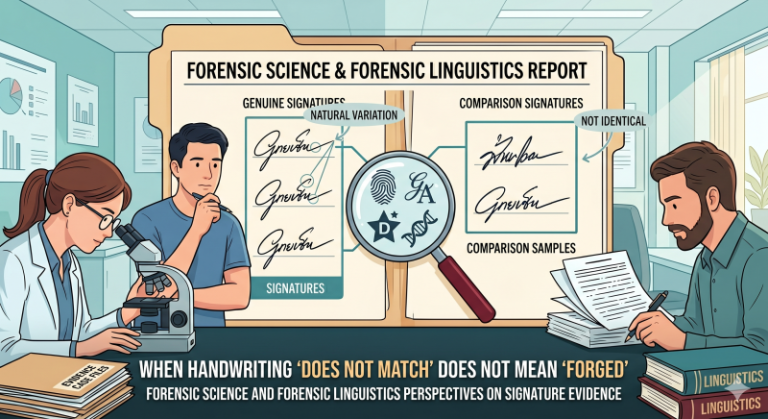
April 18, 2026, Bangkok — The interpretation of signature evidence in judicial proceedings often encounters discrepancies between scientific conclusions and legal language use. This is particularly evident in cases where the term “not identical” is interpreted as “forged signature.” This article aims to analyze the conceptual differences between these two expressions from the perspectives of forensic document examination and forensic linguistics, while also discussing their implications for prosecutorial discretion and judicial decision-making. The analysis demonstrates that “not identical” constitutes a technical observation with a low level of certainty, whereas “forgery” is a legal accusation requiring a high standard of proof. The transformation of meaning between these two levels may distort the evidential weight and undermine justice.
Introduction
Signature evidence is one of the most commonly used forms of documentary evidence in legal cases. However, the interpretation of handwriting examination results does not rely solely on scientific analysis; it also involves linguistic interpretation within a legal context. A critical issue arises when technical terminology used by experts is interpreted or expanded beyond its original scope. For instance, the term “not identical,” which functions as a scientific observation, may be elevated into a legal conclusion that a signature is “forged.” This article, therefore, examines such discrepancies through the analytical frameworks of forensic science and forensic linguistics.
The Meaning of “Not Identical” in Forensic Science
In forensic document examination, the term “not identical” indicates that two signature samples are not the same. However, this difference does not automatically imply that the signatures were written by different individuals. Research in handwriting analysis confirms that natural variation occurs even within the handwriting of a single person due to factors such as physical condition, emotional state, or writing circumstances (Found & Rogers, 2005). Therefore, “not identical” represents a technical observation reflecting surface-level differences and does not reach the level of a definitive conclusion regarding authorship.
“Forgery” in Legal Context
In legal terms, the designation of a signature as “forged” carries significantly stronger implications. It denotes intentional falsification with the purpose of deception and may constitute a criminal offence related to document fraud. Such a conclusion requires sufficiently strong evidence, including expert testimony clearly indicating that the signature was not produced by the purported author, or circumstantial evidence demonstrating fraudulent intent (Hilton, 1993). Consequently, the term “forgery” represents a definitive legal assertion with direct legal consequences and demands a higher evidentiary standard.
A Forensic Linguistic Analysis
Forensic linguistics focuses on the use of language within legal contexts, particularly the degree of certainty conveyed by specific expressions. The term “not identical” functions as a form of hedging, which reduces the level of certainty in a statement (Coulthard & Johnson, 2010). This type of expression reflects weak negation and allows for multiple interpretations. In contrast, the term “forged signature” is assertive and conveys a definitive conclusion with substantial legal weight.
The shift from “not identical” to “forgery” exemplifies semantic upgrading, whereby the level of certainty is increased without sufficient supporting evidence. Such a transformation may lead to misinterpretation by the court and ultimately affect judicial outcomes.
Implications for the Justice System
Misinterpretation of evidence can directly impact prosecutorial discretion. In principle, a prosecutor proceeds with charges only when there is sufficient evidence to support a conviction in court. If an allegation of forgery is based solely on the interpretation of “not identical,” without additional supporting evidence such as definitive expert conclusions or corroborating circumstances, the evidentiary basis may be insufficient. Furthermore, presenting overstated or contextually distorted language to the court may undermine fairness and the integrity of the judicial process.
Conclusion
The distinction between “not identical” and “forgery” is not merely a matter of wording but reflects differing levels of evidential certainty and legal implication. “Not identical” is a technical observation with limited conclusiveness, whereas “forgery” constitutes a strong legal accusation. Transforming one into the other without adequate supporting evidence risks distorting factual interpretation and compromising justice. Judicial evaluation must therefore carefully consider both scientific accuracy and linguistic precision.
References
- Coulthard, M., & Johnson, A. (2010). An introduction to forensic linguistics: Language in evidence. Routledge.
- Found, B., & Rogers, D. (2005). The probative character of forensic handwriting examiners’ identification and elimination opinions on questioned signatures. Forensic Science International, 154(2–3), 249–260.
- Hilton, O. (1993). Scientific examination of questioned documents. CRC Press.
For professional services, please visit: https://www.seaproti.org/practitioners/
About certified translators, translation certifiers, and certified interpreters associated with SEAProTI.
The Southeast Asian Association of Professional Translators and Interpreters (SEAProTI) has officially shared the qualifications and requirements for becoming Certified Translators, Translation Certification Providers, and Certified Interpreters in Sections 9 and 10 of the Royal Gazette, which was published by the Prime Minister’s Office in Thailand on July 25, 2024. Certified Translators, Translation Certification Providers, and Certified Interpreters
The Council of State has proposed the enactment of a Royal Decree, granting registered translators and recognised translation certifiers from professional associations or accredited language institutions the authority to provide legally valid translation certification (Letter to SEAProTI dated April 28, 2025)
SEAProTI is the first professional association in Thailand and Southeast Asia to implement a comprehensive certification system for translators, certifiers, and interpreters.
Head Office: Baan Ratchakru Building, No. 33, Room 402, Soi Phahonyothin 5, Phahonyothin Road, Phaya Thai District, Bangkok 10400, Thailand
Email: hello@seaproti.com | Tel.: (+66) 2-114-3128 (Office hours: Mon–Fri, 09:00–17:00).
เมื่อลายมือ “ไม่ตรงกัน” ไม่เท่ากับ “ปลอม”:
การวิเคราะห์เชิงนิติวิทยาศาสตร์และนิติภาษาศาสตร์ต่อหลักฐานลายเซ็น
บทนำ
หลักฐานลายเซ็นเป็นหนึ่งในพยานหลักฐานที่ถูกใช้บ่อยในคดีเกี่ยวกับเอกสาร อย่างไรก็ตาม การตีความผลการตรวจพิสูจน์ลายมือชื่อมิได้ขึ้นอยู่กับวิทยาศาสตร์เพียงอย่างเดียว แต่ยังเกี่ยวข้องกับการใช้ภาษาและการสื่อความหมายในบริบททางกฎหมายด้วย ปัญหาสำคัญที่เกิดขึ้นคือการที่ถ้อยคำเชิงเทคนิคของผู้เชี่ยวชาญถูกนำไปตีความหรือขยายความเกินกว่าขอบเขตเดิม ตัวอย่างเช่น การตีความคำว่า “not identical” ซึ่งมีลักษณะเป็นข้อสังเกตเชิงวิทยาศาสตร์ ไปเป็นข้อสรุปทางกฎหมายว่า “ลายเซ็นปลอม” บทความนี้จึงมุ่งวิเคราะห์ความแตกต่างดังกล่าวโดยอาศัยกรอบแนวคิดจากนิติวิทยาศาสตร์และนิติภาษาศาสตร์
ความหมายของ “not identical” ในทางนิติวิทยาศาสตร์
ในทางนิติวิทยาศาสตร์ลายมือ การระบุว่าลายเซ็น “not identical” หมายถึงการที่ลายเซ็นสองตัวอย่างไม่เหมือนกันอย่างสมบูรณ์ อย่างไรก็ตาม ความไม่เหมือนกันนี้ไม่ได้หมายความว่าลายเซ็นทั้งสองถูกเขียนโดยบุคคลที่แตกต่างกันโดยอัตโนมัติ งานวิจัยด้านการตรวจพิสูจน์ลายมือยืนยันว่าลายมือของบุคคลเดียวกันสามารถมีความแปรผันตามธรรมชาติได้จากปัจจัยหลายประการ เช่น สภาพร่างกาย อารมณ์ หรือเงื่อนไขในการเขียน (Found & Rogers, 2005) ดังนั้น “not identical” จึงเป็นเพียงข้อสังเกตเชิงเทคนิคที่สะท้อนความแตกต่างในระดับผิวเผิน โดยยังไม่ถึงระดับข้อสรุปเชิงจำแนกบุคคล
“ลายเซ็นปลอม” ในบริบททางกฎหมาย
ในทางกฎหมาย การกล่าวว่าลายเซ็นเป็น “ปลอม” มีนัยสำคัญที่ลึกซึ้งกว่า เนื่องจากเป็นการระบุถึงการกระทำโดยเจตนาเพื่อหลอกลวง ซึ่งเข้าข่ายความผิดเกี่ยวกับการปลอมแปลงเอกสาร การจะสรุปเช่นนี้ได้ต้องอาศัยพยานหลักฐานที่มีน้ำหนักเพียงพอ ไม่ว่าจะเป็นความเห็นของผู้เชี่ยวชาญที่ระบุชัดเจนว่าลายเซ็นไม่ได้มาจากบุคคลเดียวกัน หรือหลักฐานแวดล้อมที่แสดงถึงพฤติการณ์ในการปลอมแปลง (Hilton, 1993) ดังนั้น การใช้คำว่า “ปลอม” จึงเป็นการฟันธงที่มีผลทางกฎหมายโดยตรง และต้องมีมาตรฐานการพิสูจน์ที่สูงกว่า
การวิเคราะห์เชิงนิติภาษาศาสตร์
นิติภาษาศาสตร์ให้ความสำคัญกับการใช้ภาษาในบริบททางกฎหมาย โดยเฉพาะการวิเคราะห์ระดับความแน่นอนของถ้อยคำ คำว่า “not identical” จัดเป็นรูปแบบของ hedging ซึ่งเป็นการใช้ภาษาเพื่อลดระดับความมั่นใจของข้อสรุป (Coulthard & Johnson, 2010) ลักษณะดังกล่าวสะท้อนการปฏิเสธแบบอ่อนที่เปิดโอกาสให้ตีความได้หลายทาง ในทางตรงกันข้าม คำว่า “ลายเซ็นปลอม” เป็นถ้อยคำที่มีลักษณะ assertive ซึ่งแสดงถึงข้อสรุปที่ชัดเจนและมีน้ำหนักทางกฎหมายสูง
การเปลี่ยนจาก “not identical” ไปเป็น “ลายเซ็นปลอม” จึงเป็นตัวอย่างของการยกระดับความหมาย (semantic upgrading) ซึ่งทำให้ระดับความแน่นอนของข้อความเพิ่มขึ้นโดยไม่ได้มีหลักฐานรองรับเพียงพอ การกระทำเช่นนี้อาจนำไปสู่ความคลาดเคลื่อนในการรับรู้ของศาล และส่งผลต่อการตัดสินคดี
ผลกระทบต่อกระบวนการยุติธรรม
การตีความหลักฐานที่คลาดเคลื่อนอาจส่งผลโดยตรงต่อดุลยพินิจของอัยการในการสั่งฟ้อง โดยหลักการ อัยการจะดำเนินคดีเมื่อมีพยานหลักฐานเพียงพอที่จะพิสูจน์ความผิดได้ในศาล หากข้อกล่าวหาอาศัยเพียงการตีความคำว่า “not identical” โดยไม่มีหลักฐานสนับสนุนเพิ่มเติม เช่น ความเห็นผู้เชี่ยวชาญที่ชัดเจนหรือพยานแวดล้อม การสั่งฟ้องอาจถือว่าไม่สอดคล้องกับหลักความเพียงพอของพยานหลักฐาน นอกจากนี้ การนำเสนอถ้อยคำที่ขยายความเกินจริงต่อศาลยังอาจกระทบต่อหลักความเป็นธรรมและความน่าเชื่อถือของกระบวนการยุติธรรมโดยรวม
บทสรุป
การแยกแยะความแตกต่างระหว่าง “ไม่ตรงกัน” กับ “ปลอม” เป็นประเด็นสำคัญที่สะท้อนถึงความสัมพันธ์ระหว่างวิทยาศาสตร์ ภาษา และกฎหมาย “not identical” เป็นเพียงข้อสังเกตเชิงเทคนิคที่มีระดับความแน่นอนต่ำ ขณะที่ “ลายเซ็นปลอม” เป็นข้อสรุปที่มีนัยทางกฎหมายสูง การแปลงความหมายระหว่างสองระดับนี้โดยไม่มีหลักฐานรองรับจึงอาจนำไปสู่การบิดเบือนข้อเท็จจริงและกระทบต่อความยุติธรรม การพิจารณาคดีจึงควรคำนึงถึงทั้งความถูกต้องทางวิทยาศาสตร์และความแม่นยำของภาษาอย่างรอบด้าน
เอกสารอ้างอิง (References)
- Coulthard, M., & Johnson, A. (2010). An introduction to forensic linguistics: Language in evidence. Routledge.
- ]Found, B., & Rogers, D. (2005). The probative character of forensic handwriting examiners’ identification and elimination opinions on questioned signatures. Forensic Science International, 154(2–3), 249–260.
- ]Hilton, O. (1993). Scientific examination of questioned documents. CRC Press.
ติดต่อขอใช้บริการนักวิชาชีพของสมาคมได้ที่: https://www.seaproti.org/practitioners/
สมาคมวิชาชีพนักแปลและล่ามแห่งเอเชียตะวันออกเฉียงใต้ (SEAProTI) ได้ประกาศหลักเกณฑ์และคุณสมบัติของผู้ที่ขึ้นทะเบียนเป็น “นักแปลรับรอง (Certified Translators) และผู้รับรองการแปล (Translation Certification Providers) และล่ามรับรอง (Certified Interpreters)” ของสมาคม หมวดที่ 9 และหมวดที่ 10 ในราชกิจจานุเบกษา ของสำนักเลขาธิการคณะรัฐมนตรี ในสำนักนายกรัฐมนตรี แห่งราชอาณาจักรไทย ลงวันที่ 25 ก.ค. 2567 เล่มที่ 141 ตอนที่ 66 ง หน้า 100 อ่านฉบับเต็มได้ที่: นักแปลรับรอง ผู้รับรองการแปล และล่ามรับรอง
สำนักคณะกรรมการกฤษฎีกาเสนอให้ตราเป็นพระราชกฤษฎีกา โดยกำหนดให้นักแปลที่ขึ้นทะเบียน รวมถึงผู้รับรองการแปลจากสมาคมวิชาชีพหรือสถาบันสอนภาษาที่มีการอบรมและขึ้นทะเบียน สามารถรับรองคำแปลได้ (จดหมายถึงสมาคม SEAProTI ลงวันที่ 28 เม.ย. 2568)
สมาคมวิชาชีพนักแปลและล่ามแห่งเอเชียตะวันออกเฉียงใต้เป็นสมาคมวิชาชีพแห่งแรกและแห่งเดียวในประเทศไทยและภูมิภาคเอเชียตะวันออกเฉียงใต้ที่มีระบบรับรองนักแปลรับรอง ผู้รับรองการแปล และล่ามรับรอง
สำนักงานใหญ่: อาคารบ้านราชครู เลขที่ 33 ห้อง 402 ซอยพหลโยธิน 5 ถนนพหลโยธิน แขวงพญาไท เขตพญาไท กรุงเทพมหานคร 10400 ประเทศไทย
อีเมล: hello@seaproti.com โทรศัพท์: (+66) 2-114-3128 (เวลาทำการ: วันจันทร์–วันศุกร์ เวลา 09.00–17.00 น.