



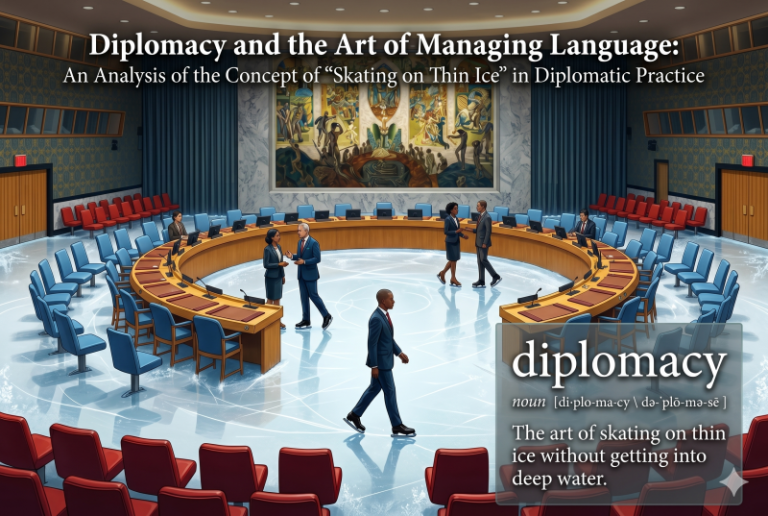
Diplomacy and the Art of Managing Language:
An Analysis of the Concept of “Skating on Thin Ice” in Diplomatic Practice
Author: Wanitcha Sumanat, President of the Southeast Asian Association of Translators and Interpreters, Arbitrator, Mediator, and Professional Forensic Linguist
The statement, “Diplomacy is the art of skating on thin ice without getting into deep water,” encapsulates the essence of diplomatic practice with remarkable precision, particularly in relation to communication, decision-making, and political risk management in international affairs. On a superficial level, the quotation may appear to emphasize the importance of caution in diplomatic conduct. However, when examined through the lens of international relations theory and state behavior, the phrase reflects the structural constraints diplomats face in balancing communication with strategic non-commitment.
In practice, diplomats do not merely transmit state positions. They are also required to manage strategic ambiguity in order to prevent unintended consequences that may affect interstate relations. Within this framework, “thin ice” symbolizes fragile diplomatic situations, whereas “deep water” represents irreversible outcomes resulting from inappropriate or unauthorized communication.
Diplomatic Communication as Risk Management
In diplomatic practice, particularly for junior diplomats, one of the most common challenges involves responding to sensitive political questions without having received official instructions from the home government. Such situations reveal a fundamental dilemma: the gap between personal opinion and official state policy.
When diplomats respond based on personal judgment, their statements may easily be interpreted as official governmental positions, even if expressed in informal settings such as working lunches or off-the-record conversations. Conversely, refusing to answer altogether may create the impression of unpreparedness or professional inadequacy.
Consequently, diplomatic communication is not merely an exchange of information; it is a form of policy risk management requiring linguistic discipline, emotional restraint, and institutional awareness.
Time-Buying Language in Diplomacy
One of the most widely transmitted techniques in diplomatic culture is the use of “time-buying language,” such as:
“That is an interesting question. I would like to come back to you on it.”
Analytically, such language serves at least three significant functions. First, it prevents diplomats from articulating positions that have not yet been authorized by their governments. Second, it preserves diplomatic relationships without directly rejecting the interlocutor. Third, it creates institutional space for internal coordination prior to official communication.
This phenomenon aligns closely with the bureaucratic politics model, which argues that foreign policy decisions are not produced solely by individuals but emerge from negotiations within bureaucratic and political structures. Diplomats therefore do not possess unlimited authority to formulate policy; rather, they function primarily as managers of state messaging instead of creators of policy.
Reframing Questions as a Diplomatic Strategy
Another important diplomatic technique involves refusing to answer in the “language” of the question. When confronted with political inquiries, diplomats often respond procedurally rather than politically. For example, a diplomat may ask:
“Has this issue been raised through the formal channel yet?”
From a theoretical perspective, this strategy reflects the concepts of framing and agenda control, both of which play critical roles in directing conversations and reducing pressure to disclose sensitive positions. By shifting the discussion from political substance to diplomatic procedure, diplomats maintain constructive engagement without committing themselves to potentially consequential statements.
Such practices also reflect the characteristics of classical diplomacy, which prioritizes restraint, linguistic precision, and the avoidance of direct confrontation.
Silence as an Instrument of Power
Beyond language itself, silence constitutes another crucial element of diplomatic communication. Experienced diplomats understand that the duration of a pause before responding can significantly shape the perceptions of interlocutors.
A brief pause may signal composure and careful consideration, whereas prolonged silence may be interpreted as uncertainty or panic. For this reason, diplomats frequently employ subtle behavioral techniques—such as taking a sip of water—to create a moment of strategic reflection before answering a difficult question.
Although seemingly insignificant, these gestures demonstrate a high degree of self-control and situational awareness, both of which are essential competencies in diplomatic service.
Conclusion
The central meaning of the phrase, “Diplomacy is the art of skating on thin ice without getting into deep water,” extends beyond the simple avoidance of mistakes. It underscores the long-term consequences of language and communication in international political environments.
In diplomacy, the most dangerous error is often not an incorrect answer, but a memorable one. Once a diplomat’s words are reported back to the capital or circulated publicly, those statements may be interpreted as official state positions regardless of the original context.
Accordingly, the diplomat’s primary responsibility is not personal visibility or rhetorical brilliance, but the preservation of clarity, consistency, and continuity in state policy while minimizing the influence of personal opinion.
Ultimately, diplomacy is the art of understanding when to speak and when to wait—an ability that demands experience, discipline, and profound awareness of the dynamics of power in international affairs.
For professional services, please visit https://www.seaproti.org/practitioners/
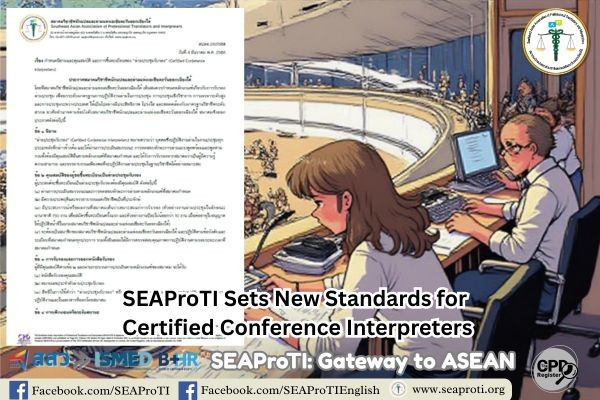
About certified translators, translation certifiers, and certified interpreters associated with SEAProTI. The Southeast Asian Association of Professional Translators and Interpreters (SEAProTI) has officially shared the qualifications and requirements for becoming certified translators, translation certification providers, and certified interpreters in Sections 9 and 10 of the Royal Gazette, which was published by the Prime Minister’s Office in Thailand on July 25, 2024. Certified Translators, Translation Certification Providers, and Certified Interpreters
The Council of State has proposed the enactment of a Royal Decree, granting registered translators and recognised translation certifiers from professional associations or accredited language institutions the authority to provide legally valid translation certification (Letter to SEAProTI dated April 28, 2025)
SEAProTI is the first professional association in Thailand and Southeast Asia to implement a comprehensive certification system for translators, certifiers, and interpreters.
Head Office: Baan Ratchakru Building, No. 33, Room 402, Soi Phahonyothin 5, Phahonyothin Road, Phaya Thai District, Bangkok 10400, Thailand
Email: hello@seaproti.com | Tel.: (+66) 2-114-3128 (Office hours: Mon–Fri, 09:00–17:00).
การทูตกับศิลปะแห่งการบริหารถ้อยคำ:
การวิเคราะห์แนวคิด “Skating on Thin Ice” ในบริบทการปฏิบัติงานทางการทูต
ผู้แต่ง: วณิชชา สุมานัส นายกสมาคมวิชาชีพนักแปลและล่ามแห่งเอเชียตะวันออกเฉียงใต้ อนุญาโตตุลาการ ผู้ไกล่เกลี่ย และนักนิติภาษาศาสตร์วิชาชีพ
คำกล่าวที่ว่า “Diplomacy is the art of skating on thin ice without getting into deep water” สะท้อนแก่นสำคัญของวิชาชีพการทูตได้อย่างลึกซึ้ง โดยเฉพาะในประเด็นที่เกี่ยวข้องกับการสื่อสาร การตัดสินใจ และการบริหารความเสี่ยงทางการเมืองระหว่างประเทศ แม้ในระดับผิวเผิน คำกล่าวนี้อาจถูกตีความว่าเป็นการเน้นย้ำเรื่อง “ความระมัดระวัง” ในการปฏิบัติงาน แต่หากพิจารณาในมิติของทฤษฎีความสัมพันธ์ระหว่างประเทศและพฤติกรรมของรัฐ คำกล่าวดังกล่าวสะท้อนถึงข้อจำกัดเชิงโครงสร้างที่นักการทูตต้องเผชิญในการรักษาสมดุลระหว่าง “การสื่อสาร” และ “การไม่ผูกมัดทางนโยบาย”
ในทางปฏิบัติ นักการทูตมิได้ทำหน้าที่เพียงถ่ายทอดจุดยืนของรัฐ หากแต่ยังต้องบริหารความกำกวม (strategic ambiguity) เพื่อหลีกเลี่ยงผลกระทบที่อาจเกิดขึ้นต่อความสัมพันธ์ระหว่างประเทศ ดังนั้น “ผืนน้ำแข็งบาง” จึงอาจหมายถึงสถานการณ์ทางการทูตที่เปราะบาง ขณะที่ “น้ำลึก” หมายถึงผลลัพธ์ที่ไม่สามารถย้อนกลับได้จากการสื่อสารที่ผิดพลาดหรือเกินขอบเขตอำนาจหน้าที่
การสื่อสารทางการทูตในฐานะการบริหารความเสี่ยง
ในบริบทของการปฏิบัติงานทางการทูต โดยเฉพาะสำหรับนักการทูตรุ่นใหม่ สถานการณ์ที่พบบ่อยคือการถูกตั้งคำถามเกี่ยวกับประเด็นอ่อนไหวทางการเมืองระหว่างประเทศโดยที่ยังไม่ได้รับคำสั่งอย่างเป็นทางการจากรัฐบาลต้นสังกัด สถานการณ์ดังกล่าวสะท้อนปัญหาสำคัญของ “ช่องว่างระหว่างความคิดเห็นส่วนบุคคลกับจุดยืนของรัฐ” (gap between personal opinion and official policy)
หากนักการทูตเลือกที่จะตอบโดยอาศัยความคิดเห็นส่วนตัว ย่อมมีความเสี่ยงที่คำตอบดังกล่าวจะถูกตีความว่าเป็น “ท่าทีอย่างเป็นทางการ” ของรัฐบาล แม้จะเกิดขึ้นในบริบทที่ไม่เป็นทางการ เช่น งานเลี้ยงอาหารกลางวันหรือการสนทนานอกรอบก็ตาม ในทางกลับกัน หากหลีกเลี่ยงการตอบโดยสิ้นเชิง ก็อาจถูกมองว่าไม่มีความพร้อมหรือขาดความน่าเชื่อถือทางวิชาชีพ
ด้วยเหตุนี้ การสื่อสารทางการทูตจึงมิใช่เพียงการแลกเปลี่ยนข้อมูล แต่เป็นกระบวนการบริหารความเสี่ยงเชิงนโยบาย (policy risk management) ซึ่งต้องอาศัยทั้งวินัยทางภาษาและการควบคุมตนเองอย่างสูง
การซื้อเวลาในทางการทูต
หนึ่งในเทคนิคที่ได้รับการถ่ายทอดอย่างแพร่หลายในวงการการทูต คือการใช้ถ้อยคำที่มีลักษณะ “เปิดพื้นที่เวลา” (time-buying language) เช่น “เป็นคำถามที่น่าสนใจ ผม/ดิฉันขอกลับไปตรวจสอบก่อน แล้วจะกลับมาตอบอีกครั้ง”
ในเชิงวิเคราะห์ ถ้อยคำดังกล่าวมีบทบาทสำคัญอย่างน้อยสามประการ ประการแรก คือการหลีกเลี่ยงการแสดงจุดยืนที่ยังไม่ได้รับอนุมัติจากส่วนกลาง ประการที่สอง คือการรักษาความสัมพันธ์ทางการทูตโดยไม่ปฏิเสธคู่สนทนาโดยตรง และประการที่สาม คือการสร้างพื้นที่สำหรับการประสานงานภายในองค์กรก่อนมีการสื่อสารอย่างเป็นทางการ
ปรากฏการณ์นี้สอดคล้องกับแนวคิดของ bureaucratic politics model ซึ่งมองว่าการตัดสินใจด้านนโยบายต่างประเทศมิได้เกิดจากบุคคลเพียงคนเดียว แต่เป็นผลของกระบวนการต่อรองภายในระบบราชการและโครงสร้างอำนาจของรัฐ ดังนั้น นักการทูตจึงไม่มีอำนาจเต็มในการกำหนดนโยบาย หากแต่ทำหน้าที่เป็น “ผู้จัดการสาร” (manager of state messaging) มากกว่าจะเป็น “ผู้กำหนดสาร” (creator of policy)
การเปลี่ยนกรอบคำถามในฐานะยุทธศาสตร์การทูต
อีกเทคนิคหนึ่งที่มีความสำคัญ คือการ “ไม่ตอบในภาษาเดียวกับคำถาม” กล่าวคือ หากถูกถามในเชิงการเมือง นักการทูตอาจตอบกลับในเชิงกระบวนการ เช่น “ประเด็นนี้ได้มีการหารือผ่านช่องทางทางการแล้วหรือยัง”
ในเชิงทฤษฎี วิธีการดังกล่าวสะท้อนแนวคิดเรื่อง framing และ agenda control ซึ่งเป็นกลไกสำคัญในการกำหนดทิศทางของการสนทนาและลดแรงกดดันในการเปิดเผยจุดยืน การเปลี่ยนกรอบคำถามจาก “เนื้อหาทางการเมือง” ไปสู่ “กระบวนการทางการทูต” ช่วยให้นักการทูตสามารถรักษาความสัมพันธ์กับคู่เจรจาได้โดยไม่จำเป็นต้องให้คำตอบที่อาจก่อให้เกิดผลกระทบเชิงนโยบาย
แนวปฏิบัติดังกล่าวยังสะท้อนคุณลักษณะสำคัญของการทูตแบบดั้งเดิม (classical diplomacy) ซึ่งให้ความสำคัญกับความสุขุม การควบคุมภาษา และการหลีกเลี่ยงการเผชิญหน้าโดยตรง
ความเงียบในฐานะเครื่องมือทางอำนาจ
นอกจากภาษาแล้ว “ความเงียบ” ยังถือเป็นองค์ประกอบสำคัญของการสื่อสารทางการทูต นักการทูตจำนวนมากตระหนักดีว่า ระยะเวลาของการหยุดคิดก่อนตอบสามารถส่งผลต่อการรับรู้ของคู่สนทนาได้อย่างมีนัยสำคัญ
ความเงียบระยะสั้นอาจสะท้อนความสุขุมและการไตร่ตรอง ขณะที่ความเงียบที่ยาวเกินไปอาจถูกตีความว่าเป็นความไม่มั่นใจหรือความตื่นตระหนก ด้วยเหตุนี้ นักการทูตจึงมักใช้พฤติกรรมบางอย่าง เช่น การยกแก้วน้ำขึ้นดื่ม เพื่อสร้าง “ช่วงเวลาปลอดภัย” ก่อนตอบคำถาม เทคนิคดังกล่าวแม้ดูเป็นรายละเอียดเล็กน้อย แต่สะท้อนการควบคุมตนเองในระดับสูง ซึ่งเป็นทักษะสำคัญของผู้ปฏิบัติงานด้านการต่างประเทศ
บทสรุป
สาระสำคัญของคำกล่าว “Diplomacy is the art of skating on thin ice without getting into deep water” มิได้อยู่ที่การ “หลีกเลี่ยงความผิดพลาด” เพียงอย่างเดียว แต่คือการตระหนักถึงผลกระทบระยะยาวของถ้อยคำและการสื่อสารในพื้นที่ทางการเมืองระหว่างประเทศ
ในโลกการทูต ความผิดพลาดที่อันตรายที่สุดอาจไม่ใช่ “คำตอบที่ผิด” หากแต่เป็น “คำตอบที่ถูกจดจำ” เพราะเมื่อถ้อยคำของนักการทูตถูกส่งกลับไปยังรัฐบาลต้นสังกัดหรือเผยแพร่ในระดับสาธารณะ คำพูดดังกล่าวอาจถูกตีความว่าเป็นจุดยืนอย่างเป็นทางการของรัฐ
ดังนั้น หน้าที่สำคัญของนักการทูตจึงมิใช่การแสดงความโดดเด่นส่วนบุคคล แต่คือการรักษาความชัดเจนและความต่อเนื่องของนโยบายต่างประเทศของรัฐ โดยลดอิทธิพลของความคิดเห็นส่วนตัวให้น้อยที่สุด
ท้ายที่สุด การทูตจึงเป็นศาสตร์แห่ง “การรู้ว่าเมื่อใดควรพูด และเมื่อใดควรรอ” อันเป็นทักษะที่ต้องอาศัยทั้งประสบการณ์ วินัย และความเข้าใจอย่างลึกซึ้งต่อพลวัตของอำนาจในเวทีระหว่างประเทศ
สมาคมวิชาชีพนักแปลและล่ามแห่งเอเชียตะวันออกเฉียงใต้ (SEAProTI) ได้ประกาศหลักเกณฑ์และคุณสมบัติของผู้ที่ขึ้นทะเบียนเป็น “นักแปลรับรอง (Certified Translators) และผู้รับรองการแปล (Translation Certification Providers) และล่ามรับรอง (Certified Interpreters)” ของสมาคม หมวดที่ 9 และหมวดที่ 10 ในราชกิจจานุเบกษา ของสำนักเลขาธิการคณะรัฐมนตรี ในสำนักนายกรัฐมนตรี แห่งราชอาณาจักรไทย ลงวันที่ 25 ก.ค. 2567 เล่มที่ 141 ตอนที่ 66 ง หน้า 100 อ่านฉบับเต็มได้ที่: นักแปลรับรอง ผู้รับรองการแปล และล่ามรับรอง
สำนักคณะกรรมการกฤษฎีกาเสนอให้ตราเป็นพระราชกฤษฎีกา โดยกำหนดให้นักแปลที่ขึ้นทะเบียน รวมถึงผู้รับรองการแปลจากสมาคมวิชาชีพหรือสถาบันสอนภาษาที่มีการอบรมและขึ้นทะเบียน สามารถรับรองคำแปลได้ (จดหมายถึงสมาคม SEAProTI ลงวันที่ 28 เม.ย. 2568)
สมาคมวิชาชีพนักแปลและล่ามแห่งเอเชียตะวันออกเฉียงใต้เป็นสมาคมวิชาชีพแห่งแรกและแห่งเดียวในประเทศไทยและภูมิภาคเอเชียตะวันออกเฉียงใต้ที่มีระบบรับรองนักแปลรับรอง ผู้รับรองการแปล และล่ามรับรอง
สำนักงานใหญ่: อาคารบ้านราชครู เลขที่ 33 ห้อง 402 ซอยพหลโยธิน 5 ถนนพหลโยธิน แขวงพญาไท เขตพญาไท กรุงเทพมหานคร 10400 ประเทศไทย