


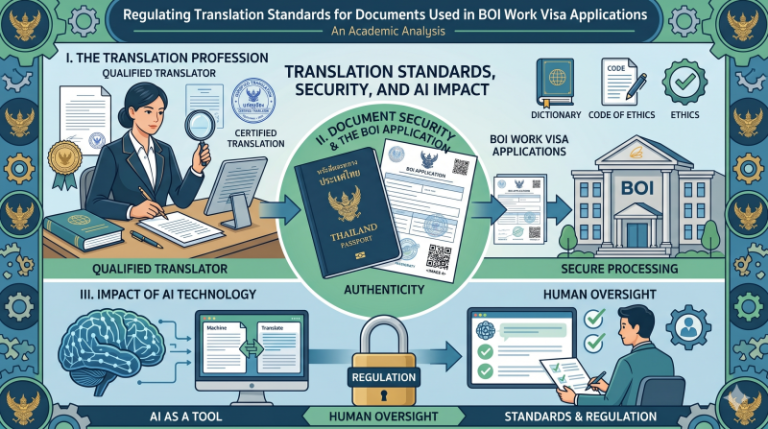
Regulating Translation Standards for Documents Used in BOI Work Visa Applications:
An Academic Analysis of the Translation Profession, Document Security, and the Impact of AI Technology
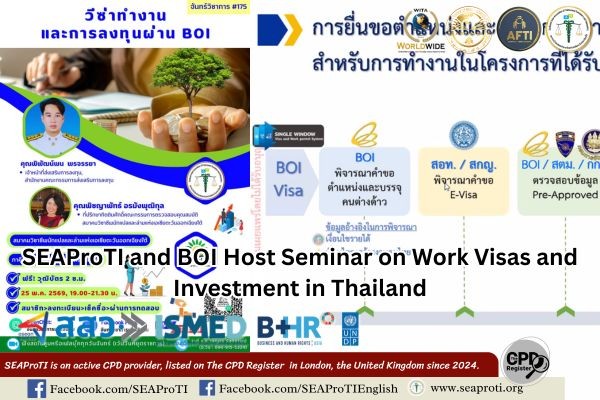
26 May 2026, Bangkok — The translation of documents used in work visa and work permit applications for foreign nationals under the investment promotion system of the Board of Investment (BOI) is a critical component directly connected to Thailand’s economic system, investment environment, and national credibility. However, the rapid expansion of artificial intelligence (AI) technology and automated translation systems has created challenges regarding translation quality standards, professional accountability, and risks associated with document forgery.
This article aims to analyze the importance of establishing standards for translators and certified translation providers. It proposes that documents submitted to the BOI should only be prepared and certified by language institutes, professional associations, translation companies registered with the Department of Business Development (DBD), or certified translators acting under the authority of professional associations. Furthermore, the article recommends the mandatory use of wet stamps instead of electronic stamps to prevent document forgery and maintain the integrity of the state document certification system.
Keywords: BOI, document translation, certified translator, wet stamp, AI translation, document security, translation profession
1. Introduction
Thailand utilizes the BOI investment promotion system as a major mechanism to attract foreign investors and skilled professionals. This process requires a large volume of translated documents, including company certificates, educational qualifications, commercial registration documents, legal documents, and foreign government-issued documents, all of which must be accurate and verifiable.
Traditionally, such translation work has been carried out by language institutes, universities, professional associations, and standardized translation offices. However, the rapid development of AI and automated translation systems such as Google Translate has significantly transformed the structure of the translation profession.
Although such technologies improve convenience and reduce translation costs, their use without linguistic knowledge, legal understanding, or expert proofreading may negatively affect the quality of official documents, the credibility of the BOI system, and Thailand’s document security.
Therefore, establishing standards concerning translators, certifying authorities, and document certification formats has become an important issue in both public policy and professional practice.
2. The Importance of Translation Work to the BOI System and Thailand’s Economy
Document translation within the BOI system is not merely a linguistic activity; it forms part of the country’s investment infrastructure and foreign workforce management system.
Documents used within this system relate to:
- Residency rights
- Work authorization
- Corporate legal status
- Verification of foreign workers’ qualifications
- Certification of professional status
From an economic perspective, document translation is also part of the “language service economy,” generating income for:
- Document translators (bearing institutional translation seals and not operating as freelance translators)
- Language proofreaders
- Certified translation providers (with institutional translation seals)
- Professional associations
- Universities
- Properly registered translation companies
Therefore, maintaining translation standards is important not only for the governmental system but also for the professional structure of language practitioners in Thailand.
3. Problems Arising from the Use of AI and Automated Translation Systems in Official Documents
Although AI demonstrates high efficiency in translating general content, translating official, legal, or immigration-related documents still presents major limitations. AI cannot assume legal responsibility for translated documents and cannot fully comprehend legal or cultural contexts. Common problems include:
- Incorrect translation of legal terminology
- Errors in translating personal information
- Use of wording inconsistent with the Thai bureaucratic system
- Incorrect translation of government agency names or legal statuses
- Inability to identify the responsible parties for the document
At present, some freelance translators are reportedly being trained to rely primarily on Google Translate or AI tools without professional proofreading. This has led to declining translation quality and weakened professional standards within Thailand’s translation industry.
Without appropriate regulatory oversight, inaccurate documents may enter Thailand’s administrative system and undermine the country’s credibility in the long term.
4. The Role of Certified Translators and Professional Associations
One important approach to maintaining translation standards is requiring translators and certifiers to possess verifiable professional status.
Certified translators and translation certifiers who are licensed or registered under professional associations should be authorized to translate and certify documents used in the BOI system, as they operate within professional standards and under institutional oversight.
Certification under professional associations possesses several key characteristics:
- Identity verification systems for translators
- Professional ethics oversight
- Traceability
- Professional accountability
- Official seals and certification systems
Institutionally, translation-related professional associations therefore play a significant role in maintaining translation quality and building confidence among government agencies and service users.
5. The Importance of Wet Stamps for Document Security
Another important issue is the requirement that translated documents submitted to the BOI must bear a wet stamp and an original signature from the translation certifier, with electronic stamps or digital stamp images prohibited.
Wet stamps serve as a mechanism for verifying identity and accountability because the physical characteristics of documents can be examined, including the following:
- Ink characteristics
- Pressure marks from the stamp
- Original handwritten signatures
- Physical characteristics of the original paper
Potential problems arising from electronic stamps include:
- Unauthorized copying of stamps
- Forgery of certified translation documents
- Impersonation of professional associations or institutions
- Creation of fraudulent documents for visa applications
- Difficulty proving original documents in legal proceedings
Therefore, wet stamps remain an important standard in official and immigration-related documentation systems in many countries worldwide.
6. Policy Recommendations
To maintain translation standards and protect Thailand’s document system, this article proposes the following measures:
6.1 Clearly Define Authorized Translation Certifiers
Documents used within the BOI system should only be certified by:
- University language and translation institutes
- Translation-related professional associations
- Translation companies or offices registered with the DBD
- Certified translators acting on behalf of professional associations
6.2 Establish a National Certified Translator Registry
A centralized database should be established to allow government agencies to verify the status of translators and certifiers.
6.3 Establish Standards for AI Usage in Translation Work
AI should be used only as a translation assistance tool, with all documents reviewed and edited by qualified experts before certification.
6.4 Mandate the Use of Wet Stamps
Certified translation documents should bear wet stamps and original signatures. Electronic stamps should not be accepted as substitutes.
6.5 Establish Penalties for Document Forgery
Laws or regulations should be enacted to impose penalties on individuals who forge stamps or certified translation documents.
7. Conclusion
The translation of documents used within the BOI system is more than a linguistic process; it forms part of the country’s economic security, legal infrastructure, and foreign workforce management system.
Although AI and automated translation systems are playing an increasing role in digital society, official document translation still requires human expertise, responsibility, and professional ethics.
Establishing standards concerning translators, certified translation providers, and the use of wet stamps is therefore an essential measure for preserving the credibility of Thailand’s bureaucratic system, preventing document forgery, and protecting the Thai translation profession in an era where AI technology is rapidly transforming the language industry.
Ultimately, achieving a balance between technology, innovation, and professional standards will be a key factor in determining Thailand’s credibility in international investment and global cooperation in the future.
For professional services, please visit https://www.seaproti.org/practitioners/
About certified translators, translation certifiers, and certified interpreters associated with SEAProTI. The Southeast Asian Association of Professional Translators and Interpreters (SEAProTI) has officially shared the qualifications and requirements for becoming certified translators, translation certification providers, and certified interpreters in Sections 9 and 10 of the Royal Gazette, which was published by the Prime Minister’s Office in Thailand on July 25, 2024. Certified Translators, Translation Certification Providers, and Certified Interpreters
The Council of State has proposed the enactment of a Royal Decree, granting registered translators and recognised translation certifiers from professional associations or accredited language institutions the authority to provide legally valid translation certification (Letter to SEAProTI dated April 28, 2025)
SEAProTI is the first professional association in Thailand and Southeast Asia to implement a comprehensive certification system for translators, certifiers, and interpreters.
Head Office: Baan Ratchakru Building, No. 33, Room 402, Soi Phahonyothin 5, Phahonyothin Road, Phaya Thai District, Bangkok 10400, Thailand
Email: hello@seaproti.com | Tel.: (+66) 2-114-3128 (Office hours: Mon–Fri, 09:00–17:00).
การกำกับมาตรฐานการแปลเอกสารเพื่อการขอวีซ่าทำงานภายใต้ BOI :
บทวิเคราะห์เชิงวิชาการด้านวิชาชีพนักแปล ความมั่นคงเอกสาร และผลกระทบจากเทคโนโลยี AI
26 พฤษภาคม 2569, กรุงเทพมหานคร – การแปลเอกสารเพื่อใช้ในกระบวนการขอวีซ่าทำงานและใบอนุญาตทำงานของชาวต่างชาติภายใต้ระบบการส่งเสริมการลงทุนของสำนักงานคณะกรรมการส่งเสริมการลงทุน (BOI) เป็นองค์ประกอบสำคัญที่เกี่ยวข้องโดยตรงกับระบบเศรษฐกิจ การลงทุน และความน่าเชื่อถือของประเทศไทย อย่างไรก็ตาม การขยายตัวของเทคโนโลยีปัญญาประดิษฐ์ (AI) และระบบแปลภาษาอัตโนมัติ ได้ก่อให้เกิดปัญหาด้านมาตรฐานคุณภาพงานแปล ความรับผิดชอบทางวิชาชีพ และความเสี่ยงต่อการปลอมแปลงเอกสาร บทความนี้มุ่งวิเคราะห์ความสำคัญของการกำหนดมาตรฐานผู้แปลและผู้รับรองคำแปล โดยเสนอให้เอกสารที่ใช้ยื่นต่อ BOI ต้องจัดทำและรับรองโดยสถาบันภาษา สมาคมวิชาชีพ ร้านแปลที่จดทะเบียนกับกรมพัฒนาธุรกิจการค้า (DBD) หรือผู้แปลรับรองที่ปฏิบัติหน้าที่ในนามสมาคมวิชาชีพเท่านั้น นอกจากนี้ยังเสนอให้ใช้ตราประทับสด (Wet Stamp) แทนตราประทับอิเล็กทรอนิกส์ เพื่อป้องกันการปลอมแปลงเอกสารและรักษาความมั่นคงของระบบรับรองเอกสารของรัฐ
คำสำคัญ: BOI, งานแปลเอกสาร, นักแปลรับรอง, ตราประทับสด, AI Translation, ความมั่นคงเอกสาร, วิชาชีพนักแปล
1. บทนำ
ประเทศไทยใช้ระบบส่งเสริมการลงทุนของ BOI เป็นกลไกสำคัญในการดึงดูดนักลงทุนและผู้เชี่ยวชาญจากต่างประเทศ กระบวนการดังกล่าวจำเป็นต้องอาศัยเอกสารแปลจำนวนมาก เช่น หนังสือรับรองบริษัท วุฒิการศึกษา เอกสารทะเบียนพาณิชย์ เอกสารกฎหมาย และเอกสารราชการจากต่างประเทศ ซึ่งต้องมีความถูกต้องและสามารถตรวจสอบได้
ในอดีต งานแปลเอกสารดังกล่าวดำเนินการโดยสถาบันภาษา มหาวิทยาลัย สมาคมวิชาชีพ และสำนักงานแปลที่มีมาตรฐาน อย่างไรก็ตาม การพัฒนาอย่างรวดเร็วของ AI และระบบแปลภาษาอัตโนมัติ เช่น Google Translate ได้เปลี่ยนโครงสร้างของวิชาชีพนักแปลอย่างมีนัยสำคัญ
แม้เทคโนโลยีดังกล่าวจะช่วยเพิ่มความสะดวกและลดต้นทุนในการแปล แต่การใช้โดยปราศจากความรู้ทางภาษา กฎหมาย หรือการตรวจแก้โดยผู้เชี่ยวชาญ อาจส่งผลกระทบต่อคุณภาพเอกสารราชการ ความน่าเชื่อถือของระบบ BOI และความมั่นคงด้านเอกสารของประเทศ
ดังนั้น การกำหนดมาตรฐานเกี่ยวกับผู้แปล ผู้รับรองคำแปล และรูปแบบการรับรองเอกสาร จึงกลายเป็นประเด็นสำคัญในเชิงนโยบายสาธารณะและวิชาชีพ
2. ความสำคัญของงานแปลต่อระบบ BOI และเศรษฐกิจไทย
งานแปลเอกสารในระบบ BOI ไม่ได้เป็นเพียงกิจกรรมทางภาษา แต่เป็นส่วนหนึ่งของโครงสร้างพื้นฐานด้านการลงทุนและการบริหารจัดการแรงงานต่างชาติของประเทศ
เอกสารที่ใช้ในระบบดังกล่าวเกี่ยวข้องกับ
- สิทธิการพำนัก
- การอนุญาตทำงาน
- สถานะทางกฎหมายของบริษัท
- การตรวจสอบคุณสมบัติของแรงงานต่างชาติ
- การรับรองสถานะทางวิชาชีพ
ในมิติทางเศรษฐศาสตร์ งานแปลเอกสารยังเป็นส่วนหนึ่งของ “เศรษฐกิจบริการทางภาษา” (Language Service Economy) ซึ่งสร้างรายได้ให้แก่
- นักแปลเอกสาร (ที่มีตราประทับสถาบันการแปล และต้องไม่ใช่นักแปลอิสระ)
- ผู้ตรวจแก้ภาษา
- ผู้รับรองคำแปล (ที่มีตราประทับสถาบันการแปล)
- สมาคมวิชาชีพ
- มหาวิทยาลัย
- บริษัทแปลเอกสารที่จดทะเบียนถูกต้อง
ดังนั้น การรักษามาตรฐานงานแปลจึงมีความสำคัญทั้งต่อระบบราชการและต่อโครงสร้างอาชีพของผู้ประกอบวิชาชีพด้านภาษาในประเทศไทย
3. ปัญหาการใช้ AI และระบบแปลอัตโนมัติในงานเอกสารราชการ
แม้ AI จะมีประสิทธิภาพสูงในการแปลข้อความทั่วไป แต่การแปลเอกสารราชการ กฎหมาย หรือเอกสารเพื่อการตรวจคนเข้าเมือง ยังคงมีข้อจำกัดที่สำคัญ
AI ไม่สามารถรับผิดชอบทางกฎหมายต่อเอกสารที่แปล และไม่สามารถเข้าใจบริบทเชิงกฎหมายหรือวัฒนธรรมได้อย่างสมบูรณ์ ตัวอย่างปัญหาที่พบบ่อย ได้แก่
- การแปลศัพท์กฎหมายผิดบริบท
- การแปลข้อมูลเฉพาะบุคคลผิดพลาด
- การใช้ถ้อยคำที่ไม่สอดคล้องกับระบบราชการไทย
- การแปลชื่อหน่วยงานหรือสถานะทางกฎหมายคลาดเคลื่อน
- การไม่สามารถตรวจสอบผู้รับผิดชอบเอกสารได้
ปัจจุบันยังพบว่า มีการสอนให้นักแปลอิสระบางส่วนใช้ Google Translate หรือ AI เป็นเครื่องมือหลักในการแปลเอกสารโดยไม่มีการตรวจแก้จากผู้เชี่ยวชาญ ส่งผลให้เกิดปัญหาคุณภาพงานแปลและลดมาตรฐานวิชาชีพนักแปลไทย
หากไม่มีระบบกำกับดูแลที่เหมาะสม อาจทำให้เอกสารที่มีข้อผิดพลาดเข้าสู่ระบบราชการไทยและส่งผลต่อความน่าเชื่อถือของประเทศในระยะยาว
4. บทบาทของนักแปลรับรองและสมาคมวิชาชีพ
หนึ่งในแนวทางสำคัญในการรักษามาตรฐานงานแปล คือ การกำหนดให้ผู้แปลและผู้รับรองคำแปลต้องมีสถานะทางวิชาชีพที่ตรวจสอบได้
นักแปลรับรองและผู้รับรองคำแปลที่ได้รับใบอนุญาตหรือการขึ้นทะเบียนในนามสมาคมวิชาชีพ ควรได้รับสิทธิในการแปลและรับรองเอกสารที่ใช้ในระบบ BOI เนื่องจากบุคคลดังกล่าวปฏิบัติหน้าที่ภายใต้กรอบมาตรฐานวิชาชีพและอยู่ภายใต้การกำกับดูแลขององค์กรวิชาชีพ
การรับรองในนามสมาคมวิชาชีพมีลักษณะสำคัญ ดังนี้
- มีระบบตรวจสอบตัวตนของผู้แปล
- มีจรรยาบรรณวิชาชีพกำกับ
- สามารถตรวจสอบย้อนกลับได้
- มีความรับผิดชอบทางวิชาชีพ
- มีตราประทับและการรับรองที่เป็นทางการ
- ในเชิงสถาบัน สมาคมวิชาชีพด้านการแปลจึงมีบทบาทสำคัญในการรักษาคุณภาพงานแปลและสร้างความเชื่อมั่นให้แก่หน่วยงานรัฐและผู้ใช้บริการ
5. ความสำคัญของตราประทับสด (Wet Stamp) ต่อความมั่นคงเอกสาร
ประเด็นสำคัญอีกประการหนึ่ง คือ การกำหนดให้เอกสารแปลที่ใช้ยื่นต่อ BOI ต้องใช้ “ตราประทับสด” (Wet Stamp) และลายเซ็นจริงของผู้รับรองคำแปล โดยไม่อนุญาตให้ใช้ตราประทับอิเล็กทรอนิกส์หรือภาพตราประทับดิจิทัลแทน
ตราประทับสดมีความสำคัญในฐานะกลไกยืนยันตัวตนและความรับผิดชอบของผู้รับรองเอกสาร เนื่องจากสามารถตรวจสอบลักษณะทางกายภาพของเอกสารได้ เช่น
- ลักษณะหมึก
- รอยกดของตราประทับ
- การลงลายมือชื่อจริง
- ลักษณะกระดาษต้นฉบับ
- การคัดลอกตราประทับไปใช้โดยไม่ได้รับอนุญาต
- การปลอมแปลงเอกสารรับรองคำแปล
- การปลอมตัวเป็นสมาคมหรือหน่วยงานวิชาชีพ
- การสร้างเอกสารเท็จเพื่อใช้ในกระบวนการขอวีซ่า
- ความยากในการพิสูจน์เอกสารต้นฉบับในทางกฎหมาย
ดังนั้น การใช้ตราประทับสดจึงยังคงเป็นมาตรฐานสำคัญในงานเอกสารราชการและเอกสารด้านการตรวจคนเข้าเมืองในหลายประเทศทั่วโลก
6. ข้อเสนอเชิงนโยบาย
เพื่อรักษามาตรฐานงานแปลและคุ้มครองระบบเอกสารของประเทศไทย บทความนี้เสนอแนวทางดังต่อไปนี้
6.1 กำหนดผู้มีสิทธิ์รับรองคำแปลอย่างชัดเจน
- เอกสารที่ใช้ในระบบ BOI ควรรับรองโดย
- สถาบันภาษาและการแปลของมหาวิทยาลัย
- สมาคมวิชาชีพด้านการแปล
- บริษัทหรือร้านแปลที่จดทะเบียนกับ DBD
- นักแปลรับรองที่ปฏิบัติหน้าที่ในนามสมาคมวิชาชีพ
6.2 จัดตั้งระบบทะเบียนนักแปลรับรองระดับประเทศ
ควรมีฐานข้อมูลกลางเพื่อให้หน่วยงานรัฐสามารถตรวจสอบสถานะผู้แปลและผู้รับรองได้
6.3 กำหนดมาตรฐานการใช้ AI ในงานแปล
AI ควรถูกใช้ในฐานะเครื่องมือช่วยแปลเท่านั้น และต้องมีผู้เชี่ยวชาญตรวจแก้ก่อนรับรองเอกสาร
6.4 บังคับใช้ตราประทับสด
เอกสารรับรองคำแปลควรใช้ตราประทับสดและลายเซ็นจริง ห้ามใช้ตราประทับอิเล็กทรอนิกส์แทน
6.5 กำหนดบทลงโทษด้านการปลอมแปลงเอกสาร
ควรมีกฎหมายหรือระเบียบรองรับการลงโทษผู้ปลอมแปลงตราประทับและเอกสารรับรองคำแปล
7. บทสรุป
การแปลเอกสารเพื่อใช้ในระบบ BOI เป็นมากกว่ากระบวนการทางภาษา แต่เป็นส่วนหนึ่งของโครงสร้างความมั่นคงทางเศรษฐกิจ กฎหมาย และการบริหารจัดการแรงงานต่างชาติของประเทศ แม้ AI และระบบแปลอัตโนมัติจะมีบทบาทเพิ่มขึ้นในสังคมดิจิทัล แต่การแปลเอกสารราชการยังจำเป็นต้องอาศัยมนุษย์ผู้มีความรู้ ความรับผิดชอบ และจริยธรรมทางวิชาชีพ การกำหนดมาตรฐานเกี่ยวกับผู้แปล ผู้รับรองคำแปล และการใช้ตราประทับสด จึงเป็นมาตรการสำคัญในการรักษาความน่าเชื่อถือของระบบราชการไทย ป้องกันการปลอมแปลงเอกสาร และคุ้มครองวิชาชีพนักแปลไทยในยุคที่เทคโนโลยี AI กำลังเปลี่ยนแปลงโครงสร้างของอุตสาหกรรมภาษาอย่างรวดเร็ว ท้ายที่สุด การสร้างสมดุลระหว่างเทคโนโลยี นวัตกรรม และมาตรฐานวิชาชีพ จะเป็นปัจจัยสำคัญที่กำหนดความน่าเชื่อถือของประเทศไทยในเวทีการลงทุนและความร่วมมือระหว่างประเทศในอนาคต
สำนักคณะกรรมการกฤษฎีกาเสนอให้ตราเป็นพระราชกฤษฎีกา โดยกำหนดให้นักแปลที่ขึ้นทะเบียน รวมถึงผู้รับรองการแปลจากสมาคมวิชาชีพหรือสถาบันสอนภาษาที่มีการอบรมและขึ้นทะเบียน สามารถรับรองคำแปลได้ (จดหมายถึงสมาคม SEAProTI ลงวันที่ 28 เม.ย. 2568)
สมาคมวิชาชีพนักแปลและล่ามแห่งเอเชียตะวันออกเฉียงใต้เป็นสมาคมวิชาชีพแห่งแรกและแห่งเดียวในประเทศไทยและภูมิภาคเอเชียตะวันออกเฉียงใต้ที่มีระบบรับรองนักแปลรับรอง ผู้รับรองการแปล และล่ามรับรอง
สำนักงานใหญ่: อาคารบ้านราชครู เลขที่ 33 ห้อง 402 ซอยพหลโยธิน 5 ถนนพหลโยธิน แขวงพญาไท เขตพญาไท กรุงเทพมหานคร 10400 ประเทศไทย