



Differences Among Audiences and Their Impact on Translation Effectiveness: Reception, Audiovisual Translation, and Language Learning
Author: Griroek Gruaythong
22 May 2026, Bangkok – This article examines the relationship between audience differences and translation effectiveness, particularly in the context of audiovisual translation and language learning through contemporary digital media. Research in Translation Studies over recent decades has demonstrated that translation is not merely a process of transferring meaning from one language to another, but also a form of cultural mediation. The effectiveness of translation depends on various audience-related factors, including age, language proficiency, cultural background, literacy skills, and media experience. This article synthesizes concepts from audience reception theory, audiovisual translation, and multimodality to argue that different audiences interpret and benefit from translated texts in different ways. The article also discusses case studies from subtitle studies, showing that the same type of subtitles may produce different outcomes among learners of different age groups and language proficiency levels. It proposes that future translation research should place greater emphasis on audience-centered perspectives and integrate concepts related to digital media, identity, and multimodal perception into contemporary Translation Studies.
Keywords: audiovisual translation, audience, subtitles, language learning, reception, multimodality
Introduction
In the past, translation studies primarily focused on source texts and the accurate transfer of meaning between languages. However, contemporary Translation Studies has increasingly expanded toward cultural, social, and audience-oriented perspectives, viewing translation as a communicative process shaped by interpretation, perception, and the context of language users (Pérez-González, 2019). This shift raises an important question: how do differences among audiences affect translation effectiveness?
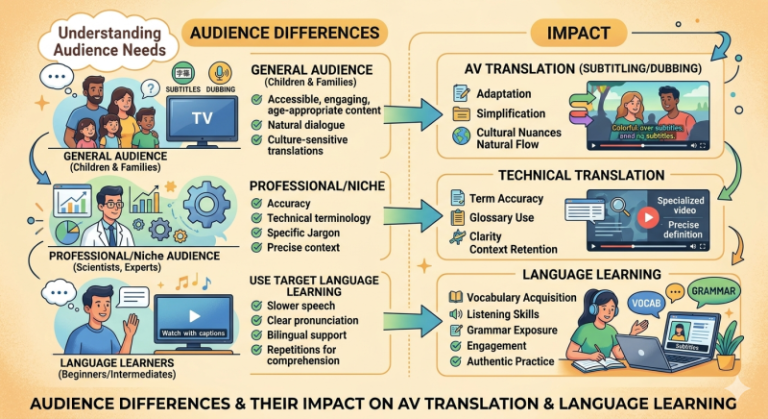
In the context of digital media and contemporary audiovisual communication, translation extends beyond written text to include images, sounds, subtitles, and paratextual elements. Reception therefore becomes a multimodal process in which viewers simultaneously process information through multiple channels. The ability to understand translated material depends on audience-specific factors such as language proficiency, age, reading skills, and media experience.
A considerable body of research in subtitle studies suggests that subtitles play an important role in supporting language learning, particularly vocabulary acquisition and listening comprehension. Nevertheless, the effects of subtitles are not identical across all learner groups. For example, Chen (2024) found that secondary school students benefited significantly from subtitles, whereas primary school students did not achieve the same positive outcomes. This difference indicates that translation effectiveness depends not only on translation quality itself, but also on the audience’s capacity for reception and information processing.
This article aims to discuss how audience differences influence translation effectiveness, with particular emphasis on audiovisual translation and language learning through digital media. It also synthesizes theories of reception, audiovisual translation, and multimodal learning to propose an analytical framework applicable to future Translation Studies research.
Literature Review
The concept of the audience has long played an important role in media and communication studies. Reception theory argues that meaning is not determined solely by producers, but is constructed through the interpretive processes of audiences with different social backgrounds, cultural experiences, and perspectives. This concept has been applied in Translation Studies to explain why the same translation may be interpreted differently by different audience groups.
In the field of audiovisual translation, Díaz-Cintas (2020) explains that subtitles function as a bridge between language, image, and sound. Viewers must therefore process information from multiple channels simultaneously. Understanding subtitles depends not only on linguistic competence, but also on cognitive processing and attention management.
This perspective is closely related to Paivio’s (1986) Dual Coding Theory, which proposes that learning becomes more effective when information is presented through both visual and verbal forms. Subtitles enable learners to connect spoken language with written text and visual images simultaneously. However, if learners lack sufficient language proficiency, processing multiple streams of information may result in cognitive overload and reduce learning effectiveness.
Montero Perez et al. (2013), in their meta-analysis of captioned videos, found that intralingual subtitles tend to support vocabulary learning among second-language learners. Nevertheless, their effectiveness varies according to language proficiency and learner characteristics. Similarly, Chen (2024) found that certain subtitle types were effective for secondary school students but not for primary school learners. The study suggests that younger children face limitations in literacy skills and cognitive development, preventing them from fully benefiting from subtitles.
In addition to age and language proficiency, contemporary studies indicate that cultural background and audience identity also influence translation interpretation. Folaron (2015) argues that translation contributes to the visibility of minority and lesser-translated languages and cultures. Audience perceptions of translated language are therefore linked to issues of power, identity, and cultural accessibility.
Consequently, the study of translation effectiveness should not focus solely on linguistic accuracy, but should also consider audience diversity in terms of language, culture, age, and perception.
Research Methodology
This study employs qualitative research and documentary analysis to investigate how audience differences influence translation effectiveness, particularly in audiovisual translation and digital language learning contexts. The research examines the relationship between audience characteristics and the processes of perceiving and interpreting translated texts through the synthesis of concepts and previous studies in Translation Studies, Audiovisual Translation, and Language Learning.
Primary sources include academic articles, research studies, and scholarly books related to subtitle studies, multimodality, audience reception, and audiovisual translation. The selected materials were published in international academic journals and were directly relevant to issues concerning audiences and translation effectiveness. Key references include Chen (2024), Montero Perez et al. (2013), Díaz-Cintas (2020), Paivio (1986), and Folaron (2015), covering both theoretical and empirical perspectives.
Data were analyzed using thematic analysis. Four major themes were identified: age and language proficiency differences, literacy and information-processing abilities, cultural perception, and multimodal reception. The relationships between these factors and translation effectiveness were then examined across different contexts. The analysis emphasizes conceptual synthesis rather than statistical comparison in order to construct a framework explaining the role of audiences in the success or limitations of translation.
The study also employs multimodality and Dual Coding Theory as theoretical frameworks for explaining audience perception. It considers how audiovisual translation involves simultaneous processing of visual, auditory, and textual information. These frameworks help explain why certain audience groups benefit effectively from subtitles, whereas others experience cognitive burden and limited learning outcomes.
Discussion
The findings demonstrate that audience differences directly influence translation effectiveness, particularly in audiovisual translation, where audiences must process multiple forms of information simultaneously, including images, sounds, and text. The studies analyzed consistently indicate that a translation effective for one audience group may not necessarily be appropriate for another because audiences differ in language proficiency, reading skills, and cognitive abilities.
Chen’s (2024) study clearly demonstrates that secondary school students can effectively use subtitles to support vocabulary learning, whereas primary school students do not benefit to the same extent. This finding suggests that subtitles do not automatically function as learning tools. Their effectiveness depends on learners’ readiness to process information. When learners have limitations in language proficiency and literacy skills, reading subtitles while simultaneously listening and watching visual content may create cognitive overload rather than facilitate learning.
This finding supports Paivio’s (1986) argument that presenting information through both visual and verbal channels enhances learning only when audiences can process both channels in a balanced manner. If audiences lack fundamental reading or listening skills, subtitles may become an additional cognitive burden instead of improving comprehension.
The findings also suggest that audiences are not merely passive receivers of information, but active meaning-makers. Folaron (2015) demonstrates that translation is connected to identity, culture, and linguistic power. Different audience groups therefore interpret translations differently according to their social and cultural backgrounds. Translation is thus not a neutral transfer of meaning, but a dynamic process of cultural mediation.
Furthermore, the concept of multimodality helps explain that translation effectiveness in contemporary media depends on the interaction of multiple elements, including images, sounds, editing pace, and subtitle design. Audiences with greater experience in digital media consumption may be better able to allocate attention across these elements, resulting in more effective comprehension and language learning.
Another important issue concerns differences in cultural background and native language. Many studies suggest that interlingual subtitles or subtitles in the viewer’s first language can reduce comprehension difficulty and improve accessibility, especially among learners with lower foreign-language proficiency. However, in some cases, native-language subtitles may encourage excessive reliance on translation and reduce attention to the source language. Therefore, subtitle selection should be adapted to the characteristics and objectives of target audiences.
Overall, this discussion demonstrates that translation effectiveness cannot be measured solely by linguistic accuracy. It must also take audience-related factors into account, including age, language proficiency, cultural background, cognitive ability, and media experience. Effective translation is therefore translation that responds appropriately to the needs and capacities of different audience groups.
Future Research Directions
Although translation and film translation research has increasingly emphasized audience roles over recent decades, several important gaps remain, particularly in relation to language learners, digital media audiences, and multicultural societies.
First, future studies should investigate the relationship between language proficiency and appropriate translation forms across diverse contexts, such as subtitle translation, online educational media, and intercultural communication. Chen’s (2024) study clearly demonstrates that learners of different age groups respond differently to subtitle types, indicating that translation effectiveness depends not only on linguistic quality but also on audiences’ information-processing abilities.
Second, interdisciplinary research integrating Translation Studies, psycholinguistics, and cognitive science should be conducted to better understand the cognitive mechanisms involved in processing translated content. Issues such as cognitive load, split attention, and multimodal processing directly influence comprehension. Eye-tracking and neurocognitive studies may help explain which elements audiences focus on during reception and why certain groups benefit more from specific translation types.
Third, future research should broaden the concept of “audience” to include social and cultural dimensions, such as minority groups, refugees, hearing-impaired audiences, and language learners from diverse cultural backgrounds. Folaron (2015) argues that translation is not merely a linguistic tool but also a mechanism connected to power, cultural visibility, and access to knowledge. Investigating how audiences with different identities interpret translated texts may therefore contribute to more inclusive and equitable translation practices.
In addition, future studies should examine the impact of artificial intelligence and machine translation on audiences in the digital era. Contemporary translation technologies often prioritize speed and linguistic accuracy, yet they still struggle to adapt to users’ cultural contexts, language proficiency levels, and cognitive capacities. Future research should therefore explore the extent to which intelligent translation systems can become more audience-responsive and how this may affect intercultural communication quality.
Finally, translation research should place greater emphasis on evaluating translation effectiveness in real-world contexts rather than focusing solely on linguistic accuracy. New indicators such as comprehension, information retention, emotional engagement, and audience satisfaction may provide a more comprehensive understanding of translation quality. Shifting from “translation accuracy” to “translation effectiveness for audiences” would help Translation Studies better reflect the realities of communication in a globalized world.
Conclusion
This article has explored how audience differences directly influence translation effectiveness in terms of comprehension, meaning-making, and communication outcomes. Drawing on audience-oriented translation theories, information-processing theories, and contemporary studies on audiovisual media and language learning, the analysis demonstrates that factors such as age, language proficiency, cultural background, cognitive ability, and audience experience significantly shape the interpretation and effectiveness of translated texts.
Chen’s (2024) study clearly shows that subtitle types are not equally effective for all learners. Secondary school students benefit more from subtitles than primary school learners, while bilingual keyword subtitles and interlingual subtitles produce different outcomes depending on learner characteristics. These findings support the idea that effective translation must prioritize target audiences rather than relying solely on linguistic accuracy.
At the same time, Folaron’s (2015) perspective expands translation into broader social and cultural dimensions, emphasizing its role in providing access to knowledge for minority-language communities and marginalized groups. Translation effectiveness is therefore closely linked to the ability to create shared understanding between senders and audiences across diverse contexts.
In conclusion, translation is not merely a word-for-word transfer process, but a communicative practice requiring adaptation to audience characteristics. Understanding audience diversity is therefore central to improving translation quality in the digital era and multicultural societies, particularly in education, audiovisual media, and international communication. Future audience-oriented research will help advance Translation Studies toward more effective, inclusive, and socially responsive approaches.
References
- Chen, S. (2024). Effects of subtitles on vocabulary learning through videos: An exploration across different learner types. The Journal of Specialised Translation, 42, 257–276. https://doi.org/10.26034/cm.jostrans.2024.5992
- Díaz-Cintas, J. (2020). Audiovisual translation and subtitling studies. Routledge.
- Folaron, D. (2015). Introduction: Translation and minority, lesser-used and lesser-translated languages and cultures. The Journal of Specialised Translation, 24, 1–8.
- Montero Perez, M., Van Den Noortgate, W., & Desmet, P. (2013). Captioned video for L2 listening and vocabulary learning: A meta-analysis. System, 41, 720–739. https://doi.org/10.1016/j.system.2013.07.013
- Paivio, A. (1986). Mental representations: A dual coding approach. Oxford University Press.
- Pérez-González, L. (2019). The Routledge handbook of audiovisual translation. Routledge.
- Vanderplank, R. (2016). ‘Effects of’ and ‘effects with’ captions: How exactly does watching a TV programme with same-language subtitles make a difference to language learners? Language Teaching, 49(2), 235–250. https://doi.org/10.1017/S0261444813000207
For professional services, please visit https://www.seaproti.org/practitioners/
About certified translators, translation certifiers, and certified interpreters associated with SEAProTI. The Southeast Asian Association of Professional Translators and Interpreters (SEAProTI) has officially shared the qualifications and requirements for becoming certified translators, translation certification providers, and certified interpreters in Sections 9 and 10 of the Royal Gazette, which was published by the Prime Minister’s Office in Thailand on July 25, 2024. Certified Translators, Translation Certification Providers, and Certified Interpreters
The Council of State has proposed the enactment of a Royal Decree, granting registered translators and recognised translation certifiers from professional associations or accredited language institutions the authority to provide legally valid translation certification (Letter to SEAProTI dated April 28, 2025)
SEAProTI is the first professional association in Thailand and Southeast Asia to implement a comprehensive certification system for translators, certifiers, and interpreters.
Head Office: Baan Ratchakru Building, No. 33, Room 402, Soi Phahonyothin 5, Phahonyothin Road, Phaya Thai District, Bangkok 10400, Thailand
Email: hello@seaproti.com | Tel.: (+66) 2-114-3128 (Office hours: Mon–Fri, 09:00–17:00).
ความแตกต่างของผู้รับสารมีผลต่อประสิทธิภาพของการแปล: มิติด้านการรับสาร การแปลโสตทัศน์ และการเรียนรู้ภาษา
ผู้เขียน: ไกรฤกษ์ กรวยทอง
22 พฤษภาคม 2569, กรุงเทพมหานคร – บทความนี้มุ่งศึกษาความสัมพันธ์ระหว่าง “ความแตกต่างของผู้รับสาร” กับ “ประสิทธิภาพของการแปล” โดยเฉพาะในบริบทของการแปลโสตทัศน์และการเรียนรู้ภาษาผ่านสื่อดิจิทัลร่วมสมัย งานวิจัยในสาขาการศึกษาการแปลในช่วงหลายทศวรรษที่ผ่านมาแสดงให้เห็นว่า การแปลมิได้เป็นเพียงกระบวนการถ่ายทอดความหมายจากภาษาหนึ่งไปสู่อีกภาษาหนึ่งเท่านั้น หากแต่เป็นกระบวนการไกล่เกลี่ยทางวัฒนธรรม ซึ่งประสิทธิภาพของการแปลขึ้นอยู่กับปัจจัยหลากหลายด้านของผู้รับสาร เช่น อายุ ระดับภาษา พื้นฐานทางวัฒนธรรม ความสามารถด้านการอ่าน ตลอดจนประสบการณ์ในการรับสื่อ บทความนี้สังเคราะห์แนวคิดด้านการรับสาร การแปลโสตทัศน์ และพหุสื่อ เพื่อนำเสนอว่าผู้รับสารที่แตกต่างกันย่อมตีความและได้รับประโยชน์จากงานแปลแตกต่างกัน นอกจากนี้ บทความยังอภิปรายกรณีศึกษาจากงานวิจัยด้านซับไตเติลซึ่งชี้ว่าคำบรรยายประเภทเดียวกันอาจให้ผลลัพธ์แตกต่างกันในผู้เรียนต่างช่วงวัยและต่างระดับความสามารถทางภาษา บทความเสนอว่าการวิจัยด้านการแปลในอนาคตควรให้ความสำคัญกับมิติของผู้รับสารมากขึ้น และควรบูรณาการแนวคิดด้านสื่อดิจิทัล อัตลักษณ์ และการรับรู้หลายรูปแบบเข้ากับการศึกษาด้านการแปลร่วมสมัย
คำสำคัญ: การแปลโสตทัศน์, ผู้รับสาร, ซับไตเติล, การเรียนรู้ภาษา, การรับสาร, พหุสื่อ
บทนำ
ในอดีต การศึกษาด้านการแปลมักให้ความสำคัญกับตัวบทต้นฉบับและความถูกต้องของการถ่ายทอดความหมายระหว่างภาษาเป็นสำคัญ อย่างไรก็ตาม แนวโน้มของศาสตร์การแปลร่วมสมัยได้ขยายขอบเขตการศึกษาไปสู่ประเด็นด้านวัฒนธรรม สังคม และผู้รับสารมากขึ้น โดยมองว่าการแปลเป็นกระบวนการสื่อสารที่เกี่ยวข้องกับการตีความ การรับรู้ และบริบทของผู้ใช้ภาษา (เปเรซ-กอนซาเลซ, 2556) การเปลี่ยนผ่านดังกล่าวทำให้เกิดคำถามสำคัญว่า “ผู้รับสารที่แตกต่างกันส่งผลต่อประสิทธิภาพของการแปลอย่างไร”
ในบริบทของโลกดิจิทัลและสื่อโสตทัศน์ร่วมสมัย การแปลมิได้จำกัดอยู่เพียงตัวอักษร หากแต่ครอบคลุมองค์ประกอบหลายรูปแบบ เช่น ภาพ เสียง ซับไตเติล และองค์ประกอบนอกตัวบท การรับสารจึงกลายเป็นกระบวนการเชิงพหุสื่อที่ผู้ชมต้องประมวลผลข้อมูลจากหลายช่องทางพร้อมกัน ความสามารถในการเข้าใจงานแปลจึงขึ้นอยู่กับปัจจัยเฉพาะตัวของผู้รับสาร เช่น ระดับภาษา อายุ ทักษะการอ่าน และประสบการณ์ในการใช้สื่อ
งานวิจัยจำนวนมากในด้านการศึกษาซับไตเติลชี้ให้เห็นว่าซับไตเติลมีบทบาทสำคัญในการสนับสนุนการเรียนรู้ภาษา โดยเฉพาะด้านคำศัพท์และการฟัง อย่างไรก็ตาม ผลลัพธ์ของการใช้ซับไตเติลมิได้เหมือนกันในผู้เรียนทุกกลุ่ม ตัวอย่างเช่น งานของ เฉิน (2567) พบว่า นักเรียนมัธยมได้รับประโยชน์จากซับไตเติลอย่างชัดเจน ขณะที่นักเรียนประถมกลับไม่ได้รับผลเชิงบวกในระดับเดียวกัน ความแตกต่างดังกล่าวสะท้อนว่าประสิทธิภาพของการแปลมิได้ขึ้นอยู่กับคุณภาพของงานแปลเพียงอย่างเดียว แต่ยังขึ้นอยู่กับ “ศักยภาพในการรับสาร” ของผู้ชมด้วย
บทความนี้มีวัตถุประสงค์เพื่ออภิปรายว่า ความแตกต่างของผู้รับสารส่งผลต่อประสิทธิภาพของการแปลอย่างไร โดยเน้นบริบทของการแปลโสตทัศน์และการเรียนรู้ภาษาผ่านสื่อดิจิทัล นอกจากนี้ บทความยังมุ่งสังเคราะห์แนวคิดด้านการรับสาร การแปลโสตทัศน์ และการเรียนรู้แบบพหุสื่อ เพื่อเสนอกรอบการวิเคราะห์ที่สามารถนำไปประยุกต์ใช้ในการวิจัยด้านการศึกษาการแปลในอนาคต
ทบทวนวรรณกรรม
แนวคิดเรื่อง “ผู้รับสาร” มีบทบาทสำคัญในศาสตร์ด้านสื่อและการสื่อสารมาอย่างยาวนาน โดยทฤษฎีการรับสารเสนอว่าความหมายของตัวบทมิได้ถูกกำหนดโดยผู้ผลิตสารเพียงฝ่ายเดียว แต่ถูกสร้างขึ้นผ่านกระบวนการตีความของผู้รับสารซึ่งมีพื้นฐานทางสังคม วัฒนธรรม และประสบการณ์แตกต่างกัน แนวคิดดังกล่าวถูกนำมาประยุกต์ใช้ในศาสตร์การแปลเพื่ออธิบายว่าผลงานแปลเดียวกันอาจถูกตีความต่างกันในผู้รับสารแต่ละกลุ่ม
ในบริบทของการแปลโสตทัศน์ ดิแอซ-ซินตัส (2563) อธิบายว่า ซับไตเติลเป็นรูปแบบหนึ่งของการแปลโสตทัศน์ที่ทำหน้าที่เชื่อมโยงระหว่างภาษา ภาพ และเสียง ผู้ชมจึงต้องประมวลผลข้อมูลหลายช่องทางพร้อมกัน การเข้าใจซับไตเติลจึงมิได้ขึ้นอยู่กับความสามารถทางภาษาเพียงอย่างเดียว แต่เกี่ยวข้องกับกระบวนการทางการรู้คิดและความสามารถในการจัดสรรความสนใจด้วย
แนวคิดดังกล่าวสอดคล้องกับทฤษฎีการเข้ารหัสสองระบบของ ไพวิโอ (2529) ซึ่งเสนอว่าการเรียนรู้มีประสิทธิภาพมากขึ้นเมื่อข้อมูลถูกนำเสนอทั้งในรูปแบบภาพและภาษา การมีซับไตเติลจึงช่วยให้ผู้เรียนเชื่อมโยงเสียงพูดกับข้อความและภาพได้พร้อมกัน อย่างไรก็ตาม หากผู้เรียนมีทักษะภาษาไม่เพียงพอ การประมวลผลข้อมูลจำนวนมากอาจนำไปสู่ภาวะภาระทางการรู้คิดเกิน และลดประสิทธิภาพในการเรียนรู้
งานของ มอนเตโร เปเรซ, ฟาน เดน นูร์ตเกต และเดสเมต (2556) ซึ่งเป็นการวิเคราะห์อภิมานด้านวิดีโอที่มีคำบรรยาย พบว่า ซับไตเติลภาษาเดียวกับต้นฉบับมีแนวโน้มช่วยส่งเสริมการเรียนรู้คำศัพท์ในผู้เรียนภาษาที่สอง อย่างไรก็ตาม ประสิทธิภาพดังกล่าวแตกต่างกันตามระดับภาษาและลักษณะของผู้เรียน ขณะที่ เฉิน (2567) พบว่า ซับไตเติลบางประเภทมีประสิทธิภาพในนักเรียนมัธยม แต่ไม่เกิดผลเชิงบวกในนักเรียนประถม ผู้วิจัยอธิบายว่าเด็กเล็กยังมีข้อจำกัดด้านทักษะการอ่านเขียนและพัฒนาการทางการรู้คิด ทำให้ไม่สามารถใช้ประโยชน์จากซับไตเติลได้เต็มที่
นอกจากปัจจัยด้านอายุและระดับภาษาแล้ว งานวิจัยร่วมสมัยยังชี้ให้เห็นว่าพื้นฐานทางวัฒนธรรมและอัตลักษณ์ของผู้รับสารส่งผลต่อการตีความงานแปลด้วย โฟลารอน (2558) อภิปรายว่าการแปลมีบทบาทในการสร้างการมองเห็นให้แก่ภาษาและวัฒนธรรมชายขอบ การรับรู้ของผู้ชมต่อภาษาที่ถูกแปลจึงเชื่อมโยงกับอำนาจ อัตลักษณ์ และการเข้าถึงพื้นที่ทางวัฒนธรรม
ด้วยเหตุนี้ การศึกษาประสิทธิภาพของการแปลจึงไม่ควรมองเพียงความถูกต้องของภาษา แต่ควรคำนึงถึงความหลากหลายของผู้รับสารในมิติด้านภาษา วัฒนธรรม อายุ และการรับรู้ร่วมด้วย
ระเบียบวิธีการวิจัย
การวิจัยนี้ใช้ระเบียบวิธีวิจัยเชิงคุณภาพร่วมกับการวิเคราะห์เอกสาร เพื่อศึกษาว่าความแตกต่างของผู้รับสารส่งผลต่อประสิทธิภาพของการแปลอย่างไร โดยเฉพาะในบริบทของการแปลโสตทัศน์และการเรียนรู้ภาษาผ่านสื่อดิจิทัล งานวิจัยมุ่งวิเคราะห์ความสัมพันธ์ระหว่างลักษณะของผู้รับสารกับกระบวนการรับรู้และตีความงานแปล ผ่านการสังเคราะห์แนวคิดและงานวิจัยที่เกี่ยวข้องในสาขาการศึกษาการแปล การแปลโสตทัศน์ และการเรียนรู้ภาษา
แหล่งข้อมูลหลักประกอบด้วยบทความวิชาการ งานวิจัย และหนังสือทางวิชาการที่เกี่ยวข้องกับการศึกษาซับไตเติล พหุสื่อ การรับสาร และการแปลโสตทัศน์ โดยคัดเลือกเอกสารที่ได้รับการตีพิมพ์ในวารสารวิชาการนานาชาติและมีความเกี่ยวข้องโดยตรงกับประเด็นเรื่องผู้รับสารและประสิทธิภาพของการแปล เอกสารที่นำมาวิเคราะห์ประกอบด้วยงานของ เฉิน (2567), มอนเตโร เปเรซ และคณะ (2556), ดิแอซ-ซินตัส (2563), ไพวิโอ (2529) และโฟลารอน (2558) ซึ่งครอบคลุมทั้งมิติด้านทฤษฎีและงานวิจัยเชิงประจักษ์
กระบวนการวิเคราะห์ข้อมูลใช้แนวทางการวิเคราะห์เชิงประเด็น โดยจำแนกประเด็นสำคัญออกเป็น 4 ด้าน ได้แก่ ความแตกต่างด้านอายุและระดับภาษา ความสามารถด้านการอ่านและการประมวลผลข้อมูล การรับรู้เชิงวัฒนธรรม และการรับสารแบบพหุสื่อ จากนั้นจึงวิเคราะห์ความสัมพันธ์ระหว่างปัจจัยเหล่านี้กับประสิทธิภาพของการแปลในบริบทต่าง ๆ การวิเคราะห์เน้นการสังเคราะห์เชิงแนวคิดมากกว่าการเปรียบเทียบเชิงสถิติ เพื่อสร้างกรอบความเข้าใจว่าผู้รับสารมีบทบาทอย่างไรต่อความสำเร็จหรือข้อจำกัดของงานแปล
นอกจากนี้ งานวิจัยยังใช้แนวคิดเรื่องพหุสื่อและทฤษฎีการเข้ารหัสสองระบบเป็นกรอบในการอธิบายกระบวนการรับรู้ของผู้รับสาร โดยพิจารณาว่าการแปลในสื่อโสตทัศน์เกี่ยวข้องกับการประมวลผลข้อมูลจากภาพ เสียง และข้อความพร้อมกันอย่างไร การใช้กรอบแนวคิดดังกล่าวช่วยให้สามารถอธิบายได้ว่าทำไมผู้รับสารบางกลุ่มจึงสามารถใช้ประโยชน์จากซับไตเติลได้อย่างมีประสิทธิภาพ ขณะที่บางกลุ่มกลับเผชิญกับภาระทางการรับรู้และไม่สามารถเรียนรู้ได้อย่างเต็มที่
อภิปราย
ผลการสังเคราะห์ข้อมูลแสดงให้เห็นว่า ความแตกต่างของผู้รับสารมีผลโดยตรงต่อประสิทธิภาพของการแปล โดยเฉพาะในบริบทของการแปลโสตทัศน์ ซึ่งผู้รับสารต้องประมวลผลข้อมูลหลายรูปแบบพร้อมกัน ทั้งภาพ เสียง และข้อความ งานวิจัยที่นำมาวิเคราะห์ต่างสะท้อนว่า การแปลที่มีประสิทธิภาพสำหรับผู้รับสารกลุ่มหนึ่งอาจไม่เหมาะสมสำหรับอีกกลุ่มหนึ่ง เนื่องจากผู้รับสารมีระดับภาษา ทักษะการอ่าน และศักยภาพด้านการรับรู้แตกต่างกัน
กรณีศึกษาของ เฉิน (2567) ชี้ให้เห็นอย่างชัดเจนว่า นักเรียนมัธยมสามารถใช้ซับไตเติลเพื่อสนับสนุนการเรียนรู้คำศัพท์ได้อย่างมีประสิทธิภาพ ขณะที่นักเรียนประถมกลับไม่ได้รับประโยชน์ในระดับเดียวกัน ผลลัพธ์ดังกล่าวสะท้อนว่า ซับไตเติลมิได้ทำหน้าที่เป็น “เครื่องมือช่วยเรียนรู้” โดยอัตโนมัติ แต่ประสิทธิภาพของซับไตเติลขึ้นอยู่กับความพร้อมของผู้เรียนในการประมวลผลข้อมูล หากผู้เรียนยังมีข้อจำกัดด้านภาษาและทักษะการอ่านเขียน การอ่านข้อความพร้อมกับรับฟังเสียงและดูภาพอาจก่อให้เกิดภาระทางการรู้คิดเกิน มากกว่าการสนับสนุนการเรียนรู้
ข้อค้นพบนี้สอดคล้องกับแนวคิดของ ไพวิโอ (2529) ที่เสนอว่า การนำเสนอข้อมูลทั้งในรูปแบบภาพและข้อความสามารถเพิ่มประสิทธิภาพในการเรียนรู้ได้ก็ต่อเมื่อผู้รับสารสามารถประมวลผลข้อมูลทั้งสองช่องทางได้อย่างสมดุล หากผู้รับสารยังขาดทักษะพื้นฐานในการอ่านหรือการฟัง การเพิ่มซับไตเติลอาจกลายเป็นภาระทางการรับรู้แทนที่จะช่วยเสริมความเข้าใจ
ในอีกด้านหนึ่ง ผลการศึกษายังสะท้อนให้เห็นว่าผู้รับสารมิได้เป็นเพียง “ผู้รับข้อมูล” แต่เป็นผู้สร้างความหมายร่วมกับตัวบท งานของ โฟลารอน (2558) แสดงให้เห็นว่าการแปลเกี่ยวข้องกับอัตลักษณ์ วัฒนธรรม และอำนาจทางภาษา ผู้รับสารแต่ละกลุ่มจึงตีความงานแปลแตกต่างกันตามพื้นฐานทางสังคมและวัฒนธรรมของตน การแปลจึงไม่ใช่กระบวนการถ่ายทอดความหมายแบบเป็นกลาง แต่เป็นกระบวนการไกล่เกลี่ยทางวัฒนธรรมที่มีพลวัต
นอกจากนี้ แนวคิดเรื่องพหุสื่อยังช่วยอธิบายว่าประสิทธิภาพของการแปลในสื่อร่วมสมัยขึ้นอยู่กับการทำงานร่วมกันขององค์ประกอบหลายด้าน ไม่ว่าจะเป็นภาพ เสียง จังหวะการตัดต่อ หรือรูปแบบของซับไตเติล ผู้รับสารที่มีประสบการณ์ในการบริโภคสื่อดิจิทัลมากกว่าอาจสามารถจัดสรรความสนใจระหว่างองค์ประกอบเหล่านี้ได้ดีกว่า ส่งผลให้เข้าใจเนื้อหาและเรียนรู้ภาษาได้มีประสิทธิภาพมากขึ้น
อีกประเด็นหนึ่งที่ควรพิจารณาคือ ความแตกต่างด้านวัฒนธรรมและภาษาแม่ของผู้รับสาร งานวิจัยหลายชิ้นพบว่า ซับไตเติลต่างภาษา หรือซับไตเติลภาษาแม่ช่วยลดภาระในการทำความเข้าใจและเพิ่มการเข้าถึงเนื้อหา โดยเฉพาะในผู้เรียนที่มีระดับภาษาต่างประเทศต่ำ อย่างไรก็ตาม ในบางกรณี ซับไตเติลภาษาแม่อาจทำให้ผู้เรียนพึ่งพาการแปลมากเกินไป และลดความสนใจต่อรูปแบบของภาษาต้นฉบับ ดังนั้น การเลือกประเภทของซับไตเติลจึงควรพิจารณาตามลักษณะและวัตถุประสงค์ของผู้รับสารเป็นสำคัญ
โดยสรุป การอภิปรายครั้งนี้ชี้ให้เห็นว่า ประสิทธิภาพของการแปลไม่สามารถวัดได้จากความถูกต้องของภาษาเพียงอย่างเดียว แต่ต้องพิจารณาปัจจัยด้านผู้รับสารร่วมด้วย ทั้งในด้านอายุ ระดับภาษา พื้นฐานวัฒนธรรม ความสามารถในการรับรู้ และประสบการณ์ในการใช้สื่อ การแปลที่มีประสิทธิภาพจึงเป็นการแปลที่สามารถตอบสนองต่อความต้องการและศักยภาพของผู้รับสารแต่ละกลุ่มได้อย่างเหมาะสม
แนวทางของงานวิจัยในอนาคต
แม้งานวิจัยเกี่ยวกับการแปลและการแปลภาพยนตร์ในช่วงหลายทศวรรษที่ผ่านมาได้ให้ความสำคัญกับบทบาทของผู้รับสารมากขึ้น แต่ยังมีช่องว่างทางวิชาการอีกหลายประการที่ควรได้รับการศึกษาเพิ่มเติม โดยเฉพาะในบริบทของผู้เรียนภาษา ผู้ชมสื่อดิจิทัล และสังคมพหุวัฒนธรรมร่วมสมัย
ประการแรก งานวิจัยในอนาคตควรศึกษาความสัมพันธ์ระหว่างระดับความสามารถทางภาษา กับรูปแบบการแปลที่เหมาะสมในบริบทที่หลากหลายมากขึ้น เช่น การแปลบทบรรยาย การแปลสื่อการเรียนรู้ออนไลน์ และการแปลเพื่อการสื่อสารระหว่างวัฒนธรรม เนื่องจากงานของ เฉิน (2024) แสดงให้เห็นอย่างชัดเจนว่าผู้เรียนแต่ละช่วงวัยตอบสนองต่อซับไตเติลแต่ละประเภทแตกต่างกัน ซึ่งสะท้อนว่าประสิทธิภาพของการแปลมิได้ขึ้นอยู่กับคุณภาพทางภาษาเพียงอย่างเดียว แต่ยังขึ้นอยู่กับความสามารถในการประมวลผลข้อมูลของผู้รับสารด้วย
ประการที่สอง ควรมีการศึกษาเชิงสหวิทยาการที่ผสานศาสตร์ด้านการแปล ภาษาศาสตร์จิตวิทยา และวิทยาศาสตร์การรู้คิด เพื่อทำความเข้าใจกลไกทางสมองของผู้รับสารขณะรับข้อมูลที่ผ่านการแปล โดยเฉพาะประเด็นเรื่องภาระทางการรู้คิด การแบ่งความสนใจ และการประมวลผลแบบพหุสื่อ ซึ่งมีผลโดยตรงต่อการทำความเข้าใจเนื้อหา งานวิจัยประเภทการติดตามการเคลื่อนไหวของดวงตา หรือการศึกษาทางประสาทการรู้คิด อาจช่วยอธิบายได้ว่าผู้รับสารแต่ละกลุ่มเลือกให้ความสนใจกับองค์ประกอบใดของข้อความแปล และเหตุใดบางกลุ่มจึงได้รับประโยชน์จากการแปลบางประเภทมากกว่ากลุ่มอื่น
ประการที่สาม งานวิจัยในอนาคตควรขยายขอบเขตของ “ผู้รับสาร” ให้ครอบคลุมปัจจัยด้านสังคมและวัฒนธรรมมากขึ้น เช่น ชนกลุ่มน้อย ผู้ลี้ภัย ผู้พิการทางการได้ยิน หรือผู้เรียนภาษาที่มีพื้นฐานทางวัฒนธรรมต่างกัน งานของ โฟลารอน (2558) ชี้ให้เห็นว่าการแปลมิได้เป็นเพียงเครื่องมือถ่ายทอดภาษา แต่ยังเกี่ยวข้องกับอำนาจ การมองเห็นทางวัฒนธรรม และการเข้าถึงองค์ความรู้ ดังนั้น การศึกษาว่ากลุ่มผู้รับสารที่มีอัตลักษณ์แตกต่างกันตีความข้อความแปลอย่างไร จะช่วยให้การแปลมีความครอบคลุมและเป็นธรรมมากขึ้น
นอกจากนี้ ควรมีการศึกษาผลกระทบของเทคโนโลยีปัญญาประดิษฐ์และระบบแปลอัตโนมัติต่อผู้รับสารในยุคดิจิทัล เนื่องจากเครื่องมือแปลสมัยใหม่มักให้ความสำคัญกับความรวดเร็วและความถูกต้องเชิงภาษา แต่ยังไม่สามารถปรับตัวตามบริบททางวัฒนธรรม ระดับภาษา หรือความสามารถในการรับรู้ของผู้ใช้แต่ละกลุ่มได้อย่างสมบูรณ์ การวิจัยในอนาคตจึงควรพิจารณาว่าระบบแปลอัจฉริยะสามารถออกแบบให้ “ตอบสนองต่อผู้รับสาร” ได้มากน้อยเพียงใด และจะส่งผลต่อคุณภาพการสื่อสารข้ามวัฒนธรรมอย่างไร
ท้ายที่สุด งานวิจัยควรให้ความสำคัญกับการประเมินประสิทธิภาพของการแปลในสถานการณ์จริงมากขึ้น แทนที่จะวัดผลเพียงด้านความถูกต้องของภาษา ตัวชี้วัดใหม่ เช่น ระดับความเข้าใจ การจดจำข้อมูล การมีส่วนร่วมทางอารมณ์ และความพึงพอใจของผู้รับสาร อาจสะท้อนคุณภาพของงานแปลได้ครอบคลุมกว่าเดิม การเปลี่ยนมุมมองจาก “ความถูกต้องของการแปล” ไปสู่ “ประสิทธิผลของการแปลสำหรับผู้รับสาร” จะช่วยยกระดับงานวิจัยด้านการแปลให้สอดคล้องกับสภาพการสื่อสารในโลกยุคโลกาภิวัตน์มากยิ่งขึ้น
สรุป
บทความนี้มุ่งอธิบายว่าความแตกต่างของผู้รับสารมีอิทธิพลโดยตรงต่อประสิทธิภาพของการแปล ทั้งในด้านการทำความเข้าใจ การรับรู้ความหมาย และผลลัพธ์ของการสื่อสาร โดยอาศัยกรอบแนวคิดด้านการแปลเชิงผู้รับสาร ทฤษฎีการประมวลผลข้อมูล และงานวิจัยร่วมสมัยเกี่ยวกับสื่อโสตทัศน์และการเรียนรู้ภาษา ผลการวิเคราะห์ชี้ให้เห็นว่า ปัจจัยด้านอายุ ระดับภาษา พื้นฐานทางวัฒนธรรม ความสามารถทางการรู้คิด และประสบการณ์ของผู้รับสาร ล้วนส่งผลต่อการตีความและประสิทธิภาพของข้อความแปลอย่างมีนัยสำคัญ
การศึกษาของ เฉิน (2567) สะท้อนอย่างเด่นชัดว่า ซับไตเติลแต่ละประเภทมิได้มีประสิทธิภาพเท่ากันสำหรับผู้เรียนทุกกลุ่ม โดยผู้เรียนระดับมัธยมและมัธยมปลายได้รับประโยชน์จากซับไตเติลมากกว่าผู้เรียนระดับประถมศึกษา ขณะที่ซับไตเติลแบบสองภาษาเฉพาะคำสำคัญและซับไตเติลต่างภาษาให้ผลลัพธ์แตกต่างกันตามลักษณะของผู้เรียน ข้อค้นพบดังกล่าวสนับสนุนแนวคิดที่ว่า การแปลที่มีประสิทธิภาพจำเป็นต้องคำนึงถึง “ผู้รับสารเป้าหมาย” มากกว่าการยึดติดกับความถูกต้องทางภาษาเพียงอย่างเดียว
ในขณะเดียวกัน แนวคิดของ โฟลารอน (2558) ช่วยขยายมิติของการแปลไปสู่ประเด็นทางสังคมและวัฒนธรรม โดยชี้ให้เห็นว่าการแปลมีบทบาทสำคัญในการสร้างการเข้าถึงองค์ความรู้ให้แก่กลุ่มภาษาชนกลุ่มน้อยและผู้ที่อยู่นอกกระแสหลัก ดังนั้น ประสิทธิภาพของการแปลจึงเกี่ยวข้องกับความสามารถในการสร้าง “ความเข้าใจร่วม” ระหว่างผู้ส่งสารและผู้รับสารในบริบทที่หลากหลาย
กล่าวโดยสรุป การแปลมิใช่กระบวนการถ่ายทอดคำต่อคำ หากแต่เป็นกระบวนการสื่อสารที่ต้องอาศัยการปรับตัวให้สอดคล้องกับลักษณะของผู้รับสาร การทำความเข้าใจความแตกต่างของผู้รับสารจึงเป็นหัวใจสำคัญของการพัฒนาคุณภาพงานแปลในโลกยุคดิจิทัลและสังคมพหุวัฒนธรรม ทั้งในด้านการศึกษา สื่อโสตทัศน์ และการสื่อสารระหว่างประเทศ การวิจัยในอนาคตที่ให้ความสำคัญกับมิติของผู้รับสารจะช่วยผลักดันให้ศาสตร์การแปลก้าวไปสู่แนวทางที่มีประสิทธิภาพ ครอบคลุม และตอบสนองต่อความต้องการของสังคมร่วมสมัยได้ดียิ่งขึ้น
เอกสารอ้างอิง
- เฉิน, เอส. (2567). ผลของซับไตเติลต่อการเรียนรู้คำศัพท์ผ่านวิดีโอ: การสำรวจในผู้เรียนหลากหลายประเภท. วารสารการแปลเฉพาะทาง, 42, 257–276. https://doi.org/10.26034/cm.jostrans.2024.5992
- โฟลารอน, ดี. (2558). บทนำ: การแปลและภาษา วัฒนธรรมชนกลุ่มน้อย ภาษาที่ใช้น้อย และภาษาที่ถูกแปลน้อย. วารสารการแปลเฉพาะทาง, 24, 1–8.
- มอนเตโร เปเรซ, เอ็ม., ฟาน เดน นูร์ตเกต, ดับเบิลยู., และเดสเมต, พี. (2556). วิดีโอที่มีคำบรรยายสำหรับการฟังและการเรียนรู้คำศัพท์ภาษาที่สอง: การวิเคราะห์อภิมาน. ซิสเต็ม, 41, 720–739. https://doi.org/10.1016/j.system.2013.07.013
- ไพวิโอ, เอ. (2529). การแทนภาพทางจิต: แนวทางการเข้ารหัสสองระบบ. สำนักพิมพ์มหาวิทยาลัยออกซ์ฟอร์ด
- แวนเดอร์แพลงก์, อาร์. (2559). “ผลของ” และ “ผลร่วมกับ” คำบรรยาย: การรับชมรายการโทรทัศน์พร้อมซับไตเติลภาษาเดียวกันส่งผลต่อผู้เรียนภาษาอย่างไร. การสอนภาษา, 49(2), 235–250. https://doi.org/10.1017/S0261444813000207
สมาคมวิชาชีพนักแปลและล่ามแห่งเอเชียตะวันออกเฉียงใต้ (SEAProTI) ได้ประกาศหลักเกณฑ์และคุณสมบัติของผู้ที่ขึ้นทะเบียนเป็น “นักแปลรับรอง (Certified Translators) และผู้รับรองการแปล (Translation Certification Providers) และล่ามรับรอง (Certified Interpreters)” ของสมาคม หมวดที่ 9 และหมวดที่ 10 ในราชกิจจานุเบกษา ของสำนักเลขาธิการคณะรัฐมนตรี ในสำนักนายกรัฐมนตรี แห่งราชอาณาจักรไทย ลงวันที่ 25 ก.ค. 2567 เล่มที่ 141 ตอนที่ 66 ง หน้า 100 อ่านฉบับเต็มได้ที่: นักแปลรับรอง ผู้รับรองการแปล และล่ามรับรอง
สำนักคณะกรรมการกฤษฎีกาเสนอให้ตราเป็นพระราชกฤษฎีกา โดยกำหนดให้นักแปลที่ขึ้นทะเบียน รวมถึงผู้รับรองการแปลจากสมาคมวิชาชีพหรือสถาบันสอนภาษาที่มีการอบรมและขึ้นทะเบียน สามารถรับรองคำแปลได้ (จดหมายถึงสมาคม SEAProTI ลงวันที่ 28 เม.ย. 2568)
สมาคมวิชาชีพนักแปลและล่ามแห่งเอเชียตะวันออกเฉียงใต้เป็นสมาคมวิชาชีพแห่งแรกและแห่งเดียวในประเทศไทยและภูมิภาคเอเชียตะวันออกเฉียงใต้ที่มีระบบรับรองนักแปลรับรอง ผู้รับรองการแปล และล่ามรับรอง
สำนักงานใหญ่: อาคารบ้านราชครู เลขที่ 33 ห้อง 402 ซอยพหลโยธิน 5 ถนนพหลโยธิน แขวงพญาไท เขตพญาไท กรุงเทพมหานคร 10400 ประเทศไทย