



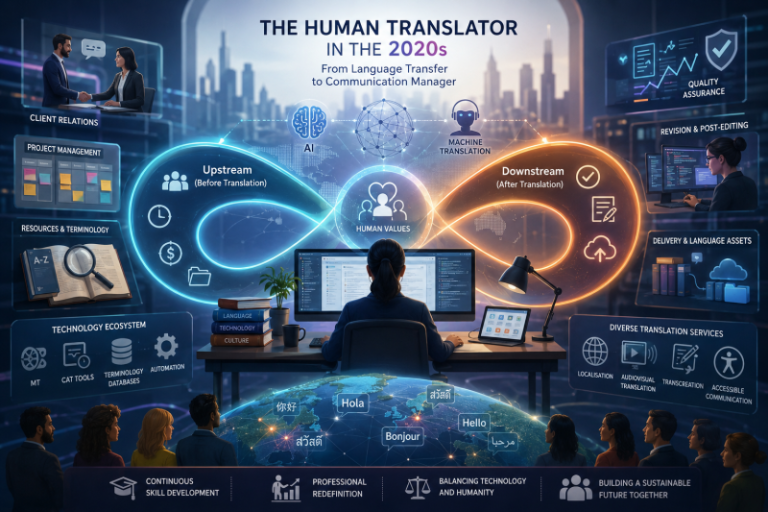
The Transformation of Human Translators’ Roles in the 2020s: A Professional Analysis in the Context of Technology and Artificial Intelligence
Author: Phakaporn Tanjararak
May 06, 2026, Bangkok – This academic article aims to analyze and synthesize the roles of human translators in the 2020s, drawing on the conceptual framework of the edited volume by Gary Massey, Elsa Huertas-Barros, and David Katan (2023), Human Translator in the 2020s. The volume highlights structural changes in the translation profession within the context of digital technology, artificial intelligence, and hybrid human–machine translation systems. The findings indicate that the role of translators has expanded beyond interlingual transfer to encompass the management of both upstream and downstream workflows, including client relations, quality assurance, and translation resource management. Furthermore, the study underscores the need to redefine professional boundaries, promote continuous skill development, and reaffirm human values within the contemporary translation technology ecosystem.
Keywords: human translators, 2020s, translation technology, artificial intelligence, machine translation, language industry, user-centred translation, translation quality assurance, continuous professional development
Introduction
In today’s technology-driven society, empirical evidence suggests that the boundaries of language service professions have expanded beyond the traditional notion of transferring content and style across languages (ISO 18587, 2017). This transformation has led to increasingly complex and multifaceted roles for human translators. These roles now extend to upstream activities such as job acquisition, tendering processes, client communication, and time and budget management, as well as downstream tasks including translation delivery, quality assurance, and the management of linguistic resources.
Such shifts in the professional landscape call for a reassessment of what constitutes “professional translation work” from the perspective of multiple stakeholders, as well as a redefinition of the competencies required in both formal education and ongoing professional development. The edited volume by Massey, Huertas-Barros, and Katan (2023) offers a forward-looking framework that integrates technology-assisted and human-centred approaches to translation, while also prompting critical reflection on human values amid the rapid expansion of artificial intelligence and automation.
Moreover, a growing body of scholarship has documented the evolution of language professions over time (Gouadec, 2010; Angelone et al., 2020; O’Hagan, 2020; Yi, 2023). These perspectives align with the themes presented in the volume, which originated from the conference Living Translation: People, Processes, Products, held in 2019 in South Africa. The conference highlighted emerging innovations in technology-assisted translation and emphasized the continuing importance of human translators in the coming decade.
Methodology
This article adopts a qualitative research approach, focusing primarily on document analysis and knowledge synthesis from secondary sources. The main source of data is the edited volume Human Translator in the 2020s by Gary Massey, Elsa Huertas-Barros, and David Katan (2023), along with relevant literature on the evolution of the translation profession, translation technology, and the role of translators in the digital era, including works by Gouadec (2010), Angelone et al. (2020), O’Hagan (2020), and Yi (2023).
The research process begins with the collection and selection of documents based on their thematic relevance and timeliness. This is followed by a thematic content analysis, in which key issues are categorized, such as the changing roles of translators, the impact of technology on the language industry, and the competencies required in the contemporary professional landscape. The findings are then synthesized through comparative analysis to identify patterns and trends in structural transformation.
To enhance the credibility of the study, data triangulation is employed by comparing information across multiple types of sources, alongside the use of well-established academic references. The interpretation is guided by an interdisciplinary framework that integrates linguistic, technological, and socio-cultural perspectives in order to provide a comprehensive understanding of developments in the modern translation industry.
Findings and Discussion
The volume primarily addresses the transformation of the language industry driven by translation technologies, particularly artificial intelligence, machine translation, digitalisation, and automation. These developments have significantly reshaped the role of human translators in cross-linguistic and intercultural communication.
From a process-oriented perspective, translators are no longer confined to text production. Instead, they are actively involved in the entire workflow system. At the upstream stage, translators engage in project management, client communication, and resource coordination. At the downstream stage, they contribute to quality assurance, revision, and the optimisation of translation outputs to meet user needs.
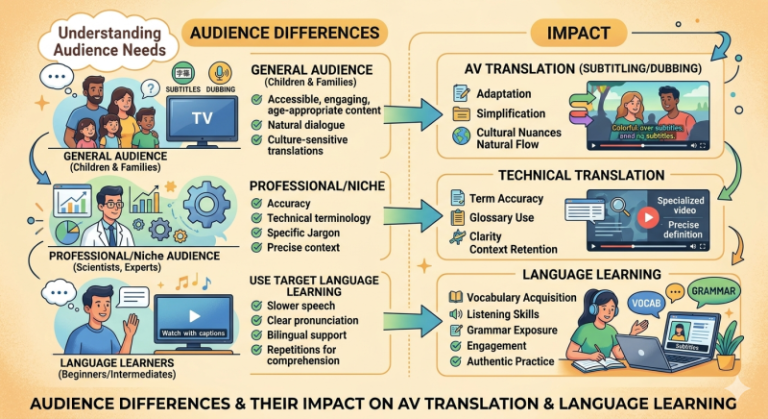
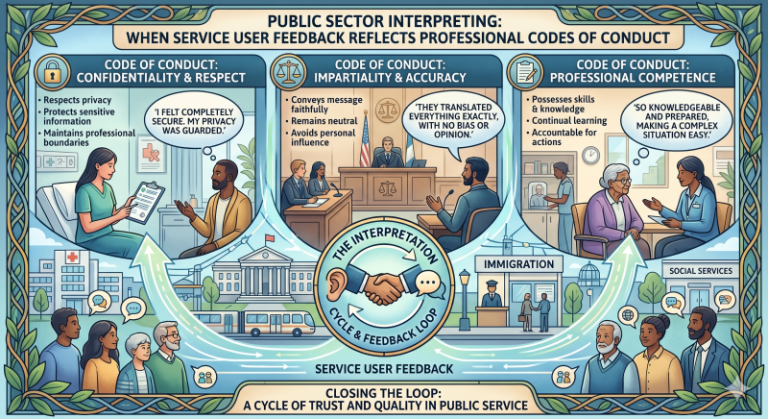
From a user-centred perspective, the volume brings together insights from experts across various domains to provide a comprehensive view of developments in the language industry. Key topics include localisation, transcreation, multimodal and audiovisual translation, user-centred translation, accessible and barrier-free communication, revision, pre-editing, post-editing, terminological services, as well as linguistic and intercultural mediation and public service translation.
A critical analysis reveals that these developments have expanded the definition of the translator’s role from a “language transfer agent” to a “manager of language-mediated communication processes,” requiring not only linguistic competence but also technological expertise and deep intercultural understanding.
Conclusion
In conclusion, the edited volume Human Translator in the 2020s (Massey, Huertas-Barros, & Katan, 2023) demonstrates a structural transformation of the translation profession in the technological era. The role of translators has evolved from purely linguistic operations to the management of complex communication systems. This shift highlights the need for new competencies, the redefinition of professional identity, and the maintenance of a balance between technological advancement and human values in the future of the translation industry.
References
- Angelone, E., et al. (2020). Research on translation and the evolution of language professions.
- Gouadec, D. (2010). The translation profession and structural transformation.
- O’Hagan, M. (2020). Translation technology and the transformation of the language industry.
- Yi, Y. (2023). The evolution of the translation profession in the twenty-first century.
- Massey, G., Huertas-Barros, E., & Katan, D. (2023). Human Translator in the 2020s. Routledge.
- International Organization for Standardization. (2017). Translation services—Post-editing of machine translation output (ISO 18587).
For professional services, please visit: https://www.seaproti.org/practitioners/
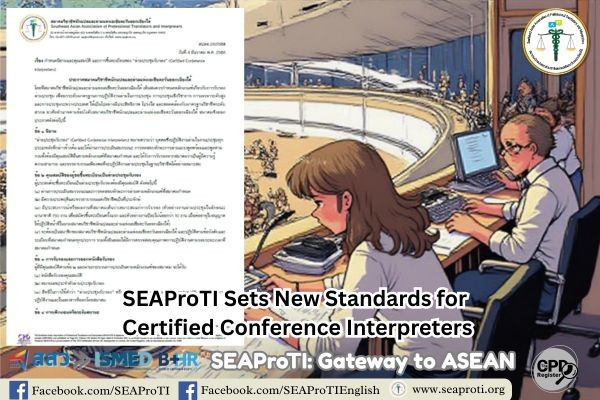
About certified translators, translation certifiers, and certified interpreters associated with SEAProTI. The Southeast Asian Association of Professional Translators and Interpreters (SEAProTI) has officially shared the qualifications and requirements for becoming Certified Translators, Translation Certification Providers, and Certified Interpreters in Sections 9 and 10 of the Royal Gazette, which was published by the Prime Minister’s Office in Thailand on July 25, 2024. Certified Translators, Translation Certification Providers, and Certified Interpreters
The Council of State has proposed the enactment of a Royal Decree, granting registered translators and recognised translation certifiers from professional associations or accredited language institutions the authority to provide legally valid translation certification (Letter to SEAProTI dated April 28, 2025)
SEAProTI is the first professional association in Thailand and Southeast Asia to implement a comprehensive certification system for translators, certifiers, and interpreters.
Head Office: Baan Ratchakru Building, No. 33, Room 402, Soi Phahonyothin 5, Phahonyothin Road, Phaya Thai District, Bangkok 10400, Thailand
Email: hello@seaproti.com | Tel.: (+66) 2-114-3128 (Office hours: Mon–Fri, 09:00–17:00).
การเปลี่ยนผ่านบทบาทนักแปลมนุษย์ในทศวรรษ 2020: การวิเคราะห์เชิงวิชาชีพภายใต้บริบทเทคโนโลยีและปัญญาประดิษฐ์
ผู้เขียน: ภคพร ตันจรารักษ์
06 พฤษภาคม 2569, กรุงเทพมหานคร – บทความวิชาการนี้มีวัตถุประสงค์เพื่อวิเคราะห์และสังเคราะห์บทบาทของนักแปลมนุษย์ในทศวรรษ 2020 โดยอาศัยกรอบแนวคิดจากงานบรรณาธิการของแกรี เมสซี เอลซา อูเอร์ตัส-บาร์รอส และเดวิด คาทัน (พ.ศ. 2566) เรื่อง “มนุษย์นักแปลในทศวรรษ 2020” ซึ่งนำเสนอการเปลี่ยนแปลงเชิงโครงสร้างของวิชาชีพการแปลภายใต้บริบทเทคโนโลยีดิจิทัล ปัญญาประดิษฐ์ และระบบการแปลแบบผสมผสานระหว่างมนุษย์และเครื่องจักร ผลการวิเคราะห์ชี้ให้เห็นว่าบทบาทของนักแปลได้ขยายจากการถ่ายโอนทางภาษาไปสู่การจัดการกระบวนการทำงานทั้งต้นน้ำและปลายน้ำ รวมถึงการบริหารลูกค้า การควบคุมคุณภาพ และการจัดการทรัพยากรการแปล นอกจากนี้ยังสะท้อนความจำเป็นในการปรับนิยามวิชาชีพ การพัฒนาทักษะอย่างต่อเนื่อง และการให้ความสำคัญกับคุณค่ามนุษย์ในระบบนิเวศเทคโนโลยีการแปลร่วมสมัย
คำสำคัญ: นักแปลมนุษย์, ทศวรรษ 2020, เทคโนโลยีการแปล, ปัญญาประดิษฐ์, การแปลด้วยเครื่อง, อุตสาหกรรมภาษา, การแปลที่ยึดผู้ใช้เป็นศูนย์กลาง, การประกันคุณภาพการแปล, การพัฒนาวิชาชีพอย่างต่อเนื่อง
บทนำ
ในยุคสังคมที่ขับเคลื่อนด้วยเทคโนโลยี หลักฐานเชิงประจักษ์แสดงให้เห็นว่าขอบเขตของวิชาชีพบริการด้านภาษาได้ขยายตัวเกินกว่าการถ่ายโอนเนื้อหาและรูปแบบระหว่างภาษาเพียงอย่างเดียวตามแนวคิดดั้งเดิม (ISO 18587, พ.ศ. 2560) การเปลี่ยนแปลงดังกล่าวส่งผลให้บทบาทของนักแปลมนุษย์มีความซับซ้อนและหลากหลายมากขึ้น ทั้งในมิติของงานก่อนกระบวนการแปล เช่น การรับงาน การประมูลโครงการ การสื่อสารกับลูกค้า และการบริหารเวลาและงบประมาณ ตลอดจนงานหลังการแปล เช่น การส่งมอบงาน การประกันคุณภาพ และการจัดการทรัพยากรทางภาษา
การเปลี่ยนแปลงของภูมิทัศน์วิชาชีพนี้สะท้อนถึงความจำเป็นในการทบทวนความหมายของ “งานวิชาชีพนักแปล” จากมุมมองของผู้มีส่วนได้ส่วนเสียหลายฝ่าย รวมถึงการกำหนดสมรรถนะที่พึงประสงค์ทั้งในระดับการศึกษาและการพัฒนาวิชาชีพอย่างต่อเนื่อง งานบรรณาธิการของเมสซี อูเอร์ตัส-บาร์รอส และคาทัน (พ.ศ. 2566) ได้นำเสนอกรอบคิดเชิงอนาคตที่ครอบคลุมพัฒนาการของการแปลที่ผสานเทคโนโลยีและมนุษย์เป็นศูนย์กลาง พร้อมทั้งกระตุ้นให้เกิดการตั้งคำถามต่อคุณค่าของมนุษย์ท่ามกลางการขยายตัวของปัญญาประดิษฐ์และระบบอัตโนมัติ
นอกจากนี้ งานวิชาการจำนวนมากได้ชี้ให้เห็นพัฒนาการของวิชาชีพด้านภาษาในมิติเวลาอย่างต่อเนื่อง (โกอูแด็ก, 2553; แองเจโลน และคณะ, 2563; โอฮาแกน, 2563; อี้, 2566) ซึ่งสอดคล้องกับประเด็นที่ถูกนำเสนอในหนังสือเล่มนี้ที่มีที่มาจากการประชุมวิชาการ “การแปลที่มีชีวิต: ผู้คน กระบวนการ และผลผลิต” เมื่อ พ.ศ. 2562 ณ ประเทศแอฟริกาใต้ โดยได้สะท้อนแนวโน้มของนวัตกรรมด้านการแปลแบบใช้เทคโนโลยีช่วย และย้ำบทบาทสำคัญของนักแปลมนุษย์ในทศวรรษถัดไป
ระเบียบวิธีวิจัย
บทความวิชาการนี้ใช้ระเบียบวิธีวิจัยเชิงคุณภาพ โดยมุ่งเน้นการวิเคราะห์เอกสารและการสังเคราะห์องค์ความรู้จากแหล่งข้อมูลทุติยภูมิเป็นหลัก แหล่งข้อมูลสำคัญประกอบด้วยงานบรรณาธิการเรื่อง “มนุษย์นักแปลในทศวรรษ 2020” ของเมสซี อูเอร์ตัส-บาร์รอส และคาทัน (พ.ศ. 2566) ตลอดจนวรรณกรรมที่เกี่ยวข้องกับพัฒนาการของวิชาชีพการแปล เทคโนโลยีการแปล และบทบาทของนักแปลในบริบทดิจิทัล เช่น งานของโกอูแด็ก (พ.ศ. 2553) แองเจโลน และคณะ (พ.ศ. 2563) โอฮาแกน (พ.ศ. 2563) และอี้ (พ.ศ. 2566)
กระบวนการวิจัยเริ่มจากการรวบรวมและคัดเลือกเอกสารตามเกณฑ์ความเกี่ยวข้องเชิงเนื้อหาและความทันสมัยของข้อมูล จากนั้นดำเนินการวิเคราะห์เนื้อหาเชิงธีม โดยจัดหมวดหมู่ประเด็นสำคัญ เช่น การเปลี่ยนแปลงบทบาทนักแปล เทคโนโลยีที่มีอิทธิพลต่ออุตสาหกรรมภาษา และสมรรถนะที่จำเป็นในวิชาชีพยุคใหม่ ภายหลังจึงนำผลการวิเคราะห์มาสังเคราะห์เชิงเปรียบเทียบเพื่ออธิบายแนวโน้มและแบบแผนของการเปลี่ยนแปลงในระดับโครงสร้าง
เพื่อเพิ่มความน่าเชื่อถือของผลการศึกษา ผู้วิจัยได้ใช้วิธีการตรวจสอบข้อมูลแบบสามเส้าโดยเปรียบเทียบข้อมูลจากแหล่งเอกสารหลายประเภท รวมถึงการอ้างอิงงานวิจัยที่ได้รับการยอมรับในวงวิชาการ นอกจากนี้ การตีความข้อมูลยึดหลักกรอบแนวคิดสหวิทยาการที่ผสานมิติทางภาษา เทคโนโลยี และสังคมวัฒนธรรม เพื่อให้ได้ข้อสรุปที่ครอบคลุมและสอดคล้องกับบริบทของอุตสาหกรรมการแปลร่วมสมัย
ผลการวิเคราะห์และอภิปราย
งานบรรณาธิการฉบับนี้มุ่งเน้นการอธิบายการเปลี่ยนแปลงของอุตสาหกรรมภาษาอันเกิดจากเทคโนโลยีช่วยแปล โดยเฉพาะอย่างยิ่งปัญญาประดิษฐ์ การแปลด้วยเครื่อง การแปลงเป็นดิจิทัล และระบบอัตโนมัติ ซึ่งส่งผลโดยตรงต่อบทบาทของนักแปลมนุษย์ในระบบการสื่อสารระหว่างภาษาและวัฒนธรรม
ในมิติของกระบวนการทำงาน นักแปลมิได้มีบทบาทจำกัดเฉพาะการแปลข้อความอีกต่อไป แต่ต้องมีส่วนร่วมในกระบวนการเชิงระบบทั้งก่อนและหลังการแปล โดยในขั้นตอนต้นน้ำ นักแปลมีบทบาทด้านการจัดการโครงการ การสื่อสารกับลูกค้า และการควบคุมทรัพยากร ขณะที่ในขั้นตอนปลายน้ำ นักแปลมีบทบาทในการประกันคุณภาพ การตรวจแก้ไข และการปรับปรุงผลผลิตการแปลให้มีความเหมาะสมต่อผู้ใช้งาน
เมื่อพิจารณาจากมุมมองเชิงผู้ใช้บริการ หนังสือได้รวบรวมองค์ความรู้จากผู้เชี่ยวชาญในสาขาต่าง ๆ เพื่อสะท้อนความเปลี่ยนแปลงของอุตสาหกรรมภาษาอย่างรอบด้าน โดยครอบคลุมประเด็นสำคัญ ได้แก่ การแปลเฉพาะท้องถิ่น การแปลเชิงสร้างสรรค์ การแปลสื่อหลายรูปแบบ การแปลเชิงโสตทัศนวัสดุ การแปลที่เน้นผู้ใช้เป็นศูนย์กลาง การสื่อสารที่เข้าถึงได้โดยไม่มีอุปสรรค การตรวจแก้ไข การเตรียมข้อความก่อนแปล การปรับแก้หลังการแปล ตลอดจนบริการด้านศัพท์เฉพาะทาง และการเป็นสื่อกลางทางภาษาและวัฒนธรรม
การวิเคราะห์เชิงวิพากษ์ชี้ให้เห็นว่าการเปลี่ยนแปลงดังกล่าวนำไปสู่การขยายความหมายของวิชาชีพนักแปลจาก “ผู้ถ่ายโอนภาษา” ไปสู่ “ผู้จัดการกระบวนการสื่อสารเชิงภาษา” ซึ่งต้องอาศัยทั้งทักษะทางเทคนิค เทคโนโลยี และความเข้าใจเชิงวัฒนธรรมอย่างลึกซึ้ง
สรุป
โดยสรุป งานบรรณาธิการเรื่อง “มนุษย์นักแปลในทศวรรษ 2020” (เมสซี, อูเอร์ตัส-บาร์รอส และคาทัน, พ.ศ. 2566) แสดงให้เห็นการเปลี่ยนผ่านเชิงโครงสร้างของวิชาชีพการแปลในยุคเทคโนโลยี ซึ่งขยายบทบาทของนักแปลจากระดับปฏิบัติการทางภาษาไปสู่ระดับการจัดการระบบการสื่อสารที่ซับซ้อนมากขึ้น การเปลี่ยนแปลงดังกล่าวสะท้อนความจำเป็นในการพัฒนาทักษะใหม่ การนิยามวิชาชีพใหม่ และการรักษาสมดุลระหว่างเทคโนโลยีและคุณค่าความเป็นมนุษย์ในอนาคตของอุตสาหกรรมการแปล
เอกสารอ้างอิง
- แองเจโลน, อี. และคณะ. (พ.ศ. 2563). งานวิจัยด้านการแปลและวิวัฒนาการของวิชาชีพภาษา.
- โกอูแด็ก, จี. (พ.ศ. 2553). วิชาชีพนักแปลและการเปลี่ยนแปลงเชิงโครงสร้าง.
- โอฮาแกน, เอ็ม. (พ.ศ. 2563). เทคโนโลยีการแปลและการเปลี่ยนผ่านของอุตสาหกรรมภาษา.
- อี้, วาย. (พ.ศ. 2566). พัฒนาการของวิชาชีพการแปลในศตวรรษที่ 21.
- เมสซี, แกรี, อูเอร์ตัส-บาร์รอส, เอลซา และคาทัน, เดวิด. (พ.ศ. 2566). มนุษย์นักแปลในทศวรรษ 2020. รูทเลดจ์.
- องค์การมาตรฐานสากล. (พ.ศ. 2560). มาตรฐานกระบวนการแปลหลังการแก้ไขด้วยเครื่อง ISO 18587.
ขอใช้บริการนักวิชาชีพของสมาคมได้ที่:https://www.seaproti.org/practitioners/
สมาคมวิชาชีพนักแปลและล่ามแห่งเอเชียตะวันออกเฉียงใต้ (SEAProTI) ได้ประกาศหลักเกณฑ์และคุณสมบัติของผู้ที่ขึ้นทะเบียนเป็น “นักแปลรับรอง (Certified Translators) และผู้รับรองการแปล (Translation Certification Providers) และล่ามรับรอง (Certified Interpreters)” ของสมาคม หมวดที่ 9 และหมวดที่ 10 ในราชกิจจานุเบกษา ของสำนักเลขาธิการคณะรัฐมนตรี ในสำนักนายกรัฐมนตรี แห่งราชอาณาจักรไทย ลงวันที่ 25 ก.ค. 2567 เล่มที่ 141 ตอนที่ 66 ง หน้า 100 อ่านฉบับเต็มได้ที่: นักแปลรับรอง ผู้รับรองการแปล และล่ามรับรอง
สำนักคณะกรรมการกฤษฎีกาเสนอให้ตราเป็นพระราชกฤษฎีกา โดยกำหนดให้นักแปลที่ขึ้นทะเบียน รวมถึงผู้รับรองการแปลจากสมาคมวิชาชีพหรือสถาบันสอนภาษาที่มีการอบรมและขึ้นทะเบียน สามารถรับรองคำแปลได้ (จดหมายถึงสมาคม SEAProTI ลงวันที่ 28 เม.ย. 2568)
สมาคมวิชาชีพนักแปลและล่ามแห่งเอเชียตะวันออกเฉียงใต้เป็นสมาคมวิชาชีพแห่งแรกและแห่งเดียวในประเทศไทยและภูมิภาคเอเชียตะวันออกเฉียงใต้ที่มีระบบรับรองนักแปลรับรอง ผู้รับรองการแปล และล่ามรับรอง
สำนักงานใหญ่: อาคารบ้านราชครู เลขที่ 33 ห้อง 402 ซอยพหลโยธิน 5 ถนนพหลโยธิน แขวงพญาไท เขตพญาไท กรุงเทพมหานคร 10400 ประเทศไทย