



Eastern Economic Corridor (EEC) Visa in Thailand: Legal Framework, Economic Policy, and the Role of Certified Translators and Interpreters in Cross-Border Mobility
Author: Griroek Gruaythong
8 May 2026, Bangkok – The Eastern Economic Corridor (EEC) Visa is an immigration measure developed by the Thai government to attract highly skilled workers, investors, executives, and foreign specialists to Thailand’s special economic zones in the eastern region of the country. The policy particularly targets industries associated with advanced technology and the digital economy. This article examines the legal and policy framework of the EEC Visa, including its tax incentives, work authorization mechanisms, and relationship to Thailand’s broader regional economic competitiveness strategy. Furthermore, the study discusses the role of certified translators, translation certification providers, and certified interpreters affiliated with professional translation and interpreting associations in Southeast Asia in facilitating immigration procedures, official documentation, and cross-cultural communication in the context of international labor mobility. The findings suggest that language professionals constitute an important mechanism for minimizing legal risks and facilitating cross-border investment within the contemporary globalized economy.
Introduction
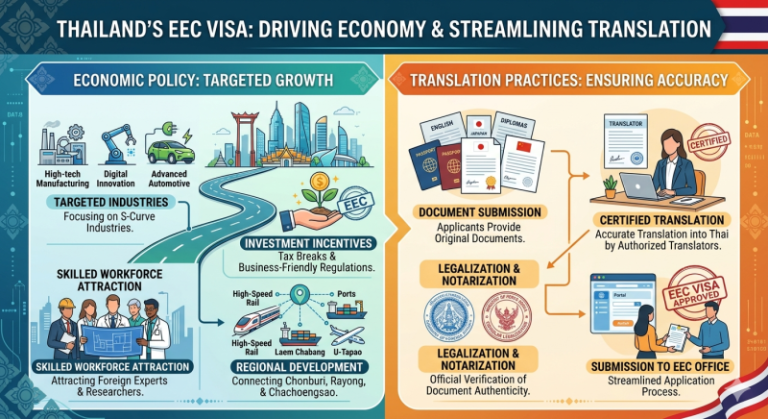
Over the past decade, Thailand has continuously pursued policies aimed at promoting foreign investment and developing high-technology industries through the Eastern Economic Corridor (EEC) project, which encompasses the provinces of Chachoengsao, Chonburi, and Rayong. These regions have been designated as new industrial and economic hubs intended to strengthen Thailand’s competitiveness within Southeast Asia and the global economy. The Thai government has therefore sought to attract foreign experts, investors, and highly skilled workers in industries such as automation, robotics, aviation, logistics, and biochemicals.
Within this context, the Thai Cabinet approved a new long-term visa scheme in 2024 known as the EEC Visa. The visa was designed to support the mobility of international professionals and specialists while simultaneously strengthening the targeted industries located within the EEC region. The visa grants foreign nationals the right to remain in Thailand for up to ten years and provides various tax, employment, and immigration-related benefits (Siam Legal International, 2024).
Nevertheless, the process of applying for visas, verifying documentation, and complying with immigration regulations in an international environment requires accurate multilingual communication and officially certified translations. Consequently, certified translators, translation certification providers, and certified interpreters play an essential role in ensuring the legal validity and reliability of official documents used in immigration procedures. This article therefore examines the legal, economic, and linguistic dimensions of the EEC Visa in an integrated manner.
Legal Framework and Key Characteristics of the EEC Visa
The EEC Visa was designed as a specialized immigration instrument intended to accommodate highly skilled foreign professionals and executives working within Thailand’s targeted industries. Its principal objective is to strengthen Thailand’s economic competitiveness by attracting global talent and supporting advanced industrial development.
The visa allows foreign nationals to remain in Thailand for up to ten years through a renewable five-year multiple-entry permit system. However, the duration of stay remains dependent upon the holder’s employment contract. If the employment contract terminates, the visa status and associated privileges also cease to apply (Siam Legal International, 2024).
The EEC Visa is divided into four categories: Specialist Visa (EEC Visa “S”), Executive Visa (EEC Visa “E”), Professional Visa (EEC Visa “P”), and Dependent Visa (EEC Visa “O”) for spouses and family members. Holders are granted several significant benefits, including a flat personal income tax rate of 17 percent, expedited work permit processing, streamlined online immigration reporting procedures, and access to fast-track immigration channels at international airports in Thailand.
Such measures reflect the broader concept of “global talent competition,” whereby states employ immigration policies as economic tools to attract highly qualified foreign labor and investment. Long-term visa programs have consequently become central mechanisms linking immigration law with national industrial development strategies.
Relationship Between the EEC Visa and the Long-Term Resident (LTR) Visa
Although the EEC Visa shares similarities with Thailand’s Long-Term Resident (LTR) Visa, the two visa categories differ substantially in policy orientation and legal structure. The EEC Visa specifically targets professionals employed within the EEC region and its designated industries, whereas the LTR Visa permits highly skilled professionals to work throughout Thailand without geographical restrictions.
Another major distinction concerns the relationship between visa validity and employment contracts. The EEC Visa is directly tied to the duration of the holder’s employment contract, while the LTR Visa provides greater flexibility because its validity is not immediately terminated upon the end of employment. As a result, the LTR Visa is often viewed as a more suitable option for long-term professionals and transnational digital workers.
The Role of Certified Translators and Certified Interpreters in the EEC Visa Process
The EEC Visa application process requires a substantial amount of official and legal documentation, including passports, employment contracts, corporate certificates, educational credentials, tax documents, and proof of family relationships. Such documents frequently require official translation and certification before they can be accepted by Thai immigration authorities.
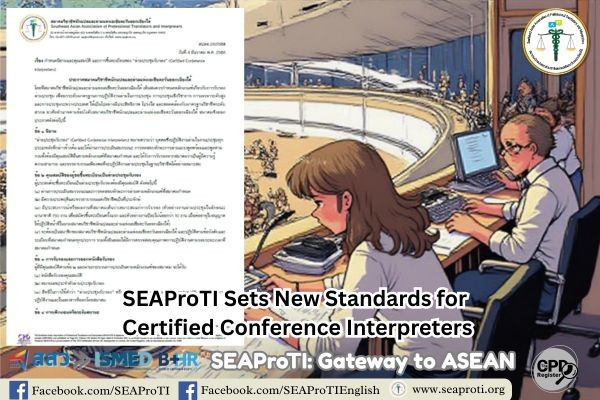
Within this framework, certified translators play an essential role in producing accurate legal and administrative translations that preserve both linguistic precision and legal validity. Translation certification providers are responsible for certifying the authenticity and completeness of translated documents, thereby enhancing their credibility during immigration review procedures. Furthermore, certified interpreters facilitate communication during interviews, governmental meetings, business negotiations, and labor-related procedures involving foreign professionals and Thai authorities.
Professional translation and interpreting associations in Southeast Asia also contribute significantly to the development of professional standards, ethical guidelines, and certification systems for translators and interpreters operating in cross-border contexts. These organizations help strengthen the credibility of language services within ASEAN and support regional economic integration and international investment mobility.
From a practical perspective, translation inaccuracies may result in delays in visa approval, application rejection, or legal disputes concerning immigration and employment status. Consequently, translators and interpreters with specialized expertise in immigration law and international labor regulations constitute a critical component of legal risk management for both applicants and employers.
Policy and Economic Analysis
The EEC Visa reflects a broader transformation in modern immigration governance, wherein immigration law increasingly functions as an economic instrument rather than solely a mechanism of border control. The policy seeks to attract global human capital capable of contributing to Thailand’s transition toward a knowledge-based and innovation-driven economy.
However, the successful attraction of foreign professionals depends not only upon tax incentives or visa duration but also upon the efficiency, transparency, and multilingual accessibility of state administrative systems. Certified translators and interpreters therefore form part of the “linguistic infrastructure” necessary for facilitating foreign investment and international labor mobility.
Within the ASEAN context, where legal systems and languages vary considerably among member states, the professionalization of translation and interpreting services extends beyond linguistic concerns and becomes directly connected to economic stability, investment facilitation, and regional integration.
Conclusion
The EEC Visa represents a significant mechanism through which Thailand seeks to attract highly skilled professionals and foreign specialists to its targeted industries within the Eastern Economic Corridor. The visa demonstrates the integration of immigration policy with broader national economic strategies concerning investment, technology, and industrial competitiveness.
This article further argues that certified translators, translation certification providers, and certified interpreters play a crucial role in supporting the effectiveness of this system, particularly by ensuring legal accuracy, documentary reliability, and cross-cultural communication within international investment environments. Language professionals should therefore be understood not merely as linguistic mediators but also as key actors within the legal and economic infrastructure of globalization.
References
- Siam Legal International. (2024). Eastern Economic Corridor (EEC) Visa. Retrieved from the Siam Legal International website.
For professional services, please visit: https://www.seaproti.org/practitioners/
About certified translators, translation certifiers, and certified interpreters associated with SEAProTI. The Southeast Asian Association of Professional Translators and Interpreters (SEAProTI) has officially shared the qualifications and requirements for becoming Certified Translators, Translation Certification Providers, and Certified Interpreters in Sections 9 and 10 of the Royal Gazette, which was published by the Prime Minister’s Office in Thailand on July 25, 2024. Certified Translators, Translation Certification Providers, and Certified Interpreters
The Council of State has proposed the enactment of a Royal Decree, granting registered translators and recognised translation certifiers from professional associations or accredited language institutions the authority to provide legally valid translation certification (Letter to SEAProTI dated April 28, 2025)
SEAProTI is the first professional association in Thailand and Southeast Asia to implement a comprehensive certification system for translators, certifiers, and interpreters.
Head Office: Baan Ratchakru Building, No. 33, Room 402, Soi Phahonyothin 5, Phahonyothin Road, Phaya Thai District, Bangkok 10400, Thailand
Email: hello@seaproti.com | Tel.: (+66) 2-114-3128 (Office hours: Mon–Fri, 09:00–17:00).
Eastern Economic Corridor (EEC) Visa in Thailand: Legal Framework, Economic Policy, and the Role of Certified Translators and Interpreters in Cross-Border Mobility
ผู้เขียน: ไกรฤกษ์ กรวยทอง
8 เมษายน 2569, กรุงเทพมหานคร – วีซ่าเขตพัฒนาพิเศษภาคตะวันออก หรือ Eastern Economic Corridor (EEC) Visa เป็นมาตรการด้านตรวจคนเข้าเมืองที่รัฐบาลไทยพัฒนาขึ้นเพื่อดึงดูดแรงงานทักษะสูง นักลงทุน ผู้บริหาร และผู้เชี่ยวชาญจากต่างประเทศเข้าสู่พื้นที่เศรษฐกิจพิเศษในภาคตะวันออกของประเทศไทย โดยเฉพาะในอุตสาหกรรมเป้าหมายที่เกี่ยวข้องกับเทคโนโลยีขั้นสูงและเศรษฐกิจดิจิทัล บทความนี้มุ่งศึกษากรอบกฎหมายและนโยบายของ EEC Visa รวมถึงวิเคราะห์สิทธิประโยชน์ทางภาษี การอนุญาตทำงาน และความเชื่อมโยงกับนโยบายการแข่งขันทางเศรษฐกิจระดับภูมิภาค นอกจากนี้ บทความยังอภิปรายบทบาทของนักแปลรับรอง ผู้รับรองการแปล และล่ามรับรองของสมาคมวิชาชีพนักแปลและล่ามแห่งเอเชียตะวันออกเฉียงใต้ในการสนับสนุนกระบวนการตรวจคนเข้าเมือง การจัดทำเอกสารราชการ และการสื่อสารข้ามวัฒนธรรมในบริบทของแรงงานระหว่างประเทศ ผลการศึกษาชี้ให้เห็นว่า ผู้ประกอบวิชาชีพด้านภาษาเป็นกลไกสำคัญในการลดความเสี่ยงด้านกฎหมายและอำนวยความสะดวกแก่การลงทุนข้ามพรมแดนในระบบเศรษฐกิจยุคโลกาภิวัตน์
บทนำ
ในช่วงทศวรรษที่ผ่านมา ประเทศไทยได้ดำเนินนโยบายส่งเสริมการลงทุนและพัฒนาอุตสาหกรรมเทคโนโลยีขั้นสูงอย่างต่อเนื่องผ่านโครงการเขตพัฒนาพิเศษภาคตะวันออก หรือ Eastern Economic Corridor (EEC) ซึ่งครอบคลุมจังหวัดฉะเชิงเทรา ชลบุรี และระยอง พื้นที่ดังกล่าวได้รับการกำหนดให้เป็นศูนย์กลางเศรษฐกิจและอุตสาหกรรมแห่งใหม่ของประเทศ โดยรัฐบาลไทยมุ่งดึงดูดผู้เชี่ยวชาญ นักลงทุน และแรงงานทักษะสูงจากต่างประเทศเข้าสู่ภาคอุตสาหกรรมเป้าหมาย เช่น ระบบอัตโนมัติ หุ่นยนต์ อากาศยาน โลจิสติกส์ และอุตสาหกรรมชีวภาพ
ภายใต้บริบทดังกล่าว คณะรัฐมนตรีไทยได้อนุมัติวีซ่าระยะยาวรูปแบบใหม่ในปี พ.ศ. 2567 ซึ่งเรียกว่า EEC Visa เพื่อสนับสนุนการเคลื่อนย้ายแรงงานและผู้เชี่ยวชาญระหว่างประเทศ วีซ่าประเภทนี้มีระยะเวลาสูงสุด 10 ปี และมอบสิทธิประโยชน์ด้านภาษี การทำงาน และการอำนวยความสะดวกด้านตรวจคนเข้าเมืองแก่ผู้ถือวีซ่า (Siam Legal International, 2024)
อย่างไรก็ตาม กระบวนการยื่นขอวีซ่า การตรวจสอบเอกสาร และการปฏิบัติตามข้อกำหนดทางกฎหมายในบริบทระหว่างประเทศจำเป็นต้องอาศัยการแปลเอกสารและการสื่อสารหลายภาษาอย่างถูกต้องและเป็นทางการ ด้วยเหตุนี้ นักแปลรับรอง ผู้รับรองการแปล และล่ามรับรองจึงมีบทบาทสำคัญต่อความน่าเชื่อถือของเอกสารราชการและความชอบด้วยกฎหมายของกระบวนการตรวจคนเข้าเมือง บทความนี้จึงมุ่งวิเคราะห์ทั้งมิติทางกฎหมาย เศรษฐกิจ และมิติด้านภาษาของ EEC Visa ควบคู่กัน
กรอบกฎหมายและลักษณะสำคัญของ EEC Visa
EEC Visa เป็นมาตรการตรวจคนเข้าเมืองที่ออกแบบมาเพื่อรองรับผู้เชี่ยวชาญและแรงงานทักษะสูงในอุตสาหกรรมเป้าหมายของประเทศไทย โดยมีเป้าหมายหลักเพื่อเพิ่มศักยภาพการแข่งขันทางเศรษฐกิจของประเทศในระดับภูมิภาค วีซ่านี้อนุญาตให้ชาวต่างชาติพำนักในประเทศไทยได้ระยะยาวสูงสุด 10 ปี ผ่านระบบใบอนุญาตเข้าออกหลายครั้งแบบต่ออายุได้ทุก 5 ปี อย่างไรก็ตาม ระยะเวลาการพำนักยังคงผูกพันกับสัญญาจ้างงานของผู้ถือวีซ่า หากสัญญาสิ้นสุดลง สิทธิในการพำนักภายใต้วีซ่าดังกล่าวก็สิ้นสุดลงด้วย (Siam Legal International, 2024)
EEC Visa แบ่งออกเป็นสี่ประเภท ได้แก่ วีซ่าสำหรับผู้เชี่ยวชาญ (EEC Visa “S”) ผู้บริหาร (EEC Visa “E”) ผู้ประกอบวิชาชีพ (EEC Visa “P”) และคู่สมรสหรือผู้ติดตาม (EEC Visa “O”) ผู้ถือวีซ่าจะได้รับสิทธิประโยชน์หลายประการ เช่น อัตราภาษีเงินได้บุคคลธรรมดาคงที่ร้อยละ 17 การพิจารณาใบอนุญาตทำงานแบบเร่งด่วน การรายงานตัวผ่านระบบออนไลน์ และสิทธิใช้ช่องทางพิเศษในสนามบินระหว่างประเทศ
นโยบายดังกล่าวสะท้อนแนวคิด “การแข่งขันเพื่อดึงดูดทุนมนุษย์ระดับโลก” (global talent competition) ซึ่งหลายประเทศในเอเชียกำลังนำมาใช้เพื่อเพิ่มศักยภาพด้านนวัตกรรมและการลงทุนระหว่างประเทศ การใช้มาตรการวีซ่าระยะยาวจึงกลายเป็นเครื่องมือทางเศรษฐกิจที่เชื่อมโยงนโยบายตรวจคนเข้าเมืองเข้ากับยุทธศาสตร์การพัฒนาอุตสาหกรรมของรัฐ
ความสัมพันธ์ระหว่าง EEC Visa กับ Long-Term Resident (LTR) Visa
แม้ EEC Visa จะมีลักษณะใกล้เคียงกับ Long-Term Resident (LTR) Visa ของประเทศไทย แต่ทั้งสองประเภทมีความแตกต่างเชิงนโยบายอย่างมีนัยสำคัญ โดย EEC Visa มุ่งเน้นเฉพาะบุคลากรที่ทำงานในพื้นที่ EEC และอุตสาหกรรมเป้าหมาย ขณะที่ LTR Visa เปิดกว้างให้แรงงานทักษะสูงทำงานได้ทั่วประเทศ
อีกประเด็นหนึ่งที่แตกต่างกันคือ ความสัมพันธ์ระหว่างสถานะวีซ่ากับสัญญาจ้างงาน EEC Visa ผูกพันโดยตรงกับระยะเวลาของสัญญาจ้าง ในขณะที่ LTR Visa มีความยืดหยุ่นมากกว่า เนื่องจากสถานะการพำนักไม่ได้สิ้นสุดลงทันทีเมื่อความสัมพันธ์ทางการจ้างงานสิ้นสุดลง ลักษณะดังกล่าวทำให้ LTR Visa ถูกมองว่าเป็นทางเลือกที่เหมาะสมสำหรับผู้เชี่ยวชาญระยะยาวหรือแรงงานดิจิทัลที่มีรูปแบบการทำงานข้ามพรมแดน
บทบาทของนักแปลรับรองและล่ามรับรองในกระบวนการ EEC Visa
การยื่นขอ EEC Visa จำเป็นต้องใช้เอกสารราชการและเอกสารทางกฎหมายจำนวนมาก เช่น หนังสือเดินทาง สัญญาจ้าง หนังสือรับรองบริษัท เอกสารการศึกษา เอกสารการเสียภาษี และเอกสารรับรองความสัมพันธ์ในครอบครัว เอกสารเหล่านี้มักต้องได้รับการแปลอย่างเป็นทางการและผ่านการรับรองเพื่อให้หน่วยงานตรวจคนเข้าเมืองของไทยสามารถตรวจสอบความถูกต้องได้
ในบริบทนี้ นักแปลรับรอง (certified translators) มีบทบาทสำคัญในการแปลเอกสารราชการและเอกสารกฎหมายให้มีความถูกต้องทั้งในเชิงภาษาและเชิงกฎหมาย ขณะที่ผู้รับรองการแปล (translation certification providers) ทำหน้าที่รับรองความถูกต้องและความสมบูรณ์ของเอกสารแปล ซึ่งช่วยเพิ่มความน่าเชื่อถือในกระบวนการพิจารณาวีซ่า นอกจากนี้ ล่ามรับรอง (certified interpreters) ยังมีบทบาทในกระบวนการสัมภาษณ์ การประชุมกับหน่วยงานรัฐ การเจรจาทางธุรกิจ และการดำเนินการด้านแรงงานที่เกี่ยวข้องกับผู้ถือวีซ่าต่างชาติ
สมาคมวิชาชีพนักแปลและล่ามแห่งเอเชียตะวันออกเฉียงใต้มีบทบาทสำคัญในการกำหนดมาตรฐานวิชาชีพ การอบรมจริยธรรม และการรับรองคุณสมบัติของนักแปลและล่ามในภูมิภาค องค์กรวิชาชีพดังกล่าวช่วยยกระดับความน่าเชื่อถือของบริการด้านภาษาในบริบทข้ามพรมแดน และมีส่วนสำคัญต่อการอำนวยความสะดวกทางกฎหมายและเศรษฐกิจในภูมิภาคอาเซียน
ในเชิงปฏิบัติ ความผิดพลาดในการแปลเอกสารอาจนำไปสู่ความล่าช้าในการอนุมัติวีซ่า การปฏิเสธคำขอ หรือข้อพิพาททางกฎหมายเกี่ยวกับสถานะการทำงาน ดังนั้น นักแปลและล่ามที่มีความรู้เฉพาะด้านกฎหมายตรวจคนเข้าเมืองและกฎหมายแรงงานระหว่างประเทศจึงมีบทบาทสำคัญอย่างยิ่งต่อการลดความเสี่ยงทางกฎหมายของทั้งผู้สมัครและนายจ้าง
การวิเคราะห์เชิงนโยบายและเศรษฐกิจ
EEC Visa สะท้อนแนวโน้มของรัฐสมัยใหม่ที่ใช้กฎหมายตรวจคนเข้าเมืองเป็นเครื่องมือทางเศรษฐกิจมากกว่าการควบคุมชายแดนเพียงอย่างเดียว นโยบายดังกล่าวมีเป้าหมายเพื่อดึงดูด “ทุนมนุษย์ระดับโลก” (global human capital) เข้ามาเสริมสร้างความสามารถในการแข่งขันของประเทศในเศรษฐกิจฐานความรู้
อย่างไรก็ตาม การดึงดูดแรงงานต่างชาติไม่ได้ขึ้นอยู่กับสิทธิประโยชน์ด้านภาษีหรือระยะเวลาวีซ่าเพียงเท่านั้น แต่ยังขึ้นอยู่กับความสามารถของรัฐในการสร้างระบบราชการที่มีประสิทธิภาพ โปร่งใส และรองรับความหลากหลายทางภาษา การมีนักแปลรับรองและล่ามรับรองที่มีมาตรฐานจึงเป็นองค์ประกอบสำคัญของ “โครงสร้างพื้นฐานด้านภาษา” (linguistic infrastructure) ที่ช่วยสนับสนุนการลงทุนและการเคลื่อนย้ายแรงงานระหว่างประเทศ
ในบริบทของอาเซียน ซึ่งมีความหลากหลายทางภาษาและระบบกฎหมายแตกต่างกัน การพัฒนาวิชาชีพนักแปลและล่ามจึงไม่ได้เป็นเพียงประเด็นด้านภาษาเท่านั้น แต่ยังเกี่ยวข้องกับความมั่นคงทางเศรษฐกิจ การลงทุน และการบูรณาการระดับภูมิภาคอีกด้วย
สรุป
EEC Visa เป็นกลไกสำคัญของประเทศไทยในการดึงดูดผู้เชี่ยวชาญและแรงงานทักษะสูงเข้าสู่อุตสาหกรรมเป้าหมายในเขตพัฒนาพิเศษภาคตะวันออก วีซ่าประเภทนี้สะท้อนการบูรณาการระหว่างนโยบายตรวจคนเข้าเมืองกับยุทธศาสตร์เศรษฐกิจระดับชาติ ทั้งในด้านการลงทุน เทคโนโลยี และการแข่งขันทางอุตสาหกรรม
นอกจากนี้ บทความยังชี้ให้เห็นว่า นักแปลรับรอง ผู้รับรองการแปล และล่ามรับรองมีบทบาทสำคัญต่อความสำเร็จของระบบดังกล่าว โดยเฉพาะในการสร้างความถูกต้องทางกฎหมาย ความน่าเชื่อถือของเอกสาร และการสื่อสารข้ามวัฒนธรรมในบริบทการลงทุนระหว่างประเทศ ผู้ประกอบวิชาชีพด้านภาษาจึงมิได้เป็นเพียงผู้ถ่ายทอดภาษาเท่านั้น แต่ยังเป็นกลไกสำคัญของโครงสร้างพื้นฐานทางเศรษฐกิจและกฎหมายในยุคโลกาภิวัตน์
เอกสารอ้างอิง
- Siam Legal International. (2024). Eastern Economic Corridor (EEC) Visa. สืบค้นจากเว็บไซต์ของ Siam Legal International.
ขอใช้บริการนักวิชาชีพของสมาคมได้ที่:https://www.seaproti.org/practitioners/
สมาคมวิชาชีพนักแปลและล่ามแห่งเอเชียตะวันออกเฉียงใต้ (SEAProTI) ได้ประกาศหลักเกณฑ์และคุณสมบัติของผู้ที่ขึ้นทะเบียนเป็น “นักแปลรับรอง (Certified Translators) และผู้รับรองการแปล (Translation Certification Providers) และล่ามรับรอง (Certified Interpreters)” ของสมาคม หมวดที่ 9 และหมวดที่ 10 ในราชกิจจานุเบกษา ของสำนักเลขาธิการคณะรัฐมนตรี ในสำนักนายกรัฐมนตรี แห่งราชอาณาจักรไทย ลงวันที่ 25 ก.ค. 2567 เล่มที่ 141 ตอนที่ 66 ง หน้า 100 อ่านฉบับเต็มได้ที่: นักแปลรับรอง ผู้รับรองการแปล และล่ามรับรอง
สำนักคณะกรรมการกฤษฎีกาเสนอให้ตราเป็นพระราชกฤษฎีกาโดยกำหนดให้นักแปลที่ขึ้นทะเบียน รวมถึงผู้รับรองการแปลจากสมาคมวิชาชีพหรือสถาบันสอนภาษาที่มีการอบรมและขึ้นทะเบียน สามารถรับรองคำแปลได้ (จดหมายถึงสมาคม SEAProTI ลงวันที่ 28 เม.ย. 2568)
สมาคมวิชาชีพนักแปลและล่ามแห่งเอเชียตะวันออกเฉียงใต้เป็นสมาคมวิชาชีพแห่งแรกและแห่งเดียวในประเทศไทยและภูมิภาคเอเชียตะวันออกเฉียงใต้ที่มีระบบรับรองนักแปลรับรอง ผู้รับรองการแปล และล่ามรับรอง
สำนักงานใหญ่: อาคารบ้านราชครู เลขที่ 33 ห้อง 402 ซอยพหลโยธิน 5 ถนนพหลโยธิน แขวงพญาไท เขตพญาไท กรุงเทพมหานคร 10400 ประเทศไทย