



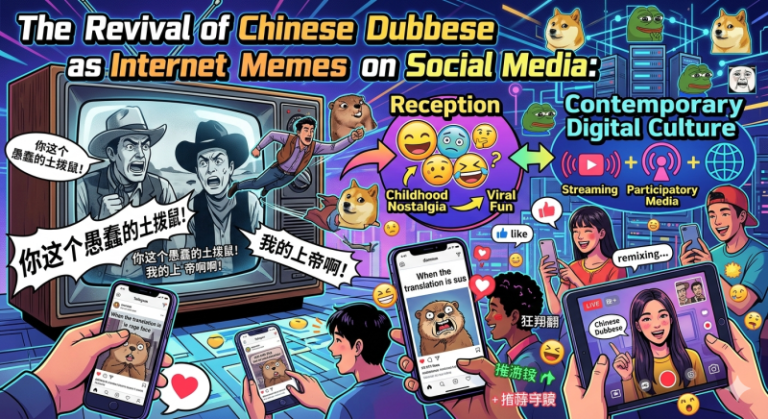
The Revival of Chinese Dubbese as Internet Memes on Social Media: Reception and Contemporary Digital Culture
Author: Griroek Gruaythong
May 8, 2026, Bangkok – Chinese dubbese, a stylised form of Mandarin developed for dubbing foreign audiovisual media, once played a significant role in the Chinese film and television industry throughout the twentieth century. However, the popularity of dubbing declined following the rise of subtitling practices in the late 1990s and early 2000s. Although dubbese was often regarded as outdated and linguistically unnatural, it has recently experienced an unexpected revival on social media platforms in the digital age, particularly as a form of internet meme and online subcultural language. This study aims to examine the linguistic characteristics of Chinese dubbese on the video-sharing platform Bilibili and to analyse the factors contributing to its renewed popularity among Chinese internet users. Employing a qualitative research methodology, the study analyses eight highly viewed dubbese-themed videos and 1,232 user comments. The findings reveal that Chinese dubbese is frequently characterised by formulaic phrases, exaggerated interjections, swear words, absurd metaphors, and theatrical intonation. Rather than rejecting its linguistic artificiality, online users embrace dubbese for its foreign flavour, humorous effects, and nostalgic associations. Consequently, dubbese has evolved from a translation register into a memetic linguistic resource used for humour, identity construction, and collective participation in digital culture. This study contributes to audiovisual translation studies by challenging the conventional assumption that audiences primarily value linguistic naturalness in dubbing. Instead, it demonstrates that translation language can acquire new cultural meanings and social functions within participatory digital environments.
Keywords: Chinese dubbese, dubbing, internet memes, reception, digital culture
Introduction
Dubbing has long functioned as a major mode of audiovisual translation in China, particularly after 1949 when foreign films began to circulate systematically within the country. The dubbed Soviet film Private Aleksandr Matrosov (1947), released in China in 1949, is commonly regarded as the starting point of the Chinese dubbing industry (Ma, 2005). During the 1980s, dubbing reached its cultural peak and was often referred to as the “golden age” of Chinese dubbing. However, the increasing popularity of subtitled audiovisual content among younger audiences in the late 1990s and early 2000s gradually diminished the status of dubbing. Subtitled media became associated with authenticity and immediacy, whereas dubbed productions were frequently perceived as outdated and linguistically unnatural (Du, 2018).
Despite this decline, Chinese dubbese has undergone an unexpected revival in contemporary digital culture. On social media platforms such as Bilibili, internet users actively imitate, parody, and remix dubbese through videos, comments, and internet memes. In this context, dubbese no longer functions solely as a translation register but has become a cultural and affective resource employed for humour, nostalgia, and identity performance. The resurgence of dubbese demonstrates how linguistic forms previously considered artificial or obsolete can be recontextualised and revalued within participatory online culture.
This study investigates the linguistic features of Chinese dubbese commonly circulated on Bilibili and explores the reasons behind its renewed popularity among Chinese netizens. In doing so, the article examines how dubbese functions as an internet meme and a mode of affective communication within digital subcultures.
Literature Review
The concept of dubbese has received considerable scholarly attention in audiovisual translation studies. Chaume (2020) describes dubbese as a stylised linguistic register characterised by distinctive phonetic, lexical, and syntactic features that differ from everyday spoken language. Similarly, Pavesi (1996) conceptualises dubbese as a “third norm” positioned between the source and target languages, resulting in a hybrid linguistic system with its own conventions and formulaic expressions.
In the Chinese context, Hou et al. (2012) observe that Chinese dubbese often exhibits intonational patterns influenced by English, including exaggerated rises and falls in speech. Du (2018) further argues that Chinese dubbese contains traces of a “foreign accent,” accompanied by unnatural pauses and theatrical delivery rarely found in spontaneous Mandarin speech. Nevertheless, previous studies have primarily focused on the linguistic characteristics of dubbese rather than on audience reception and online participation.
Research on internet memes provides another important framework for understanding the digital revival of dubbese. Shifman (2014) defines internet memes as groups of digital items that share common characteristics and are circulated, imitated, and transformed by users online. Memes frequently appear in the form of catchphrases, phrasal templates, or visual macros (Wiggins, 2019). Zappavigna (2012) argues that memes function as tools for building affiliation and collective identity in online communities.
Studies of Chinese internet culture have demonstrated that humorous expressions, parody, and catchphrases play a central role in online communication (Guo, 2018). However, few studies have specifically examined the relationship between dubbese and internet meme culture. This study therefore seeks to fill this gap by analysing how Chinese dubbese has been transformed into a memetic linguistic resource within contemporary digital culture.
Research Methodology
This study adopts a qualitative research methodology. Data were collected from Bilibili, one of the most influential video-sharing platforms in China. The dataset consists of eight highly viewed dubbese-themed videos and 1,232 user comments collected on 6 May 2024.
The study employs content analysis and thematic analysis following Braun and Clarke’s (2006) framework. First, relevant video segments were transcribed and analysed to identify recurring linguistic patterns and stylistic features associated with dubbese. Second, user comments were categorised according to recurring themes, including positive attitudes toward dubbese, humour, nostalgia, and parody.
Particular attention was paid to the ways internet users imitate and creatively adapt dubbese through formulaic expressions, exaggerated metaphors, and stylised emotional language. This methodological approach allows for an examination of dubbese not only as a linguistic phenomenon but also as a participatory cultural practice within digital environments.
Findings
The findings indicate that Chinese dubbese on Bilibili is characterised by several recurring linguistic features, including exaggerated interjections such as “Oh, my God,” intensifiers such as “extremely” or “absolutely,” and humorous swear words and absurd metaphors. These expressions contribute to the theatrical and artificial quality of dubbese, distinguishing it from ordinary spoken Mandarin.
Interestingly, many internet users perceive this linguistic artificiality positively. Rather than criticising dubbese for lacking naturalness, users appreciate its “foreign flavour,” which they associate with the experience of watching foreign films. Users also describe dubbese as aesthetically pleasing, theatrical, and emotionally expressive.
Nostalgia emerged as another important factor explaining the revival of dubbese. Many users associated dubbese with childhood memories of watching dubbed films and television programmes during the 1970s and 1980s, often regarded as the golden age of Chinese dubbing. In this sense, dubbese functions as a cultural symbol of a shared generational experience.
The findings further demonstrate that dubbese has become highly memetic in online culture. Formulaic expressions derived from dubbed media are frequently reused, parodied, and transformed into internet catchphrases. Users employ dubbese not only for humour but also to signal group belonging and participation in online subcultures.
Analysis
The results suggest that Chinese dubbese should not be understood merely as a flawed or artificial translation register. Instead, its digital revival illustrates how translation language can acquire new social and cultural meanings within participatory online culture. The popularity of dubbese challenges dominant assumptions in audiovisual translation studies that audiences primarily value linguistic naturalness and realism (Chaume, 2020).
In digital contexts, dubbese functions less as a medium of information exchange and more as a performative and affective mode of communication. Internet users employ dubbese to express humour, emotional exaggeration, and shared cultural memory. Consequently, the significance of dubbese lies not in semantic accuracy but in its symbolic and emotional resonance within online communities.
Furthermore, the transformation of dubbese into internet memes reflects broader characteristics of contemporary digital culture, where users actively participate in the production, circulation, and reinterpretation of cultural forms. Rather than disappearing alongside traditional dubbing practices, dubbese has acquired a new afterlife through collective online creativity and participatory media practices.
Conclusion
This study examined the revival of Chinese dubbese on Bilibili as a form of internet meme and online subcultural language. The findings reveal that internet users do not reject the artificiality of dubbese; instead, they value its humour, foreignness, theatricality, and nostalgic associations. Dubbese has consequently evolved from a translation register into a dynamic linguistic resource used for parody, identity construction, and affective communication in digital culture.
This study contributes to audiovisual translation studies by demonstrating that audience reception of dubbing cannot be explained solely through the concept of linguistic naturalness. Translation language should also be understood in relation to its cultural, emotional, and social functions within contemporary participatory media environments.
References
- Braun, V., & Clarke, V. (2006). Using thematic analysis in psychology. Qualitative Research in Psychology, 3(2), 77–101.
- Chaume, F. (2020). Dubbing. In Ł. Bogucki & M. Deckert (Eds.), The Palgrave handbook of audiovisual translation and media accessibility (pp. 103–132). Palgrave Macmillan.
- Du, W. (2018). Exchanging faces, matching voices: Dubbing foreign films in China. Journal of Chinese Cinemas, 12(3), 285–299.
- Guo, M. (2018). Playfulness, parody, and carnival: Catchphrases and mood on the Chinese Internet from 2003 to 2015. Communication and the Public, 3(2), 134–150.
- Hou, L., Jia, Y., & Li, A. (2012). Phonetic foreignization of Mandarin for dubbing in imported western movies. In Proceedings of the 13th Annual Conference of the International Speech Communication Association.
- Ma, Z. (2005). An introduction to dubbing. Communication University of China.
- Pavesi, M. (1996). L’allocuzione nel doppiaggio dall’inglese all’italiano. In C. Heiss, R. Maria, & B. Bosinelli (Eds.), Traduzione multimediale per il cinema, la televisione e la scena (pp. 117–130). Clueb.
- Shifman, L. (2014). Memes in digital culture. MIT Press.
- Wiggins, B. E. (2019). The discursive power of memes in digital culture. Routledge.
- Zappavigna, M. (2012). Discourse of Twitter and social media: How we use language to create affiliation on the web. Bloomsbury Academic.
For professional services, please visit: https://www.seaproti.org/practitioners/
About certified translators, translation certifiers, and certified interpreters associated with SEAProTI. The Southeast Asian Association of Professional Translators and Interpreters (SEAProTI) has officially shared the qualifications and requirements for becoming Certified Translators, Translation Certification Providers, and Certified Interpreters in Sections 9 and 10 of the Royal Gazette, which was published by the Prime Minister’s Office in Thailand on July 25, 2024. Certified Translators, Translation Certification Providers, and Certified Interpreters
The Council of State has proposed the enactment of a Royal Decree, granting registered translators and recognised translation certifiers from professional associations or accredited language institutions the authority to provide legally valid translation certification (Letter to SEAProTI dated April 28, 2025)
SEAProTI is the first professional association in Thailand and Southeast Asia to implement a comprehensive certification system for translators, certifiers, and interpreters.
Head Office: Baan Ratchakru Building, No. 33, Room 402, Soi Phahonyothin 5, Phahonyothin Road, Phaya Thai District, Bangkok 10400, Thailand
Email: hello@seaproti.com | Tel.: (+66) 2-114-3128 (Office hours: Mon–Fri, 09:00–17:00).
การฟื้นคืนของภาษาพากย์จีนในฐานะมีมอินเทอร์เน็ตบนสื่อสังคมออนไลน์: การศึกษาการรับสารและวัฒนธรรมดิจิทัลร่วมสมัย
ผู้เขียน: ไกรฤกษ์ กรวยทอง
8 พฤษภาคม 2569, กรุงเทพมหานคร – ภาษาพากย์จีน (Chinese dubbese) ซึ่งเป็นรูปแบบภาษาจีนกลางที่ถูกพัฒนาขึ้นเพื่อใช้ในการพากย์สื่อโสตทัศน์ต่างประเทศ เคยมีบทบาทสำคัญอย่างยิ่งในอุตสาหกรรมภาพยนตร์และโทรทัศน์จีนช่วงคริสต์ศตวรรษที่ 20 อย่างไรก็ตาม ความนิยมของการพากย์ลดลงภายหลังการเติบโตของการแปลแบบบรรยายใต้ภาพในช่วงปลายทศวรรษ 1990 ถึงต้นทศวรรษ 2000 แม้จะถูกมองว่าเป็นรูปแบบภาษาที่ล้าสมัยและไม่เป็นธรรมชาติ แต่ในยุคดิจิทัล ภาษาพากย์จีนกลับได้รับความนิยมอีกครั้งบนแพลตฟอร์มสื่อสังคมออนไลน์ โดยเฉพาะในฐานะมีมอินเทอร์เน็ตและภาษาวัฒนธรรมย่อย งานวิจัยนี้มีวัตถุประสงค์เพื่อศึกษาลักษณะทางภาษาของภาษาพากย์จีนที่ถูกนำมาใช้บนแพลตฟอร์ม Bilibili และวิเคราะห์ปัจจัยที่ทำให้ภาษาพากย์ได้รับความนิยมในหมู่ผู้ใช้อินเทอร์เน็ตจีนร่วมสมัย งานวิจัยใช้ระเบียบวิธีเชิงคุณภาพ โดยวิเคราะห์วิดีโอเกี่ยวกับภาษาพากย์ที่มียอดรับชมสูงจำนวน 8 รายการ และความคิดเห็นของผู้ใช้จำนวน 1,232 ความคิดเห็น ผลการศึกษาพบว่าภาษาพากย์จีนถูกใช้ในลักษณะของวลีสำเร็จรูป คำอุทาน คำด่า คำเปรียบเทียบเกินจริง และถ้อยคำที่มีน้ำเสียงละครเวที ผู้ใช้อินเทอร์เน็ตมิได้ปฏิเสธความไม่เป็นธรรมชาติของภาษาพากย์ แต่กลับชื่นชอบความแปลกแยก ความตลก และคุณค่าทางความทรงจำของมัน ภาษาพากย์จึงถูกแปรเปลี่ยนจากภาษาของงานพากย์ไปสู่ภาษาของมีม วัฒนธรรมออนไลน์ และการสร้างอัตลักษณ์ร่วม งานวิจัยนี้เสนอให้ทบทวนแนวคิดเรื่อง “ความเป็นธรรมชาติ” ในการแปลโสตทัศน์ และชี้ให้เห็นว่าภาษาการแปลสามารถมีชีวิตใหม่ในบริบทดิจิทัลผ่านกระบวนการมีส่วนร่วมของผู้ใช้
คำสำคัญ: ภาษาพากย์จีน, การพากย์เสียง, มีมอินเทอร์เน็ต, การรับสาร, วัฒนธรรมดิจิทัล
บทนำ
การพากย์เสียงถือเป็นกลไกสำคัญของการแปลสื่อโสตทัศน์ในประเทศจีนมาอย่างยาวนาน โดยเฉพาะในช่วงหลังปี ค.ศ. 1949 ซึ่งเป็นช่วงที่ภาพยนตร์ต่างประเทศเริ่มถูกนำเข้ามาเผยแพร่ในจีนอย่างเป็นระบบ ภาพยนตร์พากย์ภาษารัสเซียเรื่อง Private Aleksandr Matrosov ซึ่งออกฉายในปี ค.ศ. 1949 นับเป็นจุดเริ่มต้นสำคัญของอุตสาหกรรมการพากย์จีน (หม่า, 2548) ต่อมาในช่วงทศวรรษ 1980 การพากย์เสียงได้รับความนิยมสูงสุดจนถูกเรียกว่า “ยุคทองของการพากย์” อย่างไรก็ตาม เมื่อเทคโนโลยีการแปลแบบบรรยายใต้ภาพเริ่มแพร่หลาย โดยเฉพาะในหมู่ผู้ชมรุ่นใหม่ ความนิยมของการพากย์กลับลดลงอย่างต่อเนื่อง ผู้ชมจำนวนมากเริ่มมองว่าการพากย์เป็นสิ่งล้าสมัยและขาดความสมจริงทางภาษา (ตู๋, 2561)
แม้ภาษาพากย์จะเคยถูกมองว่าเป็นรูปแบบภาษาที่ไม่เป็นธรรมชาติ แต่ในบริบทของสื่อสังคมออนไลน์ร่วมสมัย ภาษาพากย์จีนกลับได้รับการฟื้นคืนในฐานะภาษาวัฒนธรรมย่อย ผู้ใช้อินเทอร์เน็ตจำนวนมากบนแพลตฟอร์ม Bilibili นำภาษาพากย์มาล้อเลียน ดัดแปลง และผลิตซ้ำในรูปแบบของมีมอินเทอร์เน็ต วิดีโอพากย์ล้อเลียน และการแสดงความคิดเห็นเชิงตลก ปรากฏการณ์ดังกล่าวสะท้อนให้เห็นว่าภาษาพากย์มิได้เป็นเพียง “ภาษาของการแปล” อีกต่อไป แต่ได้กลายเป็นทรัพยากรเชิงวัฒนธรรมที่ผู้ใช้สามารถนำมาใช้สร้างอารมณ์ขัน ความทรงจำร่วม และอัตลักษณ์ทางสังคม
งานวิจัยนี้มีวัตถุประสงค์เพื่อศึกษาลักษณะทางภาษาของภาษาพากย์จีนที่ได้รับความนิยมบนสื่อสังคมออนไลน์ และวิเคราะห์เหตุผลที่ทำให้ภาษาพากย์กลับมาได้รับความนิยมอีกครั้งในยุคดิจิทัล โดยผู้วิจัยมุ่งสำรวจบทบาทของภาษาพากย์ในฐานะมีมอินเทอร์เน็ตและกลไกการสื่อสารเชิงอารมณ์ในชุมชนออนไลน์
ทบทวนวรรณกรรม
แนวคิดเรื่อง “ภาษาพากย์” หรือ dubbese ได้รับการศึกษาอย่างต่อเนื่องในสาขาการแปลโสตทัศน์ โชม์ (2563) อธิบายว่าภาษาพากย์มีลักษณะเฉพาะทั้งในระดับคำศัพท์ สัทศาสตร์ และวากยสัมพันธ์ ซึ่งแตกต่างจากภาษาพูดในชีวิตประจำวัน ขณะที่ ปาเวซี (2539) เสนอว่าภาษาพากย์เป็น “บรรทัดฐานที่สาม” ซึ่งอยู่ระหว่างภาษาต้นฉบับและภาษาปลายทาง ส่งผลให้เกิดระบบภาษาที่มีลักษณะเฉพาะในตัวเอง
ในบริบทจีน โหว, เจีย, และ หลี่ (2555) พบว่าภาษาพากย์จีนมีลักษณะเสียงและจังหวะการพูดที่ได้รับอิทธิพลจากภาษาอังกฤษ เช่น การใช้น้ำเสียงขึ้นลงที่แตกต่างจากภาษาจีนกลางทั่วไป ด้าน ตู๋ (2561) ชี้ว่าภาษาพากย์จีนมักมีลักษณะ “สำเนียงต่างชาติ” และมีการหยุดจังหวะที่ไม่พบในภาษาพูดจริง อย่างไรก็ตาม งานศึกษาก่อนหน้านี้มักมุ่งเน้นการวิเคราะห์เชิงภาษาศาสตร์ มากกว่าการศึกษาการรับสารของผู้ชม
ในด้านการศึกษามีมอินเทอร์เน็ต ชิฟแมน (2557) อธิบายว่ามีมคือเนื้อหาดิจิทัลที่ถูกผลิตซ้ำ ดัดแปลง และแพร่กระจายผ่านการมีส่วนร่วมของผู้ใช้อินเทอร์เน็ต มีมสามารถปรากฏในรูปของวลีติดปาก ประโยคแม่แบบ หรือภาพล้อเลียน (วิกกินส์, 2562) ขณะที่ ซัปปาวินญา (2555) มองว่ามีมทำหน้าที่เป็นเครื่องมือสร้างความเป็นกลุ่มและอัตลักษณ์ร่วมในชุมชนออนไลน์
งานวิจัยเกี่ยวกับมีมในจีนพบว่าภาษาตลก วลีติดปาก และการล้อเลียนมีบทบาทสำคัญต่อวัฒนธรรมออนไลน์ร่วมสมัย (กัว, 2561) อย่างไรก็ตาม ยังมีงานศึกษาเพียงไม่มากที่เชื่อมโยงระหว่างภาษาพากย์กับวัฒนธรรมมีมอินเทอร์เน็ต งานวิจัยนี้จึงมีส่วนเติมเต็มช่องว่างดังกล่าว โดยวิเคราะห์ว่าภาษาพากย์จีนถูกนำมาสร้างความหมายใหม่ในโลกดิจิทัลอย่างไร
ระเบียบวิธีวิจัย
งานวิจัยนี้ใช้ระเบียบวิธีเชิงคุณภาพ (qualitative research) โดยเก็บข้อมูลจากแพลตฟอร์ม Bilibili ซึ่งเป็นเว็บไซต์แบ่งปันวิดีโอที่ได้รับความนิยมสูงในประเทศจีน ข้อมูลประกอบด้วยวิดีโอเกี่ยวกับภาษาพากย์จำนวน 8 รายการที่มียอดเข้าชมสูง และความคิดเห็นของผู้ใช้จำนวน 1,232 ความคิดเห็น ซึ่งรวบรวมเมื่อวันที่ 6 พฤษภาคม พ.ศ. 2567
ผู้วิจัยใช้วิธีการวิเคราะห์เนื้อหา (content analysis) และการวิเคราะห์เชิงธีม (thematic analysis) ตามแนวทางของ เบราน์ และ คลาร์ก (2549) โดยเริ่มจากการถอดข้อความและวิเคราะห์ลักษณะทางภาษาในวิดีโอ จากนั้นจึงจำแนกความคิดเห็นของผู้ใช้ตามประเด็นสำคัญ เช่น ทัศนคติเชิงบวก ความรู้สึกขบขัน ความทรงจำในอดีต และการล้อเลียนภาษาพากย์
การวิเคราะห์ยังมุ่งศึกษาว่าผู้ใช้อินเทอร์เน็ตนำภาษาพากย์ไปใช้ในลักษณะใด เช่น การสร้างวลีใหม่ การใช้คำอุทาน และการสร้างอารมณ์ขันผ่านการเปรียบเทียบเกินจริง เพื่อทำความเข้าใจว่าภาษาพากย์ทำหน้าที่อย่างไรในฐานะทรัพยากรทางวัฒนธรรมดิจิทัล
ผลการวิจัย
ผลการวิจัยพบว่าภาษาพากย์จีนที่ได้รับความนิยมบน Bilibili มีลักษณะทางภาษาที่เด่นชัด ได้แก่ การใช้คำอุทาน เช่น “โอ้ พระเจ้า” คำขยายระดับอารมณ์ เช่น “อย่างยิ่ง” และคำด่าหรือถ้อยคำเกินจริง เช่น “เจ้าหนูโง่เหมือนตัวมาร์มอต” ลักษณะเหล่านี้ทำให้ภาษาพากย์มีน้ำเสียงละครเวทีและสร้างความรู้สึก “ไม่เป็นธรรมชาติ” เมื่อเทียบกับภาษาพูดทั่วไป
อย่างไรก็ตาม ผู้ใช้อินเทอร์เน็ตจำนวนมากกลับมองว่าความไม่เป็นธรรมชาตินี้เป็นเสน่ห์สำคัญของภาษาพากย์ ความคิดเห็นจำนวนมากสะท้อนว่าภาษาพากย์ให้ “กลิ่นอายต่างชาติ” และสร้างประสบการณ์การรับชมที่สอดคล้องกับภาพยนตร์ต่างประเทศ นอกจากนี้ ผู้ใช้ยังมองว่าภาษาพากย์มีจังหวะเสียงที่ไพเราะ มีความเป็นศิลปะ และให้ความรู้สึกคล้ายการแสดงละครเวที
ผลการศึกษายังพบว่าความนิยมของภาษาพากย์สัมพันธ์กับ “ความทรงจำวัยเด็ก” ของผู้ชม โดยเฉพาะผู้ที่เติบโตในช่วงทศวรรษ 1970–1980 ซึ่งเป็นยุคทองของการพากย์จีน ผู้ใช้จำนวนมากเชื่อมโยงภาษาพากย์กับความทรงจำเกี่ยวกับการดูภาพยนตร์ในวัยเด็ก ทำให้ภาษาพากย์กลายเป็นสัญลักษณ์ของอดีตที่งดงาม
อีกประเด็นสำคัญคือ ผู้ใช้อินเทอร์เน็ตจำนวนมากนำภาษาพากย์ไปใช้ในลักษณะของมีมอินเทอร์เน็ต วลีจากภาษาพากย์ถูกนำไปดัดแปลงเป็นแม่แบบทางภาษาและวลีติดปากที่แพร่กระจายอย่างรวดเร็วในชุมชนออนไลน์ การใช้ภาษาพากย์จึงกลายเป็นรูปแบบของการเล่นภาษา การสร้างอารมณ์ขัน และการแสดงความเป็นสมาชิกของวัฒนธรรมย่อยออนไลน์
การวิเคราะห์
ผลการศึกษาสะท้อนให้เห็นว่าภาษาพากย์จีนมิได้ถูกประเมินคุณค่าเพียงในฐานะ “ภาษาการแปล” แต่ยังถูกตีความใหม่ในฐานะสัญลักษณ์ทางวัฒนธรรมดิจิทัล การที่ผู้ใช้อินเทอร์เน็ตชื่นชอบความไม่เป็นธรรมชาติของภาษาพากย์ถือเป็นการท้าทายแนวคิดหลักในงานศึกษาการแปลโสตทัศน์ที่มักให้ความสำคัญกับ “ความสมจริง” และ “ความเป็นธรรมชาติ” ของภาษา (โชม์, 2563)
ภาษาพากย์ในบริบทออนไลน์ทำหน้าที่คล้าย “ภาษาการแสดง” มากกว่าภาษาสื่อสารทั่วไป กล่าวคือ ผู้ใช้มิได้ใช้ภาษาพากย์เพื่อถ่ายทอดข้อมูล แต่ใช้เพื่อสร้างอารมณ์ขัน ความรู้สึกร่วม และความเป็นกลุ่ม วลีจากภาษาพากย์จึงมีคุณค่าเชิงอารมณ์และเชิงสัญลักษณ์มากกว่าความหมายตามตัวอักษร
นอกจากนี้ การนำภาษาพากย์กลับมาใช้ใหม่ในรูปแบบมีมยังสะท้อนให้เห็นลักษณะสำคัญของวัฒนธรรมดิจิทัลร่วมสมัย ซึ่งเปิดโอกาสให้ผู้ใช้มีส่วนร่วมในการผลิตและดัดแปลงวัฒนธรรมอย่างต่อเนื่อง ภาษาพากย์จึงมิได้สูญหายไปพร้อมกับยุคของการพากย์แบบดั้งเดิม แต่กลับได้รับชีวิตใหม่ผ่านการมีส่วนร่วมของชุมชนออนไลน์
สรุป
งานวิจัยนี้ศึกษาการฟื้นคืนของภาษาพากย์จีนบนแพลตฟอร์ม Bilibili ในฐานะมีมอินเทอร์เน็ตและวัฒนธรรมย่อยออนไลน์ ผลการศึกษาพบว่าผู้ใช้อินเทอร์เน็ตมิได้ปฏิเสธความไม่เป็นธรรมชาติของภาษาพากย์ แต่กลับชื่นชอบความแปลก ความตลก และความทรงจำที่ภาษาพากย์มอบให้ ภาษาพากย์จึงถูกเปลี่ยนจากภาษาของงานพากย์ไปสู่ภาษาของการเล่น การล้อเลียน และการสร้างอัตลักษณ์ร่วมในโลกดิจิทัล
งานวิจัยนี้มีส่วนสำคัญต่อสาขาการแปลโสตทัศน์ โดยเสนอว่าการประเมินคุณค่าของภาษาพากย์ไม่ควรยึดโยงกับแนวคิดเรื่อง “ความเป็นธรรมชาติ” เพียงอย่างเดียว แต่ควรพิจารณาบทบาททางวัฒนธรรม อารมณ์ และสังคมของภาษาพากย์ในบริบทใหม่ของสื่อดิจิทัลร่วมสมัยด้วย
เอกสารอ้างอิง
- เบราน์, ว., และ คลาร์ก, ว. (2549). Using thematic analysis in psychology. Qualitative Research in Psychology, 3(2), 77–101.
- โชม์, ฟ. (2563). Dubbing. In Ł. Bogucki & M. Deckert (Eds.), The Palgrave handbook of audiovisual translation and media accessibility (pp. 103–132). Palgrave Macmillan.
- ตู๋, ว. (2561). Exchanging faces, matching voices: Dubbing foreign films in China. Journal of Chinese Cinemas, 12(3), 285–299.
- กัว, ม. (2561). Playfulness, parody, and carnival: Catchphrases and mood on the Chinese Internet from 2003 to 2015. Communication and the Public, 3(2), 134–150.
- โหว, ล., เจีย, ย., และ หลี่, อ. (2555). Phonetic foreignization of Mandarin for dubbing in imported western movies. In Proceedings of the 13th Annual Conference of the International Speech Communication Association.
- หม่า, จ. (2548). 影视译制概论 [An introduction to dubbing]. Communication University of China.
- ปาเวซี, ม. (2539). L’allocuzione nel doppiaggio dall’inglese all’italiano. In C. Heiss, R. Maria, & B. Bosinelli (Eds.), Traduzione multimediale per il cinema, la televisione e la scena (pp. 117–130). Clueb.
- ชิฟแมน, ล. (2557). Memes in digital culture. MIT Press.
- วิกกินส์, บ. อี. (2562). The discursive power of memes in digital culture. Routledge.
- ซัปปาวินญา, ม. (2555). Discourse of Twitter and social media: How we use language to create affiliation on the web. Bloomsbury Academic.
ขอใช้บริการนักวิชาชีพของสมาคมได้ที่:https://www.seaproti.org/practitioners/
สมาคมวิชาชีพนักแปลและล่ามแห่งเอเชียตะวันออกเฉียงใต้ (SEAProTI) ได้ประกาศหลักเกณฑ์และคุณสมบัติของผู้ที่ขึ้นทะเบียนเป็น “นักแปลรับรอง (Certified Translators) และผู้รับรองการแปล (Translation Certification Providers) และล่ามรับรอง (Certified Interpreters)” ของสมาคม หมวดที่ 9 และหมวดที่ 10 ในราชกิจจานุเบกษา ของสำนักเลขาธิการคณะรัฐมนตรี ในสำนักนายกรัฐมนตรี แห่งราชอาณาจักรไทย ลงวันที่ 25 ก.ค. 2567 เล่มที่ 141 ตอนที่ 66 ง หน้า 100 อ่านฉบับเต็มได้ที่: นักแปลรับรอง ผู้รับรองการแปล และล่ามรับรอง
สำนักคณะกรรมการกฤษฎีกาเสนอให้ตราเป็นพระราชกฤษฎีกาโดยกำหนดให้นักแปลที่ขึ้นทะเบียน รวมถึงผู้รับรองการแปลจากสมาคมวิชาชีพหรือสถาบันสอนภาษาที่มีการอบรมและขึ้นทะเบียน สามารถรับรองคำแปลได้ (จดหมายถึงสมาคม SEAProTI ลงวันที่ 28 เม.ย. 2568)
สมาคมวิชาชีพนักแปลและล่ามแห่งเอเชียตะวันออกเฉียงใต้เป็นสมาคมวิชาชีพแห่งแรกและแห่งเดียวในประเทศไทยและภูมิภาคเอเชียตะวันออกเฉียงใต้ที่มีระบบรับรองนักแปลรับรอง ผู้รับรองการแปล และล่ามรับรอง
สำนักงานใหญ่: อาคารบ้านราชครู เลขที่ 33 ห้อง 402 ซอยพหลโยธิน 5 ถนนพหลโยธิน แขวงพญาไท เขตพญาไท กรุงเทพมหานคร 10400 ประเทศไทย