



Types of Thai Permanent Residency: Immigration Law Frameworks, the Role of Certified Translators, and Translation Certification in International Migration Contexts
Thai Permanent Residency constitutes a significant mechanism within Thailand’s immigration policy framework, aiming to attract foreign investment, skilled human capital, and social stability through family reunification. Permanent residency status allows foreign nationals to reside indefinitely in Thailand without the need for annual visa renewals while also facilitating employment opportunities, investment privileges, and access to certain state services. The Thai permanent residency system reflects a policy-based selection framework that integrates economic considerations, humanitarian objectives, and national interests (Siam Legal International, 2025).
Under the regulations of the Thai Immigration Bureau, permanent residency applications are categorized into five principal categories: investment, employment, humanitarian purposes, global talented experts, and case-by-case special circumstances (Siam Legal International, 2025). Each category demonstrates the Thai state’s broader strategy in managing migration in alignment with economic development, national security, and demographic considerations.
The first category concerns permanent residency through investment. Applicants are required to possess a minimum investment capital of 10 million THB and provide evidence of overseas funds transferred into Thailand through a domestic commercial bank. Such investments must generate benefits for the Thai economy, including investments in limited or public companies, government bonds, or securities regulated by the Thai Securities and Exchange Commission. These requirements illustrate Thailand’s utilization of immigration policy as a tool for economic growth and foreign capital attraction.
The second category involves permanent residency through employment. Applicants must occupy senior executive positions, such as Chief Executive Officer or company president, in a Thailand-registered company, possess authorized signatory power, and maintain income levels prescribed by the government. Additionally, the applicant’s business activities must contribute positively to the Thai economy, particularly in sectors such as international trade, tourism, or high-value investment enterprises. This framework corresponds with the concept of “economic migration,” widely adopted by states seeking to attract highly skilled labor and foreign executives.
The third category pertains to humanitarian purposes, encompassing spouses, children, and parents of Thai nationals or Thai permanent residents. The regulations within this category reflect the state’s role in protecting family institutions and facilitating cross-border family reunification. Nevertheless, Thai immigration authorities continue to impose strict conditions regarding income, age, and biological relationships to prevent misuse of the residency system. For example, spouses must maintain legally registered marriages for specified periods and provide evidence of sufficient income and tax payments.
Another category grants permanent residency to “global talented experts,” referring to individuals possessing specialized expertise capable of contributing to Thailand’s national development. Applicants must hold at least a bachelor’s degree, secure employment certification, and obtain sponsorship or endorsement from a competent authority. This approach reflects increasing regional competition among Southeast Asian states to attract highly qualified professionals in science, technology, innovation, and related sectors.
In addition, special case-by-case consideration is available for individuals who have contributed significantly to Thailand or have received endorsements from senior government officials, including ministers, provincial governors, or military leaders. Such provisions demonstrate that Thailand’s immigration framework does not rely solely on quantitative criteria but also incorporates policy discretion and national strategic interests.
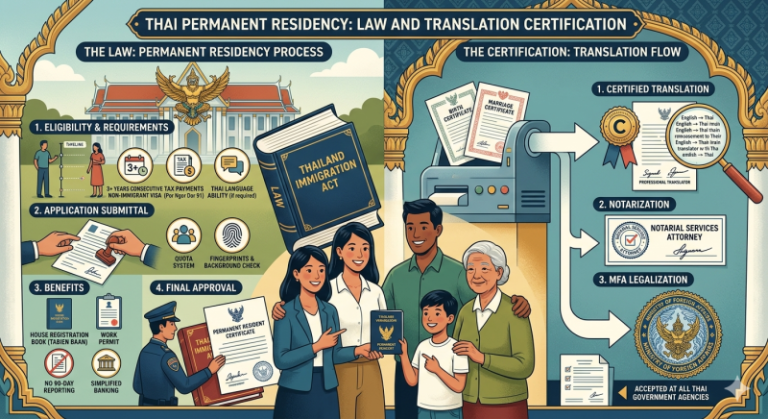
Within the permanent residency application process, foreign-issued official documents constitute a critical component. These documents may include birth certificates, marriage certificates, educational qualifications, employment records, tax statements, and financial evidence. Consequently, certified translation has become an essential mechanism bridging the legal systems of source and destination countries. Certified translators play a pivotal role in accurately transferring legal and specialized meanings from one language to another while ensuring compliance with official documentation standards required by governmental agencies. Even minor translation inaccuracies may lead to application rejection or legal complications.
Similarly, translation certification providers are responsible for verifying the accuracy and authenticity of translated documents and certifying that translations faithfully correspond to the original texts. Such entities may include legal firms, translation agencies, or professional organizations recognized by government authorities. Translation certification contributes significantly to documentary credibility, which remains fundamental in international immigration procedures.
Certified interpreters also perform indispensable functions during interviews, application submissions, and interactions with immigration authorities, particularly when applicants possess limited proficiency in Thai. Certified interpreters are required to adhere to professional ethical standards emphasizing impartiality, accuracy, and confidentiality. Misinterpretation during immigration interviews may directly affect applicants’ legal rights and residency status.
At the regional level, professional associations of translators and interpreters in Southeast Asia contribute substantially to establishing professional standards, training systems, and certification frameworks for language professionals working in legal and immigration contexts. These organizations enhance the quality and reliability of official document translation while promoting ethical standards aligned with increasing labor mobility and migration within the ASEAN region. In the context of globalization, translation is no longer merely a linguistic activity; rather, it constitutes part of the legal and administrative infrastructure of the modern state.
In conclusion, Thailand’s permanent residency framework reflects an immigration policy that integrates economic interests, humanitarian considerations, and national development strategies. Simultaneously, the system depends significantly upon the expertise of certified translators, translation certification providers, and certified interpreters, as international migration inherently involves the cross-border transfer of documents, information, and legal rights across languages. The continued development of professional standards for language practitioners in Southeast Asia therefore represents a crucial factor in enhancing transparency, credibility, and efficiency within future immigration systems.
References
- Siam Legal International. (2025). Types of Thai permanent residency. Siam Legal International.https://www.siam-legal.com/thailand-visa/permanent-residency-thailand.php?utm
For professional services, please visit: https://www.seaproti.org/practitioners/
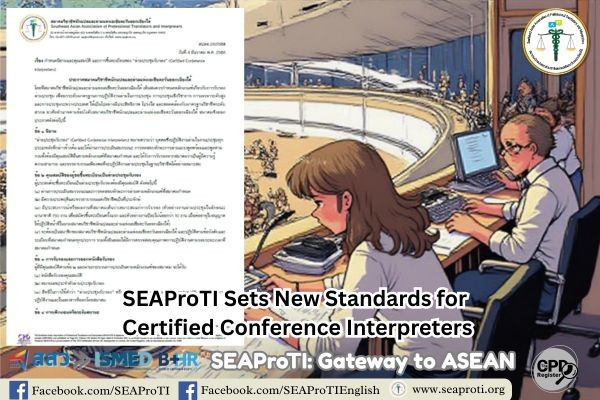
About certified translators, translation certifiers, and certified interpreters associated with SEAProTI. The Southeast Asian Association of Professional Translators and Interpreters (SEAProTI) has officially shared the qualifications and requirements for becoming Certified Translators, Translation Certification Providers, and Certified Interpreters in Sections 9 and 10 of the Royal Gazette, which was published by the Prime Minister’s Office in Thailand on July 25, 2024. Certified Translators, Translation Certification Providers, and Certified Interpreters
The Council of State has proposed the enactment of a Royal Decree, granting registered translators and recognised translation certifiers from professional associations or accredited language institutions the authority to provide legally valid translation certification (Letter to SEAProTI dated April 28, 2025)
SEAProTI is the first professional association in Thailand and Southeast Asia to implement a comprehensive certification system for translators, certifiers, and interpreters.
Head Office: Baan Ratchakru Building, No. 33, Room 402, Soi Phahonyothin 5, Phahonyothin Road, Phaya Thai District, Bangkok 10400, Thailand
Email: hello@seaproti.com | Tel.: (+66) 2-114-3128 (Office hours: Mon–Fri, 09:00–17:00).
ประเภทของการมีถิ่นที่อยู่ถาวรในประเทศไทย: กรอบกฎหมายตรวจคนเข้าเมือง บทบาทของนักแปลรับรอง และการรับรองเอกสารในบริบทการย้ายถิ่นฐานระหว่างประเทศ
การมีถิ่นที่อยู่ถาวรในประเทศไทย (Thai Permanent Residency) เป็นกลไกสำคัญของนโยบายตรวจคนเข้าเมืองไทยที่มุ่งดึงดูดการลงทุน ทรัพยากรมนุษย์ที่มีศักยภาพ และการสร้างความมั่นคงทางสังคมผ่านการรวมครอบครัว โดยสถานะดังกล่าวเปิดโอกาสให้ชาวต่างชาติสามารถพำนักอยู่ในประเทศไทยได้อย่างถาวรโดยไม่ต้องต่อวีซ่ารายปี ทั้งยังเอื้อประโยชน์ด้านการทำงาน การลงทุน และการเข้าถึงบริการของรัฐบางประการ กระบวนการพิจารณาถิ่นที่อยู่ถาวรของไทยมีลักษณะเป็นระบบคัดกรองเชิงนโยบาย (policy-based selection system) ที่ผสมผสานปัจจัยทางเศรษฐกิจ มนุษยธรรม และผลประโยชน์แห่งชาติ (Siam Legal International, 2568)
ภายใต้หลักเกณฑ์ของสำนักงานตรวจคนเข้าเมืองไทย การขอมีถิ่นที่อยู่ถาวรแบ่งออกเป็นห้าประเภทหลัก ได้แก่ การลงทุน การทำงาน วัตถุประสงค์ด้านมนุษยธรรม การเป็นผู้เชี่ยวชาญที่มีความสามารถพิเศษระดับโลก และกรณีพิเศษที่พิจารณาเป็นรายกรณี (Siam Legal International, 2568) แต่ละประเภทสะท้อนแนวคิดของรัฐไทยในการบริหารจัดการการย้ายถิ่นฐานให้สอดคล้องกับเป้าหมายด้านเศรษฐกิจ ความมั่นคง และโครงสร้างประชากร
ประเภทแรกคือการได้รับถิ่นที่อยู่ถาวรผ่านการลงทุน ซึ่งกำหนดให้ผู้สมัครต้องมีเงินลงทุนไม่น้อยกว่า 10 ล้านบาท โดยต้องแสดงหลักฐานการโอนเงินจากต่างประเทศเข้าสู่ประเทศไทยผ่านธนาคารพาณิชย์ในประเทศ เงินลงทุนดังกล่าวต้องก่อให้เกิดประโยชน์ต่อเศรษฐกิจไทย เช่น การลงทุนในบริษัทจำกัดหรือบริษัทมหาชน การถือพันธบัตรรัฐบาล หรือการลงทุนในตลาดหลักทรัพย์ภายใต้การกำกับของสำนักงานคณะกรรมการกำกับหลักทรัพย์และตลาดหลักทรัพย์ เกณฑ์ดังกล่าวสะท้อนแนวโน้มของรัฐไทยในการใช้ระบบตรวจคนเข้าเมืองเพื่อสนับสนุนการเติบโตทางเศรษฐกิจและดึงดูดทุนต่างชาติ
ประเภทที่สองคือการมีถิ่นที่อยู่ถาวรผ่านการทำงาน ผู้สมัครต้องดำรงตำแหน่งผู้บริหารระดับสูง เช่น ประธานบริษัทหรือประธานเจ้าหน้าที่บริหารของบริษัทที่จดทะเบียนในประเทศไทย มีอำนาจลงนามแทนนิติบุคคล และมีรายได้เฉลี่ยตามเกณฑ์ที่รัฐกำหนด นอกจากนี้ ธุรกิจของผู้สมัครต้องเป็นกิจการที่ก่อประโยชน์ต่อเศรษฐกิจไทย ไม่ว่าจะเป็นการค้าระหว่างประเทศ ธุรกิจการท่องเที่ยว หรือธุรกิจอื่นที่มีการลงทุนในระดับสูง หลักเกณฑ์ดังกล่าวสอดคล้องกับแนวคิด “economic migration” ที่หลายประเทศใช้ในการดึงดูดแรงงานทักษะสูงและผู้บริหารจากต่างประเทศเข้าสู่ระบบเศรษฐกิจของรัฐปลายทาง
ประเภทที่สามคือการพำนักถาวรด้วยเหตุผลด้านมนุษยธรรม ซึ่งครอบคลุมกรณีคู่สมรส บุตร และบิดามารดาของบุคคลสัญชาติไทยหรือผู้มีถิ่นที่อยู่ถาวรในประเทศไทย หลักเกณฑ์ในหมวดนี้สะท้อนบทบาทของรัฐในการคุ้มครองสถาบันครอบครัวและส่งเสริมการรวมครอบครัวข้ามพรมแดน (family reunification) อย่างไรก็ตาม รัฐไทยยังคงกำหนดเงื่อนไขด้านรายได้ อายุ และความสัมพันธ์ทางสายเลือดอย่างเข้มงวดเพื่อป้องกันการใช้ระบบถิ่นที่อยู่ถาวรโดยมิชอบ ตัวอย่างเช่น คู่สมรสต้องจดทะเบียนสมรสเป็นระยะเวลาตามที่กำหนด และต้องมีรายได้ขั้นต่ำพร้อมหลักฐานการเสียภาษีอย่างต่อเนื่อง
อีกประเภทหนึ่งคือการให้ถิ่นที่อยู่ถาวรแก่ “ผู้เชี่ยวชาญระดับโลก” ซึ่งเป็นบุคคลที่มีความสามารถเฉพาะทางและสามารถสร้างประโยชน์ต่อประเทศ โดยผู้สมัครต้องมีวุฒิการศึกษาระดับปริญญาตรีขึ้นไป มีหนังสือรับรองการจ้างงาน และมีหน่วยงานของรัฐหรือเจ้าหน้าที่ผู้มีอำนาจให้การสนับสนุน แนวทางดังกล่าวสะท้อนการแข่งขันระหว่างรัฐในภูมิภาคเอเชียตะวันออกเฉียงใต้เพื่อดึงดูดบุคลากรที่มีศักยภาพสูงในสาขาเทคโนโลยี วิทยาศาสตร์ และนวัตกรรม
นอกจากนี้ ยังมีการพิจารณาแบบกรณีพิเศษสำหรับบุคคลที่สร้างคุณประโยชน์แก่ประเทศไทยหรือได้รับการรับรองจากหน่วยงานภาครัฐระดับสูง เช่น รัฐมนตรี ผู้ว่าราชการจังหวัด หรือผู้บัญชาการเหล่าทัพ กระบวนการดังกล่าวแสดงให้เห็นว่าระบบตรวจคนเข้าเมืองไทยมิได้อาศัยเพียงหลักเกณฑ์เชิงตัวเลข แต่ยังเปิดพื้นที่สำหรับดุลพินิจทางนโยบายและผลประโยชน์แห่งชาติ
ในบริบทของการขอมีถิ่นที่อยู่ถาวร เอกสารราชการจากต่างประเทศถือเป็นองค์ประกอบสำคัญอย่างยิ่ง ไม่ว่าจะเป็นสูติบัตร ทะเบียนสมรส หลักฐานการศึกษา หนังสือรับรองการทำงาน รายงานภาษี หรือเอกสารการเงิน ด้วยเหตุนี้ “การแปลรับรอง” (certified translation) จึงกลายเป็นกลไกสำคัญที่เชื่อมโยงระหว่างระบบกฎหมายของรัฐต้นทางและรัฐปลายทาง นักแปลรับรอง (Certified Translators) มีบทบาทในการถ่ายทอดความหมายทางกฎหมายและข้อมูลเฉพาะทางจากภาษาหนึ่งสู่อีกภาษาหนึ่งอย่างถูกต้อง ครบถ้วน และสอดคล้องกับรูปแบบที่หน่วยงานราชการยอมรับ ความผิดพลาดในการแปลเอกสารเพียงเล็กน้อยอาจส่งผลให้คำร้องถูกปฏิเสธหรือเกิดปัญหาทางกฎหมายในภายหลังได้
ในทำนองเดียวกัน ผู้รับรองการแปล (Translation Certification Providers) มีบทบาทในการตรวจสอบความถูกต้องของเอกสารแปลและรับรองว่าเนื้อหาที่แปลมีความสอดคล้องกับต้นฉบับ หน่วยงานเหล่านี้อาจเป็นบริษัทด้านกฎหมาย สำนักงานแปล หรือองค์กรวิชาชีพที่ได้รับความเชื่อถือจากหน่วยงานรัฐ การรับรองดังกล่าวช่วยสร้าง “ความน่าเชื่อถือเชิงเอกสาร” (documentary credibility) ซึ่งมีความสำคัญอย่างมากในกระบวนการตรวจคนเข้าเมืองระหว่างประเทศ
นอกจากนี้ ล่ามรับรอง (Certified Interpreters) ยังมีบทบาทสำคัญในกระบวนการสัมภาษณ์ การยื่นคำร้อง และการติดต่อกับหน่วยงานรัฐ โดยเฉพาะในกรณีที่ผู้ยื่นคำร้องไม่สามารถสื่อสารภาษาไทยได้อย่างเพียงพอ ล่ามรับรองต้องปฏิบัติงานภายใต้หลักจรรยาบรรณด้านความเป็นกลาง ความถูกต้อง และการรักษาความลับ เนื่องจากการสื่อสารผิดพลาดในการสัมภาษณ์ตรวจคนเข้าเมืองอาจกระทบต่อสิทธิและสถานะทางกฎหมายของผู้สมัครโดยตรง
ในระดับภูมิภาค สมาคมวิชาชีพนักแปลและล่ามแห่งเอเชียตะวันออกเฉียงใต้มีบทบาทสำคัญในการกำหนดมาตรฐานวิชาชีพ การอบรม และการรับรองคุณสมบัติของนักแปลและล่ามที่ปฏิบัติงานด้านกฎหมายและตรวจคนเข้าเมือง องค์กรวิชาชีพดังกล่าวช่วยยกระดับมาตรฐานการแปลเอกสารราชการระหว่างประเทศ และส่งเสริมการพัฒนาหลักจริยธรรมทางวิชาชีพให้สอดคล้องกับบริบทการเคลื่อนย้ายแรงงานและการย้ายถิ่นฐานในภูมิภาคอาเซียน ภายใต้กระแสโลกาภิวัตน์ การแปลมิได้เป็นเพียงกิจกรรมทางภาษา หากแต่เป็นส่วนหนึ่งของโครงสร้างพื้นฐานทางกฎหมายและการบริหารรัฐสมัยใหม่
กล่าวโดยสรุป ระบบการมีถิ่นที่อยู่ถาวรของไทยสะท้อนนโยบายตรวจคนเข้าเมืองที่ผสมผสานผลประโยชน์ทางเศรษฐกิจ มนุษยธรรม และยุทธศาสตร์การพัฒนาประเทศเข้าด้วยกัน ขณะเดียวกัน กระบวนการดังกล่าวยังพึ่งพาการทำงานของนักแปลรับรอง ผู้รับรองการแปล และล่ามรับรองอย่างมีนัยสำคัญ เนื่องจากการย้ายถิ่นฐานระหว่างประเทศเกี่ยวข้องกับการเคลื่อนย้ายข้อมูล เอกสาร และสิทธิทางกฎหมายข้ามภาษา การพัฒนามาตรฐานวิชาชีพของผู้ปฏิบัติงานด้านภาษาในภูมิภาคเอเชียตะวันออกเฉียงใต้จึงเป็นปัจจัยสำคัญในการเสริมสร้างความโปร่งใส ความน่าเชื่อถือ และประสิทธิภาพของระบบตรวจคนเข้าเมืองในอนาคต
เอกสารอ้างอิง
- Siam Legal International. (2568). Types of Thai permanent residency. Siam Legal International.https://www.siam-legal.com/thailand-visa/permanent-residency-thailand.php?utm
สมาคมวิชาชีพนักแปลและล่ามแห่งเอเชียตะวันออกเฉียงใต้ (SEAProTI) ได้ประกาศหลักเกณฑ์และคุณสมบัติของผู้ที่ขึ้นทะเบียนเป็น “นักแปลรับรอง (Certified Translators) และผู้รับรองการแปล (Translation Certification Providers) และล่ามรับรอง (Certified Interpreters)” ของสมาคม หมวดที่ 9 และหมวดที่ 10 ในราชกิจจานุเบกษา ของสำนักเลขาธิการคณะรัฐมนตรี ในสำนักนายกรัฐมนตรี แห่งราชอาณาจักรไทย ลงวันที่ 25 ก.ค. 2567 เล่มที่ 141 ตอนที่ 66 ง หน้า 100 อ่านฉบับเต็มได้ที่: นักแปลรับรอง ผู้รับรองการแปล และล่ามรับรอง
สำนักคณะกรรมการกฤษฎีกาเสนอให้ตราเป็นพระราชกฤษฎีกา โดยกำหนดให้นักแปลที่ขึ้นทะเบียน รวมถึงผู้รับรองการแปลจากสมาคมวิชาชีพหรือสถาบันสอนภาษาที่มีการอบรมและขึ้นทะเบียน สามารถรับรองคำแปลได้ (จดหมายถึงสมาคม SEAProTI ลงวันที่ 28 เม.ย. 2568)
สมาคมวิชาชีพนักแปลและล่ามแห่งเอเชียตะวันออกเฉียงใต้เป็นสมาคมวิชาชีพแห่งแรกและแห่งเดียวในประเทศไทยและภูมิภาคเอเชียตะวันออกเฉียงใต้ที่มีระบบรับรองนักแปลรับรอง ผู้รับรองการแปล และล่ามรับรอง
สำนักงานใหญ่: อาคารบ้านราชครู เลขที่ 33 ห้อง 402 ซอยพหลโยธิน 5 ถนนพหลโยธิน แขวงพญาไท เขตพญาไท กรุงเทพมหานคร 10400 ประเทศไทย