



Food Translation Is Cultural Translation: Australian English Speakers’ Reception of Food Translation
Author: Griroek Gruaaythong
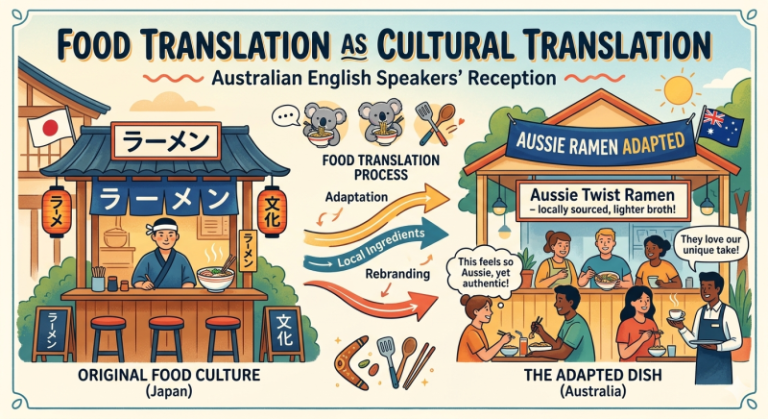
12 May 2026, Bangkok – Reception studies of culture-specific items have attracted increasing attention in empirical translation studies, and food is widely regarded as one of the most culturally embedded domains. Food is not merely an object of consumption; it also reflects culturally situated practices of production, preparation, and eating. Consequently, the quality of food translation depends largely on readers’ ability to interpret and respond to the cultural meanings embedded in food and culinary culture. However, studies investigating readers’ reception of food translation remain limited.
This article examines Australian English speakers’ reception of Chinese–English food translation through semi-structured interviews with 22 participants, who were asked to read translated food-related texts and explain their understanding of them.
The findings reveal that domestication strategies may generate cultural misunderstandings, whereas foreignisation strategies may lead to problematic lexical choices and stylistic inconsistency. Nevertheless, most readers expressed a preference for translations that preserve a sense of cultural otherness, provided that brief explanations are included to reduce confusion. Furthermore, although readers generally tolerated grammatical errors to some extent, they placed considerable importance on precision in lexical choice. This study therefore provides empirical insights into readers’ perceptions of food culture and their expectations of food translation, offering practical implications for translators working in food-related contexts.
Keywords: food translation, reception studies, readers, Australian English, explicitation
Food Translation and Culinary Culture
Food translation is a widespread phenomenon across all levels of food production and the global food supply chain in the age of globalisation (Desjardins, 2021). It appears on food packaging, restaurant menus, cookbooks, online restaurant reviews, social media, and audiovisual media such as films, food documentaries, cooking programmes, and digital cooking videos. Food translation is not limited to interlingual transfer; it may also involve intersemiotic translation, since food itself can function as a “code of communication” (Charron & Desjardins, 2011, para. 3) that reflects cultural identity in different contexts. This study, however, focuses specifically on language related to food and interlingual translation, defining “food translation” as the transfer of food-related meanings across linguistic boundaries.
Food translation is a complex task because many food-related words, phrases, and expressions are tied to culture-specific eating practices that often lack direct equivalents in other languages and are sometimes regarded as “untranslatable.” Food is also understood as a cultural product that embodies processes of production, preparation, and consumption (Montanari, 2006). Culinary culture, as well as eating habits and traditions, reflects the values, identities, and worldviews of a society (Garzone, 2017; Zhang & Torres-Hostench, 2023). As such, food translation is not merely a form of entertainment-oriented content but also carries broader social and cultural implications (Desjardins, 2021).
Although food translation has received less scholarly attention than other areas of translation studies, previous research has increasingly examined the translation of menus and cookbooks (e.g., Chłopicki, 2018; Desjardins, 2011; Fuentes-Luque, 2017; Paradowski, 2018). Contemporary research has also focused on food-related terminology and phraseology (e.g., Gaspari, 2015; Jurado & Ponce, 2023; Zhang & Torres-Hostench, 2022; Zhu et al., 2024), particularly strategies for translating dish names, ingredients, and cooking techniques.
Most existing studies, however, remain strongly text-oriented. Researchers have primarily employed qualitative analyses to investigate the linguistic and pragmatic features of food translation (e.g., Chłopicki, 2018; Jurado & Ponce, 2023; Panou, 2022), often through comparative analyses between source texts and translations. Corpus-based research later became increasingly popular because it enabled researchers to identify recurring patterns in actual food translation practices (e.g., Amenador & Wang, 2022; Li, 2019; Li et al., 2022).
Despite the practical importance of readers’ responses, relatively little research has explored how actual readers perceive and interpret translated food texts. Previous studies have tended to prioritise stakeholders such as translators, restaurant owners, and tourism agencies, while “readers” or “consumers” as end-users of translated texts have largely been overlooked (Fuentes-Luque, 2017).
This study therefore investigates readers’ reception of food translation using empirical data from interviews with Australian English speakers, aiming to explore how readers interpret food-related meanings and what they expect from food translation.
Reception Studies
The concept of “reception” gained prominence in literary studies during the 1960s and 1970s, marking a shift in focus from the “text” and the “author” to the “reader,” since texts cannot generate meaning without reader interpretation (Brems & Pinto, 2013). This perspective later influenced contemporary translation studies, which increasingly emphasised the role of audiences, including literary readers, audiovisual viewers, and users of translated materials.
In literary translation, reception studies have examined which aspects of translated texts readers value, such as immersion, stylistic fidelity, and the use of paratextual elements (Chen, 2023; Guo & Zou, 2023). Scholars have also investigated readers’ responses to human translation, machine translation, and post-edited machine translation (Guerberof-Arenas & Toral, 2024).
In audiovisual translation, reception studies have received considerable attention in areas such as audio description, dubbing, and subtitling, particularly regarding how visually impaired audiences or cross-cultural viewers respond differently to translation modes (Bardini, 2020; Chmiel & Mazur, 2022).
Methodologically, reception studies can generally be divided into two major approaches: the cognitive approach, which employs technological tools such as eye-tracking devices, and the textual approach, which relies on self-reported data collected through questionnaires, interviews, or focus groups (Di Giovanni, 2020; Guerberof-Arenas et al., 2024).
This study adopts semi-structured interviews because they allow participants to describe their experiences and perspectives in a detailed and natural manner, thereby facilitating the discovery of new insights into the reception of food translation.
Methodology
The research materials were selected from the official English subtitles of the Chinese documentary A Bite of Shunde, distributed through Amazon Prime and YouTube (Liu, 2016). The documentary introduces the culinary culture of Shunde, China, through three major themes: origins, innovation, and culinary heritage.
Four excerpts of approximately 100–200 words each were selected. The passages contained references to food names, textures, cooking techniques, and food-related cultural narratives. The researchers intentionally selected examples containing grammatical errors, spelling mistakes, and problematic lexical choices in order to encourage participants to comment on translation quality.
The participant group consisted of 22 Australian English speakers aged between 18 and 64. None had Chinese heritage or Chinese language proficiency. Participants were recruited voluntarily through online and offline advertisements. Each interview lasted approximately one hour and consisted of two sections: discussion of the translated texts and broader discussion about food translation in general.
Approximately 23 hours of interview recordings were transcribed and analysed using NVivo software. The analysis employed Sharifian’s (2011, 2017) Cultural Linguistics framework to explain culturally influenced interpretive processes among readers.
Australian English Speakers’ Reception of Food Translation
The analysis revealed significant discrepancies between the meanings intended by translators and readers’ interpretations. Three major issues emerged: (1) cultural misunderstandings, (2) problematic lexical choices, and (3) cross-linguistic stylistic differences.
1. Cultural Misunderstandings
One notable example involved the translation of “早茶” (zǎochá), which refers to the Cantonese tradition of consuming dim sum with tea. The translator rendered the term as “morning tea,” while “点心” (diǎnxīn), meaning dim sum, was translated as “refreshments.” As a result, most participants interpreted the phrase as referring merely to drinking tea in the morning or taking a tea break, rather than eating a substantial meal at a restaurant.
Many participants associated “refreshments” with sweets, beverages, or light Western-style snacks, creating a gap between the translator’s intended meaning and readers’ cultural expectations. This example demonstrates how familiar target-culture terminology may unintentionally activate entirely different cultural schemas.
A similar issue appeared in the translation of “凉拌鱼皮” as “fish skin salad.” Most participants imagined a vegetable salad containing fish skin, whereas the dish actually referred to a cold appetiser consisting mainly of seasoned fish skin. The misunderstanding stemmed from the word “salad,” which strongly evokes Western-style dishes centred on fresh vegetables.
2. Problematic Lexical Choices
The findings indicate that lexical choice strongly influences readers’ comprehension. This was particularly evident in transliterated expressions such as “yusheng” and “niang.” Many participants could not determine whether these words referred to dishes, cooking methods, or ingredients. However, some participants appreciated the retention of Chinese terminology because it preserved cultural identity and conveyed a sense of novelty.
Conversely, the use of unfamiliar English words also caused confusion. For example, the word “dace,” referring to a freshwater fish species, was linguistically accurate but unknown to most participants, preventing them from clearly visualising the dish.
In addition, vocabulary originating from English varieties other than Australian English occasionally generated misunderstanding. One example was the use of “punky” to describe the texture of pork offal. None of the participants understood the term, and several attempted to infer its meaning from its sound alone.
3. Cross-Linguistic Stylistic Differences
Another major issue involved differences in narrative structure and figurative language between Chinese and English. Chinese discourse often introduces contextual background before presenting the main point, whereas English writing typically foregrounds the central idea at the outset. When translators reproduced the original Chinese structure too closely, readers frequently became confused about the main topic.
Literal translation of figurative expressions also caused misunderstanding. For example, the sentence “Yusheng is the live fossil of Chinese cuisine” led some participants to assume the text referred to an ancient animal or organism rather than a traditional culinary practice preserved across generations.
Readers’ Expectations of Food Translation
1. Do Readers Prefer Foreignness or Familiarity?
The findings suggest that domestication strategies, although intended to facilitate comprehension, may inadvertently create cultural misunderstanding. In contrast, foreignisation strategies, despite causing initial confusion, were generally preferred because readers expected a culturally distinctive experience when reading about foreign food.
Most participants suggested that transliterated terms should be accompanied by brief explanations in order to aid comprehension without erasing cultural identity. This aligns with Blum-Kulka’s (1986) concept of explicitation, which proposes that translations often increase explicitness to facilitate communication.
2. Is Accuracy Enough?
Although participants noticed grammatical and spelling errors in the translated texts, most agreed that such mistakes did not significantly obstruct comprehension. Instead, they mainly increased processing effort and reading time. These findings align with eye-tracking studies showing that grammatical anomalies increase cognitive processing load without necessarily impairing comprehension (Braze et al., 2002; Hallberg & Niehorster, 2021).
However, readers placed far greater importance on precision in lexical choice than on grammatical correctness. For example, the phrase “ways to cook fish” confused participants because the original dish involved raw fish rather than heat-based cooking. Participants therefore suggested “prepare fish dishes” as a more precise alternative.
Participants also expressed a preference for direct and transparent translation of ingredients, even when such ingredients might appear unappealing in the target culture. For example, they preferred “pig stomach” over “pig tripe” because it provided clearer information that allowed them to make informed decisions about the food themselves.
Conclusion
This study investigated Australian English speakers’ reception of food translation and their expectations regarding translated food texts. The findings identified three major issues affecting reader comprehension: cultural misunderstanding, problematic lexical choices, and cross-linguistic stylistic differences.
The results suggest that readers value concise but necessary explanations for culture-specific items and place strong emphasis on precision in lexical choice, even when dealing with unfamiliar or potentially unappetising food items.
Practically, the findings indicate that translators should pay greater attention to the cultural conceptualisations of target readers rather than focusing solely on linguistic fidelity. Translators need to consider how lexical choices and translation strategies shape readers’ cultural interpretations. The findings also have broader implications for the translation of other culture-specific items beyond food.
At the theoretical and methodological levels, this study contributes to the growing body of reception-oriented translation research by demonstrating the value of analysing reader responses as a means of evaluating translation effects and by supporting more culturally sensitive empirical approaches to translation studies.
References
- Amenador, K. B., & Wang, Z. (2022). The translation of culture-specific items (CSIs) in Chinese–English food menu corpus: A study of strategies and factors. SAGE Open, 12(2), 1–17. https://doi.org/10.1177/21582440221096649
- Ameri, S., & Khoshsaligheh, M. (2021). An experiment on amateur and professional subtitling reception in Iran. SKASE Journal of Translation and Interpretation, 14(2), 2–21.
- Bardini, F. (2020). Film language, film emotions and the experience of blind and partially sighted viewers: A reception study. Journal of Specialised Translation, 33, 259–280. https://doi.org/10.26034/cm.jostrans.2020.556
- Blum-Kulka, S. (1986). Shifts of cohesion and coherence in translation. In J. House & S. Blum-Kulka (Eds.), Interlingual and Intercultural Communication: Discourse and Cognition in Translation and Second Language Acquisition Studies (pp. 17–35).
-
Braze, D., Shankweiler, D., Ni, W., & Palumbo, L. C. (2002). Readers’ eye movements distinguish anomalies of form and content. Journal of Psycholinguistic Research, 31(1), 25–44. https://doi.org/10.1023/A:1014324220455
-
Brems, E., & Pinto, S. R. (2013). Reception and translation. In Y. Gambier & L. van Doorslaer (Eds.), Handbook of Translation Studies (Vol. 4, pp. 142–147). John Benjamins Publishing Company.
- Charron, M., & Desjardins, R. (2011). Introduction: Food, language, and identity. Cuizine: The Journal of Canadian Food Cultures, 3(1). https://doi.org/10.7202/1004725ar
- Chen, X. (2023). The role of spatial changes to paratext in literary translation reception: Eleven Chinese editions of Charlotte’s Web. Translation Studies, 17(2), 299–313. https://doi.org/10.1080/14781700.2023.2231959
- Chłopicki, W. (2018). Translation of menus: Labour of Sisyphos, squaring the circle or marrying water and fire? Folklore: Electronic Journal of Folklore, 71, 155–178. https://doi.org/10.7592/FEJF2018.71.chlopicki
- Chmiel, A., & Mazur, I. (2022). A homogenous or heterogeneous audience? Audio description preferences of persons with congenital blindness, non-congenital blindness and low vision. Perspectives: Studies in Translation Theory and Practice, 30(3), 552–567. https://doi.org/10.1080/0907676X.2021.1913198
- Desjardins, R. (2011). L’étude du menu comme représentation de l’identité culinaire québécoise: Le cas des menus au Château Frontenac. Cuizine: The Journal of Canadian Food Cultures, 3(1). https://doi.org/10.7202/1004729ar
- Desjardins, R. (2021). Food and translation. In Y. Gambier & L. van Doorslaer (Eds.), Handbook of Translation Studies (Vol. 5, pp. 88–93). John Benjamins Publishing Company. https://doi.org/10.1075/hts.5.foo1
- Di Giovanni, E. (2020). Eye tracking and the museum experience in Italy. Altre Modernita, 24, 10–24. https://doi.org/10.13130/2035-7680/14511
- Fuentes-Luque, A. (2017). An approach to analysing the quality of menu translations in southern Spain restaurants. Journal of Multilingual and Multicultural Development, 38(2), 177–188. https://doi.org/10.1080/01434632.2016.1187154
- Garzone, G. (2017). Food, culture, language and translation. Journal of Multicultural Discourses, 12(3), 214–221. https://doi.org/10.1080/17447143.2017.1364255
- Gaspari, F. (2015). Exploring Expo Milano 2015: A cross-linguistic comparison of food-related phraseology in translation using a comparallel corpus approach. The Translator, 21(3), 327–349. https://doi.org/10.1080/13556509.2015.1103099
- Guo, J., & Zou, D. (2023). Reception study: The omission of narrative text in the English translation of Life and Death Are Wearing Me Out. Frontiers in Communication, 8, 1–13. https://doi.org/10.3389/fcomm.2023.1063490
- Guerberof-Arenas, A., Moorkens, J., & Orrego-Carmona, D. (2024). “A Spanish version of EastEnders”: A reception study of a telenovela subtitled using MT. Journal of Specialised Translation, 41, 230–254. https://doi.org/10.26034/cm.jostrans.2024.4724
- Guerberof-Arenas, A., & Toral, A. (2024). To be or not to be: A translation reception study of a literary text translated into Dutch and Catalan using machine translation. Target, 36(2), 215–244. https://doi.org/10.1075/target.22134.gue
- Hallberg, A., & Niehorster, D. C. (2021). Parsing written language with non-standard grammar. Reading and Writing, 34(1), 27–48. https://doi.org/10.1007/s11145-020-10040-6
- Hennink, M. M., & Kaiser, B. N. (2022). Sample sizes for saturation in qualitative research: A systematic review of empirical tests. Social Science & Medicine, 292, Article 114523. https://doi.org/10.1016/j.socscimed.2021.114523
-
Jurado, M. Á., & Ponce, G. P. (2023). Contrastive study of translation techniques used in agri-food translation of food labelling: The product’s name (Spanish–French). In I. P. Gil & M.-T. O. Antón (Eds.), Interpreting and Translation for Agri-food Professionals in the Global Marketplace (pp. 119–139). De Gruyter Brill. https://doi.org/10.1515/9783111101729-007
- Li, S. (2019). A corpus-based multimodal approach to the translation of restaurant menus. Perspectives: Studies in Translation Theory and Practice, 27(1), 1–19. https://doi.org/10.1080/0907676X.2018.1483408
-
Li, S., Li, Q., & Hope, W. (2022). Translating (and rewriting) Jane Austen’s food across time and space. Asia Pacific Translation and Intercultural Studies, 9(2), 201–216. https://doi.org/10.1080/23306343.2022.2106068
- Liu, S. (Director). (2016). A Bite of Shunde [Documentary]. NewTV.
- Montanari, M. (2006). Food Is Culture (A. Sonnenfeld, Trans.). Columbia University Press.
- Murtisari, E. (2016). Explicitation in translation studies: The journey of an elusive concept. The International Journal of Translation and Interpreting Research, 8, 64–81. https://doi.org/10.12807/ti.108202.2016.a05
- Panou, D. (2022). Possibilising food translation in children’s literature: With a focus on Greek translations of Captain Underpants. Babel, 68(6), 890–912. https://doi.org/10.1075/babel.00294.pan
- Paradowski, M. B. (2018). What’s cooking in English culinary texts? Insights from genre corpora for cookbook and menu writers and translators. The Translator, 24(1), 50–69. https://doi.org/10.1080/13556509.2016.1271735
- Sharifian, F. (2011). Cultural Conceptualisations and Language: Theoretical Framework and Applications. John Benjamins Publishing Company.
- Sharifian, F. (2017). Cultural Linguistics. John Benjamins Publishing Company.
- Venuti, L. (2008). The Translator’s Invisibility: A History of Translation (2nd ed.). Routledge.
- Wang, B. (2011). Translation practices and the issue of directionality in China. Meta: Translators’ Journal, 56(4), 896–914. https://doi.org/10.7202/1011259ar
- Zhang, X., & Torres-Hostench, O. (2022). La traducción al español de las técnicas culinarias chinas [Translating Chinese food preparation methods into Spanish]. Hermeneus, 24, 483–514. https://doi.org/10.24197/her.24.2022.483-514
- Zhang, X., & Torres-Hostench, O. (2023). Chinese gastronomic nomenclature: Culture and translation. In I. P. Gil & M.-T. O.
- Antón (Eds.), Interpreting and Translation for Agri-food Professionals in the Global Marketplace (pp. 29–45). De Gruyter Brill. https://doi.org/10.1515/9783111101729-002
- Zhu, H., Ang, L. H., & Mansor, N. S. (2024). Are mouse noodles actually made from mice? Touring street food name translations. Humanities and Social Sciences Communications, 11(1). https://doi.org/10.1057/s41599-024-03041-1
For professional services, please visit: https://www.seaproti.org/practitioners/
About certified translators, translation certifiers, and certified interpreters associated with SEAProTI. The Southeast Asian Association of Professional Translators and Interpreters (SEAProTI) has officially shared the qualifications and requirements for becoming Certified Translators, Translation Certification Providers, and Certified Interpreters in Sections 9 and 10 of the Royal Gazette, which was published by the Prime Minister’s Office in Thailand on July 25, 2024. Certified Translators, Translation Certification Providers, and Certified Interpreters
The Council of State has proposed the enactment of a Royal Decree, granting registered translators and recognised translation certifiers from professional associations or accredited language institutions the authority to provide legally valid translation certification (Letter to SEAProTI dated April 28, 2025)
SEAProTI is the first professional association in Thailand and Southeast Asia to implement a comprehensive certification system for translators, certifiers, and interpreters.
Head Office: Baan Ratchakru Building, No. 33, Room 402, Soi Phahonyothin 5, Phahonyothin Road, Phaya Thai District, Bangkok 10400, Thailand
Email: hello@seaproti.com | Tel.: (+66) 2-114-3128 (Office hours: Mon–Fri, 09:00–17:00).
การแปลอาหารคือการแปลวัฒนธรรม: การรับสารของผู้พูดภาษาอังกฤษแบบออสเตรเลียต่อการแปลอาหาร
ผู้เขียน: ไกรฤกษ์ กรวยทอง
12 พฤษพาคม 2569, กรุงเทพมหานคร – การศึกษาการรับสารของรายการอ้างอิงเฉพาะวัฒนธรรมได้รับความสนใจเพิ่มขึ้นอย่างต่อเนื่องในแวดวงการศึกษาการแปลเชิงประจักษ์ โดย “อาหาร” ถือเป็นหนึ่งในองค์ประกอบทางวัฒนธรรมที่โดดเด่นที่สุด เนื่องจากอาหารมิได้เป็นเพียงวัตถุเพื่อการบริโภค หากยังสะท้อนกระบวนการผลิต การปรุง และวิถีการบริโภคที่ฝังรากอยู่ในวัฒนธรรมของสังคมหนึ่ง ๆ อย่างลึกซึ้ง ด้วยเหตุนี้ คุณภาพของการแปลอาหารจึงขึ้นอยู่กับความสามารถของผู้อ่านในการตีความและตอบสนองต่อองค์ประกอบทางวัฒนธรรมที่แฝงอยู่ในอาหารและวัฒนธรรมการกิน อย่างไรก็ตาม งานศึกษาที่มุ่งสำรวจการรับสารของผู้อ่านต่อการแปลอาหารยังมีอยู่อย่างจำกัด บทความนี้จึงมุ่งศึกษาการรับสารของผู้พูดภาษาอังกฤษแบบออสเตรเลียต่อบทแปลอาหารจากภาษาจีนเป็นภาษาอังกฤษ โดยใช้การสัมภาษณ์กึ่งโครงสร้างกับผู้เข้าร่วมจำนวน 22 คน ซึ่งได้รับมอบหมายให้อ่านข้อความเกี่ยวกับอาหารที่ผ่านการแปลแล้วอธิบายความเข้าใจของตน
ผลการศึกษาพบว่า กลวิธีการแปลแบบทำให้เป็นวัฒนธรรมปลายทาง (domestication) อาจก่อให้เกิดความเข้าใจคลาดเคลื่อนทางวัฒนธรรม ขณะที่กลวิธีการแปลแบบคงความแปลกต่างของวัฒนธรรมต้นทาง (foreignisation) อาจนำไปสู่การเลือกใช้คำศัพท์ที่ไม่เหมาะสมและความไม่สอดคล้องด้านลีลา ภาษา อย่างไรก็ดี ผู้อ่านส่วนใหญ่กลับแสดงความพึงพอใจต่อบทแปลที่ยังคงกลิ่นอายวัฒนธรรมต่างถิ่น โดยคาดหวังเพียงคำอธิบายสั้น ๆ เพื่อช่วยลดความสับสน นอกจากนี้ แม้ผู้อ่านจะยอมรับข้อผิดพลาดทางภาษาได้ในระดับหนึ่ง แต่กลับให้ความสำคัญอย่างมากต่อความแม่นยำในการเลือกใช้คำศัพท์ งานวิจัยนี้จึงนำเสนอข้อมูลเชิงประจักษ์เกี่ยวกับการรับรู้วัฒนธรรมอาหารของผู้อ่าน ตลอดจนความคาดหวังที่มีต่อการแปลอาหาร เพื่อเป็นแนวทางสนับสนุนการตัดสินใจของนักแปลในงานแปลอาหาร
คำสำคัญ: การแปลอาหาร, การศึกษาการรับสาร, ผู้อ่าน, ภาษาอังกฤษแบบออสเตรเลีย, การทำให้ชัดแจ้ง
การแปลอาหารและวัฒนธรรมอาหาร
การแปลอาหารเป็นปรากฏการณ์ที่พบได้อย่างแพร่หลายในทุกระดับของกระบวนการผลิตอาหารและห่วงโซ่อุปทานอาหารในโลกยุคโลกาภิวัตน์ (เดสจาร์แด็งส์, 2564) ไม่ว่าจะเป็นบนบรรจุภัณฑ์อาหาร เมนูอาหาร หนังสือทำอาหาร รีวิวร้านอาหารออนไลน์ หรือสื่อสังคมออนไลน์ ตลอดจนสื่อบันเทิงประเภทภาพยนตร์ สารคดีอาหาร รายการเรียลลิตีเกี่ยวกับเชฟชื่อดัง และวิดีโอการทำอาหารบนแพลตฟอร์มดิจิทัล การแปลอาหารมิได้จำกัดอยู่เพียงการแปลระหว่างภาษา หากยังครอบคลุมถึงการแปลข้ามสัญญะ เนื่องจากอาหารสามารถทำหน้าที่เป็น “รหัสแห่งการสื่อสาร” (ชาร์รง และ เดสจาร์แด็งส์, 2554, ย่อหน้า 3) ที่สะท้อนอัตลักษณ์และวัฒนธรรมในบริบทต่างๆ ได้ อย่างไรก็ตาม บทความนี้มุ่งศึกษาเฉพาะภาษาที่ใช้เกี่ยวกับอาหารและการแปลระหว่างภาษา โดยนิยาม “การแปลอาหาร” ว่าเป็นกระบวนการถ่ายทอดเนื้อหาเกี่ยวกับอาหารข้ามพรมแดนทางภาษา
การแปลอาหารเป็นภารกิจที่ซับซ้อน เนื่องจากคำศัพท์ วลี และระบบถ้อยคำจำนวนมากเกี่ยวข้องกับพฤติกรรมการบริโภคเฉพาะวัฒนธรรม ซึ่งมักไม่มีคำเทียบตรงในภาษาอื่น และบางครั้งถูกมองว่า “ไม่อาจแปลได้” ส่งผลให้เกิดความท้าทายต่อผู้แปลอย่างยิ่ง ขณะเดียวกัน อาหารยังถูกมองว่าเป็นผลผลิตทางวัฒนธรรมที่สะท้อนกระบวนการผลิต การปรุง และการบริโภค (มอนตานารี, 2549) วัฒนธรรมอาหาร ตลอดจนประเพณีและพฤติกรรมการกินของแต่ละสังคม ล้วนสะท้อนคุณค่า อัตลักษณ์ และโลกทัศน์ของผู้คนในสังคมนั้นอย่างชัดเจน (การ์โซเน, 2560; จาง และ ตอร์เรส-โฮสเตนช์, 2566) ดังนั้น การแปลอาหารจึงมิได้ดำรงอยู่เพียงในฐานะเนื้อหาเพื่อความบันเทิง หากยังเชื่อมโยงกับผลกระทบทางสังคมและวัฒนธรรมในโลกความเป็นจริง (เดสจาร์แด็งส์, 2564)
แม้ว่าการแปลอาหารจะยังได้รับความสนใจน้อยเมื่อเทียบกับสาขาอื่นในศาสตร์การแปล แต่งานวิจัยก่อนหน้าได้เริ่มศึกษาการแปลเมนูอาหารและตำราอาหารอย่างต่อเนื่อง (เช่น คลอพิกกี, 2561; เดสจาร์แด็งส์, 2554; ฟวนเตส-ลูเก, 2560; พาราดอฟสกี, 2561) ขณะเดียวกัน งานวิจัยร่วมสมัยได้หันมาสนใจการแปลวลีและคำศัพท์เฉพาะด้านอาหารมากขึ้น (เช่น กัสปารี, 2558; ฆูราโด และ ปอนเซ, 2566; จาง และ ตอร์เรส-โฮสเตนช์, 2565; จู และคณะ, 2567) โดยมุ่งเสนอแนวทางในการแปลชื่ออาหาร วัตถุดิบ และวิธีการปรุง
อย่างไรก็ตาม งานศึกษาส่วนใหญ่ยังคงเน้นการวิเคราะห์ตัวบทเป็นสำคัญ นักวิจัยมักใช้การวิเคราะห์เชิงคุณภาพเพื่อพิจารณาลักษณะทางภาษาและวัจนปฏิบัติของบทแปลอาหาร (เช่น คลอพิกกี, 2561; ฆูราโด และ ปอนเซ, 2566; พาโนว, 2565) โดยเฉพาะการวิเคราะห์เปรียบเทียบระหว่างต้นฉบับและบทแปล เพื่อค้นหาความเท่าเทียมกันทางวัฒนธรรมระหว่างสองภาษา ต่อมา งานวิจัยเชิงคลังข้อมูล (corpus-based research) เริ่มได้รับความนิยมมากขึ้น เนื่องจากสามารถชี้ให้เห็นรูปแบบซ้ำที่เกิดขึ้นจริงในการปฏิบัติการแปลอาหาร (เช่น อาเมนาดอร์ และ หวัง, 2565; หลี่, 2562; หลี่ และคณะ, 2565)
แม้งานแปลอาหารในทางปฏิบัติมักอาศัยมุมมองของนักแปลเป็นสำคัญ ทั้งในด้านกระบวนการและผลผลิต แต่กลับแทบไม่มีการสำรวจว่าผู้อ่านจริงรับรู้และตีความบทแปลอย่างไร งานศึกษาก่อนหน้าส่วนใหญ่ให้ความสำคัญกับผู้มีส่วนได้ส่วนเสีย เช่น นักแปล เจ้าของร้านอาหาร หรือหน่วยงานด้านการท่องเที่ยว ขณะที่ “ผู้อ่าน” หรือ “ผู้บริโภค” ซึ่งเป็นผู้รับสารปลายทางกลับถูกมองข้าม (ฟวนเตส-ลูเก, 2560)
ด้วยเหตุนี้ งานวิจัยฉบับนี้จึงมุ่งศึกษาการรับสารของผู้อ่านจริงต่อการแปลอาหาร โดยใช้ข้อมูลเชิงประจักษ์จากการสัมภาษณ์ผู้พูดภาษาอังกฤษแบบออสเตรเลีย เพื่อสำรวจว่าผู้อ่านตีความเนื้อหาอาหารอย่างไร และคาดหวังสิ่งใดจากการแปลอาหาร
การศึกษาการรับสาร
แนวคิดเรื่อง “การรับสาร” (reception) เริ่มได้รับความสนใจในวงการวรรณกรรมศึกษาช่วงทศวรรษ 2500–2510 โดยถือเป็นการเปลี่ยนจุดสนใจจาก “ตัวบท” และ “ผู้ประพันธ์” ไปสู่ “ผู้อ่าน” เนื่องจากตัวบทจะไม่สามารถสร้างความหมายได้หากปราศจากการตีความของผู้อ่าน (เบรมส์ และ ปินโต, 2556) แนวคิดดังกล่าวได้ขยายอิทธิพลเข้าสู่ศาสตร์การแปลร่วมสมัย ซึ่งเริ่มให้ความสำคัญกับบทบาทของผู้รับสาร ไม่ว่าจะเป็นผู้อ่านวรรณกรรม ผู้ชมสื่อโสตทัศน์ หรือผู้ใช้คู่มือการใช้งานต่าง ๆ
ในบริบทของการแปลวรรณกรรม การศึกษาการรับสารช่วยอธิบายว่าผู้อ่านให้คุณค่ากับองค์ประกอบใดของบทแปล เช่น ระดับความดื่มด่ำ ความซื่อสัตย์ต่อสไตล์และเนื้อหา หรือการใช้ปริบทกำกับ (paratext) (เฉิน, 2566; กัว และ โจว, 2566) นอกจากนี้ ยังมีการศึกษาว่าผู้อ่านตอบสนองต่อวรรณกรรมที่แปลโดยมนุษย์ การแปลด้วยเครื่อง และการหลังการแก้ไขเครื่องแปลอย่างไร (เกร์เบอโรฟ-อาเรนัส และ โทรัล, 2567)
ในสายการแปลโสตทัศน์ การศึกษาการรับสารได้รับความสนใจอย่างมากในด้านคำบรรยายเสียง การพากย์ และคำบรรยายใต้ภาพ โดยเฉพาะการสำรวจว่าผู้ชมที่มีความบกพร่องทางสายตาหรือผู้ชมต่างวัฒนธรรมตอบสนองต่อรูปแบบการแปลแตกต่างกันอย่างไร (บาร์ดินี [Bardini], 2563; ชมีล และ มาซูร์, 2565)
ในเชิงระเบียบวิธี การศึกษาการรับสารสามารถแบ่งได้เป็นสองแนวทางหลัก ได้แก่ แนวทางเชิงปริชาน (cognitive approach) ซึ่งใช้เครื่องมือทางเทคโนโลยี เช่น เครื่องติดตามการเคลื่อนไหวของดวงตา และแนวทางเชิงข้อความ (textual approach) ซึ่งอาศัยข้อมูลจากการรายงานตนเอง เช่น แบบสอบถาม การสัมภาษณ์ หรือการสนทนากลุ่ม (ดิ โจวานนี, 2563; เกอร์เบอโรฟ-อาเรนัส และคณะ, 2567)
งานวิจัยนี้เลือกใช้การสัมภาษณ์กึ่งโครงสร้าง เนื่องจากช่วยเปิดโอกาสให้ผู้เข้าร่วมสามารถอธิบายมุมมองและประสบการณ์ของตนได้อย่างละเอียดและเป็นธรรมชาติ อันนำไปสู่การค้นพบประเด็นใหม่เกี่ยวกับการรับสารการแปลอาหาร
ระเบียบวิธีวิจัย
ตัวอย่างข้อความที่ใช้ในการวิจัยนำมาจากคำบรรยายภาษาอังกฤษอย่างเป็นทางการของสารคดีจีนเรื่อง A Bite of Shunde ซึ่งเผยแพร่ผ่าน Amazon Prime และ YouTube (หลิว, 2559) สารคดีดังกล่าวนำเสนอวัฒนธรรมอาหารของเมืองซุ่นเต๋อ ประเทศจีน ผ่านสามตอนหลักว่าด้วยต้นกำเนิด นวัตกรรม และมรดกทางอาหารของภูมิภาค
ผู้วิจัยคัดเลือกข้อความจำนวน 4 ตอน ความยาวตอนละประมาณ 100–200 คำ ซึ่งมีเนื้อหาเกี่ยวกับชื่ออาหาร รสสัมผัส เทคนิคการปรุง และเรื่องเล่าทางวัฒนธรรมที่เกี่ยวข้องกับอาหาร โดยเจตนาเลือกข้อความที่มีข้อผิดพลาดด้านไวยากรณ์ การสะกดคำ และการเลือกใช้คำ เพื่อกระตุ้นให้ผู้เข้าร่วมสะท้อนความคิดเห็นต่อคุณภาพของบทแปล
กลุ่มตัวอย่างประกอบด้วยผู้พูดภาษาอังกฤษแบบออสเตรเลียจำนวน 22 คน อายุระหว่าง 18–64 ปี ซึ่งไม่มีเชื้อสายจีนและไม่มีความรู้ภาษาจีน ผู้เข้าร่วมได้รับคัดเลือกผ่านการสมัครใจจากประกาศออนไลน์และออฟไลน์ การสัมภาษณ์ใช้เวลาประมาณ 1 ชั่วโมงต่อคน และแบ่งออกเป็นสองส่วน ได้แก่ การอภิปรายข้อความแปล และการอภิปรายเกี่ยวกับการแปลอาหารโดยทั่วไป
ข้อมูลเสียงจากการสัมภาษณ์รวมประมาณ 23 ชั่วโมง ถูกถอดความและวิเคราะห์ด้วยโปรแกรม NVivo โดยใช้กรอบแนวคิดภาษาศาสตร์วัฒนธรรม (Cultural Linguistics) ของ ชารีเฟียน (2554, 2560) เพื่ออธิบายกลไกการตีความที่ได้รับอิทธิพลจากวัฒนธรรมของผู้อ่าน
การรับสารของผู้พูดภาษาอังกฤษแบบออสเตรเลียต่อการแปลอาหาร
ผลการวิเคราะห์พบว่ามีความคลาดเคลื่อนอย่างมีนัยสำคัญระหว่างความหมายที่ผู้แปลต้องการสื่อกับความเข้าใจของผู้อ่าน โดยสามารถแบ่งปัญหาหลักออกเป็น 3 ประการ ได้แก่ (1) ความเข้าใจคลาดเคลื่อนทางวัฒนธรรม (2) การเลือกใช้คำที่เป็นปัญหา และ (3) ความแตกต่างด้านลีลาระหว่างภาษา
1. ความเข้าใจคลาดเคลื่อนทางวัฒนธรรม
หนึ่งในกรณีที่โดดเด่นคือการแปลคำว่า “早茶” (zǎochá) ซึ่งหมายถึงวัฒนธรรมการรับประทานติ่มซำพร้อมชาแบบกวางตุ้ง ผู้แปลเลือกใช้คำว่า “morning tea” ขณะที่คำว่า “点心” (diǎnxīn) ซึ่งหมายถึงติ่มซำ ถูกแปลว่า “refreshments” ผลคือ ผู้เข้าร่วมส่วนใหญ่มองว่าเป็นเพียงการดื่มชาในตอนเช้าหรือการพักดื่มชา ไม่ได้เข้าใจว่าเป็นมื้ออาหารในร้านอาหาร
ผู้เข้าร่วมจำนวนมากเชื่อมโยงคำว่า “refreshments” เข้ากับขนมหวาน เครื่องดื่ม หรือของว่างแบบตะวันตก จึงเกิดช่องว่างทางการรับรู้ระหว่างความหมายที่ผู้แปลต้องการสื่อกับภาพจำทางวัฒนธรรมของผู้อ่าน ความคลาดเคลื่อนดังกล่าวสะท้อนให้เห็นว่าการใช้คำที่คุ้นเคยในวัฒนธรรมปลายทางอาจกระตุ้นกรอบความคิดทางวัฒนธรรมที่แตกต่างจากต้นฉบับอย่างสิ้นเชิง
กรณีคล้ายกันเกิดขึ้นกับคำว่า “凉拌鱼皮” ซึ่งแปลว่า “fish skin salad” ผู้เข้าร่วมส่วนใหญ่จินตนาการว่าเป็นสลัดผักที่มีหนังปลาเป็นส่วนประกอบ ทั้งที่จริงแล้วเป็นอาหารเย็นประเภทหนังปลาคลุกเครื่องปรุง ปัญหานี้เกิดจากการใช้คำว่า “salad” ซึ่งกระตุ้นภาพจำของอาหารตะวันตกที่เน้นผักสดเป็นหลัก
2. การเลือกใช้คำที่เป็นปัญหา
ผลการศึกษาพบว่าการเลือกใช้คำศัพท์มีผลอย่างยิ่งต่อความเข้าใจของผู้อ่าน โดยเฉพาะในกรณีของการทับศัพท์ เช่น “yusheng” และ “niang” ผู้เข้าร่วมจำนวนมากไม่สามารถระบุได้ว่าคำดังกล่าวหมายถึงอาหาร เทคนิคการปรุง หรือส่วนผสม อย่างไรก็ตาม ผู้เข้าร่วมบางคนกลับเห็นว่าการคงรูปคำภาษาจีนช่วยรักษาอัตลักษณ์ทางวัฒนธรรมและสร้างประสบการณ์ความแปลกใหม่แก่ผู้อ่าน
ในอีกด้านหนึ่ง การใช้คำภาษาอังกฤษที่ไม่คุ้นเคยก็สร้างปัญหาเช่นกัน ตัวอย่างเช่น คำว่า “dace” ซึ่งเป็นชื่อปลาน้ำจืดชนิดหนึ่ง แม้จะเป็นคำภาษาอังกฤษที่ถูกต้อง แต่ผู้เข้าร่วมส่วนใหญ่ไม่รู้จักคำนี้ ทำให้ไม่สามารถจินตนาการถึงอาหารได้อย่างชัดเจน
นอกจากนี้ การเลือกใช้คำจากภาษาอังกฤษบางสำเนียงที่ไม่ใช่ภาษาอังกฤษแบบออสเตรเลียยังสร้างความสับสน ตัวอย่างเช่น การใช้คำว่า “punky” เพื่ออธิบายสัมผัสของเครื่องในหมู ซึ่งผู้เข้าร่วมไม่มีใครเข้าใจความหมาย และบางคนพยายามเดาจากเสียงของคำแทน
3. ความแตกต่างด้านลีลาระหว่างภาษา
อีกประเด็นสำคัญคือความแตกต่างด้านโครงสร้างการเล่าเรื่องและการใช้ภาพพจน์ระหว่างภาษาจีนกับภาษาอังกฤษ ต้นฉบับภาษาจีนมักเปิดเรื่องด้วยการปูบริบทก่อนเข้าสู่ประเด็นหลัก ขณะที่ภาษาอังกฤษนิยมเสนอหัวข้อสำคัญตั้งแต่ต้น เมื่อผู้แปลถ่ายทอดโครงสร้างเดิมโดยตรง ผู้อ่านจึงเกิดความสับสนและไม่สามารถระบุประเด็นหลักได้ชัดเจน
นอกจากนี้ การแปลภาพพจน์แบบตรงตัว เช่น “Yusheng is the live fossil of Chinese cuisine” ยังทำให้ผู้อ่านบางคนเข้าใจผิดว่ากำลังกล่าวถึงสัตว์หรือสิ่งมีชีวิตโบราณ แทนที่จะเข้าใจว่าผู้เขียนต้องการสื่อถึงอาหารดั้งเดิมที่สืบทอดมายาวนาน
ความคาดหวังของผู้อ่านต่อการแปลอาหาร
1. ผู้อ่านต้องการความเป็นต่างหรือความคุ้นเคย
ผลการศึกษาชี้ว่ากลวิธีการแปลแบบทำให้เป็นวัฒนธรรมปลายทาง แม้มีจุดมุ่งหมายเพื่อช่วยให้ผู้อ่านเข้าใจง่ายขึ้น แต่กลับอาจก่อให้เกิดความเข้าใจผิดทางวัฒนธรรม ในทางตรงกันข้าม การแปลแบบคงความแปลกต่างทางวัฒนธรรม แม้อาจทำให้ผู้อ่านสับสนในระยะแรก แต่กลับได้รับการยอมรับมากกว่า เพราะผู้อ่านคาดหวังประสบการณ์เชิงวัฒนธรรมจากการอ่านเนื้อหาเกี่ยวกับอาหารต่างชาติ
ผู้เข้าร่วมส่วนใหญ่เสนอว่าการใช้คำทับศัพท์ควรมีคำอธิบายสั้น ๆ ประกอบ เพื่อช่วยให้ผู้อ่านเข้าใจโดยไม่ลดทอนอัตลักษณ์ของวัฒนธรรมต้นทาง แนวคิดดังกล่าวสอดคล้องกับทฤษฎี “การทำให้ชัดแจ้ง” (explicitation) ของ บลัม-คุลกา (2529) ซึ่งอธิบายว่าการแปลมักเพิ่มความชัดเจนให้กับข้อความเพื่อเอื้อต่อการสื่อสาร
2. ความถูกต้องเพียงพอหรือไม่
แม้ผู้เข้าร่วมจะสังเกตเห็นข้อผิดพลาดด้านไวยากรณ์และการสะกดคำในข้อความแปล แต่ส่วนใหญ่เห็นว่าข้อผิดพลาดเหล่านี้ไม่ได้ขัดขวางความเข้าใจอย่างมีนัยสำคัญ เพียงแต่ทำให้การประมวลผลข้อความใช้เวลามากขึ้นเท่านั้น ผลลัพธ์ดังกล่าวสอดคล้องกับงานวิจัยด้านการติดตามการเคลื่อนไหวของดวงตา ซึ่งชี้ว่าความผิดปกติทางไวยากรณ์อาจเพิ่มภาระทางการประมวลผล แต่ไม่จำเป็นต้องทำลายความเข้าใจของผู้อ่าน (เบรซ และคณะ, 2545; ฮอลล์เบิร์ก และ นีฮอร์สเตอร์, 2564)
อย่างไรก็ตาม ผู้อ่านให้ความสำคัญอย่างยิ่งต่อ “ความแม่นยำ” ของการเลือกใช้คำ มากกว่าความถูกต้องเชิงไวยากรณ์ ตัวอย่างเช่น วลี “ways to cook fish” ทำให้ผู้เข้าร่วมสับสนว่าอาหารจานดังกล่าวผ่านการปรุงสุกด้วยความร้อนหรือไม่ ทั้งที่อาหารต้นฉบับเป็นปลาดิบ ผู้เข้าร่วมจึงเสนอว่าควรใช้คำว่า “prepare fish dishes” ซึ่งให้ความหมายที่แม่นยำกว่า
นอกจากนี้ ผู้เข้าร่วมยังแสดงความต้องการให้ผู้แปลใช้คำตรงไปตรงมา แม้จะเป็นวัตถุดิบที่อาจฟังไม่น่ารับประทานในวัฒนธรรมปลายทาง เช่น “pig stomach” แทน “pig tripe” เนื่องจากต้องการข้อมูลที่ชัดเจนเพื่อตัดสินใจเกี่ยวกับอาหารด้วยตนเอง
บทสรุป
งานวิจัยนี้ศึกษาการรับสารและความคาดหวังของผู้พูดภาษาอังกฤษแบบออสเตรเลียต่อการแปลอาหาร โดยผลการศึกษาชี้ให้เห็นปัญหาหลักสามประการที่ส่งผลต่อความเข้าใจของผู้อ่าน ได้แก่ ความเข้าใจคลาดเคลื่อนทางวัฒนธรรม การเลือกใช้คำที่เป็นปัญหา และความแตกต่างด้านลีลาระหว่างภาษา
ผลการศึกษาสะท้อนว่าผู้อ่านต้องการคำอธิบายที่กระชับแต่จำเป็นในการแปลรายการเฉพาะวัฒนธรรม และให้คุณค่ากับการเลือกใช้คำที่แม่นยำ แม้ในกรณีของอาหารที่อาจสร้างความรู้สึกไม่คุ้นเคยหรือไม่น่ารับประทานในวัฒนธรรมปลายทาง
ในเชิงปฏิบัติ ผลการวิจัยชี้ให้เห็นว่านักแปลควรตระหนักถึงกรอบความคิดทางวัฒนธรรมของผู้อ่านปลายทางมากขึ้น มิใช่มุ่งเพียงความซื่อสัตย์ทางภาษาเท่านั้น แต่ควรพิจารณาว่าการเลือกใช้คำและกลวิธีการแปลจะส่งผลต่อการตีความทางวัฒนธรรมอย่างไร นอกจากนี้ งานวิจัยยังมีนัยสำคัญต่อการแปลรายการเฉพาะวัฒนธรรมประเภทอื่น ไม่จำกัดเฉพาะอาหาร
ในเชิงทฤษฎีและระเบียบวิธี งานวิจัยนี้สนับสนุนแนวโน้มการศึกษาการแปลที่ให้ความสำคัญกับบริบทการรับสาร โดยชี้ให้เห็นว่าการวิเคราะห์ปฏิกิริยาของผู้อ่านสามารถเป็นเครื่องมือสำคัญในการประเมินผลกระทบของการแปล และช่วยพัฒนากรอบการศึกษาการแปลเชิงประจักษ์ที่มีความไวต่อวัฒนธรรมมากยิ่งขึ้น
เอกสารอ้างอิง
- อาเมนาดอร์, เค. บี., และ หวัง, จ. (2565). การแปลรายการเฉพาะวัฒนธรรมในคลังข้อมูลเมนูอาหารจีน–อังกฤษ: การศึกษากลวิธีและปัจจัย. SAGE Open, 12(2), 1–17. https://doi.org/10.1177/21582440221096649
- อเมริ, เอส., และ โคชซาลีเกห์, ม. (2564). การทดลองเกี่ยวกับการรับสารของคำบรรยายสมัครเล่นและคำบรรยายวิชาชีพในอิหร่าน. SKASE Journal of Translation and Interpretation, 14(2), 2–21.
- บาร์ดินี, ฟ. (2563). ภาษาภาพยนตร์ อารมณ์ในภาพยนตร์ และประสบการณ์ของผู้ชมที่มีความบกพร่องทางสายตา: การศึกษาการรับสาร. Journal of Specialised Translation, 33, 259–280. https://doi.org/10.26034/cm.jostrans.2020.556
- เบรมส์, อี., และ ปินโต, เอส. อาร์. (2556). การรับสารและการแปล. ใน Y. Gambier และ L. van Doorslaer (บ.ก.), Handbook of Translation Studies (เล่ม 4, น. 142–147). John Benjamins.
- ชาร์รง, ม., และ เดสจาร์แด็งส์, อาร์. (2554). บทนำ: อาหาร ภาษา และอัตลักษณ์. Cuizine: The Journal of Canadian Food Cultures, 3(1). https://doi.org/10.7202/1004725ar
- เฉิน, ซ. (2566). บทบาทของการเปลี่ยนแปลงเชิงพื้นที่ของปริบทกำกับต่อการรับสารงานแปลวรรณกรรม: กรณีศึกษาฉบับแปลภาษาจีนของ Charlotte’s Web จำนวน 11 ฉบับ. Translation Studies, 17(2), 299–313. https://doi.org/10.1080/14781700.2023.2231959
- คลอพิกกี, ว. (2561). การแปลเมนูอาหาร: งานของซิซิฟัส การทำสิ่งที่เป็นไปไม่ได้ หรือการผสมน้ำกับไฟ. Folklore: Electronic Journal of Folklore, 71, 155–178. https://doi.org/10.7592/FEJF2018.71.chlopicki
- เดสจาร์แด็งส์, อาร์. (2554). การศึกษาเมนูอาหารในฐานะภาพแทนอัตลักษณ์อาหารควิเบก: กรณีเมนูใน Château Frontenac. Cuizine: The Journal of Canadian Food Cultures, 3(1). https://doi.org/10.7202/1004729ar
- เดสจาร์แด็งส์, อาร์. (2564). อาหารและการแปล. ใน Y. Gambier และ L. van Doorslaer (บ.ก.), Handbook of Translation Studies (เล่ม 5, น. 88–93). John Benjamins.
- ฟวนเตส-ลูเก, อ. (2560). แนวทางการวิเคราะห์คุณภาพการแปลเมนูอาหารในร้านอาหารทางตอนใต้ของสเปน. Journal of Multilingual and Multicultural Development, 38(2), 177–188. https://doi.org/10.1080/01434632.2016.1187154
- การ์โซเน, จี. (2560). อาหาร วัฒนธรรม ภาษา และการแปล. Journal of Multicultural Discourses, 12(3), 214–221. https://doi.org/10.1080/17447143.2017.1364255
- กัสปารี, ฟ. (2558). การสำรวจ Expo Milano 2015: การเปรียบเทียบวลีเกี่ยวกับอาหารระหว่างภาษาโดยใช้คลังข้อมูลคู่ขนาน. Translator, 21(3), 327–349. https://doi.org/10.1080/13556509.2015.1103099
- กัว, จ., และ โจว, ด. (2566). การศึกษาการรับสาร: การละข้อความเชิงบรรยายในการแปลภาษาอังกฤษของนวนิยายเรื่อง Life and Death Are Wearing Me Out ของโม่เหยียน. Frontiers in Communication, 8, 1–13. https://doi.org/10.3389/fcomm.2023.1063490
- เฮนนิงก์, ม. ม., และ ไคเซอร์, บี. เอ็น. (2565). ขนาดกลุ่มตัวอย่างเพื่อให้ถึงจุดอิ่มตัวในการวิจัยเชิงคุณภาพ: การทบทวนอย่างเป็นระบบของการทดสอบเชิงประจักษ์. Social Science & Medicine, 292, 114523. https://doi.org/10.1016/j.socscimed.2021.114523
- หลิว, ซ. (ผู้กำกับ). (2559). A Bite of Shunde [สารคดี]. NewTV.
- มอนตานารี, ม. (2549). Food is Culture. Columbia University Press.
- มูร์ติซารี, อี. (2559). การทำให้ชัดแจ้งในการศึกษาการแปล: พัฒนาการของแนวคิดที่ยากต่อการนิยาม. The International Journal of Translation and Interpreting Research, 8, 64–81. https://doi.org/10.12807/ti.108202.2016.a05
- ชารีเฟียน, ฟ. (2554). Cultural Conceptualisations and Language: Theoretical Framework and Applications. John Benjamins.
- ชารีเฟียน, ฟ. (2560). Cultural Linguistics. John Benjamins.
- เวนูตี, ล. (2551). The Translator’s Invisibility: A History of Translation (พิมพ์ครั้งที่ 2). Routledge.
- หวัง, บ. (2554). แนวปฏิบัติด้านการแปลและประเด็นเรื่องทิศทางการแปลในประเทศจีน. Meta: Translators’ Journal, 56(4), 896–914. https://doi.org/10.7202/1011259ar
- จาง, ซ., และ ตอร์เรส-โฮสเตนช์, อ. (2565). การแปลเทคนิคการปรุงอาหารจีนเป็นภาษาสเปน. Hermeneus, 24, 483–514. https://doi.org/10.24197/her.24.2022.483-514
- จาง, ซ., และ ตอร์เรส-โฮสเตนช์, อ. (2566). ศัพท์บัญญัติด้านอาหารจีน: วัฒนธรรมและการแปล. ใน I. P. Gil และ M.-T. O. Antón (บ.ก.), Interpreting and Translation for Agri-food Professionals in the Global Marketplace (น. 29–45). De Gruyter Brill.
- จู, ห., อัง, ล. ฮ., และ มันซอร์, น. เอส. (2567). บะหมี่หนูทำจากหนูจริงหรือไม่?: การสำรวจการแปลชื่ออาหารข้างทาง. Humanities and Social Sciences Communications, 11(1). https://doi.org/10.1057/s41599-024-03041-1
สมาคมวิชาชีพนักแปลและล่ามแห่งเอเชียตะวันออกเฉียงใต้ (SEAProTI) ได้ประกาศหลักเกณฑ์และคุณสมบัติของผู้ที่ขึ้นทะเบียนเป็น “นักแปลรับรอง (Certified Translators) และผู้รับรองการแปล (Translation Certification Providers) และล่ามรับรอง (Certified Interpreters)” ของสมาคม หมวดที่ 9 และหมวดที่ 10 ในราชกิจจานุเบกษา ของสำนักเลขาธิการคณะรัฐมนตรี ในสำนักนายกรัฐมนตรี แห่งราชอาณาจักรไทย ลงวันที่ 25 ก.ค. 2567 เล่มที่ 141 ตอนที่ 66 ง หน้า 100 อ่านฉบับเต็มได้ที่: นักแปลรับรอง ผู้รับรองการแปล และล่ามรับรอง
สำนักคณะกรรมการกฤษฎีกาเสนอให้ตราเป็นพระราชกฤษฎีกา โดยกำหนดให้นักแปลที่ขึ้นทะเบียน รวมถึงผู้รับรองการแปลจากสมาคมวิชาชีพหรือสถาบันสอนภาษาที่มีการอบรมและขึ้นทะเบียน สามารถรับรองคำแปลได้ (จดหมายถึงสมาคม SEAProTI ลงวันที่ 28 เม.ย. 2568)
สมาคมวิชาชีพนักแปลและล่ามแห่งเอเชียตะวันออกเฉียงใต้เป็นสมาคมวิชาชีพแห่งแรกและแห่งเดียวในประเทศไทยและภูมิภาคเอเชียตะวันออกเฉียงใต้ที่มีระบบรับรองนักแปลรับรอง ผู้รับรองการแปล และล่ามรับรอง
สำนักงานใหญ่: อาคารบ้านราชครู เลขที่ 33 ห้อง 402 ซอยพหลโยธิน 5 ถนนพหลโยธิน แขวงพญาไท เขตพญาไท กรุงเทพมหานคร 10400 ประเทศไทย