



Reimagining Rosaura: How extralinguistic factors shape the empowerment of female characters in English retranslations of La vida es sueño.
Author: Petra Bordt
May 14, 2026, Bangkok– Despite the growing interest in literary retranslation, there is a significant need to investigate how linguistic, contextual, and personal factors influence the translation of plays. This article illuminates the extralinguistic agents—personal, social, and performative—that intervene in the English retranslation and reception of the Spanish classic La vida es sueño by Calderón de la Barca.
The Focus: Women’s Identity and Rosaura
The research specifically examines how women’s identity is transmuted in target plays, emphasizing the empowerment granted to female characters. This is most evident in the character of Rosaura, who seeks to restore her honor independently, challenging restrictive gender norms of the Spanish Golden Age. The study scrutinizes three major English retranslations:
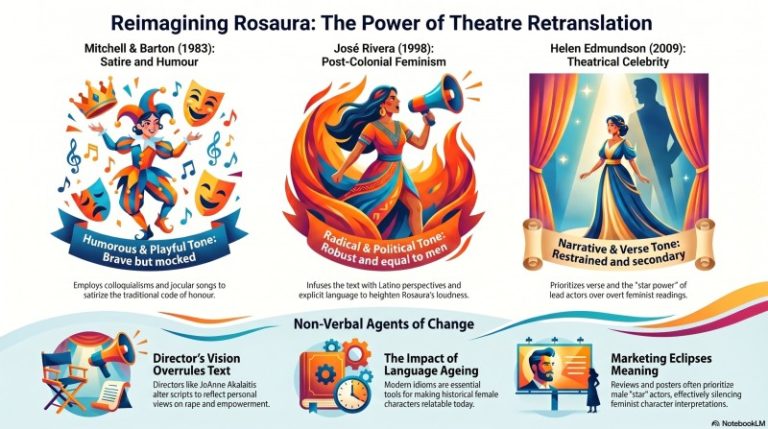
John Barton and Adrian Mitchell (1983)
A version that introduced humor and colloquialisms, though sometimes downplaying the symbolic weight of Rosaura’s actions.
José Rivera (1998): Titled Sueño, this version adopts a post-colonial and feminist perspective, positioning Rosaura’s narrative on equal footing with the male lead, Segismundo.
Helen Edmundson (2009): A “celebrity retranslation” produced for the Donmar Warehouse, which stayed closer to the original plot but was heavily influenced by the star power of the lead actor, potentially overshadowing feminist interpretations.
Conclusion
The analysis demonstrates that (Spanish) theatre classics serve as catalysts for gendered retranslations on the Anglophone stage. The shift toward a contemporary idiom empowers female protagonists, making them more relatable to modern audiences. Retranslation is shown to be a multi-agency medium where directors, translators, and social contexts play active roles in shaping identity.
References
- Aaltonen, S. (2003). Retranslation in the Finnish theatre. Cadernos de Traduçao, 1 (11), 141–159.
- Abril Sánchez, J. (2008). Review of Life’s a dream. Comedia Performance, 5(1), 217–222.
- Allatson, P. (1996). Confounding conventions: ‘Women’ in three Golden Age plays. Bulletin of the Comediantes, 48(2), 261–273.
- Bechtel, R. (2000). Review of Life’s a dream. Theatre Journal, 52(3), 405–407.
- Bellos, D. (2011). Is that a fish in your ear? Faber & Faber.
- Berk Albachten, Ö. & Gürçaglar, S.T. (Eds.) (2019). Perspectives on retranslation: Ideology, paratexts, methods. Routledge.
- Berk Albachten, Ö. & Gürçaglar, S.T. (Eds.) (2020). Multimodality in Translation Studies and retranslation. Special issue of The Translator, 26(1).
- Billington, M. (2016, July 5). Rosaura review – feminists unlock the mystery of Calderon’s classic. The Guardian.
- Bollaert, C. (2019). Jean-Paul Sartre’s theatre after Communism: Perpetuating the past through non-retranslation? Cadernos de Tradução, 39(1), 45–72.
- Braga Riera, J. (2018). The Role of epitexts in drama translation. JoSTrans. The Journal of Specialised Translation, 30, 249–268.
- Brodie, G. (2018). The translator on stage. Bloomsbury.
- Buzelin, H. (2011). Agents of translation. In Y. Gambier & L. van Doorslaer (Eds.), Handbook of Translation Studies (vol. 2) (pp. 6–12). John Benjamins.
- Cadera, S. M. & Walsh, A.S. (Eds.) (2017). Literary retranslation in context. Peter Lang.
- Crossley, M. (Ed.) (2019). Intermedial theatre: Principles and practices. Palgrave.
- Deane-Cox, S. (2014). Retranslation: Translation, literature and reinterpretation. Bloomsbury.
- Donmar Warehouse. (2009). Study guide for Life is a dream. Donmar Warehouse.
- Edmundson, H. (2009). Life is a dream. Nick Hern Books.
- Fischer, S.L. (2000a). Trayectorias escénicas de algunas obras calderonianas en el siglo XX: Inglaterra, Escocia y EE. UU. In J.M. Díez Borque & A. Peláez Martín (Eds.), Calderón en escena: siglo XX (pp. 169–180). Consejería de Cultura de la Comunidad.
- Fischer, S. L. (2000b). La vida es sueño en las escenas posmodernas. Calíope, 6(1–2), 103–119.
- Fournari, M. (2007). La retraducción del teatro lorquiano y la renovación escénica de la Grecia de posguerra. In J.J. Zaro Vera & F. Ruiz Noguera (Eds.), Retraducir: una nueva mirada (pp. 233–242). Miguel Gómez Ediciones.
- Fuchs, B. (2024). Rethinking gender in the Hispanic Comedia. In S. Metzger & R. Mock (Eds.), The Methuen drama handbook of gender and theatre (pp. 373–391). Bloomsbury.
- Gambier, Y. (1994). La retraduction, retour et détour. Meta, 39(3), 413–417.
- Hartford Stage (2018). Hartford Stage.
- Johnston, D. (1996). Las terribles aduanas: fortuna de Lope de Vega, Calderón de la Barca y Tirso de Molina en inglés. In A.L. Pujante & K. Gregor (Eds.), Teatro clásico en traducción: texto, representación, recepción (pp. 89–98). Universidad de Murcia.
- Larson, C. (2015). Terms and concepts: The adaptation of classical texts for the stage. In H. Erdman & S. Paun de Garcia (Eds.), Remaking the Comedia. Spanish Classical Theatre in Adaptation (pp. 3–12). Tamesis.
- Marinetti, C. (2021). Invisible agents in translation history: Censors and actors in performed drama of 18th century England. Translation Studies, 14(3), 263–281.
- Martín Ruano, M. R. & Vidal, C. (2013). Identidades en traducción: representaciones transculturales de las subjetividades collectiveใน los medios. Debats, 121, 84–93.
- Mitchell, A. & Barton, J. (1983). Life’s a dream. Dramatic Publishing.
- Mitchell, A. (1996). Adrian Mitchell: Poetry on stage. In conversation with David Johnston. In D. Johnston (Ed.), Stages of translation (pp. 239–247). Absolute Classics.
- Mujica, B. (2003). Calderón para ateos: la producción de Sueño de José Carrasquillo. In Manfred Tietz (Ed.), Teatro calderoniano sobre el tablado: Calderón y su puesta en escena a través de los siglos (pp. 329–341). Franz Steiner.
- Mujica, B. (2010). Karen Berman: Still dreaming. Comedia Performance, 7(1), 200–208.
- Ortiz Gozalo, J.M. (2007). La retraducción en el panorama de la literature contemporánea. In J.J. Zaro Vera & F. Ruiz Noguera (Eds.), Retraducir: una nueva mirada (pp. 35–48). Miguel Gómez Ediciones.
- Ortiz Lottman, M. (2010). Review of Life Is a dream. Comedia Performance, 7(1), 301–306.
- Ortiz Lottman, M. (2011). Calderón’s Dream on the London stage: A Conversation with Jonathan Munby. Comedia Performance, 8(1), 201–225.
- Peeters, K. & van Poucke, P. (Eds.) (2023). Retranslation, Thirty-odd Years after Berman. Special issue of Paralléles, 35(1).
- Pym, A. (1998). A Method for translating history. St Jerome.
- Quintero, C. (2009). Dreaming a post-colonial Calderón: José Rivera’s Sueño. Bulletin of the Comediantes, 61(1), 129–142.
- Rivera, J. (1999). Sueño. Dramatic Publishing.
- Ruano de la Haza, J.M. (Ed.) (1994). La vida es sueño. Castalia.
- Stock, R. (2020). Celebrity translation in British Theatre. Bloomsbury.
- Tahir Gürçaglar, S. (1998). Retranslation. In M. Baker & G. Saldanha (Eds.), Routledge Encyclopedia of Translation Studies (3rd ed.) (pp. 233–246). Routledge.
- Thacker, J. (2013). The Translation of La vida es sueño for a twenty-first-century Anglophone audience. In B. Mujica (Ed.), Shakespeare and the Spanish Comedia: Translation, interpretation, performance (pp. 43–66). Bucknell University Press.
- van Poucke, P. (2017). Aging as a motive for literary retranslation. Translation and Interpreting Studies, 12(1), 91–115.
- van Poucke, P. & Sanz Gallego, G. (Eds.) (2019). Retranslation in Context. Special issue of Translation and Interpreting Studies, 12(1).
- Venuti, L. (2004). Retranslation: The creation of value. In K. M. Faull (Ed.), Translation and culture (pp. 25–38). Bucknell University Press.
- Veselica Majhut, S. (Ed.) (2020). Special issue of Hieronymus. Journal of Translation Studies and Terminology, 7.
- Whitby, W. M. (1960). Rosaura’s role in the structure of La vida es sueño. Hispanic Review, 28(1), 16–27.
- Wilks, K. (2001). Interpreting ideas. Court theatre’s production of Life’s a dream. Bulletin of the Comediantes, 53(1), 57–82.
- Williams, T. (2011). Life is a dream. Chicago Critic.
- Zaro Vera, J.J. & Ruiz Noguera, F. (Eds.) (2007). Retraducir: una nueva mirada. Miguel Gómez Ediciones.
- Zaro Vera, J.J. (2007). En torno al concepto de retraducción. In J.J. Zaro Vera and F. Ruiz Noguera (Eds.), Retraducir: una nueva mirada (pp. 21–34). Miguel Gómez Ediciones.
- Zhang, H. & Huijuan, M. (2018). Intertextuality in retranslation. Perspectives, 26(4), 576–592.
- Zurbach, C. (2009). The theatre translator as a cultural agent: A case study. In J. Milton & P. Bandia (Eds.), Agents of translation (pp. 280–299). Benjamins.
For professional services, please visit: https://www.seaproti.org/practitioners/
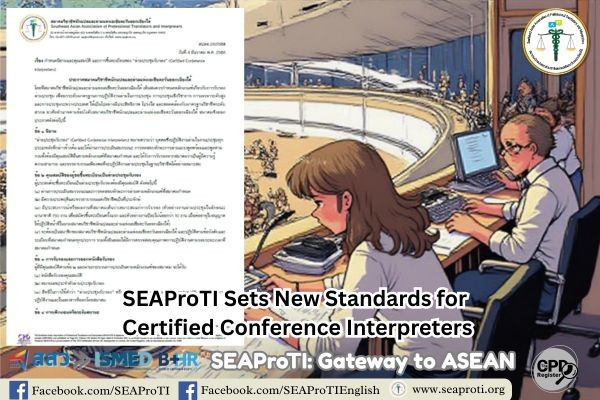
About certified translators, translation certifiers, and certified interpreters associated with SEAProTI. The Southeast Asian Association of Professional Translators and Interpreters (SEAProTI) has officially shared the qualifications and requirements for becoming Certified Translators, Translation Certification Providers, and Certified Interpreters in Sections 9 and 10 of the Royal Gazette, which was published by the Prime Minister’s Office in Thailand on July 25, 2024. Certified Translators, Translation Certification Providers, and Certified Interpreters
The Council of State has proposed the enactment of a Royal Decree, granting registered translators and recognised translation certifiers from professional associations or accredited language institutions the authority to provide legally valid translation certification (Letter to SEAProTI dated April 28, 2025)
SEAProTI is the first professional association in Thailand and Southeast Asia to implement a comprehensive certification system for translators, certifiers, and interpreters.
Head Office: Baan Ratchakru Building, No. 33, Room 402, Soi Phahonyothin 5, Phahonyothin Road, Phaya Thai District, Bangkok 10400, Thailand
Email: hello@seaproti.com | Tel.: (+66) 2-114-3128 (Office hours: Mon–Fri, 09:00–17:00).
การสร้างภาพลักษณ์ใหม่ของ Rosaura: ปัจจัยนอกเหนือภาษาที่มีอิทธิพลต่อการมอบอำนาจให้ตัวละครหญิงในบทแปลภาษาอังกฤษของเรื่อง La vida es sueño.
ผู้เขียน: เภตรา โบรด
14 พฤษภาคม 2569, กรุงเทพมหานคร – แม้จะมีความสนใจเพิ่มขึ้นในการแปลวรรณกรรมซ้ำ แต่ยังคงมีความจำเป็นต้องศึกษาวิธีที่ปัจจัยทางภาษา บริบท และตัวบุคคล ส่งผลต่อการแปลบทละคร บทความนี้มุ่งเน้นไปที่ตัวแทนภายนอกภาษา ได้แก่ ปัจจัยส่วนบุคคล สังคม และการแสดง ที่เข้ามามีบทบาทในการแปลซ้ำและการรับสารของบทละครคลาสสิกสเปนเรื่อง La vida es sueño โดย Calderón de la Barca ในฉบับภาษาอังกฤษ
จุดเน้น: อัตลักษณ์ของสตรีและตัวละคร Rosaura
งานวิจัยนี้พิจารณาว่าอัตลักษณ์ของสตรีถูกเปลี่ยนแปลงอย่างไรในบทละครภาษาปลายทาง โดยเน้นที่การมอบอำนาจและอัตลักษณ์ให้กับตัวละครหญิง สิ่งนี้เห็นได้ชัดเจนที่สุดในตัวละคร Rosaura ผู้พยายามกอบกู้เกียรติยศของตนเองอย่างกล้าหาญโดยไม่พึ่งพาผู้ชาย ซึ่งเป็นการท้าทายบรรทัดฐานทางเพศที่เข้มงวดในยุคทองของสเปน โดยมีการวิเคราะห์บทแปลภาษาอังกฤษที่สำคัญ 3 เวอร์ชัน ได้แก่:
John Barton และ Adrian Mitchell (1983): เวอร์ชันที่นำอารมณ์ขันและภาษาพูดมาใช้ แม้บางครั้งจะทำให้ความสำคัญเชิงสัญลักษณ์ของการกระทำของ Rosaura ลดน้อยลง
José Rivera (1998): ในชื่อเรื่อง Sueño ซึ่งใช้มุมมองหลังอาณานิคมและสตรีนิยม โดยวางบทบาทของ Rosaura ให้มีความสำคัญเท่าเทียมกับตัวละครเอกชายอย่าง Segismundo
Helen Edmundson (2009): บทแปลโดยนักเขียนชื่อดังสำหรับโรงละคร Donmar Warehouse ที่รักษาโครงเรื่องเดิมไว้ แต่ได้รับอิทธิพลอย่างมากจากชื่อเสียงของนักแสดงนำชาย ซึ่งอาจบดบังการตีความด้านสตรีนิยมไปบ้าง
บทสรุป
การวิเคราะห์แสดงให้เห็นว่าบทละครคลาสสิก (ของสเปน) สามารถเป็นตัวเร่งให้เกิดการแปลซ้ำที่คำนึงถึงประเด็นทางเพศบนเวทีภาษาอังกฤษ การใช้ภาษาที่เป็นปัจจุบันช่วยเสริมอำนาจให้ตัวละครเอกหญิง ทำให้ผู้ชมยุคใหม่เข้าถึงได้ง่ายขึ้น การแปลละครซ้ำจึงเป็นสื่อที่มีตัวแทนหลากหลาย ทั้งผู้กำกับ นักแปล และบริบททางสังคมที่มีส่วนร่วมในการสร้างอัตลักษณ์
เอกสารอ้างอิง
- อัลโตเนน, เอส. (2003). Retranslation in the Finnish theatre. Cadernos de Traduçao, 1 (11), 141–159.
- อาบริล ซานเชซ, เจ. (2008). Review of Life’s a dream. Comedia Performance, 5(1), 217–222.
- อัลลาตสัน, พี. (1996). Confounding conventions: ‘Women’ in three Golden Age plays. Bulletin of the Comediantes, 48(2), 261–273.
- เบ็คเทล, อาร์. (2000). Review of Life’s a dream. Theatre Journal, 52(3), 405–407.
- เบลลอส, ดี. (2011). Is that a fish in your ear? Faber & Faber.
- เบิร์ก อัลบาคเท็น, โอ. และ เกอร์ชากลาร์, เอส.ที. (บรรณาธิการ) (2019). Perspectives on retranslation: Ideology, paratexts, methods. Routledge.
- เบิร์ก อัลบาคเท็น, โอ. และ เกอร์ชากลาร์, เอส.ที. (บรรณาธิการ) (2020). Multimodality in Translation Studies and retranslation. Special issue of The Translator, 26(1).
- บิลลิงตัน, เอ็ม. (2016, July 5). Rosaura review – feminists unlock the mystery of Calderon’s classic. The Guardian.
- โบลเลิร์ต, ซี. (2019). Jean-Paul Sartre’s theatre after Communism: Perpetuating the past through non-retranslation? Cadernos de Tradução, 39(1), 45–72.
- บรากา เรียรา, เจ. (2018). The Role of epitexts in drama translation. JoSTrans. The Journal of Specialised Translation, 30, 249–268.
- โบรดี, จี. (2018). The translator on stage. Bloomsbury.
- บูเซลิน, เอช. (2011). Agents of translation. In Y. Gambier & L. van Doorslaer (Eds.), Handbook of Translation Studies (vol. 2) (pp. 6–12). John Benjamins.
- คาเดรา, เอส. เอ็ม. และ วอลช์, เอ.เอส. (บรรณาธิการ) (2017). Literary retranslation in context. Peter Lang.
- ครอสลีย์, เอ็ม. (บรรณาธิการ) (2019). Intermedial theatre: Principles and practices. Palgrave.
- ดีน-ค็อกซ์, เอส. (2014). Retranslation: Translation, literature and reinterpretation. Bloomsbury.
- ดอนมาร์ แวร์เฮาส์. (2009). Study guide for Life is a dream. Donmar Warehouse.
- เอ็ดมันด์สัน, เอช. (2009). Life is a dream. Nick Hern Books.
- ฟิชเชอร์, เอส.แอล. (2000ก). Trayectorias escénicas de algunas obras calderonianasใน el siglo XX: Inglaterra, Escocia y EE. UU. In J.M. Díez Borque & A. Peláez Martín (Eds.), Calderón en escena: siglo XX (pp. 169–180). Consejería de Cultura de la Comunidad.
- ฟิชเชอร์, เอส. แอล. (2000ข). La vida es sueñoใน las escenas posmodernas. Calíope, 6(1–2), 103–119.
- โฟร์นารี, เอ็ม. (2007). La retraducción del teatro lorquiano y la renovación escénica de la Grecia de posguerra. In J.J. Zaro Vera & F. Ruiz Noguera (Eds.), Retraducir: una nueva mirada (pp. 233–242). Miguel Gómez Ediciones.
- ฟุกส์, บี. (2024). Rethinking genderใน the Hispanic Comedia. In S. Metzger & R. Mock (Eds.), The Methuen drama handbook of gender and theatre (pp. 373–391). Bloomsbury.
- แกมเบียร์, วาย. (1994). La retraduction, retour et détour. Meta, 39(3), 413–417.
- ฮาร์ตฟอร์ด สเตจ (2018). Hartford Stage.
- จอห์นสตัน, ดี. (1996). Las terribles aduanas: fortuna de Lope de Vega, Calderón de la Barca y Tirso de Molinaใน inglés. In A.L. Pujante & K. Gregor (Eds.), Teatro clásico en traducción: texto, representación, recepción (pp. 89–98). Universidad de Murcia.
- ลาร์สัน, ซี. (2015). Terms and concepts: The adaptation of classical texts for the stage. In H. Erdman & S. Paun de Garcia (Eds.), Remaking the Comedia. Spanish Classical Theatre in Adaptation (pp. 3–12). Tamesis.
- มาริเนตตี, ซี. (2021). Invisible agentsใน translation history: Censors and actorsใน performed drama of 18th century England. Translation Studies, 14(3), 263–281.
- มาร์ติน รูอาโน, เอ็ม. อาร์. และ วิดัล, ซี. (2013). Identidadesใน traducción: representaciones transculturales de las subjetividades collectiveใน los medios. Debats, 121, 84–93.
- มิตเชลล์, เอ. และ บาร์ตัน, เจ. (1983). Life’s a dream. Dramatic Publishing.
- มิตเชลล์, เอ. (1996). Adrian Mitchell: Poetry on stage. In conversation with David Johnston. In D. Johnston (Ed.), Stages of translation (pp. 239–247). Absolute Classics.
- มูจิกา, บี. (2003). Calderón para ateos: la producción de Sueño de José Carrasquillo. In Manfred Tietz (Ed.), Teatro calderoniano sobre el tablado: Calderón y su puesta en escena a través de los siglos (pp. 329–341). Franz Steiner.
- มูจิกา, บี. (2010). Karen Berman: Still dreaming. Comedia Performance, 7(1), 200–208.
- ออร์ติซ โกซาโล, เจ.เอ็ม. (2007). La retraducciónใน el panorama de la literature contemporánea. In J.J. Zaro Vera & F. Ruiz Noguera (Eds.), Retraducir: una nueva mirada (pp. 35–48). Miguel Gómez Ediciones.
- ออร์ติซ ล็อตต์แมน, เอ็ม. (2010). Review of Life Is a dream. Comedia Performance, 7(1), 301–306.
- ออร์ติซ ล็อตต์แมน, เอ็ม. (2011). Calderón’s Dream on the London stage: A Conversation with Jonathan Munby. Comedia Performance, 8(1), 201–225.
- ปีเตอร์ส, เค. และ ฟาน ปูเคอ, พี. (บรรณาธิการ) (2023). Retranslation, Thirty-odd Years after Berman. Special issue of Paralléles, 35(1).
- พิม, เอ. (1998). A Method for translating history. St Jerome.
- ควินเทโร, ซี. (2009). Dreaming a post-colonial Calderón: José Rivera’s Sueño. Bulletin of the Comediantes, 61(1), 129–142.
- เรียรา (Rivera), เจ. (1999). Sueño. Dramatic Publishing.
- รูอาโน เด ลา ฮาซา, เจ.เอ็ม. (บรรณาธิการ) (1994). La vida es sueño. Castalia.
- สต็อก, อาร์. (2020). Celebrity translation in British Theatre. Bloomsbury.
- ตาฮีร์ เกอร์ชากลาร์, เอส. (1998). Retranslation. In M. Baker & G. Saldanha (Eds.), Routledge Encyclopedia of Translation Studies (3rd ed.) (pp. 233–246). Routledge.
- แธคเกอร์, เจ. (2013). The Translation of La vida es sueño for a twenty-first-century Anglophone audience. In B. Mujica (Ed.), Shakespeare and the Spanish Comedia: Translation, interpretation, performance (pp. 43–66). Bucknell University Press.
- ฟาน ปูเคอ, พี. (2017). Aging as a motive for literary retranslation. Translation and Interpreting Studies, 12(1), 91–115.
- ฟาน ปูเคอ, พี. และ ซานซ์ กัลเลโก, จี. (บรรณาธิการ) (2019). Retranslation in Context. Special issue of Translation and Interpreting Studies, 12(1).
- เวนูตี, แอล. (2004). Retranslation: The creation of value. In K. M. Faull (Ed.), Translation and culture (pp. 25–38). Bucknell University Press.
- เวเซลิกา มาจูต, เอส. (บรรณาธิการ) (2020). Special issue of Hieronymus. Journal of Translation Studies and Terminology, 7.
- วิทบี, ดับเบิลยู. เอ็ม. (1960). Rosaura’s roleใน the structure of La vida es sueño. Hispanic Review, 28(1), 16–27.
- วิลค์ส, เค. (2001). Interpreting ideas. Court theatre’s production of Life’s a dream. Bulletin of the Comediantes, 53(1), 57–82.
- วิลเลียมส์, ที. (2011). Life is a dream. Chicago Critic.
- ซาโร เวรา, เจ.เจ. และ รูอิซ โนเกรา, เอฟ. (บรรณาธิการ) (2007). Retraducir: una nueva mirada. Miguel Gómez Ediciones.
- ซาโร เวรา, เจ.เจ. (2007). En torno al concepto de retraducción. In J.J. Zaro Vera and F. Ruiz Noguera (Eds.), Retraducir: una nueva mirada (pp. 21–34). Miguel Gómez Ediciones.
- จาง, เอช. และ ฮุ่ยเจียน, เอ็ม. (2018). Intertextualityใน retranslation. Perspectives, 26(4), 576–592.
- เซอร์บาค, ซี. (2009). The theatre translator as a cultural agent: A case study. In J. Milton & P. Bandia (Eds.), Agents of translation (pp. 280–299). Benjamins.
สมาคมวิชาชีพนักแปลและล่ามแห่งเอเชียตะวันออกเฉียงใต้ (SEAProTI) ได้ประกาศหลักเกณฑ์และคุณสมบัติของผู้ที่ขึ้นทะเบียนเป็น “นักแปลรับรอง (Certified Translators) และผู้รับรองการแปล (Translation Certification Providers) และล่ามรับรอง (Certified Interpreters)” ของสมาคม หมวดที่ 9 และหมวดที่ 10 ในราชกิจจานุเบกษา ของสำนักเลขาธิการคณะรัฐมนตรี ในสำนักนายกรัฐมนตรี แห่งราชอาณาจักรไทย ลงวันที่ 25 ก.ค. 2567 เล่มที่ 141 ตอนที่ 66 ง หน้า 100 อ่านฉบับเต็มได้ที่: นักแปลรับรอง ผู้รับรองการแปล และล่ามรับรอง
สำนักคณะกรรมการกฤษฎีกาเสนอให้ตราเป็นพระราชกฤษฎีกา โดยกำหนดให้นักแปลที่ขึ้นทะเบียน รวมถึงผู้รับรองการแปลจากสมาคมวิชาชีพหรือสถาบันสอนภาษาที่มีการอบรมและขึ้นทะเบียน สามารถรับรองคำแปลได้ (จดหมายถึงสมาคม SEAProTI ลงวันที่ 28 เม.ย. 2568)
สมาคมวิชาชีพนักแปลและล่ามแห่งเอเชียตะวันออกเฉียงใต้เป็นสมาคมวิชาชีพแห่งแรกและแห่งเดียวในประเทศไทยและภูมิภาคเอเชียตะวันออกเฉียงใต้ที่มีระบบรับรองนักแปลรับรอง ผู้รับรองการแปล และล่ามรับรอง
สำนักงานใหญ่: อาคารบ้านราชครู เลขที่ 33 ห้อง 402 ซอยพหลโยธิน 5 ถนนพหลโยธิน แขวงพญาไท เขตพญาไท กรุงเทพมหานคร 10400 ประเทศไทย