



Book Review: Demystifying Translation for General Readers
Author: Phakaporn Tanjararak
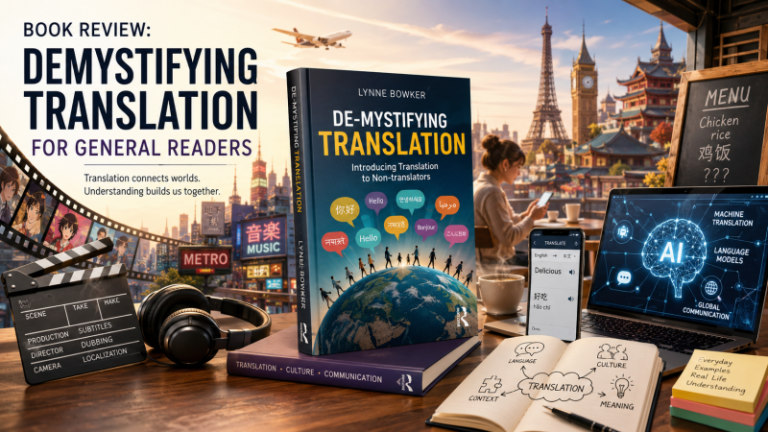
14 May 2026, Bangkok – The book De-mystifying Translation: Introducing Translation to Non-translators by Lynne Bowker is considered a significant contribution aimed at explaining the fields of translation and interpreting to general readers without formal backgrounds in translation studies. The volume presents translation as a cross-linguistic and cross-cultural activity that plays a crucial role in contemporary society. Written in an accessible style, the book minimizes complex academic terminology while connecting its content to everyday experiences. This article aims to critically analyze and review the book from an academic perspective by examining its structure, theoretical foundations, presentation methods, and contributions to translation studies.
The analysis reveals that Bowker’s work effectively functions as a bridge between translation studies and the general public. Furthermore, the book aligns with contemporary scholarly trends that emphasize “translation literacy” and the importance of machine translation literacy in the era of artificial intelligence.
Introduction
The book De-mystifying Translation: Introducing Translation to Non-translators was written by Lynne Bowker and published in 2023 by Routledge in New York. The volume consists of 216 pages and is available in both paperback and open-access digital formats. The primary objective of the book is to explain the fields of translation and interpreting to individuals without professional expertise in translation, including language students, study-abroad participants, digital nomads, and individuals likely to work in international contexts such as multinational organizations or global business firms.
Bowker argues that translation should not be understood merely as a process of matching words between two languages. Rather, it is an activity deeply connected to cultural, social, and communicative dimensions. This perspective corresponds with the argument proposed by Brian James Baer, who emphasizes that translation should not be reduced to a mere “linguistic matching game” (Baer, 2023).
Presenting Translation Studies for Non-translators
One of the book’s most distinctive strengths lies in its intended audience, which differs considerably from that of traditional translation textbooks. Most translation-related textbooks are designed for students pursuing professional translation careers or formal studies in translation studies. Bowker, however, deliberately addresses “non-translators,” namely readers who have not received formal education in translation or interpreting.
This approach reflects broader shifts within academia, where increasing attention has been given to the role of translation in everyday life. Colina and Lafford (2017) propose that translation should be considered a “fifth skill” in language teaching and learning, while Anthony Pym (2023) discusses the notion of “active translation literacy” within literature classrooms. Bowker’s volume can therefore be viewed as a practical manifestation of efforts to make translation studies more accessible to wider audiences.
In addition, the book builds upon Bowker’s earlier work with Juan Buitrago Ciro concerning the importance of machine translation literacy within scholarly communities (Bowker & Buitrago Ciro, 2019). In an era characterized by the rapid expansion of artificial intelligence and large language models, foundational knowledge about translation has become an increasingly essential skill for the general public.
Structure and Style of Presentation
The volume adopts a conversational writing style that avoids excessive academic jargon while connecting theoretical discussions to readers’ everyday experiences. Examples discussed throughout the book include subtitling, dubbing, anime, manga, and the use of machine translation applications in restaurants or during travel. These examples are highly recognizable and relatable to ordinary readers.
Bowker also incorporates examples illustrating translation errors, such as mistranslated song lyrics or misunderstandings occurring during interpreting situations. These examples demonstrate that translation requires contextual understanding rather than simple word-for-word substitution. Such illustrations create an engaging learning atmosphere while encouraging readers to recognize the complexity of cross-cultural communication.
Structurally, the book is divided into multiple chapters that begin with explanations of foundational terminology in translation and interpreting before gradually moving toward more complex topics such as equivalence, machine translation technologies, localization, digital resources, and terminology management. The author progressively increases the complexity of the material, allowing readers to develop their understanding systematically and continuously.
Academic and Pedagogical Contributions
Although the volume minimizes dense academic citation in order to remain accessible to general audiences, its theoretical foundations remain evident throughout the text. Scholars in translation studies can readily identify connections to major concepts and theoretical frameworks within the discipline. Consequently, instructors may effectively combine this book with more theory-oriented readings in educational settings.
Another notable strength is the design of the end-of-chapter exercises, which are varied and encourage critical thinking among both students and instructors. The book also includes “fun fact” sections and a glossary that provides concise definitions alongside cross-references to related terminology. These features enable readers to develop a more systematic understanding of translation studies.
Nevertheless, some minor limitations are evident. Certain chapter summaries and key points occasionally become overly lengthy and repetitive, potentially disrupting the reading experience for audiences who prefer a more narrative style. Furthermore, instructors may find extended lists of learning objectives somewhat difficult to navigate in classroom contexts. Despite these minor criticisms, such concerns do not diminish the overall scholarly and pedagogical value of the volume.
Conclusion
In conclusion, De-mystifying Translation: Introducing Translation to Non-translators by Lynne Bowker represents a significant contribution to the field of translation studies. The volume successfully presents translation studies to general readers in a manner that is clear, accessible, and contemporary. It expands the reach of translation studies beyond purely academic spaces and highlights the importance of translation as a crucial component of intercultural communication in the digital age.
At a time when artificial intelligence and automated translation technologies are becoming increasingly influential, Bowker’s work plays an essential role in fostering translation literacy among the broader public. The book ultimately encourages society to recognize both the value and complexity of translation in an interconnected global environment.
References
- Baer, B. J. (2023). Is there a translation in this class? A crash course in translation literacy. In B. J. Baer & M. Woods (Eds.), Teaching translation: Pedagogical contexts and reading practices (pp. 3–12). Routledge. https://doi.org/10.4324/9781003105220-2
- Bowker, L. (2023). De-mystifying translation: Introducing translation to non-translators. New York: Routledge.
- Bowker, L., & Buitrago Ciro, J. (2019). Machine translation and global research: Towards improved machine translation literacy in the scholarly community. Emerald.
- Colina, S., & Lafford, B. A. (2017). Translation in Spanish language teaching: The integration of a “fifth skill” in the second language classroom. Journal of Spanish Language Teaching, 4(2), 110–123. https://doi.org/10.1080/23247797.2017.1407127
- Mellinger, C. D. (2017). Integrating translation into language teaching to develop informed users of language services. Translation Studies Journal, 10(2), 21–24.
- Pym, A. (2023). Active translation literacy in the literature class. PMLA, 138(3), 819–823. https://doi.org/10.1632/S0030812923000718
For professional services, please visit: https://www.seaproti.org/practitioners/
About certified translators, translation certifiers, and certified interpreters associated with SEAProTI. The Southeast Asian Association of Professional Translators and Interpreters (SEAProTI) has officially shared the qualifications and requirements for becoming Certified Translators, Translation Certification Providers, and Certified Interpreters in Sections 9 and 10 of the Royal Gazette, which was published by the Prime Minister’s Office in Thailand on July 25, 2024. Certified Translators, Translation Certification Providers, and Certified Interpreters
The Council of State has proposed the enactment of a Royal Decree, granting registered translators and recognised translation certifiers from professional associations or accredited language institutions the authority to provide legally valid translation certification (Letter to SEAProTI dated April 28, 2025)
SEAProTI is the first professional association in Thailand and Southeast Asia to implement a comprehensive certification system for translators, certifiers, and interpreters.
Head Office: Baan Ratchakru Building, No. 33, Room 402, Soi Phahonyothin 5, Phahonyothin Road, Phaya Thai District, Bangkok 10400, Thailand
Email: hello@seaproti.com | Tel.: (+66) 2-114-3128 (Office hours: Mon–Fri, 09:00–17:00).
บทวิจารณ์หนังสือ: การลดทอนความซับซ้อนของการแปลเพื่อผู้อ่านทั่วไป
ผู้เขียน: ภคพร ตันจรารักษ์
14 พฤษภาคม 2569, กรุงเทพมหานคร – หนังสือ การลดทอนความซับซ้อนของการแปล: การแนะนำการแปลสำหรับผู้ที่ไม่ใช่นักแปล ของ ลินน์ เบาเกอร์ นับเป็นผลงานสำคัญที่มุ่งอธิบายศาสตร์ด้านการแปลและการล่ามแก่ผู้อ่านทั่วไปที่ไม่ได้มีพื้นฐานทางการแปลโดยตรง หนังสือเล่มนี้นำเสนอแนวคิดเกี่ยวกับการแปลในฐานะกิจกรรมข้ามภาษาและข้ามวัฒนธรรมที่มีบทบาทสำคัญในสังคมร่วมสมัย โดยใช้ภาษาที่เข้าถึงง่าย ลดการใช้ศัพท์วิชาการที่ซับซ้อน และเชื่อมโยงเนื้อหากับประสบการณ์ในชีวิตประจำวัน บทความนี้มีวัตถุประสงค์เพื่อวิเคราะห์และวิจารณ์หนังสือดังกล่าวในเชิงวิชาการ โดยพิจารณาทั้งด้านโครงสร้าง แนวคิดทางทฤษฎี วิธีการนำเสนอ และคุณูปการต่อวงการการศึกษาการแปล ผลการวิเคราะห์พบว่า หนังสือของเบาเกอร์สามารถทำหน้าที่เป็นสะพานเชื่อมระหว่างศาสตร์การแปลกับสาธารณชนทั่วไปได้อย่างมีประสิทธิภาพ อีกทั้งยังสอดคล้องกับแนวโน้มร่วมสมัยที่ให้ความสำคัญกับ “ความรู้ด้านการแปล” และการรู้เท่าทันเทคโนโลยีการแปลด้วยเครื่องจักรในยุคปัญญาประดิษฐ์
บทนำ
หนังสือ การลดทอนความซับซ้อนของการแปล: การแนะนำการแปลสำหรับผู้ที่ไม่ใช่นักแปล เขียนโดย ลินน์ เบาเกอร์ และตีพิมพ์ในพ.ศ. 2566 โดยสำนักพิมพ์รัทเลดจ์ ณ นครนิวยอร์ก หนังสือเล่มนี้มีจำนวน 216 หน้า และได้รับการเผยแพร่ทั้งในรูปแบบหนังสือปกอ่อนและเอกสารเปิดเสรี หนังสือดังกล่าวมีเป้าหมายหลักในการอธิบายศาสตร์ด้านการแปลและการล่ามให้แก่บุคคลทั่วไปที่ไม่ได้มีความเชี่ยวชาญทางการแปล ไม่ว่าจะเป็นนักศึกษาภาษา ผู้ที่ศึกษาในต่างประเทศ กลุ่มแรงงานดิจิทัล หรือบุคคลที่มีแนวโน้มทำงานในบริบทนานาชาติ เช่น องค์กรข้ามชาติหรือบริษัทระหว่างประเทศ
เบาเกอร์ชี้ให้เห็นว่า การแปลมิใช่เพียงกระบวนการจับคู่คำระหว่างสองภาษา หากแต่เป็นกิจกรรมที่เกี่ยวข้องกับมิติทางวัฒนธรรม สังคม และบริบทการสื่อสารที่ซับซ้อน แนวคิดดังกล่าวสอดคล้องกับข้อเสนอของ ไบรอัน เจมส์ แบร์ ที่มองว่าการแปลไม่ควรถูกลดทอนให้เป็นเพียง “เกมจับคู่ทางภาษา” เท่านั้น (แบร์, 2566)
การนำเสนอศาสตร์การแปลสำหรับผู้ที่ไม่ใช่นักแปล
จุดเด่นสำคัญของหนังสือเล่มนี้คือการเลือกกลุ่มเป้าหมายที่แตกต่างจากตำราการแปลทั่วไป โดยหนังสือด้านการแปลจำนวนมากมักถูกออกแบบมาเพื่อผู้เรียนที่ต้องการเป็นนักแปลมืออาชีพ หรือผู้ศึกษาด้านการแปลศึกษาโดยเฉพาะ อย่างไรก็ตาม เบาเกอร์กลับเลือกนำเสนอเนื้อหาแก่ “ผู้ที่ไม่ใช่นักแปล” ซึ่งเป็นกลุ่มที่ไม่เคยได้รับการศึกษาด้านการแปลอย่างเป็นทางการ
แนวทางดังกล่าวสะท้อนการเปลี่ยนแปลงในวงวิชาการที่เริ่มตระหนักถึงบทบาทของการแปลในชีวิตประจำวันมากขึ้น โคลินา และ แลฟฟอร์ด เสนอว่าการแปลควรถูกมองเป็น “ทักษะที่ห้า” ในการเรียนการสอนภาษา (โคลินา และ แลฟฟอร์ด, 2560) ขณะที่ แอนโทนี พิม เสนอแนวคิดเรื่อง “ความรู้ด้านการแปลเชิงปฏิบัติ” ในบริบทการเรียนวรรณกรรม (พิม, 2566) หนังสือของเบาเกอร์จึงสามารถมองได้ว่าเป็นตัวอย่างเชิงรูปธรรมของความพยายามผลักดันให้ศาสตร์การแปลเข้าถึงผู้คนในวงกว้างมากขึ้น
นอกจากนี้ หนังสือยังเชื่อมโยงกับงานก่อนหน้าของเบาเกอร์และฆวน บวยตราโก ซีโร ซึ่งกล่าวถึงความจำเป็นของการรู้เท่าทันการแปลด้วยเครื่องจักรในสังคมวิชาการ (เบาเกอร์ และ บวยตราโก ซีโร, 2562) โดยเฉพาะในยุคที่ปัญญาประดิษฐ์และแบบจำลองภาษาขนาดใหญ่ถูกใช้อย่างแพร่หลาย ความเข้าใจพื้นฐานเกี่ยวกับการแปลจึงกลายเป็นทักษะสำคัญสำหรับผู้คนทั่วไป
โครงสร้างและลักษณะการนำเสนอ
หนังสือเล่มนี้ใช้รูปแบบการเขียนเชิงสนทนา หลีกเลี่ยงศัพท์เฉพาะทางวิชาการที่ซับซ้อน และพยายามเชื่อมโยงเนื้อหากับประสบการณ์ใกล้ตัวของผู้อ่าน ตัวอย่างที่ผู้เขียนยกมา เช่น การแปลคำบรรยายภาพยนตร์ การพากย์เสียง อนิเมะ มังงะ หรือการใช้โปรแกรมแปลภาษาในร้านอาหารและระหว่างการเดินทาง ล้วนเป็นสถานการณ์ที่ผู้อ่านทั่วไปสามารถจินตนาการและเข้าถึงได้ง่าย
เบาเกอร์ยังใช้กรณีตัวอย่างที่สะท้อนความผิดพลาดของการแปล เช่น การแปลเนื้อเพลงผิดความหมาย หรือปัญหาที่เกิดขึ้นระหว่างการล่าม เพื่อแสดงให้เห็นว่าการแปลเป็นกิจกรรมที่ต้องอาศัยความเข้าใจเชิงบริบท มิใช่เพียงการแปลคำต่อคำ ตัวอย่างเหล่านี้ช่วยสร้างบรรยากาศการเรียนรู้ที่เป็นกันเองและกระตุ้นให้ผู้อ่านตระหนักถึงความซับซ้อนของการสื่อสารข้ามภาษา
ในด้านโครงสร้าง หนังสือแบ่งเนื้อหาออกเป็นหลายบท โดยเริ่มจากการอธิบายคำศัพท์พื้นฐานในวงการแปลและการล่าม ก่อนจะขยายไปสู่ประเด็นที่ซับซ้อนมากขึ้น เช่น ความเท่าเทียมกันทางความหมาย เทคโนโลยีการแปลด้วยเครื่องจักร การแปลเฉพาะท้องถิ่น ทรัพยากรดิจิทัล และการจัดการศัพท์เฉพาะ ทั้งนี้ ผู้เขียนค่อย ๆ เพิ่มระดับความซับซ้อนของเนื้อหาอย่างเป็นลำดับ ทำให้ผู้อ่านสามารถสร้างความเข้าใจได้อย่างต่อเนื่อง
คุณูปการทางวิชาการและการเรียนการสอน
แม้ว่าหนังสือเล่มนี้จะลดการอ้างอิงทางวิชาการลงเพื่อให้เหมาะกับผู้อ่านทั่วไป แต่เนื้อหากลับมีพื้นฐานทางทฤษฎีที่ชัดเจน นักวิชาการด้านการแปลสามารถสังเกตเห็นการเชื่อมโยงกับแนวคิดสำคัญในศาสตร์การแปลได้ตลอดทั้งเล่ม ผู้สอนจึงสามารถใช้หนังสือเล่มนี้ร่วมกับบทอ่านเชิงทฤษฎีเพิ่มเติมได้อย่างมีประสิทธิภาพ
อีกประเด็นที่น่าสนใจคือการออกแบบกิจกรรมท้ายบท ซึ่งมีความหลากหลายและส่งเสริมการคิดวิเคราะห์ ทั้งสำหรับผู้เรียนและผู้สอน นอกจากนี้ หนังสือยังมีส่วน “ข้อเท็จจริงน่าสนใจ” และอภิธานศัพท์ที่ช่วยอธิบายคำสำคัญพร้อมเชื่อมโยงไปยังคำอื่นที่เกี่ยวข้อง ส่งผลให้ผู้อ่านสามารถพัฒนาความเข้าใจเชิงระบบเกี่ยวกับศาสตร์การแปลได้ดียิ่งขึ้น
อย่างไรก็ตาม ผู้วิจารณ์เห็นว่าบางส่วนของหัวข้อสรุปท้ายบทอาจมีความยาวและซ้ำซ้อนกับเนื้อหาเดิมมากเกินไป ซึ่งอาจทำให้ผู้อ่านที่ชื่นชอบงานเขียนเชิงเล่าเรื่องรู้สึกไม่ต่อเนื่อง นอกจากนี้ สำหรับผู้สอน การใช้รายการประเด็นสำคัญที่ยาวเกินไปอาจทำให้การกำหนดวัตถุประสงค์การเรียนรู้มีความซับซ้อนขึ้น แม้ข้อสังเกตดังกล่าวจะถือเป็นเพียงประเด็นเล็กน้อยเมื่อเทียบกับคุณค่ารวมของหนังสือก็ตาม
สรุป
โดยสรุป หนังสือ การลดทอนความซับซ้อนของการแปล: การแนะนำการแปลสำหรับผู้ที่ไม่ใช่นักแปล ของ ลินน์ เบาเกอร์ ถือเป็นผลงานที่มีคุณูปการสำคัญต่อวงการการแปลศึกษา เนื่องจากสามารถนำเสนอศาสตร์การแปลแก่สาธารณชนทั่วไปได้อย่างชัดเจน เข้าถึงง่าย และร่วมสมัย หนังสือเล่มนี้ช่วยขยายขอบเขตของการแปลศึกษาออกจากพื้นที่ทางวิชาการสู่บริบทสังคมในวงกว้าง อีกทั้งยังส่งเสริมความเข้าใจเกี่ยวกับการแปลในฐานะกิจกรรมที่มีบทบาทสำคัญต่อการสื่อสารระหว่างวัฒนธรรมในโลกยุคดิจิทัล
ในยุคที่เทคโนโลยีปัญญาประดิษฐ์และการแปลอัตโนมัติเข้ามามีบทบาทมากขึ้น หนังสือของเบาเกอร์จึงมีความสำคัญอย่างยิ่งต่อการสร้าง “ความรู้ด้านการแปล” ให้แก่ผู้คนทั่วไป และช่วยให้สังคมตระหนักถึงคุณค่าและความซับซ้อนของงานแปลมากยิ่งขึ้น
เอกสารอ้างอิง
- แบร์, ไบรอัน เจมส์. (พ.ศ. 2566). ความรู้ด้านการแปลเบื้องต้นในห้องเรียน. ใน ไบรอัน เจมส์ แบร์ และ เอ็ม. วูดส์ (บรรณาธิการ), การสอนการแปล: บริบทเชิงการสอนและการปฏิบัติการอ่าน (น. 3-12). รูทเลดจ์. https://doi.org/10.4324/9781003105220-2
- เบาเกอร์, ลินน์. (พ.ศ. 2566). การลดทอนความซับซ้อนของการแปล: การแนะนำการแปลสำหรับผู้ที่ไม่ใช่นักแปล. นิวยอร์ก: รูทเลดจ์.
- เบาเกอร์, ลินน์ และ บวยตราโก ซีโร, ฆวน. (พ.ศ. 2562). การแปลด้วยเครื่องจักรและงานวิจัยระดับโลก: สู่การรู้เท่าทันการแปลด้วยเครื่องจักรที่ดีขึ้นในชุมชนนักวิชาการ. เอเมอรัลด์.
- โคลินา, โซเนีย และ แลฟฟอร์ด, บาร์บารา เอ. (พ.ศ. 2560). การแปลในการสอนภาษาสเปน: การบูรณาการ “ทักษะที่ห้า” ในห้องเรียนภาษาที่สอง. วารสารการสอนภาษาสเปน, 4(2), 110-123. https://doi.org/10.1080/23247797.2017.1407127
- เมลลิงเจอร์, คริสโตเฟอร์ ดี. (พ.ศ. 2560). การบูรณาการการแปลในการเรียนการสอนภาษาเพื่อสร้างผู้ใช้บริการทางภาษาอย่างมีความรู้. วารสารการแปลศึกษา, 10(2), 21-24.
- พิม, แอนโทนี. (พ.ศ. 2566). ความรู้ด้านการแปลเชิงปฏิบัติในชั้นเรียนวรรณกรรม. พีเอ็มแอลเอ, 138(3), 819-823. https://doi.org/10.1632/S0030812923000718
สมาคมวิชาชีพนักแปลและล่ามแห่งเอเชียตะวันออกเฉียงใต้ (SEAProTI) ได้ประกาศหลักเกณฑ์และคุณสมบัติของผู้ที่ขึ้นทะเบียนเป็น “นักแปลรับรอง (Certified Translators) และผู้รับรองการแปล (Translation Certification Providers) และล่ามรับรอง (Certified Interpreters)” ของสมาคม หมวดที่ 9 และหมวดที่ 10 ในราชกิจจานุเบกษา ของสำนักเลขาธิการคณะรัฐมนตรี ในสำนักนายกรัฐมนตรี แห่งราชอาณาจักรไทย ลงวันที่ 25 ก.ค. 2567 เล่มที่ 141 ตอนที่ 66 ง หน้า 100 อ่านฉบับเต็มได้ที่: นักแปลรับรอง ผู้รับรองการแปล และล่ามรับรอง
สำนักคณะกรรมการกฤษฎีกาเสนอให้ตราเป็นพระราชกฤษฎีกา โดยกำหนดให้นักแปลที่ขึ้นทะเบียน รวมถึงผู้รับรองการแปลจากสมาคมวิชาชีพหรือสถาบันสอนภาษาที่มีการอบรมและขึ้นทะเบียน สามารถรับรองคำแปลได้ (จดหมายถึงสมาคม SEAProTI ลงวันที่ 28 เม.ย. 2568)
สมาคมวิชาชีพนักแปลและล่ามแห่งเอเชียตะวันออกเฉียงใต้เป็นสมาคมวิชาชีพแห่งแรกและแห่งเดียวในประเทศไทยและภูมิภาคเอเชียตะวันออกเฉียงใต้ที่มีระบบรับรองนักแปลรับรอง ผู้รับรองการแปล และล่ามรับรอง
สำนักงานใหญ่: อาคารบ้านราชครู เลขที่ 33 ห้อง 402 ซอยพหลโยธิน 5 ถนนพหลโยธิน แขวงพญาไท เขตพญาไท กรุงเทพมหานคร 10400 ประเทศไทย