


Book Review Article on Quality in Professional Translation: Assessment and Improvement by Joanna Drugan
Author: Phakaporn Tanjararak
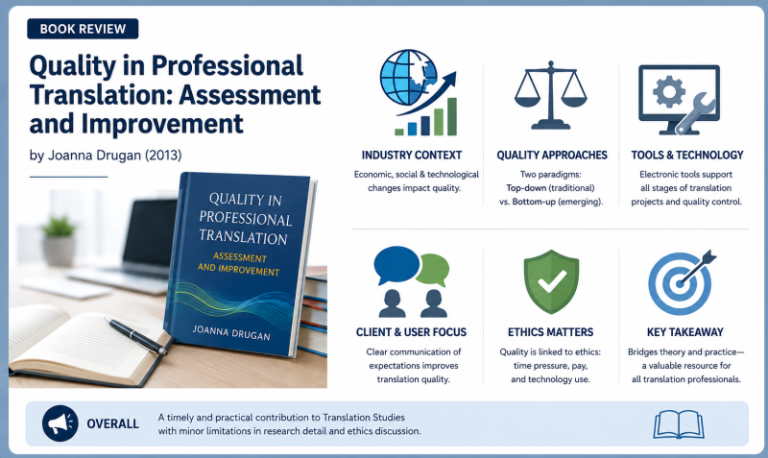
26 May 2026, Bangkok – This article aims to analyze and critically review the book Quality in Professional Translation: Assessment and Improvement by Joanna Drugan, a significant study on translation quality in the contemporary translation industry. The book presents both theoretical and professional perspectives on translation quality assessment while also examining the effects of economic, social, and technological changes on translation processes. This article discusses the major issues addressed by the author, including traditional approaches to quality measurement, emerging quality paradigms, the use of electronic tools in the translation industry, and the relationship between quality and ethics in translation. Furthermore, the article evaluates the strengths and limitations of the book in terms of research methodology, content organization, and ethical discussion. The analysis reveals that the book makes a substantial contribution to Translation Studies, particularly in the area of professional translation quality, which remains relatively underexplored. Although the work contains certain minor shortcomings, it is overall a highly valuable resource for students, researchers, teachers, translators, and professionals working in the translation industry.
Introduction
In an era in which the translation industry has been profoundly influenced by technological change, economic transformation, and globalization, the issue of “translation quality” has become a major concern in both academia and the professional sector. Translators are no longer expected merely to produce linguistically accurate translations; they must also respond to constraints related to time, cost, and client expectations.
Joanna Drugan’s Quality in Professional Translation: Assessment and Improvement, published in 2013, is therefore regarded as an important work that seeks to explain the dynamics of the contemporary translation industry while systematically proposing approaches for analyzing and assessing professional translation quality.
The book has two primary objectives: first, to present both theoretical and practical approaches to measuring and improving translation quality, and second, to critically evaluate whether these approaches are suitable for real professional contexts (Drugan, 2013). The author organizes the content into six chapters, beginning with an overview of the translation industry and gradually moving toward specific issues related to tools, technology, and models of quality assessment.
Content Analysis
The first chapter discusses the current environment of the translation industry, emphasizing how economic, social, and technological changes are transforming translators’ working conditions. Drugan explains that increasing demands for speed, shorter deadlines, and lower rates of pay directly affect translation quality (Drugan, 2013, p. 6). This argument demonstrates that “quality” in the translation industry does not depend solely on the translated text itself but is also shaped by economic contexts and production structures.
In Chapter Two, the author discusses academic approaches to translation quality by presenting theoretical frameworks used in Translation Studies. Professional approaches are only briefly introduced at this stage because they are explored in greater detail in later chapters. In this regard, the book successfully bridges theory and professional practice, which constitutes one of its greatest strengths, as many studies in translation focus more heavily on theory than on actual industrial practices.
Chapter Three is arguably one of the most valuable sections of the book, particularly for translation teachers and students. The author provides a detailed explanation of the electronic tools used in the translation industry, including tools employed in project planning, bidding, project management, quality control, and post-project evaluation (Drugan, 2013). This discussion allows readers to understand the extent to which contemporary translation workflows rely on technology and how such technologies influence standards of quality.
Drugan further proposes that there are currently two major paradigms in translation quality assessment: the traditional top-down approach commonly associated with established industry practices, and the bottom-up approach emerging from modern technology companies such as Google and Facebook (Drugan, 2013, p. 123).
The former emphasizes institutional standards and centralized quality control, whereas the latter focuses on user participation and the continuous development of quality through online communities. The comparison between these two approaches demonstrates that the definition of “quality” in the translation industry is not fixed but evolves according to technological and business structures.
In the final chapter, the author argues that if translation theorists focus solely on “the quality of the text,” they risk overlooking the rapid transformations occurring within the contemporary translation industry (Drugan, 2013, p. 183). Drugan suggests that effectively communicating client and user expectations to translators can significantly enhance translation quality, regardless of whether a top-down or bottom-up approach is employed. Furthermore, the author emphasizes that these two approaches should develop a mutually supportive relationship. As an example, Drugan refers to the open-source movement in the software industry, which was initially perceived as a threat to established providers but later evolved into a collaborative model that supports quality development.
Critical Evaluation
Although the book is comprehensive in both content and analysis, several limitations should be noted. First, the explanation of the research methodology lacks sufficient detail. The author states that the study is based on large-scale fieldwork conducted since 2004 and includes data collected from translators, project managers, clients, editors, linguists, and technology personnel across more than 100 organizations (Drugan, 2013, p. 3). However, the book does not specify when the research concluded, the exact number of participants in each group, or the proportions represented by each category of informants. Such information would have enabled readers to gain a clearer understanding of the differing perspectives, interests, and objectives of the various stakeholders involved in translation quality assessment.
Another limitation concerns the book’s table of contents, which is overly concise and lists only first-level headings despite the existence of multiple levels of subsections within the text. This issue reduces the usability of the book as a reference work or academic handbook, as readers may encounter difficulties locating specific topics efficiently.
Moreover, although the author briefly addresses the relationship between “quality” and “ethics” near the end of the book (Drugan, 2013, pp. 187–189), the discussion remains relatively limited. Considering that ethical concerns implicitly emerge throughout the book, including issues related to time pressure, payment rates, and the use of technology in translation production, a more extensive discussion of ethics would have enhanced the comprehensiveness of the work.
Conclusion
In conclusion, Quality in Professional Translation: Assessment and Improvement by Joanna Drugan is an important contribution to the field of professional translation quality, combining contemporary relevance with significant academic value. The author successfully connects translation theory with the realities of the translation industry while clearly presenting the impact of technology and modern quality assessment approaches. Although the book contains certain limitations regarding research methodology and ethical discussion, it remains a highly valuable reference for students, teachers, researchers, translators, and professionals working in all sectors of the translation industry.
References
- Drugan, J. (2013). Quality in Professional Translation: Assessment and Improvement. London and New York: Bloomsbury Academic.
- Abdallah, K. (2016). Review of Quality in Professional Translation: Assessment and Improvement. The Journal of Specialised Translation, 25, 268–269.
For professional services, please visit: https://www.seaproti.org/practitioners/
About certified translators, translation certifiers, and certified interpreters associated with SEAProTI. The Southeast Asian Association of Professional Translators and Interpreters (SEAProTI) has officially shared the qualifications and requirements for becoming Certified Translators, Translation Certification Providers, and Certified Interpreters in Sections 9 and 10 of the Royal Gazette, which was published by the Prime Minister’s Office in Thailand on July 25, 2024. Certified Translators, Translation Certification Providers, and Certified Interpreters
The Council of State has proposed the enactment of a Royal Decree, granting registered translators and recognised translation certifiers from professional associations or accredited language institutions the authority to provide legally valid translation certification (Letter to SEAProTI dated April 28, 2025)
SEAProTI is the first professional association in Thailand and Southeast Asia to implement a comprehensive certification system for translators, certifiers, and interpreters.
Head Office: Baan Ratchakru Building, No. 33, Room 402, Soi Phahonyothin 5, Phahonyothin Road, Phaya Thai District, Bangkok 10400, Thailand
Email: hello@seaproti.com | Tel.: (+66) 2-114-3128 (Office hours: Mon–Fri, 09:00–17:00).
บทความวิจารณ์หนังสือเรื่อง คุณภาพในการแปลวิชาชีพ: การประเมินและการพัฒนา ของ โจแอนนา ดรูแกน
ผู้เขียน: ภคพร ตันจรารักษ์
26 พฤษภาคม 2569, กรุงเทพมหานคร – บทความนี้มีวัตถุประสงค์เพื่อวิเคราะห์และวิจารณ์หนังสือ คุณภาพในการแปลวิชาชีพ: การประเมินและการพัฒนา ของ โจแอนนา ดรูแกน ซึ่งเป็นงานศึกษาด้านคุณภาพการแปลในอุตสาหกรรมการแปลร่วมสมัย หนังสือเล่มดังกล่าวนำเสนอทั้งมิติทางทฤษฎีและมิติทางวิชาชีพเกี่ยวกับการประเมินคุณภาพการแปล ตลอดจนวิเคราะห์ผลกระทบของการเปลี่ยนแปลงทางเศรษฐกิจ สังคม และเทคโนโลยีที่มีต่อกระบวนการทำงานด้านการแปล บทความนี้อภิปรายประเด็นสำคัญที่ผู้เขียนหนังสือนำเสนอ ได้แก่ แนวทางการวัดคุณภาพแบบดั้งเดิม แนวทางคุณภาพแบบใหม่ การใช้เครื่องมืออิเล็กทรอนิกส์ในอุตสาหกรรมการแปล ตลอดจนความสัมพันธ์ระหว่างคุณภาพกับจริยธรรมในการแปล นอกจากนี้ บทความยังประเมินจุดแข็งและข้อจำกัดของหนังสือในด้านระเบียบวิธีวิจัย การจัดโครงสร้างเนื้อหา และการอภิปรายเชิงจริยธรรม ผลการวิเคราะห์พบว่าหนังสือเล่มนี้เป็นผลงานที่มีคุณูปการอย่างมากต่อวงการแปลศึกษา โดยเฉพาะในประเด็นคุณภาพการแปลเชิงวิชาชีพที่ยังมีงานศึกษาค่อนข้างจำกัด แม้ว่าจะยังมีข้อบกพร่องบางประการ แต่โดยรวมถือเป็นงานที่มีคุณค่าต่อทั้งนักศึกษา นักวิจัย อาจารย์ นักแปล และผู้ปฏิบัติงานในอุตสาหกรรมการแปล
บทนำ
ในยุคที่อุตสาหกรรมการแปลได้รับอิทธิพลอย่างมากจากความเปลี่ยนแปลงทางเทคโนโลยี เศรษฐกิจ และโลกาภิวัตน์ ประเด็นเรื่อง “คุณภาพการแปล” กลายเป็นหัวข้อสำคัญทั้งในวงวิชาการและภาคอุตสาหกรรม นักแปลไม่ได้ถูกคาดหวังเพียงให้ผลิตงานแปลที่ถูกต้องทางภาษาเท่านั้น แต่ยังต้องตอบสนองต่อข้อจำกัดด้านเวลา ต้นทุน และความต้องการของลูกค้าอีกด้วย หนังสือ คุณภาพในการแปลวิชาชีพ: การประเมินและการพัฒนา ของ โจแอนนา ดรูแกน ตีพิมพ์เมื่อ พ.ศ. 2556 จึงถือเป็นผลงานสำคัญที่พยายามอธิบายพลวัตของอุตสาหกรรมการแปลร่วมสมัย พร้อมทั้งเสนอแนวทางวิเคราะห์และประเมินคุณภาพการแปลในเชิงวิชาชีพอย่างเป็นระบบ
หนังสือเล่มนี้มีวัตถุประสงค์หลัก 2 ประการ ได้แก่ การนำเสนอแนวคิดทั้งเชิงทฤษฎีและเชิงปฏิบัติเกี่ยวกับการวัดและพัฒนาคุณภาพการแปล และการวิพากษ์แนวทางเหล่านั้นว่ามีความเหมาะสมต่อการใช้งานจริงในอุตสาหกรรมหรือไม่ (ดรูแกน, พ.ศ. 2556) ผู้เขียนแบ่งเนื้อหาออกเป็น 6 บท โดยเรียบเรียงจากภาพรวมของอุตสาหกรรมการแปลไปสู่ประเด็นเฉพาะด้านเครื่องมือ เทคโนโลยี และรูปแบบการประเมินคุณภาพ
การวิเคราะห์เนื้อหา
บทแรกของหนังสือกล่าวถึงสภาพแวดล้อมของอุตสาหกรรมการแปลในปัจจุบัน โดยเน้นให้เห็นว่าความเปลี่ยนแปลงทางเศรษฐกิจ สังคม และเทคโนโลยีกำลังส่งผลต่อรูปแบบการทำงานของนักแปลอย่างไร ดรูแกนอธิบายว่าความต้องการด้านความรวดเร็ว กำหนดเวลาส่งงานที่สั้นลง และอัตราค่าตอบแทนที่ลดลง ล้วนส่งผลกระทบโดยตรงต่อคุณภาพของงานแปล (ดรูแกน, พ.ศ. 2556, น. 6) ประเด็นดังกล่าวสะท้อนให้เห็นว่า “คุณภาพ” ในอุตสาหกรรมการแปลไม่ได้ขึ้นอยู่กับตัวบทเพียงอย่างเดียว แต่เชื่อมโยงกับบริบททางเศรษฐกิจและโครงสร้างการผลิตงานแปลด้วย
ในบทที่ 2 ผู้เขียนอภิปรายแนวทางทางวิชาการเกี่ยวกับคุณภาพการแปล โดยนำเสนอกรอบคิดด้านการประเมินคุณภาพในแวดวงแปลศึกษา ขณะเดียวกัน แนวทางเชิงวิชาชีพถูกกล่าวถึงเพียงสั้น ๆ เนื่องจากจะถูกขยายความในบทต่อมา หนังสือจึงพยายามเชื่อมโยงระหว่างทฤษฎีและการปฏิบัติจริง ซึ่งเป็นจุดเด่นสำคัญ เพราะงานศึกษาด้านการแปลจำนวนมากมักให้ความสำคัญกับทฤษฎีมากกว่าการใช้งานจริงในอุตสาหกรรม
บทที่ 3 ถือเป็นหนึ่งในส่วนที่มีคุณค่ามากที่สุด โดยเฉพาะต่อผู้สอนและนักศึกษาด้านการแปล เนื่องจากผู้เขียนอธิบายเครื่องมืออิเล็กทรอนิกส์ที่ใช้ในอุตสาหกรรมการแปลอย่างละเอียด ทั้งในขั้นตอนการวางแผนโครงการ การประมูลงาน การจัดการโครงการ การตรวจสอบคุณภาพ และการประเมินผลหลังจบโครงการ (ดรูแกน, พ.ศ. 2556) การอภิปรายดังกล่าวช่วยให้ผู้อ่านเห็นภาพว่ากระบวนการแปลร่วมสมัยพึ่งพาเทคโนโลยีมากเพียงใด และเทคโนโลยีเหล่านี้ส่งผลต่อมาตรฐานคุณภาพอย่างไร
ดรูแกนยังเสนอว่าปัจจุบันมีแนวคิดด้านการประเมินคุณภาพอยู่ 2 กระบวนทัศน์หลัก ได้แก่ แนวทางแบบบนลงล่างซึ่งเป็นรูปแบบดั้งเดิมของอุตสาหกรรม และแนวทางแบบล่างขึ้นบนซึ่งเกิดจากบริษัทเทคโนโลยีสมัยใหม่ เช่น กูเกิล และ เฟซบุ๊ก (ดรูแกน, พ.ศ. 2556, น. 123) แนวทางแรกให้ความสำคัญกับมาตรฐานและการควบคุมคุณภาพจากองค์กร ส่วนแนวทางหลังเน้นการมีส่วนร่วมของผู้ใช้และการพัฒนาคุณภาพแบบต่อเนื่องผ่านชุมชนออนไลน์ การเปรียบเทียบทั้งสองแนวทางช่วยให้เห็นว่าการนิยาม “คุณภาพ” ในอุตสาหกรรมการแปลไม่ใช่สิ่งตายตัว แต่เปลี่ยนแปลงไปตามโครงสร้างทางเทคโนโลยีและธุรกิจ
ในบทสุดท้าย ผู้เขียนเน้นว่าหากนักทฤษฎีการแปลให้ความสำคัญเฉพาะ “คุณภาพของตัวบท” ก็อาจมองข้ามการเปลี่ยนแปลงสำคัญที่เกิดขึ้นในอุตสาหกรรมการแปลร่วมสมัย (ดรูแกน, พ.ศ. 2556, น. 183) ผู้เขียนเสนอว่าการสื่อสารความคาดหวังของลูกค้าและผู้ใช้งานไปยังนักแปลอย่างมีประสิทธิภาพสามารถช่วยยกระดับคุณภาพงานแปลได้ ไม่ว่าจะใช้แนวทางแบบบนลงล่างหรือแบบล่างขึ้นบนก็ตาม นอกจากนี้ ดรูแกนยังเสนอว่าทั้งสองแนวทางควรพัฒนาความสัมพันธ์แบบเกื้อหนุนซึ่งกันและกัน โดยยกตัวอย่างขบวนการโอเพนซอร์สในอุตสาหกรรมซอฟต์แวร์ ซึ่งเดิมเคยถูกมองว่าเป็นภัยคุกคามต่อผู้ให้บริการรายใหญ่ แต่ภายหลังกลับกลายเป็นรูปแบบการทำงานที่ส่งเสริมการพัฒนาคุณภาพร่วมกัน
การประเมินเชิงวิพากษ์
แม้ว่าหนังสือเล่มนี้จะมีความสมบูรณ์ทั้งด้านเนื้อหาและการวิเคราะห์ แต่ก็ยังมีข้อจำกัดบางประการ ประเด็นแรกคือการอธิบายระเบียบวิธีวิจัยยังไม่ชัดเจนเพียงพอ ผู้เขียนระบุว่าการศึกษานี้อาศัยการวิจัยภาคสนามตั้งแต่ พ.ศ. 2547 โดยรวบรวมข้อมูลจากนักแปล ผู้จัดการโครงการ ลูกค้า บรรณาธิการ นักภาษาศาสตร์ และบุคลากรด้านเทคโนโลยีในองค์กรกว่า 100 แห่ง (ดรูแกน, พ.ศ. 2556, น. 3) อย่างไรก็ตาม หนังสือไม่ได้ระบุช่วงเวลาสิ้นสุดของการวิจัย จำนวนผู้ให้ข้อมูลในแต่ละกลุ่ม หรือสัดส่วนของกลุ่มตัวอย่างอย่างละเอียด ส่งผลให้ผู้อ่านไม่สามารถวิเคราะห์ความแตกต่างด้านมุมมองของผู้มีส่วนเกี่ยวข้องแต่ละกลุ่มได้อย่างชัดเจน
อีกประเด็นหนึ่งคือสารบัญของหนังสือมีลักษณะย่อมากเกินไป โดยแสดงเฉพาะหัวข้อหลักระดับแรก แม้ว่าเนื้อหาภายในจะมีการแบ่งหัวข้อย่อยหลายระดับก็ตาม ปัญหานี้ส่งผลต่อการใช้งานในฐานะหนังสืออ้างอิงหรือคู่มือทางวิชาการ เนื่องจากผู้อ่านไม่สามารถค้นหาประเด็นเฉพาะได้อย่างสะดวก
นอกจากนี้ แม้ว่าผู้เขียนจะกล่าวถึงความสัมพันธ์ระหว่าง “คุณภาพ” และ “จริยธรรม” ในช่วงท้ายของหนังสือ (ดรูแกน, พ.ศ. 2556, น. 187-189) แต่การอภิปรายยังค่อนข้างจำกัด เมื่อพิจารณาว่าประเด็นจริยธรรมปรากฏอย่างแฝงอยู่ตลอดทั้งเล่ม ไม่ว่าจะเป็นเรื่องแรงกดดันด้านเวลา ค่าตอบแทน หรือการใช้เทคโนโลยีในการผลิตงานแปล การขยายประเด็นด้านจริยธรรมให้ลึกซึ้งยิ่งขึ้นจะช่วยให้หนังสือมีความครอบคลุมมากกว่าเดิม
บทสรุป
โดยสรุป หนังสือ คุณภาพในการแปลวิชาชีพ: การประเมินและการพัฒนา ของ โจแอนนา ดรูแกน ถือเป็นผลงานสำคัญด้านคุณภาพการแปลเชิงวิชาชีพที่มีทั้งความร่วมสมัยและคุณค่าทางวิชาการ ผู้เขียนสามารถเชื่อมโยงระหว่างทฤษฎีการแปลกับสภาพจริงของอุตสาหกรรมได้อย่างมีประสิทธิภาพ อีกทั้งยังนำเสนอผลกระทบของเทคโนโลยีและแนวทางการประเมินคุณภาพสมัยใหม่ได้อย่างชัดเจน แม้ว่าจะมีข้อจำกัดบางประการในด้านระเบียบวิธีวิจัยและการอภิปรายเชิงจริยธรรม แต่หนังสือเล่มนี้ยังคงเป็นแหล่งอ้างอิงที่มีคุณค่าสำหรับนักศึกษา อาจารย์ นักวิจัย นักแปล และผู้ปฏิบัติงานในอุตสาหกรรมการแปลทุกระดับ
เอกสารอ้างอิง
- ดรูแกน, โจแอนนา. (พ.ศ. 2556). คุณภาพในการแปลวิชาชีพ: การประเมินและการพัฒนา. ลอนดอน และนิวยอร์ก: บลูมส์บิวรี อะคาเดมิก.
- อับดัลลาห์, คริสตินา. (พ.ศ. 2559). บทวิจารณ์หนังสือ คุณภาพในการแปลวิชาชีพ: การประเมินและการพัฒนา. วารสารการแปลเฉพาะทาง, 25, 268-269.
สมาคมวิชาชีพนักแปลและล่ามแห่งเอเชียตะวันออกเฉียงใต้ (SEAProTI) ได้ประกาศหลักเกณฑ์และคุณสมบัติของผู้ที่ขึ้นทะเบียนเป็น “นักแปลรับรอง (Certified Translators) และผู้รับรองการแปล (Translation Certification Providers) และล่ามรับรอง (Certified Interpreters)” ของสมาคม หมวดที่ 9 และหมวดที่ 10 ในราชกิจจานุเบกษา ของสำนักเลขาธิการคณะรัฐมนตรี ในสำนักนายกรัฐมนตรี แห่งราชอาณาจักรไทย ลงวันที่ 25 ก.ค. 2567 เล่มที่ 141 ตอนที่ 66 ง หน้า 100 อ่านฉบับเต็มได้ที่: นักแปลรับรอง ผู้รับรองการแปล และล่ามรับรอง
สำนักคณะกรรมการกฤษฎีกาเสนอให้ตราเป็นพระราชกฤษฎีกา โดยกำหนดให้นักแปลที่ขึ้นทะเบียน รวมถึงผู้รับรองการแปลจากสมาคมวิชาชีพหรือสถาบันสอนภาษาที่มีการอบรมและขึ้นทะเบียน สามารถรับรองคำแปลได้ (จดหมายถึงสมาคม SEAProTI ลงวันที่ 28 เม.ย. 2568)
สมาคมวิชาชีพนักแปลและล่ามแห่งเอเชียตะวันออกเฉียงใต้เป็นสมาคมวิชาชีพแห่งแรกและแห่งเดียวในประเทศไทยและภูมิภาคเอเชียตะวันออกเฉียงใต้ที่มีระบบรับรองนักแปลรับรอง ผู้รับรองการแปล และล่ามรับรอง
สำนักงานใหญ่: อาคารบ้านราชครู เลขที่ 33 ห้อง 402 ซอยพหลโยธิน 5 ถนนพหลโยธิน แขวงพญาไท เขตพญาไท กรุงเทพมหานคร 10400 ประเทศไทย