



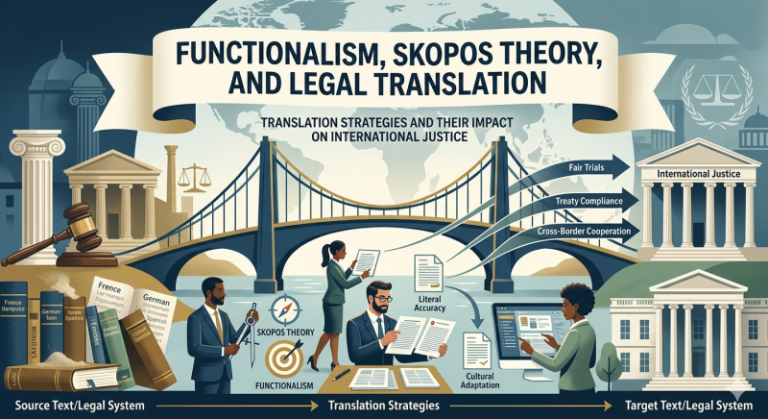
Functionalism, Skopos Theory, and Legal Translation: Translation Strategies and Their Impact on International Justice
Author: Griroek Gruaythong
26 May 2026, Bangkok – This article examines the relationship between Functionalism, Skopos Theory, and legal translation in the context of international criminal law, particularly the translation of legal terminology related to mafia-type criminal organisations in Italian law. The study is grounded in the argument that legal translation is not merely a linguistic transfer of meaning but also a process of mediation between different legal systems, cultures, and social contexts. The article analyses the arguments proposed by Nicholas Whithorn (2014) regarding the translation of the term associazione di tipo mafioso and the choice between the renderings “criminal organisation” and “mafia-type organisation,” both of which may produce significantly different legal consequences in extradition procedures and the European Arrest Warrant under the principle of double criminality. This study adopts a qualitative research methodology through documentary analysis and theoretical synthesis drawn from Translation Studies and Legal Translation Studies. The findings indicate that Functionalism and Skopos Theory play a crucial role in determining legal translation strategies because translators must consider the purpose of the text, the target legal system, and the legal consequences of interpretation rather than focusing solely on linguistic literalness. The article argues that legal translation in international contexts should prioritise functional equivalence and the explanation of legal-cultural contexts in order to minimise misunderstandings that may affect international judicial processes.
Introduction
In the era of globalisation, the movement of people, capital, and transnational criminal organisations has intensified the importance of international law and judicial cooperation. Within this context, legal translation has become an essential component of international justice processes, including extradition proceedings, cross-border criminal litigation, and cooperation between security agencies. However, legal translation is not simply a matter of transferring terminology from one language to another; it also involves navigating differences in legal systems, cultural frameworks, and social concepts that may not have direct equivalents in the target language.
This issue is particularly evident in the translation of mafia-related terminology in Italian law, which was extensively analysed by Nicholas Whithorn in the article Translating the Mafia: Legal Translation Issues and Strategies. Whithorn (2014) argues that terms such as associazione di tipo mafioso and omertà are legal culturemes deeply rooted in the historical, social, and legal context of Italy. Consequently, these terms cannot be translated literally without losing important legal and cultural meanings.
This discussion reflects the growing influence of Functionalism and Skopos Theory within contemporary Translation Studies. These theories propose that the success of a translation should not be measured solely by linguistic accuracy but also by the communicative purpose (skopos) and the function of the target text within its intended context. This perspective is especially significant in legal translation because legal terminology may produce substantially different legal consequences depending on how it is interpreted. The issue becomes particularly relevant in the context of extradition and the European Arrest Warrant, both of which rely on the principle of double criminality, meaning that the alleged act must constitute an offence in both the requesting and requested states before extradition can be granted.
This article therefore aims to analyse the role of Functionalism and Skopos Theory in legal translation through the case study of mafia-related legal terminology in Italian law. It further discusses the impact of translation strategies on international justice processes and proposes directions for future research in legal translation and intercultural legal communication.
Literature Review
Functionalism and Skopos Theory constitute major foundations of contemporary Translation Studies. These approaches emphasise that translation should be determined by the purpose of the text and the needs of the target audience rather than strict adherence to the linguistic structure of the source text. Christiane Nord (1997) argues that translation is a purposeful activity in which translators must always consider the function of the target text within its intended context. This principle has exerted considerable influence on specialised translation, particularly legal translation, where texts carry direct juridical implications.
Within the field of legal translation, Susan Šarčević (1997) explains that differences between legal systems make equivalence highly complex because many legal terms have no complete counterpart in another legal system. Translators must therefore consider not only legal meaning but also the interpretative effect of the translated term within the target legal system. The concept of functional equivalence consequently emerged as an important approach, suggesting that a translation does not need to replicate the exact form of the source text provided that it performs a similar legal function in the target context.
Nicholas Whithorn (2014) expands upon this issue through his examination of mafia-related terminology in Italian law. He argues that the term associazione di tipo mafioso cannot be adequately translated as “mafia association” because the word “association” in English fails to convey the hierarchical, structured, and intimidation-based nature of mafia organisations under Italian law. He therefore proposes the term “mafia-type organisation” as a more suitable functional equivalent because it better communicates both the organisational structure and the functional meaning of the Italian concept.
Another important issue concerns the concepts of foreignisation and domestication introduced by Lawrence Venuti (1995). Foreignisation seeks to preserve the cultural specificity of the source text, whereas domestication attempts to adapt the text to the norms and expectations of the target culture. Whithorn (2014) argues that mafia-related legal terminology should generally favour foreignisation, or at least culturally neutral terminology, in order to preserve the legal and cultural implications embedded in the source text.
Furthermore, Mona Baker (2011) suggests that the translation of culture-specific concepts often requires explicitation in order to prevent the loss of cultural meaning. This argument is particularly relevant to the translation of the term omertà, which Whithorn (2014) argues cannot be sufficiently conveyed through the phrase “code of silence.” Instead, he proposes “culture of silence” because it better reflects the deeply embedded social phenomenon associated with mafia influence in Italian society.
Research Methodology
This study adopts a qualitative research methodology based on documentary analysis and theoretical synthesis from Translation Studies and comparative legal studies. The research focuses on the relationship between Functionalism, Skopos Theory, and legal translation in the context of international criminal law. Particular attention is given to the translation strategies used for mafia-related legal terminology in European Union legal documents, academic literature on legal translation, and the work of Whithorn (2014).
The analysis concentrates on key terms including associazione di tipo mafioso, omertà, “criminal organisation,” and “mafia-type organisation.” These terms are examined through the perspectives of literal translation, functional equivalence, foreignisation, and domestication. The study also investigates how translation choices may influence legal interpretation within international contexts, particularly in extradition proceedings and the European Arrest Warrant system.
Additionally, this study employs comparative legal analysis to examine differences between the Italian civil law system and English-speaking common law systems such as those of the United Kingdom and the United States. Since differences between legal systems directly affect translational equivalence, this comparative approach helps explain why certain legal concepts cannot be adequately conveyed through literal translation and why translators often need to adopt functional strategies instead.
The theoretical framework of the study is primarily based on the Skopos Theory of Christiane Nord (1997), the legal equivalence framework proposed by Susan Šarčević (1997), and the concepts of foreignisation and domestication developed by Lawrence Venuti (1995).
Discussion
The findings demonstrate that Functionalism and Skopos Theory play a crucial role in legal translation within the globalised world, particularly when source texts contain legal culturemes for which no complete equivalent exists in the target language. The case of associazione di tipo mafioso clearly illustrates this issue because the term does not merely refer to a criminal organisation in a general sense. Instead, it contains specific legal elements under Italian law, including organisational hierarchy, systematic intimidation, and the creation of social submission through fear and omertà (Whithorn, 2014).
If translators choose the term “criminal organisation,” the translation may appear more accessible within international legal discourse. However, such a term risks reducing the distinctive legal characteristics of mafia-type organisations under Italian law. By contrast, the term “mafia-type organisation,” although more foreignised, preserves the functional meaning and cultural implications of the source concept more effectively. This reflects the principles of Functionalism, which emphasise that translation success depends not only on linguistic similarity but also on whether the translated text can fulfil its intended function in the target context.
This issue becomes particularly important in extradition proceedings and the European Arrest Warrant system, both of which rely on the principle of double criminality. If a translation fails to convey the legal nature of the offence accurately, courts in the requested state may reject extradition requests or misunderstand the legal basis of the accusation. Whithorn (2014) notes that several extradition cases involving alleged mafia members required further clarification because common law jurisdictions lacked offences fully equivalent to associazione di tipo mafioso.
These circumstances demonstrate that translation in international legal contexts is not merely a linguistic activity but also a direct component of judicial processes. Legal translators therefore function as intercultural legal mediators who must bridge not only languages but also legal reasoning systems and cultural frameworks. This observation aligns with the arguments of Susan Šarčević (1997), who emphasises that legal translators must understand both the source and target legal systems in order to avoid non-equivalence that may produce serious legal consequences.
Another important issue concerns the tension between foreignisation and domestication in legal translation. While domestication may increase readability for target readers, excessive domestication in legal contexts risks creating misunderstandings regarding the nature or legal status of the offence. For example, translating associazione as “conspiracy” may lead readers in common law systems to associate the term with conspiracy offences, despite the significant differences between conspiracy and the Italian legal concept of associazione.
Functionalism in legal translation therefore does not simply involve simplifying texts for readability. Rather, it requires translators to select strategies that preserve the legal function of the source text as effectively as possible. In some cases, translators may need to employ explicitation or explanatory glosses in order to convey legal culturemes that lack direct equivalents in the target language. This approach corresponds with the arguments of Mona Baker (2011), who views explicitation as an essential strategy for preserving cultural meaning in translation.
The study also demonstrates that legal translation within the European Union continues to suffer from terminological inconsistency. Although European legal harmonisation seeks to establish common legal standards, member states frequently employ different translations according to their domestic legal traditions. This inconsistency creates ambiguity in legal interpretation and application across jurisdictions. Consequently, legal harmonisation cannot be fully successful without parallel harmonisation in legal language and translation practices.
Moreover, the study reflects a broader shift within contemporary Translation Studies away from equivalence-based approaches toward sociocultural and functional approaches. Translation is increasingly understood not as simple word substitution but as the reconstruction of meaning within different social and legal contexts. Legal translators therefore operate simultaneously as linguists, legal experts, and cultural mediators, making legal translation an increasingly interdisciplinary field in the modern world.
Directions for Future Research
Although the three studies examined in this article significantly contribute to the understanding of Functionalism, Skopos Theory, and culturally embedded legal translation, many issues remain open for future investigation. Future research should undertake more extensive comparative analyses between civil law and common law systems in order to examine how structural legal differences influence translation strategies and judicial interpretation.
Another important direction involves empirical studies of the practical effects of translation on international justice processes. Future scholars could analyse extradition cases or European Arrest Warrant proceedings in which disputes over translated legal terminology played a role in judicial decisions. Such studies would provide concrete evidence regarding how translators’ lexical choices may influence judicial reasoning, evidentiary assessment, and international law enforcement.
Further research should also investigate the role and limits of explicitation in legal translation. An important question concerns how much explanatory intervention translators may provide before crossing the boundary between translation and legal interpretation. This issue is particularly sensitive in international legal documents, where translator neutrality remains a fundamental professional principle.
In addition, future studies should explore the impact of artificial intelligence and machine translation on culturally embedded legal translation. Although AI-assisted translation is increasingly used in international legal contexts, such systems continue to struggle with legal culturemes and historically grounded legal concepts. Future research should therefore examine whether AI systems can adequately incorporate Functionalist principles and Skopos-oriented approaches into legal translation practices.
Finally, in the context of Thailand, legal translation research remains relatively underdeveloped compared with European scholarship. Future studies should investigate Thai legal culturemes in fields such as family law, criminal law, and culturally specific legal concepts, particularly in cases involving international marriages, certified translation, and court interpreting. Such research would contribute significantly to the development of Thai Legal Translation Studies and the professional standards of legal translators in international contexts.
Conclusion
The three studies examined in this article collectively reflect a significant development within Translation Studies, shifting from viewing translation as a purely linguistic transfer to understanding it as a functional communicative process deeply connected to legal, social, and cultural contexts. Functionalism and Skopos Theory play an important role in explaining why translation strategies cannot be evaluated solely according to linguistic accuracy but must also consider communicative purpose, target readership, and real-world consequences.
The case study presented by Nicholas Whithorn concerning the translation of associazione di tipo mafioso and omertà clearly demonstrates that culturally embedded legal terminology cannot be adequately translated through literal methods alone. The use of expressions such as “mafia-type organisation” and “culture of silence” represents an attempt to establish functional equivalence while preserving both legal meaning and cultural context. At the same time, the discussion surrounding extradition and the European Arrest Warrant illustrates that legal translation may directly influence international judicial processes.
These studies further reveal that the role of translators has expanded from that of linguistic mediators to cultural and legal mediators. Legal translators therefore require not only linguistic competence but also expertise in comparative law, legal systems, and intercultural communication. The major challenge of legal translation is consequently not simply the search for equivalent terminology but the balancing of fidelity, intelligibility, and legal effect across different legal systems.
Ultimately, this study demonstrates that Translation Studies is increasingly becoming an interdisciplinary field connected to law, sociology, cultural studies, and technology. Understanding the role of translation within these broader contexts is therefore essential not only for the advancement of translation theory but also for international communication, legal justice, and intercultural understanding in the contemporary globalised world.
References
Mona Baker. (2011). In Other Words: A Coursebook on Translation (2nd ed.). Routledge.
Christiane Nord. (1997). Translating as a Purposeful Activity: Functionalist Approaches Explained. St. Jerome.
Susan Šarčević. (1997). New Approach to Legal Translation. Kluwer Law International.
Lawrence Venuti. (1995). The Translator’s Invisibility: A History of Translation. Routledge.
Nicholas Whithorn. (2014). “Translating the Mafia: Legal Translation Issues and Strategies.” JoSTrans: The Journal of Specialised Translation, 22, 144–166.
For professional services, please visit: https://www.seaproti.org/practitioners/
About certified translators, translation certifiers, and certified interpreters associated with SEAProTI. The Southeast Asian Association of Professional Translators and Interpreters (SEAProTI) has officially shared the qualifications and requirements for becoming Certified Translators, Translation Certification Providers, and Certified Interpreters in Sections 9 and 10 of the Royal Gazette, which was published by the Prime Minister’s Office in Thailand on July 25, 2024. Certified Translators, Translation Certification Providers, and Certified Interpreters
The Council of State has proposed the enactment of a Royal Decree, granting registered translators and recognised translation certifiers from professional associations or accredited language institutions the authority to provide legally valid translation certification (Letter to SEAProTI dated April 28, 2025)
SEAProTI is the first professional association in Thailand and Southeast Asia to implement a comprehensive certification system for translators, certifiers, and interpreters.
Head Office: Baan Ratchakru Building, No. 33, Room 402, Soi Phahonyothin 5, Phahonyothin Road, Phaya Thai District, Bangkok 10400, Thailand
Email: hello@seaproti.com | Tel.: (+66) 2-114-3128 (Office hours: Mon–Fri, 09:00–17:00)
ทฤษฎีหน้าที่นิยม (Functionalism) ทฤษฎีสโกปอส (Skopos Theory) และการแปลกฎหมาย: กลยุทธ์การแปลและผลกระทบต่อกระบวนการยุติธรรมระหว่างประเทศ
ผู้เขียน: ไกรฤกษ์ กรวยทอง
26 พฤษภาคม 2569, กรุงเทพมหานคร – บทความนี้มุ่งศึกษาความสัมพันธ์ระหว่างแนวคิดทฤษฎีหน้าที่นิยม (Functionalism) และทฤษฎีสโกปอส (Skopos Theory) กับการแปลกฎหมายในบริบทของกฎหมายอาญาระหว่างประเทศ โดยเฉพาะกรณีการแปลศัพท์กฎหมายที่เกี่ยวข้องกับองค์กรอาชญากรรมแบบมาเฟียในกฎหมายอิตาลี งานศึกษานี้ตั้งอยู่บนแนวคิดว่าการแปลกฎหมายมิได้เป็นเพียงกระบวนการถ่ายทอดความหมายทางภาษา แต่เป็นกระบวนการสื่อกลางระหว่างระบบกฎหมาย วัฒนธรรม และบริบททางสังคมที่แตกต่างกัน บทความวิเคราะห์ข้อเสนอของ วิธอร์น (2557) เกี่ยวกับการแปลคำว่า associazione di tipo mafioso และการเลือกใช้คำว่า องค์กรอาชญากรรม (criminal organisation) หรือ องค์กรแบบมาเฟีย (mafia-type organisation) ซึ่งอาจก่อให้เกิดผลทางกฎหมายแตกต่างกันในกระบวนการส่งผู้ร้ายข้ามแดน (extradition) และหมายจับยุโรป (European Arrest Warrant) ภายใต้หลักการกระทำผิดซ้อนกันสองรัฐ (double criminality) การศึกษานี้ใช้ระเบียบวิธีวิจัยเชิงคุณภาพผ่านการวิเคราะห์เอกสารและการสังเคราะห์แนวคิดจากศาสตร์การแปลและการแปลกฎหมาย ผลการศึกษาพบว่าแนวคิดทฤษฎีหน้าที่นิยมและทฤษฎีสโกปอสมีบทบาทสำคัญในการกำหนดกลยุทธ์การแปลกฎหมาย เนื่องจากผู้แปลจำเป็นต้องพิจารณาวัตถุประสงค์ของข้อความ ระบบกฎหมายเป้าหมาย และผลกระทบของการตีความทางกฎหมาย มากกว่าการรักษาความตรงตัวทางภาษาเพียงอย่างเดียว บทความเสนอว่าการแปลกฎหมายในบริบทระหว่างประเทศควรให้ความสำคัญกับ “ความเทียบเท่าเชิงหน้าที่” (functional equivalence) และการอธิบายบริบทวัฒนธรรมทางกฎหมาย เพื่อป้องกันความคลาดเคลื่อนที่อาจส่งผลต่อกระบวนการยุติธรรมระหว่างประเทศ
บทนำ
ในยุคโลกาภิวัตน์ การเคลื่อนย้ายของบุคคล เงินทุน และองค์กรอาชญากรรมข้ามชาติทำให้กฎหมายระหว่างประเทศและความร่วมมือด้านกระบวนการยุติธรรมมีความสำคัญมากขึ้นอย่างต่อเนื่อง ภายใต้บริบทดังกล่าว การแปลกฎหมายได้กลายเป็นองค์ประกอบสำคัญของกระบวนการยุติธรรมระหว่างประเทศ ไม่ว่าจะเป็นการส่งผู้ร้ายข้ามแดน การดำเนินคดีอาญาระหว่างรัฐ หรือความร่วมมือระหว่างองค์กรด้านความมั่นคง อย่างไรก็ตาม การแปลกฎหมายมิได้เป็นเพียงการถ่ายทอดคำศัพท์จากภาษาหนึ่งไปสู่อีกภาษาหนึ่ง แต่เป็นกระบวนการที่เกี่ยวข้องกับความแตกต่างของระบบกฎหมาย วัฒนธรรม และแนวคิดทางสังคมที่อาจไม่มีคำเทียบโดยตรงในภาษาเป้าหมาย
ประเด็นดังกล่าวปรากฏอย่างชัดเจนในกรณีการแปลศัพท์เกี่ยวกับมาเฟีย ในกฎหมายอิตาลี ซึ่งได้รับการวิเคราะห์อย่างละเอียดโดย นิโคลัส วิธอร์น ในบทความ Translating the Mafia: Legal Translation Issues and Strategies โดย วิธอร์น (2557) ชี้ให้เห็นว่าคำศัพท์อย่าง associazione di tipo mafioso และ omertà เป็นหน่วยวัฒนธรรมทางกฎหมาย (legal culturemes) ที่มีรากฐานเชิงประวัติศาสตร์ สังคม และกฎหมายเฉพาะของอิตาลี จึงไม่สามารถแปลแบบตรงตัวได้โดยไม่สูญเสียความหมายทางกฎหมายและวัฒนธรรม
การศึกษาดังกล่าวสะท้อนการขยายตัวของแนวคิดทฤษฎีหน้าที่นิยมและทฤษฎีสโกปอสในศาสตร์การแปลสมัยใหม่ ซึ่งเสนอว่าความสำเร็จของการแปลมิได้วัดจากความถูกต้อง ทางภาษาเพียงอย่างเดียว แต่ขึ้นอยู่กับวัตถุประสงค์ของการสื่อสาร (skopos) และหน้าที่ของข้อความในบริบทเป้าหมายด้วย แนวคิดนี้มีความสำคัญอย่างยิ่งในงานแปลกฎหมาย เพราะคำศัพท์ทางกฎหมายสามารถก่อให้เกิดผลทางกฎหมายที่แตกต่างกันได้อย่างมีนัยสำคัญ โดยเฉพาะในบริบทของการส่งผู้ร้ายข้ามแดนและหมายจับยุโรป ซึ่งเกี่ยวข้องกับหลักการกระทำผิดซ้อนกันสองรัฐ กล่าวคือ การกระทำจะต้องถือเป็นความผิดทั้งในรัฐผู้ร้องขอและรัฐผู้รับคำร้องจึงจะสามารถส่งผู้ร้ายข้ามแดนได้
บทความนี้จึงมีวัตถุประสงค์เพื่อวิเคราะห์บทบาทของทฤษฎีหน้าที่นิยมและทฤษฎีสโกปอสในการแปลกฎหมาย โดยเน้นศึกษากรณีศัพท์กฎหมายเกี่ยวกับมาเฟียในกฎหมายอิตาลี พร้อมอภิปรายผลกระทบของกลยุทธ์การแปลต่อกระบวนการยุติธรรมระหว่างประเทศ ตลอดจนเสนอแนวทางสำหรับการวิจัยในอนาคตด้านการแปลกฎหมาย (legal translation) และการสื่อสารกฎหมายระหว่างวัฒนธรรม (intercultural legal communication)
ทบทวนวรรณกรรม
แนวคิดทฤษฎีหน้าที่นิยมและทฤษฎีสโกปอสเป็นหนึ่งในรากฐานสำคัญของศาสตร์การแปลร่วมสมัย โดยเน้นว่าการแปลควรถูกกำหนดจากวัตถุประสงค์ของข้อความและความต้องการของผู้รับสาร มากกว่าการยึดติดกับโครงสร้างทางภาษาเดิมอย่างเคร่งครัด นอร์ด (2540) เสนอว่าการแปลเป็นกิจกรรมที่มีจุดมุ่งหมาย (purposeful activity) และผู้แปลต้องพิจารณาหน้าที่ของข้อความในบริบทเป้าหมายเสมอ หลักการดังกล่าวมีอิทธิพลอย่างมากต่อการแปลเฉพาะทาง โดยเฉพาะการแปลกฎหมายซึ่งเกี่ยวข้องกับผลทางนิติศาสตร์โดยตรง
ในบริบทการแปลกฎหมาย ชาร์เชวิช (2540) อธิบายว่าความแตกต่างระหว่างระบบกฎหมายทำให้ความเทียบเท่า (equivalence) ในการแปลกฎหมายเป็นเรื่องซับซ้อน เนื่องจากคำศัพท์จำนวนมากไม่มีคู่เทียบที่สมบูรณ์ในอีกระบบกฎหมายหนึ่ง ผู้แปลจึงต้องพิจารณาทั้งความหมายเชิงกฎหมายและผลของการตีความในระบบกฎหมายเป้าหมาย นอกจากนี้ แนวคิดเรื่อง “ความเทียบเท่าเชิงหน้าที่” (functional equivalence) ยังถูกใช้เพื่ออธิบายว่าคำแปลไม่จำเป็นต้องมีรูปแบบเหมือนต้นฉบับ หากแต่ต้องทำหน้าที่ทางกฎหมายใกล้เคียงกันในบริบทเป้าหมาย
วิธอร์น (2557) ขยายประเด็นดังกล่าวผ่านการศึกษาศัพท์กฎหมายเกี่ยวกับมาเฟียในกฎหมายอิตาลี โดยชี้ว่าคำว่า associazione di tipo mafioso ไม่สามารถแปลตรงตัวว่า “สมาคมมาเฟีย” (mafia association) ได้อย่างสมบูรณ์ เพราะคำว่า “สมาคม” (association) ในภาษาอังกฤษมิได้สะท้อนโครงสร้างองค์กรอาชญากรรมที่มีลักษณะเป็นระบบ มีลำดับชั้น และใช้อำนาจการข่มขู่เช่นเดียวกับความหมายในกฎหมายอิตาลี เขาจึงเสนอว่าคำว่า “องค์กรแบบมาเฟีย” (mafia-type organisation) มีลักษณะเป็นความเทียบเท่าเชิงหน้าที่ที่เหมาะสมกว่า เนื่องจากสามารถสื่อความหมายเชิงหน้าที่และโครงสร้างองค์กรได้ใกล้เคียงกว่า
อีกประเด็นสำคัญคือแนวคิดการทำให้คงความต่างทางวัฒนธรรม (foreignisation) และการทำให้สอดคล้องกับวัฒนธรรมเป้าหมาย (domestication) ของ เวนูตี (2538) ซึ่งมีบทบาทต่อการแปลหน่วยวัฒนธรรมทางกฎหมายอย่างมาก การทำให้คงความต่างทางวัฒนธรรมเน้นการรักษาลักษณะเฉพาะของต้นฉบับไว้ ขณะที่การทำให้สอดคล้องกับวัฒนธรรมเป้าหมายมุ่งทำให้ข้อความเข้าใจง่ายในบริบทของภาษาเป้าหมาย วิธอร์น (2557) เห็นว่าการแปลศัพท์เกี่ยวกับมาเฟียควรเอนเอียงไปทางการรักษาความต่างทางวัฒนธรรม หรืออย่างน้อยควรใช้คำกลางทางวัฒนธรรม (culturally neutral terms) เพื่อรักษานัยทางกฎหมายและวัฒนธรรมของต้นฉบับ
นอกจากนี้ เบเกอร์ (2554) ยังเสนอว่าการแปลคำเฉพาะทางวัฒนธรรมจำเป็นต้องใช้ “การอธิบายเพิ่มเติม” (explicitation) เพื่อป้องกันการสูญเสียความหมายเชิงวัฒนธรรม โดยเฉพาะในกรณีที่ภาษาเป้าหมายไม่มีแนวคิดเทียบเท่าโดยตรง แนวคิดนี้สอดคล้องกับกรณีการแปลคำว่า omertà ซึ่ง วิธอร์น (2557) เห็นว่าการใช้คำว่า “หลักแห่งความเงียบ” (code of silence) ยังไม่เพียงพอในการถ่ายทอดลักษณะของ “วัฒนธรรมแห่งความเงียบ” (culture of silence) ที่ฝังรากอยู่ในสังคมอิตาลีภายใต้อิทธิพลของมาเฟีย
ระเบียบวิธีการวิจัย
บทความนี้ใช้ระเบียบวิธีวิจัยเชิงคุณภาพ (qualitative research) โดยอาศัยการวิเคราะห์เอกสาร (documentary analysis) และการสังเคราะห์แนวคิดเชิงทฤษฎีจากศาสตร์การแปลและกฎหมายเปรียบเทียบ เพื่อศึกษาความสัมพันธ์ระหว่างทฤษฎีหน้าที่นิยม ทฤษฎีสโกปอส และการแปลกฎหมายในบริบทของกฎหมายอาญาระหว่างประเทศ การศึกษามุ่งวิเคราะห์การใช้กลยุทธ์การแปลศัพท์กฎหมายเกี่ยวกับองค์กรอาชญากรรมแบบมาเฟียในเอกสารทางกฎหมายของสหภาพยุโรป เอกสารทางวิชาการด้านการแปลกฎหมาย และงานศึกษาของวิธอร์น (2557)
การวิเคราะห์เน้นศึกษาคำศัพท์สำคัญ ได้แก่ associazione di tipo mafioso, omertà, “องค์กรอาชญากรรม” (criminal organisation) และ “องค์กรแบบมาเฟีย” (mafia-type organisation) โดยพิจารณาความแตกต่างระหว่างการแปลแบบตรงตัว (literal translation) ความเทียบเท่าเชิงหน้าที่ การรักษาความต่างทางวัฒนธรรม และการทำให้สอดคล้องกับวัฒนธรรมเป้าหมาย ตลอดจนผลกระทบของการเลือกคำแปลต่อการตีความทางกฎหมายในบริบทระหว่างประเทศ โดยเฉพาะในกระบวนการส่งผู้ร้ายข้ามแดนและหมายจับยุโรป
นอกจากนี้ การศึกษายังใช้แนวคิดการวิเคราะห์กฎหมายเปรียบเทียบ (comparative legal analysis) เพื่อเปรียบเทียบระบบกฎหมายซีวิลลอว์ (civil law) ของอิตาลีกับระบบคอมมอนลอว์ (common law) ในประเทศที่ใช้ภาษาอังกฤษ เช่น สหราชอาณาจักรและสหรัฐอเมริกา เนื่องจากความแตกต่างของระบบกฎหมายมีผลโดยตรงต่อการกำหนดความเทียบเท่าในการแปลศัพท์กฎหมาย การวิเคราะห์ดังกล่าวช่วยให้สามารถอธิบายได้ว่าทำไมคำศัพท์บางคำจึงไม่สามารถถ่ายทอดผ่านการแปลแบบตรงตัวได้ และเหตุใดผู้แปลจึงจำเป็นต้องเลือกใช้กลยุทธ์เชิงหน้าที่แทน
อภิปราย
ผลการศึกษาชี้ให้เห็นว่าแนวคิดทฤษฎีหน้าที่นิยมและทฤษฎีสโกปอสมีบทบาทสำคัญอย่างยิ่งต่อการแปลกฎหมายในยุคโลกาภิวัตน์ โดยเฉพาะในกรณีที่ข้อความต้นฉบับมีลักษณะเป็นหน่วยวัฒนธรรมทางกฎหมายซึ่งไม่สามารถหาคำเทียบที่สมบูรณ์ในภาษาเป้าหมายได้ กรณีของ associazione di tipo mafioso เป็นตัวอย่างที่ชัดเจน เนื่องจากคำดังกล่าวมิได้หมายถึงองค์กรอาชญากรรม ในความหมายทั่วไป แต่มีองค์ประกอบเฉพาะทางกฎหมายอิตาลี ได้แก่ การมีโครงสร้างองค์กรที่มั่นคง การใช้อำนาจข่มขู่ และการสร้างสภาพการยอมจำนนทางสังคมผ่านความหวาดกลัวและ omertà วิธอร์น (2557)
หากผู้แปลเลือกใช้คำว่าองค์กรอาชญากรรม แม้ว่าจะเป็นคำที่เข้าใจง่ายในระบบกฎหมายระหว่างประเทศ แต่คำดังกล่าวอาจลดทอนลักษณะเฉพาะขององค์กรแบบมาเฟียในกฎหมายอิตาลี ในทางกลับกัน การใช้คำว่า องค์กรแบบมาเฟีย แม้จะมีลักษณะรักษาความต่างทางวัฒนธรรมมากกว่า แต่สามารถรักษาความหมายเชิงหน้าที่และนัยทางวัฒนธรรมของต้นฉบับได้มากกว่า นี่สะท้อนแนวคิดของทฤษฎีหน้าที่นิยมที่มองว่าความสำเร็จของการแปลมิได้ขึ้นอยู่กับความใกล้เคียงทางภาษาเท่านั้น แต่ขึ้นอยู่กับว่าคำแปลสามารถทำหน้าที่ในบริบทเป้าหมายได้หรือไม่
ประเด็นดังกล่าวมีความสำคัญอย่างยิ่งในกระบวนการส่งผู้ร้ายข้ามแดนและหมายจับยุโรป ซึ่งอาศัยหลักการกระทำผิดซ้อนกันสองรัฐ กล่าวคือ ความผิดที่ถูกกล่าวหาจะต้องเป็นความผิดทั้งในรัฐผู้ร้องขอและรัฐผู้รับคำร้อง หากการแปลไม่สามารถถ่ายทอดลักษณะทางกฎหมายของความผิดได้อย่างเพียงพอ อาจนำไปสู่การปฏิเสธการส่งผู้ร้ายข้ามแดนหรือความเข้าใจคลาดเคลื่อนของศาลต่างประเทศ ดังที่ วิธอร์น (2557) ชี้ว่าหลายกรณีที่เกี่ยวข้องกับการส่งผู้ร้ายข้ามแดนผู้ต้องหามาเฟียไปยังอิตาลีจำเป็นต้องมีการชี้แจงเพิ่มเติมเกี่ยวกับความหมายของ associazione di tipo mafioso เนื่องจากระบบคอมมอนลอว์ไม่มีฐานความผิดที่ตรงกันโดยสมบูรณ์
สถานการณ์ดังกล่าวสะท้อนว่าการแปลในบริบทกฎหมายระหว่างประเทศมิได้เป็นเพียงกิจกรรมทางภาษา แต่เป็นส่วนหนึ่งของกระบวนการยุติธรรมโดยตรง ผู้แปลจึงมีบทบาทในฐานะ ผู้ไกล่เกลี่ยกฎหมายระหว่างวัฒนธรรม (intercultural legal mediator) ที่ต้องเชื่อมโยงไม่เพียงแต่ภาษา หากรวมถึงตรรกะของระบบกฎหมายและบริบททางวัฒนธรรมด้วย แนวคิดนี้สอดคล้องกับข้อเสนอของชาร์เชวิช (2540) ที่ว่าผู้แปลกฎหมายจำเป็นต้องเข้าใจทั้งระบบกฎหมายต้นทางและระบบกฎหมายปลายทาง เพื่อหลีกเลี่ยงภาวะไม่เทียบเท่า (non-equivalence) ที่อาจก่อให้เกิดผลทางกฎหมายร้ายแรง
แนวทางของงานวิจัยในอนาคต
แม้งานศึกษาทั้งสามชิ้นจะช่วยขยายความเข้าใจเกี่ยวกับทฤษฎีหน้าที่นิยม ทฤษฎีสโกปอส และการแปลกฎหมายเชิงวัฒนธรรมได้อย่างมีนัยสำคัญ แต่ยังมีประเด็นอีกจำนวนมากที่ควรได้รับการศึกษาต่อในอนาคต โดยเฉพาะในบริบทของกฎหมายข้ามชาติและการสื่อสารระหว่างระบบกฎหมายที่แตกต่างกัน งานวิจัยในอนาคตควรมุ่งศึกษาเชิงเปรียบเทียบระหว่างระบบกฎหมายซีวิลลอว์และคอมมอนลอว์ให้ลึกซึ้งมากขึ้น เพื่อสำรวจว่าความแตกต่างด้านโครงสร้างกฎหมายส่งผลต่อการเลือกกลยุทธ์การแปลอย่างไร รวมถึงศึกษาว่าศาลหรือหน่วยงานยุติธรรมในแต่ละประเทศตีความคำแปลของหน่วยวัฒนธรรมทางกฎหมายแตกต่างกันหรือไม่
อีกแนวทางหนึ่งที่มีความสำคัญคือการศึกษาผลกระทบเชิงปฏิบัติของการแปลต่อกระบวนการยุติธรรมระหว่างประเทศ เช่น การวิเคราะห์คดีส่งผู้ร้ายข้ามแดนหรือหมายจับยุโรปที่มีข้อโต้แย้งเกี่ยวกับความหมายของคำแปลทางกฎหมาย งานวิจัยลักษณะนี้จะช่วยให้เห็นอย่างเป็นรูปธรรมว่าการเลือกใช้คำศัพท์ของนักแปลสามารถส่งผลต่อคำวินิจฉัยของศาล การรับฟังพยานหลักฐาน หรือการบังคับใช้กฎหมายระหว่างประเทศได้มากเพียงใด ซึ่งจะช่วยยกระดับศาสตร์การแปลให้เชื่อมโยงกับการศึกษากฎหมายและสังคม (socio-legal studies) และกฎหมายเปรียบเทียบมากขึ้น
นอกจากนี้ ควรมีการศึกษาบทบาทของการอธิบายเพิ่มเติมในการแปลกฎหมายเพิ่มเติม โดยเฉพาะคำถามสำคัญว่าขอบเขตของการอธิบายเพิ่มเติมควรอยู่ตรงจุดใดเพื่อไม่ให้นักแปลก้าวล้ำไปสู่การตีความแทนศาล ประเด็นนี้มีความละเอียดอ่อนอย่างยิ่งในเอกสารทางกฎหมายระหว่างประเทศ ซึ่งความเป็นกลางของนักแปลถือเป็นหลักวิชาชีพสำคัญ
สรุป
บทความทั้งสามชิ้นสะท้อนให้เห็นพัฒนาการสำคัญของศาสตร์การแปลที่เปลี่ยนจากการมองการแปลในฐานะกระบวนการถ่ายทอดภาษา ไปสู่การมองการแปลในฐานะกระบวนการสื่อสารเชิงหน้าที่ที่เกี่ยวข้องกับบริบททางกฎหมาย สังคม และวัฒนธรรมอย่างลึกซึ้ง แนวคิดทฤษฎีหน้าที่นิยมและทฤษฎีสโกปอสมีบทบาทสำคัญในการอธิบายว่าการเลือกกลยุทธ์การแปลไม่อาจตัดสินด้วยเกณฑ์ความ “ถูกต้อง” ทางภาษาเพียงอย่างเดียว แต่ต้องพิจารณาถึงวัตถุประสงค์ของข้อความ ผู้อ่านปลายทาง และผลกระทบของการสื่อสารในบริบทจริง
กรณีศึกษาของวิธอร์น เกี่ยวกับการแปลคำว่า associazione di tipo mafioso และ omertà แสดงให้เห็นอย่างชัดเจนว่าคำศัพท์ทางกฎหมายที่ฝังรากอยู่ในวัฒนธรรมเฉพาะไม่สามารถแปลด้วยวิธีแปลตรงตัวได้อย่างสมบูรณ์ การเลือกใช้คำ เช่น องค์กรแบบมาเฟียหรือวัฒนธรรมแห่งความเงียบ เป็นความพยายามสร้างความเทียบเท่าเชิงหน้าที่เพื่อรักษาทั้งความหมายทางกฎหมายและบริบททางวัฒนธรรมเอาไว้ ขณะเดียวกัน ประเด็นเรื่องการส่งผู้ร้ายข้ามแดนและหมายจับยุโรปยังชี้ให้เห็นว่าการแปลกฎหมายสามารถส่งผลโดยตรงต่อกระบวนการยุติธรรมระหว่างประเทศ
เอกสารอ้างอิง
- เบเกอร์, เอ็ม. (2554). In other words: A coursebook on translation (พิมพ์ครั้งที่ 2). Routledge.
- นอร์ด, ซี. (2540). Translating as a purposeful activity: Functionalist approaches explained. St. Jerome.
- ชาร์เชวิช, เอส. (2540). New approach to legal translation. Kluwer Law International.
- เวนูตี, แอล. (2538). The translator’s invisibility: A history of translation. Routledge.
- วิธอร์น, น. (2557). Translating the mafia: Legal translation issues and strategies. JoSTrans: The Journal of Specialised Translation, 22, 144–166.
สมาคมวิชาชีพนักแปลและล่ามแห่งเอเชียตะวันออกเฉียงใต้ (SEAProTI) ได้ประกาศหลักเกณฑ์และคุณสมบัติของผู้ที่ขึ้นทะเบียนเป็น “นักแปลรับรอง (Certified Translators) และผู้รับรองการแปล (Translation Certification Providers) และล่ามรับรอง (Certified Interpreters)” ของสมาคม หมวดที่ 9 และหมวดที่ 10 ในราชกิจจานุเบกษา ของสำนักเลขาธิการคณะรัฐมนตรี ในสำนักนายกรัฐมนตรี แห่งราชอาณาจักรไทย ลงวันที่ 25 ก.ค. 2567 เล่มที่ 141 ตอนที่ 66 ง หน้า 100 อ่านฉบับเต็มได้ที่: นักแปลรับรอง ผู้รับรองการแปล และล่ามรับรอง
สำนักคณะกรรมการกฤษฎีกาเสนอให้ตราเป็นพระราชกฤษฎีกา โดยกำหนดให้นักแปลที่ขึ้นทะเบียน รวมถึงผู้รับรองการแปลจากสมาคมวิชาชีพหรือสถาบันสอนภาษาที่มีการอบรมและขึ้นทะเบียน สามารถรับรองคำแปลได้ (จดหมายถึงสมาคม SEAProTI ลงวันที่ 28 เม.ย. 2568)
สมาคมวิชาชีพนักแปลและล่ามแห่งเอเชียตะวันออกเฉียงใต้เป็นสมาคมวิชาชีพแห่งแรกและแห่งเดียวในประเทศไทยและภูมิภาคเอเชียตะวันออกเฉียงใต้ที่มีระบบรับรองนักแปลรับรอง ผู้รับรองการแปล และล่ามรับรอง
สำนักงานใหญ่: อาคารบ้านราชครู เลขที่ 33 ห้อง 402 ซอยพหลโยธิน 5 ถนนพหลโยธิน แขวงพญาไท เขตพญาไท กรุงเทพมหานคร 10400 ประเทศไทย