



Translation as Social Justice: An Analysis of Translation Policies and Practices in International Non-Governmental Organizations
Author: Phakaporn Tanjararak
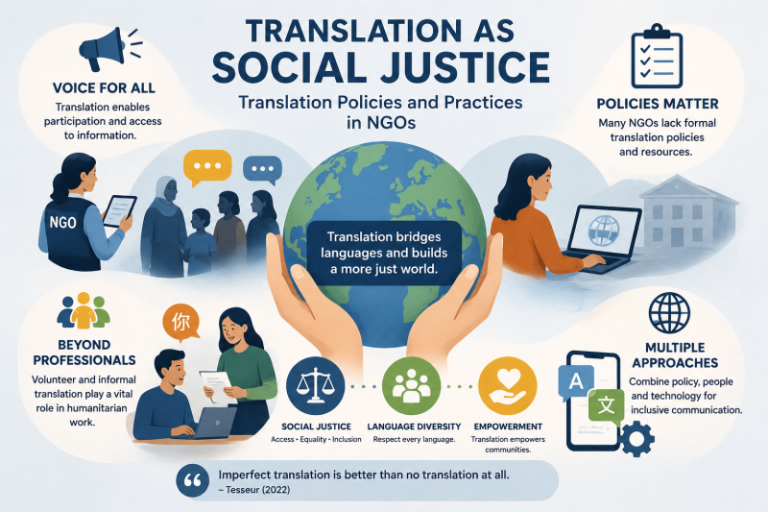
11 May 2026, Bangkok – This article aims to analyze the book Translation as Social Justice: Translation Policies and Practices in Non-Governmental Organisations by Wine Tesseur, published in 2022. The discussion focuses on the role of translation as a crucial mechanism for promoting social justice within international non-governmental organizations. The author argues that translation is not merely a linguistic activity but also a process deeply connected to power, access to information, and participation among linguistically diverse communities. Tesseur employs language policy analysis, ethnographic research, and interviews with NGO personnel to demonstrate the relationship between translation and humanitarian as well as human rights operations. The findings reveal that although many organizations recognize the importance of cross-linguistic communication, translation and interpreting often remain insufficiently supported in terms of both funding and policy planning.
Furthermore, the study proposes expanding the understanding of translation beyond traditional professional frameworks to include informal translation practices, volunteer translation, and translation technologies in order to create more inclusive and equitable communication. This article concludes that Tesseur’s work makes a significant contribution to translation studies, sociolinguistics, language policy, and the study of social justice at the international level.
Introduction
Over the past several decades, translation studies has expanded beyond the analysis of texts and linguistic equivalence toward the examination of social, cultural, and political factors related to translation processes. This trend has been described as the “sociological turn in translation studies,” reflecting scholars’ attempts to understand translation as a social activity closely connected to power, identity, and justice (Angelelli, 2015). This perspective has generated a growing body of research examining the relationship between translation, human rights, linguistic diversity, and access to information for marginalized groups (Monzó-Nebot & Mellinger, 2023).
Within the context of international non-governmental organizations, translation plays a vital role in humanitarian operations, including refugee assistance, human rights advocacy, work in conflict zones, and communication with linguistically diverse communities. Nevertheless, despite its importance as a mechanism for ensuring access to information and participation, many organizations fail to establish systematic language and translation policies. Consequently, translation tasks are frequently assigned to multilingual staff members, volunteers, or individuals who are not professional translators (Tesseur, 2017).
The book Translation as Social Justice: Translation Policies and Practices in Non-Governmental Organisations by Wine Tesseur represents a major contribution to the study of the relationship between language policy, translation, and social justice. The author argues that translation should be regarded as an essential component of language policy and as a tool for promoting social equality, particularly within organizations involved in human rights and development work. Tesseur also introduces the concept of “translation-as-empowerment,” which views translation as a means of increasing access to information, enhancing organizational accountability, and fostering equitable communication (Meylaerts & González Núñez, 2018).
This article seeks to analyze and critically discuss the key concepts presented in Tesseur’s book, with particular attention to language policy, translation practices, volunteer translation, and the role of translation in promoting social justice. In addition, the article discusses the contribution of this work to contemporary translation studies and its expansion toward broader social and political issues of global significance.
Translation as a Mechanism of Social Justice
Tesseur argues that translation should be regarded as a fundamental component of language policy because access to information in one’s own language constitutes a basic condition of social equality. This perspective aligns with Bernard Spolsky’s conception of language policy as consisting of language management, language practices, and language ideologies (Spolsky, 2004). Tesseur therefore expands the framework of language policy studies to encompass translation activities, viewing translation as a tool that enables the participation of linguistically marginalized groups.
The author emphasizes that although international non-governmental organizations prioritize humanitarian and human rights missions, translation and interpreting are often treated as secondary concerns in terms of budgeting and policy planning (Federici & O’Brien, 2019). Many organizations lack dedicated translation departments, resulting in language-related tasks being carried out by multilingual staff members and volunteers. This situation reflects a broader lack of awareness regarding the importance of language policy at the organizational level.
Volunteer Translation and Informal Translation Practices
One of the key issues discussed by Tesseur is the role of “volunteer translation” within human rights organizations, particularly the Urgent Action Network of Amnesty International, which includes more than 165,000 activists worldwide participating in human rights campaigns through multilingual communication and letter-writing activities. Translation thus becomes a central activity that enables information to reach people across different linguistic contexts (Tesseur, 2018).
Although volunteer translation is often criticized for issues related to quality and professional standards, Tesseur argues that such practices play an important role in ensuring access to information. In many situations, “imperfect translation is better than no translation at all.” This perspective challenges traditional assumptions that privilege professional translation as the only legitimate form of translation and instead opens space for recognizing the social value of informal translation practices (Orrego-Carmona, 2019).
Conclusion
The book Translation as Social Justice: Translation Policies and Practices in Non-Governmental Organisations by Wine Tesseur is an important contribution that expands the scope of translation studies toward deeper engagement with social, political, and human rights issues. Rather than viewing translation merely as a process of linguistic transfer, Tesseur demonstrates that translation functions as a crucial mechanism for ensuring access to information, equality, and participation within linguistically diverse societies.
Furthermore, Tesseur challenges traditional assumptions regarding professional translation by highlighting the importance of volunteer and informal translation practices within non-governmental organizations. These practices play a significant role in reducing linguistic inequality. Consequently, the book is not only a theoretical academic work but also a practical proposal encouraging organizations to recognize the importance of language policy and inclusive communication.
In conclusion, Tesseur’s work makes a substantial contribution to translation studies, sociolinguistics, and language policy studies. It also demonstrates the transformative potential of translation in promoting social justice within an increasingly globalized world.
References
- Angelelli, C. (2015). The Sociological Turn in Translation and Interpreting Studies. John Benjamins.
- Bassnett, S., & Johnston, D. (2019). The Outward Turn in Translation Studies. The Translator, 25(3), 181-188.
- Delgado Luchner, C. (2020). Translation and Development. Special Issue of Journal for Translation Studies in Africa, 1, 1-75.
- Federici, F., & O’Brien, S. (2019). Translation in Cascading Crises. Routledge.
- Federici, F., et al. (2019). The International Humanitarian Sector and Language Translation in Crisis Situations. The International Network on Crisis Translation.
- Fettes, M. (2015). Language in the United Nations post-2015 Development Agenda: Challenges to language policy and planning. Language Problems and Language Planning, 39(3), 298-311.
- Footitt, Hillary, et al. (2020). Development NGOs and Languages: Listening, Power and Inclusion. Palgrave Macmillan.
- González Núñez, G. (2016) Translating in Linguistically Diverse Societies: Translation policy in the United Kingdom. John Benjamins.
- Meylaerts, R., & González Núñez, G. (2018). No Language Policy without Translation Policy: A Comparison of Flanders and Wales. Language Problems and Language Planning, 42(2), 196-219.
- Monzó-Nebot, E., & Jiménez-Salcedo, J. (eds). (2017). Translating and Interpreting Justice in a Postmonolingual Age. Vernon Press.
- Monzo-Nebot, E., & Mellinger, C. (2023). Language Policies for Social Justice – Translation, Interpreting, and Access. Just. Journal of Language Rights & Minorities, 1(1-2), 15-35.
- Moreno-Rivero, J. (2018). Interdisciplinary Multilingual Practices in NGOs: Addressing Translation and Interpreting at the ‘Human Rights Investigations Lab’ and ‘Translators without Borders’. Translation Spaces, 7(1), 143-161.
- Moreno-Rivero, J. (2023). Translation Policy of Minoritised Languages through Organised Activism: a Comparative Study of Catalan and Welsh. Unpublished PhD thesis. University of Cambridge.
- Orrego-Carmona, D. (2019). A Holistic Approach to Non-professional Subtitling from a Functional Quality Perspective. Translation Studies, 12(2), 196-212.
- Spolsky, B. (2004). Language Policy. Cambridge University Press.
- Tesseur, W. (2017). Incorporating Translation into Sociolinguistic Research: Translation Policy in an International Non-governmental Organization. Journal of Sociolinguistics, 21(5), 629-649
- Tesseur, W. (2018). Researching Translation and Interpreting in Non-Governmental Organisations. Translation Spaces, 7(1), 1-18.
- Vidal Claramonte, Á. (2022). Outward Turn (el giro de apertura). ENTI (Enciclopedia de Traducción e Interpretación). Asociación Ibérica de Estudios de Traducción e Interpretación.
- Wolf, M. (2007). Introduction: TheEmergence of aSociology of Translation. In M. Wolf and A. Fukari (Eds.), Constructing a Sociology of Translation (pp.1-36). John Benjamins
For professional services, please visit: https://www.seaproti.org/practitioners/
About certified translators, translation certifiers, and certified interpreters associated with SEAProTI. The Southeast Asian Association of Professional Translators and Interpreters (SEAProTI) has officially shared the qualifications and requirements for becoming Certified Translators, Translation Certification Providers, and Certified Interpreters in Sections 9 and 10 of the Royal Gazette, which was published by the Prime Minister’s Office in Thailand on July 25, 2024. Certified Translators, Translation Certification Providers, and Certified Interpreters
The Council of State has proposed the enactment of a Royal Decree, granting registered translators and recognised translation certifiers from professional associations or accredited language institutions the authority to provide legally valid translation certification (Letter to SEAProTI dated April 28, 2025)
SEAProTI is the first professional association in Thailand and Southeast Asia to implement a comprehensive certification system for translators, certifiers, and interpreters.
Head Office: Baan Ratchakru Building, No. 33, Room 402, Soi Phahonyothin 5, Phahonyothin Road, Phaya Thai District, Bangkok 10400, Thailand
Email: hello@seaproti.com | Tel.: (+66) 2-114-3128 (Office hours: Mon–Fri, 09:00–17:00).
การแปลในฐานะความยุติธรรมทางสังคม: การวิเคราะห์นโยบายและแนวปฏิบัติด้านการแปลในองค์กรพัฒนาเอกชนระหว่างประเทศ
ผู้เขียน: ภคพร ตันจรารักษ์
11 พฤษภาคม 2569, กรุงเทพมหานคร – บทความนี้มุ่งวิเคราะห์หนังสือ การแปลในฐานะความยุติธรรมทางสังคม: นโยบายและแนวปฏิบัติด้านการแปลในองค์กรพัฒนาเอกชน ของ ไวน์ เทสเซอร์ ซึ่งตีพิมพ์เมื่อ พ.ศ. 2565 โดยเน้นการอภิปรายบทบาทของการแปลในฐานะกลไกสำคัญในการส่งเสริมความยุติธรรมทางสังคมภายในองค์กรพัฒนาเอกชนระหว่างประเทศ ผู้เขียนชี้ให้เห็นว่าการแปลมิได้เป็นเพียงกิจกรรมทางภาษา แต่เป็นกระบวนการที่เกี่ยวข้องกับอำนาจ การเข้าถึงข้อมูล และการมีส่วนร่วมของกลุ่มคนที่มีความหลากหลายทางภาษา เทสเซอร์ใช้การวิเคราะห์นโยบายภาษา การศึกษาชาติพันธุ์วรรณนา และการสัมภาษณ์บุคลากรในองค์กรพัฒนาเอกชน เพื่อแสดงให้เห็นถึงความสัมพันธ์ระหว่างการแปลกับการดำเนินงานด้านสิทธิมนุษยชนและมนุษยธรรม ผลการศึกษาพบว่า แม้องค์กรจำนวนมากจะตระหนักถึงความสำคัญของการสื่อสารข้ามภาษา แต่การแปลและการล่ามกลับยังไม่ได้รับการสนับสนุนอย่างเพียงพอทั้งในด้านงบประมาณและการวางแผนเชิงนโยบาย
นอกจากนี้ งานวิจัยยังเสนอให้ขยายความเข้าใจเกี่ยวกับการแปลจากกรอบวิชาชีพแบบดั้งเดิมไปสู่มุมมองที่ครอบคลุมการแปลแบบไม่เป็นทางการ การแปลโดยอาสาสมัคร และการใช้เทคโนโลยีการแปล เพื่อสร้างการสื่อสารที่ครอบคลุมและเป็นธรรมมากยิ่งขึ้น บทความนี้จึงสรุปได้ว่า ผลงานของเทสเซอร์มีคุณูปการสำคัญต่อศาสตร์การแปล ภาษาศาสตร์สังคม นโยบายภาษา และการศึกษาด้านความยุติธรรมทางสังคมในระดับนานาชาติ
บทนำ
ในช่วงหลายทศวรรษที่ผ่านมา ศาสตร์การแปลได้ขยายขอบเขตการศึกษาออกจากการวิเคราะห์ตัวบทและความเทียบเท่าทางภาษาไปสู่การพิจารณาปัจจัยทางสังคม วัฒนธรรม และการเมืองที่เกี่ยวข้องกับกระบวนการแปลมากยิ่งขึ้น กระแสดังกล่าวได้รับการอธิบายว่าเป็น “การหันสู่สังคมวิทยาในการศึกษาการแปล” ซึ่งสะท้อนถึงความพยายามของนักวิชาการในการทำความเข้าใจบทบาทของการแปลในฐานะกิจกรรมทางสังคมที่เชื่อมโยงกับอำนาจ อัตลักษณ์ และความยุติธรรม (แองเจเลลลี, พ.ศ. 2558) แนวคิดนี้ส่งผลให้เกิดงานวิจัยจำนวนมากที่ศึกษาความสัมพันธ์ระหว่างการแปลกับประเด็นด้านสิทธิมนุษยชน ความหลากหลายทางภาษา และการเข้าถึงข้อมูลของกลุ่มคนชายขอบ (มอนโซ-เนบอต และ เมลลิงเจอร์, พ.ศ. 2566)
ภายใต้บริบทขององค์กรพัฒนาเอกชนระหว่างประเทศ การแปลมีบทบาทสำคัญอย่างยิ่งต่อการดำเนินงานด้านมนุษยธรรม ไม่ว่าจะเป็นการช่วยเหลือผู้ลี้ภัย การสนับสนุนสิทธิมนุษยชน การทำงานในพื้นที่สงคราม หรือการสื่อสารกับชุมชนที่มีความหลากหลายทางภาษา อย่างไรก็ตาม แม้การแปลจะเป็นกลไกสำคัญในการสร้างการเข้าถึงข้อมูลและการมีส่วนร่วมของผู้คนในสังคม แต่องค์กรจำนวนมากกลับมิได้ให้ความสำคัญกับการกำหนดนโยบายด้านภาษาและการแปลอย่างเป็นระบบ ส่งผลให้ภาระงานด้านการแปลมักตกอยู่กับเจ้าหน้าที่หลายภาษา อาสาสมัคร หรือบุคคลที่มิได้มีสถานะเป็นนักแปลวิชาชีพ (เทสเซอร์, พ.ศ. 2560)
หนังสือ การแปลในฐานะความยุติธรรมทางสังคม: นโยบายและแนวปฏิบัติด้านการแปลในองค์กรพัฒนาเอกชน ของ ไวน์ เทสเซอร์ นับเป็นผลงานสำคัญที่นำเสนอการศึกษาความสัมพันธ์ระหว่างนโยบายภาษา การแปล และความยุติธรรมทางสังคมอย่างเป็นระบบ ผู้เขียนเสนอว่าการแปลควรถูกมองว่าเป็นองค์ประกอบสำคัญของนโยบายภาษา และเป็นเครื่องมือในการสร้างความเสมอภาคทางสังคม โดยเฉพาะในองค์กรที่ทำงานด้านสิทธิมนุษยชนและการพัฒนา เทสเซอร์ยังเสนอแนวคิด “การแปลในฐานะการเสริมพลัง” ซึ่งมองว่าการแปลช่วยเพิ่มการเข้าถึงข้อมูล สร้างความรับผิดชอบขององค์กร และส่งเสริมการสื่อสารที่เท่าเทียม (เมย์แลร์ตส์ และ กอนซาเลซ นูเญซ, พ.ศ. 2561)
บทความนี้มีวัตถุประสงค์เพื่อวิเคราะห์และวิจารณ์แนวคิดสำคัญในหนังสือของเทสเซอร์ โดยมุ่งเน้นประเด็นเกี่ยวกับนโยบายภาษา แนวปฏิบัติด้านการแปล การแปลโดยอาสาสมัคร และบทบาทของการแปลในการสร้างความยุติธรรมทางสังคม นอกจากนี้ บทความยังอภิปรายคุณูปการของงานดังกล่าวต่อศาสตร์การแปลร่วมสมัย รวมถึงการขยายขอบเขตการศึกษาการแปลไปสู่ประเด็นทางสังคมและการเมืองที่มีความสำคัญในระดับสากล
การแปลในฐานะกลไกของความยุติธรรมทางสังคม
เทสเซอร์เสนอว่าการแปลควรถูกมองว่าเป็นองค์ประกอบสำคัญของนโยบายภาษา เนื่องจากการเข้าถึงข้อมูลในภาษาของตนเองเป็นเงื่อนไขพื้นฐานของความเสมอภาคทางสังคม แนวคิดดังกล่าวสอดคล้องกับมุมมองของ สปอลสกี ที่อธิบายนโยบายภาษาว่าประกอบด้วยการจัดการภาษา การปฏิบัติทางภาษา และอุดมการณ์ทางภาษา (สปอลสกี, พ.ศ. 2547) เทสเซอร์จึงขยายกรอบการศึกษานโยบายภาษาให้ครอบคลุมกิจกรรมการแปล โดยมองว่าการแปลเป็นเครื่องมือที่ช่วยสร้างการมีส่วนร่วมของกลุ่มคนที่ถูกกีดกันทางภาษา
ผู้เขียนชี้ให้เห็นว่า แม้องค์กรพัฒนาเอกชนระหว่างประเทศจะมีพันธกิจด้านมนุษยธรรมและสิทธิมนุษยชน แต่การแปลและการล่ามกลับมักได้รับความสำคัญในระดับรอง ทั้งในด้านงบประมาณและการวางแผนเชิงนโยบาย (เฟเดอริชี และ โอไบรอัน, พ.ศ. 2562) หลายองค์กรไม่มีหน่วยงานด้านการแปลโดยเฉพาะ ส่งผลให้ภาระงานด้านภาษาตกอยู่กับเจ้าหน้าที่หลายภาษาและอาสาสมัคร ซึ่งสะท้อนถึงการขาดความตระหนักเกี่ยวกับความสำคัญของนโยบายภาษาในระดับองค์กร
การแปลโดยอาสาสมัครและการแปลแบบไม่เป็นทางการ
หนึ่งในประเด็นสำคัญที่เทสเซอร์อภิปรายคือบทบาทของ “การแปลโดยอาสาสมัคร” ภายในองค์กรด้านสิทธิมนุษยชน โดยเฉพาะเครือข่ายปฏิบัติการเร่งด่วนขององค์การนิรโทษกรรมสากล ซึ่งมีนักกิจกรรมกว่า 165,000 คนทั่วโลกเข้าร่วมสนับสนุนการรณรงค์ด้านสิทธิมนุษยชนผ่านการเขียนจดหมายและการสื่อสารหลายภาษา การแปลจึงกลายเป็นกิจกรรมหลักที่ช่วยให้ข้อมูลสามารถเข้าถึงผู้คนในบริบททางภาษาที่แตกต่างกัน (เทสเซอร์, พ.ศ. 2561)
แม้การแปลโดยอาสาสมัครจะถูกวิพากษ์วิจารณ์ในด้านคุณภาพและมาตรฐานวิชาชีพ เทสเซอร์กลับเสนอว่าการแปลลักษณะดังกล่าวมีบทบาทสำคัญต่อการสร้างการเข้าถึงข้อมูล และในหลายกรณี “การมีการแปลที่ไม่สมบูรณ์ย่อมดีกว่าไม่มีการแปลเลย” แนวคิดนี้ท้าทายมุมมองดั้งเดิมที่มักให้คุณค่ากับการแปลวิชาชีพเพียงรูปแบบเดียว และเปิดพื้นที่ให้เกิดการพิจารณาคุณค่าของการแปลแบบไม่เป็นทางการในฐานะกลไกของการมีส่วนร่วมทางสังคม (ออร์เรโก-คาร์โมนา, พ.ศ. 2562)
บทสรุป
หนังสือ การแปลในฐานะความยุติธรรมทางสังคม: นโยบายและแนวปฏิบัติด้านการแปลในองค์กรพัฒนาเอกชน ของ ไวน์ เทสเซอร์ ถือเป็นผลงานสำคัญที่ช่วยขยายขอบเขตของศาสตร์การแปลไปสู่การศึกษาประเด็นด้านสังคม การเมือง และสิทธิมนุษยชนอย่างลึกซึ้ง ผู้เขียนมิได้มองการแปลเพียงในฐานะกระบวนการถ่ายทอดภาษา แต่เสนอให้เห็นว่าการแปลคือกลไกสำคัญในการสร้างการเข้าถึงข้อมูล ความเท่าเทียม และการมีส่วนร่วมของผู้คนในสังคมที่มีความหลากหลายทางภาษา
นอกจากนี้ เทสเซอร์ยังท้าทายกรอบคิดแบบดั้งเดิมเกี่ยวกับการแปลวิชาชีพ ด้วยการชี้ให้เห็นถึงความสำคัญของการแปลโดยอาสาสมัครและการแปลแบบไม่เป็นทางการในองค์กรพัฒนาเอกชน ซึ่งมีบทบาทสำคัญต่อการลดความเหลื่อมล้ำทางภาษา ผลงานชิ้นนี้จึงมิได้เป็นเพียงงานวิชาการเชิงทฤษฎี หากยังเป็นข้อเสนอเชิงปฏิบัติที่กระตุ้นให้องค์กรต่าง ๆ ตระหนักถึงความสำคัญของนโยบายภาษาและการสื่อสารแบบครอบคลุม
กล่าวโดยสรุป หนังสือของเทสเซอร์มีคุณูปการสำคัญต่อศาสตร์การแปล ภาษาศาสตร์สังคม และการศึกษาด้านนโยบายภาษา อีกทั้งยังเป็นผลงานที่สะท้อนให้เห็นถึงศักยภาพของการแปลในการส่งเสริมความยุติธรรมทางสังคมในโลกยุคโลกาภิวัตน์อย่างชัดเจน
เอกสารอ้างอิง
- แองเจเลลลี, ซี. (พ.ศ. 2558). การหันสู่สังคมวิทยาในการศึกษาการแปลและการล่าม. สำนักพิมพ์จอห์น เบนจามินส์
- แบสเน็ตต์, เอส. และ จอห์นสตัน, ดี. (พ.ศ. 2562). “การหันออกสู่ภายนอกในการศึกษาการแปล.” เดอะ ทรานสเลเตอร์, 25(3), 181-188.
- เดลกาโด ลุชเนอร์, ซี. (พ.ศ. 2563). “การแปลและการพัฒนา.” ฉบับพิเศษของวารสารการศึกษาการแปลในแอฟริกา, 1, 1-75.
- เฟเดอริชี, เอฟ. และ โอไบรอัน, เอส. (พ.ศ. 2562). การแปลในภาวะวิกฤตต่อเนื่อง. สำนักพิมพ์ราวต์เลดจ์
- เฟเดอริชี, เอฟ. และคณะ. (พ.ศ. 2562). ภาคส่วนมนุษยธรรมระหว่างประเทศและการแปลภาษาในสถานการณ์วิกฤต. เครือข่ายนานาชาติด้านการแปลในภาวะวิกฤต
- เฟตเตส, เอ็ม. (พ.ศ. 2558). “ภาษาในวาระการพัฒนาของสหประชาชาติหลัง พ.ศ. 2558: ความท้าทายต่อนโยบายและการวางแผนภาษา.” ปัญหาภาษาและการวางแผนภาษา, 39(3), 298-311.
- ฟุตทิตต์, ฮิลลารี และคณะ. (พ.ศ. 2563). องค์กรพัฒนาเอกชนด้านการพัฒนาและภาษา: การรับฟัง อำนาจ และการมีส่วนร่วม. สำนักพิมพ์พัลเกรฟ แมคมิลแลน
- กอนซาเลซ นูเญซ, จี. (พ.ศ. 2559). การแปลในสังคมที่มีความหลากหลายทางภาษา: นโยบายการแปลในสหราชอาณาจักร. สำนักพิมพ์จอห์น เบนจามินส์
- เมย์แลร์ตส์, อาร์. และ กอนซาเลซ นูเญซ, จี. (พ.ศ. 2561). “ไม่มีนโยบายภาษาใดปราศจากนโยบายการแปล: การเปรียบเทียบแฟลนเดอร์สและเวลส์.” ปัญหาภาษาและการวางแผนภาษา, 42(2), 196-219.
- มอนโซ-เนบอต, อี. และ ฮิเมเนซ-ซัลเซโด, เจ. (บรรณาธิการ). (พ.ศ. 2560). การแปลและการล่ามเพื่อความยุติธรรมในยุคหลังภาษาเดียว. สำนักพิมพ์เวอร์นอน
- มอนโซ-เนบอต, อี. และ เมลลิงเจอร์, ซี. (พ.ศ. 2566). “นโยบายภาษากับความยุติธรรมทางสังคม: การแปล การล่าม และการเข้าถึง.” วารสารสิทธิทางภาษาและชนกลุ่มน้อย, 1(1-2), 15-35.
- โมเรโน-ริเวโร, เจ. (พ.ศ. 2561). “แนวปฏิบัติพหุภาษาแบบสหวิทยาการในองค์กรพัฒนาเอกชน: การจัดการการแปลและการล่ามในห้องปฏิบัติการสืบสวนสิทธิมนุษยชนและนักแปลไร้พรมแดน.” ทรานสเลชัน สเปซ, 7(1), 143-161.
- โมเรโน-ริเวโร, เจ. (พ.ศ. 2566). นโยบายการแปลของภาษาชนกลุ่มน้อยผ่านการเคลื่อนไหวเชิงองค์กร: การศึกษาเปรียบเทียบภาษากาตาลันและภาษาเวลส์. วิทยานิพนธ์ปริญญาเอกที่ยังไม่ได้ตีพิมพ์ มหาวิทยาลัยเคมบริดจ์
- ออร์เรโก-คาร์โมนา, ดี. (พ.ศ. 2562). “แนวทางแบบองค์รวมต่อการทำคำบรรยายโดยผู้ไม่ใช่มืออาชีพจากมุมมองคุณภาพเชิงหน้าที่.” การศึกษาการแปล, 12(2), 196-212.
- สปอลสกี, บี. (พ.ศ. 2547). นโยบายภาษา. สำนักพิมพ์มหาวิทยาลัยเคมบริดจ์
- เทสเซอร์, ว. (พ.ศ. 2560). “การบูรณาการการแปลสู่การวิจัยภาษาศาสตร์สังคม: นโยบายการแปลในองค์กรพัฒนาเอกชนระหว่างประเทศ.” วารสารภาษาศาสตร์สังคม, 21(5), 629-649.
- เทสเซอร์, ว. (พ.ศ. 2561). “การวิจัยการแปลและการล่ามในองค์กรพัฒนาเอกชน.” ทรานสเลชัน สเปซ, 7(1), 1-18.
- วิดัล คลารามอนเต, อา. (พ.ศ. 2565). “การหันออกสู่ภายนอก.” สารานุกรมการแปลและการล่าม. สมาคมไอบีเรียเพื่อการศึกษาการแปลและการล่าม
สมาคมวิชาชีพนักแปลและล่ามแห่งเอเชียตะวันออกเฉียงใต้ (SEAProTI) ได้ประกาศหลักเกณฑ์และคุณสมบัติของผู้ที่ขึ้นทะเบียนเป็น “นักแปลรับรอง (Certified Translators) และผู้รับรองการแปล (Translation Certification Providers) และล่ามรับรอง (Certified Interpreters)” ของสมาคม หมวดที่ 9 และหมวดที่ 10 ในราชกิจจานุเบกษา ของสำนักเลขาธิการคณะรัฐมนตรี ในสำนักนายกรัฐมนตรี แห่งราชอาณาจักรไทย ลงวันที่ 25 ก.ค. 2567 เล่มที่ 141 ตอนที่ 66 ง หน้า 100 อ่านฉบับเต็มได้ที่: นักแปลรับรอง ผู้รับรองการแปล และล่ามรับรอง
สำนักคณะกรรมการกฤษฎีกาเสนอให้ตราเป็นพระราชกฤษฎีกา โดยกำหนดให้นักแปลที่ขึ้นทะเบียน รวมถึงผู้รับรองการแปลจากสมาคมวิชาชีพหรือสถาบันสอนภาษาที่มีการอบรมและขึ้นทะเบียน สามารถรับรองคำแปลได้ (จดหมายถึงสมาคม SEAProTI ลงวันที่ 28 เม.ย. 2568)
สมาคมวิชาชีพนักแปลและล่ามแห่งเอเชียตะวันออกเฉียงใต้เป็นสมาคมวิชาชีพแห่งแรกและแห่งเดียวในประเทศไทยและภูมิภาคเอเชียตะวันออกเฉียงใต้ที่มีระบบรับรองนักแปลรับรอง ผู้รับรองการแปล และล่ามรับรอง
สำนักงานใหญ่: อาคารบ้านราชครู เลขที่ 33 ห้อง 402 ซอยพหลโยธิน 5 ถนนพหลโยธิน แขวงพญาไท เขตพญาไท กรุงเทพมหานคร 10400 ประเทศไทย