


Supreme Court Ruling on Long-Term Lease Agreements in Thailand: Legal Implications for Foreign Real Estate Investment
Author: Phakaporn Tanjararak
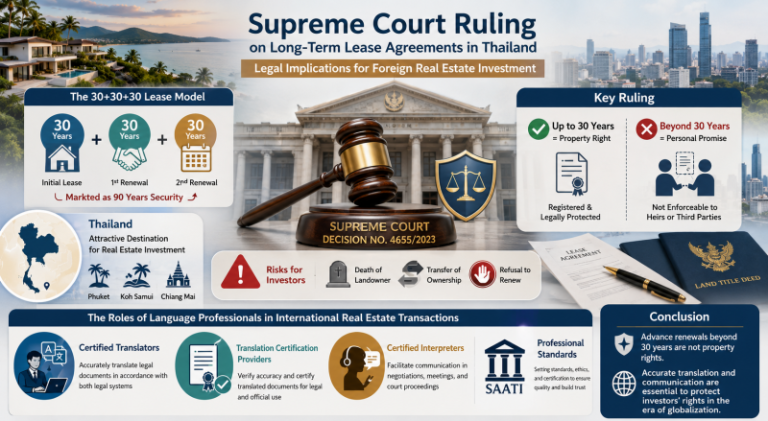
11 May 2026, Bangkok – Supreme Court Decision No. 4655/2023 has significantly affected the structure of foreign real estate ownership in Thailand, particularly the “30+30+30-year lease” model that has been widely promoted in the investment property market. This article aims to analyze the legal principles related to the aforementioned ruling, including examining its impacts on foreign investors and the roles of certified translators, translation certification providers, and certified interpreters in international real estate transactions.
The study found that the Supreme Court reaffirmed the important principle that advance lease renewal clauses extending beyond 30 years do not constitute registrable property rights, but merely personal agreements between contracting parties, which may not be enforceable against heirs or third parties (Supreme Court, 2023). Furthermore, this article highlights that the accuracy of legal document translation and cross-linguistic communication constitutes a crucial factor in protecting the rights of foreign investors. Certified translators, translation certification providers, and certified interpreters play significant roles in ensuring accuracy, transparency, and reducing legal risks in international real estate transactions
Introduction
Thailand is considered one of the major centers of real estate investment in Southeast Asia, particularly in important tourist destinations such as Phuket Province, Koh Samui, and Chiang Mai Province, which are highly popular among foreign investors and retirees from abroad. Nevertheless, although Thailand welcomes foreign investment in various sectors, Thai law continues to impose strict limitations regarding land ownership by foreign nationals (Civil and Commercial Code, 2023). As a result, alternative legal structures have been developed to facilitate foreign investors’ long-term utilization of real estate.
One of the most popular arrangements is the “30+30+30-year lease agreement,” which involves an initial 30-year lease accompanied by clauses providing for two additional renewals, totaling 90 years. Although this structure has been marketed as guaranteeing long-term ownership security, legal controversies remain regarding its enforceability, particularly in cases involving changes of land ownership or the death of the lessor (Surasak Wilassak, 2024).
This issue became clearer following Supreme Court Decision No. 4655/2023, in which the Court established the principle that advance lease renewal clauses exceeding the legally prescribed duration cannot be regarded as property rights enforceable against third parties (Supreme Court, 2023). Consequently, this ruling has become a major legal precedent affecting the real estate sector, foreign investors, and legal professionals alike.
In addition to legal issues, international real estate transactions also involve cross-linguistic communication and the translation of numerous legal documents, including lease agreements, title deeds, powers of attorney, and corporate establishment documents. Translation inaccuracies may directly affect the interpretation of the rights and obligations of the contracting parties (Southeast Asian Association of Translators and Interpreters, 2025).
Therefore, certified translators, translation certification providers, and certified interpreters play important roles in supporting the legal accuracy of international transactions.
Legal Principles Concerning Long-Term Lease Agreements in Thailand
The Civil and Commercial Code stipulates that lease agreements concerning immovable property exceeding three years must be registered with the competent authority and that the maximum lease term may not exceed 30 years (Civil and Commercial Code, 2023). Although the contracting parties may agree to renew the lease agreement, such renewal must be executed anew upon the expiration of the original term and cannot be registered once in advance for the entire 90-year period.
However, in practice, many real estate developers have promoted the “30+30+30-year lease” arrangement to foreign investors by creating the impression that lessees would enjoy uninterrupted possession rights for 90 years, which differs substantially from the actual legal principles (Surasak Wilassak, 2024).
Supreme Court Decision No. 4655/2023 and Its Legal Implications
Supreme Court Decision No. 4655/2023 represents a major turning point in the interpretation of Thai lease law concerning immovable property. The Court ruled that advance lease renewal clauses constitute merely personal contractual agreements rather than property rights capable of registration and enforceability against third parties (Supreme Court, 2023).
The Court clearly distinguished between “property rights” and “contractual claims.” The initial 30-year lease term registered with the Land Department constitutes a property right protected under Thai law, whereas future renewal rights are merely promises requiring renewed consent from the contracting parties upon expiration of the original term (Supreme Court, 2023).
The effects of this ruling have exposed numerous foreign investors to legal risks, particularly in cases where the original landowner dies, transfers ownership, or refuses to renew the lease agreement in the future (Surasak Wilassak, 2024).
The Roles of Certified Translators, Translation Certification Providers, and Certified Interpreters
International real estate transactions involve legal documents that are highly complex and contain extensive specialized terminology. Consequently, certified translators play an important role in accurately conveying the contents of documents in accordance with the legal principles of both languages, particularly lease agreements, powers of attorney, corporate documents, and land title documents (The Southeast Asian Association of Professional Translators and Interpreters, 2025).
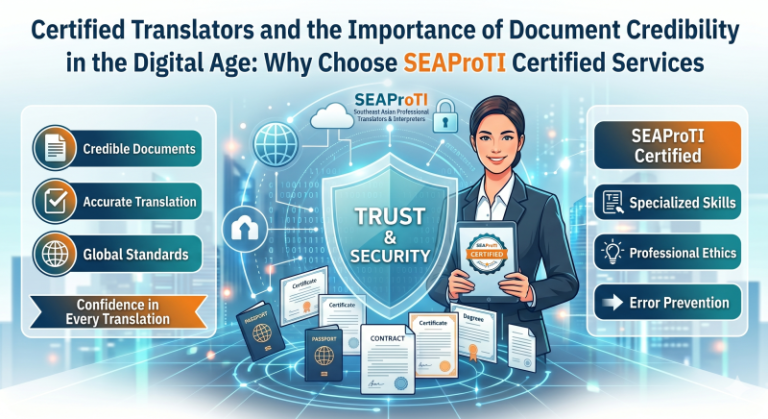
Translation certification providers are responsible for verifying the accuracy of translated documents so that they may be reliably used in legal and governmental proceedings. Certified interpreters, meanwhile, play roles in communication between contracting parties, negotiations, and court proceedings in order to prevent misunderstandings that may lead to disputes (The Southeast Asian Association of Professional Translators and Interpreters, 2025).
The Southeast Asian Association of Professional Translators and Interpreters also plays an important role in establishing professional standards, ethical guidelines, and quality certification systems for language professionals, thereby enhancing the credibility of legal documents and increasing confidence among foreign investors (The Southeast Asian Association of Professional Translators and Interpreters
Conclusion
Supreme Court Decision No. 4655/2023 reflects the Thai judiciary’s strict adherence to written legal principles and confirms that advance lease renewal clauses cannot genuinely substitute for property rights (Supreme Court, 2023). Foreign investors must therefore recognize these legal limitations and conduct careful legal due diligence prior to making investments.
At the same time, certified translators, translation certification providers, and certified interpreters play critically important roles in fostering accurate understanding, reducing risks arising from linguistic discrepancies, and supporting the legal security of international real estate transactions, which constitute essential components in protecting investors’ rights in the era of globalization (The Southeast Asian Association of Professional Translators and Interpreters, 2025).
References
- Civil and Commercial Code. (2023). Bangkok: Nititham Publishing.
- Supreme Court. (2023). Supreme Court Decision No. 4655/2023.
- Office of the Council of State. (2022). Condominium Act. Bangkok: Cabinet Publishing Office.
- The Southeast Asian Association of Professional Translators and Interpreters. (2025). Professional Standards for Translators and Interpreters in International Transactions. Bangkok: Southeast Asian Association of Professional Translators and Interpreters. (2025). Professional Standards for Translators and Interpreters.
- Wilassak, S. (2024). Real Estate Law for Foreigners in Thailand. Bangkok: Winyuchon Publishing House.
For professional services, please visit: https://www.seaproti.org/practitioners/
About certified translators, translation certifiers, and certified interpreters associated with SEAProTI. The Southeast Asian Association of Professional Translators and Interpreters (SEAProTI) has officially shared the qualifications and requirements for becoming Certified Translators, Translation Certification Providers, and Certified Interpreters in Sections 9 and 10 of the Royal Gazette, which was published by the Prime Minister’s Office in Thailand on July 25, 2024. Certified Translators, Translation Certification Providers, and Certified Interpreters
The Council of State has proposed the enactment of a Royal Decree, granting registered translators and recognised translation certifiers from professional associations or accredited language institutions the authority to provide legally valid translation certification (Letter to SEAProTI dated April 28, 2025)
SEAProTI is the first professional association in Thailand and Southeast Asia to implement a comprehensive certification system for translators, certifiers, and interpreters.
Head Office: Baan Ratchakru Building, No. 33, Room 402, Soi Phahonyothin 5, Phahonyothin Road, Phaya Thai District, Bangkok 10400, Thailand
Email: hello@seaproti.com | Tel.: (+66) 2-114-3128 (Office hours: Mon–Fri, 09:00–17:00).
คำพิพากษาศาลฎีกาเกี่ยวกับสัญญาเช่าระยะยาวในประเทศไทย: ผลกระทบทางกฎหมายต่อการลงทุนอสังหาริมทรัพย์ของชาวต่างชาติ
ผู้เขียน: ภคพร ตันจรารักษ์
11 พฤษภาคม 2569, กรุงเทพมหานคร – คำพิพากษาศาลฎีกาที่ 4655/2566 ได้สร้างผลกระทบอย่างมีนัยสำคัญต่อโครงสร้างการถือครองอสังหาริมทรัพย์ของชาวต่างชาติในประเทศไทย โดยเฉพาะรูปแบบสัญญาเช่าระยะยาว “30+30+30 ปี” ที่ได้รับความนิยมอย่างแพร่หลายในตลาดอสังหาริมทรัพย์เพื่อการลงทุน บทความนี้มีวัตถุประสงค์เพื่อวิเคราะห์หลักกฎหมายที่เกี่ยวข้องกับคำพิพากษาดังกล่าว รวมถึงศึกษาผลกระทบต่อผู้ลงทุนต่างชาติและบทบาทของนักแปลรับรอง ผู้รับรองการแปล และล่ามรับรองในกระบวนการทำธุรกรรมอสังหาริมทรัพย์ระหว่างประเทศ การศึกษาพบว่า ศาลฎีกาได้ยืนยันหลักการสำคัญว่าการต่ออายุสัญญาเช่าล่วงหน้าเกินกว่า 30 ปี ไม่ถือเป็นสิทธิในทรัพย์สินที่สามารถจดทะเบียนได้ แต่เป็นเพียงข้อตกลงส่วนบุคคลระหว่างคู่สัญญา ซึ่งอาจไม่สามารถบังคับใช้กับทายาทหรือบุคคลภายนอกได้ (ศาลฎีกา, พ.ศ. 2566)
นอกจากนี้ บทความยังชี้ให้เห็นว่า ความถูกต้องของการแปลเอกสารทางกฎหมายและการสื่อสารข้ามภาษาเป็นปัจจัยสำคัญต่อการคุ้มครองสิทธิของนักลงทุนต่างชาติ โดยนักแปลรับรอง ผู้รับรองการแปล และล่ามรับรองมีบทบาทสำคัญในการสร้างความถูกต้อง โปร่งใส และลดความเสี่ยงทางกฎหมายในธุรกรรมอสังหาริมทรัพย์ระหว่างประเทศ
บทนำ
ประเทศไทยถือเป็นหนึ่งในศูนย์กลางการลงทุนด้านอสังหาริมทรัพย์ที่สำคัญของภูมิภาคเอเชียตะวันออกเฉียงใต้ โดยเฉพาะในพื้นที่ท่องเที่ยวสำคัญ เช่น จังหวัดภูเก็ต เกาะสมุย และจังหวัดเชียงใหม่ ซึ่งได้รับความนิยมจากนักลงทุนต่างชาติและผู้เกษียณอายุจากต่างประเทศ อย่างไรก็ตาม แม้ว่าประเทศไทยจะเปิดรับการลงทุนจากต่างชาติในหลายภาคส่วน แต่กฎหมายไทยยังคงกำหนดข้อจำกัดเกี่ยวกับการถือครองกรรมสิทธิ์ในที่ดินของบุคคลต่างชาติอย่างเคร่งครัด (ประมวลกฎหมายแพ่งและพาณิชย์, พ.ศ. 2566) ส่งผลให้เกิดการพัฒนาโครงสร้างทางกฎหมายทางเลือกเพื่อเอื้อให้นักลงทุนต่างชาติสามารถใช้ประโยชน์จากอสังหาริมทรัพย์ในระยะยาวได้
หนึ่งในรูปแบบที่ได้รับความนิยมมากที่สุด คือ “สัญญาเช่า 30+30+30 ปี” ซึ่งเป็นการทำสัญญาเช่าระยะแรก 30 ปี พร้อมแนบข้อกำหนดเกี่ยวกับการต่ออายุสัญญาอีกสองครั้ง รวมเป็นระยะเวลา 90 ปี แม้รูปแบบดังกล่าวจะถูกนำเสนอในเชิงการตลาดว่าเป็นหลักประกันการถือครองระยะยาว แต่ในทางกฎหมายกลับมีข้อถกเถียงเกี่ยวกับความสามารถในการบังคับใช้ โดยเฉพาะในกรณีที่มีการเปลี่ยนแปลงเจ้าของที่ดินหรือผู้ให้เช่าเสียชีวิต (สุรศักดิ์ วิลาสศักดิ์, พ.ศ. 2567)
ประเด็นดังกล่าวได้รับความชัดเจนมากขึ้นจากคำพิพากษาศาลฎีกาที่ 4655/2566 ซึ่งศาลได้วางหลักว่า การต่ออายุสัญญาเช่าล่วงหน้าเกินกว่าระยะเวลาที่กฎหมายกำหนด ไม่อาจถือเป็นสิทธิในทรัพย์สินที่มีผลผูกพันต่อบุคคลภายนอกได้ (ศาลฎีกา, พ.ศ. 2566) คำพิพากษานี้จึงกลายเป็นบรรทัดฐานสำคัญที่ส่งผลต่อทั้งภาคธุรกิจอสังหาริมทรัพย์ นักลงทุนต่างชาติ และผู้ประกอบวิชาชีพด้านกฎหมาย
นอกจากประเด็นทางกฎหมายแล้ว ธุรกรรมอสังหาริมทรัพย์ระหว่างประเทศยังเกี่ยวข้องกับการสื่อสารข้ามภาษาและการแปลเอกสารทางกฎหมายจำนวนมาก ไม่ว่าจะเป็นสัญญาเช่า โฉนด หนังสือมอบอำนาจ หรือเอกสารจัดตั้งบริษัท ความคลาดเคลื่อนในการแปลอาจส่งผลกระทบโดยตรงต่อการตีความสิทธิและหน้าที่ของคู่สัญญา (สมาคมวิชาชีพนักแปลและล่ามแห่งเอเชียตะวันออกเฉียงใต้, พ.ศ. 2568) ดังนั้น นักแปลรับรอง ผู้รับรองการแปล และล่ามรับรองจึงมีบทบาทสำคัญในการสนับสนุนความถูกต้องทางกฎหมายของธุรกรรมระหว่างประเทศ
หลักกฎหมายเกี่ยวกับสัญญาเช่าระยะยาวในประเทศไทย
ประมวลกฎหมายแพ่งและพาณิชย์กำหนดให้สัญญาเช่าอสังหาริมทรัพย์ที่มีระยะเวลาเกิน 3 ปี ต้องจดทะเบียนต่อพนักงานเจ้าหน้าที่ และกำหนดระยะเวลาสูงสุดของสัญญาเช่าไว้ไม่เกิน 30 ปี (ประมวลกฎหมายแพ่งและพาณิชย์, พ.ศ. 2566) ทั้งนี้ แม้คู่สัญญาจะสามารถตกลงต่ออายุสัญญาได้ แต่การต่ออายุดังกล่าวต้องดำเนินการใหม่เมื่อครบกำหนดระยะเวลาเดิม มิใช่การจดทะเบียนล่วงหน้าครั้งเดียวตลอด 90 ปี
อย่างไรก็ตาม ในทางปฏิบัติ ผู้พัฒนาอสังหาริมทรัพย์จำนวนมากได้นำเสนอรูปแบบสัญญาเช่า “30+30+30 ปี” แก่นักลงทุนต่างชาติ โดยสร้างความเข้าใจว่า ผู้เช่าจะได้รับสิทธิครอบครองต่อเนื่องเป็นระยะเวลา 90 ปี ซึ่งแตกต่างจากหลักกฎหมายที่แท้จริง (สุรศักดิ์ วิลาสศักดิ์, พ.ศ. 2567)
คำพิพากษาศาลฎีกาที่ 4655/2566 และผลทางกฎหมาย
คำพิพากษาศาลฎีกาที่ 4655/2566 ถือเป็นจุดเปลี่ยนสำคัญของการตีความกฎหมายเช่าอสังหาริมทรัพย์ในประเทศไทย โดยศาลวินิจฉัยว่า ข้อกำหนดเกี่ยวกับการต่ออายุสัญญาเช่าล่วงหน้าเป็นเพียงสัญญาส่วนบุคคล มิใช่สิทธิในทรัพย์สินที่สามารถจดทะเบียนและมีผลผูกพันต่อบุคคลภายนอกได้ (ศาลฎีกา, พ.ศ. 2566)
ศาลได้แยกความแตกต่างระหว่าง “สิทธิในทรัพย์สิน” กับ “สิทธิเรียกร้องตามสัญญา” อย่างชัดเจน โดยสิทธิการเช่าระยะเวลา 30 ปีแรกที่จดทะเบียนต่อสำนักงานที่ดินถือเป็นสิทธิในทรัพย์สินที่ได้รับความคุ้มครองตามกฎหมาย ขณะที่สิทธิการต่ออายุในอนาคตเป็นเพียงคำมั่นสัญญาที่ต้องอาศัยความยินยอมของคู่สัญญาอีกครั้งเมื่อครบกำหนด (ศาลฎีกา, พ.ศ. 2566)
ผลของคำพิพากษาดังกล่าวทำให้นักลงทุนต่างชาติจำนวนมากเผชิญความเสี่ยงทางกฎหมาย โดยเฉพาะในกรณีที่เจ้าของที่ดินเดิมเสียชีวิต โอนกรรมสิทธิ์ หรือปฏิเสธการต่อสัญญาเช่าในอนาคต (สุรศักดิ์ วิลาสศักดิ์, พ.ศ. 2567)
บทบาทของนักแปลรับรอง ผู้รับรองการแปล และล่ามรับรอง
ธุรกรรมอสังหาริมทรัพย์ระหว่างประเทศเกี่ยวข้องกับเอกสารทางกฎหมายที่มีความซับซ้อนและใช้ศัพท์เฉพาะจำนวนมาก ดังนั้น นักแปลรับรองจึงมีบทบาทสำคัญในการถ่ายทอดเนื้อหาของเอกสารให้ถูกต้องตามหลักกฎหมายทั้งสองภาษา โดยเฉพาะสัญญาเช่า หนังสือมอบอำนาจ เอกสารบริษัท และเอกสารสิทธิในที่ดิน (สมาคมวิชาชีพนักแปลและล่ามแห่งเอเชียตะวันออกเฉียงใต้, พ.ศ. 2568)
ผู้รับรองการแปลมีหน้าที่ตรวจสอบความถูกต้องของเอกสารแปล เพื่อให้สามารถใช้ในกระบวนการทางกฎหมายและราชการได้อย่างน่าเชื่อถือ ส่วนล่ามรับรองมีบทบาทในการสื่อสารระหว่างคู่สัญญา การเจรจา และการดำเนินกระบวนพิจารณาในศาล เพื่อป้องกันความเข้าใจคลาดเคลื่อนที่อาจก่อให้เกิดข้อพิพาท (สมาคมวิชาชีพนักแปลและล่ามแห่งเอเชียตะวันออกเฉียงใต้, พ.ศ. 2568)
สมาคมวิชาชีพนักแปลและล่ามแห่งเอเชียตะวันออกเฉียงใต้มีบทบาทในการกำหนดมาตรฐานวิชาชีพ จรรยาบรรณ และระบบการรับรองคุณภาพของผู้ประกอบวิชาชีพด้านภาษา ซึ่งช่วยเสริมสร้างความน่าเชื่อถือให้แก่เอกสารทางกฎหมายและเพิ่มความมั่นใจให้แก่ผู้ลงทุนต่างชาติ (สมาคมวิชาชีพนักแปลและล่ามแห่งเอเชียตะวันออกเฉียงใต้, พ.ศ. 2568)
บทสรุป
คำพิพากษาศาลฎีกาที่ 4655/2566 ได้สะท้อนให้เห็นถึงแนวทางการตีความกฎหมายของศาลไทยที่ยึดหลักกฎหมายลายลักษณ์อักษรอย่างเคร่งครัด และยืนยันว่าข้อกำหนดเกี่ยวกับการต่ออายุสัญญาเช่าล่วงหน้าไม่อาจใช้แทนสิทธิในทรัพย์สินได้อย่างแท้จริง (ศาลฎีกา, พ.ศ. 2566) นักลงทุนต่างชาติจึงจำเป็นต้องตระหนักถึงข้อจำกัดทางกฎหมายและดำเนินการตรวจสอบสถานะทางกฎหมายอย่างรอบคอบก่อนการลงทุน
ในขณะเดียวกัน นักแปลรับรอง ผู้รับรองการแปล และล่ามรับรองมีบทบาทสำคัญอย่างยิ่งในการสร้างความเข้าใจที่ถูกต้อง ลดความเสี่ยงจากความคลาดเคลื่อนทางภาษา และสนับสนุนความมั่นคงทางกฎหมายของธุรกรรมอสังหาริมทรัพย์ระหว่างประเทศ อันเป็นองค์ประกอบสำคัญของการคุ้มครองสิทธิของนักลงทุนในยุคเศรษฐกิจโลกาภิวัตน์ (สมาคมวิชาชีพนักแปลและล่ามแห่งเอเชียตะวันออกเฉียงใต้, พ.ศ. 2568)
เอกสารอ้างอิง
- ประมวลกฎหมายแพ่งและพาณิชย์. (พ.ศ. 2566). กรุงเทพฯ: สำนักพิมพ์นิติธรรม.
- ศาลฎีกา. (พ.ศ. 2566). คำพิพากษาศาลฎีกาที่ 4655/2566.
- สำนักงานคณะกรรมการกฤษฎีกา. (พ.ศ. 2565). พระราชบัญญัติอาคารชุด. กรุงเทพฯ: สำนักพิมพ์คณะรัฐมนตรี.
- สมาคมวิชาชีพนักแปลและล่ามแห่งเอเชียตะวันออกเฉียงใต้. (พ.ศ. 2568). มาตรฐานวิชาชีพนักแปลและล่ามในธุรกรรมระหว่างประเทศ. กรุงเทพฯ: สมาคมวิชาชีพนักแปลและล่ามแห่งเอเชียตะวันออกเฉียงใต้.
- สุรศักดิ์ วิลาสศักดิ์. (พ.ศ. 2567). กฎหมายอสังหาริมทรัพย์สำหรับชาวต่างชาติในประเทศไทย. กรุงเทพฯ: วิญญูชน.
สมาคมวิชาชีพนักแปลและล่ามแห่งเอเชียตะวันออกเฉียงใต้ (SEAProTI) ได้ประกาศหลักเกณฑ์และคุณสมบัติของผู้ที่ขึ้นทะเบียนเป็น “นักแปลรับรอง (Certified Translators) และผู้รับรองการแปล (Translation Certification Providers) และล่ามรับรอง (Certified Interpreters)” ของสมาคม หมวดที่ 9 และหมวดที่ 10 ในราชกิจจานุเบกษา ของสำนักเลขาธิการคณะรัฐมนตรี ในสำนักนายกรัฐมนตรี แห่งราชอาณาจักรไทย ลงวันที่ 25 ก.ค. 2567 เล่มที่ 141 ตอนที่ 66 ง หน้า 100 อ่านฉบับเต็มได้ที่: นักแปลรับรอง ผู้รับรองการแปล และล่ามรับรอง
สำนักคณะกรรมการกฤษฎีกาเสนอให้ตราเป็นพระราชกฤษฎีกา โดยกำหนดให้นักแปลที่ขึ้นทะเบียน รวมถึงผู้รับรองการแปลจากสมาคมวิชาชีพหรือสถาบันสอนภาษาที่มีการอบรมและขึ้นทะเบียน สามารถรับรองคำแปลได้ (จดหมายถึงสมาคม SEAProTI ลงวันที่ 28 เม.ย. 2568)
สมาคมวิชาชีพนักแปลและล่ามแห่งเอเชียตะวันออกเฉียงใต้เป็นสมาคมวิชาชีพแห่งแรกและแห่งเดียวในประเทศไทยและภูมิภาคเอเชียตะวันออกเฉียงใต้ที่มีระบบรับรองนักแปลรับรอง ผู้รับรองการแปล และล่ามรับรอง
สำนักงานใหญ่: อาคารบ้านราชครู เลขที่ 33 ห้อง 402 ซอยพหลโยธิน 5 ถนนพหลโยธิน แขวงพญาไท เขตพญาไท กรุงเทพมหานคร 10400 ประเทศไทย