



Digital Theatre and Audience Accessibility: A Review Essay on Contemporary Surtitling
Author: Phakaporn Tanjararak
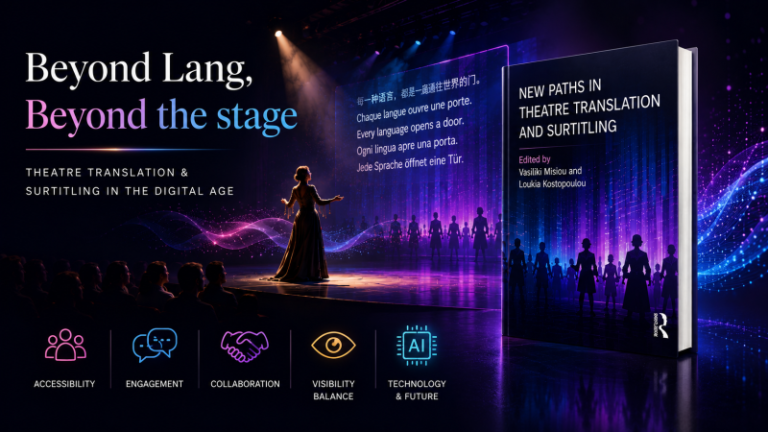
18 May 2026, Bangkok – This article aims to analyze the book New Paths in Theatre Translation and Surtitling, edited by Vasiliki Misiou and Loukia Kostopoulou and published in 2024 by Routledge. The volume presents contemporary developments in the fields of theatre translation and surtitling within the context of digital performance arts. It emphasizes concepts such as accessibility, audience engagement, linguistic diversity, and the role of digital technology in contemporary theatrical productions. This article examines the content of the book through the frameworks of translation theory, Reception Theory, and transmediality, while also discussing the limitations and challenges of surtitling in live performance contexts. The analysis reveals that the volume makes a significant contribution to the academic fields of theatre translation and performance translation studies, particularly in relation to audience accessibility, the application of artificial intelligence, and the development of the “Practice as Research” methodology. Nevertheless, the volume could further expand its critical discussion concerning technical limitations, audience cognitive load, and the discontinuities between live performance and surtitled text.
Introduction
The fields of theatre translation and surtitling have increasingly attracted scholarly attention within Translation Studies, as contemporary performing arts continue to encounter rapidly changing cultural and technological environments. Translation in theatrical contexts is not merely a process of transferring text from one language to another; it also involves interpretation, performance, audience perception, and the temporal and spatial constraints of live productions.
The book New Paths in Theatre Translation and Surtitling, edited by Vasiliki Misiou and Loukia Kostopoulou, represents a significant contribution reflecting the evolution of these fields in the digital era. The volume is divided into three major sections covering theoretical perspectives, surtitling practices, relationships between translators and performers, and the role of technology and artificial intelligence in shaping new audience experiences.
This article aims to examine the key arguments presented in the volume while discussing its scholarly contributions as well as the limitations and challenges associated with surtitling in contemporary theatre contexts.
Theatre Translation and Surtitling in Contemporary Contexts
The volume demonstrates that surtitling for live performances has gained increasing acceptance in recent years, particularly in opera, musicals, and multilingual performances. Lucile Desblache argues that surtitles have become valuable tools enabling performances to reach linguistically and culturally diverse audiences while simultaneously promoting the internationalization of contemporary performing arts (Misiou & Kostopoulou, 2024).
Sarah Maitland introduces the concept of “audience expectation” through a hermeneutic framework, emphasizing that theatrical reception depends not solely on textual content but also on the experiences, knowledge, and interpretations of individual spectators. This perspective aligns with Reception Theory, which considers meaning as emerging from the interaction between audiences and texts (D’Egidio, 2015).
In Chapter 3, Angela Tarantini proposes the concept of “Practice as Research” (PaR), suggesting that translation itself can function as a form of research because it generates new knowledge and can be systematically investigated (Tarantini, 2021). This concept is particularly important in theatre translation studies because live performance involves multiple elements, including actors’ gestures, speech rhythms, stage positioning, and interactions between language and movement.
Furthermore, Titika Dimitroulia expands the concept of “theatre translation” to include “media dramaturgy,” highlighting the interrelationship between digital media and contemporary performing arts. Translation, therefore, is no longer viewed merely as a linguistic activity but rather as an interdisciplinary process involving technology, visuality, sound, and digital media.
The Complexity of Surtitling and Multimodal Translation
The second section of the volume focuses on case studies from European musicals and theatrical productions. Marta Mateo examines the translation of the musical Chicago across both stage and cinematic adaptations, demonstrating that intermedial translation requires consideration of visual, auditory, rhythmic, and emotional dimensions rather than relying solely on literal textual translation.
Eva Espasa argues that surtitlers should be regarded as integral participants in the production process because they must collaborate closely with directors, actors, and technical teams. Consequently, surtitling functions as a collaborative meaning-making process rather than merely a backstage technical operation.
Marisa S. Trubiano analyzes The Lehman Trilogy, a play characterized by multilingualism and multiculturalism. She argues that translation in such contexts reflects linguistic hierarchies and cultural power structures while encouraging audiences to recognize the relationships between language, identity, and history.
The concepts of “transmediality” and “transcreation” are also extensively discussed throughout the volume. Balestrini (2023) defines transmediality as phenomena occurring across multiple media forms, while Spinzi (2018) conceptualizes transcreation as a process of retelling narratives in another language rather than translating them literally. These perspectives significantly broaden the scope of theatre translation in the digital age.
Accessibility, Inclusivity, and Reception Theory
The volume places considerable emphasis on issues of accessibility and inclusivity in live performances, particularly for deaf and hard-of-hearing audiences as well as international spectators. This perspective corresponds with Mälzer and Wünsche (2024), who define inclusivity in theatre as the development of productions that allow all audience groups to access artistic experiences equally.
Nevertheless, the volume also discusses the “visibility paradox,” referring to the tension between making surtitles visible enough to facilitate comprehension while ensuring that they do not disrupt the aesthetic experience of the performance. Many audience members must repeatedly shift their attention from the stage to the surtitles, creating a “split-attention effect” that diminishes concentration and aesthetic immersion.
This issue becomes especially significant in live performance contexts because spectators cannot pause, rewind, or reread the text as they can in cinematic media. Additionally, actors’ speech speed and textual density further increase audiences’ cognitive load.
Reception Theory therefore plays a crucial role in theatre translation studies. Zarrilli et al. (2010) argue that audiences’ aesthetic experiences emerge through interpretation and participation in meaning-making processes rather than through passive reception alone. Consequently, the effectiveness of surtitles cannot be measured solely by linguistic accuracy; it must also consider audience reactions, readability, accessibility, and emotional engagement.
Digital Technology and the Future of Theatre Translation
The volume highlights the increasing role of digital technologies in theatre translation, particularly following the COVID-19 pandemic, which normalized online performances. Emerging technologies such as smart caption glasses and generative artificial intelligence are now being used to enhance accessibility and create immersive audience experiences.
These developments reflect new forms of interaction between humans and technology within the performing arts. However, technological implementation also faces several limitations, including issues of machine translation accuracy, system latency, and synchronization between text and live performance.
Lim (2023) additionally notes that multilingual performances may create new challenges concerning lingua franca usage and code-switching practices, both of which may affect audience comprehension and performance continuity.
Conclusion
New Paths in Theatre Translation and Surtitling represents a significant contribution to contemporary theatre translation studies by comprehensively addressing theoretical, practical, technological, and accessibility-related dimensions of surtitling. The volume demonstrates that surtitling is not merely a linguistic aid but also an integral component of theatrical experience and cultural meaning-making.
Although the book’s strengths lie in its collection of contemporary case studies and innovative theoretical perspectives, it could further expand its critical discussions concerning technical limitations, audience cognitive load, and the effects of surtitles on audience concentration. Nevertheless, the volume remains an invaluable resource for researchers, students, and scholars interested in translation, performance studies, and digital media technologies.
References
- Aiello, L. (2014). Handbook of Research on Management of Cultural Products: E-Relationship Marketing and Accessibility Perspectives. IGI Global.
- Balestrini, N. W. (2023). Boundaries and crossings: Why adaptation and transmediality theories should dialogue. In M. Cangiano & F. L. Sambugaro (Eds.), Adaptation as a Transmedial Process: Theory and Practices (pp. 19–33). Sapienza Università Editrice.
- D’Egidio, A. (2015). How readers perceive translated literary works: An analysis of reader reception. Lingue Linguaggi, 14, 69–82.
- Gambarato, R. R., Alzamora, G. C., & Tárcia, L. (2020). Theory, Development, and Strategy in Transmedia Storytelling. Routledge.
- Lim, A. E. H. (2023). Experiments in surtitling: Performing multilingual translation live and onscreen in the contemporary theatres of Singapore, Taiwan and Berlin. In A. Ganguly & K. Gotman (Eds.), Performance and Translation in a Global Age (pp. 64–86). Cambridge University Press.
- Mälzer, N., & Wünsche, M. (2024). Accessibility and inclusion in the theatre: The inclusive theatre project at the University of Hildesheim. In C. Maaß & I. Rink (Eds.), Handbook of Accessible Communication (pp. 561–576). Frank & Timme.
- Spinzi, C. (2018). Introduction. In C. Spinzi, A. Rizzo, & M. L. Zummo (Eds.), Translation or Transcreation (pp. 1–14). Cambridge Scholars Publishing.
- Tarantini, A. T. (2021). Theatre Translation: A Practice as Research Model. Palgrave Macmillan.
- Zarrilli, P. B., McConachie, B., Williams, G. J., & Sorgenfrei, C. F. (2010). Theatre Histories: An Introduction (2nd ed.). Routledge.
- Misiou, V., & Kostopoulou, L. (Eds.). (2024). New Paths in Theatre Translation and Surtitling. Routledge.
For professional services, please visit: https://www.seaproti.org/practitioners/
About certified translators, translation certifiers, and certified interpreters associated with SEAProTI. The Southeast Asian Association of Professional Translators and Interpreters (SEAProTI) has officially shared the qualifications and requirements for becoming Certified Translators, Translation Certification Providers, and Certified Interpreters in Sections 9 and 10 of the Royal Gazette, which was published by the Prime Minister’s Office in Thailand on July 25, 2024. Certified Translators, Translation Certification Providers, and Certified Interpreters
The Council of State has proposed the enactment of a Royal Decree, granting registered translators and recognised translation certifiers from professional associations or accredited language institutions the authority to provide legally valid translation certification (Letter to SEAProTI dated April 28, 2025)
SEAProTI is the first professional association in Thailand and Southeast Asia to implement a comprehensive certification system for translators, certifiers, and interpreters.
Head Office: Baan Ratchakru Building, No. 33, Room 402, Soi Phahonyothin 5, Phahonyothin Road, Phaya Thai District, Bangkok 10400, Thailand
Email: hello@seaproti.com | Tel.: (+66) 2-114-3128 (Office hours: Mon–Fri, 09:00–17:00).
การละครดิจิทัลกับการเข้าถึงของผู้ชม: บทความวิเคราะห์เกี่ยวกับการทำซับไตเติลร่วมสมัย
ผู้เขียน: ภคพร ตันจรารักษ์
18 พฤษภาคม 2569, กรุงเทพมหานคร – บทความนี้มีวัตถุประสงค์เพื่อวิเคราะห์หนังสือ เส้นทางใหม่ในการแปลละครเวทีและการทำซับไตเติล ซึ่งเรียบเรียงโดย วาซิลิกิ มิซิอู และ ลูเกีย คอสโตปูลู ตีพิมพ์ในปี พ.ศ. 2567 โดยสำนักพิมพ์รัทเลดจ์ หนังสือดังกล่าวนำเสนอพัฒนาการร่วมสมัยของศาสตร์การแปลละครเวทีและการทำซับไตเติลในบริบทของศิลปะการแสดงยุคดิจิทัล โดยให้ความสำคัญกับแนวคิดด้านการเข้าถึง การมีส่วนร่วมของผู้ชม ความหลากหลายทางภาษา และบทบาทของเทคโนโลยีดิจิทัลในการผลิตการแสดงร่วมสมัย บทความนี้วิเคราะห์เนื้อหาของหนังสือผ่านกรอบแนวคิดด้านทฤษฎีการแปล ทฤษฎีการตอบรับของผู้ชม และแนวคิดสหสื่อ รวมถึงอภิปรายข้อจำกัดและความท้าทายของการทำซับไตเติลในบริบทการแสดงสด ผลการวิเคราะห์พบว่า หนังสือเล่มนี้มีคุณูปการสำคัญต่อวงวิชาการด้านการแปลละครเวทีและการแปลสื่อการแสดง โดยเฉพาะในประเด็นการเข้าถึงผู้ชมที่มีความหลากหลาย การประยุกต์ใช้ปัญญาประดิษฐ์ และการพัฒนาวิธีวิทยาวิจัยแบบ “การปฏิบัติในฐานะงานวิจัย” อย่างไรก็ตาม หนังสือยังสามารถขยายการอภิปรายเชิงวิพากษ์เกี่ยวกับข้อจำกัดด้านเทคนิค ภาระทางการรับรู้ของผู้ชม และปัญหาความไม่ต่อเนื่องระหว่างการแสดงกับข้อความซับไตเติลได้มากยิ่งขึ้น
บทนำ
ศาสตร์ด้านการแปลละครเวทีและการทำซับไตเติลกำลังได้รับความสนใจเพิ่มขึ้นอย่างต่อเนื่องในวงวิชาการด้านการแปลศึกษา เนื่องจากศิลปะการแสดงร่วมสมัยต้องเผชิญกับสภาพแวดล้อมทางวัฒนธรรมและเทคโนโลยีที่เปลี่ยนแปลงอย่างรวดเร็ว การแปลในบริบทละครเวทีมิได้เป็นเพียงการถ่ายทอดข้อความจากภาษาหนึ่งสู่อีกภาษาหนึ่งเท่านั้น แต่ยังเกี่ยวข้องกับการตีความ การแสดง การรับรู้ของผู้ชม และข้อจำกัดเชิงเวลาและพื้นที่ของการแสดงสดอีกด้วย
หนังสือ เส้นทางใหม่ในการแปลละครเวทีและการทำซับไตเติล ซึ่งเรียบเรียงโดย วาซิลิกิ มิซิอู และ ลูเกีย คอสโตปูลู นับเป็นผลงานที่สะท้อนพัฒนาการของศาสตร์ดังกล่าวในยุคดิจิทัลอย่างชัดเจน หนังสือแบ่งออกเป็น 3 ส่วนหลัก ครอบคลุมทั้งประเด็นทฤษฎี กระบวนการสร้างซับไตเติล ความสัมพันธ์ระหว่างผู้แปลกับนักแสดง ตลอดจนบทบาทของเทคโนโลยีและปัญญาประดิษฐ์ในการสร้างประสบการณ์การรับชมรูปแบบใหม่
บทความนี้มุ่งวิเคราะห์สาระสำคัญของหนังสือดังกล่าว พร้อมอภิปรายคุณูปการเชิงวิชาการ รวมถึงข้อจำกัดและความท้าทายของการทำซับไตเติลในบริบทละครเวทีร่วมสมัย
การแปลละครเวทีและการทำซับไตเติลในบริบทสมัยใหม่
หนังสือชี้ให้เห็นว่า การทำซับไตเติลสำหรับการแสดงสดได้รับการยอมรับมากขึ้นในช่วงหลายปีที่ผ่านมา โดยเฉพาะในโอเปรา ละครเพลง และการแสดงหลายภาษา ลูซิล เดสบลาช ระบุว่า ซับไตเติลกลายเป็นเครื่องมือสำคัญที่ช่วยให้การแสดงเข้าถึงผู้ชมที่มีความหลากหลายทางภาษาและวัฒนธรรม อีกทั้งยังส่งเสริมความเป็นสากลของศิลปะการแสดงร่วมสมัย (มิซิอู และ คอสโตปูลู, พ.ศ. 2567)
ซาราห์ เมตแลนด์ เสนอแนวคิดเรื่อง “ความคาดหวังของผู้ชม” ผ่านกรอบอรรถศาสตร์ตีความ โดยชี้ว่าการรับชมละครเวทีไม่ได้ขึ้นอยู่กับข้อความเพียงอย่างเดียว แต่ขึ้นอยู่กับประสบการณ์ ความรู้ และการตีความของผู้ชมแต่ละคนด้วย แนวคิดดังกล่าวสอดคล้องกับทฤษฎีการตอบรับซึ่งมองว่าความหมายเกิดจากปฏิสัมพันธ์ระหว่างผู้ชมกับตัวบท (ดีเอจิดิโอ, พ.ศ. 2558)
ในบทที่ 3 แองเจลา ทารันตินี นำเสนอแนวคิด “การปฏิบัติในฐานะงานวิจัย” ซึ่งมองว่ากระบวนการแปลเองสามารถเป็นการวิจัยได้ เนื่องจากการแปลก่อให้เกิดองค์ความรู้ใหม่และสามารถศึกษาเชิงวิเคราะห์ได้ (ทารันตินี, พ.ศ. 2564) แนวคิดนี้มีความสำคัญต่อการศึกษาการแปลละครเวที เนื่องจากการแสดงจริงเกี่ยวข้องกับองค์ประกอบหลากหลาย ทั้งท่าทางนักแสดง จังหวะการพูด ตำแหน่งบนเวที และปฏิสัมพันธ์ระหว่างภาษาและการเคลื่อนไหว
นอกจากนี้ ติติกา ดิมิทรูเลีย ยังขยายความหมายของ “การแปลละครเวที” ให้ครอบคลุมแนวคิด “การกำกับสื่อ” ซึ่งสะท้อนความเชื่อมโยงระหว่างสื่อดิจิทัลกับศิลปะการแสดงร่วมสมัย การแปลจึงมิได้เป็นเพียงกิจกรรมทางภาษา แต่เป็นกระบวนการสหวิทยาการที่เกี่ยวข้องกับเทคโนโลยี ภาพ เสียง และสื่อดิจิทัลร่วมสมัย
ความซับซ้อนของการทำซับไตเติลและการแปลหลายสื่อ
ส่วนที่สองของหนังสือเน้นศึกษากรณีตัวอย่างจากละครเพลงและละครเวทีในยุโรป มาร์ตา มาเตโอ วิเคราะห์การแปลละครเพลง ชิคาโก ทั้งในเวทีละครและภาพยนตร์ โดยชี้ให้เห็นว่าการแปลข้ามสื่อจำเป็นต้องคำนึงถึงองค์ประกอบด้านภาพ เสียง จังหวะ และอารมณ์ร่วมของผู้ชม ไม่ใช่เพียงการแปลข้อความแบบตรงตัวเท่านั้น
เอวา เอสปาซา เสนอว่าผู้ทำซับไตเติลควรถูกมองเป็นส่วนหนึ่งของกระบวนการสร้างการแสดง เพราะต้องประสานงานกับผู้กำกับ นักแสดง และทีมเทคนิคอย่างใกล้ชิด ซับไตเติลจึงเป็นกระบวนการร่วมสร้างความหมาย มากกว่าจะเป็นเพียงงานเทคนิคเบื้องหลัง
มาริซา เอส ทรูเบียโน วิเคราะห์ละคร เดอะ เลห์แมน ไตรโลจี ซึ่งมีการใช้หลายภาษาและหลายวัฒนธรรมร่วมกัน การแปลในลักษณะนี้สะท้อนลำดับชั้นทางภาษาและอำนาจทางวัฒนธรรมภายในตัวบท อีกทั้งยังทำให้ผู้ชมตระหนักถึงความสัมพันธ์ระหว่างภาษา อัตลักษณ์ และประวัติศาสตร์
แนวคิดด้าน “สหสื่อ” และ “การสร้างสรรค์ข้ามภาษา” ถูกอภิปรายอย่างเด่นชัดในหนังสือ โดย บาเลสตรีนี (พ.ศ. 2566) อธิบายว่า “สหสื่อ” หมายถึงปรากฏการณ์ที่เกิดขึ้นข้ามสื่อหลายประเภท ขณะที่ สปินซี (พ.ศ. 2561) มอง “การสร้างสรรค์ข้ามภาษา” ว่าเป็นกระบวนการเล่าเรื่องใหม่ผ่านภาษาอื่น มากกว่าการแปลแบบตรงตัว แนวคิดเหล่านี้ช่วยขยายขอบเขตของการแปลละครเวทีในยุคดิจิทัลอย่างมีนัยสำคัญ
การเข้าถึง การมีส่วนร่วม และทฤษฎีการตอบรับ
หนังสือให้ความสำคัญอย่างมากกับประเด็น “การเข้าถึง” และ “ความครอบคลุม” ในการแสดงสด โดยเฉพาะสำหรับผู้พิการทางการได้ยินหรือผู้ชมต่างชาติ แนวคิดดังกล่าวสอดคล้องกับ มึลเซอร์ และ วึนเชอ (พ.ศ. 2567) ที่อธิบายว่าความครอบคลุมในละครเวทีหมายถึงการพัฒนาการแสดงที่เปิดโอกาสให้ทุกกลุ่มสามารถเข้าถึงประสบการณ์ทางศิลปะได้อย่างเท่าเทียม
อย่างไรก็ตาม หนังสือยังอภิปรายถึง “ปฏิทรรศน์แห่งการมองเห็น” ซึ่งเกิดจากความขัดแย้งระหว่างการทำให้ซับไตเติล “มองเห็นได้” เพื่อความเข้าใจ กับการทำให้ “ไม่รบกวน” ประสบการณ์การชมการแสดง ผู้ชมจำนวนมากจำเป็นต้องละสายตาจากเวทีเพื่ออ่านข้อความบนจอ ส่งผลให้เกิดภาวะ “การแบ่งความสนใจ” ซึ่งลดทอนสมาธิและประสบการณ์ด้านสุนทรียศาสตร์
ปัญหาดังกล่าวมีความสำคัญอย่างยิ่งในบริบทการแสดงสด เนื่องจากผู้ชมไม่สามารถหยุด ย้อนกลับ หรืออ่านข้อความซ้ำได้เหมือนสื่อภาพยนตร์ อีกทั้งความเร็วในการพูดของนักแสดงและความหนาแน่นของข้อความยังเพิ่มภาระทางการรับรู้ให้แก่ผู้ชมด้วย
ทฤษฎีการตอบรับจึงมีบทบาทสำคัญในการศึกษาการแปลละครเวที ซาร์ริลลี และคณะ (พ.ศ. 2553) ระบุว่า ประสบการณ์ทางสุนทรียศาสตร์ของผู้ชมเกิดจากกระบวนการตีความและการมีส่วนร่วมในการสร้างความหมาย มากกว่าการรับสารแบบทางเดียว ดังนั้น ประสิทธิภาพของซับไตเติลจึงไม่อาจวัดได้จากความถูกต้องทางภาษาเพียงอย่างเดียว แต่ต้องพิจารณาปฏิกิริยา ความสามารถในการอ่าน การเข้าถึง และความรู้สึกของผู้ชมร่วมด้วย
เทคโนโลยีดิจิทัลและอนาคตของการแปลละครเวที
หนังสือสะท้อนให้เห็นบทบาทที่เพิ่มขึ้นของเทคโนโลยีดิจิทัลในการแปลละครเวที โดยเฉพาะหลังสถานการณ์โควิด-19 ซึ่งทำให้การแสดงออนไลน์กลายเป็นเรื่องปกติ เทคโนโลยีใหม่ เช่น แว่นตาคำบรรยายอัจฉริยะ และปัญญาประดิษฐ์เชิงกำเนิด ถูกนำมาใช้เพื่อเพิ่มการเข้าถึงและสร้างประสบการณ์แบบดื่มด่ำสำหรับผู้ชม
แนวโน้มดังกล่าวสะท้อนความสัมพันธ์รูปแบบใหม่ระหว่างมนุษย์กับเทคโนโลยีในศิลปะการแสดง อย่างไรก็ตาม การใช้เทคโนโลยียังต้องเผชิญข้อจำกัดหลายประการ เช่น ความแม่นยำของการแปลแบบอัตโนมัติ ความล่าช้าของระบบ และปัญหาด้านความสอดคล้องระหว่างข้อความกับจังหวะการแสดง
ลิม (พ.ศ. 2566) ยังตั้งข้อสังเกตว่า การแสดงหลายภาษาอาจสร้างปัญหาใหม่ด้านภาษากลางและการสลับรหัสภาษา ซึ่งส่งผลต่อความเข้าใจของผู้ชมและความต่อเนื่องของการแสดง
บทสรุป
หนังสือ เส้นทางใหม่ในการแปลละครเวทีและการทำซับไตเติล ถือเป็นผลงานสำคัญที่ช่วยขยายองค์ความรู้ด้านการแปลละครเวทีในยุคดิจิทัลอย่างครอบคลุม ทั้งในด้านทฤษฎี การปฏิบัติ เทคโนโลยี และการเข้าถึงของผู้ชม หนังสือชี้ให้เห็นว่าการทำซับไตเติลมิใช่เพียงเครื่องมือช่วยแปลภาษา แต่เป็นส่วนหนึ่งของประสบการณ์การแสดงและการสร้างความหมายทางวัฒนธรรม
แม้ว่าหนังสือจะมีจุดแข็งด้านการรวบรวมกรณีศึกษาและแนวคิดร่วมสมัย แต่ยังสามารถขยายการอภิปรายเชิงวิพากษ์เกี่ยวกับข้อจำกัดด้านเทคนิค ภาระทางการรับรู้ และผลกระทบของซับไตเติลต่อสมาธิของผู้ชมได้มากยิ่งขึ้น อย่างไรก็ตาม หนังสือเล่มนี้ยังคงเป็นแหล่งอ้างอิงที่มีคุณค่าสำหรับนักวิจัย นักศึกษา และผู้สนใจด้านการแปล ศิลปะการแสดง และเทคโนโลยีสื่อร่วมสมัย
เอกสารอ้างอิง
- ไอเอลโล, แอล. (พ.ศ. 2557). คู่มือการวิจัยด้านการจัดการผลิตภัณฑ์วัฒนธรรม: มุมมองด้านการตลาดความสัมพันธ์อิเล็กทรอนิกส์และการเข้าถึง. สำนักพิมพ์ไอจีไอโกลบอล
- บาเลสตรีนี, เอ็น. ดับเบิลยู. (พ.ศ. 2566). เส้นแบ่งและการข้ามพรมแดน: เหตุใดทฤษฎีการดัดแปลงและสหสื่อควรสนทนาร่วมกัน. ใน เอ็ม. คันจิอาโน และ เอฟ. แอล. ซัมบูกาโร (บ.ก.), การดัดแปลงในฐานะกระบวนการสหสื่อ: ทฤษฎีและปฏิบัติการ (น. 19-33). สำนักพิมพ์ซาเปียนซา ยูนิเวอร์ซิตา เอดิทริเช
- ดีเอจิดิโอ, เอ. (พ.ศ. 2558). การรับรู้วรรณกรรมแปลของผู้อ่าน: การวิเคราะห์การตอบรับของผู้อ่าน. ลิงกเว ลิงกวัจจี, 14, 69-82.
- กัมบาราโต, อาร์. อาร์., อัลซาโมรา, จี. ซี., และ ตาร์เซีย, แอล. (พ.ศ. 2563). ทฤษฎี การพัฒนา และกลยุทธ์ในการเล่าเรื่องข้ามสื่อ. รูทเลทจ์.
- ลิม, เอ. อี. เอช. (พ.ศ. 2566). การทดลองในการทำซับไตเติล: การแปลหลายภาษาแบบสดและบนจอในโรงละครร่วมสมัยของสิงคโปร์ ไต้หวัน และเบอร์ลิน. ใน เอ. กังกูลี และ เค. ก็อตแมน (บ.ก.), การแสดงและการแปลในยุคโลกาภิวัตน์ (น. 64-86). สำนักพิมพ์มหาวิทยาลัยเคมบริดจ์
- มึลเซอร์, เอ็น., และ วึนเชอ, เอ็ม. (พ.ศ. 2567). การเข้าถึงและความครอบคลุมในโรงละคร: โครงการโรงละครแบบครอบคลุมแห่งมหาวิทยาลัยฮิลเดสไฮม์. ใน ซี. มาสส์ และ ไอ. ริงก์ (บ.ก.), คู่มือการสื่อสารที่เข้าถึงได้ (น. 561-576). แฟรงก์ แอนด์ ทิมม์
- สปินซี, ซี. (พ.ศ. 2561). บทนำ. ใน ซี. สปินซี, เอ. ริซโซ และ เอ็ม. แอล. ซุมโม (บ.ก.), การแปลหรือการสร้างสรรค์ข้ามภาษา (น. 1-14). สำนักพิมพ์เคมบริดจ์ สกอลาร์ส
- ทารันตินี, เอ. ที. (พ.ศ. 2564). การแปลละครเวที: แบบจำลองการปฏิบัติในฐานะงานวิจัย. พัลเกรฟ แมคมิลแลน
- ซาร์ริลลี, พี. บี., แม็กโคนาชี, บี., วิลเลียมส์, จี. เจ., และ ซอร์เกนไฟร, ซี. เอฟ. (พ.ศ. 2553). ประวัติศาสตร์ละครเวที: บทนำ (พิมพ์ครั้งที่ 2). รูทเลทจ์.
- มิซิอู, ว., และ คอสโตปูลู, ล. (บ.ก.). (พ.ศ. 2567). เส้นทางใหม่ในการแปลละครเวทีและการทำซับไตเติล. รูทเลทจ์.
สมาคมวิชาชีพนักแปลและล่ามแห่งเอเชียตะวันออกเฉียงใต้ (SEAProTI) ได้ประกาศหลักเกณฑ์และคุณสมบัติของผู้ที่ขึ้นทะเบียนเป็น “นักแปลรับรอง (Certified Translators) และผู้รับรองการแปล (Translation Certification Providers) และล่ามรับรอง (Certified Interpreters)” ของสมาคม หมวดที่ 9 และหมวดที่ 10 ในราชกิจจานุเบกษา ของสำนักเลขาธิการคณะรัฐมนตรี ในสำนักนายกรัฐมนตรี แห่งราชอาณาจักรไทย ลงวันที่ 25 ก.ค. 2567 เล่มที่ 141 ตอนที่ 66 ง หน้า 100 อ่านฉบับเต็มได้ที่: นักแปลรับรอง ผู้รับรองการแปล และล่ามรับรอง
สำนักคณะกรรมการกฤษฎีกาเสนอให้ตราเป็นพระราชกฤษฎีกา โดยกำหนดให้นักแปลที่ขึ้นทะเบียน รวมถึงผู้รับรองการแปลจากสมาคมวิชาชีพหรือสถาบันสอนภาษาที่มีการอบรมและขึ้นทะเบียน สามารถรับรองคำแปลได้ (จดหมายถึงสมาคม SEAProTI ลงวันที่ 28 เม.ย. 2568)
สมาคมวิชาชีพนักแปลและล่ามแห่งเอเชียตะวันออกเฉียงใต้เป็นสมาคมวิชาชีพแห่งแรกและแห่งเดียวในประเทศไทยและภูมิภาคเอเชียตะวันออกเฉียงใต้ที่มีระบบรับรองนักแปลรับรอง ผู้รับรองการแปล และล่ามรับรอง
สำนักงานใหญ่: อาคารบ้านราชครู เลขที่ 33 ห้อง 402 ซอยพหลโยธิน 5 ถนนพหลโยธิน แขวงพญาไท เขตพญาไท กรุงเทพมหานคร 10400 ประเทศไทย