



Performance as Representational Space: Reshaping Contemporary Greek Theatre through La llamada de Lauren
Author: Griroek Gruaythong
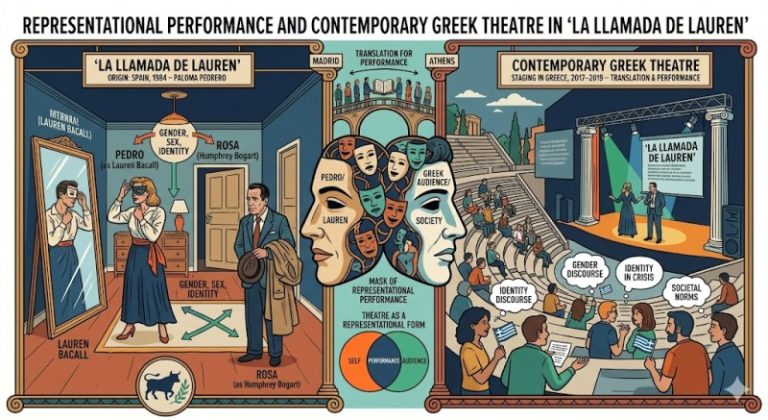
18 May 2026, Bangkok – This article examines the role of translation for performance as a cultural and political mechanism that negotiates, transforms, and challenges norms related to sexuality, identity, and representation in contemporary Greek society. It focuses on the case study of the Greek translation and staging of Paloma Pedrero’s La llamada de Lauren… between 2017 and 2019. The study situates the performance within a complex socio-political context in which, despite legislative reforms recognizing transgender rights in Greece, discrimination, exclusion, and conservative discourses on gender remain pervasive.
Drawing on Judith Butler’s theory of gender performativity alongside queer translation studies, this article analyses how the translation and direction by Maria Hatziemmanouil and Fenia Apostolou transform the play into a site of cultural resistance. Findings suggest that translation does not merely transfer linguistic meaning but operates as a political practice involved in meaning production, identity formation, and social power negotiation. The use of language, insults, and sexual symbolism in the Greek translation enables audiences to question normative gender frameworks and socially constructed “normality.” Furthermore, Apostolou’s direction as a transgender female director adds a pronounced political and representational dimension to the performance. The study concludes that translation for performance functions as a space of social and cultural transformation, with the capacity to render visible marginalized groups excluded from public discourse.
Keywords: theatre translation, translation for performance, queer translation, gender performativity, gender identity, contemporary Greek theatre
Introduction
In recent decades, issues concerning sexuality, gender identity, and LGBTQIA+ rights have become central to public debate across Europe, including Greece, which is simultaneously experiencing processes of increased recognition of gender diversity and intensified conservative backlash. The enactment of Law 4491/2017 on legal gender recognition marked a significant shift in the country’s socio-political landscape by allowing individuals to change their legal gender without medical or surgical requirements. However, despite this legislative progress, violence and discrimination against transgender and queer individuals persist, as exemplified by the widely publicized death of activist Zak Kostopoulos in 2018, which exposed ongoing structural violence within Greek society (Papanikolaou & Kolocotroni, 2018).
Within this context, the staging of Paloma Pedrero’s La llamada de Lauren… in Athens between 2017 and 2019 cannot be understood merely as a transfer of a Spanish theatrical text into another linguistic and cultural environment. Rather, it constitutes a cultural intervention that explicitly interrogates gender norms and patriarchal constructions of masculinity. The narrative follows Pedro, a man performing normative masculinity while internally experiencing dissonance with socially imposed gender expectations. Cross-dressing, role-playing, and performative embodiment become central mechanisms through which the fragility of naturalized gender systems is exposed.
This article investigates how the translation and direction by Maria Hatziemmanouil and Fenia Apostolou transform the play into a space of political and identity negotiation. Drawing on Butler’s theory of gender performativity (1990) and queer translation studies (Epstein & Gillet, 2017; Baer & Kaindl, 2018), it argues that translation is not a neutral transfer of meaning but a generative cultural practice producing new epistemological and representational possibilities.
Literature Review
Recent developments in translation studies have expanded the understanding of translation beyond linguistic equivalence to encompass its socio-cultural and political dimensions. Baker (2010) argues that translation functions as a form of activism and resistance, contributing to the formation of narrative communities that challenge dominant power structures. Similarly, Tymoczko (1999) conceptualizes translation as a public action embedded in relations of power and meaning production.
Within queer translation studies, scholars emphasize the role of translation in constructing and negotiating gendered and sexual identities. Epstein and Gillet (2017) argue that translation opens spaces of ambiguity and non-binary identity formations, while Baer and Kaindl (2018) introduce the concept of “queering translation” to describe practices that resist fixed meaning and embrace multiplicity.
Judith Butler’s theory of gender performativity (1988, 1990) is central to this study, as it conceptualizes gender not as an inherent essence but as a repeated set of performative acts that produce the illusion of naturalness. This framework has significantly influenced both theatre and translation studies by highlighting the constructed and mutable nature of gender identity.
Pedrero’s dramaturgy has been widely recognized for its critique of traditional gender roles. O’Connor (1990) identifies La llamada de Lauren… as a play that interrogates masculinity, power relations, and identity through cross-dressing and metatheatrical strategies. Zatlin (2001) further notes that Pedrero’s theatre exposes the instability of identity under patriarchal pressure.
Translation scholars such as Harvey (2014) and Larkosh (2011) emphasize that translators act as cultural agents rather than neutral mediators, negotiating meaning across linguistic and ideological boundaries, particularly in relation to sexuality and gender.
Methodology
This study adopts a qualitative methodology based on textual and contextual analysis. It examines the relationship between translation, performance, and identity politics in the Greek staging of La llamada de Lauren….
Primary materials include the original Spanish text (Pedrero, 1987), the Greek translation by Hatziemmanouil (2010), interviews with the translator and director, and critical discourse and media reports from Greece between 2017 and 2019. The analysis is informed by queer theory, performance studies, and translation studies frameworks.
The study focuses on the translation of sexual terminology, linguistic violence, bodily representation, and performativity in order to understand how translation and performance function as sites of resistance and meaning production.
Discussion
The findings indicate that Hatziemmanouil’s translation is not a neutral act of linguistic transfer but a deliberate cultural intervention. The retention of strongly derogatory terms such as πούστης and αδερφές confronts audiences with the embedded homophobia of Greek society, while simultaneously enabling processes of semantic reconfiguration and political resignification.
Similarly, the translation of “Penétrame” as “Γάμα με” disrupts conventional gendered sexual roles by assigning a sexually assertive utterance to a male character, thereby destabilizing normative active/passive binaries in sexuality. This reflects Butler’s (1990) notion that gender is performative rather than essential.
Apostolou’s directorial approach further intensifies the political dimension of the performance. Through bodily exposure, extended gestural sequences, and the strategic use of explicit props, the staging forces audiences into a confrontation with normalized gender assumptions. The performance space becomes one of affective disruption, where discomfort is used as a critical tool.
Moreover, Apostolou’s identity as a transgender female director adds an additional representational layer. Her presence in the theatrical field challenges cisnormative structures of cultural production and situates her work within broader struggles for visibility and legitimacy.
Overall, translation for performance in this case operates as queer praxis, producing new spaces of subjectivity and visibility for marginalized identities while simultaneously destabilizing dominant cultural narratives.
Future Research Directions
Future research may extend this study by comparing queer theatrical translations across different cultural contexts to examine how socio-political conditions influence translation strategies. Further audience reception studies would also be valuable in assessing the impact of such performances on perceptions of gender and identity.
Additionally, more attention should be given to the role of translators and directors as cultural mediators or activists, particularly within restrictive socio-political environments. Interdisciplinary approaches combining translation studies, queer theory, and performance studies may further illuminate the relationship between language, power, and embodiment.
Conclusion
This article argues that translation for performance is not merely a linguistic operation but a socio-cultural and political practice that actively shapes understandings of gender and identity. The Greek staging of La llamada de Lauren… demonstrates how translation and performance can function as sites of resistance against patriarchal and heteronormative structures.
Through linguistic choices, bodily representation, and performative strategies, Hatziemmanouil and Apostolou transform the play into a space of visibility for marginalized identities. Translation in this context is not a process of transfer but one of transformation, with the capacity to reshape cultural and social imaginaries.
References
-
Baer, B. J., & Kaindl, K. (Eds.). (2018). Queering translation, translating the queer: Theory, practice, activism. Routledge.
- Baker, M. (2010). Translation and activism: Emerging patterns of narrative community. In M. Tymoczko (Ed.), Translation, resistance, activism (pp. 23–41). University of Massachusetts Press.
- Butler, J. (1988). Performative acts and gender constitution: An essay in phenomenology and feminist theory. Theatre Journal, 40(4), 519–531.
- Butler, J. (1990). Gender trouble: Feminism and the subversion of identity. Routledge.
- Epstein, B. J., & Gillet, R. (Eds.). (2017). Queer in translation. Routledge.
- Harvey, K. (2014). Intercultural movements: American gay in French translation. Routledge.
- Larkosh, C. (Ed.). (2011). Re-engendering translation: Transcultural practice, gender/sexuality and the politics of alterity. St. Jerome Publishing.
- O’Connor, P. (1990). Women playwrights in contemporary Spain and the male-dominated canon. Signs, 15(2), 376–390.
- Papanikolaou, D., & Kolocotroni, V. (2018). New queer Greece: Performance, politics, and identity in crisis. Journal of Greek Media & Culture, 4(2), 143–150.
- Pedrero, P. (1987). La llamada de Lauren (2nd ed.). Antonio Machado.
- Pedrero, P. (2010). Το κάλεσμα της Λωρήν Μπακώλ (M. Hatziemmanouil, Trans.). Lagoudera. (Original work published 1984)
- Tymoczko, M. (1999). Translation in a postcolonial context. St. Jerome.
- Zatlin, P. (2001). From night games to postmodern satire: The theatre of Paloma Pedrero. Hispania, 84(2), 193–204.
For professional services, please visit: https://www.seaproti.org/practitioners/
About certified translators, translation certifiers, and certified interpreters associated with SEAProTI. The Southeast Asian Association of Professional Translators and Interpreters (SEAProTI) has officially shared the qualifications and requirements for becoming Certified Translators, Translation Certification Providers, and Certified Interpreters in Sections 9 and 10 of the Royal Gazette, which was published by the Prime Minister’s Office in Thailand on July 25, 2024. Certified Translators, Translation Certification Providers, and Certified Interpreters
The Council of State has proposed the enactment of a Royal Decree, granting registered translators and recognised translation certifiers from professional associations or accredited language institutions the authority to provide legally valid translation certification (Letter to SEAProTI dated April 28, 2025)
SEAProTI is the first professional association in Thailand and Southeast Asia to implement a comprehensive certification system for translators, certifiers, and interpreters.
Head Office: Baan Ratchakru Building, No. 33, Room 402, Soi Phahonyothin 5, Phahonyothin Road, Phaya Thai District, Bangkok 10400, Thailand
Email: hello@seaproti.com | Tel.: (+66) 2-114-3128 (Office hours: Mon–Fri, 09:00–17:00).
การแสดงในฐานะพื้นที่ของการแทนค่า: การปรับเปลี่ยนภูมิทัศน์ละครกรีกร่วมสมัยผ่าน La llamada de Lauren
ผู้เขียน: ไกรฤกษ์ กรวยทอง
18 พฤษภาคม 2569, กรุงเทพมหานคร – บทความนี้มุ่งศึกษาบทบาทของการแปลเพื่อการแสดง (translation for performance) ในฐานะกลไกทางวัฒนธรรมและการเมืองที่มีส่วนต่อรอง เปลี่ยนผ่าน และท้าทายบรรทัดฐานเกี่ยวกับเพศวิถี อัตลักษณ์ และการเป็นตัวแทนในสังคมกรีกร่วมสมัย ผ่านกรณีศึกษาการแปลและการจัดแสดงบทละคร La llamada de Lauren… ของ พาโลมา เปเดรโร ในประเทศกรีซระหว่างปี พ.ศ. 2560–2562 ภายใต้บริบททางสังคมและการเมืองที่ซับซ้อน กล่าวคือ แม้ว่ารัฐกรีซจะเริ่มยอมรับสิทธิของบุคคลข้ามเพศผ่านการปฏิรูปกฎหมายเกี่ยวกับอัตลักษณ์ทางเพศ แต่ในอีกด้านหนึ่ง ความรุนแรง การกีดกัน และวาทกรรมอนุรักษนิยมเกี่ยวกับเพศยังคงดำรงอยู่อย่างเข้มข้น บทความนี้อาศัยกรอบแนวคิดว่าด้วย gender performativity ของ จูดิธ บัตเลอร์ ร่วมกับแนวคิดด้าน queer translation studies เพื่อวิเคราะห์ว่าการแปลและการกำกับการแสดงของ มาเรีย ฮัตซีเอมมานูอิล และ เฟเนีย อะโพสโตลู ได้ทำให้บทละครดังกล่าวกลายเป็นพื้นที่แห่งการต่อต้านเชิงวัฒนธรรมอย่างไร การศึกษาพบว่า การแปลมิได้ทำหน้าที่เพียงถ่ายทอดภาษา หากแต่เป็นปฏิบัติการเชิงการเมืองที่เกี่ยวข้องกับการผลิตความหมาย การสร้างตัวตน และการต่อรองอำนาจทางสังคม การเลือกใช้ภาษา คำด่า และสัญลักษณ์ทางเพศในฉบับแปลภาษากรีกได้เปิดพื้นที่ให้ผู้ชมตั้งคำถามต่อระเบียบแบบแผนของเพศภาวะและอัตลักษณ์ที่ถูกทำให้เป็น “ปกติ” ในสังคม นอกจากนี้ การกำกับการแสดงของ อะโพสโตลู ซึ่งเป็นผู้กำกับหญิงข้ามเพศ ยังยิ่งทำให้การแสดงมีนัยเชิงการเมืองและเชิงตัวแทนที่ชัดเจนมากขึ้น บทความสรุปว่า การแปลเพื่อการแสดงสามารถทำหน้าที่เป็นพื้นที่ของการเปลี่ยนผ่านทางสังคมและวัฒนธรรม อีกทั้งมีศักยภาพในการสร้างการมองเห็นให้กับกลุ่มที่ถูกกดทับและผลักออกจากพื้นที่สาธารณะ
คำสำคัญ: การแปลละคร, การแปลเพื่อการแสดง, queer translation, gender performativity, อัตลักษณ์ทางเพศ, โรงละครกรีกร่วมสมัย
บทนำ
ในช่วงทศวรรษที่ผ่านมา ประเด็นเกี่ยวกับเพศวิถี อัตลักษณ์ทางเพศ และสิทธิของบุคคล LGBTQIA+ ได้กลายเป็นพื้นที่ถกเถียงสำคัญในสังคมยุโรปจำนวนมาก รวมถึงประเทศกรีซซึ่งกำลังเผชิญทั้งกระบวนการเปิดรับความหลากหลายทางเพศและกระแสต่อต้านเชิงอนุรักษนิยมไปพร้อมกัน การผ่านกฎหมายว่าด้วยอัตลักษณ์ทางเพศของรัฐกรีซในปี พ.ศ. 2560 ซึ่งเปิดโอกาสให้บุคคลสามารถเปลี่ยนเพศตามกฎหมายโดยไม่จำเป็นต้องผ่านกระบวนการผ่าตัดหรือประเมินทางจิตเวช ถือเป็นจุดเปลี่ยนสำคัญของภูมิทัศน์ทางสังคมและการเมืองของประเทศ อย่างไรก็ตาม แม้จะมีความก้าวหน้าทางกฎหมาย ความรุนแรงต่อบุคคลข้ามเพศและกลุ่ม queer ยังคงเกิดขึ้นอย่างต่อเนื่อง โดยเฉพาะกรณีการเสียชีวิตของนักกิจกรรม แซค คอสโตปูลอส ในปี พ.ศ. 2561 ซึ่งกลายเป็นสัญลักษณ์ของความรุนแรงเชิงโครงสร้างที่ยังคงดำรงอยู่ในสังคมกรีก (ปาปานิโคเลา และ โคโลโตรอนี, 2561)
ภายใต้บริบทดังกล่าว การแสดงละคร La llamada de Lauren… ของ พาโลมา เปเดรโร ในกรุงเอเธนส์ระหว่างปี ค.ศ. 2017–2019 จึงมิได้เป็นเพียงการนำบทละครสเปนมาถ่ายทอดในอีกภาษาและวัฒนธรรมหนึ่งเท่านั้น หากแต่เป็นการแทรกแซงทางวัฒนธรรม (cultural intervention) ที่ตั้งคำถามต่อบรรทัดฐานทางเพศและความเป็นชายแบบปิตาธิปไตยอย่างชัดเจน ตัวบทกล่าวถึง เปเดร ชายผู้สวมบทบาท “ชายแท้” ตามที่สังคมคาดหวัง แต่ภายในกลับรู้สึกแปลกแยกจากอัตลักษณ์ที่ถูกบังคับให้แสดงออก การแต่งกายข้ามเพศ การสวมบทบาท และการแสดงออกทางเพศจึงกลายเป็นกลไกสำคัญในการเปิดโปงความเปราะบางของระบบเพศภาวะที่ถูกทำให้เป็นธรรมชาติ
บทความนี้มุ่งศึกษาว่า การแปลและการกำกับการแสดงของ มาเรีย ฮัตซีเอมมานูอิล และ เฟเนีย อะโพสโตลู ได้เปลี่ยนบทละครดังกล่าวให้กลายเป็นพื้นที่ของการต่อรองทางการเมืองและอัตลักษณ์อย่างไร โดยอาศัยกรอบแนวคิด gender performativity ของ บัตเลอร์ (2533) ร่วมกับแนวคิด queer translation studies ของ เอพสไตน์ และ กิลเล็ต (2560) รวมถึง บาเออร์ และ ไคน์เดิล (2561) เพื่อเสนอว่าการแปลมิได้เป็นเพียงกระบวนการถ่ายโอนภาษา หากแต่เป็นการผลิตความหมายและการสร้างความเป็นไปได้ใหม่ทางวัฒนธรรม บทความเสนอว่า การแปลเพื่อการแสดงสามารถทำหน้าที่เป็น “ปฏิบัติการเชิงแสดง” (performative act) ที่มีส่วนเปลี่ยนแปลงการรับรู้เกี่ยวกับเพศ เพศวิถี และอัตลักษณ์ในสังคมร่วมสมัย
ทบทวนวรรณกรรม
การศึกษาด้านการแปลในช่วงหลังได้ขยายขอบเขตจากการมองการแปลในฐานะการถ่ายทอดความหมายเชิงภาษา ไปสู่การทำความเข้าใจการแปลในฐานะกระบวนการทางสังคม วัฒนธรรม และการเมือง Baker (2010) เสนอว่าการแปลสามารถทำหน้าที่เป็นพื้นที่ของ activism และ resistance โดยมีบทบาทสำคัญในการสร้าง “narrative communities” ที่ท้าทายระเบียบอำนาจเดิม ในทำนองเดียวกัน เบเกอร์ (2553) มองว่าการแปลเป็น “public action” ที่เกี่ยวข้องกับอำนาจ การต่อรอง และการสร้างความหมายทางสังคม
ในบริบทของ queer translation studies นักวิชาการจำนวนมากเสนอว่าการแปลเกี่ยวข้องโดยตรงกับการสร้างและต่อรองอัตลักษณ์ทางเพศและเพศวิถี เอพสไตน์ และ กิลเล็ต (2560) ชี้ว่าการแปลสามารถเปิดพื้นที่ให้กับความคลุมเครือ ความไม่แน่นอน และอัตลักษณ์ที่อยู่นอกกรอบไบนารี ขณะที่ บาเออร์ และ ไคน์เดิล (2561) เสนอแนวคิด “queering translation” เพื่ออธิบายการแปลที่ต่อต้านการทำให้ความหมายตายตัวและเปิดรับความหลากหลายของตัวตน
แนวคิดสำคัญอีกประการหนึ่งคือ gender performativity ของ บัตเลอร์ (2531, 2533) ซึ่งมองว่าเพศมิใช่สิ่งที่มีอยู่โดยธรรมชาติ หากแต่เกิดจากการแสดงซ้ำทางสังคมผ่านพฤติกรรม ภาษา และสัญลักษณ์ต่างๆ บัตเลอร์ (2533) เสนอว่าเพศเป็นผลของ “performative acts” ที่ถูกทำซ้ำจนดูราวกับเป็นธรรมชาติ แนวคิดนี้มีอิทธิพลอย่างมากต่อการศึกษาละครและการแปล เนื่องจากทำให้เห็นว่าการแสดงออกทางเพศสามารถถูกสั่นคลอน ดัดแปลง และสร้างใหม่ได้ผ่านการแสดงและภาษา
ในบริบทของละครเวที Pedrero ได้รับการยอมรับว่าเป็นนักเขียนบทละครหญิงชาวสเปนที่ท้าทายบทบาททางเพศแบบดั้งเดิม โอคอนเนอร์ (2533) ระบุว่า La llamada de Lauren… เป็นบทละครที่ตั้งคำถามต่อความเป็นชาย ความสัมพันธ์เชิงอำนาจ และอัตลักษณ์ทางเพศผ่านกลวิธี cross-dressing และ metatheatre ขณะที่ แซตลิน (2544) ชี้ว่าผลงานของ เปเดรโร เปิดพื้นที่ให้ผู้ชมสำรวจความเปราะบางของอัตลักษณ์และแรงกดดันจากสังคมชายเป็นใหญ่
งานศึกษาด้านการแปลละครยังชี้ให้เห็นว่า ผู้แปลมิได้เป็นเพียง “ตัวกลาง” หากแต่เป็น cultural agent ที่มีบทบาทกำหนดการรับรู้ของผู้ชม ฮาร์วีย์ (2557) และ ลาร์คอช (2554) เสนอว่า การแปลเกี่ยวข้องกับการเจรจาระหว่างภาษา วัฒนธรรม และอัตลักษณ์ โดยเฉพาะในประเด็นเกี่ยวกับเพศและเพศวิถี ซึ่งมักมีนัยทางอำนาจและความรุนแรงแฝงอยู่ในตัวภาษาเอง
ระเบียบวิธีการวิจัย
บทความนี้ใช้ระเบียบวิธีวิจัยเชิงคุณภาพ (qualitative research) ผ่านการวิเคราะห์ตัวบท (textual analysis) และการวิเคราะห์บริบททางวัฒนธรรมและสังคม (contextual analysis) โดยมุ่งศึกษาความสัมพันธ์ระหว่างการแปล การแสดง และการเมืองเรื่องอัตลักษณ์ในกรณีศึกษาบทละคร La llamada de Lauren… ฉบับภาษากรีก
ข้อมูลหลักประกอบด้วยบทละครต้นฉบับภาษาสเปนของ เปเดรโร (2530) ฉบับแปลภาษากรีกโดย ฮัตซีเอมมานูอิล (2553) บทสัมภาษณ์ของผู้แปลและผู้กำกับ ตลอดจนบทความวิจารณ์และสื่อร่วมสมัยที่เกี่ยวข้องกับการจัดแสดงในกรีซระหว่างปี พ.ศ. 2560–2562 การศึกษายังอาศัยกรอบแนวคิดจาก queer theory, performance studies และ translation studies เพื่อวิเคราะห์ว่าการเลือกใช้ภาษา กลวิธีการแปล และการกำกับการแสดงมีส่วนสร้างความหมายใหม่เกี่ยวกับเพศและอัตลักษณ์อย่างไร
การวิเคราะห์มุ่งเน้นเป็นพิเศษไปที่การแปลคำดูหมิ่นทางเพศ การใช้ภาษาหยาบคาย การสร้างภาพแทนของร่างกาย และการแสดง performativity ของเพศภาวะ ทั้งนี้เพื่อทำความเข้าใจว่าการแปลและการแสดงได้ทำหน้าที่เป็นพื้นที่ของการต่อต้านและการสร้างความหมายใหม่อย่างไรในบริบทสังคมกรีกร่วมสมัย
อภิปรายผล
ผลการศึกษาชี้ให้เห็นว่า การแปลของ ฮัตซีเอมมานูอิล มิได้มีลักษณะเป็นการถ่ายทอดความหมายอย่างเป็นกลาง หากแต่เป็นการแทรกแซงเชิงวัฒนธรรมที่มีนัยทางการเมืองอย่างชัดเจน โดยเฉพาะการเลือกใช้คำอย่าง πούστης (“faggot”) และ αδερφές (“sissies”) ซึ่งเป็นคำดูหมิ่นที่มีน้ำหนักทางสังคมสูงในภาษากรีก การคงรักษาความรุนแรงของถ้อยคำเหล่านี้ทำให้ผู้ชมและผู้อ่านต้องเผชิญหน้ากับวัฒนธรรม homophobia ที่ฝังรากอยู่ในสังคมกรีก ขณะเดียวกันก็เปิดพื้นที่ให้เกิดการ resemanticisation หรือการเปลี่ยนความหมายของคำดูหมิ่นเหล่านี้ใหม่ในเชิงการเมืองและอัตลักษณ์
นอกจากนี้ การเลือกแปลคำว่า “Penétrame” เป็น “Γάμα με” (“Fuck me”) ยังแสดงให้เห็นความตั้งใจในการทำลายกรอบการแสดงออกทางเพศแบบชายเป็นใหญ่ เนื่องจากวลีดังกล่าวในบริบทกรีกมักถูกเชื่อมโยงกับบทบาททางเพศของผู้หญิง การให้ตัวละครชายเป็นผู้กล่าวประโยคนี้จึงทำหน้าที่สั่นคลอนความเข้าใจแบบดั้งเดิมเกี่ยวกับ active/passive sexuality และเผยให้เห็นว่าเพศภาวะเป็นสิ่งที่ถูกแสดง (performed) มากกว่าจะเป็นสารัตถะโดยธรรมชาติ
ในด้านการกำกับการแสดง อะโพสโตลู ใช้ร่างกาย การเคลื่อนไหว และวัตถุประกอบฉากเป็นเครื่องมือทางการเมืองอย่างเด่นชัด การใช้ phallus ที่มีลักษณะสมจริง การยืดระยะเวลาฉากถอดชุด และการเน้นภาวะเปราะบางของร่างกาย ล้วนทำให้ผู้ชมไม่สามารถรักษาระยะห่างจากความไม่สบายใจที่เกิดขึ้นบนเวทีได้ การแสดงจึงกลายเป็นพื้นที่ที่ผู้ชมถูกบังคับให้เผชิญหน้ากับบรรทัดฐานทางเพศที่พวกเขาเคยมองว่า “ปกติ”
ยิ่งไปกว่านั้น การที่ อะโพสโตลู เป็นผู้กำกับหญิงข้ามเพศทำให้การแสดงมีมิติของ representation ที่สำคัญในเชิงสังคมและการเมือง ตัวตนของเธอถูกสื่อกรีกใช้เป็นจุดขายและกลายเป็นศูนย์กลางของการอภิปรายเกี่ยวกับ gender identity ในวงการละครกรีก การมีอยู่ของเธอบนพื้นที่สาธารณะจึงเป็นทั้งการต่อต้านและการท้าทายโครงสร้างอำนาจแบบ cisnormativity ที่ครอบงำวงการศิลปะการแสดง
จากผลการศึกษาอาจกล่าวได้ว่า การแปลเพื่อการแสดงในกรณีนี้ทำหน้าที่เป็น queer praxis กล่าวคือ เป็นกระบวนการที่ไม่เพียงถ่ายทอดตัวบท แต่ยังสร้างพื้นที่ใหม่ให้กับอัตลักษณ์ ความปรารถนา และประสบการณ์ที่ถูกกดทับ การแปลและการแสดงจึงมีศักยภาพในการเปลี่ยนผ่านการรับรู้ของสังคม และสร้างการมองเห็นให้กับกลุ่มที่เคยถูกทำให้เป็นชายขอบ
แนวทางของงานวิจัยในอนาคต
แม้งานศึกษานี้จะมุ่งเน้นกรณีของ La llamada de Lauren… ในบริบทกรีก แต่ประเด็นเกี่ยวกับ queer translation และการแปลเพื่อการแสดงยังเปิดพื้นที่ให้ศึกษาต่อได้อีกมาก งานวิจัยในอนาคตอาจเปรียบเทียบการแปลบทละคร queer ระหว่างประเทศต่าง ๆ เพื่อสำรวจว่าบริบททางสังคมและการเมืองส่งผลต่อการเลือกกลวิธีการแปลอย่างไร นอกจากนี้ ยังควรศึกษาปฏิกิริยาของผู้ชม (audience reception) อย่างเป็นระบบ เพื่อทำความเข้าใจว่าการแสดงประเภทนี้ส่งผลต่อการรับรู้เกี่ยวกับเพศและอัตลักษณ์ในระดับใด
อีกประเด็นหนึ่งที่ควรได้รับความสนใจคือบทบาทของผู้แปลและผู้กำกับในฐานะ activist หรือ cultural mediator โดยเฉพาะในสังคมที่ยังมีข้อจำกัดเกี่ยวกับการแสดงออกทางเพศและเพศวิถี การศึกษาข้ามศาสตร์ระหว่าง translation studies, queer studies และ performance studies จะช่วยเปิดมุมมองใหม่ต่อการทำความเข้าใจความสัมพันธ์ระหว่างภาษา อำนาจ และร่างกายในสังคมร่วมสมัย
สรุป
บทความนี้เสนอว่า การแปลเพื่อการแสดงมิได้เป็นเพียงกระบวนการทางภาษา หากแต่เป็นปฏิบัติการทางสังคม วัฒนธรรม และการเมืองที่มีส่วนสร้างและเปลี่ยนแปลงการรับรู้เกี่ยวกับอัตลักษณ์ทางเพศในสังคม การแปลและการจัดแสดง La llamada de Lauren… ในประเทศกรีซได้ทำให้บทละครกลายเป็นพื้นที่ของการต่อต้านบรรทัดฐานแบบปิตาธิปไตยและ heteronormativity ผ่านทั้งภาษา ร่างกาย และการแสดง
ฮัตซีเอมมานูอิล และ อะโพสโตลู ใช้การแปลและการแสดงเป็นเครื่องมือในการเปิดพื้นที่ให้กับเสียงและประสบการณ์ของผู้ที่ถูกกดทับในสังคม การเลือกใช้ภาษาที่รุนแรง การทำให้ร่างกายกลายเป็นพื้นที่แห่งความเปราะบาง และการท้าทาย binary thinking ล้วนทำให้ผู้ชมต้องกลับมาตั้งคำถามต่อความเข้าใจเดิมเกี่ยวกับเพศและอัตลักษณ์ ในบริบทนี้ การแปลจึงมิใช่การถ่ายโอนความหมาย หากแต่เป็นการสร้างความหมายใหม่ที่มีศักยภาพในการเปลี่ยนแปลงสังคม
บรรณานุกรม
- บาเออร์, บี. เจ., และ ไคน์เดิล, เค. (บ.ก.) (2561). Queering translation, translating the queer: Theory, practice, activism. Routledge.
- เบเกอร์, เอ็ม. (2553). Translation and activism: Emerging patterns of narrative community. ใน เอ็ม. ทิมอซโก (บ.ก.), Translation, resistance, activism (น. 23–41). University of Massachusetts Press.
- บัตเลอร์, เจ. (2531). Performative acts and gender constitution: An essay in phenomenology and feminist theory. Theatre Journal, 40(4), 519–531.
- บัตเลอร์, เจ. (2533). Gender trouble: Feminism and the subversion of identity. Routledge.
- เอพสไตน์, บี. เจ., และ กิลเล็ต, อาร์. (บ.ก.) (2560). Queer in translation. Routledge.
- ฮาร์วีย์, เค. (2557). Intercultural movements: American gay in French translation. Routledge.
- ลาร์คอช, ซี. (บ.ก.) (2554). Re-engendering translation: Transcultural practice, gender/sexuality and the politics of alterity. St. Jerome Publishing.
- โอคอนเนอร์, พี. (2533). Women playwrights in contemporary Spain and the male-dominated canon. Signs, 15(2), 376–390.
- ปาปานิโคเลา, ดี., และ โคโลโตรอนี, วี. (2561). New queer Greece: Performance, politics, and identity in crisis. Journal of Greek Media & Culture, 4(2), 143–150.
- เปเดรโร, พี. (2530). La llamada de Lauren (พิมพ์ครั้งที่ 2). Antonio Machado.
- เปเดรโร, พี. (2553). Το κάλεσμα της Λωρήν Μπακώλ (ม. ฮัตซีเอมมานูอิล, ผู้แปล). Lagoudera. (Original work published 1984)
- ทิมอซโก, เอ็ม. (2542). Translation in a postcolonial context. St. Jerome.
- แซตลิน, พี. (2544). From night games to postmodern satire: The theatre of Paloma Pedrero. Hispania, 84(2), 193–204.
สมาคมวิชาชีพนักแปลและล่ามแห่งเอเชียตะวันออกเฉียงใต้ (SEAProTI) ได้ประกาศหลักเกณฑ์และคุณสมบัติของผู้ที่ขึ้นทะเบียนเป็น “นักแปลรับรอง (Certified Translators) และผู้รับรองการแปล (Translation Certification Providers) และล่ามรับรอง (Certified Interpreters)” ของสมาคม หมวดที่ 9 และหมวดที่ 10 ในราชกิจจานุเบกษา ของสำนักเลขาธิการคณะรัฐมนตรี ในสำนักนายกรัฐมนตรี แห่งราชอาณาจักรไทย ลงวันที่ 25 ก.ค. 2567 เล่มที่ 141 ตอนที่ 66 ง หน้า 100 อ่านฉบับเต็มได้ที่: นักแปลรับรอง ผู้รับรองการแปล และล่ามรับรอง
สำนักคณะกรรมการกฤษฎีกาเสนอให้ตราเป็นพระราชกฤษฎีกา โดยกำหนดให้นักแปลที่ขึ้นทะเบียน รวมถึงผู้รับรองการแปลจากสมาคมวิชาชีพหรือสถาบันสอนภาษาที่มีการอบรมและขึ้นทะเบียน สามารถรับรองคำแปลได้ (จดหมายถึงสมาคม SEAProTI ลงวันที่ 28 เม.ย. 2568)
สมาคมวิชาชีพนักแปลและล่ามแห่งเอเชียตะวันออกเฉียงใต้เป็นสมาคมวิชาชีพแห่งแรกและแห่งเดียวในประเทศไทยและภูมิภาคเอเชียตะวันออกเฉียงใต้ที่มีระบบรับรองนักแปลรับรอง ผู้รับรองการแปล และล่ามรับรอง
สำนักงานใหญ่: อาคารบ้านราชครู เลขที่ 33 ห้อง 402 ซอยพหลโยธิน 5 ถนนพหลโยธิน แขวงพญาไท เขตพญาไท กรุงเทพมหานคร 10400 ประเทศไทย