



Reforms for Thai Personal Income Tax Deductions in 2026: Policy Rationale, Impacts, and the Role of Language Professionals
Author: Phakaporn Tanjararak
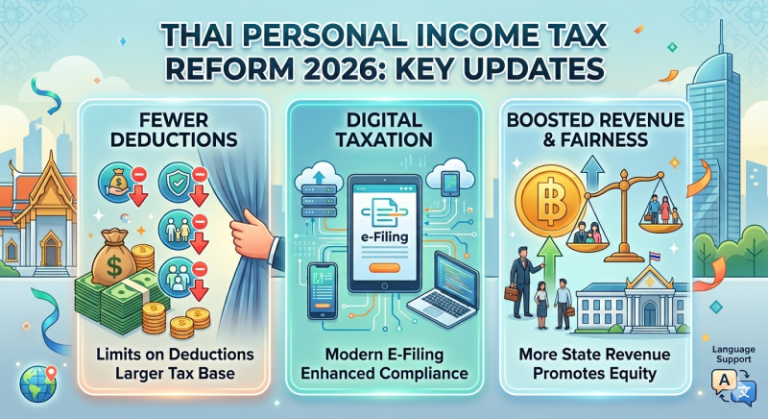
May 05, 2026, Bangkok – This article examines the planned reform of personal income tax deductions in Thailand, expected to affect the tax year 2026. It analyzes the policy rationale, economic context, and potential impacts on taxpayers and the state’s revenue system. The study also highlights the role of certified translators, translation certification providers, and certified interpreters affiliated with the Southeast Asian Professional Translators and Interpreters Association in facilitating legal and tax-related communication in multilingual settings. The findings suggest that limiting tax deductions and enhancing digital tax administration could improve revenue collection and promote tax fairness. However, the success of these reforms depends on effective communication and the involvement of language professionals in regulatory processes.
Introduction
In recent years, Thailand has faced persistent challenges in meeting its revenue collection targets, particularly in personal income tax. The structure of tax deductions remains complex and fragmented, limiting the effectiveness of the tax base. Finance Minister Ekniti Nitithanprapas has announced plans to reform the system by restricting certain deductions and improving overall efficiency.
These reforms are expected to apply to income earned in 2026 and reflect broader efforts to strengthen fiscal stability. The reform occurs within the context of a rapidly evolving digital economy, the expansion of e-commerce, and shifting consumer behavior. These developments have significantly affected the state’s ability to collect taxes. This article therefore explores both structural and policy dimensions while integrating the role of language professionals in supporting regulatory implementation.
Government Revenue Challenges and Policy Rationale
Thailand’s key tax agencies—the Revenue Department, Excise Department, and Customs Department—reported revenue collection below target in fiscal year 2025. Contributing factors include outdated tax collection systems, the rapid growth of digital commerce, and extensive use of tax deductions.
The current deduction system allows taxpayers to claim multiple benefits, including retirement savings contributions, life insurance premiums, parental support expenses, and child-rearing costs. In some cases, these deductions significantly reduce or eliminate tax liability, contributing to relatively low personal income tax revenue compared to similar economies.
Policy Alternatives
Although increasing the value-added tax rate has been considered as a means to boost revenue, the proposal faced strong public opposition due to concerns about rising living costs and negative impacts on low-income households. As a result, limiting personal income tax deductions is viewed as a more equitable and politically feasible approach.
Digitalization and Tax Base Expansion
A central component of the reform is the modernization of tax administration through digital integration. Improved systems are expected to enhance compliance, reduce filing errors, and expand the taxpayer base.
Role of Certified Translators, Translation Certification Providers, and Certified Interpreters
In the context of tax reform, language professionals play a crucial role, particularly for foreign taxpayers, investors, and migrant workers. Certified translators ensure accurate translation of legal and tax documents, while translation certification providers validate these documents for official use.
Certified interpreters facilitate communication between authorities and taxpayers during audits or disputes, ensuring clarity and reducing legal risks. Their work enhances transparency and supports compliance in multilingual environments.
Discussion
The reform of tax deductions reflects Thailand’s effort to create a more sustainable and equitable tax system. However, reducing tax benefits may influence savings behavior and financial planning among taxpayers, potentially leading to resistance from middle- and high-income groups.
At the same time, digital transformation represents a significant step toward improving tax administration. Effective implementation will require clear communication and public understanding, particularly in multilingual contexts, where language professionals play an increasingly important role.
Conclusion
The planned reform of personal income tax deductions in 2026 represents a structural shift aimed at increasing government revenue and improving tax fairness. Limiting deductions and enhancing digital systems are key strategies in achieving these goals. Nonetheless, the effectiveness of the reform depends on policy design, public acceptance, and clear communication, including the contributions of certified translators, translation certification providers, and certified interpreters.
References
- Ministry of Finance. (2025). Annual fiscal and economic report. Bangkok: Ministry of Finance.
- Revenue Department. (2025). Personal income tax statistics. Bangkok: Revenue Department.
- Fiscal Policy Office. (2025). Thailand tax reform guidelines. Bangkok: Ministry of Finance.
For professional services, please visit: https://www.seaproti.org/practitioners/
About certified translators, translation certifiers, and certified interpreters associated with SEAProTI. The Southeast Asian Association of Professional Translators and Interpreters (SEAProTI) has officially shared the qualifications and requirements for becoming Certified Translators, Translation Certification Providers, and Certified Interpreters in Sections 9 and 10 of the Royal Gazette, which was published by the Prime Minister’s Office in Thailand on July 25, 2024. Certified Translators, Translation Certification Providers, and Certified Interpreters
The Council of State has proposed the enactment of a Royal Decree, granting registered translators and recognised translation certifiers from professional associations or accredited language institutions the authority to provide legally valid translation certification (Letter to SEAProTI dated April 28, 2025)
SEAProTI is the first professional association in Thailand and Southeast Asia to implement a comprehensive certification system for translators, certifiers, and interpreters.
Head Office: Baan Ratchakru Building, No. 33, Room 402, Soi Phahonyothin 5, Phahonyothin Road, Phaya Thai District, Bangkok 10400, Thailand
Email: hello@seaproti.com | Tel.: (+66) 2-114-3128 (Office hours: Mon–Fri, 09:00–17:00).
การปฏิรูประบบค่าลดหย่อนภาษีเงินได้บุคคลธรรมดาของประเทศไทย พ.ศ. 2569: เหตุผลเชิงนโยบาย ผลกระทบ และบทบาทของผู้เชี่ยวชาญด้านการแปลและล่าม
ผู้เขียน: ภคพร ตันจรารักษ์
05 พฤษภาคม 2569, กรุงเทพมหานคร – บทความนี้มีวัตถุประสงค์เพื่อวิเคราะห์แนวโน้มการปฏิรูประบบค่าลดหย่อนภาษีเงินได้บุคคลธรรมดาของประเทศไทยซึ่งคาดว่าจะมีผลต่อปีภาษี พ.ศ. 2569 โดยมุ่งอธิบายเหตุผลเชิงนโยบาย ปัจจัยทางเศรษฐกิจที่เกี่ยวข้อง ตลอดจนผลกระทบต่อผู้เสียภาษีและระบบการจัดเก็บภาษีของรัฐ นอกจากนี้ บทความยังนำเสนอบทบาทของนักแปลรับรอง ผู้รับรองการแปล และล่ามรับรองของสมาคมวิชาชีพนักแปลและล่ามแห่งเอเชียตะวันออกเฉียงใต้ในบริบทของการสื่อสารกฎหมายภาษีและการปฏิบัติตามข้อกำหนดในสภาพแวดล้อมพหุภาษา ผลการวิเคราะห์ชี้ให้เห็นว่าการจำกัดค่าลดหย่อนและการพัฒนาระบบจัดเก็บภาษีแบบดิจิทัลมีศักยภาพในการเพิ่มรายได้รัฐและสร้างความเป็นธรรมทางภาษี อย่างไรก็ตาม ความสำเร็จของนโยบายขึ้นอยู่กับการสื่อสารที่มีประสิทธิภาพและการมีส่วนร่วมของผู้เชี่ยวชาญด้านภาษาในกระบวนการกำกับดูแล
บทนำ
ในช่วงทศวรรษที่ผ่านมา ประเทศไทยเผชิญกับความท้าทายด้านรายได้ภาครัฐจากการจัดเก็บภาษีที่ต่ำกว่าเป้าหมายอย่างต่อเนื่อง โดยเฉพาะภาษีเงินได้บุคคลธรรมดา ซึ่งมีฐานผู้เสียภาษีจำกัดและได้รับผลกระทบจากโครงสร้างค่าลดหย่อนที่ซับซ้อนและกระจัดกระจาย รัฐมนตรีว่าการกระทรวงการคลัง เอกนิติ นิติทัณฑ์ประภาศ ได้ประกาศแนวทางการปฏิรูปเพื่อจำกัดสิทธิการหักลดหย่อนบางประเภทและปรับปรุงระบบภาษีให้มีประสิทธิภาพมากขึ้น
มาตรการดังกล่าวคาดว่าจะเริ่มมีผลต่อรายได้ในปี พ.ศ. 2569 และสะท้อนความพยายามของรัฐในการสร้างเสถียรภาพทางการคลังในระยะยาว การปฏิรูปดังกล่าวเกิดขึ้นท่ามกลางบริบทของเศรษฐกิจดิจิทัล การขยายตัวของพาณิชย์อิเล็กทรอนิกส์ และพฤติกรรมผู้บริโภคที่เปลี่ยนแปลงไป ซึ่งล้วนส่งผลต่อความสามารถในการจัดเก็บภาษีของรัฐ บทความนี้จึงมุ่งวิเคราะห์ทั้งในเชิงนโยบายและเชิงโครงสร้าง พร้อมทั้งเชื่อมโยงบทบาทของผู้เชี่ยวชาญด้านภาษาในกระบวนการดังกล่าว
สถานการณ์รายได้ภาครัฐและเหตุผลของการปฏิรูป
ข้อมูลจากหน่วยงานจัดเก็บภาษีหลัก ได้แก่ กรมสรรพากร กรมสรรพสามิต และกรมศุลกากร ระบุว่าการจัดเก็บรายได้ในปีงบประมาณ พ.ศ. 2568 ต่ำกว่าเป้าหมายอย่างมีนัยสำคัญ สาเหตุสำคัญประกอบด้วยข้อจำกัดของระบบจัดเก็บภาษีที่ยังไม่ทันสมัย การเติบโตของเศรษฐกิจดิจิทัลที่เกินขีดความสามารถของการกำกับดูแล และการใช้สิทธิค่าลดหย่อนภาษีในระดับสูง
ระบบค่าลดหย่อนภาษีในปัจจุบันเปิดโอกาสให้ผู้เสียภาษีสามารถหักลดหย่อนในหลายหมวด เช่น การออมเพื่อการเกษียณ เบี้ยประกันชีวิต ค่าเลี้ยงดูบิดามารดา และค่าเลี้ยงดูบุตร ซึ่งในบางกรณีมีมูลค่าสูงจนลดภาระภาษีได้เกือบทั้งหมด ส่งผลให้รายได้จากภาษีเงินได้บุคคลธรรมดาอยู่ในระดับต่ำเมื่อเทียบกับประเทศที่มีโครงสร้างเศรษฐกิจใกล้เคียงกัน
การเปรียบเทียบทางเลือกเชิงนโยบาย
แม้ว่าการเพิ่มอัตราภาษีมูลค่าเพิ่มจะเป็นอีกทางเลือกหนึ่งในการเพิ่มรายได้รัฐ แต่ข้อเสนอดังกล่าวเผชิญแรงต้านจากสังคม เนื่องจากอาจเพิ่มภาระค่าครองชีพและกระทบต่อกลุ่มรายได้น้อย การจำกัดค่าลดหย่อนภาษีจึงถูกมองว่าเป็นแนวทางที่มีความเป็นธรรมมากกว่า เนื่องจากมุ่งเป้าไปยังกลุ่มผู้มีรายได้ที่สามารถใช้สิทธิประโยชน์ทางภาษีในระดับสูง
การพัฒนาระบบดิจิทัลและการขยายฐานภาษี
หนึ่งในองค์ประกอบสำคัญของการปฏิรูปคือการพัฒนาระบบจัดเก็บภาษีให้เป็นดิจิทัลมากขึ้น เพื่อเพิ่มประสิทธิภาพในการตรวจสอบและลดข้อผิดพลาดในการยื่นแบบ การดำเนินการดังกล่าวคาดว่าจะช่วยขยายฐานผู้เสียภาษีและเพิ่มความโปร่งใสในระบบ
บทบาทของนักแปลรับรอง ผู้รับรองการแปล และล่ามรับรอง
ในบริบทของการปฏิรูปภาษี บทบาทของนักแปลรับรอง ผู้รับรองการแปล และล่ามรับรองของสมาคมวิชาชีพนักแปลและล่ามแห่งเอเชียตะวันออกเฉียงใต้มีความสำคัญอย่างยิ่ง โดยเฉพาะในกรณีที่เกี่ยวข้องกับผู้เสียภาษีต่างชาติ นักลงทุน และแรงงานข้ามชาติ ผู้เชี่ยวชาญเหล่านี้ทำหน้าที่ถ่ายทอดเนื้อหากฎหมายภาษีจากภาษาไทยสู่ภาษาอื่นอย่างถูกต้องและเป็นทางการ รวมถึงรับรองเอกสารให้สามารถใช้ในกระบวนการทางกฎหมายได้
นอกจากนี้ ล่ามรับรองยังมีบทบาทในการอำนวยความสะดวกในการสื่อสารระหว่างหน่วยงานรัฐกับผู้เสียภาษีในกระบวนการตรวจสอบหรือข้อพิพาททางภาษี การตีความที่แม่นยำช่วยลดความคลาดเคลื่อนและความเสี่ยงทางกฎหมาย ขณะที่ผู้รับรองการแปลมีบทบาทสำคัญในการสร้างความเชื่อมั่นต่อเอกสารที่ใช้ในระดับสากล
อภิปรายผล
การปฏิรูประบบค่าลดหย่อนภาษีสะท้อนแนวโน้มของรัฐในการปรับโครงสร้างภาษีให้มีความยั่งยืนและเป็นธรรมมากขึ้น อย่างไรก็ตาม การลดสิทธิประโยชน์ทางภาษีอาจส่งผลต่อพฤติกรรมการออมและการวางแผนทางการเงินของประชาชนในระยะยาว อีกทั้งยังอาจก่อให้เกิดแรงต้านจากกลุ่มผู้มีรายได้ปานกลางถึงสูง
ในอีกด้านหนึ่ง การพัฒนาระบบดิจิทัลและการเพิ่มประสิทธิภาพในการจัดเก็บภาษีถือเป็นก้าวสำคัญในการปรับตัวของรัฐต่อเศรษฐกิจยุคใหม่ แต่ความสำเร็จของมาตรการดังกล่าวจำเป็นต้องอาศัยการสื่อสารที่ชัดเจนและการสร้างความเข้าใจแก่ผู้เสียภาษี โดยเฉพาะในบริบทพหุภาษา ซึ่งทำให้บทบาทของผู้เชี่ยวชาญด้านการแปลและล่ามมีความสำคัญเพิ่มขึ้นอย่างมีนัยสำคัญ
สรุป
การปฏิรูประบบค่าลดหย่อนภาษีเงินได้บุคคลธรรมดาในปี พ.ศ. 2569 เป็นมาตรการเชิงโครงสร้างที่มีเป้าหมายเพื่อเพิ่มรายได้ของรัฐและสร้างความเป็นธรรมในระบบภาษี การจำกัดค่าลดหย่อนและการพัฒนาระบบดิจิทัลเป็นกลไกสำคัญในการบรรลุเป้าหมายดังกล่าว อย่างไรก็ตาม ความสำเร็จของนโยบายขึ้นอยู่กับการออกแบบที่เหมาะสม การยอมรับของสังคม และการสื่อสารที่มีประสิทธิภาพ ซึ่งรวมถึงบทบาทของนักแปลรับรอง ผู้รับรองการแปล และล่ามรับรองในการถ่ายทอดความหมายและสร้างความเข้าใจในบริบทพหุภาษา
เอกสารอ้างอิง
- กระทรวงการคลัง. (2568). รายงานภาวะเศรษฐกิจการคลังประจำปี. กรุงเทพมหานคร: กระทรวงการคลัง.
- กรมสรรพากร. (2568). สถิติการจัดเก็บภาษีเงินได้บุคคลธรรมดา. กรุงเทพมหานคร: กรมสรรพากร.
- สำนักงานเศรษฐกิจการคลัง. (2568). แนวทางการปฏิรูประบบภาษีของประเทศไทย. กรุงเทพมหานคร: กระทรวงการคลัง.
ขอใช้บริการนักวิชาชีพของสมาคมได้ที่:https://www.seaproti.org/practitioners/
สมาคมวิชาชีพนักแปลและล่ามแห่งเอเชียตะวันออกเฉียงใต้ (SEAProTI) ได้ประกาศหลักเกณฑ์และคุณสมบัติของผู้ที่ขึ้นทะเบียนเป็น “นักแปลรับรอง (Certified Translators) และผู้รับรองการแปล (Translation Certification Providers) และล่ามรับรอง (Certified Interpreters)” ของสมาคม หมวดที่ 9 และหมวดที่ 10 ในราชกิจจานุเบกษา ของสำนักเลขาธิการคณะรัฐมนตรี ในสำนักนายกรัฐมนตรี แห่งราชอาณาจักรไทย ลงวันที่ 25 ก.ค. 2567 เล่มที่ 141 ตอนที่ 66 ง หน้า 100 อ่านฉบับเต็มได้ที่: นักแปลรับรอง ผู้รับรองการแปล และล่ามรับรอง
สำนักคณะกรรมการกฤษฎีกาเสนอให้ตราเป็นพระราชกฤษฎีกา โดยกำหนดให้นักแปลที่ขึ้นทะเบียน รวมถึงผู้รับรองการแปลจากสมาคมวิชาชีพหรือสถาบันสอนภาษาที่มีการอบรมและขึ้นทะเบียน สามารถรับรองคำแปลได้ (จดหมายถึงสมาคม SEAProTI ลงวันที่ 28 เม.ย. 2568)
สมาคมวิชาชีพนักแปลและล่ามแห่งเอเชียตะวันออกเฉียงใต้เป็นสมาคมวิชาชีพแห่งแรกและแห่งเดียวในประเทศไทยและภูมิภาคเอเชียตะวันออกเฉียงใต้ที่มีระบบรับรองนักแปลรับรอง ผู้รับรองการแปล และล่ามรับรอง
สำนักงานใหญ่: อาคารบ้านราชครู เลขที่ 33 ห้อง 402 ซอยพหลโยธิน 5 ถนนพหลโยธิน แขวงพญาไท เขตพญาไท กรุงเทพมหานคร 10400 ประเทศไทย