


Update Gender-Inclusive Translations Put to the Test: By Joke Daems, Ghent University & International Quadball Association (2026)
Author: Petra Bordt
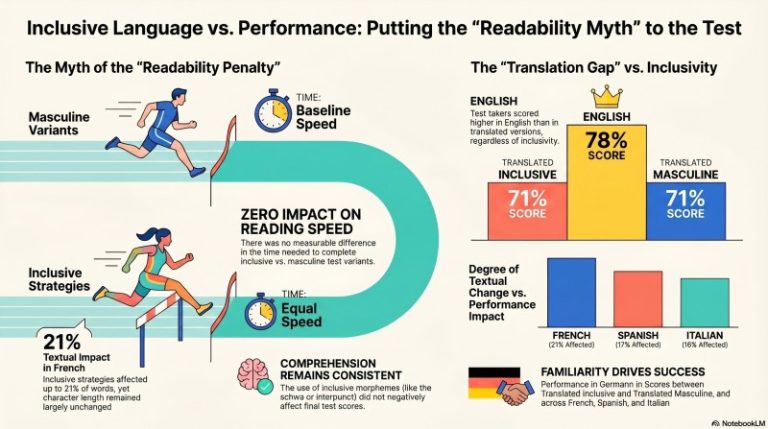
May 05, 2026, Bangkok – This empirical study, conducted in collaboration with the International Quadball Association (IQA), investigates the impact of gender-inclusive translation strategies on the performance of referee certification test-takers. Quadball is a mixed-gender sport that prioritizes inclusivity, allowing athletes to define their own gender identity. While the IQA encourages gender-inclusive language, such as using they/them pronouns in English, the textual impact of these strategies in other languages like French, Italian, and Spanish can be substantial, affecting up to 21% of the text. This study addresses whether such strategies impair readability or speed in high-stakes, timed scenarios.
Keywords: Gender-inclusive language; quadball; referee tests; sports translation; readability; comprehensibility
Introduction
Quadball is a global, mixed-gender sport governed by the IQA, where the “gender maximum rule” ensures diverse representation on the pitch. To reflect these values, the IQA uses gender-inclusive language in its rulebooks and communications. However, because referee certification tests are taken under time pressure, concerns have been raised that inclusive language might hinder readability. This study marks the first large-scale empirical test of these claims in a real-world sporting context.
Conceptual Framework and Methodology
The study analyzed assistant referee certification tests in English, French, German, Italian, and Spanish. For the Romance languages, participants were randomly assigned to either an inclusive variant (using markers like the interpunct or schwa) or a traditional masculine variant. The research compared test duration, final scores, and success rates across these conditions.
Content Analysis and Findings
The analysis showed that while inclusive strategies significantly increased word and character length in languages like French and Spanish, there were no significant differences in the time taken or the final scores between the inclusive and masculine groups. Interestingly, test-takers using the English version generally performed better and needed fewer attempts to pass than those using translations, with the exception of the German group.
Discussion: Readability and Performance
The findings contradict the argument that inclusive language reduces readability. Instead, the results suggest that familiarity with inclusive language within the quadball community likely mitigates any potential difficulty. The higher performance in English may stem from the fact that English remains the primary working language of the sport, making referees more familiar with the original terminology.
Conclusion
The study concludes that gender-inclusive language effectively reflects organizational values without compromising test performance. Consequently, no additional time is required for inclusive tests, and the IQA can continue to use these strategies to foster an inclusive environment.
References
- Abbondanza, M., et al. (2025). Neutralizing gender in role nouns: Investigating the effect of ə in written and oral Italian. Frontiers in Communication, 9.
- Abbou, J. (2024). La typographie post-binary. Au-delà de l’écriture inclusive. GLAD!.
- Anderson, B. (2006). Imagined communities: Reflections on the origin and spread of nationalism. Routledge.
- Antonini, R., et al. (2017). Non-professional interpreting and translation. John Benjamins.
- Antonsich, M. (2010). Searching for belonging–an analytical framework. Geography compass.
- Baines, R. (2012). The journalist, the translator, the player and his agent. In Words, images and performances in translation. Bloomsbury.
- Baines, R. (2018). Translation and interpreting for the media in the English Premier League. Multilingual Matters.
- Baker, M. (1993). Corpus linguistics and translation studies. John Benjamins.
- Barad, K. (2007). Meeting the universe halfway. Duke University Press.
- Besnier, N., & Brownell, S. (2012). Sport, modernity, and the body. Annual Review of Anthropology.
- Blackledge, A., & Creese, A. (2017). Translanguaging and the body. International Journal of Multilingualism.
- Bruns, H., & Leiting, S. (2024). Using gender-inclusive language in German? In Public Attitudes Towards Gender-Inclusive Language. De Gruyter.
- Brysbaert, M. (2019). How many words do we read per minute? Journal of Memory and Language, 109.
- Burtscher, S., et al. (2022). “Es geht um Respekt, nicht um Technologie”. Proceedings of Mensch Und Computer 2022.
- Coady, A. (2024). The gender-inclusive language debate in France. In Public Attitudes Towards Gender-Inclusive Language. De Gruyter.
- Cronin, M. (2014). Sport: A very short introduction. Oxford University Press.
- Daems, J. (2023). Gender-inclusive translation for a gender-inclusive sport. Proceedings of the First Workshop on Gender-Inclusive Translation Technologies.
- Daems, J. (2024). Pilot testing gender-inclusive translations and machine translations for German quadball referee certification test takers. Proceedings of the 2nd International Workshop on Gender-Inclusive Translation Technologies.
- De Santis, C. (2022). L’emancipazione grammaticale non passa per una e rovesciata. Treccani.
- di Carlo, G. S. (2024). Is Italy ready for gender-inclusive language? In Inclusiveness Beyond the (Non)binary in Romance Languages. Routledge.
- Dirix, N., et al. (2020). Reading Text When Studying in a Second Language. Reading Research Quarterly, 55(3).
- Fiorentini, I., & Oggionni, R. (2024). ‘Anche la lingua deve adeguarsi’. In Lingua inclusiva: Forme, funzioni, atteggiamenti e percezioni.
- Fogg, J. (2022). QUK Member Survey 2021/22.
- Friedrich, M. C. G., et al. (2021). The Influence of the Gender Asterisk on Comprehensibility and Interest. Frontiers in Psychology, 12.
- Friedrich, M. C. G., et al. (2022). Does the use of Gender-Fair Language Impair the Comprehensibility of Video Lectures? Psychology Learning & Teaching, 21(3).
- Gheno, V. (2024). Gender inclusiveness in a binary language: The rise of the schwa in Italian. In Inclusiveness Beyond the (Non)binary in Romance Languages. Routledge.
- Ghignoli, A., & Diaz, M. G. T. (2015). Interpreting performed by professionals of other fields: the case of sports commentators. Peter Lang.
- Girard, G., et al. (2022). Lisibilité de l’écriture inclusive: Apports des techniques d’oculométrie. Canadian Linguistic Association.
- Greey, A. D. (2023). A part of, yet apart from the team. Canadian Review of Sociology, 60(1).
- Gunther, S. (2022). Gender Dis-agreement: Reactions to Proposals for Gender-Inclusive Language in France and Quebec.
- Harris, B. (1978). The difference between natural and professional translators. Canadian Modern Language Review.
- Ingold, T. (2011). Being alive. Routledge.
- IQA. (2023). Gender representation in quadball: Survey 2023.
- IQA. (2024). IQA Rulebook 2024.
- Itaya, H. (2021). The sports interpreter’s role and interpreting strategies. De Gruyter Mouton.
- Jimenez-Crespo, M. A. (2024). Localization in translation. Routledge.
- Johnson, P. (2024). Online attitudes towards gender-inclusive language in French. In Public Attitudes Towards Gender-Inclusive Language. De Gruyter.
- Koeser, S., et al. (2015). Just Reading? How Gender-Fair Language Triggers Readers’ Use of Gender-Fair Forms. Journal of Language and Social Psychology, 34.
- Kuperman, V., et al. (2024). Word length and frequency effects on text reading are highly similar in 12 alphabetic languages. Journal of Memory and Language, 135.
- Lienardy, C., et al. (2023). Ecriture inclusive, lisibilite textuelle et representations mentales. Discours.
- Lopez, A. (2022). Trans(de)letion: Audiovisual translations of gender identities for mainstream audiences. Journal of Language and Sexuality, 11(2).
- Manesse, D. (2022). Contre l’écriture inclusive. Travail, genre et sociétés, 47(1).
- Meuleneers, P. W. (2024). On the “invention” of the Gendersprache in German media discourse. In Public Attitudes Towards Gender-Inclusive Language. De Gruyter Mouton.
- Muller-Spitzer, C., et al. (2024). Less than one percent of words would be affected by gender-inclusive language in German press texts. Humanities and Social Sciences Communications, 11(1).
- Nodari, R. (2024). Gender-inclusive strategies in Italian. In Public Attitudes Towards Gender-Inclusive Language. De Gruyter Mouton.
- Pabst, L. M., & Kollmayer, M. (2023). How to make a difference: The impact of gender-fair language on text comprehensibility. Frontiers in Psychology, 14.
- Paolucci, A. B., et al. (2023). Gender-Fair Language in Translation: A Case Study. Proceedings of the First Workshop on Gender-Inclusive Translation Technologies.
- Papadopoulos, B. (2022). A Brief History of Gender-Inclusive Spanish.
- Papadopoulos, B., et al. (2025). Italian. Gender in Language Project.
- Pecorari, F., & Ferrari, A. (2024). L’inclusione di genere nei testi ufficiali. Lingue e Culture Dei Media, 8(1).
- Pennington, R., et al. (2021). Injuries in Quidditch: A Prospective Study from a Complete UK Season. International Journal of Sports Physical Therapy, 16(5).
- Pfalzgraf, F. (2024). Attitudes of the purist association Verein Deutsche Sprache (VDS) towards gender-inclusive use of German. In Public Attitudes Towards Gender-Inclusive Language. De Gruyter Mouton.
- Pochhacker, F. (2022). Interpreters and interpreting: Shifting the balance? The Translator.
- Pym, A. (2008). On Toury’s laws of how translators translate. John Benjamins.
- Reyes-Bossio, M., & Vasquez-Cruz, D. (2024). Habilidades Psicologicas Deportivas y estados de animo en jugadores peruanos de Quadball. Revista de Psicologia Aplicada al Deporte y el Ejercicio Fisico, 9(1).
- Risku, H. (2014). Translation process research as interaction research. MonTI.
- Rock, Z. do. (2021). Geschlechtergerechte Sprache: Von innen, unnen und onnen. Die Zeit.
- Sandrelli, A. (2012). Introducing FOOTIE (Football in Europe). Peter Lang.
- Sauteur, T., et al. (2023). L’ecriture inclusive, je ne connais pas tres bien… mais je deteste!. GLAD!.
- Schneider, C. (2020). Gender-Deutsch.
- Sczesny, S., et al. (2016). Can Gender-Fair Language Reduce Gender Stereotyping and Discrimination? Frontiers in Psychology, 7.
- Simon, S. (2019). Translation sites: A field guide. Routledge.
- Slemp, K., et al. (2020). Reactions to gender-inclusive language in Spanish on Twitter and YouTube. Canadian Linguistic Association.
- Stahlberg, D., et al. (2007). Representation of the sexes in language. In Social communication. Psychology Press.
- Stetie, N. A., & Zunino, G. M. (2022). Non-binary language in Spanish? Comprehension of non-binary morphological forms. Glossa, 7(1).
- Stetie, N. A., & Zunino, G. M. (2024). Do gender stereotypes bias the processing of morphological innovations? Psychology of Language and Communication, 28(1).
- Stoyanova, S., et al. (2025). Mental Resilience and Mindfulness in Athletes. Sports.
- Tibblin, J., et al. (2023). The male bias can be attenuated in reading. Glossa Psycholinguistics, 2(1).
- Trigueros, R., et al. (2019). Emotion, Psychological Well-Being and Their Influence on Resilience. IJERPH.
- Universitat Oberta de Catalunya. (n.d.). Uso no sexista de la lengua.
- Vecchiato, D. (2025). Translating non-binary narratives. Lebende Sprachen.
- Waldendorf, A. (2024). Words of change: The increase of gender-inclusive language in German media. European Sociological Review, 40(2).
- Weber, L., et al. (2024). Ecriture inclusive et dyslexie. ANAE, 36(188).
- Zami, J., & Hemforth, B. (2024). Intelligibilite de l’ecriture inclusive: Une approche experimentale. SHS Web of Conferences, 191.
- Zanin, A. C., et al. (2023). Storying the Gender Binary in Sport. Communication & Sport, 11(5).
- Zumeta, L. N., et al. (2016). Collective efficacy in sports and physical activities. Frontiers in Psychology.
For professional services, please visit: https://www.seaproti.org/practitioners/
About certified translators, translation certifiers, and certified interpreters associated with SEAProTI. The Southeast Asian Association of Professional Translators and Interpreters (SEAProTI) has officially shared the qualifications and requirements for becoming Certified Translators, Translation Certification Providers, and Certified Interpreters in Sections 9 and 10 of the Royal Gazette, which was published by the Prime Minister’s Office in Thailand on July 25, 2024. Certified Translators, Translation Certification Providers, and Certified Interpreters
The Council of State has proposed the enactment of a Royal Decree, granting registered translators and recognised translation certifiers from professional associations or accredited language institutions the authority to provide legally valid translation certification (Letter to SEAProTI dated April 28, 2025)
SEAProTI is the first professional association in Thailand and Southeast Asia to implement a comprehensive certification system for translators, certifiers, and interpreters.
Head Office: Baan Ratchakru Building, No. 33, Room 402, Soi Phahonyothin 5, Phahonyothin Road, Phaya Thai District, Bangkok 10400, Thailand
Email: hello@seaproti.com | Tel.: (+66) 2-114-3128 (Office hours: Mon–Fri, 09:00–17:00).
อัพเดตการทดสอบการแปลที่ครอบคลุมทุกเพศ: การวัดประสิทธิภาพของผู้ทดสอบการรับรองผู้ตัดสินควอดบอล โดย โจค แดมส์, มหาวิทยาลัยเกนต์ และสมาคมควอดบอลนานาชาติ (2569)
ผู้แต่ง: เภตรา โบรด
05 พฤษภาคม 2569, กรุงเทพมหานคร – งานวิจัยเชิงประจักษ์นี้ได้รับความร่วมมือจากสมาคมควอดบอลนานาชาติ (IQA) เพื่อศึกษาผลกระทบของกลยุทธ์การแปลที่รวมทุกเพศต่อประสิทธิภาพของผู้ที่ทำข้อสอบการรับรองผู้ตัดสิน ควอดบอลเป็นกีฬาที่รวมทุกเพศและให้ความสำคัญกับความครอบคลุม โดยนักกีฬามีสิทธิในการกำหนดอัตลักษณ์ทางเพศของตนเอง แม้ IQA จะส่งเสริมภาษารวมเพศ (เช่น การใช้ they/them ในภาษาอังกฤษ) แต่ผลกระทบเชิงข้อความในภาษาอื่น เช่น ฝรั่งเศส อิตาลี และสเปน อาจสูงถึง 21% ของเนื้อหา การศึกษานี้จึงมุ่งตอบคำถามว่าภาษารวมเพศเป็นอุปสรรคต่อความง่ายในการอ่านหรือความเร็วภายใต้ความกดดันด้านเวลาหรือไม่
คำสำคัญ: ภาษารวมเพศ; ควอดบอล; การทดสอบผู้ตัดสิน; การแปลกีฬา; ความง่ายในการอ่าน; ความเข้าใจ
บทนำ
ควอดบอลเป็นกีฬาระดับโลกที่มี “กฎจำนวนเพศสูงสุด” เพื่อรับประกันความหลากหลายในสนาม IQA จึงนำภาษารวมเพศมาใช้ในหนังสือกฎกติกาและการสื่อสาร อย่างไรก็ตาม เนื่องจากการสอบผู้ตัดสินมีความกดดันด้านเวลา จึงมีความกังวลว่าภาษารวมเพศอาจทำให้อ่านยากขึ้น งานวิจัยนี้ถือเป็นการทดสอบเชิงประจักษ์ขนาดใหญ่ครั้งแรกในบริบทกีฬาจริง
กรอบแนวคิดและวิธีการวิจัย
การศึกษาวิเคราะห์ข้อสอบผู้ตัดสินในภาษาอังกฤษ ฝรั่งเศส เยอรมัน อิตาลี และสเปน โดยในกลุ่มภาษากลุ่มโรมานซ์ ผู้เข้าสอบจะถูกสุ่มให้ทำข้อสอบเวอร์ชันรวมเพศ (ใช้เครื่องหมาย interpunct หรือ schwa) หรือเวอร์ชันเพศชายดั้งเดิม และเปรียบเทียบระยะเวลาที่ใช้ คะแนน และอัตราการสอบผ่าน
การวิเคราะห์เนื้อหาและข้อค้นพบ
ผลการวิเคราะห์พบว่าแม้กลยุทธ์รวมเพศจะทำให้จำนวนคำและตัวอักษรเพิ่มขึ้นในภาษาฝรั่งเศสและสเปน แต่ไม่พบความแตกต่างอย่างมีนัยสำคัญของเวลาที่ใช้หรือคะแนนระหว่างกลุ่มรวมเพศและกลุ่มเพศชาย นอกจากนี้ ผู้เข้าสอบเวอร์ชันภาษาอังกฤษมักทำคะแนนได้ดีกว่าและใช้จำนวนครั้งในการสอบผ่านน้อยกว่ากลุ่มฉบับแปล ยกเว้นในกลุ่มภาษาเยอรมัน
การอภิปราย: ความง่ายในการอ่านและประสิทธิภาพ
ข้อค้นพบนี้โต้แย้งข้ออ้างที่ว่าภาษารวมเพศทำให้อ่านยากขึ้น โดยชี้ให้เห็นว่าความคุ้นเคยกับภาษารวมเพศในชุมชนควอดบอลช่วยลดปัญหาที่อาจเกิดขึ้น สำหรับประสิทธิภาพที่ดีกว่าในภาษาอังกฤษอาจเป็นเพราะภาษาอังกฤษเป็นภาษาหลักของกีฬานี้ ทำให้ผู้ตัดสินคุ้นเคยกับคำศัพท์ต้นฉบับมากกว่า
สรุป
งานวิจัยสรุปว่าภาษารวมเพศสะท้อนคุณค่าขององค์กรได้โดยไม่ส่งผลกระทบต่อประสิทธิภาพการทดสอบ ดังนั้น IQA จึงไม่จำเป็นต้องเพิ่มเวลาพิเศษสำหรับการทดสอบ และสามารถใช้กลยุทธ์นี้ต่อไปเพื่อสร้างสภาพแวดล้อมที่ครอบคลุมสำหรับทุกคน
บรรณานุกรม
- แอบบอนดันซา, เอ็ม. และคณะ (2025). Neutralizing gender in role nouns: Investigating the effect of ə in written and oral Italian. Frontiers in Communication, 9.
- แอบบู, เจ. (2024). La typographie post-binary. Au-delà de l’écriture inclusive. GLAD!.
- แอนเดอร์สัน, บี. (2006). Imagined communities: Reflections on the origin and spread of nationalism. Routledge.
- แอนโทนินี, อาร์. และคณะ (2017). Non-professional interpreting and translation. John Benjamins.
- แอนตันซิค, เอ็ม. (2010). Searching for belonging–an analytical framework. Geography compass.
- เบนส์, อาร์. (2012). The journalist, the translator, the player and his agent. In Words, images and performances in translation. Bloomsbury.
- เบนส์, อาร์. (2018). Translation and interpreting for the media in the English Premier League. Multilingual Matters.
- เบเกอร์, เอ็ม. (1993). Corpus linguistics and translation studies. John Benjamins.
- บารัด, เค. (2007). Meeting the universe halfway. Duke University Press.
- เบสเนียร์, เอ็น. และบราวน์เนลล์, เอส. (2012). Sport, modernity, and the body. Annual Review of Anthropology.
- แบล็คเลดจ์, เอ. และครีส, เอ. (2017). Translanguaging and the body. International Journal of Multilingualism.
- บรุนส์, เอช. และไลติง, เอส. (2024). Using gender-inclusive language in German? In Public Attitudes Towards Gender-Inclusive Language. De Gruyter.
- ไบรส์แบร์ต, เอ็ม. (2019). How many words do we read per minute? Journal of Memory and Language, 109.
- เบิร์ตเชอร์, เอส. และคณะ (2022). “Es geht um Respekt, nicht um Technologie”. Proceedings of Mensch Und Computer 2022.
- โคดี, เอ. (2024). The gender-inclusive language debate in France. In Public Attitudes Towards Gender-Inclusive Language. De Gruyter.
- โครนิน, เอ็ม. (2014). Sport: A very short introduction. Oxford University Press.
- แดมส์, เจ. (2023). Gender-inclusive translation for a gender-inclusive sport. Proceedings of the First Workshop on Gender-Inclusive Translation Technologies.
- แดมส์, เจ. (2024). Pilot testing gender-inclusive translations and machine translations for German quadball referee certification test takers. Proceedings of the 2nd International Workshop on Gender-Inclusive Translation Technologies.
- เดอ ซานติส, ซี. (2022). L’emancipazione grammaticale non passa per una e rovesciata. Treccani.
- ดิ คาร์โล, จี. เอส. (2024). Is Italy ready for gender-inclusive language? In Inclusiveness Beyond the (Non)binary in Romance Languages. Routledge.
- ดิริกซ์, เอ็น. และคณะ (2020). Reading Text When Studying in a Second Language. Reading Research Quarterly, 55(3).
- ฟิออเรนตินี, ไอ. และอ็อกจิออนนี, อาร์. (2024). ‘Anche la lingua deve adeguarsi’. In Lingua inclusiva: Forme, funzioni, atteggiamenti e percezioni.
- ฟอกก์, เจ. (2022). QUK Member Survey 2021/22.
- ฟรีดริช, เอ็ม. ซี. จี. และคณะ (2021). The Influence of the Gender Asterisk on Comprehensibility and Interest. Frontiers in Psychology, 12.
- ฟรีดริช, เอ็ม. ซี. จี. และคณะ (2022). Does the use of Gender-Fair Language Impair the Comprehensibility of Video Lectures? Psychology Learning & Teaching, 21(3).
- เกโน, วี. (2024). Gender inclusiveness in a binary language: The rise of the schwa in Italian. In Inclusiveness Beyond the (Non)binary in Romance Languages. Routledge.
- กิญโญลี, เอ. และดิแอซ, เอ็ม. กี. ที. (2015). Interpreting performed by professionals of other fields: the case of sports commentators. Peter Lang.
- จิราร์ด, จี. และคณะ (2022). Lisibilité de l’écriture inclusive: Apports des techniques d’oculométrie. Canadian Linguistic Association.
- กรี, เอ. ดี. (2023). A part of, yet apart from the team. Canadian Review of Sociology, 60(1).
- กันเธอร์, เอส. (2022). Gender Dis-agreement: Reactions to Proposals for Gender-Inclusive Language in France and Quebec.
- แฮร์ริส, บี. (1978). The difference between natural and professional translators. Canadian Modern Language Review.
- อิงโกลด์, ที. (2011). Being alive. Routledge.
- ไอคิวเอ. (2023). Gender representation in quadball: Survey 2023.
- ไอคิวเอ. (2024). IQA Rulebook 2024.
- อิตายะ, เอช. (2021). The sports interpreter’s role and interpreting strategies. De Gruyter Mouton.
- ฮิเมเนซ-เครสโป, เอ็ม. เอ. (2024). Localization in translation. Routledge.
- จอห์นสัน, พี. (2024). Online attitudes towards gender-inclusive language in French. In Public Attitudes Towards Gender-Inclusive Language. De Gruyter.
- เคอเซอร์, เอส. และคณะ (2015). Just Reading? How Gender-Fair Language Triggers Readers’ Use of Gender-Fair Forms. Journal of Language and Social Psychology, 34.
- คูเปอร์แมน, วี. และคณะ (2024). Word length and frequency effects on text reading are highly similar in 12 alphabetic languages. Journal of Memory and Language, 135.
- เลียนนาร์ดี, ซี. และคณะ (2023). Ecriture inclusive, lisibilite textuelle et representations mentales. Discours.
- โลเปซ, เอ. (2022). Trans(de)letion: Audiovisual translations of gender identities for mainstream audiences. Journal of Language and Sexuality, 11(2).
- มาเนสเซ, ดี. (2022). Contre l’écriture inclusive. Travail, genre et sociétés, 47(1).
- มิวเลเนียร์ส, พี. ดับเบิลยู. (2024). On the “invention” of the Gendersprache in German media discourse. In Public Attitudes Towards Gender-Inclusive Language. De Gruyter Mouton.
- มุลเลอร์-สปิตเซอร์, ซี. และคณะ (2024). Less than one percent of words would be affected by gender-inclusive language in German press texts. Humanities and Social Sciences Communications, 11(1).
- โนดารี, อาร์. (2024). Gender-inclusive strategies in Italian. In Public Attitudes Towards Gender-Inclusive Language. De Gruyter Mouton.
- แพบส์ต, แอล. เอ็ม. และโคลเมเยอร์, เอ็ม. (2023). How to make a difference: The impact of gender-fair language on text comprehensibility. Frontiers in Psychology, 14.
- เปาลิชชี, เอ. บี. และคณะ (2023). Gender-Fair Language in Translation: A Case Study. Proceedings of the First Workshop on Gender-Inclusive Translation Technologies.
- ปาปาโดปูลอส, บี. (2022). A Brief History of Gender-Inclusive Spanish.
- ปาปาโดปูลอส, บี. และคณะ (2025). Italian. Gender in Language Project.
- เปโครารี, เอฟ. และแฟร์รารี, เอ. (2024). L’inclusione di genere nei testi ufficiali. Lingue e Culture Dei Media, 8(1).
- เพนนิงตัน, อาร์. และคณะ (2021). Injuries in Quidditch: A Prospective Study from a Complete UK Season. International Journal of Sports Physical Therapy, 16(5).
- ฟาลซกราฟ, เอฟ. (2024). Attitudes of the purist association Verein Deutsche Sprache (VDS) towards gender-inclusive use of German. In Public Attitudes Towards Gender-Inclusive Language. De Gruyter Mouton.
- เพิคแฮคเกอร์, เอฟ. (2022). Interpreters and interpreting: Shifting the balance? The Translator.
- พิม, เอ. (2008). On Toury’s laws of how translators translate. John Benjamins.
- เรเยส-บอสซิโอ, เอ็ม. และวาสเกซ-ครูซ, ดี. (2024). Habilidades Psicologicas Deportivas y estados de animo en jugadores peruanos de Quadball. Revista de Psicologia Aplicada al Deporte y el Ejercicio Fisico, 9(1).
- ริสคู, เอช. (2014). Translation process research as interaction research. MonTI.
- ร็อค, แซด. ดู. (2021). Geschlechtergerechte Sprache: Von innen, unnen und onnen. Die Zeit.
- แซนเดรลลี, เอ. (2012). Introducing FOOTIE (Football in Europe). Peter Lang.
- โซเตอร์, ที. และคณะ (2023). L’ecriture inclusive, je ne connaิs pas tres bien… mais je deteste!. GLAD!.
- ชไนเดอร์, ซี. (2020). Gender-Deutsch.
- เซสมี, เอส. และคณะ (2559). Can Gender-Fair Language Reduce Gender Stereotyping and Discrimination? Frontiers in Psychology, 7.
- ไซมอน, เอส. (2019). Translation sites: A field guide. Routledge.
- สเลมป์, เค. และคณะ (2020). Reactions to gender-inclusive language in Spanish on Twitter and YouTube. Canadian Linguistic Association.
- สตาห์ลเบิร์ก, ดี. และคณะ (2007). Representation of the sexes in language. In Social communication. Psychology Press.
- สเตที, เอ็น. เอ. และซูนีโน, จี. เอ็ม. (2022). Non-binary language in Spanish? Comprehension of non-binary morphological forms. Glossa, 7(1).
- สเตที, เอ็น. เอ. และซูนีโน, จี. เอ็ม. (2024). Do gender stereotypes bias the processing of morphological innovations? Psychology of Language and Communication, 28(1).
- สโตยาโนวา, เอส. และคณะ (2025). Mental Resilience and Mindfulness in Athletes. Sports.
- ทิบบลิน, เจ. และคณะ (2023). The male bias can be attenuated in reading. Glossa Psycholinguistics, 2(1).
- ตริเกรอส, อาร์. และคณะ (2019). Emotion, Psychological Well-Being and Their Influence on Resilience. IJERPH.
- มหาวิทยาลัยเปิดแห่งคาตาลัน. (ม.ป.ป.). Uso no sexista de la lengua.
- เวคคิอาโต, ดี. (2025). Translating non-binary narratives. Lebende Sprachen.
- วัลเดนดอร์ฟ, เอ. (2024). Words of change: The increase of gender-inclusive language in German media. European Sociological Review, 40(2).
- เวเบอร์, แอล. และคณะ (2024). Ecriture inclusive et dyslexie. ANAE, 36(188).
- ซามี, เจ. และเฮมฟอร์ธ, บี. (2024). Intelligibilite de l’ecriture inclusive: Une approche experimentale. SHS Web of Conferences, 191.
- ซานิน, เอ. ซี. และคณะ (2023). Storying the Gender Binary in Sport. Communication & Sport, 11(5).
- ซูเมตา, แอล. เอ็น. และคณะ (2016). Collective efficacy in sports and physical activities. Frontiers in Psychology.
ขอใช้บริการนักวิชาชีพของสมาคมได้ที่:https://www.seaproti.org/practitioners/
สมาคมวิชาชีพนักแปลและล่ามแห่งเอเชียตะวันออกเฉียงใต้ (SEAProTI) ได้ประกาศหลักเกณฑ์และคุณสมบัติของผู้ที่ขึ้นทะเบียนเป็น “นักแปลรับรอง (Certified Translators) และผู้รับรองการแปล (Translation Certification Providers) และล่ามรับรอง (Certified Interpreters)” ของสมาคม หมวดที่ 9 และหมวดที่ 10 ในราชกิจจานุเบกษา ของสำนักเลขาธิการคณะรัฐมนตรี ในสำนักนายกรัฐมนตรี แห่งราชอาณาจักรไทย ลงวันที่ 25 ก.ค. 2567 เล่มที่ 141 ตอนที่ 66 ง หน้า 100 อ่านฉบับเต็มได้ที่: นักแปลรับรอง ผู้รับรองการแปล และล่ามรับรอง
สำนักคณะกรรมการกฤษฎีกาเสนอให้ตราเป็นพระราชกฤษฎีกา โดยกำหนดให้นักแปลที่ขึ้นทะเบียน รวมถึงผู้รับรองการแปลจากสมาคมวิชาชีพหรือสถาบันสอนภาษาที่มีการอบรมและขึ้นทะเบียน สามารถรับรองคำแปลได้ (จดหมายถึงสมาคม SEAProTI ลงวันที่ 28 เม.ย. 2568)
สมาคมวิชาชีพนักแปลและล่ามแห่งเอเชียตะวันออกเฉียงใต้เป็นสมาคมวิชาชีพแห่งแรกและแห่งเดียวในประเทศไทยและภูมิภาคเอเชียตะวันออกเฉียงใต้ที่มีระบบรับรองนักแปลรับรอง ผู้รับรองการแปล และล่ามรับรอง
สำนักงานใหญ่: อาคารบ้านราชครู เลขที่ 33 ห้อง 402 ซอยพหลโยธิน 5 ถนนพหลโยธิน แขวงพญาไท เขตพญาไท กรุงเทพมหานคร 10400 ประเทศไทย