



Translating Dramatic Experience: A Theoretical and Practical Synthesis Based on the Work of Jorge Braga Riera (2024)
Author: Phakaporn Tanjararak
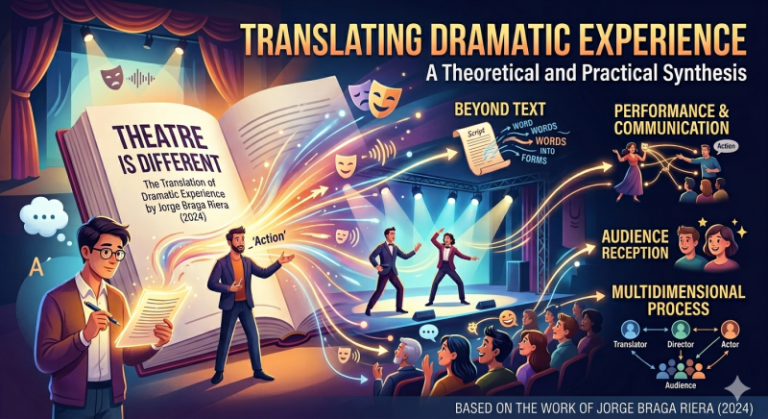
May 05, 2026, Bangkok – This article aims to analyze and synthesize the key concepts presented in Theatre Is Different: The Translation of Dramatic Experience by Jorge Braga Riera (2024). It focuses on explaining the notion of “the translation of dramatic experience,” which expands the scope of translation beyond the textual level to include performance, communication, and audience reception. The study argues that translating theatre is not merely a linguistic transfer but a multidimensional process involving various agents, including translators, directors, actors, and audiences. Through a qualitative textual analysis and engagement with relevant scholarly literature, the article demonstrates that Riera’s work contributes to moving beyond the traditional dichotomy between reader-oriented and stage-oriented approaches, offering instead an integrative framework grounded in the performative nature of theatre.
Introduction
The translation of dramatic texts constitutes a distinct domain within translation studies due to its intrinsic connection to performance. Unlike other literary forms, dramatic texts are not intended solely for reading but for staging and embodiment. In this regard, Jorge Braga Riera’s (2024) work foregrounds the concept of “translating dramatic experience,” which highlights the necessity of considering theatrical performance as central to the translation process. The title itself plays a crucial role in guiding the reader toward an understanding that the object of translation is not simply a text but an experiential and performative event.
While the translation of prose and poetry has long been the subject of extensive scholarly inquiry, the translation of theatre has gained significant attention only since the late twentieth century. This growing interest reflects an increasing awareness of the complexities inherent in translating texts designed for performance.
Literature Review
The foundational contributions of Susan Bassnett have been instrumental in shaping the study of theatre translation. Her work identifies the specific challenges associated with translating dramatic texts, including issues related to performability and textual complexity (Bassnett, 1981, 1985, 1990, 1998). Subsequent scholarship has identified two major traditions in this field: the reader-oriented approach, which treats the dramatic text as a literary artifact, and the stage-oriented approach, which prioritizes performance as the ultimate goal of translation (Coelsch-Foisner & Klein, 2004).
Within the Spanish scholarly context, Pilar Ezpeleta (2007) strongly advocates for the stage-oriented approach, grounding her analysis in theatrical concepts and emphasizing performance as a central concern. Similarly, Alejandro López Lapeña (2016) provides a practical framework for understanding theatrical translation by examining key elements such as orality, immediacy, and representability. Massimiliano Morini (2022) further traces the evolution of the field, noting a clear shift from text-centered perspectives toward approaches that privilege staging and performance.
Methodology
This study employs a qualitative research design based on textual analysis. The primary source of data is Jorge Braga Riera’s (2024) monograph, which is examined systematically to identify its central arguments, conceptual framework, and methodological contributions. The analysis is complemented by a review of relevant literature in the field of translation studies, enabling a comparative and contextualized understanding of the work. Particular attention is given to thematic organization, key concepts, and illustrative examples presented in the book.
Findings
The analysis reveals several significant contributions of Riera’s work. First, the book challenges the traditional dichotomy between reader-oriented and stage-oriented approaches by proposing a multidimensional understanding of theatre. This perspective acknowledges that dramatic translation operates across linguistic, performative, and cultural dimensions simultaneously.
Second, Riera emphasizes the role of multiple human agents in the translation process, including the playwright, translator, director, actors, and audience. These participants collectively contribute to the creation of what the author terms a “dramatic experience,” thereby redefining the end product of translation.
Third, the book addresses key challenges in theatre translation, such as the translation of humor, orality, dialects, and proper names. These elements are shown to require creative and context-sensitive solutions, as they often lack direct equivalence in the target culture.
Fourth, the concept of retranslation is highlighted as an essential practice in response to evolving linguistic norms and cultural values. Riera demonstrates that translations may become outdated or ideologically problematic over time, necessitating continual revision.
Finally, the inclusion of a discussion on research methodologies, such as comparative, contextual, and production analysis, as well as interviews with theatre directors, reinforces the importance of interdisciplinary approaches in the study of dramatic translation.
Recommendations for Future Research
The study suggests several directions for future research. There is a need for empirical studies examining audience reception in relation to translation choices. Further investigation into collaborative practices between translators and theatre practitioners would also enhance understanding of the translation process. Additionally, the development of comprehensive theoretical models that integrate textual, performative, and cultural dimensions remains an important area for scholarly exploration.
Conclusion
Jorge Braga Riera’s (2024) work represents a significant contribution to the field of theatre translation. By reframing translation as the transfer of “dramatic experience,” the author moves beyond traditional paradigms and offers a more holistic understanding of the discipline. The book not only provides valuable insights into the specific challenges of translating dramatic texts but also lays the groundwork for future theoretical and practical developments in the field.
References
- Bassnett, S. (1981). The Problems of Translating Theatre Texts. Theatre Quarterly, 10(40), 37–49.
- Bassnett, S. (1985). Ways through the Labyrinth: Strategies and Methods for Translating Theatre Texts. In T. Hermans (Ed.), The Manipulation of Literature (pp. 97–103). Croom Helm.
- Bassnett, S. (1990). Translating for the Theatre: Textual Complexities. Essays in Poetics, 15(1), 71–84.
- Bassnett, S. (1998). Still Trapped in the Labyrinth: Further Reflections on Translation and Theatre. In S. Bassnett & A. Lefevere (Eds.), Constructing Cultures (pp. 90–108). Multilingual Matters.
- Coelsch-Foisner, S., & Klein, H. M. (Eds.). (2004). Drama Translation and Theatre Practice. Peter Lang.
- Ezpeleta, P. (2007). Teatro y Traducción: aproximación desde la obra de Shakespeare. Ediciones Cátedra.
- López Lapeña, A. (2016). A pie de escenario: Guía de la traducción teatral. JPM Ediciones.
- Morini, M. (2022). Theatre Translation: Theory and Practice.
For professional services, please visit: https://www.seaproti.org/practitioners/
About certified translators, translation certifiers, and certified interpreters associated with SEAProTI. The Southeast Asian Association of Professional Translators and Interpreters (SEAProTI) has officially shared the qualifications and requirements for becoming Certified Translators, Translation Certification Providers, and Certified Interpreters in Sections 9 and 10 of the Royal Gazette, which was published by the Prime Minister’s Office in Thailand on July 25, 2024. Certified Translators, Translation Certification Providers, and Certified Interpreters
The Council of State has proposed the enactment of a Royal Decree, granting registered translators and recognised translation certifiers from professional associations or accredited language institutions the authority to provide legally valid translation certification (Letter to SEAProTI dated April 28, 2025)
SEAProTI is the first professional association in Thailand and Southeast Asia to implement a comprehensive certification system for translators, certifiers, and interpreters.
Head Office: Baan Ratchakru Building, No. 33, Room 402, Soi Phahonyothin 5, Phahonyothin Road, Phaya Thai District, Bangkok 10400, Thailand
Email: hello@seaproti.com | Tel.: (+66) 2-114-3128 (Office hours: Mon–Fri, 09:00–17:00).
การแปลประสบการณ์เชิงละคร: การสังเคราะห์เชิงทฤษฎีและปฏิบัติจากงานของ ฮอร์เฮ บรากา รีเอรา (พ.ศ. 2567)
ผู้เขียน: ภคพร ตันจรารักษ์
05 พฤษภาคม 2569, กรุงเทพมหานคร – บทความนี้มุ่งวิเคราะห์และสังเคราะห์สาระสำคัญจากหนังสือ ละครย่อมแตกต่าง: การแปลประสบการณ์เชิงละคร ของ ฮอร์เฮ บรากา รีเอรา (พ.ศ. 2567) โดยเน้นการทำความเข้าใจแนวคิด “การแปลประสบการณ์เชิงละคร” ซึ่งขยายขอบเขตของการแปลจากระดับตัวบทไปสู่มิติของการแสดง การสื่อสาร และการรับรู้ของผู้ชม บทความชี้ให้เห็นว่าการแปลบทละครมิใช่เพียงการถ่ายทอดความหมายเชิงภาษา หากแต่เป็นกระบวนการเชิงพหุมิติที่เกี่ยวข้องกับตัวแสดง ผู้กำกับ ผู้แปล และผู้ชม ผ่านการทบทวนวรรณกรรมสำคัญและการวิเคราะห์เนื้อหาภายในหนังสือ พบว่าแนวคิดของผู้เขียนมีส่วนช่วยก้าวข้ามกรอบคิดแบบเน้นผู้อ่านกับเน้นเวที และเสนอกรอบการทำงานใหม่ที่บูรณาการองค์ประกอบทั้งหมดของการละครเข้าไว้ด้วยกัน
บทนำ
การแปลบทละครเป็นสาขาหนึ่งของการแปลที่มีลักษณะเฉพาะ เนื่องจากตัวบทมิได้ดำรงอยู่เพียงในรูปของข้อความ แต่ถูกออกแบบเพื่อการแสดงและการรับรู้ในสถานการณ์จริง หนังสือของ ฮอร์เฮ บรากา รีเอรา (พ.ศ. 2567) เสนอแนวคิดที่สำคัญผ่านชื่อเรื่องที่เน้น “การแปลประสบการณ์เชิงละคร” ซึ่งสะท้อนให้เห็นว่าหัวใจของการแปลประเภทนี้มิใช่ตัวบท หากแต่เป็นประสบการณ์ที่เกิดขึ้นบนเวที ชื่อเรื่องดังกล่าวช่วยกำหนดกรอบความเข้าใจตั้งแต่ต้นว่าการแปลบทละครต้องพิจารณามิติที่เกินกว่าภาษา เช่น การแสดง ความเป็นปัจจุบัน และการมีปฏิสัมพันธ์กับผู้ชม
แม้ว่าการแปลวรรณกรรมประเภทเรื่องเล่าและบทกวีจะได้รับการศึกษาอย่างกว้างขวางมาเป็นเวลานาน แต่การแปลบทละครเพิ่งได้รับความสนใจเพิ่มขึ้นอย่างชัดเจนตั้งแต่ปลายศตวรรษที่ยี่สิบ โดยเฉพาะในประเด็นความยากและความซับซ้อนของการถ่ายทอดตัวบทที่ต้องนำไปสู่การแสดงจริง
ทบทวนวรรณกรรม
ผลงานของ ซูซาน บาสเน็ตต์ มีบทบาทสำคัญอย่างยิ่งในการกำหนดทิศทางของการศึกษาการแปลบทละคร โดยงานของเธอได้ชี้ให้เห็นถึงความท้าทายเฉพาะที่เกี่ยวข้องกับการแปลตัวบทละคร รวมถึงประเด็นด้านความสามารถในการนำไปแสดงและความซับซ้อนของตัวบท (บาสเน็ตต์, พ.ศ. 2524, พ.ศ. 2528, พ.ศ. 2533, พ.ศ. 2541) งานวิชาการในระยะต่อมาได้จำแนกแนวทางหลักในสาขานี้ออกเป็นสองกระแส ได้แก่ แนวทางที่เน้นผู้อ่าน ซึ่งมองบทละครเป็นวัตถุทางวรรณกรรม และแนวทางที่เน้นการแสดง ซึ่งให้ความสำคัญกับการนำไปแสดงเป็นเป้าหมายสูงสุดของการแปล (โคลช์-ฟอยส์เนอร์ และ ไคลน์, พ.ศ. 2547)
ในบริบทวิชาการของสเปน ปิลาร์ เอซเปเลตา (พ.ศ. 2550) สนับสนุนแนวทางที่เน้นการแสดงอย่างชัดเจน โดยตั้งอยู่บนฐานของแนวคิดทางการละครและเน้นย้ำความสำคัญของการแสดงเป็นแกนกลาง ในทำนองเดียวกัน อาเลฆานโดร โลเปซ ลาเปญา (พ.ศ. 2559) ได้นำเสนอกรอบเชิงปฏิบัติสำหรับการทำความเข้าใจการแปลบทละคร โดยวิเคราะห์องค์ประกอบสำคัญ เช่น วัจนภาษา ความฉับพลัน และความสามารถในการนำไปแสดง ขณะที่ มัสซิมิเลียโน โมรินี (พ.ศ. 2565) ได้ติดตามพัฒนาการของสาขานี้ โดยชี้ให้เห็นถึงการเปลี่ยนผ่านจากมุมมองที่เน้นตัวบท ไปสู่แนวทางที่ให้ความสำคัญกับการจัดแสดงและการแสดงเป็นหลัก
ระเบียบวิธีวิจัย
การศึกษานี้ใช้ระเบียบวิธีวิจัยเชิงคุณภาพโดยอาศัยการวิเคราะห์ตัวบทเป็นหลัก แหล่งข้อมูลสำคัญคือหนังสือของ ฮอร์เฮ บรากา รีเอรา (พ.ศ. 2567) ซึ่งได้รับการวิเคราะห์อย่างเป็นระบบเพื่อระบุข้อเสนอหลัก กรอบแนวคิด และคุณูปการด้านระเบียบวิธี การวิเคราะห์ดังกล่าวได้รับการสนับสนุนด้วยการทบทวนวรรณกรรมที่เกี่ยวข้องในสาขาการแปลศึกษา เพื่อให้เกิดความเข้าใจเชิงเปรียบเทียบและเชิงบริบทต่อผลงาน โดยให้ความสำคัญเป็นพิเศษกับการจัดโครงสร้างเนื้อหา แนวคิดสำคัญ และตัวอย่างประกอบที่นำเสนอในหนังสือ
สิ่งที่ค้นพบ
ผลการวิเคราะห์ชี้ให้เห็นถึงคุณูปการสำคัญหลายประการของผลงานของ รีเอรา ประการแรก หนังสือเล่มนี้ท้าทายกรอบความคิดแบบแบ่งขั้วระหว่างแนวทางที่เน้นผู้อ่านกับแนวทางที่เน้นการแสดง โดยเสนอความเข้าใจเกี่ยวกับการละครในลักษณะพหุมิติ มุมมองดังกล่าวยอมรับว่าการแปลบทละครดำเนินไปพร้อมกันในมิติทางภาษา มิติการแสดง และมิติทางวัฒนธรรม
ประการที่สอง รีเอราเน้นย้ำบทบาทของผู้มีส่วนเกี่ยวข้องหลายฝ่ายในกระบวนการแปล ได้แก่ ผู้เขียนบท ผู้แปล ผู้กำกับ นักแสดง และผู้ชม ผู้มีส่วนร่วมเหล่านี้ล้วนร่วมกันสร้างสิ่งที่ผู้เขียนเรียกว่า “ประสบการณ์เชิงละคร” อันเป็นการนิยามผลลัพธ์สุดท้ายของการแปลใหม่
ประการที่สาม หนังสือเล่มนี้กล่าวถึงความท้าทายสำคัญในการแปลบทละคร เช่น การแปลอารมณ์ขัน การถ่ายทอดวัจนภาษา ภาษาถิ่น และชื่อเฉพาะ องค์ประกอบเหล่านี้จำเป็นต้องอาศัยวิธีแก้ปัญหาที่สร้างสรรค์และคำนึงถึงบริบท เนื่องจากมักไม่มีความเทียบเท่าโดยตรงในวัฒนธรรมปลายทาง
ประการที่สี่ แนวคิดเรื่องการแปลซ้ำได้รับการเน้นย้ำว่าเป็นแนวปฏิบัติที่จำเป็น เพื่อตอบสนองต่อการเปลี่ยนแปลงของบรรทัดฐานทางภาษาและค่านิยมทางวัฒนธรรม รีเอราแสดงให้เห็นว่างานแปลอาจล้าสมัยหรือก่อให้เกิดปัญหาเชิงอุดมการณ์ได้เมื่อเวลาผ่านไป จึงจำเป็นต้องมีการปรับปรุงอย่างต่อเนื่อง
ท้ายที่สุด การบรรจุการอภิปรายเกี่ยวกับระเบียบวิธีวิจัย เช่น การวิเคราะห์เชิงเปรียบเทียบ การวิเคราะห์เชิงบริบท และการวิเคราะห์เชิงกระบวนการผลิต รวมถึงการสัมภาษณ์ผู้กำกับละคร ได้ช่วยตอกย้ำความสำคัญของแนวทางสหวิทยาการในการศึกษาการแปลบทละคร
คำแนะนำสำหรับงานวิจัยในอนาคต
การศึกษานี้เสนอแนะแนวทางหลายประการสำหรับการวิจัยในอนาคต โดยมีความจำเป็นในการศึกษาวิจัยเชิงประจักษ์ที่ตรวจสอบการรับรู้ของผู้ชมที่สัมพันธ์กับการตัดสินใจเชิงการแปล นอกจากนี้ การศึกษาเพิ่มเติมเกี่ยวกับรูปแบบความร่วมมือระหว่างผู้แปลกับผู้ปฏิบัติงานด้านการละครจะช่วยเสริมสร้างความเข้าใจต่อกระบวนการแปลให้ลึกซึ้งยิ่งขึ้น อีกทั้ง การพัฒนาแบบจำลองเชิงทฤษฎีที่ครอบคลุมซึ่งบูรณาการมิติของตัวบท การแสดง และวัฒนธรรม ยังคงเป็นประเด็นสำคัญที่ควรได้รับการสำรวจในเชิงวิชาการต่อไป
สรุป
หนังสือของ ฮอร์เฮ บรากา รีเอรา (พ.ศ. 2567) เป็นผลงานที่มีคุณูปการอย่างยิ่งต่อวงการการแปลบทละคร โดยเสนอกรอบแนวคิดที่ก้าวข้ามข้อจำกัดของแนวคิดเดิม และเน้นย้ำว่าการแปลบทละครคือการแปล “ประสบการณ์” ที่เกิดขึ้นบนเวทีอย่างแท้จริง งานชิ้นนี้ไม่เพียงช่วยให้เข้าใจลักษณะเฉพาะของการแปลประเภทนี้ แต่ยังเปิดพื้นที่สำหรับการวิจัยและการพัฒนาองค์ความรู้ในอนาคต
เอกสารอ้างอิง
- บาสเน็ตต์, ซูซาน. (2564). ปัญหาของการแปลบทละคร. วารสารละครศึกษา.
- บาสเน็ตต์, ซูซาน. (2528). เส้นทางในเขาวงกต: กลยุทธ์และวิธีการแปลบทละคร.
- บาสเน็ตต์, ซูซาน. (2533). การแปลเพื่อการละคร: ความซับซ้อนของตัวบท.
- บาสเน็ตต์, ซูซาน. (2541). ยังคงติดอยู่ในเขาวงกต: ข้อสะท้อนเพิ่มเติมว่าด้วยการแปลและการละคร.
- โคลช์-ฟอยส์เนอร์, ซาบีน และ ไคลน์, โฮลเกอร์ เอ็ม. (2547). การแปลบทละครและการปฏิบัติการละคร.
- เอซเปเลตา, ปิลาร์. (2550). ละครและการแปล: การศึกษาเชิงวิเคราะห์จากงานของเชกสเปียร์.
- โลเปซ ลาเปญา, อาเลฆานโดร. (2559). คู่มือการแปลบทละครเชิงปฏิบัติ.
- โมรินี, เอ็ม. (2565). การแปลบทละคร: ทฤษฎีและปฏิบัติ
ขอใช้บริการนักวิชาชีพของสมาคมได้ที่:https://www.seaproti.org/practitioners/
สมาคมวิชาชีพนักแปลและล่ามแห่งเอเชียตะวันออกเฉียงใต้ (SEAProTI) ได้ประกาศหลักเกณฑ์และคุณสมบัติของผู้ที่ขึ้นทะเบียนเป็น “นักแปลรับรอง (Certified Translators) และผู้รับรองการแปล (Translation Certification Providers) และล่ามรับรอง (Certified Interpreters)” ของสมาคม หมวดที่ 9 และหมวดที่ 10 ในราชกิจจานุเบกษา ของสำนักเลขาธิการคณะรัฐมนตรี ในสำนักนายกรัฐมนตรี แห่งราชอาณาจักรไทย ลงวันที่ 25 ก.ค. 2567 เล่มที่ 141 ตอนที่ 66 ง หน้า 100 อ่านฉบับเต็มได้ที่: นักแปลรับรอง ผู้รับรองการแปล และล่ามรับรอง
สำนักคณะกรรมการกฤษฎีกาเสนอให้ตราเป็นพระราชกฤษฎีกา โดยกำหนดให้นักแปลที่ขึ้นทะเบียน รวมถึงผู้รับรองการแปลจากสมาคมวิชาชีพหรือสถาบันสอนภาษาที่มีการอบรมและขึ้นทะเบียน สามารถรับรองคำแปลได้ (จดหมายถึงสมาคม SEAProTI ลงวันที่ 28 เม.ย. 2568)
สมาคมวิชาชีพนักแปลและล่ามแห่งเอเชียตะวันออกเฉียงใต้เป็นสมาคมวิชาชีพแห่งแรกและแห่งเดียวในประเทศไทยและภูมิภาคเอเชียตะวันออกเฉียงใต้ที่มีระบบรับรองนักแปลรับรอง ผู้รับรองการแปล และล่ามรับรอง
สำนักงานใหญ่: อาคารบ้านราชครู เลขที่ 33 ห้อง 402 ซอยพหลโยธิน 5 ถนนพหลโยธิน แขวงพญาไท เขตพญาไท กรุงเทพมหานคร 10400 ประเทศไทย