



Update Embodied Translation, Multimodal, and Situated Communication: By Vanessa Amaro and Júlio Reis Jatobá (2026)
Author: Petra Bordt
May 05, 2026, Bangkok – This ethnographic study explores how multilingual athletes in Macau’s rink hockey and football teams negotiate meaning across linguistic, bodily, and material boundaries. By examining the interactional routines of these teams, the research identifies three interconnected lenses of communication: translanguaging, intersemiotic translation, and experiential translation (TIE). The findings reveal that sport serves as a living laboratory where translation is an active, multimodal choreography that maintains collective play while navigating power dynamics and linguistic hierarchies.
Keywords: Translanguaging; intersemiotic translation; experiential translation; embodied translation; sport translation; multilingual teams.
Introduction
Multilingual sports teams in Macau provide a unique site for studying communication in a post-colonial context where Chinese, Portuguese, and English intersect. On the field, players and coaches must align tactical plans and shared affect under intense time pressure. This study treats team communication not merely as a transfer of information but as a site where power is exercised and inclusion is negotiated.
Conceptual Framework The research adopts the TIE lens
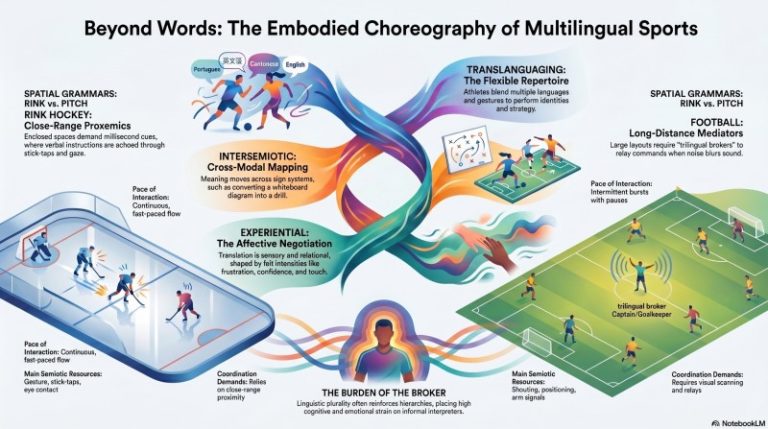
Translanguaging: The strategic use of an individual’s full semiotic repertoire, dissolving language boundaries.
Intersemiotic Translation: The movement of meaning across sign systems, such as converting a diagram on a board into a physical movement.
Experiential Translation: The affective and sensory dimension of meaning-making, where translation is a relational and embodied negotiation.
Content Analysis and Findings
The analysis contrasts two different spatial grammars:
Rink Hockey: Conducted in a confined space requiring millisecond cues. Portuguese remains the dominant coaching code, but players use hybrid “team languages” where Portuguese commands are glossed in Cantonese and enacted through stick-taps.
Football: Spanning an expansive pitch, communication relies on role-specific mediators like captains and goalkeepers. English acts as a lingua franca, while Portuguese carries coded tactical cues. Breakdown moments, such as injury stoppages, expose the fragility of these networks, forcing players to rely on intersemiotic inference from referee signals.
Discussion: Power and Inclusion
The study finds that while linguistic plurality can be a tactical asset, it often reproduces dominance. Portuguese continues to carry prestige in training due to institutional history, placing a cognitive and emotional “brokerage burden” on multilingual players who must facilitate communication for others.
Conclusion
Translation in team sports is not a transfer of text but an ongoing choreography. It is a dynamic process shaped by movement, space, and emotion, illustrating that the body is an active site of knowledge and identity.
References
- Adler, P. A., & Adler, P. (1987). Membership roles in field research. Sage.
- Aguiar, D., & Queiroz, J. (2013). Semiosis and intersemiotic translation. Semiotica, (196).
- Baynham, M., & Lee, T. K. (2019). Translation and translanguaging. Routledge.
- Blackledge, A., & Creese, A. (2017). Translanguaging and the body. International Journal of Multilingualism, 14(3).
- Blumczyński, P. (2024). Translating experience, experiencing translationality. Translation Matters, 6(1).
- Boer, J. (2023). Phenomenology as experiential translation. Critical Arts, 39(1–2).
- Braun, V., & Clarke, V. (2006). Using thematic analysis in psychology. Qualitative Research in Psychology, 3(2).
- Butler, J. (1993). Bodies that matter: On the discursive limits of “sex”. Routledge.
- Campbell, M., & Vidal, R. (Eds.). (2024). The experience of translation: Materiality and play in experiential translation. Routledge.
- Canagarajah, S. (2018). Translingual practice as spatial repertoires. Applied Linguistics, 39(1).
- Charalambous, P., et al. (2016). Troubling translanguaging: Language ideologies, superdiversity, and interethnic conflict. Applied Linguistics Review, 7(3).
- Creswell, J. W. (2013). Qualitative inquiry and research design. Sage.
- Deleuze, G., & Parnet, C. (1987). Dialogues. Athlone Press.
- DeWalt, K. M., & DeWalt, B. R. (2011). Participant observation: A guide for fieldworkers. Rowman & Littlefield.
- Dusi, N. (2015). Intersemiotic translation: Theories, problems, analysis. Semiotica, 2015(206).
- Earley, P. C., & Mosakowski, E. (2000). Creating hybrid team cultures. Academy of Management Journal, 43(1).
- Eco, U. (2000). Experiences in translation. University of Toronto Press.
- Esquinca, A., et al. (2014). Meaning making and translanguaging in a two-way dual-language program. Bilingual Research Journal, 37(2).
- García, M., & Cañado, M. L. P. (2005). Language and power. Language and Intercultural Communication, 5(1).
- García, O., & Otheguy, R. (2020). Plurilingualism and translanguaging. International Journal of Bilingual Education and Bilingualism, 23(1).
- García, O., & Wei, L. (2014). Translanguaging: Language, bilingualism, and education. Palgrave Macmillan.
- Grass, D. (2023). Translation as creative-critical practice. Cambridge University Press.
- Haapaniemi, R. (2024). Experientiality of meaning in interlingual translation. In The experience of translation. Routledge.
- Hall, E. T. (1966). The hidden dimension. Doubleday.
- Hammersley, M., & Atkinson, P. (2019). Ethnography: Principles in practice. Routledge.
- ID. (2004). 36. Campeonato Mundial B de Hoquei em Patins. Desporto de Macau, 4.
- Inside FIFA. (2020). Tiny Macau eye big gains from down-to-earth development.
- Jakobson, R. (1959). On linguistic aspects of translation. In On translation. Harvard University Press.
- JTM. (2013). Macau sem infra-estruturas para futebol profissional.
- Kendon, A. (2004). Gesture: Visible action as utterance. Cambridge University Press.
- Krys, K., et al. (2017). Punches or punchlines? Humor, 30(3).
- Lagerström, K., & Andersson, M. (2003). Creating and sharing knowledge within a transnational team. Journal of World Business, 38(2).
- Lee, T. K. (2022). Translation as experimentalism: Exploring play in poetics. Cambridge University Press.
- Li, W. (2011). Moment analysis and translanguaging space. Journal of Pragmatics, 43(5).
- Li, W. (2018). Translanguaging as a practical theory of language. Applied Linguistics, 39(1).
- Massey, D. B. (2005). For space. Sage.
- Orellana, M. F., & García-Sánchez, I. (2023). Language brokering. In Research handbook on migration and education.
- Patton, M. Q. (2002). Qualitative research and evaluation methods. Sage.
- Pennycook, A., & Otsuji, E. (2015). Metrolingualism: Language in the city. Routledge.
- Pillow, W. (2003). Confession, catharsis, or cure? International Journal of Qualitative Studies in Education, 16(2).
- Sabino, R. (2018). Languaging without languages. Brill.
- Scollon, R., & Scollon, S. W. (2004). Nexus analysis. Routledge.
- Simon, S. (2019). Translation sites: A field guide. Routledge.
- Valero-Garcés, C. (2007). Challenges in multilingual societies. Across Languages and Cultures, 8(1).
- Zhu, H., et al. (2020). Translanguaging and embodied teaching and learning. International Journal of Bilingual Education and Bilingualism, 23(1).
For professional services, please visit: https://www.seaproti.org/practitioners/
About certified translators, translation certifiers, and certified interpreters associated with SEAProTI. The Southeast Asian Association of Professional Translators and Interpreters (SEAProTI) has officially shared the qualifications and requirements for becoming Certified Translators, Translation Certification Providers, and Certified Interpreters in Sections 9 and 10 of the Royal Gazette, which was published by the Prime Minister’s Office in Thailand on July 25, 2024. Certified Translators, Translation Certification Providers, and Certified Interpreters
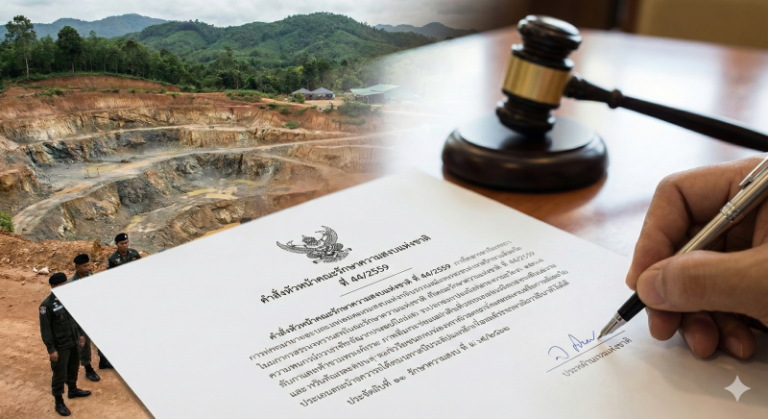
The Council of State has proposed the enactment of a Royal Decree, granting registered translators and recognised translation certifiers from professional associations or accredited language institutions the authority to provide legally valid translation certification (Letter to SEAProTI dated April 28, 2025)
SEAProTI is the first professional association in Thailand and Southeast Asia to implement a comprehensive certification system for translators, certifiers, and interpreters.
Head Office: Baan Ratchakru Building, No. 33, Room 402, Soi Phahonyothin 5, Phahonyothin Road, Phaya Thai District, Bangkok 10400, Thailand
Email: hello@seaproti.com | Tel.: (+66) 2-114-3128 (Office hours: Mon–Fri, 09:00–17:00).
อัพเดตการแปลผ่านร่างกาย มัลติโมดัล และการสื่อสารตามสถานการณ์: การศึกษาชาติพันธุ์วรรณนาของทีมกีฬาฮอกกี้และฟุตบอลพหุภาษาในมาเก๊า โดย วาเนสซา อามารู และ จูลิโอ เรอิส จาโตบา (2569)
ผู้แต่ง: เภตรา โบรด
05 พฤษภาคม 2569, กรุงเทพมหานคร – การศึกษาเชิงชาติพันธุ์วรรณนานี้สำรวจวิธีที่นักกีฬาพหุภาษาในทีมรินก์ฮอกกี้และฟุตบอลของมาเก๊าเจรจาต่อรองความหมายผ่านขอบเขตทางภาษา ร่างกาย และวัตถุ งานวิจัยนี้ระบุกรอบการสื่อสารผ่านเลนส์สามมิติที่เชื่อมโยงกัน ได้แก่ การใช้หลายภาษา (Translanguaging), การแปลข้ามระบบสัญลักษณ์ (Intersemiotic translation) และการแปลผ่านประสบการณ์ (Experiential translation) หรือ “TIE” ผลการวิจัยแสดงให้เห็นว่ากีฬาเป็นห้องปฏิบัติการที่มีชีวิตซึ่งการแปลคือการจัดระเบียบร่างกายที่ต่อเนื่องเพื่อรักษาการเล่นร่วมกัน พร้อมกับต่อรองแนวคิดเรื่องอำนาจและการมีส่วนร่วม
คำสำคัญ: การใช้หลายภาษา; การแปลข้ามระบบสัญลักษณ์; การแปลผ่านประสบการณ์; การแปลผ่านร่างกาย; การแปลในกีฬา; ทีมพหุภาษา
บทนำ
ทีมกีฬาพหุภาษาในมาเก๊าเป็นพื้นที่สำคัญสำหรับการศึกษาวิธีที่ผู้คนสื่อสารกันท่ามกลางความหลากหลายทางภาษาและวัฒนธรรม (กวางตุ้ง โปรตุเกส และอังกฤษ) ในสนามเล่น นักกีฬาและโค้ชต้องปรับทั้งแผนการเล่น อารมณ์ และความรู้สึกให้ตรงกันภายใต้ความกดดัน การศึกษานี้มองการสื่อสารในทีมเป็นพื้นที่ที่มีการใช้อำนาจ และเป็นปัญหาในทางปฏิบัติสำหรับการรวมกลุ่มสมาชิกใหม่
กรอบแนวคิดเชิงทฤษฎี งานวิจัยใช้เลนส์วิเคราะห์ TIE
การใช้หลายภาษา: การใช้ทรัพยากรทางสัญลักษณ์ทั้งหมดที่มีอย่างยืดหยุ่น
การแปลข้ามระบบสัญลักษณ์: การเปลี่ยนความหมายข้ามระบบสัญญาณ เช่น จากแผนภาพบนกระดานไปสู่ท่าทางการเคลื่อนไหว
การแปลผ่านประสบการณ์: มิติด้านอารมณ์และความรู้สึกที่เกิดจากการมีปฏิสัมพันธ์ทางร่างกาย
การวิเคราะห์เนื้อหาและข้อค้นพบ
งานวิจัยเปรียบเทียบกีฬาที่มีลักษณะพื้นที่ต่างกัน:
รินก์ฮอกกี้: เล่นในพื้นที่จำกัดที่ต้องการสัญญาณในระดับเสี้ยววินาที แม้ภาษาโปรตุเกสจะเป็นภาษาหลักของโค้ช แต่ผู้เล่นสร้าง “ภาษาทีม” ลูกผสม โดยมีการแปลคำสั่งโปรตุเกสเป็นภาษากวางตุ้งควบคู่กับการใช้ไม้ตีพื้นเป็นสัญญาณ
ฟุตบอล: มีพื้นที่สนามกว้างขวาง การสื่อสารต้องอาศัยตัวกลางตามบทบาท เช่น กัปตันทีมและผู้รักษาประตู ภาษาอังกฤษทำหน้าที่เป็นภาษากลาง ในขณะที่ภาษาโปรตุเกสถูกใช้เป็นรหัสลับในการเล่น เมื่อเกิดเหตุการณ์ไม่คาดฝัน เช่น การบาดเจ็บ การสื่อสารจะเปลี่ยนไปพึ่งพาการตีความสัญญาณจากผู้ตัดสินเป็นหลัก
การอภิปราย: อำนาจและการมีส่วนร่วม
ผลการศึกษาพบว่าภาษาโปรตุเกสยังคงมีสถานะเหนือกว่าในฐานะภาษาของการฝึกสอนเนื่องจากประวัติศาสตร์ขององค์กร สิ่งนี้สร้างภาระทางอารมณ์และการรับรู้ให้กับ “นายหน้าทางภาษา” หรือผู้เล่นที่พูดได้สามภาษาซึ่งต้องแบกรับหน้าที่ในการแปลและสื่อสารให้เพื่อนร่วมทีมคนอื่นเข้าใจ
สรุป
การแปลในกีฬาไม่ใช่เพียงการถ่ายทอดตัวอักษร แต่เป็นการกระทำเชิงความสัมพันธ์ที่หลอมรวมร่างกาย พื้นที่ และอารมณ์เข้าด้วยกัน เพื่อให้การทำงานร่วมกันขับเคลื่อนต่อไปได้ในสถานการณ์การแข่งขันที่รวดเร็ว
บรรณานุกรม
- แอดเลอร์, พี. เอ. และแอดเลอร์, พี. (1987). Membership roles in field research. Sage.
- อากีอาร์, ดี. และเกรอซ, เจ. (2013). Semiosis and intersemiotic translation. Semiotica, (196).
- เบนแฮม, เอ็ม. และลี, ที. เค. (2019). Translation and translanguaging. Routledge.
- แบล็กเลดจ์, เอ. และครีส, เอ. (2017). Translanguaging and the body. International Journal of Multilingualism, 14(3).
- บลัมซินสกี, พี. (2024). Translating experience, experiencing translationality. Translation Matters, 6(1).
- บูร์, เจ. (2023). Phenomenology as experiential translation. Critical Arts, 39(1–2).
- บรอน, วี. และคลาร์ก, วี. (2006). Using thematic analysis in psychology. Qualitative Research in Psychology, 3(2).
- บัตเลอร์, เจ. (1993). Bodies that matter: On the discursive limits of “sex”. Routledge.
- แคมป์เบลล์, เอ็ม. และวิดัล, อาร์. (บรรณาธิการ). (2024). The experience of translation: Materiality and play in experiential translation. Routledge.
- คานาการาจาห์, เอส. (2018). Translingual practice as spatial repertoires. Applied Linguistics, 39(1).
- คาราลัมบุส, พี. และคณะ (2016). Troubling translanguaging: Language ideologies, superdiversity, and interethnic conflict. Applied Linguistics Review, 7(3).
- เครสเวลล์, เจ. ดับเบิลยู. (2013). Qualitative inquiry and research design. Sage.
- เดอเลอซ, จี. และพาร์เนต์, ซี. (1987). Dialogues. Athlone Press.
- เดอวอลต์, เค. เอ็ม. และเดอวอลต์, บี. อาร์. (2011). Participant observation: A guide for fieldworkers. Rowman & Littlefield.
- ดูซี, เอ็น. (2015). Intersemiotic translation: Theories, problems, analysis. Semiotica, 2015(206).
- เออร์ลีย์, พี. ซี. และโมซาคอฟสกี, อี. (2000). Creating hybrid team cultures. Academy of Management Journal, 43(1).
- เอคโค, ยู. (2000). Experiences in translation. University of Toronto Press.
- เอสควินกา, เอ. และคณะ (2014). Meaning making and translanguaging in a two-way dual-language program. Bilingual Research Journal, 37(2).
- การ์เซีย, เอ็ม. และคาญาโด, เอ็ม. แอล. พี. (2005). Language and power. Language and Intercultural Communication, 5(1).
- การ์เซีย, โอ. และโอเทกี, อาร์. (2020). Plurilingualism and translanguaging. International Journal of Bilingual Education and Bilingualism, 23(1).
- การ์เซีย, โอ. และเวย์, แอล. (2014). Translanguaging: Language, bilingualism, and education. Palgrave Macmillan.
- กราส, ดี. (2023). Translation as creative-critical practice. Cambridge University Press.
- ฮาปานิเอมิ, อาร์. (2024). Experientiality of meaning in interlingual translation. ใน The experience of translation. Routledge.
- ฮอลล์, อี. ที. (1966). The hidden dimension. Doubleday.
- แฮมเมอร์สลีย์, เอ็ม. และแอตกินสัน, พี. (2019). Ethnography: Principles in practice. Routledge.
- ไอดี. (2004). 36. Campeonato Mundial B de Hoquei em Patins. Desporto de Macau, 4.
- อินไซด์ ฟีฟ่า. (2020). Tiny Macau eye big gains from down-to-earth development.
- จาค็อบสัน, อาร์. (1959). On linguistic aspects of translation. ใน On translation. Harvard University Press.
- เจทีเอ็ม. (2013). Macau sem infra-estruturas para futebol profissional.
- เคนดอน, เอ. (2004). Gesture: Visible action as utterance. Cambridge University Press.
- คริส, เค. และคณะ (2017). Punches or punchlines? Humor, 30(3).
- ลาเกอร์สตรอม, เค. และแอนเดอร์สัน, เอ็ม. (2003). Creating and sharing knowledge within a transnational team. Journal of World Business, 38(2).
- ลี, ที. เค. (2022). Translation as experimentalism: Exploring play in poetics. Cambridge University Press.
- ลี, ดับเบิลยู. (2011). Moment analysis and translanguaging space. Journal of Pragmatics, 43(5).
- ลี, ดับเบิลยู. (2018). Translanguaging as a practical theory of language. Applied Linguistics, 39(1).
- แมสซีย์, ดี. บี. (2005). For space. Sage.
- โอเรลลานา, เอ็ม. เอฟ. และการ์เซีย-ซานเชซ, ไอ. (2023). Language brokering. ใน Research handbook on migration and education.
- แพตตัน, เอ็ม. คิว. (2002). Qualitative research and evaluation methods. Sage.
- เพนนีคุก, เอ. และโอซึจิ, อี. (2015). Metrolingualism: Language in the city. Routledge.
- พิลโลว์, ดับเบิลยู. (2003). Confession, catharsis, or cure? International Journal of Qualitative Studies in Education, 16(2).
- ซาบิโน, อาร์. (2018). Languaging without languages. Brill.
- สโคลลอน, อาร์. และสโคลลอน, เอส. ดับเบิลยู. (2004). Nexus analysis. Routledge.
- ไซมอน, เอส. (2019). Translation sites: A field guide. Routledge.
- วาเลโร-การ์เซส, ซี. (2007). Challenges in multilingual societies. Across Languages and Cultures, 8(1).
- จู, เอช. และคณะ (2020). Translanguaging and embodied teaching and learning. International Journal of Bilingual Education and Bilingualism, 23(1).
ขอใช้บริการนักวิชาชีพของสมาคมได้ที่:https://www.seaproti.org/practitioners/
สมาคมวิชาชีพนักแปลและล่ามแห่งเอเชียตะวันออกเฉียงใต้ (SEAProTI) ได้ประกาศหลักเกณฑ์และคุณสมบัติของผู้ที่ขึ้นทะเบียนเป็น “นักแปลรับรอง (Certified Translators) และผู้รับรองการแปล (Translation Certification Providers) และล่ามรับรอง (Certified Interpreters)” ของสมาคม หมวดที่ 9 และหมวดที่ 10 ในราชกิจจานุเบกษา ของสำนักเลขาธิการคณะรัฐมนตรี ในสำนักนายกรัฐมนตรี แห่งราชอาณาจักรไทย ลงวันที่ 25 ก.ค. 2567 เล่มที่ 141 ตอนที่ 66 ง หน้า 100 อ่านฉบับเต็มได้ที่: นักแปลรับรอง ผู้รับรองการแปล และล่ามรับรอง
สำนักคณะกรรมการกฤษฎีกาเสนอให้ตราเป็นพระราชกฤษฎีกา โดยกำหนดให้นักแปลที่ขึ้นทะเบียน รวมถึงผู้รับรองการแปลจากสมาคมวิชาชีพหรือสถาบันสอนภาษาที่มีการอบรมและขึ้นทะเบียน สามารถรับรองคำแปลได้ (จดหมายถึงสมาคม SEAProTI ลงวันที่ 28 เม.ย. 2568)
สมาคมวิชาชีพนักแปลและล่ามแห่งเอเชียตะวันออกเฉียงใต้เป็นสมาคมวิชาชีพแห่งแรกและแห่งเดียวในประเทศไทยและภูมิภาคเอเชียตะวันออกเฉียงใต้ที่มีระบบรับรองนักแปลรับรอง ผู้รับรองการแปล และล่ามรับรอง
สำนักงานใหญ่: อาคารบ้านราชครู เลขที่ 33 ห้อง 402 ซอยพหลโยธิน 5 ถนนพหลโยธิน แขวงพญาไท เขตพญาไท กรุงเทพมหานคร 10400 ประเทศไทย