



New Dimensions of Media Translation: Creative Translation in the Digital Era
Author: Phakaporn Tanjararak
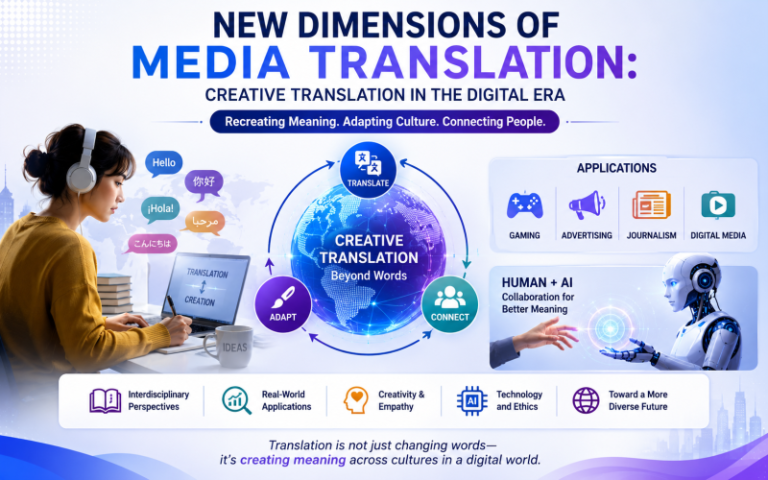
20 May 2026, Bangkok – The book New Perspectives in Media Translation: Transcreation in the Digital Age, edited by Loukia Kostopoulou and Parthena Charalampidou, reflects significant transformations in translation studies in the era of digital media, particularly through the concept of “creative translation,” which emphasizes the recreation of meaning through linguistic and cultural adaptation appropriate to target audiences. This article aims to analyze the core contributions of the book in terms of theoretical perspectives, applications within media industries, and the development of contemporary translators’ skills through qualitative document analysis. The findings reveal that the volume adopts an interdisciplinary framework integrating linguistics, sociology, psychology, and cultural studies. Moreover, it demonstrates the role of creative translation in the industries of gaming, advertising, journalism, and digital media. The book also provides meaningful discussions regarding the relationship between humans and artificial intelligence in translation processes. Nevertheless, the volume presents certain limitations, particularly concerning the ambiguity surrounding the definition of creative translation and the concentration of case studies within selected geographical regions. This article therefore suggests that future studies on creative translation should expand toward more diverse cultural contexts while further investigating collaborative interactions between human translators and artificial intelligence technologies in the contemporary translation industry.
Introduction
Advancements in digital technology have continuously transformed communication structures and media industries, resulting in the adaptation of translation studies from traditional language-oriented approaches toward creative content production capable of responding effectively to cultural and emotional differences among audiences. Kostopoulou and Charalampidou (2024) explain that “creative translation” has become an essential concept in contemporary media translation because it combines translation, adaptation, and contextual reconstruction within a single communicative process.
The volume consists of twelve chapters divided into three principal sections: theoretical discussions on creative translation, practical applications across various forms of media, and the development of translators’ skills in the digital age. The contents cover issues ranging from video game localization and advertising production to journalistic translation and the role of artificial intelligence in translation industries. Kostopoulou and Charalampidou (2024) argue that creative translation should not merely be understood as a translation technique, but rather as a process of meaning construction closely connected with sociocultural contexts.
This article therefore aims to examine the volume from an academic perspective by analyzing its conceptual framework, research methodologies, findings, and limitations in order to reflect upon the significance of creative translation within contemporary translation studies.
Literature Review
The concept of creative translation has continuously evolved within the frameworks of translation studies and contemporary media industries. Díaz-Millón and Olvera-Lobo (2023) explain that creative translation remains conceptually diverse because scholars and industry practitioners prioritize different components of the process. Some perspectives regard creative translation as a form of highly creative translation practice, whereas others consider it a process of content recreation that transcends the boundaries of conventional translation.
Kaindl (2024) analyzes the relationship between academia and the translation industry from a sociological perspective, arguing that cooperation between these sectors is essential for the professional development of translators and adaptation to technological change. Kaindl’s argument demonstrates that translation in the digital era requires both theoretical knowledge and practical experience. Regarding the conceptual development of creative translation, Martín and Martínez Sierra (2024) investigate the roots of the concept within contexts such as India, Brazil, marketing, and the digital gaming industry. They propose that creative translation should be understood as a culturally adaptive translation process rather than an entirely separate discipline disconnected from translation studies.
Rizzo (2024) examines the use of creative translation in television advertising and finds that linguistic and cultural adaptation enhances communication effectiveness with target audiences. Rizzo’s study demonstrates that creative translation is a culture-centered approach playing an important role in audiovisual media industries. Within digital media contexts, Moreno García (2024) studies the localization of the game Arena of Valor through Stuart Hall’s (1997) theory of cultural representation and finds that cultural adaptation significantly affects players’ experiences and meaning construction within games. Similarly, Iaia (2024) analyzes the transformation of static memes into short-form video content through the concepts of transmediality and humorous discourse.
Regarding translator training, Verplaetse (2024) argues that training in figurative language adaptation and headline reconstruction is essential for the development of transcreators in journalism. Spinzi (2024), meanwhile, emphasizes the role of proactive empathy in improving the quality of creative translation, particularly in tourism industries.
Within the context of artificial intelligence, Jiménez-Crespo (2024) explains that although large language models have significantly improved, human translators still possess advantages in interpreting emotional and cultural nuances, which remain central components of creative translation. This perspective aligns with Newmark’s (1988) argument that translation requires cultural understanding alongside linguistic transfer.
Research Methodology
This study employed a qualitative research approach using document analysis. The book New Perspectives in Media Translation: Transcreation in the Digital Age was used as the primary source of data (Kostopoulou and Charalampidou, 2024). The researcher conducted critical content analysis of each chapter, based on qualitative content analysis principles (Krippendorff, 2018), and compared concepts and findings with related research in translation studies, cultural studies, and digital media studies (Baker, 2018; Venuti, 2013). The analytical process focused on synthesizing shared issues in theory, methodology, application, and the impact of technology on transcreation in digital contexts (Cronin, 2017).
Findings
The findings indicate that one of the volume’s major strengths lies in its integration of theoretical perspectives with practical applications within media industries. Kostopoulou and Charalampidou (2024) provide diverse case studies illustrating that creative translation functions as a process of reconstructing meaning in relation to cultural contexts rather than merely transferring language.
Furthermore, the volume adopts an interdisciplinary approach integrating sociology, linguistics, psychology, and cultural studies, thereby offering comprehensive explanations of creative translation phenomena. Toury (1995) previously argued that translation should be analyzed within sociocultural contexts, and this volume clearly applies such perspectives.
Another important finding concerns the emphasis on creativity and emotional competence in the contemporary translation profession. Spinzi (2024) demonstrates that the ability to anticipate audiences’ cultural and emotional expectations directly influences the quality of creative translation.
Recommendations for Future Research
Future research on creative translation should develop clearer and more standardized conceptual frameworks in order to support academic discussions and reduce conceptual ambiguity. Moreover, scholars should expand case studies into underrepresented regions and industries to better reflect the diversity of intercultural communication within the digital world.
Another important area for future investigation concerns the role of artificial intelligence in creative translation processes, particularly collaboration between humans and technological systems. Experimental studies comparing the effectiveness of human translation and AI-assisted translation could generate new knowledge regarding the future of translation professions in the digital age.
Conclusion
New Perspectives in Media Translation: Transcreation in the Digital Age represents a significant contribution to translation studies in the digital media era. The volume broadens understanding of creative translation as a process of meaning-making that interconnects language, culture, and emotion. Although the book presents certain limitations regarding conceptual consistency and case-study scope, it nevertheless highlights the importance of creativity and cultural adaptation within contemporary translation industries. Consequently, the volume serves as an important academic resource for scholars, translators, and digital media practitioners in the present era.
References
- Díaz-Millón, M., & Olvera-Lobo, M. D. (2023). Towards a definition of transcreation: A systematic literature review. Perspectives, 31(2), 347–364.
- Hall, S. (1997). Representation: Cultural representations and signifying practices. Sage Publications.
- Kostopoulou, L., & Charalampidou, P. (Eds.). (2024). New perspectives in media translation: Transcreation in the digital age. Palgrave Macmillan.
- Newmark, P. (1988). A textbook of translation. Prentice Hall.
- Toury, G. (1995). Descriptive translation studies and beyond. John Benjamins.
For professional services, please visit: https://www.seaproti.org/practitioners/
About certified translators, translation certifiers, and certified interpreters associated with SEAProTI. The Southeast Asian Association of Professional Translators and Interpreters (SEAProTI) has officially shared the qualifications and requirements for becoming Certified Translators, Translation Certification Providers, and Certified Interpreters in Sections 9 and 10 of the Royal Gazette, which was published by the Prime Minister’s Office in Thailand on July 25, 2024. Certified Translators, Translation Certification Providers, and Certified Interpreters
The Council of State has proposed the enactment of a Royal Decree, granting registered translators and recognised translation certifiers from professional associations or accredited language institutions the authority to provide legally valid translation certification (Letter to SEAProTI dated April 28, 2025)
SEAProTI is the first professional association in Thailand and Southeast Asia to implement a comprehensive certification system for translators, certifiers, and interpreters.
Head Office: Baan Ratchakru Building, No. 33, Room 402, Soi Phahonyothin 5, Phahonyothin Road, Phaya Thai District, Bangkok 10400, Thailand
Email: hello@seaproti.com | Tel.: (+66) 2-114-3128 (Office hours: Mon–Fri, 09:00–17:00).
การเปลี่ยนผ่านของการแปลสื่อในยุคดิจิทัล: ทรานส์ครีเอชัน การสร้างความหมาย และการสื่อสารข้ามวัฒนธรรมร่วมสมัย
ผู้เขียน: ภคพร ตันจรารักษ์
20 พฤษภาคม 2569, กรุงเทพมหานคร – หนังสือ มุมมองใหม่ในการแปลสื่อ: การแปลเชิงสร้างสรรค์ในยุคดิจิทัล ซึ่งเรียบเรียงโดย ลูเคีย คอสโตปูลู และ พาร์เธนา คาราลัมพิดู ได้สะท้อนการเปลี่ยนแปลงสำคัญของศาสตร์การแปลในยุคสื่อดิจิทัล โดยเฉพาะแนวคิด “การแปลเชิงสร้างสรรค์” ที่เน้นการสร้างสรรค์ความหมายใหม่ผ่านการปรับภาษาและวัฒนธรรมให้เหมาะสมกับผู้รับสาร งานเขียนนี้มีวัตถุประสงค์เพื่อวิเคราะห์สาระสำคัญของหนังสือดังกล่าวในมิติทางทฤษฎี การประยุกต์ใช้ในอุตสาหกรรมสื่อ และการพัฒนาทักษะนักแปลร่วมสมัย โดยใช้การวิเคราะห์เอกสารเชิงคุณภาพ ผลการศึกษาพบว่าหนังสือเสนอแนวคิดแบบสหวิทยาการที่ผสมผสานศาสตร์ด้านภาษาศาสตร์ สังคมวิทยา จิตวิทยา และวัฒนธรรมศึกษาเข้าด้วยกัน อีกทั้งยังแสดงให้เห็นถึงบทบาทของการแปลเชิงสร้างสรรค์ในอุตสาหกรรมเกม โฆษณา ข่าวสาร และสื่อดิจิทัล นอกจากนี้ หนังสือยังอภิปรายความสัมพันธ์ระหว่างมนุษย์กับปัญญาประดิษฐ์ในกระบวนการแปลอย่างมีนัยสำคัญ อย่างไรก็ตาม งานดังกล่าวยังมีข้อจำกัดด้านความไม่ชัดเจนของนิยามการแปลเชิงสร้างสรรค์และการกระจุกตัวของกรณีศึกษาในบางภูมิภาค บทความนี้จึงเสนอว่าการศึกษาการแปลเชิงสร้างสรรค์ในอนาคตควรขยายไปสู่บริบททางวัฒนธรรมที่หลากหลายมากขึ้น รวมทั้งศึกษาการทำงานร่วมกันระหว่างมนุษย์และเทคโนโลยีปัญญาประดิษฐ์ในอุตสาหกรรมการแปลร่วมสมัย
บทนำ
ความก้าวหน้าของเทคโนโลยีดิจิทัลได้เปลี่ยนแปลงโครงสร้างของการสื่อสารและอุตสาหกรรมสื่ออย่างต่อเนื่อง ส่งผลให้ศาสตร์การแปลต้องปรับตัวจากแนวคิดดั้งเดิมที่เน้นการถ่ายทอดความหมายเชิงภาษา ไปสู่กระบวนการสร้างสรรค์เนื้อหาที่สามารถตอบสนองต่อความแตกต่างทางวัฒนธรรมและอารมณ์ของผู้รับสารได้อย่างมีประสิทธิภาพ คอสโตปูลู และ คาราลัมพิดู (พ.ศ. 2567) อธิบายว่า “การแปลเชิงสร้างสรรค์” ได้กลายเป็นแนวคิดสำคัญในวงการแปลสื่อร่วมสมัย เนื่องจากเป็นกระบวนการที่ผสมผสานการแปล การดัดแปลง และการสร้างบริบทใหม่เข้าด้วยกัน
หนังสือเล่มดังกล่าวประกอบด้วยบทความจำนวน 12 บท ซึ่งแบ่งออกเป็นสามส่วนหลัก ได้แก่ การอภิปรายเชิงทฤษฎีเกี่ยวกับการแปลเชิงสร้างสรรค์ การประยุกต์ใช้ในสื่อประเภทต่าง ๆ และการพัฒนาทักษะนักแปลในยุคดิจิทัล เนื้อหาในหนังสือครอบคลุมประเด็นตั้งแต่การแปลเกมดิจิทัล การผลิตสื่อโฆษณา การแปลข่าว ไปจนถึงบทบาทของปัญญาประดิษฐ์ในอุตสาหกรรมการแปล คอสโตปูลู และ คาราลัมพิดู (พ.ศ. 2567) ชี้ให้เห็นว่าการแปลเชิงสร้างสรรค์มิใช่เพียงเทคนิคการแปล แต่เป็นกระบวนการสร้างความหมายที่สัมพันธ์กับบริบททางสังคมและวัฒนธรรม
บทความนี้จึงมุ่งศึกษาหนังสือดังกล่าวในเชิงวิชาการ โดยวิเคราะห์ทั้งกรอบแนวคิด วิธีวิจัย ผลการศึกษา และข้อจำกัดของงาน เพื่อสะท้อนบทบาทของการแปลเชิงสร้างสรรค์ต่อวงการการแปลศึกษาในยุคดิจิทัล
ทบทวนวรรณกรรม
แนวคิดเรื่องการแปลเชิงสร้างสรรค์ได้รับการพัฒนาอย่างต่อเนื่องภายใต้กรอบการแปลศึกษาและอุตสาหกรรมสื่อร่วมสมัย ดิอัซ-มิลญอน และ โอลเวรา-โลโบ (พ.ศ. 2566) อธิบายว่าการแปลเชิงสร้างสรรค์ยังคงเป็นแนวคิดที่มีความหลากหลายด้านนิยาม เนื่องจากนักวิชาการและผู้ปฏิบัติงานในอุตสาหกรรมให้ความสำคัญกับองค์ประกอบที่แตกต่างกัน บางแนวคิดมองว่าการแปลเชิงสร้างสรรค์เป็นรูปแบบหนึ่งของการแปลเชิงสร้างสรรค์ ขณะที่อีกแนวคิดมองว่าเป็นกระบวนการผลิตเนื้อหาใหม่ที่ก้าวข้ามขอบเขตของการแปลแบบดั้งเดิม
ไคนด์ล (พ.ศ. 2567) วิเคราะห์ความสัมพันธ์ระหว่างวงการวิชาการกับอุตสาหกรรมการแปลจากมุมมองทางสังคมวิทยา โดยเสนอว่าความร่วมมือระหว่างสองภาคส่วนนี้มีความสำคัญต่อการพัฒนาวิชาชีพนักแปลและการปรับตัวต่อความเปลี่ยนแปลงของเทคโนโลยี ข้อเสนอของไคนด์ลสะท้อนให้เห็นว่าการแปลในยุคดิจิทัลจำเป็นต้องอาศัยทั้งองค์ความรู้ทางทฤษฎีและประสบการณ์จากภาคปฏิบัติ
ด้านการพัฒนาความหมายของแนวคิดการแปลเชิงสร้างสรรค์ มาร์ติน และ มาร์ติเนซ เซียร์รา (พ.ศ. 2567) ศึกษารากฐานของแนวคิดนี้ในบริบทต่าง ๆ เช่น อินเดีย บราซิล การตลาด และอุตสาหกรรมเกมดิจิทัล พร้อมทั้งเสนอว่าการแปลเชิงสร้างสรรค์ควรถูกมองว่าเป็นกระบวนการแปลเชิงสร้างสรรค์ที่เน้นการปรับวัฒนธรรม มากกว่าการเป็นศาสตร์ใหม่ที่แยกขาดจากการแปลศึกษา
ริซโซ (พ.ศ. 2567) ศึกษาการใช้การแปลเชิงสร้างสรรค์ในโฆษณาทางโทรทัศน์และพบว่าการดัดแปลงองค์ประกอบทางภาษาและวัฒนธรรมช่วยเพิ่มประสิทธิภาพในการสื่อสารกับผู้ชมเป้าหมาย งานของริซโซสะท้อนให้เห็นว่าการแปลเชิงสร้างสรรค์เป็นแนวทางที่เน้นวัฒนธรรมเป็นศูนย์กลาง ซึ่งมีบทบาทสำคัญต่ออุตสาหกรรมสื่อโสตทัศน์ ในด้านสื่อดิจิทัล โมเรโน การ์เซีย (พ.ศ. 2567) ศึกษาการแปลเกมอารีนาออฟเวเลอร์ ผ่านทฤษฎีการเป็นตัวแทนทางวัฒนธรรมของ ฮอลล์ (พ.ศ. 2540) และพบว่าการปรับเนื้อหาทางวัฒนธรรมมีผลต่อประสบการณ์ของผู้เล่นและการรับรู้ความหมายในเกม ขณะที่ อายา (พ.ศ. 2567) วิเคราะห์การดัดแปลงมีมภาพนิ่งสู่สื่อวิดีโอสั้น โดยใช้แนวคิดสื่อข้ามรูปแบบและทฤษฎีวาทกรรมเชิงอารมณ์ขัน
ด้านการฝึกอบรมนักแปล เวอร์พลาเอ็ตเซอ (พ.ศ. 2567) เสนอว่าการฝึกทักษะการดัดแปลงภาษาเชิงเปรียบเทียบและพาดหัวข่าวมีความสำคัญต่อการพัฒนาทรานส์ครีเอเตอร์ในงานข่าวสาร ขณะที่ สปินซี (พ.ศ. 2567) เน้นบทบาทของความเห็นอกเห็นใจเชิงรุกต่อคุณภาพของงานการแปลเชิงสร้างสรรค์ โดยเฉพาะในอุตสาหกรรมการท่องเที่ยว ในบริบทของปัญญาประดิษฐ์ ฆิเมเนซ-เครสโป พ.ศ. (พ.ศ. 2567) อธิบายว่าแม้เทคโนโลยีโมเดลภาษาขนาดใหญ่จะมีประสิทธิภาพสูงขึ้น แต่มนุษย์ยังคงมีข้อได้เปรียบด้านการตีความอารมณ์และวัฒนธรรม ซึ่งเป็นองค์ประกอบสำคัญของการแปลเชิงสร้างสรรค์ แนวคิดดังกล่าวสอดคล้องกับ นิวมาร์ก (พ.ศ. 2531) ที่มองว่าการแปลต้องอาศัยความเข้าใจบริบททางวัฒนธรรมควบคู่กับการถ่ายทอดภาษา
ระเบียบวิธีวิจัย
การศึกษานี้ใช้วิธีวิจัยเชิงคุณภาพในรูปแบบการวิเคราะห์เอกสาร โดยใช้หนังสือ มุมมองใหม่ในการแปลสื่อ: การแปลเชิงสร้างสรรค์ในยุคดิจิทัล เป็นแหล่งข้อมูลหลัก (คอสโตปูลู และชาราลัมปิดู, พ.ศ. 2567) ผู้วิจัยทำการวิเคราะห์เนื้อหาเชิงวิพากษ์ในแต่ละบท โดยอาศัยแนวคิดการวิเคราะห์เนื้อหาเชิงคุณภาพ (คริปเพนดอร์ฟ, พ.ศ. 2561) พร้อมทั้งเปรียบเทียบแนวคิดและข้อค้นพบกับงานวิจัยด้านการแปลศึกษา วัฒนธรรมศึกษา และสื่อดิจิทัลที่เกี่ยวข้อง (เบเกอร์, พ.ศ. 2561, เวนูติ, พ.ศ. 2556) กระบวนการวิเคราะห์มุ่งเน้นการสังเคราะห์ประเด็นร่วมด้านทฤษฎี วิธีวิจัย การประยุกต์ใช้ และผลกระทบของเทคโนโลยีต่อการแปลเชิงสร้างสรรค์ในบริบทดิจิทัล (โครนิน, พ.ศ. 2560)
สิ่งที่ค้นพบ
ผลการศึกษาพบว่าหนังสือเล่มนี้มีจุดเด่นสำคัญในด้านการเชื่อมโยงทฤษฎีกับการปฏิบัติจริงในอุตสาหกรรมสื่อ คอสโตปูลู และ คาราลัมพิดู (พ.ศ. 2567) นำเสนอกรณีศึกษาที่หลากหลาย ซึ่งช่วยให้ผู้อ่านเข้าใจว่าการแปลเชิงสร้างสรรค์เป็นกระบวนการสร้างความหมายใหม่ที่สัมพันธ์กับบริบททางวัฒนธรรมมากกว่าการแปลเชิงภาษาเพียงอย่างเดียว
นอกจากนี้ หนังสือยังใช้แนวทางแบบสหวิทยาการ โดยผสมผสานศาสตร์ด้านสังคมวิทยา ภาษาศาสตร์ จิตวิทยา และวัฒนธรรมศึกษาเข้าด้วยกัน ทำให้สามารถอธิบายปรากฏการณ์การแปลเชิงสร้างสรรค์ได้อย่างครอบคลุม ตูรี (พ.ศ. 2538) เคยเสนอว่าการแปลควรถูกวิเคราะห์ภายใต้บริบททางสังคมและวัฒนธรรม ซึ่งหนังสือเล่มนี้ได้นำแนวคิดดังกล่าวมาประยุกต์ใช้อย่างชัดเจน
อีกประเด็นสำคัญคือการเน้นบทบาทของความคิดสร้างสรรค์และทักษะทางอารมณ์ในวิชาชีพนักแปลร่วมสมัย สปินซี (พ.ศ. 2567) พบว่าความสามารถในการคาดการณ์ความคาดหวังทางวัฒนธรรมและอารมณ์ของผู้รับสารส่งผลโดยตรงต่อคุณภาพของงานการแปลเชิงสร้างสรรค์ ขณะเดียวกัน ฆิเมเนซ-เครสโป (พ.ศ. 2567) ชี้ว่าปัญญาประดิษฐ์สามารถช่วยจัดการงานพื้นฐานด้านภาษาได้ แต่ยังไม่สามารถทดแทนความละเอียดอ่อนด้านอารมณ์และวัฒนธรรมของมนุษย์ได้อย่างสมบูรณ์
สรุป
หนังสือ มุมมองใหม่ในการแปลสื่อ: การแปลเชิงสร้างสรรค์ในยุคดิจิทัล เป็นผลงานที่มีคุณูปการสำคัญต่อวงการการแปลศึกษาในยุคสื่อดิจิทัล เนื้อหาในหนังสือช่วยขยายความเข้าใจเกี่ยวกับการแปลเชิงสร้างสรรค์ในฐานะกระบวนการสร้างความหมายที่เชื่อมโยงภาษา วัฒนธรรม และอารมณ์เข้าด้วยกัน แม้ว่าหนังสือจะยังมีข้อจำกัดด้านนิยามและขอบเขตกรณีศึกษา แต่ก็ยังสามารถสะท้อนให้เห็นถึงความสำคัญของความคิดสร้างสรรค์และการปรับตัวทางวัฒนธรรมในอุตสาหกรรมการแปลร่วมสมัยได้อย่างชัดเจน งานดังกล่าวจึงนับเป็นแหล่งอ้างอิงสำคัญสำหรับนักวิชาการ นักแปล และผู้ปฏิบัติงานด้านสื่อดิจิทัลในยุคปัจจุบัน
เอกสารอ้างอิง
- คอสโตปูลู, ล., และ คาราลัมพิดู, พ. (บ.ก.). (พ.ศ. 2567). มุมมองใหม่ในการแปลสื่อ: การแปลเชิงสร้างสรรค์ในยุคดิจิทัล. พัลเกรฟ แมคมิลแลน.
- ดิอัซ-มิลญอน, ม., และ โอลเวรา-โลโบ, ม. ด. (พ.ศ. 2566). สู่การนิยามความหมายของการแปลเชิงสร้างสรรค์: การทบทวนวรรณกรรมอย่างเป็นระบบ. เพอร์สเปกทีฟส์, 31(2), 347–364.
- ตูรี, ก. (พ.ศ. 2538). การศึกษาการแปลเชิงพรรณนาและมิติที่ก้าวไกลกว่าเดิม. จอห์น เบนจามินส์.
- นิวมาร์ก, พ. (พ.ศ. 2531). ตำราการแปล. เพรนทิซ ฮอลล์.
- ฮอลล์, ส. (พ.ศ. 2540). การเป็นตัวแทนทางวัฒนธรรมและกระบวนการสร้างความหมาย. เซจ พับลิเคชันส์.
สมาคมวิชาชีพนักแปลและล่ามแห่งเอเชียตะวันออกเฉียงใต้ (SEAProTI) ได้ประกาศหลักเกณฑ์และคุณสมบัติของผู้ที่ขึ้นทะเบียนเป็น “นักแปลรับรอง (Certified Translators) และผู้รับรองการแปล (Translation Certification Providers) และล่ามรับรอง (Certified Interpreters)” ของสมาคม หมวดที่ 9 และหมวดที่ 10 ในราชกิจจานุเบกษา ของสำนักเลขาธิการคณะรัฐมนตรี ในสำนักนายกรัฐมนตรี แห่งราชอาณาจักรไทย ลงวันที่ 25 ก.ค. 2567 เล่มที่ 141 ตอนที่ 66 ง หน้า 100 อ่านฉบับเต็มได้ที่: นักแปลรับรอง ผู้รับรองการแปล และล่ามรับรอง
สำนักคณะกรรมการกฤษฎีกาเสนอให้ตราเป็นพระราชกฤษฎีกา โดยกำหนดให้นักแปลที่ขึ้นทะเบียน รวมถึงผู้รับรองการแปลจากสมาคมวิชาชีพหรือสถาบันสอนภาษาที่มีการอบรมและขึ้นทะเบียน สามารถรับรองคำแปลได้ (จดหมายถึงสมาคม SEAProTI ลงวันที่ 28 เม.ย. 2568)
สมาคมวิชาชีพนักแปลและล่ามแห่งเอเชียตะวันออกเฉียงใต้เป็นสมาคมวิชาชีพแห่งแรกและแห่งเดียวในประเทศไทยและภูมิภาคเอเชียตะวันออกเฉียงใต้ที่มีระบบรับรองนักแปลรับรอง ผู้รับรองการแปล และล่ามรับรอง
สำนักงานใหญ่: อาคารบ้านราชครู เลขที่ 33 ห้อง 402 ซอยพหลโยธิน 5 ถนนพหลโยธิน แขวงพญาไท เขตพญาไท กรุงเทพมหานคร 10400 ประเทศไทย