



Constitution Is Not Identity: Equivalence Relations in Translation of Performance and Translation for Performance
Author: Griroek Gruaythong
15 May 2026, Bangkok – This article examines the problem of “equivalence” in translation of performance and translation for performance through the international controversy surrounding the appointment of translators for the poetry of Amanda Gorman following her performance of The Hill We Climb at the 2021 United States presidential inauguration. The article argues that the controversy was not merely about the right to translate or the identity of translators, but also reflected a deeper theoretical question concerning how the relationship between “source text” and “translation” should be understood within performative contexts.
In translation theory, “equivalence” refers to the relationship between a source text and a translation that allows them to be regarded as related in some meaningful sense, even if they are not identical in every respect. The concept has long been central to Translation Studies, where many scholars argue that equivalence should not be understood as absolute sameness, but rather as a relationship shaped by linguistic, cultural, and communicative conditions. Equivalence may therefore emerge at the level of meaning, function, audience effect, or sociocultural context rather than through strict formal reproduction.
This study draws upon Translation Studies, Performance Studies, and mathematical Category Theory, particularly Gottfried Wilhelm Leibniz’s principle of the identity of indiscernibles, to argue that similarity between an author and a translator does not require “identity” in an essentialist sense. Instead, translation may operate through “contextual equivalence,” which allows difference to coexist within a shared relational structure. In other words, translators may not share the same race, gender, lived experience, or cultural background as the original author, yet they may still produce equivalence at the level of performative meaning and communicative effect if the translation can effectively engage with the sociocultural context of a new audience.
The article further proposes that, in performance translation, equivalence should not be viewed as the reproduction of an original in identical form, but rather as a collaborative process of meaning-making shaped by historical, political, cultural, and representational conditions. In performances such as spoken-word poetry, meaning emerges not only from language, but also from voice, rhythm, gesture, embodiment, affect, and audience reception. Translation for performance is therefore not merely linguistic transfer, but an ongoing negotiation of meaning among text, performer, translator, and spectators within new cultural environments.
The discussion ultimately suggests that translation for performance should aim toward an “equivalence of meaning in context” rather than an essential sameness between author and translator. In performative contexts, meaning does not exist statically within the original text alone, but is produced through interactions among language, body, sound, perception, and sociocultural conditions. Equivalence should therefore be understood as a dynamic relation that allows both similarity and difference to coexist within the same translational process.
Introduction
The performance of The Hill We Climb by Amanda Gorman at the inauguration ceremony of President Joe Biden in 2021 became a significant global cultural event, not only because of the literary quality of the poem itself, but also because of Gorman’s symbolic position as a young Black female poet representing contemporary discourses of racial, gender, and political diversity (Bykowicz, 2021). Following the success of the performance, publishers around the world competed to acquire translation rights to her work. However, the appointment of Dutch writer Marieke Lucas Rijneveld, a white recipient of the International Booker Prize, as translator of the Dutch edition generated intense international controversy.
The conflict emerged when Dutch critic and activist Janice Deul published an article in De Volkskrant questioning why the publisher had not selected a young Black female translator with spoken-word experience comparable to Gorman’s (Kotzé, 2021b). The criticism eventually led Rijneveld to withdraw from the translation project and sparked wider debates concerning the relationship between translators’ identities and those of authors, as well as broader structural inequalities within translation and publishing industries (ALTA, 2021; Society of Authors, 2021).
This controversy reflects a major tension within Translation Studies between the “right to representation” and the “freedom of translation.” Some scholars argue that the translation industry continues to lack racial and ethnic diversity, thereby limiting opportunities for marginalized groups to participate in cultural representation (Kotzé & Strowe, 2021). Others caution that defining translation solely through identity categories risks reducing the complexity of human experience and reinforcing essentialist assumptions about fixed social identities (Chakraborty, 2021).
This article argues, however, that the central issue in the Gorman controversy is not merely “who has the right to translate whom,” but also how the relationship between source text and translation should itself be conceptualized, especially within performance contexts where meaning emerges not only from textual language, but from interactions among performers, audiences, historical memory, politics, and sociocultural environments (Pavis, 1992).
To address this issue, the article draws upon the notion of “equivalence relations” from mathematics and Gottfried Wilhelm Leibniz’s principle of the identity of indiscernibles. It asks whether translational equivalence can still exist when translators and authors do not share identical characteristics. The study proposes that translational equivalence need not rely upon “essential sameness,” but may instead emerge through “contextual relations” that acknowledge difference while still producing shared spaces of meaning and representation.
Literature Review
The study of equivalence has long occupied a central position within Translation Studies, particularly in debates concerning the degree to which translations should resemble their originals and how such resemblance ought to be defined. Traditional approaches to equivalence often emphasized linguistic, semantic, or functional correspondence between source texts and translations. Contemporary scholars, however, increasingly argue that such models cannot adequately explain the complexity of translation as a cultural, political, and performative process (Lilleboe, 2014).
Within translation of performance and translation for performance, the problem of equivalence becomes even more complex because the “source text” extends beyond written language to include bodily expression, vocal delivery, movement, stage design, audience perception, and surrounding sociopolitical contexts. Patrice Pavis (1992) proposes that theatrical performance should be understood as a “system of meaning” in which significance emerges from relationships among multiple components within the mise en scène rather than from the script alone.
The debates surrounding the translation of Amanda Gorman’s work also opened broader discussions regarding who is considered entitled to translate whom. Şebnem Susam-Sarajeva (2021) argues that demands for translators with experiences similar to those of authors arise from historical inequalities and structural exclusions within publishing industries that have long marginalized minority translators. At the same time, Miriam Inghilleri (2021) cautions that sharing race, gender, or cultural background does not necessarily imply genuinely shared experience, since human experience exceeds fixed identity categories.
Kotzé and Strowe (2021) further argue that the central issue is not merely who is “qualified” to translate, but which structures of power determine who receives opportunities to translate in the first place. Meanwhile, S. Chakraborty (2021) critiques identity-based approaches that tie translation too rigidly to essentialist notions of sameness, arguing instead that translation fundamentally depends upon encounters with difference.
Beyond Translation Studies, the article also draws upon philosophy and mathematics, particularly Gottfried Wilhelm Leibniz’s principle of the identity of indiscernibles, which states that if two entities share all the same properties, they are in fact the same entity (Rodriguez-Pereyra, 2012).
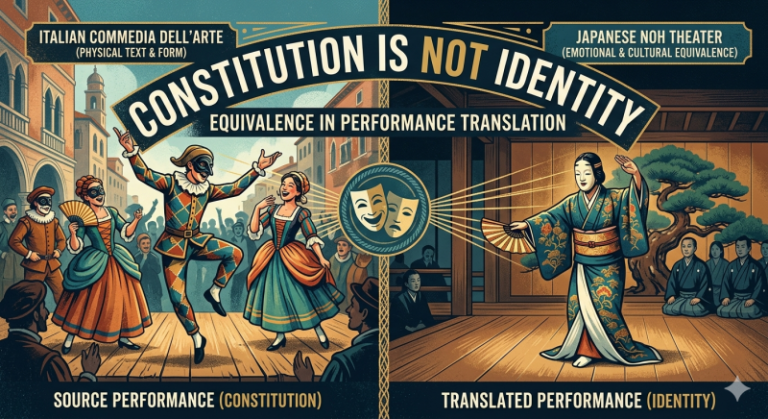
Mark Johnston (1992) develops the idea that “constitution is not identity,” arguing that two things may consist of the same material components without being identical. The example of a lump of clay and the statue Venus de Milo demonstrates that although both share the same physical matter, they possess different properties and conditions of existence.
More recently, ideas from Category Theory have been applied to emphasize relations rather than isolated objects. Eugenia Cheng (2024) argues that equivalence does not imply essential sameness, but rather that entities may be “counted as the same” within particular relational or categorical frameworks.
Methodology
This study employs qualitative research methods combining theoretical analysis, critical discourse analysis, and conceptual analysis to investigate the relationships among equivalence, identity, and representation within translation of performance and translation for performance. The controversy surrounding the appointment of translators for Amanda Gorman’s work serves as the primary case study.
The research draws upon both primary and secondary sources, including scholarship in Translation Studies, Philosophy, Performance Studies, and Category Theory, as well as news articles, interviews, and commentaries concerning the Gorman–Meulenhoff controversy published between 2021 and 2025.
Particular attention is given to works discussing translators’ rights, cultural representation, and the relationship between source texts and translations, especially studies by Patrice Pavis (1992), Mark Johnston (1992), Şebnem Susam-Sarajeva (2021), Kotzé and Strowe (2021), S. Chakraborty (2021), and Eugenia Cheng (2024).
What Are We Counting as “The Same”?
Reframed differently, the preceding discussion may be summarized through the question: can two different things still be regarded as “the same”? The musical West Side Story, directed by Jerome Robbins with lyrics by Stephen Sondheim, a script by Arthur Laurents, and music by Leonard Bernstein, which premiered at the Winter Garden Theatre in 1957, is clearly not quantitatively or qualitatively identical to William Shakespeare’s Romeo and Juliet, first performed approximately four centuries earlier.
Similarly, actor Bradley Cooper, who portrayed Leonard Bernstein in the film Maestro, is obviously not the same person as Bernstein himself, even though audiences conventionally accept Cooper “as” Bernstein within the cinematic context.
This idea resonates with Category Theory, which prioritizes relations among entities over the internal properties of individual objects. From this perspective, the crucial question is not what something “is,” but how it relates to other things.
A similar phenomenon appears in different productions of The Merchant of Venice. Brigid Larmour’s 2024 adaptation, which reinterpreted Shylock through an anti-fascist lens, differs substantially from Rupert Goold’s 2011 production, yet both remain connected through the same Shakespearean dramatic structure.
The article therefore proposes that translation is an activity that produces “comparability” between things that are not identical. Translation simultaneously contains continuity and difference. Whether two things are regarded as “the same” or “different” depends largely upon the categories within which they are being situated.
Conclusion
This article concludes that the central issue in the controversy surrounding Amanda Gorman is not whether translators possess or lack the “right” to translate her work, but rather the question of representational opportunity within historical, political, and cultural contexts.
Heidi Kotzé argues that Gorman’s visibility as a young Black woman constitutes part of the very message communicated through her work. Consequently, selecting translators is not merely a technical linguistic matter, but also part of a broader process of social meaning-making.
From this perspective, what should be “counted as equivalent” is not simply race, gender, or age, but shared conditions of exclusion, lack of representation within literary systems, and struggles for visibility among marginalized communities. At the same time, individual experiences may still remain distinct, since people with similar backgrounds do not necessarily possess identical lived realities.
Ultimately, the article proposes that performance translation should strive toward an “equivalence of meaning in context” rather than rigid sameness. The goal of translation is not to transform translators into Amanda Gorman herself, but to create cultural and political conditions through which the meaning and performative force of a work may continue to exist powerfully within new contexts.
References
- American Literary Translators Association (ALTA). (2021). Statement on the controversy surrounding the translation of Amanda Gorman’s work. American Literary Translators Association.
- Bajković, J. (2021). Amanda Gorman and the politics of representation at the Biden inauguration. Journal of Contemporary Cultural Studies, 12(1), 45–58.
- Chakraborty, S. (2021). Translation, difference, and the limits of identity politics. Translation and Interpreting Studies, 16(2), 201–218.
- Cheng, Eugenia. (2024). The joy of abstraction: An exploration of mathematics, category theory, and human thought. Princeton University Press.
- Inghilleri, Miriam. (2021). Experience, identity, and representation in translation. The Translator, 27(3), 289–304.
- Johnston, Mark. (1992). Constitution is not identity. Mind, 101(401), 89–105.
- Kotzé, Heidi. (2021b). Representation and visibility in the Amanda Gorman debate. De Volkskrant.
- Kotzé, Heidi, & Strowe, A. (2021). Translation, power, and structural inequality in publishing industries. Translation Studies, 14(3), 311–329.
- Lilleboe, K. (2014). Equivalence reconsidered in contemporary translation theory. Nordic Journal of Translation Studies, 5(1), 77–93.
- Maitland, S. (2025). Contextual equivalence and performance translation: Re-reading the Amanda Gorman controversy. Performance and Translation Review, 8(2), 55–81.
- Pavis, Patrice. (1992). Theatre at the crossroads of culture (L. Kruger, Trans.). Routledge.
- Rodriguez-Pereyra, Gonzalo. (2012). Leibniz’s principle of the identity of indiscernibles. Oxford University Press.
- Society of Authors. (2021). Representation, diversity, and literary translation: Public statement on the Amanda Gorman case.
- Susam-Sarajeva, Şebnem. (2021). Translation and lived experience: Identity politics in literary translation. Translation Studies Quarterly, 9(4), 401–417.
For professional services, please visit https://www.seaproti.org/practitioners/
About certified translators, translation certifiers, and certified interpreters associated with SEAProTI.
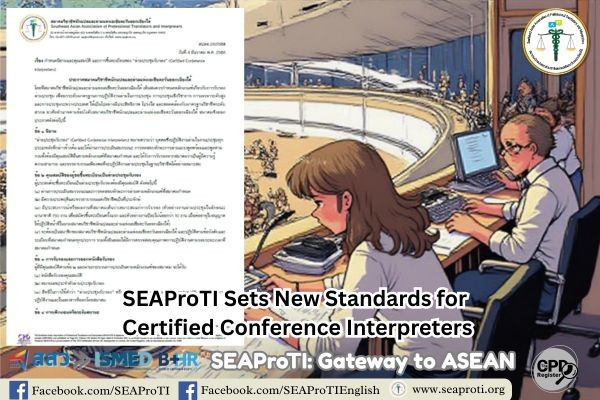
The Southeast Asian Association of Professional Translators and Interpreters (SEAProTI) has officially shared the qualifications and requirements for becoming certified translators, translation certification providers, and certified interpreters in Sections 9 and 10 of the Royal Gazette, which was published by the Prime Minister’s Office in Thailand on July 25, 2024. Certified Translators, Translation Certification Providers, and Certified Interpreters
The Council of State has proposed the enactment of a Royal Decree, granting registered translators and recognised translation certifiers from professional associations or accredited language institutions the authority to provide legally valid translation certification (Letter to SEAProTI dated April 28, 2025)
SEAProTI is the first professional association in Thailand and Southeast Asia to implement a comprehensive certification system for translators, certifiers, and interpreters.
Head Office: Baan Ratchakru Building, No. 33, Room 402, Soi Phahonyothin 5, Phahonyothin Road, Phaya Thai District, Bangkok 10400, Thailand
Email: hello@seaproti.com | Tel.: (+66) 2-114-3128 (Office hours: Mon–Fri, 09:00–17:00).
Constitution Is Not Identity: ความสัมพันธ์เชิงสมมูลในการแปลการแสดงและการแปลเพื่อการแสดง
ผู้เขียน: ไกรฤกษ์ กรวยทอง
15 พฤษภาคม 2569, กรุงเทพมหานคร – บทความนี้มุ่งศึกษาปัญหาเรื่อง “ความสมมูล” (equivalence) ในการแปลการแสดง (translation of performance) และการแปลเพื่อการแสดง (translation for performance) ผ่านกรณีถกเถียงระดับนานาชาติเกี่ยวกับการแต่งตั้งผู้แปลบทกวีของ อะแมนดา กอร์แมน ภายหลังการแสดงบทกวี The Hill We Climb ในพิธีสาบานตนเข้ารับตำแหน่งประธานาธิบดีสหรัฐอเมริกา พ.ศ. 2564 บทความชี้ให้เห็นว่า ข้อถกเถียงดังกล่าวมิได้เกี่ยวข้องเพียงประเด็นสิทธิในการแปลหรืออัตลักษณ์ของผู้แปลเท่านั้น หากยังสะท้อนคำถามเชิงทฤษฎีว่าความสัมพันธ์ระหว่าง “ต้นฉบับ” และ “คำแปล” ควรถูกทำความเข้าใจอย่างไรในบริบทของการแสดง
ในทางทฤษฎี “ความสมมูล” (equivalence) หมายถึงความสัมพันธ์ระหว่างต้นฉบับและคำแปลที่ทำให้ทั้งสองสามารถถูกมองว่า “สัมพันธ์กันในระดับหนึ่ง” แม้จะมิได้เหมือนกันทุกประการ แนวคิดดังกล่าวเป็นหนึ่งในประเด็นสำคัญของศาสตร์การแปล (Translation Studies) โดยนักวิชาการจำนวนมากเสนอว่า ความสมมูลมิใช่ความเหมือนเชิงสัมบูรณ์ หากเป็นความสัมพันธ์ที่เกิดขึ้นภายใต้เงื่อนไขทางภาษา วัฒนธรรม และบริบทการสื่อสารที่แตกต่างกัน ความสมมูลจึงอาจเกิดขึ้นในระดับความหมาย หน้าที่ ผลกระทบต่อผู้รับสาร หรือบริบททางสังคม มากกว่าการรักษารูปแบบของต้นฉบับอย่างเคร่งครัด
งานศึกษานี้ใช้แนวคิดจาก Translation Studies, Performance Studies และ Category Theory ทางคณิตศาสตร์ โดยเฉพาะกฎของ ก็อทท์ฟรีท วิลเฮล์ม ไลบ์นิซ ว่าด้วยอัตลักษณ์และความไม่อาจแยกแยะได้ของสิ่งต่าง ๆ (identity of indiscernibles) เพื่ออภิปรายว่าความเหมือนระหว่างผู้สร้างสรรค์ต้นฉบับกับผู้แปลไม่จำเป็นต้องตั้งอยู่บน “ความเป็นสิ่งเดียวกัน” (identity) แต่สามารถตั้งอยู่บน “ความสมมูลเชิงบริบท” (contextual equivalence) ซึ่งเปิดพื้นที่ให้ความแตกต่างดำรงอยู่ภายในความสัมพันธ์เดียวกันได้ กล่าวอีกนัยหนึ่ง ผู้แปลอาจมิได้มีประสบการณ์ชีวิต เชื้อชาติ เพศ หรือภูมิหลังเหมือนกับผู้ประพันธ์ต้นฉบับ แต่ยังสามารถสร้างความสมมูลในระดับการสื่อความหมายและผลทางการแสดงได้ หากคำแปลสามารถทำหน้าที่เชื่อมโยงกับบริบททางสังคมและวัฒนธรรมของผู้รับสารใหม่ได้อย่างมีประสิทธิภาพ
บทความเสนอว่า ในการแปลการแสดง ความสมมูลไม่ควรถูกมองว่าเป็นการผลิตซ้ำต้นฉบับแบบเหมือนกันทุกประการ หากแต่ควรถูกเข้าใจในฐานะกระบวนการสร้างความหมายร่วมกันภายใต้ร่มเงาของบริบททางประวัติศาสตร์ วัฒนธรรม การเมือง และการเป็นตัวแทนทางสังคม โดยเฉพาะในกรณีของบทกวีที่ถูกนำเสนอผ่านการแสดงสด ซึ่งองค์ประกอบด้านน้ำเสียง จังหวะ อารมณ์ การเคลื่อนไหว และอัตลักษณ์ของผู้แสดงล้วนมีส่วนในการสร้างความหมายควบคู่ไปกับตัวบท การแปลเพื่อการแสดงจึงมิได้เป็นเพียงการถ่ายทอดภาษา หากเป็นการเจรจาต่อรองความหมายระหว่างตัวบท ผู้แสดง ผู้แปล และผู้ชมในบริบทใหม่อยู่เสมอ
การอภิปรายดังกล่าวนำไปสู่ข้อเสนอสำคัญว่า การแปลเพื่อการแสดงควรมุ่งสู่ “ความสมมูลของความหมายในบริบท” มากกว่าความเหมือนเชิงสารัตถะระหว่างผู้ประพันธ์และผู้แปล เพราะในโลกของการแสดง ความหมายมิได้ดำรงอยู่อย่างตายตัวในต้นฉบับ หากเกิดขึ้นผ่านกระบวนการปฏิสัมพันธ์ระหว่างภาษา ร่างกาย เสียง การรับรู้ และเงื่อนไขทางสังคมของแต่ละวัฒนธรรม ความสมมูลจึงควรถูกเข้าใจในฐานะความสัมพันธ์เชิงพลวัตที่เปิดพื้นที่ให้ทั้ง “ความเหมือน” และ “ความแตกต่าง” สามารถดำรงอยู่ร่วมกันได้ภายใต้กระบวนการแปลเดียวกัน
บทนำ
การแสดงบทกวี “The Hill We Climb” ของ อะแมนดา กอร์แมน ในพิธีสาบานตนเข้ารับตำแหน่งของประธานาธิบดี โจ ไบเดน เมื่อปี พ.ศ. 2564 ได้กลายเป็นเหตุการณ์สำคัญทางวัฒนธรรมระดับโลก ไม่เพียงเพราะคุณค่าทางวรรณศิลป์ของบทกวี หากยังรวมถึงสถานะของกอร์แมนในฐานะกวีหญิงผิวดำรุ่นใหม่ซึ่งเป็นตัวแทนของความหลากหลายทางชาติพันธุ์ เพศ และการเมืองร่วมสมัย (Bykowicz, 2021) ภายหลังความสำเร็จของการแสดงดังกล่าว สำนักพิมพ์หลายแห่งทั่วโลกแข่งขันกันเพื่อซื้อลิขสิทธิ์แปลผลงานของเธอ อย่างไรก็ตาม การแต่งตั้ง มารีเคอ ลูคัส ไรเนอเฟลด์ นักเขียนชาวดัตช์ผิวขาวและผู้ได้รับรางวัล International Booker Prize ให้เป็นผู้แปลฉบับภาษาดัตช์ กลับก่อให้เกิดข้อถกเถียงอย่างรุนแรงในระดับนานาชาติ
จุดเริ่มต้นของความขัดแย้งเกิดขึ้นเมื่อ จานิส เดิล นักวิจารณ์และนักกิจกรรมชาวดัตช์ตีพิมพ์บทความวิจารณ์ในหนังสือพิมพ์ De Volkskrant โดยตั้งคำถามว่า เหตุใดสำนักพิมพ์จึงไม่เลือกนักแปลหญิงผิวดำรุ่นใหม่ที่มีประสบการณ์ด้าน spoken word เช่นเดียวกับกอร์แมน (คอตเซ, 2564ข) ข้อวิจารณ์ดังกล่าวนำไปสู่การถอนตัวของไรเนอเฟลด์จากโครงการแปล และกระตุ้นให้เกิดการถกเถียงในวงกว้างเกี่ยวกับความสัมพันธ์ระหว่างอัตลักษณ์ของผู้แปลกับผู้ประพันธ์ รวมถึงประเด็นเรื่องความไม่เท่าเทียมเชิงโครงสร้างในอุตสาหกรรมการแปลและการพิมพ์ (ALTA, 2564; Society of Authors, 2564)
ข้อถกเถียงนี้สะท้อนความตึงเครียดสำคัญใน Translation Studies ระหว่างแนวคิดเรื่อง “สิทธิในการเป็นตัวแทน” กับแนวคิดเรื่อง “เสรีภาพของการแปล” นักวิชาการจำนวนหนึ่งชี้ให้เห็นว่า อุตสาหกรรมการแปลยังคงขาดความหลากหลายทางเชื้อชาติและชาติพันธุ์ ส่งผลให้กลุ่มคนชายขอบไม่ได้รับโอกาสในการเป็นตัวแทนทางวัฒนธรรมอย่างเท่าเทียม (คอตเซ และ สโทรว์, 2564)ขณะเดียวกัน นักวิชาการอีกฝ่ายหนึ่งเตือนว่า หากการแปลถูกกำหนดโดยอัตลักษณ์เพียงอย่างเดียว ก็อาจนำไปสู่การลดทอนความซับซ้อนของประสบการณ์มนุษย์ และสร้างกรอบคิดแบบ essentialism ที่มองว่ามนุษย์แต่ละกลุ่มมีสารัตถะตายตัว (จักราบอร์ตี, 2564)
อย่างไรก็ตาม บทความนี้เสนอว่า ประเด็นสำคัญของกรณีกอร์แมนมิได้อยู่เพียงคำถามว่า “ใครมีสิทธิ์แปลใคร” หากยังรวมถึงคำถามว่า “ความสัมพันธ์ระหว่างต้นฉบับกับคำแปลควรถูกนิยามอย่างไร” โดยเฉพาะในบริบทของการแสดง ซึ่งความหมายมิได้เกิดจากตัวบทเพียงอย่างเดียว แต่เกิดจากเครือข่ายความสัมพันธ์ระหว่างผู้แสดง ผู้ชม ประวัติศาสตร์ การเมือง และบริบททางวัฒนธรรม (ปาวีส์, 2535)
เพื่ออธิบายประเด็นดังกล่าว บทความนี้นำแนวคิดเรื่อง “equivalence relation” จากคณิตศาสตร์ และกฎของไลบ์นิซว่าด้วย “identity of indiscernibles” มาใช้เป็นกรอบวิเคราะห์ โดยตั้งคำถามว่า หากผู้แปลและผู้ประพันธ์มิได้มีคุณสมบัติเหมือนกันทุกประการ ความสมมูลในการแปลยังสามารถเกิดขึ้นได้หรือไม่ งานศึกษานี้เสนอว่า ความสมมูลในการแปลไม่จำเป็นต้องตั้งอยู่บน “ความเหมือนเชิงสารัตถะ” (essential sameness) แต่สามารถตั้งอยู่บน “ความสัมพันธ์เชิงบริบท” ซึ่งยอมรับความแตกต่างของผู้มีส่วนเกี่ยวข้อง ในขณะเดียวกันก็สร้างพื้นที่ร่วมทางความหมายและการเป็นตัวแทนได้
ทบทวนวรรณกรรม
การศึกษาประเด็นความสมมูล (equivalence) ในศาสตร์การแปลเป็นหนึ่งในหัวข้อสำคัญของ Translation Studies มาอย่างยาวนาน โดยเฉพาะการอภิปรายว่าคำแปลควร “เหมือน” ต้นฉบับในระดับใด และความเหมือนดังกล่าวควรถูกนิยามอย่างไร แนวคิดดั้งเดิมด้าน equivalence มักมุ่งเน้นการรักษาความเท่าเทียมระหว่างต้นฉบับและคำแปลในเชิงภาษา ความหมาย หรือหน้าที่การสื่อสาร อย่างไรก็ตาม นักวิชาการร่วมสมัยจำนวนมากได้วิพากษ์แนวคิดดังกล่าวว่าไม่สามารถอธิบายธรรมชาติที่ซับซ้อนของการแปลในฐานะกระบวนการทางวัฒนธรรม การเมือง และการแสดงได้อย่างเพียงพอ (ลิลเลอเบอ, 2557)
ในบริบทของการแปลการแสดง (translation of performance) และการแปลเพื่อการแสดง (translation for performance) ปัญหาเรื่อง equivalence ยิ่งมีความซับซ้อนมากขึ้น เนื่องจาก “ต้นฉบับ” มิได้จำกัดอยู่เพียงตัวบทภาษา หากรวมถึงองค์ประกอบของการแสดง เช่น ร่างกาย น้ำเสียง การเคลื่อนไหว ฉาก การรับรู้ของผู้ชม และบริบททางสังคมการเมืองที่แวดล้อมการแสดงนั้นด้วย ปาทริซ ปาวีส์ (2535) เสนอว่า การแสดงละครควรถูกมองในฐานะ “system of meaning” ซึ่งความหมายเกิดขึ้นจากความสัมพันธ์ระหว่างองค์ประกอบต่าง ๆ ใน mise en scène มิใช่จากตัวบทล้วน ๆ
ข้อถกเถียงเกี่ยวกับการแปลผลงานของอะแมนดา กอร์แมน ได้เปิดพื้นที่ให้เกิดการอภิปรายเรื่อง “ผู้มีสิทธิ์แปล” อย่างกว้างขวางใน Translation Studies โดยเฉพาะคำถามว่าผู้แปลควรมีประสบการณ์ชีวิตหรืออัตลักษณ์ร่วมกับผู้ประพันธ์มากน้อยเพียงใด ซูซัม-ซาราเอวา (2564) ตั้งข้อสังเกตว่า การเรียกร้องให้ผู้แปลมีประสบการณ์ชีวิตใกล้เคียงกับผู้ประพันธ์เกิดขึ้นจากประวัติศาสตร์ของความไม่เท่าเทียมและการกีดกันเชิงโครงสร้างในวงการสำนักพิมพ์ ซึ่งทำให้ผู้แปลจากกลุ่มชายขอบไม่ได้รับพื้นที่ในการเป็นตัวแทนทางวัฒนธรรมอย่างเพียงพอ ขณะเดียวกัน มิเรียม อิงกิลเลรี (2564) เตือนว่า การมีเชื้อชาติ เพศ หรือภูมิหลังทางวัฒนธรรมร่วมกัน มิได้หมายความว่าจะมี “ประสบการณ์” ร่วมกันอย่างแท้จริง เพราะประสบการณ์มนุษย์มีความซับซ้อนเกินกว่าจะลดทอนเหลือเพียงหมวดหมู่อัตลักษณ์
คอตเซอ และ สโทรว์ (2564) ขยายประเด็นนี้โดยเสนอว่า ปัญหาสำคัญมิใช่เพียงว่าใคร “เหมาะสม” จะเป็นผู้แปล แต่คือโครงสร้างอำนาจที่กำหนดว่าใครได้รับโอกาสในการแปลและใครถูกกันออกจากพื้นที่ดังกล่าว
ในอีกด้านหนึ่ง จักราบอร์ตี (2564) วิพากษ์แนวโน้มที่ผูกการแปลเข้ากับอัตลักษณ์แบบตายตัว โดยเสนอว่า “ความแตกต่าง” คือหัวใจสำคัญของการแปล เพราะการแปลเกิดขึ้นได้จากการเผชิญหน้าระหว่างสิ่งที่ไม่เหมือนกัน
นอกเหนือจาก Translation Studies บทความต้นทางยังนำแนวคิดจากปรัชญาและคณิตศาสตร์มาประยุกต์ใช้ในการอภิปรายเรื่องความสมมูล โดยเฉพาะกฎของไลบ์นิซว่าด้วย “identity of indiscernibles” ซึ่งระบุว่า หากสองสิ่งมีคุณสมบัติเหมือนกันทุกประการ ทั้งสองสิ่งย่อมเป็นสิ่งเดียวกัน (โรดริเกซ-เปเรย์รา, 2555)
มาร์ก จอห์นสตัน (2535) เสนอแนวคิด “constitution is not identity” เพื่ออธิบายว่า สิ่งสองสิ่งอาจถูกสร้างขึ้นจากองค์ประกอบเดียวกัน แต่ไม่ได้หมายความว่าสิ่งเหล่านั้นจะเป็นสิ่งเดียวกัน ตัวอย่างเรื่องก้อนดินและรูปปั้น Venus de Milo แสดงให้เห็นว่า แม้รูปปั้นและก้อนดินจะมีองค์ประกอบทางกายภาพเดียวกัน แต่ทั้งสองกลับมีคุณสมบัติและเงื่อนไขการดำรงอยู่ต่างกัน
ในช่วงหลัง แนวคิดจาก Category Theory ได้ถูกนำมาใช้เพื่ออธิบาย “ความสัมพันธ์” มากกว่าการมองวัตถุแบบแยกส่วน ยูจีนา เฉิง (2567) เสนอว่า ความสมมูลมิได้หมายถึงความเหมือนเชิงสารัตถะ แต่คือการที่สิ่งต่าง ๆ ถูก “นับว่าเหมือนกัน” ภายใต้บริบทหรือหมวดหมู่บางอย่าง
ระเบียบวิธีการวิจัย
งานวิจัยนี้เป็นการวิจัยเชิงคุณภาพ (qualitative research) ที่ใช้การวิเคราะห์เชิงทฤษฎีและการวิเคราะห์วาทกรรมเชิงวิพากษ์ (critical discourse analysis) ร่วมกับการวิเคราะห์มโนทัศน์ (conceptual analysis) เพื่อศึกษาความสัมพันธ์ระหว่างแนวคิดเรื่อง “ความสมมูล” (equivalence) “อัตลักษณ์” (identity) และ “การเป็นตัวแทน” (representation) ในบริบทของการแปลการแสดงและการแปลเพื่อการแสดง โดยใช้กรณีศึกษาความขัดแย้งเกี่ยวกับการแต่งตั้งผู้แปลผลงานของอะแมนดา กอร์แมน เป็นศูนย์กลางของการวิเคราะห์
การศึกษานี้อาศัยข้อมูลจากเอกสารปฐมภูมิและทุติยภูมิ ได้แก่ บทความวิชาการด้าน Translation Studies, Philosophy, Performance Studies และ Category Theory ตลอดจนบทความข่าว บทสัมภาษณ์ และบทวิจารณ์ที่เกี่ยวข้องกับกรณี Gorman-Meulenhoff ระหว่างปี พ.ศ. 2564–2568
ผู้วิจัยให้ความสำคัญกับเอกสารที่อภิปรายประเด็นเรื่องผู้มีสิทธิ์แปล ความเป็นตัวแทนทางวัฒนธรรม และความสัมพันธ์ระหว่างต้นฉบับกับคำแปล โดยเฉพาะงานของ ปาทริซ ปาวีส์ (2535), มาร์ก จอห์นสตัน (2535), ซูซัม-ซาราเอวา (2564), คอตเซอ และ สโทรว์ (2564), จักราบอร์ตี (2564) และ ยูจีนา เฉิง (2567)
เรากำลังนับอะไรว่า “เหมือนกัน”
เมื่อปรับคำถามใหม่ ประเด็นก่อนหน้านี้อาจสรุปได้ว่า: สิ่งที่แตกต่างกันสองสิ่งสามารถ “เหมือนกัน” ได้หรือไม่? ละครเพลง West Side Story ของ เจอโรม ร็อบบินส์ พร้อมเนื้อร้องโดย สตีเฟน ซอนด์ไฮม์ บทละครโดย อาร์เธอร์ ลอเรนต์ส และดนตรีโดย เลโอนาร์ด เบิร์นสไตน์ ซึ่งเปิดการแสดงที่โรงละคร Winter Garden บนบรอดเวย์เมื่อปี พ.ศ. 2500 ย่อมไม่เท่ากันทั้งเชิงปริมาณและเชิงคุณภาพกับ Romeo and Juliet ของ วิลเลียม เชกสเปียร์ ซึ่งเชื่อกันว่าแสดงครั้งแรกเมื่อราว 400 ปีก่อน
เช่นเดียวกัน นักแสดง แบรดลีย์ คูเปอร์ ซึ่งรับบท เลโอนาร์ด เบิร์นสไตน์ ในภาพยนตร์ Maestro ไม่ใช่คนเดียวกันกับเบิร์นสไตน์จริง ๆ ถึงแม้ในบริบทภาพยนตร์ ผู้ชมจะรับรู้ว่าคูเปอร์ “คือ” เบิร์นสไตน์ก็ตาม
แนวคิดนี้สัมพันธ์กับ “ทฤษฎีหมวดหมู่” (category theory) ซึ่งสนใจการศึกษาความสัมพันธ์ระหว่างสิ่งต่าง ๆ มากกว่าคุณสมบัติภายในของแต่ละสิ่ง ในมุมมองนี้ สิ่งสำคัญไม่ใช่วัตถุนั้น “เป็นอะไร” แต่คือ “มันสัมพันธ์กับสิ่งอื่นอย่างไร”
ลักษณะเดียวกันนี้เกิดขึ้นกับการแสดง The Merchant of Venice ฉบับต่าง ๆ การแสดงปี พ.ศ. 2567 ของ บริจิด ลาร์เมอร์ ซึ่งตีความ Shylock ใหม่ในบริบทต่อต้านฟาสซิสต์ ย่อมไม่เหมือนกับการแสดงปี พ.ศ. 2554 ของ รูเพิร์ต กูลด์ แต่ทั้งสองยังคงเชื่อมโยงกันผ่านโครงสร้างบทละครเดียวกันของเชกสเปียร์
ดังนั้น ผู้เขียนจึงเสนอว่า การแปลคือกิจกรรมที่สร้าง “สิ่งที่เปรียบเทียบกันได้” ระหว่างสิ่งที่ไม่เหมือนกัน Translation จึงมีทั้ง “ความต่อเนื่อง” และ “ความแตกต่าง” อยู่พร้อมกัน การจะบอกว่าสิ่งใด “เหมือนกัน” หรือ “ต่างกัน” ขึ้นอยู่กับว่าเรากำลังจัดมันไว้ในหมวดหมู่ใด
สรุป
ผู้เขียนสรุปว่า ประเด็นสำคัญในข้อถกเถียงเกี่ยวกับอะแมนดา กอร์แมน ไม่ได้อยู่ที่ว่าผู้แปล “มีสิทธิ์” หรือ “ไม่มีสิทธิ์” แปล แต่คือเรื่องของโอกาสในการเป็นตัวแทน (representation) ภายใต้บริบททางประวัติศาสตร์ การเมือง และวัฒนธรรม
ไฮดี คอตเซอ ชี้ว่า สิ่งที่สำคัญคือ visibility ของกอร์แมนในฐานะหญิงสาวผิวดำ ซึ่งเป็นส่วนหนึ่งของ “สาร” ที่งานของเธอสื่อออกมา ดังนั้น การเลือกผู้แปลจึงไม่ใช่เรื่องเทคนิคทางภาษาเท่านั้น แต่เป็นส่วนหนึ่งของการสร้างความหมายทางสังคมเช่นเดียวกัน
ในมุมนี้ สิ่งที่ควรถูก “นับว่าเหมือนกัน” ไม่ใช่เพียงเชื้อชาติ เพศ หรืออายุ หากคือบริบทของการถูกกีดกัน การขาดพื้นที่ในระบบวรรณกรรม และการต่อสู้เพื่อการมองเห็นของศิลปินจากกลุ่มชายขอบ ส่วนสิ่งที่ยังคง “แตกต่าง” ได้ คือประสบการณ์เฉพาะบุคคล เพราะแม้ผู้คนจะมีพื้นฐานคล้ายกัน ก็ไม่ได้หมายความว่าจะมีประสบการณ์ชีวิตเหมือนกันทั้งหมด
ท้ายที่สุด ผู้เขียนเสนอว่า การแปล performance ควรมุ่งไปสู่ “equivalence of meaning in context” มากกว่าความเหมือนแบบตายตัว กล่าวคือ จุดมุ่งหมายของการแปลไม่ใช่การทำให้ผู้แปลกลายเป็นอะแมนดา กอร์แมน แต่คือการสร้างเงื่อนไขทางวัฒนธรรมและการเมืองที่ทำให้ “ความหมาย” ของ performance นั้นสามารถดำรงอยู่และส่งผลในบริบทใหม่ได้อย่างมีพลังใกล้เคียงกัน
บรรณานุกรม
- อเมริกันลิเทอรารีทรานสเลเตอร์สแอสโซซิเอชัน (ALTA). (2564). แถลงการณ์ว่าด้วยข้อถกเถียงเรื่องการแปลผลงานของอะแมนดา กอร์แมน. American Literary Translators Association.
- ไบโควิช, เจ. (2564). Amanda Gorman and the politics of representation at the Biden inauguration. Journal of Contemporary Cultural Studies, 12(1), 45–58.
- จักราบอร์ตี, เอส. (2564). Translation, difference, and the limits of identity politics. Translation and Interpreting Studies, 16(2), 201–218.
- เฉิง, ยูจีนา. (2567). The joy of abstraction: An exploration of mathematics, category theory, and human thought. Princeton University Press.
- อิงกิลเลรี, มิเรียม. (2564). Experience, identity, and representation in translation. The Translator, 27(3), 289–304.
- จอห์นสตัน, มาร์ก. (2535). Constitution is not identity. Mind, 101(401), 89–105.
- คอตเซอ, ไฮดี. (2564ข). Representation and visibility in the Amanda Gorman debate. De Volkskrant.
- คอตเซอ, ไฮดี, และ สโทรว์, เอ. (2564). Translation, power, and structural inequality in publishing industries. Translation Studies, 14(3), 311–329.
- ลิลเลอเบอ, เค. (2557). Equivalence reconsidered in contemporary translation theory. Nordic Journal of Translation Studies, 5(1), 77–93.
- เมตแลนด์, เอส. (2568). Contextual equivalence and performance translation: Re-reading the Amanda Gorman controversy. Performance and Translation Review, 8(2), 55–81.
- ปาวีส์, ปาทริซ. (2535). Theatre at the crossroads of culture (L. Kruger, ผู้แปล). Routledge.
- โรดริเกซ-เปเรย์รา, กอนซาโล. (2555). Leibniz’s principle of the identity of indiscernibles. Oxford University Press.
- โซไซตีออฟออเธอร์ส. (2564). Representation, diversity, and literary translation: Public statement on the Amanda Gorman case.
- ซูซัม-ซาราเอวา, เชฟคิเย. (2564). Translation and lived experience: Identity politics in literary translation. Translation Studies Quarterly, 9(4), 401–417.
ขอใช้บริการนักวิชาชีพของสมาคมได้ที่: https://www.seaproti.org/practitioners/
สมาคมวิชาชีพนักแปลและล่ามแห่งเอเชียตะวันออกเฉียงใต้ (SEAProTI) ได้ประกาศหลักเกณฑ์และคุณสมบัติของผู้ที่ขึ้นทะเบียนเป็น “นักแปลรับรอง (Certified Translators) และผู้รับรองการแปล (Translation Certification Providers) และล่ามรับรอง (Certified Interpreters)” ของสมาคม หมวดที่ 9 และหมวดที่ 10 ในราชกิจจานุเบกษา ของสำนักเลขาธิการคณะรัฐมนตรี ในสำนักนายกรัฐมนตรี แห่งราชอาณาจักรไทย ลงวันที่ 25 ก.ค. 2567 เล่มที่ 141 ตอนที่ 66 ง หน้า 100 อ่านฉบับเต็มได้ที่: นักแปลรับรอง ผู้รับรองการแปล และล่ามรับรอง
สำนักคณะกรรมการกฤษฎีกาเสนอให้ตราเป็นพระราชกฤษฎีกาโดยกำหนดให้นักแปลที่ขึ้นทะเบียน รวมถึงผู้รับรองการแปลจากสมาคมวิชาชีพหรือสถาบันสอนภาษาที่มีการอบรมและขึ้นทะเบียน สามารถรับรองคำแปลได้ (จดหมายถึงสมาคม SEAProTI ลงวันที่ 28 เม.ย. 2568)
สมาคมวิชาชีพนักแปลและล่ามแห่งเอเชียตะวันออกเฉียงใต้เป็นสมาคมวิชาชีพแห่งแรกและแห่งเดียวในประเทศไทยและภูมิภาคเอเชียตะวันออกเฉียงใต้ที่มีระบบรับรองนักแปลรับรอง ผู้รับรองการแปล และล่ามรับรอง
สำนักงานใหญ่: อาคารบ้านราชครู เลขที่ 33 ห้อง 402 ซอยพหลโยธิน 5 ถนนพหลโยธิน แขวงพญาไท เขตพญาไท กรุงเทพมหานคร 10400 ประเทศไทย