


A Review of Medical and Healthcare Translation: Profession and Training by Ana Muñoz-Miquel
Author: Phakaporn Tanjararak
8 May 2026, Bangkok – This article aims to analyze and review Medical and Healthcare Translation: Profession and Training by Ana Muñoz-Miquel (2023), a remarkable contribution to Translation Studies in the field of medical translation from both academic and professional perspectives. The book presents a comprehensive discussion of the characteristics of medical translation, the professional environment, changes in the translation market, the application of artificial intelligence technologies, and systematic approaches to translator education and training. The author argues that medical translation should be recognized as an independent specialized discipline within Translation Studies due to its distinct body of knowledge, research, professional associations, and specialized training programs. Furthermore, the book proposes training models that emphasize the development of textual analysis, information mining, critical thinking, and professional language service skills. This article argues that Muñoz-Miquel’s work (2023) makes a significant contribution to research, pedagogy, and professional development in medical translation on an international scale.
Introduction
In today’s globalized world, characterized by increasingly intensive international connections among individuals, institutions, organizations, and bodies of knowledge, specialized translation has become a crucial component of cross-linguistic and cross-cultural communication. This is particularly evident in the fields of medicine and healthcare, which are directly related to human life, health, and safety. The expansion of scientific and medical knowledge at the international level has consequently generated a growing demand for translators with specialized expertise.
Zygmunt Bauman (2007) describes contemporary society as a “liquid society,” in which physical, temporal, linguistic, cultural, and ideological boundaries are increasingly fluid and constantly changing. Within such a context, translation is no longer merely the transfer of texts from one language to another; rather, it constitutes a process of mediating meanings, knowledge, and cultures among different linguistic communities. This is especially true in the medical field, where information is highly complex and directly affects human lives.
Ana Muñoz-Miquel (2023) recognizes the significance and transformation of this field and therefore produced Medical and Healthcare Translation: Profession and Training to address the major issues and contemporary challenges of medical translation. The volume aims to serve as a modern, concise, and comprehensive practical handbook for students, researchers, instructors, and professional translators. Drawing on her expertise in research and training, the author constructs a reference work that provides a broad overview of medical translation from theoretical, professional, and pedagogical perspectives.
This article aims to analyze the content, structure, and contributions of the book to Translation Studies, with particular emphasis on the status of medical translation, professional transformation, and translator training in contemporary contexts.
Content and Analysis
Muñoz-Miquel’s book (2023) is clearly divided into two main sections. The first section consists of three chapters devoted to the characteristics and professional aspects of medical translation, while the second section contains two chapters focusing on medical translation training. This structure reflects the author’s attempt to bridge theoretical frameworks with practical applications in both professional and educational contexts.
The content is systematically organized. Each chapter begins with a brief introduction explaining its key topics and concludes with a summary of the principal points discussed, thereby facilitating readers’ understanding and access to the main ideas. Such organization reflects the nature of an academic handbook designed for practical use.
In the first chapter, Muñoz-Miquel (2023) argues that medical translation should be recognized as an independent specialized discipline within Translation Studies rather than being subsumed under scientific and technical translation in general. The author discusses the historical development of the discipline and highlights the crucial role of medical translation in disseminating and advancing scientific and medical knowledge.
The author further argues that medical translation fulfills all the criteria necessary to be considered an autonomous specialized field because it possesses its own body of literature, extensive research output, active professional communities, specialized professional associations, and dedicated training programs both inside and outside academic institutions (Muñoz-Miquel, 2023). This argument reflects a major tendency within contemporary Translation Studies toward the recognition and development of specialized disciplines and professional identities.
This perspective is consistent with Monzó Nebot’s (2015) argument that translator and interpreter training in contemporary society must respond to rapidly changing professional realities and foster specialized expertise together with adaptability to new circumstances.
In the second chapter, the author examines the diverse and complex nature of medical translation, including textual genres, specialized terminology, cultural differences, and the characteristics of target audiences. Muñoz-Miquel (2023) explains that medical translation is not limited to scientific documents alone but also includes communication intended for patients, the general public, and healthcare organizations.
The book also discusses the challenges faced by translators in real professional settings and proposes strategies and solutions employed by experienced professionals at various stages of the translation process. The author compiles numerous tools and resources essential to professional practice, including terminology databases, medical dictionaries, and reliable online reference sources.
One of the most valuable aspects of this chapter is the author’s establishment of criteria for evaluating the reliability of information sources. Muñoz-Miquel (2023) emphasizes that assessing authorship, purpose, information quality, and the date of the latest update is indispensable for medical translators, as inaccurate information may directly affect treatment processes and patient safety.
In the third chapter, the author shifts from theoretical discussion to the realities of the medical translation market and professional environment. She analyzes the sectors that commonly require medical translation services, including the pharmaceutical industry, medical publishing, hospitals, healthcare organizations, and international institutions.
Muñoz-Miquel (2023) places particular emphasis on changes in communication paradigms within modern healthcare environments, especially the impact of artificial intelligence and neural machine translation on translators’ professional roles. Although technology increases efficiency, it simultaneously intensifies the demand for translators capable of contributing “human value” to communication processes.
The author therefore argues that contemporary translators must function as mediators between technology and human understanding. They must be capable of adapting communication to diverse audiences while demonstrating analytical thinking, problem-solving abilities, and intercultural communication competence (Muñoz-Miquel, 2023).
This argument aligns with the work of Svoboda, Biel, and Sosoni (2023), who contend that modern translator training should develop technological competence alongside human judgment and professional ethics.
Toward the end of the chapter, the author also discusses professional ethics and the role of translation associations, emphasizing that professional organizations play an essential role in establishing standards, promoting collaboration, and increasing the visibility of translators within society.
The second section of the book focuses on medical translation training, which constitutes one of the book’s greatest strengths. In the fourth chapter, Muñoz-Miquel (2023) reviews pedagogical approaches, methodologies, and previous studies related to specialized translator training. She argues that effective translator education should integrate the strengths of multiple teaching approaches.
The book further emphasizes that the training of competent medical translators requires the development of textual analysis skills, information mining abilities, deep comprehension, critical thinking, and professional language service competence (Muñoz-Miquel, 2023).
The author additionally argues that translation programs should promote students’ employability through activities aligned with real labor-market conditions and encourage flexibility and adaptability within an evolving professional landscape.
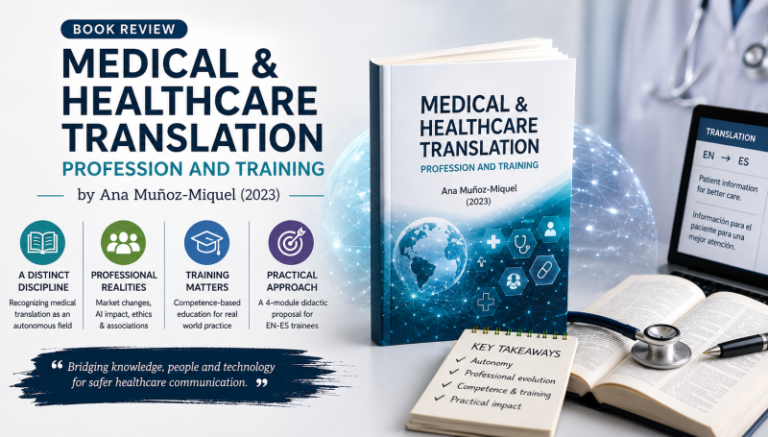
In the final chapter, the author presents a highly valuable practical contribution consisting of a four-module didactic proposal designed for English-Spanish translation trainees. The modules aim to develop the fundamental competences required for professional medical translation practice.
The author begins by identifying the professional competences and learning outcomes targeted by the program and subsequently explains the criteria used in selecting texts, activities, and teaching materials for each module.
Modules one and two focus on helping trainees recognize the essential characteristics and challenges of medical translation, while modules three and four concentrate on textual genres commonly found in medical publishing and the pharmaceutical industry (Muñoz-Miquel, 2023).
The activities vary in format, duration, objectives, and learning dynamics in order to address the diverse characteristics and practical challenges of medical translation comprehensively. In addition, the final pages of the book contain an extensive compilation of recommended readings and reference resources, thereby enhancing the work’s academic value.
Discussion
Muñoz-Miquel’s book (2023) makes several important contributions to Translation Studies. First, it reinforces the status of medical translation as a distinct specialized discipline with both academic and professional autonomy. Second, it reflects contemporary transformations in the translation market and the impact of artificial intelligence on the translation profession. Third, it proposes practical training approaches that can be effectively implemented and adapted to current labor-market demands.
One of the book’s greatest strengths lies in its successful integration of research, pedagogy, and professional practice. The author effectively bridges theory and practice, making the volume valuable not only for students and researchers but also for instructors and professional translators.
Conclusion
In conclusion, Medical and Healthcare Translation: Profession and Training by Ana Muñoz-Miquel (2023) is an outstanding academic contribution in terms of content, structure, and practical applicability. The author successfully provides a comprehensive overview of medical translation while reflecting the major transformations affecting the profession in the era of globalization and technological advancement. The book therefore has strong potential to become a major reference work within Translation Studies and constitutes a significant contribution to medical translation research, pedagogy, and professional practice at the international level.
References
- Bauman, Z. (2007). Liquid Times: Living in an Age of Uncertainty. Polity Press.
- Cerezo Merchán, B. (2019). Audiovisual translator training. In L. Pérez González (Ed.), The Routledge Handbook of Audiovisual Translation (pp. 468–482). Routledge.
- Monzó Nebot, E. (2015). Understanding legal interpreter and translator training in times of change. The Interpreter and Translator Trainer, 9(2), 129–140.
- Muñoz-Miquel, A. (2023). La traducción médico-sanitaria: profesión y formación. Comares.
- Svoboda, T., Biel, K., & Sosoni, V. (Eds.). (2023). Institutional Translator Training. Routledge.
For professional services, please visit: https://www.seaproti.org/practitioners/
About certified translators, translation certifiers, and certified interpreters associated with SEAProTI. The Southeast Asian Association of Professional Translators and Interpreters (SEAProTI) has officially shared the qualifications and requirements for becoming Certified Translators, Translation Certification Providers, and Certified Interpreters in Sections 9 and 10 of the Royal Gazette, which was published by the Prime Minister’s Office in Thailand on July 25, 2024. Certified Translators, Translation Certification Providers, and Certified Interpreters
The Council of State has proposed the enactment of a Royal Decree, granting registered translators and recognised translation certifiers from professional associations or accredited language institutions the authority to provide legally valid translation certification (Letter to SEAProTI dated April 28, 2025)
SEAProTI is the first professional association in Thailand and Southeast Asia to implement a comprehensive certification system for translators, certifiers, and interpreters.
Head Office: Baan Ratchakru Building, No. 33, Room 402, Soi Phahonyothin 5, Phahonyothin Road, Phaya Thai District, Bangkok 10400, Thailand
Email: hello@seaproti.com | Tel.: (+66) 2-114-3128 (Office hours: Mon–Fri, 09:00–17:00).
บทวิจารณ์หนังสือเรื่อง การแปลทางการแพทย์และสาธารณสุข: วิชาชีพและการฝึกอบรม ของ อานา มูญอซ-มีเกล
ผู้เขียน: ภคพร ตันจรารักษ์
8 พฤษภาคม 2569, กรุงเทพมหานคร – บทความนี้มีวัตถุประสงค์เพื่อวิเคราะห์และวิจารณ์หนังสือ การแปลทางการแพทย์และสาธารณสุข: วิชาชีพและการฝึกอบรม ของ อานา มูญอซ-มีเกล (พ.ศ. 2566) ซึ่งเป็นผลงานด้านการแปลศึกษาในสาขาการแปลทางการแพทย์ที่มีความโดดเด่นทั้งในเชิงวิชาการและวิชาชีพ หนังสือเล่มนี้นำเสนอการวิเคราะห์ลักษณะเฉพาะของการแปลทางการแพทย์ สภาพแวดล้อมทางวิชาชีพ ความเปลี่ยนแปลงของตลาดแรงงาน การประยุกต์ใช้เทคโนโลยีปัญญาประดิษฐ์ ตลอดจนแนวทางการจัดการเรียนการสอนและการฝึกอบรมนักแปลอย่างเป็นระบบ ผู้เขียนชี้ให้เห็นว่าการแปลทางการแพทย์ควรถูกยกระดับให้เป็นศาสตร์เฉพาะทางอิสระภายใต้สาขาการแปลศึกษา เนื่องจากมีองค์ความรู้ งานวิจัย สมาคมวิชาชีพ และหลักสูตรเฉพาะทางของตนเอง นอกจากนี้ หนังสือยังเสนอรูปแบบการฝึกอบรมที่เน้นการพัฒนาทักษะด้านการวิเคราะห์ตัวบท การสืบค้นข้อมูล การคิดเชิงวิพากษ์ และการให้บริการทางภาษาอย่างมืออาชีพ บทความนี้เสนอว่าหนังสือของ มูญอซ-มีเกล (พ.ศ. 2566) มีคุณูปการอย่างสำคัญต่อการวิจัย การเรียนการสอน และการพัฒนาวิชาชีพการแปลทางการแพทย์ในระดับสากล
บทนำ
ในโลกยุคโลกาภิวัตน์ที่มีการเชื่อมโยงระหว่างผู้คน องค์กร สถาบัน และองค์ความรู้ในระดับนานาชาติอย่างเข้มข้น การแปลเฉพาะทางได้กลายเป็นองค์ประกอบสำคัญของการสื่อสารข้ามภาษาและวัฒนธรรม โดยเฉพาะในสาขาการแพทย์และสาธารณสุขซึ่งเกี่ยวข้องโดยตรงกับชีวิต สุขภาพ และความปลอดภัยของมนุษย์ การขยายตัวขององค์ความรู้ทางวิทยาศาสตร์และการแพทย์ในระดับสากลส่งผลให้ความต้องการนักแปลที่มีความเชี่ยวชาญเฉพาะด้านเพิ่มสูงขึ้นอย่างต่อเนื่อง
ซิกมุนท์ เบามัน (พ.ศ. 2550) อธิบายว่าสังคมร่วมสมัยเป็น “สังคมสภาพคล่อง” ซึ่งพรมแดนทางกายภาพ เวลา ภาษา วัฒนธรรม และอุดมการณ์มีความยืดหยุ่นและเปลี่ยนแปลงตลอดเวลา ภายใต้บริบทดังกล่าว การแปลจึงมิได้เป็นเพียงการถ่ายทอดข้อความจากภาษาหนึ่งสู่อีกภาษาหนึ่งเท่านั้น หากแต่เป็นกระบวนการไกล่เกลี่ยความหมาย ความรู้ และวัฒนธรรมระหว่างกลุ่มผู้ใช้ภาษาที่แตกต่างกัน โดยเฉพาะในบริบททางการแพทย์ที่ข้อมูลมีความซับซ้อนและส่งผลต่อชีวิตมนุษย์โดยตรง
อานา มูญอซ-มีเกล (พ.ศ. 2566) ตระหนักถึงความสำคัญและความเปลี่ยนแปลงของวงการดังกล่าว จึงได้จัดทำหนังสือ การแปลทางการแพทย์และสาธารณสุข: วิชาชีพและการฝึกอบรม ขึ้นเพื่อวิเคราะห์ประเด็นสำคัญและความท้าทายร่วมสมัยของการแปลทางการแพทย์ หนังสือเล่มนี้มีจุดมุ่งหมายเพื่อเป็นคู่มือเชิงปฏิบัติที่ทันสมัย กระชับ และครอบคลุม สำหรับนักศึกษา นักวิจัย อาจารย์ และนักแปลวิชาชีพ ผู้เขียนอาศัยประสบการณ์ด้านการวิจัยและการฝึกอบรมในการสร้างหนังสืออ้างอิงที่นำเสนอภาพรวมของการแปลทางการแพทย์อย่างรอบด้าน ทั้งในเชิงทฤษฎี วิชาชีพ และการศึกษา
บทความนี้มีวัตถุประสงค์เพื่อวิเคราะห์เนื้อหา โครงสร้าง และคุณูปการของหนังสือดังกล่าวต่อวงการแปลศึกษา โดยมุ่งเน้นการอภิปรายประเด็นด้านสถานะของการแปลทางการแพทย์ ความเปลี่ยนแปลงทางวิชาชีพ และแนวทางการฝึกอบรมนักแปลในบริบทร่วมสมัย
เนื้อหาและการวิเคราะห์
หนังสือของ มูญอซ-มีเกล (พ.ศ. 2566) แบ่งออกเป็นสองภาคหลักอย่างชัดเจน โดยภาคแรกประกอบด้วยสามบทว่าด้วยลักษณะและแง่มุมทางวิชาชีพของการแปลทางการแพทย์ ส่วนภาคที่สองประกอบด้วยสองบทซึ่งมุ่งเน้นด้านการฝึกอบรมการแปลทางการแพทย์ โครงสร้างดังกล่าวสะท้อนให้เห็นถึงความพยายามของผู้เขียนในการเชื่อมโยงกรอบแนวคิดทางทฤษฎีกับการประยุกต์ใช้จริงในบริบทวิชาชีพและการศึกษา
ผู้เขียนจัดลำดับเนื้อหาอย่างเป็นระบบ โดยแต่ละบทเริ่มต้นด้วยบทนำสั้น ๆ เพื่ออธิบายสาระสำคัญของเนื้อหา และลงท้ายด้วยส่วนสรุปประเด็นสำคัญ ซึ่งช่วยให้ผู้อ่านสามารถเข้าถึงแนวคิดหลักได้อย่างสะดวกและรวดเร็ว ลักษณะดังกล่าวสะท้อนรูปแบบของหนังสือคู่มือเชิงวิชาการที่มุ่งตอบสนองต่อการใช้งานจริง
ในบทแรก มูญอซ-มีเกล (พ.ศ. 2566) เสนอว่าการแปลทางการแพทย์ควรได้รับการยอมรับในฐานะศาสตร์เฉพาะทางอิสระภายใต้สาขาการแปลศึกษา มากกว่าจะถูกจัดอยู่ภายใต้การแปลวิทยาศาสตร์และเทคนิคในภาพรวม ผู้เขียนอธิบายพัฒนาการทางประวัติศาสตร์ของศาสตร์ดังกล่าว พร้อมทั้งชี้ให้เห็นถึงบทบาทสำคัญของการแปลทางการแพทย์ในการเผยแพร่และพัฒนาองค์ความรู้ทางวิทยาศาสตร์และการแพทย์
ผู้เขียนเสนอว่าการแปลทางการแพทย์มีคุณสมบัติครบถ้วนในการเป็นศาสตร์เฉพาะทางอิสระ เนื่องจากมีองค์ความรู้เฉพาะด้าน งานวิจัยจำนวนมาก ชุมชนวิชาชีพที่มีความเข้มแข็ง สมาคมวิชาชีพเฉพาะทาง และหลักสูตรการฝึกอบรมเฉพาะทางทั้งในและนอกสถาบันการศึกษา (มูญอซ-มีเกล, พ.ศ. 2566) ข้อเสนอดังกล่าวสะท้อนแนวโน้มสำคัญของวงการแปลศึกษาร่วมสมัยที่ให้ความสำคัญกับการพัฒนาศาสตร์เฉพาะทางและการสร้างอัตลักษณ์ทางวิชาชีพ
แนวคิดนี้สอดคล้องกับการศึกษาของ มอนโซ เนบอต (พ.ศ. 2558) ซึ่งเสนอว่าการฝึกอบรมนักแปลและล่ามในโลกยุคใหม่จำเป็นต้องตอบสนองต่อบริบททางวิชาชีพที่เปลี่ยนแปลงอย่างรวดเร็ว รวมถึงต้องส่งเสริมความเชี่ยวชาญเฉพาะด้านและความสามารถในการปรับตัวต่อสถานการณ์ใหม่
ในบทที่สอง ผู้เขียนวิเคราะห์ธรรมชาติที่หลากหลายและซับซ้อนของการแปลทางการแพทย์ ทั้งในด้านประเภทตัวบท ลักษณะภาษาเฉพาะทาง ปัญหาทางศัพท์ ความแตกต่างทางวัฒนธรรม และลักษณะของผู้รับสาร มูญอซ-มีเกล (พ.ศ. 2566) อธิบายว่าการแปลทางการแพทย์มิได้จำกัดอยู่เพียงการแปลเอกสารวิชาการ แต่ยังครอบคลุมการสื่อสารสำหรับผู้ป่วย สาธารณชน และองค์กรด้านสุขภาพด้วย
หนังสือยังนำเสนอความท้าทายที่นักแปลต้องเผชิญเมื่อปฏิบัติงานจริง พร้อมทั้งเสนอแนวทางและกลยุทธ์ที่นักแปลมืออาชีพใช้ในการแก้ไขปัญหาในแต่ละขั้นตอนของกระบวนการแปล ผู้เขียนรวบรวมแหล่งข้อมูล เครื่องมือ และทรัพยากรที่จำเป็นต่อการปฏิบัติงาน เช่น ฐานข้อมูลศัพท์เฉพาะ พจนานุกรมทางการแพทย์ และแหล่งอ้างอิงออนไลน์ที่เชื่อถือได้
จุดเด่นสำคัญของบทนี้คือการเสนอเกณฑ์ประเมินความน่าเชื่อถือของแหล่งข้อมูล โดยผู้เขียนระบุว่าการตรวจสอบผู้เขียนแหล่งข้อมูล วัตถุประสงค์ของเนื้อหา คุณภาพของข้อมูล และวันที่ปรับปรุงข้อมูลล่าสุด เป็นสิ่งจำเป็นอย่างยิ่งสำหรับนักแปลทางการแพทย์ (มูญอซ-มีเกล, พ.ศ. 2566) เนื่องจากข้อมูลที่ผิดพลาดอาจส่งผลกระทบต่อการรักษาและความปลอดภัยของผู้ป่วยได้
ในบทที่สาม ผู้เขียนเปลี่ยนมุมมองจากกรอบแนวคิดทางทฤษฎีไปสู่บริบทของตลาดแรงงานและวิชาชีพการแปลทางการแพทย์ โดยวิเคราะห์ภาคส่วนต่าง ๆ ที่มีความต้องการบริการด้านการแปลทางการแพทย์ เช่น อุตสาหกรรมยา สำนักพิมพ์ทางการแพทย์ โรงพยาบาล องค์กรด้านสาธารณสุข และหน่วยงานระหว่างประเทศ
มูญอซ-มีเกล (พ.ศ. 2566) ให้ความสำคัญกับความเปลี่ยนแปลงของกระบวนการสื่อสารในโลกสุขภาพยุคใหม่ โดยเฉพาะผลกระทบของปัญญาประดิษฐ์และการแปลด้วยเครื่องแบบประสาทเทียมที่เข้ามามีบทบาทมากขึ้นในการทำงานของนักแปล ผู้เขียนชี้ให้เห็นว่าแม้เทคโนโลยีจะช่วยเพิ่มประสิทธิภาพในการทำงาน แต่ขณะเดียวกันก็ทำให้เกิดความต้องการนักแปลที่สามารถสร้าง “คุณค่าเชิงมนุษย์” ในการสื่อสารได้มากขึ้น
ผู้เขียนเสนอว่านักแปลยุคใหม่จำเป็นต้องทำหน้าที่เป็นผู้เชื่อมโยงระหว่างเทคโนโลยีกับความเข้าใจเชิงมนุษย์ โดยต้องสามารถปรับการสื่อสารให้เหมาะสมกับผู้รับสารที่หลากหลาย รวมถึงต้องมีทักษะด้านการคิดวิเคราะห์ การแก้ปัญหา และการสื่อสารระหว่างวัฒนธรรม (มูญอซ-มีเกล, พ.ศ. 2566)
แนวคิดดังกล่าวสอดคล้องกับงานของ สโวโบดา บีล และ โซโซนี (พ.ศ. 2566) ซึ่งอภิปรายว่าการฝึกอบรมนักแปลร่วมสมัยควรมุ่งพัฒนาความสามารถด้านเทคโนโลยีควบคู่ไปกับการตัดสินใจเชิงมนุษย์และจริยธรรมวิชาชีพ
ในช่วงท้ายของบท ผู้เขียนยังอภิปรายหลักจริยธรรมวิชาชีพและบทบาทของสมาคมวิชาชีพด้านการแปล โดยชี้ให้เห็นว่าสมาคมวิชาชีพมีบทบาทสำคัญในการสร้างมาตรฐานวิชาชีพ การส่งเสริมความร่วมมือ และการเพิ่มการมองเห็นของนักแปลในสังคม
ภาคที่สองของหนังสือมุ่งเน้นด้านการฝึกอบรมการแปลทางการแพทย์ ซึ่งถือเป็นจุดเด่นสำคัญของหนังสือเล่มนี้ ในบทที่สี่ มูญอซ-มีเกล (พ.ศ. 2566) อภิปรายแนวทางการจัดการเรียนการสอนด้านการแปล โดยทบทวนแนวคิด วิธีการ และงานวิจัยที่เกี่ยวข้องกับการฝึกอบรมนักแปลเฉพาะทาง ผู้เขียนเสนอว่าการฝึกอบรมที่มีประสิทธิภาพควรผสมผสานจุดแข็งของแนวทางการสอนที่หลากหลายเข้าด้วยกัน
หนังสือระบุว่าการผลิตนักแปลทางการแพทย์ที่มีคุณภาพจำเป็นต้องเน้นการพัฒนาความสามารถด้านการวิเคราะห์ตัวบท การสืบค้นข้อมูล การทำความเข้าใจเนื้อหาเชิงลึก และการคิดเชิงวิพากษ์ ตลอดจนความสามารถในการให้บริการทางภาษาอย่างมืออาชีพ (มูญอซ-มีเกล, พ.ศ. 2566)
ผู้เขียนยังเสนอว่าหลักสูตรการแปลควรส่งเสริม “ความสามารถในการจ้างงาน” ของผู้เรียน ผ่านกิจกรรมที่สอดคล้องกับตลาดแรงงานจริง และส่งเสริมความยืดหยุ่นในการปรับตัวต่อความเปลี่ยนแปลงของวิชาชีพ
ในบทสุดท้าย ผู้เขียนนำเสนอข้อเสนอเชิงปฏิบัติด้านการจัดกิจกรรมการเรียนรู้จำนวนสี่หน่วยการเรียน ซึ่งถือเป็นหนึ่งในส่วนที่มีคุณค่ามากที่สุดของหนังสือ กิจกรรมดังกล่าวได้รับการออกแบบสำหรับผู้เรียนด้านการแปลภาษาอังกฤษ–สเปน โดยมุ่งพัฒนาสมรรถนะพื้นฐานที่จำเป็นต่อการปฏิบัติงานด้านการแปลทางการแพทย์ ผู้เขียนเริ่มต้นด้วยการอธิบายสมรรถนะทางวิชาชีพและผลลัพธ์การเรียนรู้ที่ต้องการพัฒนา จากนั้นจึงอธิบายเกณฑ์ในการคัดเลือกตัวบท ประเภทกิจกรรม และสื่อการสอนที่ใช้ในแต่ละหน่วยการเรียน
กิจกรรมในหน่วยที่หนึ่งและสองมุ่งช่วยให้ผู้เรียนเข้าใจลักษณะสำคัญและความท้าทายของการแปลทางการแพทย์ ส่วนหน่วยที่สามและสี่มุ่งเน้นการทำความเข้าใจประเภทตัวบทที่พบได้บ่อยในอุตสาหกรรมสิ่งพิมพ์ทางการแพทย์และอุตสาหกรรมยา (มูญอซ-มีเกล, พ.ศ. 2566)
ผู้เขียนออกแบบกิจกรรมให้มีความหลากหลายทั้งด้านรูปแบบ ระยะเวลา วัตถุประสงค์ และพลวัตของการเรียนรู้ เพื่อให้ครอบคลุมลักษณะเฉพาะและปัญหาที่เกิดขึ้นจริงในการแปลทางการแพทย์ นอกจากนี้ ในช่วงท้ายของหนังสือยังมีการรวบรวมรายการอ่านเพิ่มเติมและทรัพยากรอ้างอิงที่สำคัญอย่างละเอียด ซึ่งช่วยเพิ่มคุณค่าในฐานะแหล่งอ้างอิงทางวิชาการ
อภิปรายผล
หนังสือของ มูญอซ-มีเกล (พ.ศ. 2566) มีคุณูปการสำคัญต่อวงการแปลศึกษาในหลายมิติ ประการแรก หนังสือช่วยตอกย้ำสถานะของการแปลทางการแพทย์ในฐานะศาสตร์เฉพาะทางที่มีเอกลักษณ์และมีความเป็นอิสระทั้งในเชิงวิชาการและวิชาชีพ ประการที่สอง หนังสือสะท้อนให้เห็นถึงความเปลี่ยนแปลงของตลาดแรงงานและบทบาทของเทคโนโลยีปัญญาประดิษฐ์ต่อวิชาชีพนักแปลร่วมสมัย ประการที่สาม หนังสือเสนอแนวทางการฝึกอบรมที่สามารถนำไปประยุกต์ใช้ได้จริงและสอดคล้องกับความต้องการของตลาดแรงงานในยุคปัจจุบัน
จุดแข็งสำคัญของหนังสืออยู่ที่การผสมผสานองค์ความรู้ด้านการวิจัย การสอน และการปฏิบัติงานจริงเข้าด้วยกันอย่างกลมกลืน ผู้เขียนสามารถเชื่อมโยงทฤษฎีกับการปฏิบัติได้อย่างมีประสิทธิภาพ ทำให้หนังสือเล่มนี้เหมาะสำหรับทั้งนักศึกษา นักวิจัย อาจารย์ และนักแปลวิชาชีพ
สรุป
กล่าวโดยสรุป หนังสือ การแปลทางการแพทย์และสาธารณสุข: วิชาชีพและการฝึกอบรม ของ อานา มูญอซ-มีเกล (พ.ศ. 2566) เป็นผลงานวิชาการที่มีความโดดเด่นทั้งด้านเนื้อหา โครงสร้าง และแนวทางการประยุกต์ใช้ ผู้เขียนสามารถนำเสนอภาพรวมของศาสตร์ด้านการแปลทางการแพทย์ได้อย่างครอบคลุม พร้อมทั้งสะท้อนความเปลี่ยนแปลงสำคัญของวิชาชีพในยุคเทคโนโลยีและโลกาภิวัตน์ หนังสือเล่มนี้จึงมีศักยภาพในการเป็นเอกสารอ้างอิงสำคัญสำหรับวงการแปลศึกษา และมีคุณูปการอย่างยิ่งต่อการพัฒนาการเรียนการสอน การวิจัย และวิชาชีพการแปลทางการแพทย์ในระดับนานาชาติ
เอกสารอ้างอิง
- เบามัน, ซิกมุนท์. (พ.ศ. 2550). ชีวิตในยุคแห่งความไม่แน่นอน. โพลิตีเพรส.
- เซเรโซ เมร์ชาน, เบเลน. (พ.ศ. 2562). การฝึกอบรมนักแปลโสตทัศน์. ใน หลุยส์ เปเรซ กอนซาเลซ (บ.ก.), คู่มือรัตเลดจ์ด้านการแปลโสตทัศน์ (หน้า 468–482). รัตเลดจ์.
- มอนโซ เนบอต, เอสเธร์. (พ.ศ. 2558). ความเข้าใจการฝึกอบรมล่ามและนักแปลกฎหมายในยุคแห่งความเปลี่ยนแปลง. วารสารการฝึกอบรมล่ามและนักแปล, 9(2), 129–140.
- มูญอซ-มีเกล, อานา. (พ.ศ. 2566). การแปลทางการแพทย์และสาธารณสุข: วิชาชีพและการฝึกอบรม. กรานาดา: โกมาเรส.
- สโวโบดา, โทมัส, บีล, คาทาร์ซีนา, และ โซโซนี, วาสซิลิกิ (บ.ก.). (พ.ศ. 2566). การฝึกอบรมนักแปลสถาบัน. รูทเลดจ์.
ขอใช้บริการนักวิชาชีพของสมาคมได้ที่:https://www.seaproti.org/practitioners/
สมาคมวิชาชีพนักแปลและล่ามแห่งเอเชียตะวันออกเฉียงใต้ (SEAProTI) ได้ประกาศหลักเกณฑ์และคุณสมบัติของผู้ที่ขึ้นทะเบียนเป็น “นักแปลรับรอง (Certified Translators) และผู้รับรองการแปล (Translation Certification Providers) และล่ามรับรอง (Certified Interpreters)” ของสมาคม หมวดที่ 9 และหมวดที่ 10 ในราชกิจจานุเบกษา ของสำนักเลขาธิการคณะรัฐมนตรี ในสำนักนายกรัฐมนตรี แห่งราชอาณาจักรไทย ลงวันที่ 25 ก.ค. 2567 เล่มที่ 141 ตอนที่ 66 ง หน้า 100 อ่านฉบับเต็มได้ที่: นักแปลรับรอง ผู้รับรองการแปล และล่ามรับรอง
สำนักคณะกรรมการกฤษฎีกาเสนอให้ตราเป็นพระราชกฤษฎีกาโดยกำหนดให้นักแปลที่ขึ้นทะเบียน รวมถึงผู้รับรองการแปลจากสมาคมวิชาชีพหรือสถาบันสอนภาษาที่มีการอบรมและขึ้นทะเบียน สามารถรับรองคำแปลได้ (จดหมายถึงสมาคม SEAProTI ลงวันที่ 28 เม.ย. 2568)
สมาคมวิชาชีพนักแปลและล่ามแห่งเอเชียตะวันออกเฉียงใต้เป็นสมาคมวิชาชีพแห่งแรกและแห่งเดียวในประเทศไทยและภูมิภาคเอเชียตะวันออกเฉียงใต้ที่มีระบบรับรองนักแปลรับรอง ผู้รับรองการแปล และล่ามรับรอง
สำนักงานใหญ่: อาคารบ้านราชครู เลขที่ 33 ห้อง 402 ซอยพหลโยธิน 5 ถนนพหลโยธิน แขวงพญาไท เขตพญาไท กรุงเทพมหานคร 10400 ประเทศไทย