


Visa Overstay in Thailand: Legal Consequences, Immigration Enforcement, and the Role of Certified Translators and Interpreters in Cross-Border Contexts
Author: Griroek Gruaythong
6 May 2026, Bangkok – Visa overstay constitutes a significant issue within Thailand’s immigration law framework, affecting legal governance, human rights, national security, and international mobility. This article examines the legal framework and penalties associated with visa overstay in Thailand, as well as the practices adopted by Thai immigration authorities in dealing with foreign nationals who violate immigration regulations. The study demonstrates that Thailand’s immigration enforcement combines administrative sanctions with migration control measures, ranging from monetary fines and travel restrictions to blacklisting, detention, and deportation.
Furthermore, this article discusses the increasingly important role of certified translators, translation certification providers, and certified interpreters in immigration-related proceedings. These language professionals play a critical role in facilitating communication between state authorities and foreign nationals, particularly in the translation of legal documents, certification of translated materials, interpretation during investigations, and the protection of procedural fairness in cross-border contexts. The study argues that strengthening professional translation and interpreting systems within Southeast Asia can contribute to greater protection of migrants’ rights and improve the effectiveness of immigration administration in Thailand.
Keywords: visa overstay, immigration law, Thailand, certified translators, certified interpreters, legal translation, foreign nationals’ rights
Introduction
In the era of globalization, international mobility has increased substantially for purposes such as tourism, education, investment, and employment. Thailand has emerged as one of Southeast Asia’s major destinations for foreign visitors and expatriates, making immigration governance and the regulation of foreign residency increasingly important policy concerns (Office of the Immigration Commission, 2023).
One of the most common immigration-related violations is visa overstay, which refers to remaining in Thailand beyond the period authorized by a visa or immigration permit. Such conduct constitutes an offense under the Immigration Act B.E. 2522 (1979) and may result in various penalties, including fines, deportation, travel bans, and detention at immigration facilities.
Beyond its legal dimensions, visa overstay is also closely linked to issues of language accessibility and intercultural communication. Many foreign nationals involved in immigration proceedings possess limited proficiency in Thai, making access to legal information and communication with state authorities highly dependent on professional translation and interpreting services. In this context, certified translators and certified interpreters serve an essential role in ensuring procedural fairness and safeguarding the rights of foreign nationals.
The Meaning and Nature of Visa Overstay in Thailand
Visa overstay occurs when a foreign national remains in Thailand beyond the authorized duration granted by immigration authorities. While some visa categories may remain valid for several years, the permissible duration of stay per entry is often significantly shorter. For example, the Destination Thailand Visa (DTV) may be valid for up to five years, but holders are generally permitted to stay only 180 consecutive days per entry. Failure to leave the country or apply for an extension before the expiration of the authorized stay results in an overstay offense (Siam Legal International, 2025).
The permitted duration of stay is indicated by the immigration stamp placed in the traveler’s passport upon arrival. This stamp constitutes an important legal document, and travelers are therefore responsible for carefully monitoring the expiration date to avoid inadvertent violations.
Legal Penalties under Thai Immigration Law
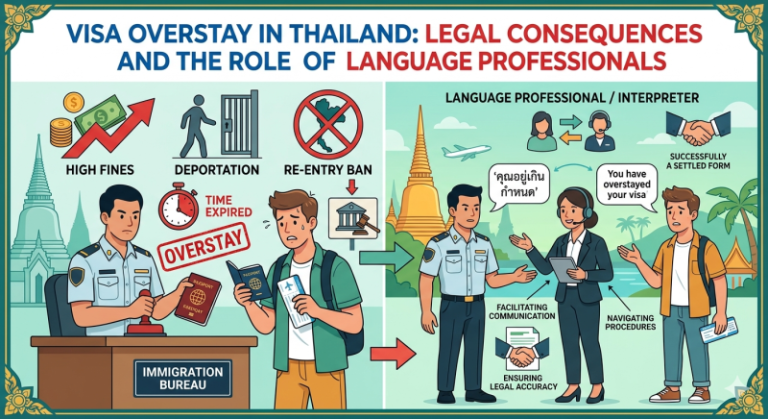
Thailand imposes strict penalties on individuals who overstay their visas. The primary penalty is a monetary fine calculated at 500 baht per day, up to a maximum of 20,000 baht. However, the severity of sanctions increases according to the duration of the overstay.
Individuals who overstay for more than 90 days may face re-entry bans ranging from one to ten years. If the foreign national is apprehended by authorities rather than voluntarily surrendering to immigration officials, the penalties are considerably harsher, as the authorities may interpret the conduct as deliberate evasion of immigration enforcement. In such cases, offenders may also be detained at an Immigration Detention Center (IDC) before deportation.
Although children under the age of 14 are exempt from overstay fines, their passports may still receive overstay stamps, potentially affecting future visa applications in other countries.
Managing and Preventing Visa Overstay
One of the most effective ways to prevent visa overstay is to regularly verify the authorized duration of stay and apply for an extension before the permitted period expires. In some cases, travelers whose visas remain valid may temporarily leave Thailand and re-enter the country to renew their period of stay. Nevertheless, this practice remains subject to the discretion of immigration officers.
Where the overstay period is less than 90 days, individuals may voluntarily depart Thailand and pay the applicable fine at an immigration checkpoint, thereby reducing the likelihood of severe long-term consequences. However, where the overstay exceeds 90 days, voluntary surrender to immigration authorities and obtaining legal assistance are generally more appropriate courses of action.
The Role of Certified Translators and Certified Interpreters in Immigration Proceedings
Language accessibility is a fundamental issue in immigration cases involving foreign nationals. Since many individuals subject to immigration investigations are unable to communicate effectively in Thai, certified translators and interpreters perform essential functions in ensuring access to justice and procedural transparency.
Certified translators are responsible for translating official documents such as passports, visas, administrative orders, residency certificates, and immigration appeal submissions. Such translations require both linguistic accuracy and legal precision, as even minor translation errors may significantly affect an individual’s immigration status.
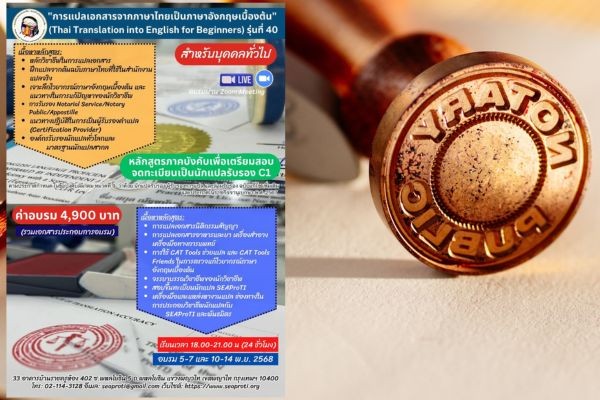
Translation certification providers further enhance the reliability of translated documents by formally certifying that translations accurately reflect the original texts. Certified translations are often required in immigration proceedings, court submissions, embassy applications, and administrative appeals.
Certified interpreters also play a vital role during interviews, investigations, detention procedures, and deportation hearings. Interpreters specializing in immigration law facilitate communication between immigration officials and foreign nationals, reducing misunderstandings and helping ensure that individuals fully understand their legal rights and obligations.
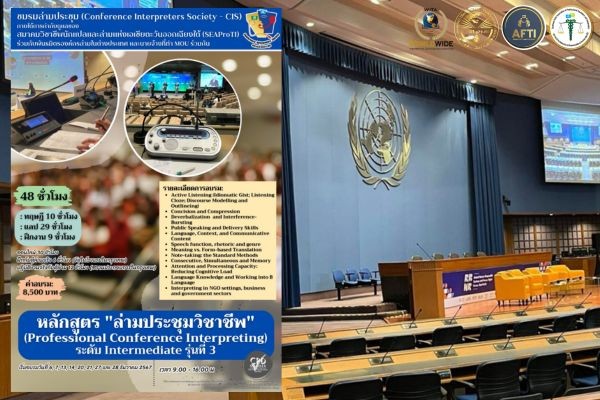
At the regional level, professional associations of translators and interpreters in Southeast Asia contribute to the development of professional standards, ethical guidelines, and certification systems for legal and immigration interpreting. These organizations promote principles such as confidentiality, impartiality, and accuracy, which are essential in cross-border legal communication.
Human Rights Protection and Multilingual Challenges
Although Thailand maintains a relatively comprehensive immigration enforcement system, one of the continuing challenges concerns the accessibility of legal information for foreign nationals. Many individuals overstay unintentionally because they misunderstand visa conditions or fail to comprehend immigration procedures.
In multilingual and multicultural contexts, professional translation and interpreting services therefore become crucial components of human rights protection. Such services help ensure that foreign nationals can understand allegations against them, exercise their right to appeal, and access legal information on an equal basis. This perspective aligns with broader principles concerning linguistic access to justice in multilingual societies (Mikkelson, 2016).
Conclusion
Visa overstay in Thailand represents a significant legal and administrative issue with long-term consequences for foreign nationals. Thailand’s immigration enforcement measures are stringent and may substantially affect an individual’s future international mobility. Consequently, increasing awareness of visa conditions and immigration procedures is essential.
At the same time, certified translators, translation certification providers, and certified interpreters play indispensable roles in promoting fairness, transparency, and access to justice in immigration proceedings. Strengthening professional translation and interpreting standards within Southeast Asia would contribute not only to more effective immigration administration but also to the protection of migrants’ rights within increasingly globalized and multilingual societies.
References
- Mikkelson, H. (2016). Introduction to court interpreting (2nd ed.). Routledge.
- Office of the Immigration Commission. (2023). Annual immigration statistics report. Bangkok: Ministry of Interior.
- Siam Legal International. (2025). Visa overstay in Thailand: What the penalties are, and what to do about it. Retrieved from the Siam Legal International website.
- Immigration Act B.E. 2522 (1979). Government Gazette of Thailand, Vol. 96, Special Issue 28, pp. 1–29.
For professional services, please visit: https://www.seaproti.org/practitioners/
About certified translators, translation certifiers, and certified interpreters associated with SEAProTI. The Southeast Asian Association of Professional Translators and Interpreters (SEAProTI) has officially shared the qualifications and requirements for becoming Certified Translators, Translation Certification Providers, and Certified Interpreters in Sections 9 and 10 of the Royal Gazette, which was published by the Prime Minister’s Office in Thailand on July 25, 2024. Certified Translators, Translation Certification Providers, and Certified Interpreters
The Council of State has proposed the enactment of a Royal Decree, granting registered translators and recognised translation certifiers from professional associations or accredited language institutions the authority to provide legally valid translation certification (Letter to SEAProTI dated April 28, 2025)
SEAProTI is the first professional association in Thailand and Southeast Asia to implement a comprehensive certification system for translators, certifiers, and interpreters.
Head Office: Baan Ratchakru Building, No. 33, Room 402, Soi Phahonyothin 5, Phahonyothin Road, Phaya Thai District, Bangkok 10400, Thailand
การอยู่เกินกำหนดวีซ่าในประเทศไทย: ผลทางกฎหมาย มาตรการลงโทษ และบทบาทของนักแปลและล่ามรับรองในบริบทการย้ายถิ่นข้ามพรมแดน
ผู้เขียน: ไกรฤกษ์ กรวยทอง
6 เมษายน 2569, กรุงเทพมหานคร – การอยู่เกินกำหนดวีซ่า (visa overstay) เป็นประเด็นสำคัญในกฎหมายคนเข้าเมืองของประเทศไทย โดยมีผลกระทบทั้งในด้านกฎหมาย สิทธิมนุษยชน ความมั่นคงของรัฐ และการเดินทางระหว่างประเทศ บทความนี้มุ่งวิเคราะห์กรอบกฎหมายและมาตรการลงโทษเกี่ยวกับการอยู่เกินกำหนดวีซ่าในประเทศไทย ตลอดจนแนวทางปฏิบัติของสำนักงานตรวจคนเข้าเมืองไทยในการจัดการกับชาวต่างชาติที่กระทำผิดกฎหมายดังกล่าว การศึกษาชี้ให้เห็นว่า มาตรการลงโทษของไทยมีลักษณะผสมผสานระหว่างการลงโทษทางปกครองและการควบคุมการเข้าเมือง โดยครอบคลุมตั้งแต่ค่าปรับ การเพิกถอนสิทธิการเดินทาง ไปจนถึงการขึ้นบัญชีดำและการกักตัวในสถานกักกันคนเข้าเมือง นอกจากนี้ บทความยังอภิปรายบทบาทของนักแปลรับรอง (certified translators) ผู้รับรองการแปล (translation certification providers) และล่ามรับรอง (certified interpreters) ซึ่งมีความสำคัญอย่างยิ่งในกระบวนการสื่อสารระหว่างรัฐกับชาวต่างชาติ โดยเฉพาะในการแปลเอกสารทางกฎหมาย การให้คำรับรองเอกสาร การล่ามในกระบวนการสอบสวน และการอำนวยความเป็นธรรมแก่ผู้ถูกกล่าวหาในบริบทข้ามพรมแดน การศึกษานี้เสนอว่าการพัฒนาระบบการแปลและการล่ามเชิงวิชาชีพในภูมิภาคเอเชียตะวันออกเฉียงใต้จะช่วยยกระดับการคุ้มครองสิทธิของชาวต่างชาติและเพิ่มประสิทธิภาพของกระบวนการตรวจคนเข้าเมืองในประเทศไทย
คำสำคัญ: การอยู่เกินกำหนดวีซ่า, กฎหมายคนเข้าเมือง, ประเทศไทย, นักแปลรับรอง, ล่ามรับรอง, การแปลกฎหมาย, สิทธิของชาวต่างชาติ
บทนำ
ในยุคโลกาภิวัตน์ การเคลื่อนย้ายบุคคลระหว่างประเทศมีแนวโน้มเพิ่มสูงขึ้นอย่างต่อเนื่อง ไม่ว่าจะเพื่อการท่องเที่ยว การศึกษา การลงทุน หรือการทำงาน ประเทศไทยถือเป็นหนึ่งในศูนย์กลางสำคัญของภูมิภาคเอเชียตะวันออกเฉียงใต้ที่รองรับชาวต่างชาติจำนวนมากในแต่ละปี ส่งผลให้ประเด็นด้านกฎหมายคนเข้าเมืองและการควบคุมการพำนักของชาวต่างชาติกลายเป็นประเด็นสำคัญเชิงนโยบาย (สำนักงานคณะกรรมการตรวจคนเข้าเมือง, 2566)
หนึ่งในปัญหาที่พบบ่อยคือ “การอยู่เกินกำหนดวีซ่า” หรือ visa overstay ซึ่งหมายถึงการพำนักอยู่ในประเทศไทยเกินระยะเวลาที่ได้รับอนุญาตตามวีซ่าหรือเงื่อนไขการอนุญาตให้อยู่ในราชอาณาจักร การกระทำดังกล่าวถือเป็นความผิดตามพระราชบัญญัติคนเข้าเมือง พ.ศ. 2522 และอาจนำไปสู่บทลงโทษหลายประการ เช่น ค่าปรับ การเนรเทศ การห้ามเดินทางเข้าประเทศ และการกักตัวในสถานกักกันคนเข้าเมือง
นอกจากมิติทางกฎหมายแล้ว ปัญหาการอยู่เกินกำหนดวีซ่ายังเกี่ยวข้องกับมิติด้านภาษาและการสื่อสารข้ามวัฒนธรรม เนื่องจากผู้ถูกกล่าวหาจำนวนมากมิได้ใช้ภาษาไทยเป็นภาษาแม่ การเข้าถึงข้อมูลทางกฎหมาย การทำความเข้าใจเอกสารราชการ และการสื่อสารกับเจ้าหน้าที่รัฐจึงจำเป็นต้องอาศัยนักแปลและล่ามที่มีความเชี่ยวชาญเฉพาะทาง โดยเฉพาะนักแปลรับรองและล่ามรับรองที่ได้รับการยอมรับจากองค์กรวิชาชีพในระดับภูมิภาค
ความหมายและลักษณะของการอยู่เกินกำหนดวีซ่า
การอยู่เกินกำหนดวีซ่าเกิดขึ้นเมื่อชาวต่างชาติพำนักอยู่ในประเทศไทยเกินระยะเวลาที่ได้รับอนุญาตตามตราประทับตรวจคนเข้าเมืองหรือเงื่อนไขของวีซ่า แม้ว่าวีซ่าบางประเภทจะมีอายุหลายปี แต่ระยะเวลาที่สามารถพำนักต่อเนื่องได้อาจสั้นกว่าระยะเวลาความมีผลของวีซ่า ตัวอย่างเช่น วีซ่าประเภท Destination Thailand Visa (DTV) อาจมีอายุสูงสุดห้าปี แต่อนุญาตให้พำนักต่อเนื่องได้เพียง 180 วันต่อครั้ง หากผู้ถือวีซ่าไม่เดินทางออกนอกประเทศหรือไม่ยื่นขอขยายระยะเวลาพำนักก่อนครบกำหนด ก็จะถือว่าอยู่เกินกำหนดโดยทันที (Siam Legal International, 2568)
การกำหนดวันสิ้นสุดการพำนักมักระบุไว้ในตราประทับตรวจคนเข้าเมืองในหนังสือเดินทาง ซึ่งถือเป็นหลักฐานสำคัญทางกฎหมาย ผู้เดินทางจึงจำเป็นต้องตรวจสอบวันดังกล่าวอย่างละเอียดเพื่อหลีกเลี่ยงการกระทำผิดโดยไม่เจตนา
มาตรการลงโทษตามกฎหมายไทย
ประเทศไทยใช้มาตรการลงโทษผู้ที่อยู่เกินกำหนดวีซ่าอย่างเข้มงวด โดยค่าปรับเริ่มต้นอยู่ที่วันละ 500 บาท และอาจสูงสุดถึง 20,000 บาท ทั้งนี้ ระยะเวลาการอยู่เกินกำหนดมีผลต่อความรุนแรงของบทลงโทษ หากอยู่เกินกำหนดเกิน 90 วัน ผู้กระทำผิดอาจถูกห้ามเดินทางเข้าประเทศไทยเป็นระยะเวลาตั้งแต่ 1 ปีถึง 10 ปี ขึ้นอยู่กับระยะเวลาการกระทำผิด
ในกรณีที่ผู้กระทำผิดถูกจับกุมแทนที่จะเข้ามอบตัวต่อเจ้าหน้าที่ตรวจคนเข้าเมือง บทลงโทษจะรุนแรงยิ่งขึ้น โดยรัฐถือว่าผู้กระทำผิดมีเจตนาหลีกเลี่ยงการบังคับใช้กฎหมาย นอกจากนี้ ผู้กระทำผิดอาจถูกส่งตัวไปยังสถานกักกันคนเข้าเมือง (Immigration Detention Center: IDC) ก่อนถูกเนรเทศออกนอกประเทศ
แม้เด็กอายุต่ำกว่า 14 ปีจะได้รับการยกเว้นค่าปรับ แต่หนังสือเดินทางของเด็กยังคงถูกประทับตราว่าอยู่เกินกำหนด ซึ่งอาจส่งผลกระทบต่อการขอวีซ่าในประเทศอื่นในอนาคต
การจัดการปัญหาการอยู่เกินกำหนดวีซ่า
แนวทางสำคัญในการหลีกเลี่ยงการอยู่เกินกำหนดคือการตรวจสอบวันอนุญาตให้อยู่ในราชอาณาจักรอย่างสม่ำเสมอ และยื่นคำร้องขอขยายระยะเวลาพำนักก่อนครบกำหนด หากวีซ่ายังคงมีผลแต่สิทธิการพำนักใกล้หมดอายุ ผู้ถือวีซ่าอาจเดินทางออกไปยังประเทศเพื่อนบ้านและเดินทางกลับเข้ามาใหม่เพื่อเริ่มระยะเวลาพำนักรอบใหม่ อย่างไรก็ตาม แนวปฏิบัตินี้อยู่ภายใต้ดุลพินิจของเจ้าหน้าที่ตรวจคนเข้าเมือง
ในกรณีที่อยู่เกินกำหนดไม่เกิน 90 วัน ผู้กระทำผิดสามารถเดินทางออกนอกประเทศและชำระค่าปรับที่ด่านตรวจคนเข้าเมืองได้โดยสมัครใจ ซึ่งอาจช่วยลดผลกระทบต่อประวัติการเดินทาง อย่างไรก็ตาม หากระยะเวลาการอยู่เกินกำหนดเกินกว่า 90 วัน การเข้ามอบตัวต่อเจ้าหน้าที่และการขอความช่วยเหลือทางกฎหมายถือเป็นแนวทางที่เหมาะสมกว่า
บทบาทของนักแปลรับรองและล่ามรับรองในคดีตรวจคนเข้าเมือง
ในบริบทของคดีตรวจคนเข้าเมือง ความถูกต้องของภาษาและการสื่อสารมีความสำคัญอย่างยิ่ง เนื่องจากผู้ถูกกล่าวหาจำนวนมากไม่สามารถใช้ภาษาไทยได้อย่างเพียงพอ นักแปลรับรองและล่ามรับรองจึงมีบทบาทสำคัญในการคุ้มครองสิทธิของชาวต่างชาติและสร้างความเป็นธรรมในกระบวนการทางกฎหมาย
นักแปลรับรองมีหน้าที่แปลเอกสารราชการ เช่น หนังสือเดินทาง วีซ่า คำสั่งทางปกครอง หนังสือรับรองการพำนัก และเอกสารอุทธรณ์ต่อสำนักงานตรวจคนเข้าเมือง การแปลดังกล่าวจำเป็นต้องมีความแม่นยำทั้งในเชิงภาษาและกฎหมาย เนื่องจากความคลาดเคลื่อนเพียงเล็กน้อยอาจส่งผลต่อสถานะทางกฎหมายของบุคคลได้
ในขณะเดียวกัน ผู้รับรองการแปล (translation certification providers) มีหน้าที่รับรองว่าเอกสารแปลมีความถูกต้องตรงตามต้นฉบับ ซึ่งช่วยเพิ่มความน่าเชื่อถือของเอกสารในกระบวนการพิจารณาของหน่วยงานรัฐ ศาล หรือสถานเอกอัครราชทูต
ล่ามรับรองมีบทบาทสำคัญในขั้นตอนการสอบสวน การสัมภาษณ์ และการชี้แจงสิทธิของผู้ถูกควบคุมตัว โดยเฉพาะในสถานกักกันคนเข้าเมืองและกระบวนการอุทธรณ์คำสั่งเนรเทศ ล่ามที่มีความรู้ด้านกฎหมายตรวจคนเข้าเมืองสามารถช่วยลดความเข้าใจผิดระหว่างเจ้าหน้าที่รัฐกับชาวต่างชาติ และช่วยให้ผู้ถูกกล่าวหาเข้าถึงกระบวนการยุติธรรมได้อย่างมีประสิทธิภาพ
ในระดับภูมิภาค สมาคมวิชาชีพนักแปลและล่ามแห่งเอเชียตะวันออกเฉียงใต้มีบทบาทในการกำหนดมาตรฐานวิชาชีพ การอบรมด้านจริยธรรม และการรับรองคุณสมบัติของนักแปลและล่ามในบริบทกฎหมายข้ามพรมแดน องค์กรเหล่านี้ยังมีส่วนสำคัญในการพัฒนาหลักเกณฑ์ด้านความถูกต้อง ความลับ และความเป็นกลาง ซึ่งเป็นหลักการพื้นฐานของการแปลและการล่ามทางกฎหมาย
การคุ้มครองสิทธิและความท้าทายในบริบทพหุภาษา
แม้ว่าประเทศไทยจะมีมาตรการด้านตรวจคนเข้าเมืองที่ชัดเจน แต่ความท้าทายสำคัญยังคงอยู่ที่การเข้าถึงข้อมูลทางกฎหมายของชาวต่างชาติ ผู้ถูกกล่าวหาหลายรายไม่เข้าใจขั้นตอนทางกฎหมายหรือเงื่อนไขของวีซ่าที่ตนถืออยู่ ส่งผลให้เกิดการอยู่เกินกำหนดโดยไม่เจตนา
ในบริบทนี้ การให้บริการแปลและล่ามที่มีคุณภาพจึงมีความสำคัญต่อการคุ้มครองสิทธิมนุษยชน โดยเฉพาะสิทธิในการรับรู้ข้อกล่าวหา สิทธิในการอุทธรณ์ และสิทธิในการเข้าถึงข้อมูลของรัฐอย่างเท่าเทียม แนวคิดดังกล่าวสอดคล้องกับหลักการว่าด้วยการเข้าถึงกระบวนการยุติธรรมในสังคมพหุภาษา (มิคเคลสัน, 2559)
สรุป
การอยู่เกินกำหนดวีซ่าในประเทศไทยเป็นประเด็นทางกฎหมายที่มีผลกระทบทั้งในระดับบุคคลและระดับนโยบายรัฐ มาตรการลงโทษของไทยมีความเข้มงวดและอาจส่งผลต่อเสรีภาพในการเดินทางของชาวต่างชาติในระยะยาว ดังนั้น การสร้างความเข้าใจเกี่ยวกับเงื่อนไขของวีซ่าและกระบวนการตรวจคนเข้าเมืองจึงมีความจำเป็นอย่างยิ่ง
ขณะเดียวกัน บทบาทของนักแปลรับรอง ผู้รับรองการแปล และล่ามรับรองมีความสำคัญต่อการสร้างความเป็นธรรมและการคุ้มครองสิทธิของผู้ถูกกล่าวหาในบริบทข้ามพรมแดน การพัฒนามาตรฐานวิชาชีพด้านการแปลและการล่ามในภูมิภาคเอเชียตะวันออกเฉียงใต้จะช่วยเสริมสร้างประสิทธิภาพของกระบวนการตรวจคนเข้าเมือง และสนับสนุนหลักนิติธรรมในสังคมพหุวัฒนธรรม
เอกสารอ้างอิง
- มิคเคลสัน, เอช. (2559). Introduction to court interpreting (พิมพ์ครั้งที่ 2). Routledge.
- สำนักงานคณะกรรมการตรวจคนเข้าเมือง. (2566). รายงานสถิติการตรวจคนเข้าเมืองประจำปี. กรุงเทพมหานคร: กระทรวงมหาดไทย.
- Siam Legal International. (2568). Visa overstay in Thailand: What the penalties are, and what to do about it. สืบค้นจากเว็บไซต์ของ Siam Legal International.
- พระราชบัญญัติคนเข้าเมือง พ.ศ. 2522. ราชกิจจานุเบกษา เล่ม 96 ตอนที่ 28 ฉบับพิเศษ หน้า 1–29.
ขอใช้บริการนักวิชาชีพของสมาคมได้ที่:https://www.seaproti.org/practitioners/
สมาคมวิชาชีพนักแปลและล่ามแห่งเอเชียตะวันออกเฉียงใต้ (SEAProTI) ได้ประกาศหลักเกณฑ์และคุณสมบัติของผู้ที่ขึ้นทะเบียนเป็น “นักแปลรับรอง (Certified Translators) และผู้รับรองการแปล (Translation Certification Providers) และล่ามรับรอง (Certified Interpreters)” ของสมาคม หมวดที่ 9 และหมวดที่ 10 ในราชกิจจานุเบกษา ของสำนักเลขาธิการคณะรัฐมนตรี ในสำนักนายกรัฐมนตรี แห่งราชอาณาจักรไทย ลงวันที่ 25 ก.ค. 2567 เล่มที่ 141 ตอนที่ 66 ง หน้า 100 อ่านฉบับเต็มได้ที่: นักแปลรับรอง ผู้รับรองการแปล และล่ามรับรอง
สำนักคณะกรรมการกฤษฎีกาเสนอให้ตราเป็นพระราชกฤษฎีกา โดยกำหนดให้นักแปลที่ขึ้นทะเบียน รวมถึงผู้รับรองการแปลจากสมาคมวิชาชีพหรือสถาบันสอนภาษาที่มีการอบรมและขึ้นทะเบียน สามารถรับรองคำแปลได้ (จดหมายถึงสมาคม SEAProTI ลงวันที่ 28 เม.ย. 2568)
สมาคมวิชาชีพนักแปลและล่ามแห่งเอเชียตะวันออกเฉียงใต้เป็นสมาคมวิชาชีพแห่งแรกและแห่งเดียวในประเทศไทยและภูมิภาคเอเชียตะวันออกเฉียงใต้ที่มีระบบรับรองนักแปลรับรอง ผู้รับรองการแปล และล่ามรับรอง
สำนักงานใหญ่: อาคารบ้านราชครู เลขที่ 33 ห้อง 402 ซอยพหลโยธิน 5 ถนนพหลโยธิน แขวงพญาไท เขตพญาไท กรุงเทพมหานคร 10400 ประเทศไทย