



The Slowdown of the Thai Real Estate Market and Its Impact on Foreign Buyers in 2026: An Economic and Legal Analysis and the Role of Certified Translators and Certified Interpreters in the Context of International Investment
Author: Phakaporn Tanjararak
May 07, 2026, Bangkok – This academic article aims to analyze the slowdown of the Thai real estate market in 2026 and examine its impacts on foreign buyers, investors, and long-term residents. The study focuses on macroeconomic factors, household debt burdens, tightening credit conditions, and changing behaviors of real estate developers (Bank of Thailand, 2025; Office of the National Economic and Social Development Council, 2025). In addition, the article discusses the roles of certified translators, translation certification providers, and certified interpreters under the Association of Translators and Interpreters of Southeast Asia in facilitating legal documentation, cross-language communication, and risk reduction in international real estate transactions. The findings indicate that although the market slowdown creates pressure on developers and domestic purchasing power, it also presents certain opportunities for foreign buyers, particularly in price negotiation and access to completed developments. However, legal complexity, cross-border fund transfers, and official document translation remain key obstacles (Bank of Thailand, 2025). Consequently, language professionals play a strategic role in Thailand’s real estate investment ecosystem in the era of globalization.
Introduction
During 2025–2026, the Thai real estate market has experienced a significant slowdown due to multiple economic factors, including low economic growth, increasing household debt, tightening credit conditions by financial institutions, and declining domestic purchasing power (Office of the National Economic and Social Development Council, 2025; Bank of Thailand, 2025). These factors have led Thai consumers to postpone housing purchase decisions. At the same time, real estate developers face unsold inventory and cash flow pressure, resulting in strategic changes in pricing, marketing, and project development (Bank of Thailand, 2025).
Although this crisis primarily affects domestic stakeholders, foreign buyers and investors are also impacted both positively and negatively. In some cases, the market slowdown creates opportunities to acquire properties at more reasonable prices and increases bargaining power with developers. However, foreign investors still face legal constraints, cross-border fund transfers, and complex documentation procedures (Bank of Thailand, 2025).
In this context, cross-language communication and legal document translation have become essential components of real estate investment processes. As a result, certified translators, translation certification providers, and certified interpreters have become increasingly important in ensuring accuracy, credibility, and security in international transactions.
The Slowdown of the Thai Real Estate Market in 2026
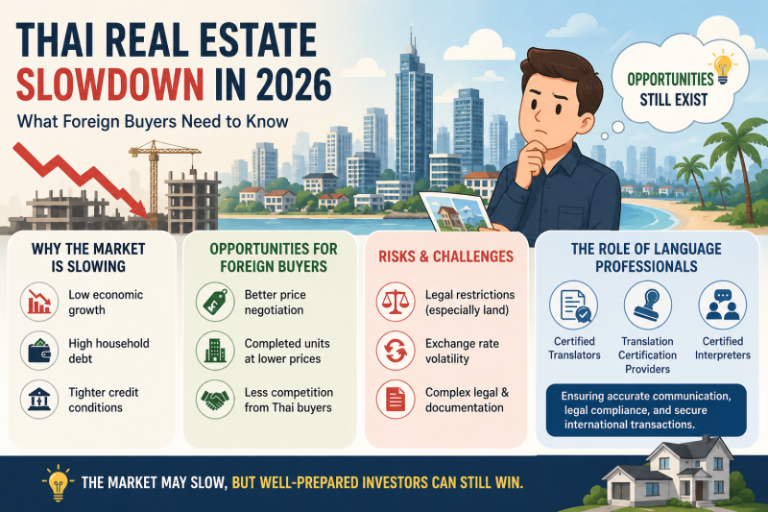
The Thai real estate market in 2026 is expected to stagnate due to structural economic and financial problems, as well as declining consumer confidence caused by earlier natural disasters (Office of the National Economic and Social Development Council, 2025). Low income growth relative to the cost of living has also contributed to delayed housing purchase decisions, even though underlying demand still exists.
Household debt is a major factor limiting access to credit, leading financial institutions to tighten lending conditions, which in turn suppress overall real estate sales (Bank of Thailand, 2025). Economically, this situation reflects an imbalance between supply and demand, where effective purchasing power declines despite the presence of structural demand.
Impacts on Foreign Buyers and Investors
For foreign buyers and investors, the market slowdown presents both opportunities and risks. On the opportunity side, buyers can negotiate lower prices as developers seek to maintain liquidity (Bank of Thailand, 2025). Completed or near-completion condominium units are offered at reduced prices, and competition from Thai buyers has decreased.
However, foreign investors continue to face risks from exchange rate volatility, legal restrictions, and ownership limitations in Thailand, particularly regarding land ownership (Bank of Thailand, 2025).
Differences by Location and Property Segment
The Thai real estate market varies significantly by location. Bangkok remains highly competitive in the mid-range condominium market, especially in areas near mass transit systems. In contrast, tourist destinations such as Phuket and Pattaya continue to attract foreign investors due to stronger tourism-driven and long-term investment demand.
Discussion
The findings indicate that the slowdown of the Thai real estate market in 2026 is directly associated with structural economic factors, including high household debt, strict lending policies, and declining domestic purchasing power. This is consistent with the report of the Bank of Thailand (2025), which highlights that household financial vulnerability significantly affects overall real estate market stability.
From a behavioral perspective, developers are forced to shift strategies toward inventory clearance and increased price incentives. Foreign buyers benefit from improved bargaining power and access to ready-to-sell properties but still face risks related to exchange rate fluctuations, legal constraints, and uncertain investment returns (Bank of Thailand, 2025).
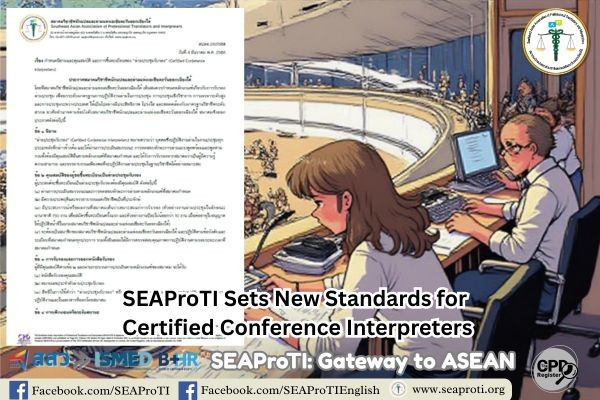
Furthermore, the study confirms that the roles of certified translators, translation certification providers, and certified interpreters have become increasingly important in international real estate transactions. These professionals help reduce linguistic and legal discrepancies, making transactions more transparent and secure, particularly under the regulatory standards of the Association of Translators and Interpreters of Southeast Asia (Association of Translators and Interpreters of Southeast Asia, 2026).
Conclusion
The slowdown of the Thai real estate market in 2026 reflects structural economic issues, particularly household debt and credit constraints (Bank of Thailand, 2025). While this situation creates challenges for developers, it also opens opportunities for foreign buyers in certain aspects. However, legal and linguistic complexities remain major barriers, making the roles of certified translators, translation certification providers, and certified interpreters strategically important in international investment processes.
References
- Bassnett, S. (1991). Translation Studies. London: Routledge.
- Hatim, B., & Mason, I. (1997). The Translator as Communicator. London: Routledge.
- Mason, I. (1999). “Institutional Translation.” In Encyclopedia of Translation Studies. London: Routledge.
- Office of the National Economic and Social Development Council. (2025). Thailand Economic Report 2025. Bangkok: NESDC.
- Bank of Thailand. (2025). Financial Stability Report. Bangkok: Bank of Thailand.
For professional services, please visit: https://www.seaproti.org/practitioners/
About certified translators, translation certifiers, and certified interpreters associated with SEAProTI. The Southeast Asian Association of Professional Translators and Interpreters (SEAProTI) has officially shared the qualifications and requirements for becoming Certified Translators, Translation Certification Providers, and Certified Interpreters in Sections 9 and 10 of the Royal Gazette, which was published by the Prime Minister’s Office in Thailand on July 25, 2024. Certified Translators, Translation Certification Providers, and Certified Interpreters
The Council of State has proposed the enactment of a Royal Decree, granting registered translators and recognised translation certifiers from professional associations or accredited language institutions the authority to provide legally valid translation certification (Letter to SEAProTI dated April 28, 2025)
SEAProTI is the first professional association in Thailand and Southeast Asia to implement a comprehensive certification system for translators, certifiers, and interpreters.
Head Office: Baan Ratchakru Building, No. 33, Room 402, Soi Phahonyothin 5, Phahonyothin Road, Phaya Thai District, Bangkok 10400, Thailand
Email: hello@seaproti.com | Tel.: (+66) 2-114-3128 (Office hours: Mon–Fri, 09:00–17:00).
ภาวะชะลอตัวของตลาดอสังหาริมทรัพย์ไทยและผลกระทบต่อผู้ซื้อชาวต่างชาติใน พ.ศ. 2569: การวิเคราะห์เชิงเศรษฐกิจ กฎหมาย และบทบาทของนักแปลรับรองและล่ามรับรองในบริบทการลงทุนระหว่างประเทศ
ผู้เขียน: ภคพร ตันจรารักษ์
07 พฤษภาคม 2569, กรุงเทพมหานคร –บทความวิชาการนี้มีวัตถุประสงค์เพื่อวิเคราะห์ภาวะชะลอตัวของตลาดอสังหาริมทรัพย์ไทยใน พ.ศ. 2569 และศึกษาผลกระทบที่เกิดขึ้นต่อผู้ซื้อ นักลงทุน และผู้พำนักระยะยาวชาวต่างชาติ โดยเน้นการวิเคราะห์ปัจจัยด้านเศรษฐกิจมหภาค ภาระหนี้ครัวเรือน การเข้มงวดด้านสินเชื่อ และการเปลี่ยนแปลงพฤติกรรมของผู้พัฒนาอสังหาริมทรัพย์ (ธนาคารแห่งประเทศไทย, พ.ศ. 2568; สำนักงานสภาพัฒนาการเศรษฐกิจและสังคมแห่งชาติ, พ.ศ. 2568) นอกจากนี้ บทความยังอภิปรายถึงบทบาทของนักแปลรับรอง ผู้รับรองการแปล และล่ามรับรองของสมาคมวิชาชีพนักแปลและล่ามแห่งเอเชียตะวันออกเฉียงใต้ ในการอำนวยความสะดวกด้านเอกสารกฎหมาย การสื่อสารข้ามภาษา และการลดความเสี่ยงในการทำธุรกรรมอสังหาริมทรัพย์ระหว่างประเทศ ผลการวิเคราะห์พบว่า แม้ว่าภาวะตลาดชะลอตัวจะสร้างแรงกดดันต่อผู้ประกอบการและกำลังซื้อภายในประเทศ แต่กลับเปิดโอกาสบางประการแก่ผู้ซื้อชาวต่างชาติ โดยเฉพาะด้านการต่อรองราคาและการเข้าถึงโครงการที่สร้างเสร็จแล้ว อย่างไรก็ตาม ความซับซ้อนด้านกฎหมาย การโอนเงินระหว่างประเทศ และการแปลเอกสารราชการยังคงเป็นอุปสรรคสำคัญ (ธนาคารแห่งประเทศไทย, พ.ศ. 2568) จึงทำให้ผู้เชี่ยวชาญด้านการแปลและล่ามมีบทบาทเชิงยุทธศาสตร์ต่อระบบนิเวศการลงทุนอสังหาริมทรัพย์ไทยในยุคโลกาภิวัตน์
บทนำ
ในช่วง พ.ศ. 2568–2569 ตลาดอสังหาริมทรัพย์ของประเทศไทยเผชิญภาวะชะลอตัวอย่างมีนัยสำคัญ อันเป็นผลมาจากปัจจัยทางเศรษฐกิจหลายประการ ได้แก่ การเติบโตทางเศรษฐกิจที่ต่ำ ภาระหนี้ครัวเรือนที่เพิ่มขึ้น ความเข้มงวดในการปล่อยสินเชื่อของสถาบันการเงิน และกำลังซื้อภายในประเทศที่ลดลง (สำนักงานสภาพัฒนาการเศรษฐกิจและสังคมแห่งชาติ, พ.ศ. 2568; ธนาคารแห่งประเทศไทย, พ.ศ. 2568) ปัจจัยเหล่านี้ส่งผลให้ผู้บริโภคชาวไทยชะลอการตัดสินใจซื้อที่อยู่อาศัย ขณะเดียวกัน ผู้พัฒนาอสังหาริมทรัพย์ต้องเผชิญกับปัญหาหน่วยขายคงค้างและแรงกดดันด้านกระแสเงินสด ส่งผลให้เกิดการเปลี่ยนแปลงเชิงกลยุทธ์ทั้งด้านราคา การตลาด และการพัฒนาโครงการ (ธนาคารแห่งประเทศไทย, พ.ศ. 2568)
แม้วิกฤตดังกล่าวจะส่งผลกระทบต่อผู้ประกอบการภายในประเทศเป็นหลัก แต่ผู้ซื้อและนักลงทุนชาวต่างชาติก็ได้รับผลกระทบทั้งในเชิงบวกและเชิงลบเช่นกัน โดยในบางกรณี ภาวะตลาดชะลอตัวกลับสร้างโอกาสในการเข้าถึงอสังหาริมทรัพย์ในราคาที่เหมาะสมมากขึ้น รวมถึงเพิ่มอำนาจในการต่อรองกับผู้พัฒนาโครงการ อย่างไรก็ตาม นักลงทุนต่างชาติยังคงต้องเผชิญกับข้อจำกัดด้านกฎหมาย การโอนเงินระหว่างประเทศ และขั้นตอนด้านเอกสารที่มีความซับซ้อน (ธนาคารแห่งประเทศไทย, พ.ศ. 2568)
ในบริบทดังกล่าว การสื่อสารข้ามภาษาและการแปลเอกสารทางกฎหมายจึงกลายเป็นองค์ประกอบสำคัญของกระบวนการลงทุนอสังหาริมทรัพย์ ด้วยเหตุนี้ นักแปลรับรอง ผู้รับรองการแปล และล่ามรับรองจึงมีบทบาทเพิ่มขึ้นอย่างชัดเจนในการสร้างความถูกต้อง ความน่าเชื่อถือ และความปลอดภัยให้แก่ธุรกรรมระหว่างประเทศ
ภาวะชะลอตัวของตลาดอสังหาริมทรัพย์ไทยใน พ.ศ. 2569
ตลาดอสังหาริมทรัพย์ไทยใน พ.ศ. 2569 มีแนวโน้มเข้าสู่ภาวะชะงักงัน โดยสาเหตุสำคัญมาจากปัญหาเชิงโครงสร้างทางเศรษฐกิจและการเงิน รวมถึงความเชื่อมั่นผู้บริโภคที่ลดลงจากเหตุการณ์ภัยพิบัติทางธรรมชาติในช่วงก่อนหน้า (สำนักงานสภาพัฒนาการเศรษฐกิจและสังคมแห่งชาติ, พ.ศ. 2568) รายได้ของประชาชนที่เติบโตต่ำเมื่อเทียบกับค่าครองชีพส่งผลให้การตัดสินใจซื้อที่อยู่อาศัยชะลอตัว แม้ความต้องการพื้นฐานยังคงมีอยู่
ภาระหนี้ครัวเรือนเป็นปัจจัยสำคัญที่ทำให้ผู้บริโภคไม่สามารถเข้าถึงสินเชื่อได้ง่าย ส่งผลให้สถาบันการเงินเพิ่มความเข้มงวดในการปล่อยสินเชื่อ ซึ่งกดดันยอดขายอสังหาริมทรัพย์โดยรวม (ธนาคารแห่งประเทศไทย, พ.ศ. 2568) ในเชิงเศรษฐศาสตร์ ภาวะดังกล่าวสะท้อนความไม่สมดุลระหว่างอุปสงค์และอุปทาน โดยกำลังซื้อที่แท้จริงลดลง แม้อุปสงค์เชิงโครงสร้างยังคงมีอยู่
ผลกระทบต่อผู้ซื้อและนักลงทุนชาวต่างชาติ
สำหรับผู้ซื้อและนักลงทุนชาวต่างชาติ ภาวะตลาดชะลอตัวสร้างทั้งโอกาสและความเสี่ยงร่วมกัน ในด้านโอกาส ผู้ซื้อสามารถต่อรองราคาได้ง่ายขึ้น เนื่องจากผู้พัฒนาโครงการต้องเร่งรักษาสภาพคล่อง (ธนาคารแห่งประเทศไทย, พ.ศ. 2568) ขณะที่โครงการสร้างเสร็จหรือใกล้แล้วเสร็จมีราคาลดลง และการแข่งขันจากผู้ซื้อชาวไทยลดลง
อย่างไรก็ตาม นักลงทุนต่างชาติยังคงเผชิญความเสี่ยงจากความผันผวนของอัตราแลกเปลี่ยน ข้อจำกัดทางกฎหมาย และข้อจำกัดด้านการถือครองอสังหาริมทรัพย์ในประเทศไทย โดยเฉพาะที่ดิน (ธนาคารแห่งประเทศไทย, พ.ศ. 2568)
ความแตกต่างด้านพื้นที่และประเภทโครงการ
ตลาดอสังหาริมทรัพย์ในประเทศไทยมีความแตกต่างตามพื้นที่ โดยกรุงเทพมหานครมีการแข่งขันสูงในตลาดคอนโดมิเนียมระดับกลาง โดยเฉพาะบริเวณใกล้ระบบขนส่งมวลชน ขณะที่เมืองท่องเที่ยว เช่น ภูเก็ตและพัทยา ยังคงได้รับความสนใจจากนักลงทุนต่างชาติเนื่องจากมีความต้องการเชิงท่องเที่ยวและการลงทุนระยะยาวมากกว่า
อภิปรายผล
ผลการศึกษาชี้ให้เห็นว่าภาวะชะลอตัวของตลาดอสังหาริมทรัพย์ไทยใน พ.ศ. 2569 มีความสัมพันธ์โดยตรงกับปัจจัยเชิงโครงสร้างทางเศรษฐกิจ ได้แก่ หนี้ครัวเรือนที่อยู่ในระดับสูง ความเข้มงวดของสถาบันการเงิน และกำลังซื้อภายในประเทศที่ลดลง ซึ่งสอดคล้องกับรายงานของธนาคารแห่งประเทศไทย (ธนาคารแห่งประเทศไทย, พ.ศ. 2568) ที่ระบุว่าความเปราะบางทางการเงินของครัวเรือนส่งผลต่อเสถียรภาพของตลาดอสังหาริมทรัพย์โดยรวม
ในเชิงพฤติกรรมตลาด ผู้พัฒนาโครงการต้องปรับกลยุทธ์ไปสู่การระบายสินค้าคงเหลือและการใช้แรงจูงใจด้านราคาเพิ่มขึ้น ขณะที่ผู้ซื้อชาวต่างชาติได้รับประโยชน์ในด้านการต่อรองราคาและการเข้าถึงโครงการที่พร้อมขาย แต่ยังคงเผชิญความเสี่ยงด้านอัตราแลกเปลี่ยน กฎหมาย และผลตอบแทนการลงทุนที่ไม่แน่นอน (ธนาคารแห่งประเทศไทย, พ.ศ. 2568)
นอกจากนี้ ผลการศึกษายังยืนยันว่าบทบาทของนักแปลรับรอง ผู้รับรองการแปล และล่ามรับรองมีความสำคัญเพิ่มขึ้นอย่างชัดเจนในธุรกรรมอสังหาริมทรัพย์ระหว่างประเทศ เนื่องจากช่วยลดความคลาดเคลื่อนด้านภาษาและกฎหมาย ทำให้กระบวนการซื้อขายมีความโปร่งใสและปลอดภัยมากขึ้น โดยเฉพาะภายใต้บทบาทกำกับมาตรฐานของสมาคมวิชาชีพนักแปลและล่ามแห่งเอเชียตะวันออกเฉียงใต้ (สมาคมวิชาชีพนักแปลและล่ามแห่งเอเชียตะวันออกเฉียงใต้, พ.ศ. 2569)
สรุป
ภาวะชะลอตัวของตลาดอสังหาริมทรัพย์ไทยใน พ.ศ. 2569 สะท้อนปัญหาเชิงโครงสร้างทางเศรษฐกิจ ได้แก่ หนี้ครัวเรือนและข้อจำกัดด้านสินเชื่อ (ธนาคารแห่งประเทศไทย, พ.ศ. 2568) แม้จะสร้างความท้าทายต่อผู้ประกอบการ แต่กลับเปิดโอกาสแก่ผู้ซื้อชาวต่างชาติในบางมิติ อย่างไรก็ตาม ความซับซ้อนด้านกฎหมายและภาษาเป็นอุปสรรคสำคัญ ทำให้บทบาทของนักแปลรับรอง ผู้รับรองการแปล และล่ามรับรองมีความสำคัญเชิงยุทธศาสตร์ต่อการลงทุนระหว่างประเทศ
เอกสารอ้างอิง
- แบสเน็ตต์, ซูซาน. (พ.ศ. 2534). การศึกษาการแปล. ลอนดอน: รูต์เลดจ์.
- ฮัททิม, เบซิล, และ เมสัน, เอียน. (พ.ศ. 2540). ผู้แปลในฐานะผู้สื่อสาร. ลอนดอน: รูต์เลดจ์.
- เมสัน, เอียน. (พ.ศ. 2542). “การแปลเชิงสถาบัน”. ใน สารานุกรมการแปลศึกษา. ลอนดอน: รูต์เลดจ์.
- สำนักงานสภาพัฒนาการเศรษฐกิจและสังคมแห่งชาติ. (พ.ศ. 2568). รายงานภาวะเศรษฐกิจไทย พ.ศ. 2568. กรุงเทพมหานคร: สศช.
- ธนาคารแห่งประเทศไทย. (พ.ศ. 2568). รายงานเสถียรภาพระบบการเงินไทย. กรุงเทพมหานคร: ธนาคารแห่งประเทศไทย.
ขอใช้บริการนักวิชาชีพของสมาคมได้ที่:https://www.seaproti.org/practitioners/
สมาคมวิชาชีพนักแปลและล่ามแห่งเอเชียตะวันออกเฉียงใต้ (SEAProTI) ได้ประกาศหลักเกณฑ์และคุณสมบัติของผู้ที่ขึ้นทะเบียนเป็น “นักแปลรับรอง (Certified Translators) และผู้รับรองการแปล (Translation Certification Providers) และล่ามรับรอง (Certified Interpreters)” ของสมาคม หมวดที่ 9 และหมวดที่ 10 ในราชกิจจานุเบกษา ของสำนักเลขาธิการคณะรัฐมนตรี ในสำนักนายกรัฐมนตรี แห่งราชอาณาจักรไทย ลงวันที่ 25 ก.ค. 2567 เล่มที่ 141 ตอนที่ 66 ง หน้า 100 อ่านฉบับเต็มได้ที่: นักแปลรับรอง ผู้รับรองการแปล และล่ามรับรอง
สำนักคณะกรรมการกฤษฎีกาเสนอให้ตราเป็นพระราชกฤษฎีกา โดยกำหนดให้นักแปลที่ขึ้นทะเบียน รวมถึงผู้รับรองการแปลจากสมาคมวิชาชีพหรือสถาบันสอนภาษาที่มีการอบรมและขึ้นทะเบียน สามารถรับรองคำแปลได้ (จดหมายถึงสมาคม SEAProTI ลงวันที่ 28 เม.ย. 2568)
สมาคมวิชาชีพนักแปลและล่ามแห่งเอเชียตะวันออกเฉียงใต้เป็นสมาคมวิชาชีพแห่งแรกและแห่งเดียวในประเทศไทยและภูมิภาคเอเชียตะวันออกเฉียงใต้ที่มีระบบรับรองนักแปลรับรอง ผู้รับรองการแปล และล่ามรับรอง
สำนักงานใหญ่: อาคารบ้านราชครู เลขที่ 33 ห้อง 402 ซอยพหลโยธิน 5 ถนนพหลโยธิน แขวงพญาไท เขตพญาไท กรุงเทพมหานคร 10400 ประเทศไทย