



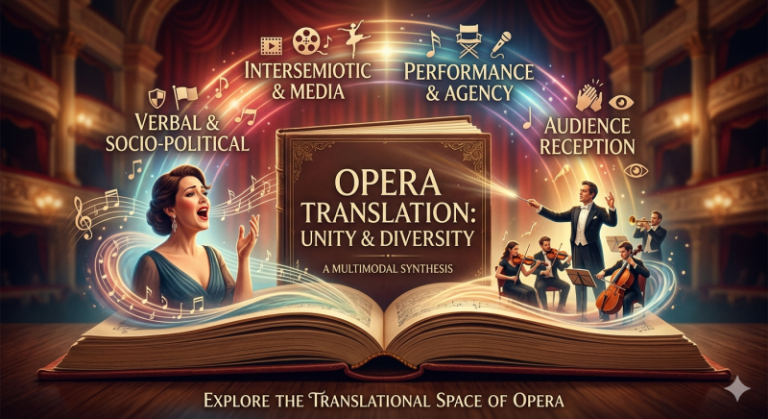
Opera in Translation: A Synthetic Analysis of Unity and Diversity within Intermedial Art
Author: Phakaporn Tanjararak
May 07, 2026, Bangkok – This article aims to analyze and synthesize the scholarly work Opera in Translation: Unity and Diversity, edited by Adriana Şerban and Kelly Kar Yue Chan (2020), with a focus on understanding the role of translation in opera as a multimodal art form that systematically integrates music, literature, and performative semiotics. This work employs documentary analysis based on the review of chapters within the volume, which consist of diverse case-based studies, including verbal translation, intersemiotic translation, and performance-related translation. The analysis shows that opera is a highly complex translational space, both linguistically and culturally, and it is also a site that continuously allows reinterpretation according to social, political, and artistic contexts.
Introduction
Opera is an art form with a high degree of semiotic complexity, as it combines music, text, performance, and visual elements within a single structure. The concept of Richard Wagner, who described opera as “sung drama” or “dramatic music drama,” highlights that opera cannot easily be separated into independent components (Şerban and Chan, 2020).
Many operas are also based on pre-existing literary works, which leads to translation at multiple levels, including linguistic translation, semiotic translation, and performance translation. In addition, there are subtitle and surtitling practices that function to connect audiences with content in different linguistic contexts. As a result, opera has become an important field of translation studies in the contemporary era.
Literature Review
Scholarly literature related to opera translation has developed in multiple directions, particularly in works concerning song translation and vocal performance, such as those by Ronnie Apter and Mark Herman (2016), which emphasize the relationship between musical rhythm and lexical choices, as well as Peter Low (2017), who studies practical approaches to song translation.
In the field of performance media, Anna Rędzioch-Korkuz (2016) examines opera surtitling as audiovisual translation, while Helen Julia Minors (2013) and Lucile Desblache (2019) analyze the relationship between music and text from an intermedial perspective.
In theoretical terms, the works of Edwin Gentzler (2017) and Piotr Blumczyński (2016) expand translation studies toward post-translation studies and the notion of ubiquitous translation, which sees translation as embedded in everyday life. Meanwhile, Susan Bassnett and David Johnston (2019) propose the outward turn in translation studies, emphasizing the relationship between translation and social and cultural contexts.
Methodology
This study employs qualitative documentary analysis by examining all 16 chapters in Opera in Translation: Unity and Diversity (2020). The analysis focuses on categorizing the content into key themes, including verbal translation, intersemiotic translation, performance-related translation, and translator agency. The study then synthesizes recurring conceptual frameworks across chapters without introducing external data.
Findings
First, verbal translation in opera demonstrates a strong relationship between translation and socio-political contexts. In particular, the case study of Mozart opera translations in Nazi Germany shows how translation functions as an ideological instrument (Kaindl in Şerban and Chan, 2020).
Second, intersemiotic translation involves transformation from literature into other media such as film, ballet, and new operatic forms. The works of Vidal, Ngai, and Takebe demonstrate changes in semiotic systems rather than purely linguistic translation.
Third, practitioner-oriented studies such as those by Palmer, Wilson-deRoze, and Edo reveal the complexity of translation in practice, particularly in surtitling and singing translation, which must consider temporal constraints, musical structure, and audience reception.
Fourth, Minors’ work suggests that the audience’s reception of opera itself can be understood as a form of translation at the level of meaning-making, aligning with the concept of translation as embedded in all dimensions of perceptual experience.
Recommendations for Future Research
Future research directions should focus on expanding into digital media, particularly streaming platforms that employ multilingual subtitling systems. In addition, deeper cross-cultural comparative studies should be conducted, as well as the application of post-translation studies and the concept of ubiquitous translation as proposed by Robinson and Marais.
Conclusion
The book Opera in Translation: Unity and Diversity (2020), edited by Adriana Şerban and Kelly Kar Yue Chan, demonstrates that opera is a translational space of high complexity at linguistic, semiotic, and cultural levels. Translation in opera is not merely a process of linguistic transfer, but a process of meaning-making that occurs across all components of performance.
References
- Apter, Ronnie and Herman, Mark. 2016. Translating for Singing: The Theory, Art and Craft of Translating Lyrics.
- Bassnett, Susan and Johnston, David. 2019. The Outward Turn in Translation Studies.
- Blumczyński, Piotr. 2016. Ubiquitous Translation.
- Desblache, Lucile. 2019. Music and Translation: New Mediations in the Digital Age.
- Gentzler, Edwin. 2017. Translation and Rewriting in the Age of Post-Translation Studies.
- Low, Peter. 2017. Translating Song: Lyrics and Texts.
- Minors, Helen Julia. 2013. Music, Text and Translation.
- Rędzioch-Korkuz, Anna. 2016. Opera Surtitling as a Special Case of Audiovisual Translation.
- Şerban, Adriana and Chan, Kelly Kar Yue. 2020. Opera in Translation: Unity and Diversity.
For professional services, please visit: https://www.seaproti.org/practitioners/
About certified translators, translation certifiers, and certified interpreters associated with SEAProTI. The Southeast Asian Association of Professional Translators and Interpreters (SEAProTI) has officially shared the qualifications and requirements for becoming Certified Translators, Translation Certification Providers, and Certified Interpreters in Sections 9 and 10 of the Royal Gazette, which was published by the Prime Minister’s Office in Thailand on July 25, 2024. Certified Translators, Translation Certification Providers, and Certified Interpreters
The Council of State has proposed the enactment of a Royal Decree, granting registered translators and recognised translation certifiers from professional associations or accredited language institutions the authority to provide legally valid translation certification (Letter to SEAProTI dated April 28, 2025)
SEAProTI is the first professional association in Thailand and Southeast Asia to implement a comprehensive certification system for translators, certifiers, and interpreters.
Head Office: Baan Ratchakru Building, No. 33, Room 402, Soi Phahonyothin 5, Phahonyothin Road, Phaya Thai District, Bangkok 10400, Thailand
Email: hello@seaproti.com | Tel.: (+66) 2-114-3128 (Office hours: Mon–Fri, 09:00–17:00).
โอเปราในการแปล: การวิเคราะห์เชิงสังเคราะห์ของเอกภาพและความหลากหลายภายในศิลปะสหสื่อ
ผู้เขียน: ภคพร ตันจรารักษ์
07 พฤษภาคม 2569, กรุงเทพมหานคร – บทความนี้มีวัตถุประสงค์เพื่อวิเคราะห์และสังเคราะห์งานวิชาการเรื่อง โอเปราในการแปล: เอกภาพและความหลากหลาย ซึ่งบรรณาธิการโดย อาเดรียนา เชอร์บาน และเคลลี คาร์ ยู่ ชาน (พ.ศ. 2563) โดยมุ่งเน้นการทำความเข้าใจบทบาทของการแปลในโอเปราในฐานะศิลปะสหสื่อที่รวมเอาดนตรี วรรณกรรม และสัญศาสตร์การแสดงเข้าด้วยกันอย่างเป็นระบบ งานชิ้นนี้ใช้วิธีการวิเคราะห์เชิงเอกสารจากการทบทวนบทความภายในเล่มซึ่งประกอบด้วยงานศึกษาหลากหลายเชิงกรณีศึกษา ทั้งการแปลวัจนภาษา การแปลข้ามสื่อ และการแปลเชิงการแสดง ผลการวิเคราะห์ชี้ให้เห็นว่าโอเปราเป็นพื้นที่ของการแปลที่มีความซับซ้อนสูง ทั้งในเชิงภาษาและวัฒนธรรม อีกทั้งยังเป็นพื้นที่ที่เปิดให้เกิดการตีความใหม่อย่างต่อเนื่องตามบริบททางสังคม การเมือง และศิลปะ
บทนำ
โอเปราเป็นรูปแบบศิลปะที่มีความซับซ้อนทางสัญศาสตร์ เนื่องจากเป็นการรวมกันของดนตรี ข้อความ การแสดง และองค์ประกอบภาพในโครงสร้างเดียวกัน แนวคิดของ ริชาร์ด วากเนอร์ ซึ่งอธิบายโอเปราว่าเป็น “บทละครที่ถูกร้อง” หรือ “ดรามาเชิงเสียง” ชี้ให้เห็นว่าโอเปราไม่สามารถแยกองค์ประกอบออกจากกันได้โดยง่าย (เชอร์บาน และชาน, พ.ศ. 2563)
โอเปราจำนวนมากยังมีพื้นฐานจากวรรณกรรมต้นฉบับ ทำให้เกิดการแปลในหลายระดับ ได้แก่ การแปลทางภาษา การแปลเชิงสัญศาสตร์ และการแปลเชิงการแสดง นอกจากนี้ยังมีการแปลในรูปแบบซับไตเติลและซูร์ไตเติลซึ่งทำหน้าที่เชื่อมโยงผู้ชมกับเนื้อหาในบริบทภาษาที่แตกต่างกัน ส่งผลให้โอเปรากลายเป็นพื้นที่สำคัญของการศึกษาการแปลในยุคปัจจุบัน
ทบทวนวรรณกรรม
วรรณกรรมที่เกี่ยวข้องกับการแปลโอเปรามีการพัฒนาในหลายทิศทาง โดยเฉพาะงานที่เกี่ยวข้องกับการแปลบทเพลงและการร้องเพลง เช่น ผลงานของ โรนี แอปเทอร์ และมาร์ก เฮอร์แมน (พ.ศ. 2559) ซึ่งเน้นความสัมพันธ์ระหว่างจังหวะดนตรีและการเลือกคำแปล รวมถึงงานของ ปีเตอร์ โลว์ (พ.ศ. 2560) ที่ศึกษาแนวทางการแปลเนื้อร้องเชิงปฏิบัติ
ในด้านสื่อการแสดง งานของ อันนา เรนซิโอค-คอร์คุซ (พ.ศ. 2559) ได้ศึกษาโอเปราซับไตเติลในฐานะการแปลสื่อโสตทัศน์ ขณะที่ เฮเลน จูเลีย ไมเนอร์ส (พ.ศ. 2556) และ ลูซิล เดสแบลช (พ.ศ. 2562) ได้วิเคราะห์ความสัมพันธ์ระหว่างดนตรีและข้อความในเชิงสหสื่อ
ในเชิงทฤษฎี งานของ เอ็ดวิน เกนต์ซเลอร์ (พ.ศ. 2560) และ ปิโอเตอร์ บลุมชินสกี (พ.ศ. 2559) ได้ขยายขอบเขตการศึกษาการแปลไปสู่แนวคิดหลังการแปลและการแปลที่ปรากฏอยู่ทั่วไปในชีวิตประจำวัน ในขณะที่ ซูซาน แบสเน็ตต์ และเดวิด จอห์นสตัน (พ.ศ. 2562) ได้เสนอแนวคิดการหันออกสู่ภายนอกของการแปล ซึ่งเน้นความสัมพันธ์ระหว่างการแปลกับบริบททางสังคมและวัฒนธรรม
ระเบียบวิธีวิจัย
งานวิจัยนี้ใช้การวิเคราะห์เอกสารเชิงคุณภาพ โดยศึกษาบทความทั้ง 16 บทภายในหนังสือ โอเปราในการแปล: เอกภาพและความหลากหลาย (พ.ศ. 2563) การวิเคราะห์เน้นการจัดหมวดหมู่เนื้อหาตามประเด็นหลัก ได้แก่ การแปลวัจนภาษา การแปลข้ามสื่อ การแปลเชิงการแสดง และบทบาทของผู้แปล จากนั้นทำการสังเคราะห์แนวคิดที่ปรากฏร่วมกันในแต่ละบทความโดยไม่เพิ่มข้อมูลภายนอก
สิ่งที่ค้นพบ
ประเด็นแรก การแปลวัจนภาษาในโอเปราแสดงให้เห็นถึงความสัมพันธ์ระหว่างการแปลกับบริบททางสังคมและการเมือง โดยเฉพาะกรณีศึกษาการแปลโอเปราของโมสาร์ทในบริบทนาซีเยอรมนี ซึ่งสะท้อนให้เห็นการใช้การแปลในฐานะเครื่องมือทางอุดมการณ์ (ไคนด์ล ใน เชอร์บาน และชาน, พ.ศ. 2563)
ประเด็นที่สอง การแปลข้ามสื่อเกี่ยวข้องกับการเปลี่ยนรูปแบบจากวรรณกรรมไปสู่สื่ออื่น เช่น ภาพยนตร์ บัลเลต์ และการแสดงโอเปราในรูปแบบใหม่ โดยงานของ วิดัล งาย และทาเกเบะ แสดงให้เห็นการเปลี่ยนแปลงของระบบสัญญะมากกว่าการแปลทางภาษาเพียงอย่างเดียว
ประเด็นที่สาม งานศึกษาที่เน้นผู้ปฏิบัติ เช่น พาล์เมอร์ วิลสัน-เดอโรซ และเอดอ แสดงให้เห็นความซับซ้อนของการแปลในทางปฏิบัติ โดยเฉพาะการสร้างซูร์ไตเติลและการแปลเพื่อการร้องเพลง ซึ่งต้องคำนึงถึงข้อจำกัดของเวลา ดนตรี และผู้ชม
ประเด็นที่สี่ งานของไมเนอร์สเสนอว่ากระบวนการรับรู้โอเปราของผู้ชมเองสามารถถูกมองว่าเป็นการแปลในเชิงความหมาย ซึ่งสอดคล้องกับแนวคิดการแปลในทุกมิติของประสบการณ์การรับรู้
คำแนะนำสำหรับงานวิจัยในอนาคต
แนวทางการวิจัยในอนาคตควรให้ความสำคัญกับการขยายขอบเขตไปสู่สื่อดิจิทัล โดยเฉพาะแพลตฟอร์มสตรีมมิงที่มีการใช้ซับไตเติลหลายภาษา นอกจากนี้ควรมีการศึกษาเปรียบเทียบข้ามวัฒนธรรมที่ลึกซึ้งยิ่งขึ้น รวมถึงการประยุกต์แนวคิดหลังการแปลและแนวคิดการแปลที่แทรกอยู่ทั่วไปในชีวิตประจำวันตามแนวคิดของ โรบินสัน และมารายส์
สรุป
หนังสือ โอเปราในการแปล: เอกภาพและความหลากหลาย (พ.ศ. 2563) โดย อาเดรียนา เชอร์บาน และเคลลี คาร์ ยู่ ชาน เป็นงานวิชาการที่แสดงให้เห็นว่าโอเปราเป็นพื้นที่ของการแปลที่มีความซับซ้อนทั้งในระดับภาษา สัญศาสตร์ และวัฒนธรรม การแปลในโอเปราไม่ใช่เพียงการถ่ายโอนความหมายทางภาษา แต่เป็นกระบวนการสร้างความหมายใหม่ที่เกิดขึ้นในทุกองค์ประกอบของการแสดง
เอกสารอ้างอิง
- แอปเทอร์ โรนี และเฮอร์แมน มาร์ก. พ.ศ. 2559. การแปลเพื่อการร้องเพลง: ทฤษฎี ศิลปะ และการปฏิบัติของการแปลบทเพลง
- แบสเน็ตต์ ซูซาน และจอห์นสตัน เดวิด. พ.ศ. 2562. การหันออกสู่ภายนอกในการศึกษาการแปล
- บลุมชินสกี ปิโอเตอร์. พ.ศ. 2559. การแปลที่ปรากฏอยู่ทั่วไป
- เดสแบลช ลูซิล. พ.ศ. 2562. ดนตรีและการแปล: การสื่อความหมายใหม่ในยุคดิจิทัล
- เกนต์ซเลอร์ เอ็ดวิน. พ.ศ. 2560. การแปลและการเขียนใหม่ในยุคหลังการแปล
- โลว์ ปีเตอร์. พ.ศ. 2560. การแปลเพลง: เนื้อร้องและบทเพลง
- ไมเนอร์ส เฮเลน จูเลีย. พ.ศ. 2556. ดนตรี ข้อความ และการแปล
- เรนซิโอค-คอร์คุซ อันนา. พ.ศ. 2559. การทำซับไตเติลโอเปราในฐานะการแปลสื่อโสตทัศน์
- เชอร์บาน อาเดรียนา และชาน เคลลี คาร์ ยู่. พ.ศ. 2563. โอเปราในการแปล: เอกภาพและความหลากหลาย
ขอใช้บริการนักวิชาชีพของสมาคมได้ที่:https://www.seaproti.org/practitioners/
สมาคมวิชาชีพนักแปลและล่ามแห่งเอเชียตะวันออกเฉียงใต้ (SEAProTI) ได้ประกาศหลักเกณฑ์และคุณสมบัติของผู้ที่ขึ้นทะเบียนเป็น “นักแปลรับรอง (Certified Translators) และผู้รับรองการแปล (Translation Certification Providers) และล่ามรับรอง (Certified Interpreters)” ของสมาคม หมวดที่ 9 และหมวดที่ 10 ในราชกิจจานุเบกษา ของสำนักเลขาธิการคณะรัฐมนตรี ในสำนักนายกรัฐมนตรี แห่งราชอาณาจักรไทย ลงวันที่ 25 ก.ค. 2567 เล่มที่ 141 ตอนที่ 66 ง หน้า 100 อ่านฉบับเต็มได้ที่: นักแปลรับรอง ผู้รับรองการแปล และล่ามรับรอง
สำนักคณะกรรมการกฤษฎีกาเสนอให้ตราเป็นพระราชกฤษฎีกา โดยกำหนดให้นักแปลที่ขึ้นทะเบียน รวมถึงผู้รับรองการแปลจากสมาคมวิชาชีพหรือสถาบันสอนภาษาที่มีการอบรมและขึ้นทะเบียน สามารถรับรองคำแปลได้ (จดหมายถึงสมาคม SEAProTI ลงวันที่ 28 เม.ย. 2568)
สมาคมวิชาชีพนักแปลและล่ามแห่งเอเชียตะวันออกเฉียงใต้เป็นสมาคมวิชาชีพแห่งแรกและแห่งเดียวในประเทศไทยและภูมิภาคเอเชียตะวันออกเฉียงใต้ที่มีระบบรับรองนักแปลรับรอง ผู้รับรองการแปล และล่ามรับรอง
สำนักงานใหญ่: อาคารบ้านราชครู เลขที่ 33 ห้อง 402 ซอยพหลโยธิน 5 ถนนพหลโยธิน แขวงพญาไท เขตพญาไท กรุงเทพมหานคร 10400 ประเทศไทย