



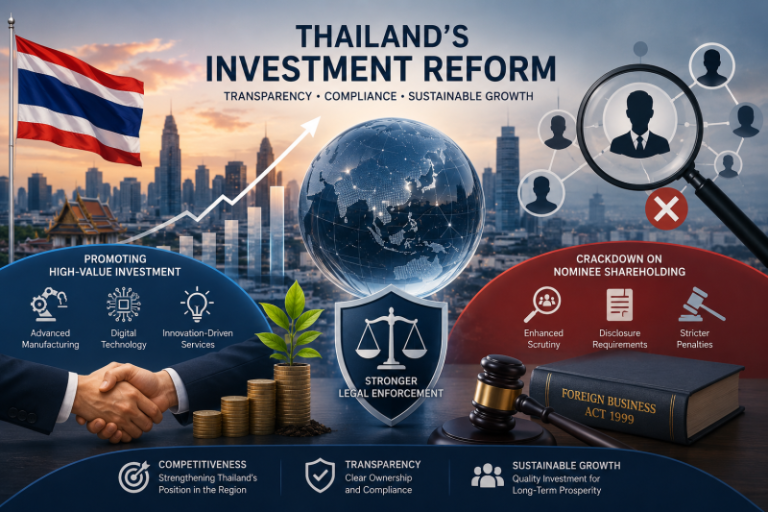
Thailand’s Investment Reform and the Crackdown on Nominee Shareholding: A Policy and Legal Analysis in a Contemporary Economic Context
Author: Phakaporn Tanjararak
May 06, 2026, Bangkok – This article aims to analyze the current direction of Thailand’s investment policy reform, which reflects a dual-track strategy: promoting high-value foreign investment while strengthening legal enforcement against nominee shareholding under the Foreign Business Act 1999. The study demonstrates that the Thai government is moving toward a more transparent and well-regulated business environment aligned with long-term economic development goals. Using documentary analysis and policy synthesis, the article concludes that these changes carry significant implications for foreign investors, particularly in terms of legal compliance, ownership structures, and long-term business stability.
Keywords: Thailand investment reform; foreign direct investment (FDI); nominee shareholding; Foreign Business Act 1999; regulatory enforcement; corporate ownership structure; legal compliance; high-value investment; economic competitiveness; policy analysis
Introduction
Over the past decade, Thailand has faced challenges in maintaining its competitiveness in attracting foreign direct investment amid increasing competition from other Southeast Asian economies. Recent policy developments reflect efforts to modernize the investment framework, enhance transparency, and improve regulatory efficiency, alongside stricter enforcement of laws governing corporate ownership structures (Ministry of Commerce, 2025).
Promotion of High-Value Investment and Long-Term Economic Development
Thailand’s current policy direction emphasizes attracting high value-added investment, particularly in advanced manufacturing, digital technology, and innovation-driven services. Ongoing reforms aim to streamline business procedures, reduce administrative burdens, and facilitate the establishment of enterprises in targeted sectors (Board of Investment, 2025).
Moreover, the government prioritizes investments that contribute to technology transfer, skilled employment, and sustainable economic growth. This reflects a shift from a focus on the quantity of investment toward the quality of investment.
Legal Enforcement under the Foreign Business Act 1999
Alongside investment promotion, the government has intensified enforcement of the Foreign Business Act 1999, which restricts foreign ownership in certain sectors.
In practice, some businesses have attempted to circumvent these restrictions by using Thai nationals as nominee shareholders. Regulatory authorities have therefore strengthened oversight measures, including reviewing funding sources, examining corporate documentation, and identifying the ultimate controlling parties of businesses (Department of Business Development, 2025).
Strengthening Enforcement Measures and Penalties
Reform trends suggest a move toward stricter enforcement and harsher penalties for violations. These may include asset seizure for companies operating through nominee structures, criminal liability for conducting business without proper authorization, and expanded reporting obligations for foreign-controlled entities.
Such measures aim to address long-standing enforcement gaps, where previous penalties were often insufficient as deterrents.
Closing Structural Loopholes in Ownership
A key focus of the reform is addressing complex ownership structures, particularly cross-shareholding arrangements that obscure the identification of foreign-controlled entities. Clarifying legal definitions and strengthening disclosure requirements are essential steps toward enhancing transparency and reducing ambiguity in the business environment.
Economic Drivers and Regional Competition
The acceleration of reform is also driven by economic pressures. Thailand’s investment levels have declined compared to previous decades, while competition from neighboring countries with more investor-friendly regulatory frameworks has intensified.
Proposals for an omnibus investment law, which would consolidate various investment-related regulations into a single framework, have gained attention as a means to reduce bureaucratic complexity and improve efficiency (Economic Policy Scholars, 2025).
Implications for Foreign Businesses
For foreign businesses, these developments increase the importance of proper legal structuring and regulatory compliance. Reliance on nominee arrangements may expose firms to heightened scrutiny and legal risks. Conversely, companies that maintain transparent ownership structures and adhere strictly to legal requirements are better positioned to benefit from investment incentives and regulatory clarity.
Discussion
The dual-track policy approach reflects the government’s attempt to balance openness to foreign capital with the protection of domestic economic interests. Stricter enforcement should not be interpreted as a retreat from foreign investment, but rather as the establishment of higher standards of transparency and accountability.
Conclusion
Thailand’s ongoing investment reform represents a transition toward a more transparent, structured, and well-regulated system. Foreign investors must prioritize legal compliance, proper corporate structuring, and accurate documentation to ensure sustainable and secure business operations in the long term.
References
- Department of Business Development. (2025). Guidelines on regulating foreign business operations in Thailand. Bangkok: Ministry of Commerce.
- Ministry of Commerce. (2025). Investment policy and foreign business regulation report. Bangkok: Author.
- Board of Investment. (2025). Investment promotion policies for sustainable economic development. Bangkok: Author.
- Economic Policy Scholars. (2025). Investment law reform in Thailand: Trends and challenges. Journal of Economics and Public Policy, 15(2), 45–68.
For professional services, please visit: https://www.seaproti.org/practitioners/
About certified translators, translation certifiers, and certified interpreters associated with SEAProTI. The Southeast Asian Association of Professional Translators and Interpreters (SEAProTI) has officially shared the qualifications and requirements for becoming Certified Translators, Translation Certification Providers, and Certified Interpreters in Sections 9 and 10 of the Royal Gazette, which was published by the Prime Minister’s Office in Thailand on July 25, 2024. Certified Translators, Translation Certification Providers, and Certified Interpreters
The Council of State has proposed the enactment of a Royal Decree, granting registered translators and recognised translation certifiers from professional associations or accredited language institutions the authority to provide legally valid translation certification (Letter to SEAProTI dated April 28, 2025)
SEAProTI is the first professional association in Thailand and Southeast Asia to implement a comprehensive certification system for translators, certifiers, and interpreters.
Head Office: Baan Ratchakru Building, No. 33, Room 402, Soi Phahonyothin 5, Phahonyothin Road, Phaya Thai District, Bangkok 10400, Thailand
Email: hello@seaproti.com | Tel.: (+66) 2-114-3128 (Office hours: Mon–Fri, 09:00–17:00).
การปฏิรูปโครงสร้างการลงทุนของประเทศไทยควบคู่การปราบปรามการถือหุ้นแทน: การวิเคราะห์เชิงนโยบายและกฎหมายในบริบทเศรษฐกิจร่วมสมัย
ผู้เขียน: ภคพร ตันจรารักษ์
06 พฤษภาคม 2569, กรุงเทพมหานคร – บทความนี้มีวัตถุประสงค์เพื่อวิเคราะห์ทิศทางการปฏิรูปนโยบายการลงทุนของประเทศไทยในช่วงร่วมสมัย ซึ่งสะท้อนให้เห็นถึงยุทธศาสตร์แบบสองแนวทาง ได้แก่ การส่งเสริมการลงทุนจากต่างประเทศในอุตสาหกรรมที่มีมูลค่าสูง และการเพิ่มความเข้มงวดในการบังคับใช้กฎหมายเกี่ยวกับการถือหุ้นแทนภายใต้พระราชบัญญัติการประกอบธุรกิจของคนต่างด้าว พ.ศ. 2542 การศึกษานี้ชี้ให้เห็นว่ารัฐบาลไทยกำลังมุ่งสร้างสภาพแวดล้อมทางธุรกิจที่โปร่งใส มีการกำกับดูแลที่ชัดเจน และสอดคล้องกับเป้าหมายการพัฒนาเศรษฐกิจระยะยาว โดยใช้วิธีการวิเคราะห์เชิงเอกสารและการสังเคราะห์นโยบาย บทความสรุปว่าการเปลี่ยนแปลงดังกล่าวมีนัยสำคัญต่อผู้ลงทุนต่างชาติ โดยเฉพาะในด้านการปฏิบัติตามกฎหมาย โครงสร้างการถือหุ้น และความมั่นคงทางธุรกิจในระยะยาว
คำสำคัญ: การปฏิรูปการลงทุนของประเทศไทย; การลงทุนโดยตรงจากต่างประเทศ; การถือหุ้นแทน; พระราชบัญญัติการประกอบธุรกิจของคนต่างด้าว พ.ศ. 2542; การบังคับใช้กฎหมาย; โครงสร้างความเป็นเจ้าของกิจการ; การปฏิบัติตามกฎหมาย; การลงทุนมูลค่าสูง; ความสามารถในการแข่งขันทางเศรษฐกิจ; การวิเคราะห์เชิงนโยบาย
บทนำ
ในช่วงทศวรรษที่ผ่านมา ประเทศไทยได้เผชิญกับความท้าทายในการรักษาความสามารถในการแข่งขันด้านการดึงดูดการลงทุนจากต่างประเทศ ท่ามกลางการแข่งขันที่เพิ่มขึ้นจากประเทศในภูมิภาคเอเชียตะวันออกเฉียงใต้ การกำหนดนโยบายล่าสุดสะท้อนถึงความพยายามในการปรับโครงสร้างระบบการลงทุนให้มีความทันสมัย โปร่งใส และมีประสิทธิภาพมากยิ่งขึ้น โดยควบคู่ไปกับการยกระดับการบังคับใช้กฎหมายที่เกี่ยวข้องกับโครงสร้างความเป็นเจ้าของของกิจการ (กระทรวงพาณิชย์, พ.ศ. 2568)
การส่งเสริมการลงทุนมูลค่าสูงและการพัฒนาเศรษฐกิจระยะยาว
แนวโน้มเชิงนโยบายของประเทศไทยในปัจจุบันมุ่งเน้นการดึงดูดการลงทุนที่มีมูลค่าเพิ่มสูง โดยเฉพาะในอุตสาหกรรมการผลิตขั้นสูง เทคโนโลยีดิจิทัล และบริการที่ขับเคลื่อนด้วยนวัตกรรม การปรับปรุงกระบวนการทางธุรกิจให้มีความคล่องตัว ลดขั้นตอนทางปกครอง และอำนวยความสะดวกในการจัดตั้งกิจการ เป็นประเด็นสำคัญที่ได้รับการผลักดันอย่างต่อเนื่อง (สำนักงานคณะกรรมการส่งเสริมการลงทุน, พ.ศ. 2568)
นอกจากนี้ ภาครัฐยังให้ความสำคัญกับการลงทุนที่ก่อให้เกิดการถ่ายทอดเทคโนโลยี การสร้างงานที่มีทักษะสูง และการเติบโตทางเศรษฐกิจอย่างยั่งยืน ซึ่งสะท้อนถึงการเปลี่ยนผ่านจากการเน้นปริมาณการลงทุนไปสู่คุณภาพของการลงทุน
การบังคับใช้กฎหมายภายใต้พระราชบัญญัติการประกอบธุรกิจของคนต่างด้าว พ.ศ. 2542
ควบคู่กับการส่งเสริมการลงทุน รัฐบาลได้เพิ่มความเข้มงวดในการบังคับใช้กฎหมาย โดยเฉพาะพระราชบัญญัติการประกอบธุรกิจของคนต่างด้าว พ.ศ. 2542 ซึ่งกำหนดข้อจำกัดเกี่ยวกับสัดส่วนการถือหุ้นของชาวต่างชาติในธุรกิจบางประเภท
ในทางปฏิบัติ พบว่ามีการใช้โครงสร้างการถือหุ้นแทนโดยบุคคลสัญชาติไทยเพื่อหลีกเลี่ยงข้อจำกัดดังกล่าว หน่วยงานกำกับดูแลจึงเพิ่มมาตรการตรวจสอบ เช่น การตรวจสอบแหล่งที่มาของเงินลงทุน การพิจารณาเอกสารนิติบุคคล และการวิเคราะห์ผู้มีอำนาจควบคุมที่แท้จริงของกิจการ (กรมพัฒนาธุรกิจการค้า, พ.ศ. 2568)
การยกระดับมาตรการบังคับใช้และบทลงโทษ
แนวโน้มการปฏิรูปชี้ให้เห็นถึงความเป็นไปได้ในการเพิ่มความเข้มงวดของบทลงโทษสำหรับการกระทำที่ฝ่าฝืนกฎหมาย เช่น การยึดทรัพย์สินของกิจการที่ใช้โครงสร้างตัวแทน การกำหนดความผิดทางอาญาสำหรับการประกอบธุรกิจโดยไม่ได้รับอนุญาต และการขยายภาระหน้าที่ในการรายงานข้อมูลของกิจการที่อยู่ภายใต้การควบคุมของต่างชาติ
มาตรการดังกล่าวมีเป้าหมายเพื่อแก้ไขช่องว่างของการบังคับใช้กฎหมายในอดีต ซึ่งบทลงโทษเดิมอาจไม่เพียงพอในการยับยั้งการกระทำผิด
การปิดช่องโหว่เชิงโครงสร้างของความเป็นเจ้าของ
ประเด็นสำคัญของการปฏิรูปคือการจัดการกับโครงสร้างการถือหุ้นที่ซับซ้อน โดยเฉพาะการถือหุ้นไขว้ระหว่างบริษัท ซึ่งอาจทำให้ยากต่อการระบุสถานะความเป็นนิติบุคคลต่างด้าว การปรับปรุงนิยามและข้อกำหนดด้านการเปิดเผยข้อมูลมีบทบาทสำคัญในการลดความคลุมเครือและเพิ่มความโปร่งใสในระบบธุรกิจ
แรงผลักดันทางเศรษฐกิจและการแข่งขันในภูมิภาค
การเร่งดำเนินการปฏิรูปยังมีปัจจัยจากแรงกดดันทางเศรษฐกิจ โดยระดับการลงทุนของประเทศไทยลดลงเมื่อเทียบกับอดีต และต้องเผชิญกับการแข่งขันจากประเทศเพื่อนบ้านที่มีระบบกฎระเบียบที่เอื้อต่อการลงทุนมากกว่า
ข้อเสนอเกี่ยวกับการจัดทำกฎหมายแบบบูรณาการเพื่อรวมกฎหมายด้านการลงทุนให้เป็นระบบเดียว เป็นอีกแนวทางหนึ่งที่ถูกหยิบยกขึ้นมาเพื่อเพิ่มประสิทธิภาพและลดความซ้ำซ้อนของกฎระเบียบ (นักวิชาการด้านนโยบายเศรษฐกิจ, พ.ศ. 2568)
ผลกระทบต่อผู้ประกอบการต่างชาติ
สำหรับผู้ประกอบการต่างชาติ การเปลี่ยนแปลงดังกล่าวเพิ่มความสำคัญของการจัดโครงสร้างธุรกิจให้สอดคล้องกับกฎหมาย การใช้โครงสร้างการถือหุ้นแทนอาจนำไปสู่ความเสี่ยงด้านกฎหมายและการตรวจสอบที่เข้มงวดมากขึ้น ในทางตรงกันข้าม ธุรกิจที่มีความโปร่งใสและปฏิบัติตามกฎหมายอย่างเคร่งครัดจะมีโอกาสได้รับประโยชน์จากมาตรการส่งเสริมการลงทุนและความชัดเจนของกฎระเบียบ
อภิปราย
การดำเนินนโยบายแบบสองแนวทางสะท้อนถึงความพยายามของรัฐในการสร้างสมดุลระหว่างการเปิดรับเงินทุนจากต่างประเทศและการคุ้มครองผลประโยชน์ทางเศรษฐกิจภายในประเทศ การเพิ่มความเข้มงวดในการบังคับใช้กฎหมายไม่ใช่การปิดกั้นการลงทุน แต่เป็นการสร้างมาตรฐานใหม่ที่เน้นความโปร่งใสและความรับผิดชอบ
สรุป
การปฏิรูปนโยบายการลงทุนของประเทศไทยในปัจจุบันแสดงให้เห็นถึงการเปลี่ยนผ่านไปสู่ระบบที่มีความชัดเจน โปร่งใส และมีการกำกับดูแลที่เข้มแข็งมากขึ้น ผู้ลงทุนต่างชาติจำเป็นต้องให้ความสำคัญกับการปฏิบัติตามกฎหมาย การจัดโครงสร้างองค์กรอย่างเหมาะสม และการจัดทำเอกสารที่ถูกต้อง เพื่อให้สามารถดำเนินธุรกิจได้อย่างมั่นคงและยั่งยืนในระยะยาว
เอกสารอ้างอิง
- กรมพัฒนาธุรกิจการค้า. (พ.ศ. 2568). แนวทางการกำกับดูแลธุรกิจของคนต่างด้าวในประเทศไทย. กรุงเทพฯ: กระทรวงพาณิชย์.
- กระทรวงพาณิชย์. (พ.ศ. 2568). รายงานนโยบายการลงทุนและการกำกับดูแลธุรกิจต่างชาติ. กรุงเทพฯ: ผู้แต่ง.
- สำนักงานคณะกรรมการส่งเสริมการลงทุน. (พ.ศ. 2568). นโยบายส่งเสริมการลงทุนเพื่อการพัฒนาเศรษฐกิจอย่างยั่งยืน. กรุงเทพฯ: ผู้แต่ง.
- นักวิชาการด้านนโยบายเศรษฐกิจ. (พ.ศ. 2568). การปฏิรูปกฎหมายการลงทุนในประเทศไทย: แนวโน้มและความท้าทาย. วารสารเศรษฐศาสตร์และนโยบายสาธารณะ, 15(2), 45–68.
ขอใช้บริการนักวิชาชีพของสมาคมได้ที่:https://www.seaproti.org/practitioners/
สมาคมวิชาชีพนักแปลและล่ามแห่งเอเชียตะวันออกเฉียงใต้ (SEAProTI) ได้ประกาศหลักเกณฑ์และคุณสมบัติของผู้ที่ขึ้นทะเบียนเป็น “นักแปลรับรอง (Certified Translators) และผู้รับรองการแปล (Translation Certification Providers) และล่ามรับรอง (Certified Interpreters)” ของสมาคม หมวดที่ 9 และหมวดที่ 10 ในราชกิจจานุเบกษา ของสำนักเลขาธิการคณะรัฐมนตรี ในสำนักนายกรัฐมนตรี แห่งราชอาณาจักรไทย ลงวันที่ 25 ก.ค. 2567 เล่มที่ 141 ตอนที่ 66 ง หน้า 100 อ่านฉบับเต็มได้ที่: นักแปลรับรอง ผู้รับรองการแปล และล่ามรับรอง
สำนักคณะกรรมการกฤษฎีกาเสนอให้ตราเป็นพระราชกฤษฎีกา โดยกำหนดให้นักแปลที่ขึ้นทะเบียน รวมถึงผู้รับรองการแปลจากสมาคมวิชาชีพหรือสถาบันสอนภาษาที่มีการอบรมและขึ้นทะเบียน สามารถรับรองคำแปลได้ (จดหมายถึงสมาคม SEAProTI ลงวันที่ 28 เม.ย. 2568)
สมาคมวิชาชีพนักแปลและล่ามแห่งเอเชียตะวันออกเฉียงใต้เป็นสมาคมวิชาชีพแห่งแรกและแห่งเดียวในประเทศไทยและภูมิภาคเอเชียตะวันออกเฉียงใต้ที่มีระบบรับรองนักแปลรับรอง ผู้รับรองการแปล และล่ามรับรอง
สำนักงานใหญ่: อาคารบ้านราชครู เลขที่ 33 ห้อง 402 ซอยพหลโยธิน 5 ถนนพหลโยธิน แขวงพญาไท เขตพญาไท กรุงเทพมหานคร 10400 ประเทศไทย