



Legal Framework of Business Visas in Thailand: A Comparative Analysis and the Role of Language Professionals in a Cross-Border Context
Author: Griroek Gruaythong
May 6, 2026, Bangkok – This article aims to analyze the policy framework and visa categories related to business travel in Thailand by comparing the requirements, limitations, and legal implications of major visa types, including tourist visas, long-term business visas, and special visas under state-sponsored privilege programs. The study highlights that the improper selection of visa types may lead to legal risks and negatively affect long-term business operations. Furthermore, the article extends its analysis to the role of certified translators, translation certification providers, and certified interpreters in visa application processes and institutional communication. These actors serve as crucial mechanisms in reducing linguistic discrepancies and enhancing the credibility of documents and business negotiations in cross-cultural contexts.
Introduction
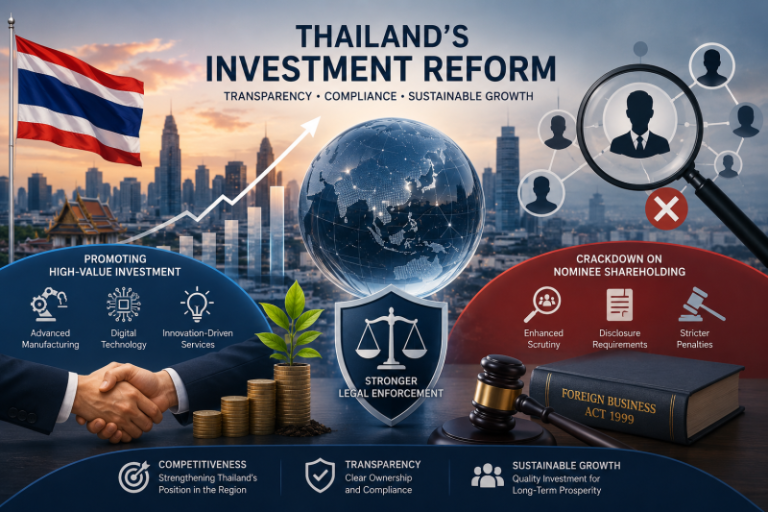
Thailand serves as a significant economic hub in Southeast Asia, with ongoing policies aimed at attracting foreign investment and fostering international business cooperation. However, entering the country for business purposes must strictly comply with immigration laws. The misuse of visa categories may result in legal violations, revocation of stay privileges, or restrictions on future travel (Immigration Bureau, 2023). Therefore, understanding visa types and their conditions is essential from both practical and policy perspectives.
Types of Visas for Business Operations in Thailand
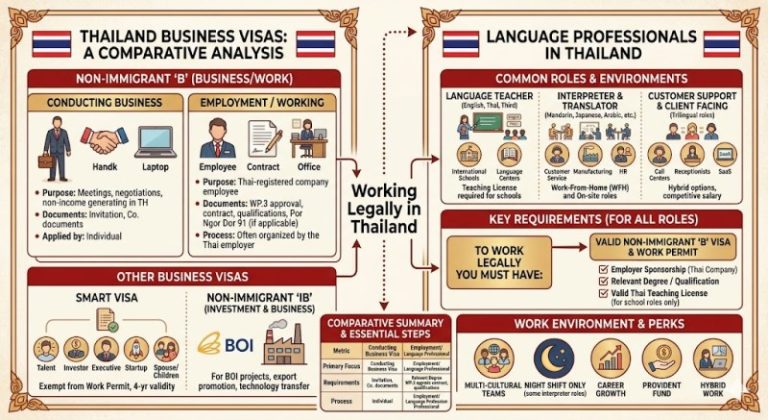
Tourist visas, although allowing short-term stays and involving relatively simple application procedures, are not designed to accommodate business activities. Using such visas to attend meetings, conduct negotiations, or engage in investment-related activities may be interpreted as misuse, posing risks of legal prosecution or blacklisting (Ministry of Foreign Affairs, 2022).
In contrast, long-term business visas (e.g., non-immigrant business visas) are specifically designed to support business activities. Despite stricter documentation requirements—such as invitation letters from Thai companies, corporate registration documents, and proof of business operations—these visas reduce legal risks and provide clearer legal status for travelers (Siam Legal International, 2024).
Additionally, special visas under government privilege programs, which emphasize convenience and premium residency experiences for long-term stay, have become increasingly popular among international businesspersons. These visas offer flexibility in travel, streamlined immigration procedures, and reduced administrative burdens, reflecting the state’s strategy to attract high-potential investors (Thailand Privilege Card Co., Ltd., 2023).
Comparative Analysis and Legal Implications
From a comparative perspective, each visa category reflects different levels of state regulation. Tourist visas offer high flexibility but limited permissible purposes, while business visas provide legal clarity at the cost of stricter documentation requirements. Privilege visas, although involving higher costs, significantly reduce administrative complexity. Therefore, visa selection is not merely a practical decision but also a determination of legal status and business credibility in the eyes of the state and business partners (Chalamwong & Amornthum, 2021).
The Role of Certified Translators and Interpreters in Visa Processes and Cross-Border Business
In the context of visa applications and international business operations, many documents must be officially translated and certified, including corporate documents, business contracts, and financial records. Certified translators and translation certification providers play a crucial role in ensuring that these documents are legally valid by verifying their accuracy and consistency with the originals (Pim, 2014).
Meanwhile, certified interpreters are essential in real-time communication settings such as government interviews, business negotiations, or legal proceedings. Their accuracy and impartiality directly influence the outcomes of such processes (Hale, 2007).
At the institutional level, professional associations of translators and interpreters in Southeast Asia contribute to establishing professional standards, certification systems, and capacity development. These efforts enhance trust among government agencies and business sectors in the quality of language services. Such institutional involvement also mitigates risks arising from linguistic inaccuracies, which could otherwise lead to disputes or delays in visa processing and business operations (Federation of ASEAN Translators and Interpreters, 2020).
Discussion
The integration of legal and linguistic dimensions reveals that conducting business in cross-border contexts depends not only on visa policies but also on supporting structures related to language and institutional communication. Certified translators and interpreters should therefore be viewed not merely as language mediators, but as “institutional intermediaries” who connect legal systems, cultures, and economies.
Conclusion
Selecting the appropriate visa type is a fundamental factor in conducting business in Thailand, affecting both legal status and long-term economic opportunities. Simultaneously, the role of language professionals—particularly certified translators and interpreters—is essential in ensuring that processes are carried out accurately, transparently, and efficiently. The development of professional standards and regional cooperation thus represents a key mechanism in supporting future business mobility and investment.
References
- Chalamwong, Y., & Amornthum, P. (2021). Migration policies and economic development in Thailand. Journal of Asian Economics, 75, 101321.
- Federation of ASEAN Translators and Interpreters. (2020). Professional standards and certification in Southeast Asia.
Hale, S. (2007). Community interpreting. Palgrave Macmillan. - Ministry of Foreign Affairs. (2022). Thailand visa guidelines and regulations.
- Immigration Bureau. (2023). Immigration policies and enforcement in Thailand.
- Pim, A. (2014). Exploring translation theories (2nd ed.). Routledge.
- Siam Legal International. (2024). Thailand business visa overview.
- Thailand Privilege Card Co., Ltd. (2023). Thailand Privilege program handbook.
For professional services, please visit: https://www.seaproti.org/practitioners/
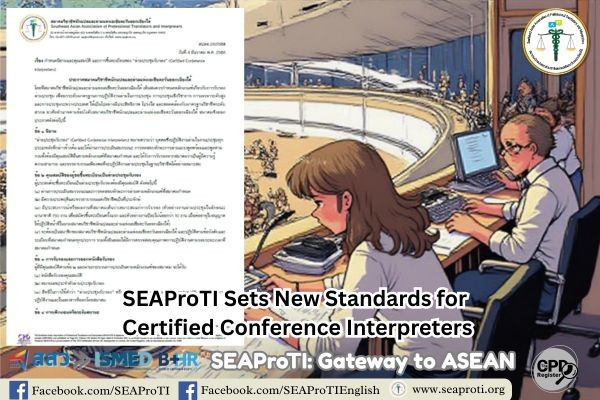
About certified translators, translation certifiers, and certified interpreters associated with SEAProTI. The Southeast Asian Association of Professional Translators and Interpreters (SEAProTI) has officially shared the qualifications and requirements for becoming Certified Translators, Translation Certification Providers, and Certified Interpreters in Sections 9 and 10 of the Royal Gazette, which was published by the Prime Minister’s Office in Thailand on July 25, 2024. Certified Translators, Translation Certification Providers, and Certified Interpreters
The Council of State has proposed the enactment of a Royal Decree, granting registered translators and recognised translation certifiers from professional associations or accredited language institutions the authority to provide legally valid translation certification (Letter to SEAProTI dated April 28, 2025)
SEAProTI is the first professional association in Thailand and Southeast Asia to implement a comprehensive certification system for translators, certifiers, and interpreters.
Head Office: Baan Ratchakru Building, No. 33, Room 402, Soi Phahonyothin 5, Phahonyothin Road, Phaya Thai District, Bangkok 10400, Thailand
Email: hello@seaproti.com | Tel.: (+66) 2-114-3128 (Office hours: Mon–Fri, 09:00–17:00).
กรอบกฎหมายวีซ่าสำหรับการดำเนินธุรกิจในประเทศไทย: การวิเคราะห์เชิงเปรียบเทียบและบทบาทของผู้เชี่ยวชาญด้านภาษาในบริบทข้ามพรมแดน
ผู้เขียน: ไกรฤกษ์ กรวยทอง
6 เมษายน 2569, กรุงเทพมหานคร – บทความนี้มุ่งวิเคราะห์กรอบนโยบายและประเภทวีซ่าที่เกี่ยวข้องกับการเดินทางเพื่อธุรกิจในประเทศไทย โดยเปรียบเทียบข้อกำหนด ข้อจำกัด และนัยทางกฎหมายของวีซ่าหลัก ได้แก่ วีซ่าท่องเที่ยว วีซ่าธุรกิจระยะยาว และวีซ่าพิเศษภายใต้โครงการสิทธิพิเศษของรัฐ การศึกษาชี้ให้เห็นว่าการเลือกใช้วีซ่าอย่างไม่เหมาะสมอาจก่อให้เกิดความเสี่ยงทางกฎหมายและกระทบต่อความสามารถในการดำเนินธุรกิจในระยะยาว นอกจากนี้ บทความยังขยายการวิเคราะห์ไปสู่บทบาทของนักแปลรับรอง ผู้รับรองการแปล และล่ามรับรองในกระบวนการขอวีซ่าและการสื่อสารเชิงสถาบัน ซึ่งเป็นกลไกสำคัญในการลดความคลาดเคลื่อนทางภาษาและเสริมสร้างความน่าเชื่อถือของเอกสารและการเจรจาทางธุรกิจในบริบทข้ามวัฒนธรรม
บทนำ
ประเทศไทยเป็นศูนย์กลางทางเศรษฐกิจที่สำคัญในภูมิภาคเอเชียตะวันออกเฉียงใต้ โดยมีนโยบายเปิดรับการลงทุนและความร่วมมือทางธุรกิจจากต่างประเทศอย่างต่อเนื่อง อย่างไรก็ตาม การเข้าสู่ประเทศเพื่อวัตถุประสงค์ทางธุรกิจจำเป็นต้องสอดคล้องกับกรอบกฎหมายคนเข้าเมืองอย่างเคร่งครัด เนื่องจากการใช้วีซ่าที่ไม่ตรงกับวัตถุประสงค์อาจนำไปสู่ความผิดทางกฎหมาย การเพิกถอนสิทธิ์การพำนัก หรือข้อจำกัดในการเดินทางในอนาคต (สำนักงานตรวจคนเข้าเมือง, 2566) ด้วยเหตุนี้ การทำความเข้าใจประเภทวีซ่าและเงื่อนไขการใช้งานจึงเป็นประเด็นสำคัญทั้งในเชิงปฏิบัติและเชิงนโยบาย
ประเภทวีซ่าสำหรับการดำเนินธุรกิจในประเทศไทย
วีซ่าท่องเที่ยว แม้จะอนุญาตให้พำนักระยะสั้นและมีขั้นตอนการขอที่ไม่ซับซ้อน แต่ไม่ได้ออกแบบมาเพื่อรองรับกิจกรรมทางธุรกิจ การใช้วีซ่าประเภทนี้ในการเข้าร่วมประชุม เจรจาทางธุรกิจ หรือกิจกรรมที่เกี่ยวข้องกับการลงทุน อาจถูกตีความว่าเป็นการใช้วีซ่าผิดประเภท ซึ่งมีความเสี่ยงต่อการถูกดำเนินคดีหรือถูกขึ้นบัญชีเฝ้าระวัง (กระทรวงการต่างประเทศ, 2565)
ในทางตรงกันข้าม วีซ่าธุรกิจระยะยาว (เช่น วีซ่าประเภทไม่อพยพเพื่อธุรกิจ) ได้รับการออกแบบเพื่อรองรับกิจกรรมทางธุรกิจโดยเฉพาะ แม้จะมีข้อกำหนดด้านเอกสารที่เข้มงวด เช่น หนังสือเชิญจากบริษัทในประเทศไทย เอกสารรับรองนิติบุคคล และหลักฐานการดำเนินธุรกิจ แต่ก็ช่วยลดความเสี่ยงทางกฎหมายและเพิ่มความชัดเจนด้านสถานะของผู้เดินทาง (Siam Legal International, 2567)
นอกจากนี้ วีซ่าพิเศษภายใต้โครงการสิทธิพิเศษของรัฐ ซึ่งมุ่งเน้นความสะดวกและประสบการณ์ระดับพรีเมียมสำหรับผู้พำนักระยะยาว ได้กลายเป็นทางเลือกที่ได้รับความนิยมในกลุ่มนักธุรกิจระหว่างประเทศ วีซ่าประเภทนี้มีลักษณะเด่นด้านความยืดหยุ่นในการเดินทาง การอำนวยความสะดวกด้านกระบวนการตรวจคนเข้าเมือง และการลดภาระด้านงานเอกสาร ซึ่งสะท้อนถึงแนวโน้มของรัฐในการแข่งขันดึงดูดนักลงทุนและผู้มีศักยภาพสูง (Thailand Privilege Card Co., Ltd., 2566)
การวิเคราะห์เชิงเปรียบเทียบและนัยทางกฎหมาย
เมื่อพิจารณาในเชิงเปรียบเทียบ วีซ่าแต่ละประเภทสะท้อนระดับการกำกับดูแลของรัฐที่แตกต่างกัน วีซ่าท่องเที่ยวมีความยืดหยุ่นสูงแต่มีข้อจำกัดด้านวัตถุประสงค์ ขณะที่วีซ่าธุรกิจมีความชัดเจนทางกฎหมายแต่ต้องแลกกับภาระด้านเอกสาร ส่วนวีซ่าพิเศษมีต้นทุนสูงแต่ลดความซับซ้อนในการบริหารจัดการ การเลือกวีซ่าจึงไม่เพียงเป็นการตัดสินใจเชิงปฏิบัติ แต่ยังเป็นการกำหนดสถานะทางกฎหมายและความน่าเชื่อถือของผู้ประกอบการในสายตาของรัฐและคู่ค้า (ชลัมวงศ์ และ อมรธรรม, 2564)
บทบาทของนักแปลและล่ามรับรองในกระบวนการวีซ่าและธุรกิจข้ามพรมแดน
ในบริบทของการยื่นคำร้องขอวีซ่าและการดำเนินธุรกิจระหว่างประเทศ เอกสารจำนวนมากจำเป็นต้องได้รับการแปลและรับรองอย่างเป็นทางการ ไม่ว่าจะเป็นเอกสารนิติบุคคล สัญญาทางธุรกิจ หรือเอกสารทางการเงิน นักแปลรับรอง (certified translators) และผู้ให้บริการรับรองการแปล (translation certification providers) มีบทบาทสำคัญในการทำให้เอกสารเหล่านี้มีผลใช้บังคับในเชิงกฎหมาย โดยการรับรองความถูกต้องและความสอดคล้องกับต้นฉบับ (พิม, 2557)
ขณะเดียวกัน ล่ามรับรอง (certified interpreters) มีบทบาทในสถานการณ์ที่ต้องอาศัยการสื่อสารแบบทันที เช่น การสัมภาษณ์กับหน่วยงานรัฐ การเจรจาธุรกิจ หรือการดำเนินการทางกฎหมาย ความแม่นยำและความเป็นกลางของล่ามมีผลโดยตรงต่อผลลัพธ์ของกระบวนการดังกล่าว (เฮล, 2550)
ในระดับสถาบัน สมาคมวิชาชีพนักแปลและล่ามแห่งเอเชียตะวันออกเฉียงใต้มีบทบาทในการกำหนดมาตรฐานวิชาชีพ การรับรองคุณสมบัติ และการพัฒนาศักยภาพของผู้ปฏิบัติงานด้านภาษา ซึ่งช่วยยกระดับความเชื่อมั่นของหน่วยงานรัฐและภาคธุรกิจต่อคุณภาพของบริการด้านภาษา การมีส่วนร่วมขององค์กรวิชาชีพดังกล่าวยังช่วยลดความเสี่ยงจากความคลาดเคลื่อนทางภาษา อันอาจนำไปสู่ข้อพิพาทหรือความล่าช้าในกระบวนการพิจารณาวีซ่าและการดำเนินธุรกิจ (Federation of ASEAN Translators and Interpreters, 2563)
อภิปรายผล
การบูรณาการมิติด้านกฎหมายและภาษาเผยให้เห็นว่าการดำเนินธุรกิจในบริบทข้ามพรมแดนไม่ได้ขึ้นอยู่กับนโยบายวีซ่าเพียงอย่างเดียว แต่ยังเกี่ยวข้องกับโครงสร้างสนับสนุนด้านภาษาและการสื่อสารเชิงสถาบัน นักแปลและล่ามรับรองจึงมิได้เป็นเพียงผู้ถ่ายทอดภาษา หากแต่เป็น “ตัวกลางเชิงสถาบัน” ที่ช่วยเชื่อมโยงระบบกฎหมาย วัฒนธรรม และเศรษฐกิจเข้าด้วยกัน
สรุป
การเลือกประเภทวีซ่าที่เหมาะสมเป็นปัจจัยพื้นฐานในการดำเนินธุรกิจในประเทศไทย โดยมีผลต่อทั้งสถานะทางกฎหมายและโอกาสทางเศรษฐกิจในระยะยาว ควบคู่กันนั้น บทบาทของผู้เชี่ยวชาญด้านภาษา โดยเฉพาะนักแปลและล่ามรับรอง มีความสำคัญอย่างยิ่งในการทำให้กระบวนการต่าง ๆ ดำเนินไปอย่างถูกต้อง โปร่งใส และมีประสิทธิภาพ การพัฒนามาตรฐานวิชาชีพและความร่วมมือในระดับภูมิภาคจึงเป็นกลไกสำคัญในการสนับสนุนการเคลื่อนย้ายทางธุรกิจและการลงทุนในอนาคต
เอกสารอ้างอิง
- ชลัมวงศ์, ย., และ อมรธรรม, พ. (2564). Migration policies and economic development in Thailand. Journal of Asian Economics, 75, 101321.
- Federation of ASEAN Translators and Interpreters. (2563). Professional standards and certification in Southeast Asia.
- เฮล, ส. (2550). Community interpreting. Palgrave Macmillan.
- กระทรวงการต่างประเทศ. (2565). Thailand visa guidelines and regulations.
- สำนักงานตรวจคนเข้าเมือง. (2566). Immigration policies and enforcement in Thailand.
- พิม, อ. (2557). Exploring translation theories (2nd ed.). Routledge.
- Siam Legal International. (2567). Thailand business visa overview.
- Thailand Privilege Card Co., Ltd. (2566). Thailand Privilege program handbook.
ขอใช้บริการนักวิชาชีพของสมาคมได้ที่:https://www.seaproti.org/practitioners/
สมาคมวิชาชีพนักแปลและล่ามแห่งเอเชียตะวันออกเฉียงใต้ (SEAProTI) ได้ประกาศหลักเกณฑ์และคุณสมบัติของผู้ที่ขึ้นทะเบียนเป็น “นักแปลรับรอง (Certified Translators) และผู้รับรองการแปล (Translation Certification Providers) และล่ามรับรอง (Certified Interpreters)” ของสมาคม หมวดที่ 9 และหมวดที่ 10 ในราชกิจจานุเบกษา ของสำนักเลขาธิการคณะรัฐมนตรี ในสำนักนายกรัฐมนตรี แห่งราชอาณาจักรไทย ลงวันที่ 25 ก.ค. 2567 เล่มที่ 141 ตอนที่ 66 ง หน้า 100 อ่านฉบับเต็มได้ที่: นักแปลรับรอง ผู้รับรองการแปล และล่ามรับรอง
สำนักคณะกรรมการกฤษฎีกาเสนอให้ตราเป็นพระราชกฤษฎีกา โดยกำหนดให้นักแปลที่ขึ้นทะเบียน รวมถึงผู้รับรองการแปลจากสมาคมวิชาชีพหรือสถาบันสอนภาษาที่มีการอบรมและขึ้นทะเบียน สามารถรับรองคำแปลได้ (จดหมายถึงสมาคม SEAProTI ลงวันที่ 28 เม.ย. 2568)
สมาคมวิชาชีพนักแปลและล่ามแห่งเอเชียตะวันออกเฉียงใต้เป็นสมาคมวิชาชีพแห่งแรกและแห่งเดียวในประเทศไทยและภูมิภาคเอเชียตะวันออกเฉียงใต้ที่มีระบบรับรองนักแปลรับรอง ผู้รับรองการแปล และล่ามรับรอง
สำนักงานใหญ่: อาคารบ้านราชครู เลขที่ 33 ห้อง 402 ซอยพหลโยธิน 5 ถนนพหลโยธิน แขวงพญาไท เขตพญาไท กรุงเทพมหานคร 10400 ประเทศไทย