



Translationality Beyond Language: A Critical Academic Review of Piotr Blumczynski’s Concept
Author: Phakaporn Tanjararak
April 29, 2026, Bangkok – This academic article aims to analyze and critically examine the book Experiencing Translationality: Material and Metaphorical Journeys by Piotr Blumczynski (2023). It focuses on expanding the understanding of the concept of “translationality,” which moves beyond the framework of interlingual translation toward materiality, the body, and sensory experience. The study demonstrates that translation can manifest in diverse contexts, including religion, history, and sports, while also discussing the potential of this concept for advancing Translation Studies in an interdisciplinary direction.
Introduction
The world of sports constitutes a significant domain that generates diverse bodies of knowledge for translation researchers, ranging from specialized sports terminology and the localization of digital platforms to multilingual communication on international athletes’ social media. However, most research continues to focus on interlingual translation, raising the question of whether translation can extend beyond linguistic dimensions. For example, the transfer of elite football players across clubs and national borders may be interpreted as translational movement, while stadium souvenirs or symbolic objects—such as Lionel Messi’s boots or Novak Djokovic’s racket—may also be examined within a translational framework. Such perspectives align with the proposal of Blumczynski (2023), who seeks to significantly expand the scope of Translation Studies.
Literature Review
Blumczynski’s work (2023) builds upon his earlier publication Ubiquitous Translation (2016) and corresponds with the expansion of Translation Studies found in the works of Susan Bassnett and David Johnston (2019), as well as Kobus Marais (2019). The concept of translationality is influenced by Douglas Robinson (2017), who views translation as an ongoing process emerging through embodied and contextual interaction, and by Marais (2019), who argues that translation research should encompass all phenomena rather than being limited to language. Additionally, the work of Sara Ahmed (2014 [2004]) contributes to explaining how translation and emotion function as experiences of contact and connection between humans and objects.
Conceptual Framework and Methodology
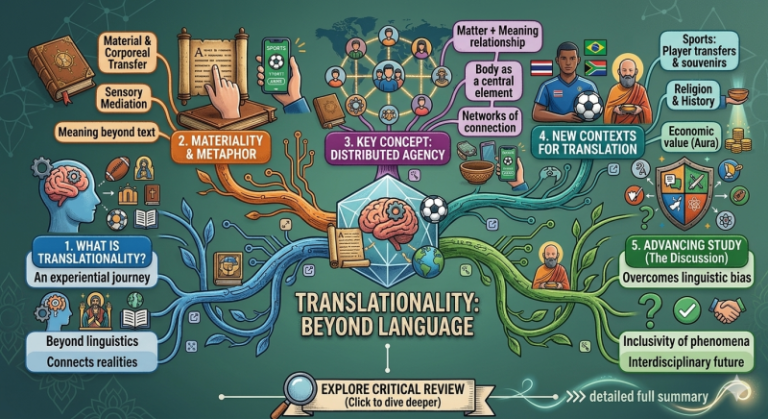
Blumczynski (2023) adopts a semasiological approach to analyze the meaning of the term “translation” in both historical and contemporary contexts, emphasizing material and corporeal transfer as the core of analysis rather than limiting translation to interlingual processes. Key concepts include semiotic experience, the relationship between matter and meaning, and distributed agency, with a strong emphasis on the body and experience as central elements in understanding translation.
Findings
The concept of translationality is defined as “the experience of connecting with another reality across temporal and spatial distance through material and sensory mediation” (Blumczynski, 2023, p. 6). This definition highlights translation as a holistic experience involving multiple sensory dimensions. The author demonstrates that translation is not confined to linguistic texts but also appears in social and cultural processes, such as the transfer of bishops in ecclesiastical history, which reflects complex networks of power and relationships.
Similarly, the movement of sacred or revered objects in religious contexts illustrates the role of translation as a process of meaning-making and cultural memory (Brodzki, 2007). This perspective can be applied to sports, where objects associated with famous athletes or rituals commemorating significant figures reflect the symbolic power of translation beyond language.
Furthermore, Blumczynski (2023) discusses the economic dimension of translation through the distinction between “authentic objects” and “replicas,” arguing that translationality occurs only when genuine experiential connection is established. Meaningful objects must generate an “aura” in the Benjaminian sense (Benjamin, 2007 [1935]), which arises from direct lived experience.
Discussion
Blumczynski’s proposal (2023) challenges the linguistic bias deeply embedded in Translation Studies and opens space for a broader, more inclusive understanding of translation. The concept of translationality enables the analysis of seemingly non-linguistic phenomena—such as the movement of people, objects, and experiences—as translational processes. Moreover, the connection between translation and emotion underscores the importance of human experience in meaning-making.
Conclusion
Blumczynski’s work (2023) plays a crucial role in expanding the conceptual boundaries of Translation Studies by proposing that translation be understood as an experiential process connecting humans to the world through material and sensory dimensions. This perspective not only deepens the understanding of translation but also opens new avenues for research across diverse contexts, including sports and contemporary culture.
References
- Ahmed, S. (2014 [2004]). The Cultural Politics of Emotion. Edinburgh University Press.
- Bassnett, S., & Johnston, D. (2019). The outward turn in Translation Studies. The Translator, 25(3), 181–188.
- Benjamin, W. (2007 [1935]). The work of art in the age of mechanical reproduction. In Illuminations (pp. 217–251). Schocken Books.
- Bennett, K. (2024). Book review: Experiencing Translationality: Material and Metaphorical Journeys. The Translator, 30, 294–296.
- Blumczynski, P. (2016). Ubiquitous Translation. Routledge.
- Blumczynski, P. (2023). Experiencing Translationality: Material and Metaphorical Journeys. Routledge.
- Brodzki, B. (2007). Can These Bones Live?: Translation, Survival, and Cultural Memory. Stanford University Press.
- Jakobson, R. (1971 [1959]). On linguistic aspects of translation. Mouton.
- Marais, K. (2019). A (Bio)semiotic Theory of Translation. Routledge.
- Marais, K. (2023). Review of Blumczynski’s work. TTR, 36(1).
- Robinson, D. (2017). Translationality: Essays in the Translational-Medical Humanities. Routledge.
- Valler, M. (2024). Translationality as a transformational concept. Translation and Interpreting Studies, 19(2), 323–333.
- Vidal Claramonte, M. C. Á. (2025). Translation and Objects. Routledge.
For professional services, please visit: https://www.seaproti.org/practitioners/
About certified translators, translation certifiers, and certified interpreters associated with SEAProTI. The Southeast Asian Association of Professional Translators and Interpreters (SEAProTI) has officially shared the qualifications and requirements for becoming Certified Translators, Translation Certification Providers, and Certified Interpreters in Sections 9 and 10 of the Royal Gazette, which was published by the Prime Minister’s Office in Thailand on July 25, 2024. Certified Translators, Translation Certification Providers, and Certified Interpreters
The Council of State has proposed the enactment of a Royal Decree, granting registered translators and recognised translation certifiers from professional associations or accredited language institutions the authority to provide legally valid translation certification (Letter to SEAProTI dated April 28, 2025)
SEAProTI is the first professional association in Thailand and Southeast Asia to implement a comprehensive certification system for translators, certifiers, and interpreters.
Head Office: Baan Ratchakru Building, No. 33, Room 402, Soi Phahonyothin 5, Phahonyothin Road, Phaya Thai District, Bangkok 10400, Thailand
Email: hello@seaproti.com | Tel.: (+66) 2-114-3128 (Office hours: Mon–Fri, 09:00–17:00).
สภาวะแห่งการแปลนอกเหนือจากภาษา: การทบทวนเชิงวิชาการเชิงวิพากษ์แนวคิดของปิโอเตอร์ บลุมชินสกี
ผู้เขียน: ภคพร ตันจรารักษ์
29 เมษายน 2569 –บทความวิชาการนี้มีวัตถุประสงค์เพื่อวิเคราะห์และวิพากษ์หนังสือ Experiencing Translationality: Material and Metaphorical Journeys ของ ปิออตร์ บลุมชินสกี (2566) โดยมุ่งเน้นการขยายความเข้าใจเกี่ยวกับแนวคิด “ความเป็นการแปล” ซึ่งก้าวข้ามกรอบการแปลระหว่างภาษาไปสู่มิติทางวัตถุ ร่างกาย และประสบการณ์เชิงประสาทสัมผัส การศึกษานี้แสดงให้เห็นว่าการแปลสามารถปรากฏในบริบทที่หลากหลาย รวมถึงบริบททางศาสนา ประวัติศาสตร์ และกีฬา พร้อมทั้งอภิปรายศักยภาพของแนวคิดดังกล่าวในการพัฒนาศาสตร์การแปลในเชิงข้ามศาสตร์
บทนำ
โลกของกีฬานับเป็นพื้นที่สำคัญที่ก่อให้เกิดองค์ความรู้ที่หลากหลายสำหรับนักวิจัยด้านการแปล ตั้งแต่คำศัพท์เฉพาะทางกีฬา การปรับเนื้อหาแพลตฟอร์มดิจิทัล ไปจนถึงการสื่อสารหลายภาษาในสื่อสังคมออนไลน์ของนักกีฬาระดับนานาชาติ อย่างไรก็ตาม งานวิจัยส่วนใหญ่ยังคงมุ่งเน้นการแปลระหว่างภาษา ส่งผลให้เกิดคำถามว่าการแปลสามารถขยายไปสู่มิติที่ไม่ใช่ภาษาได้หรือไม่ เช่น การย้ายตัวนักฟุตบอลระดับโลกข้ามสโมสรและพรมแดนอาจถูกมองว่าเป็นการเคลื่อนย้ายเชิงการแปล หรือของที่ระลึกจากสนามกีฬา รวมถึงวัตถุที่มีความหมายเชิงสัญลักษณ์ เช่น รองเท้าของลิโอเนล เมสซี หรือแร็กเกตของโนวัค ยอโควิช สามารถวิเคราะห์ในกรอบการแปลได้หรือไม่ แนวคิดดังกล่าวสอดคล้องกับข้อเสนอของ บลุมชินสกี (2566) ซึ่งพยายามขยายขอบเขตของศาสตร์การแปลอย่างมีนัยสำคัญ
การทบทวนวรรณกรรม
หนังสือของ บลุมชินสกี (2566) สร้างขึ้นบนพื้นฐานของผลงานก่อนหน้า Ubiquitous Translation (2559) และสอดคล้องกับแนวโน้มการขยายศาสตร์การแปลที่ปรากฏในงานของ ซูซาน แบสเน็ตต์ และ เดวิด จอห์นสตัน (2562) รวมถึง โคบุส มาเรส์ (2562) แนวคิด “ความเป็นการแปล” ได้รับอิทธิพลจาก ดักลาส โรบินสัน (2560) ซึ่งมองว่าการแปลเป็นกระบวนการที่เกิดขึ้นอย่างต่อเนื่องผ่านการปฏิสัมพันธ์ของร่างกายและบริบท และมาเรส์ (2562) ที่เสนอว่าการศึกษาการแปลควรครอบคลุมปรากฏการณ์ทุกประเภท ไม่จำกัดเฉพาะภาษา นอกจากนี้ แนวคิดของ ซารา อาเหม็ด (2557 [2547]) ยังช่วยอธิบายว่าการแปลและอารมณ์เป็นประสบการณ์ของการสัมผัสและการเชื่อมโยงระหว่างมนุษย์กับวัตถุ
กรอบแนวคิดและระเบียบวิธีวิจัย
บลุมชินสกี (2566) ใช้แนวทางเชิงความหมายศาสตร์ในการวิเคราะห์ความหมายของคำว่า “การแปล” ทั้งในเชิงประวัติศาสตร์และร่วมสมัย โดยเน้นแนวคิดการเคลื่อนย้ายเชิงวัตถุและร่างกายเป็นแกนกลางของการศึกษา แทนการยึดโยงกับการแปลระหว่างภาษาเพียงอย่างเดียว แนวคิดสำคัญที่ผู้เขียนนำเสนอ ได้แก่ ประสบการณ์เชิงสัญญะ ความสัมพันธ์ระหว่างสสารกับความหมาย และแนวคิดการกระทำแบบกระจาย โดยเน้นว่าร่างกายและประสบการณ์เป็นองค์ประกอบสำคัญในการทำความเข้าใจการแปล
ผลการศึกษา
แนวคิด “ความเป็นการแปล” ถูกนิยามว่าเป็น “ประสบการณ์ของการเชื่อมโยงกับความเป็นจริงอื่นผ่านระยะห่างทางเวลาและพื้นที่ โดยอาศัยการไกล่เกลี่ยทางวัตถุและประสาทสัมผัส” (บลุมชินสกี, 2566, น. 6) ซึ่งสะท้อนให้เห็นว่าการแปลเป็นประสบการณ์แบบองค์รวมที่เกี่ยวข้องกับประสาทสัมผัสหลากหลายมิติ ผู้เขียนชี้ให้เห็นว่าการแปลมิได้จำกัดอยู่ในตัวบทภาษา แต่ยังปรากฏในกระบวนการทางสังคมและวัฒนธรรม เช่น การโยกย้ายตำแหน่งพระสังฆราชในประวัติศาสตร์ ซึ่งสะท้อนเครือข่ายอำนาจและความสัมพันธ์ที่ซับซ้อน
ในทำนองเดียวกัน การเคลื่อนย้ายวัตถุศักดิ์สิทธิ์หรือวัตถุอันเป็นที่เคารพในบริบทศาสนา แสดงให้เห็นถึงบทบาทของการแปลในฐานะกระบวนการสร้างความหมายและความทรงจำทางวัฒนธรรม (บรอดซกี, 2550) แนวคิดนี้สามารถนำไปเปรียบเทียบกับบริบทกีฬาได้ เช่น การยกย่องวัตถุที่เกี่ยวข้องกับนักกีฬาชื่อดัง หรือพิธีกรรมที่เกี่ยวข้องกับการรำลึกถึงบุคคลสำคัญในวงการกีฬา ซึ่งล้วนสะท้อนพลังเชิงสัญลักษณ์ของการแปลในมิติที่ไม่ใช่ภาษา
นอกจากนี้ บลุมชินสกี (2566) ยังอภิปรายมิติทางเศรษฐกิจของการแปลผ่านการวิเคราะห์ความแตกต่างระหว่าง “วัตถุแท้” และ “วัตถุจำลอง” โดยชี้ให้เห็นว่าความเป็นการแปลเกิดขึ้นได้ก็ต่อเมื่อมีการเชื่อมโยงเชิงประสบการณ์อย่างแท้จริง วัตถุที่มีความหมายจึงต้องสามารถสร้าง “ออร่า” ในเชิงเบนจามิน (เบนยามิน, 2550 [2478]) ซึ่งเกิดจากประสบการณ์ตรงของผู้มีส่วนร่วม
อภิปรายผล
ข้อเสนอของบลุมชินสกี (2566) ช่วยท้าทายอคติทางภาษาที่ฝังรากลึกในศาสตร์การแปล และเปิดพื้นที่ให้การศึกษาการแปลครอบคลุมมิติที่หลากหลายมากขึ้น แนวคิด “ความเป็นการแปล” ทำให้สามารถวิเคราะห์ปรากฏการณ์ที่ดูเหมือนไม่เกี่ยวข้องกับภาษา เช่น การเคลื่อนย้ายบุคคล วัตถุ หรือประสบการณ์ ในฐานะกระบวนการแปลได้อย่างมีนัยสำคัญ นอกจากนี้ การเชื่อมโยงระหว่างการแปลและอารมณ์ยังชี้ให้เห็นถึงความสำคัญของประสบการณ์มนุษย์ในการสร้างความหมาย
สรุป
หนังสือของบลุมชินสกี (2566) มีบทบาทสำคัญในการขยายกรอบแนวคิดของศาสตร์การแปล โดยเสนอให้มองการแปลในฐานะประสบการณ์ที่เชื่อมโยงมนุษย์กับโลกผ่านมิติทางวัตถุและประสาทสัมผัส แนวคิดดังกล่าวไม่เพียงช่วยเพิ่มความลึกซึ้งในการทำความเข้าใจการแปล แต่ยังเปิดโอกาสให้เกิดการวิจัยใหม่ในบริบทที่หลากหลาย รวมถึงบริบทกีฬาและวัฒนธรรมร่วมสมัย
เอกสารอ้างอิง
- อาเหม็ด, ซารา. (2557 [2547]). การเมืองวัฒนธรรมของอารมณ์. สำนักพิมพ์มหาวิทยาลัยเอดินบะระ
- แบสเน็ตต์, ซูซาน, และ จอห์นสตัน, เดวิด. (2562). การหันออกสู่ภายนอกในศาสตร์การแปล. เดอะทรานสเลเตอร์, 25(3), 181–188
- เบนยามิน, วอลเทอร์. (2550 [2478]). งานศิลปะในยุคของการผลิตซ้ำเชิงกล. ใน อิลลูมิเนชันส์ (หน้า 217–251). ช็อคเคนบุ๊คส์
- เบนเน็ตต์, เคท. (2567). บทวิจารณ์หนังสือ Experiencing Translationality: Material and Metaphorical Journeys. เดอะทรานสเลเตอร์, 30, 294–296
- บลุมชินสกี, ปิโอเตอร์. (2559). การแปลที่แพร่หลาย. รูทเลดจ์
- บลุมชินสกี, ปิโอเตอร์. (2566). การประสบความเป็นการแปล: การเดินทางเชิงวัตถุและเชิงอุปมา. รูทเลดจ์
- บรอดซกี, เบลลา. (2550). กระดูกเหล่านี้มีชีวิตได้หรือไม่: การแปล การอยู่รอด และความทรงจำทางวัฒนธรรม. สำนักพิมพ์มหาวิทยาลัยสแตนฟอร์ด
- ยาค็อบสัน, โรมัน. (2514 [2502]). ว่าด้วยแง่มุมทางภาษาศาสตร์ของการแปล. มูตง
- มาเรส์, โคบุส. (2562). ทฤษฎีชีวสัญวิทยาของการแปล. รูทเลดจ์
- มาเรส์, โคบุส. (2566). บทวิจารณ์งานของบลุมชินสกี. ทีทีอาร์, 36(1)
- โรบินสัน, ดักลาส. (2560). ความเป็นการแปล: บทความในมนุษยศาสตร์การแพทย์เชิงการแปล. รูทเลดจ์
- วาลเลอร์, มาร์ติน. (2567). ความเป็นการแปลในฐานะแนวคิดเชิงเปลี่ยนผ่าน. วารสารการแปลและล่าม, 19(2), 323–333
- วิดัล คลารามอนเต, มาเรีย คาร์เมน อาฟริกา. (2568). การแปลและวัตถุ: การเขียนใหม่ของการย้ายถิ่นและการพลัดถิ่นผ่านสสารของศิลปะ. รูทเลดจ์
ขอใช้บริการนักวิชาชีพของสมาคมได้ที่:https://www.seaproti.org/practitioners/
สมาคมวิชาชีพนักแปลและล่ามแห่งเอเชียตะวันออกเฉียงใต้ (SEAProTI) ได้ประกาศหลักเกณฑ์และคุณสมบัติของผู้ที่ขึ้นทะเบียนเป็น “นักแปลรับรอง (Certified Translators) และผู้รับรองการแปล (Translation Certification Providers) และล่ามรับรอง (Certified Interpreters)” ของสมาคม หมวดที่ 9 และหมวดที่ 10 ในราชกิจจานุเบกษา ของสำนักเลขาธิการคณะรัฐมนตรี ในสำนักนายกรัฐมนตรี แห่งราชอาณาจักรไทย ลงวันที่ 25 ก.ค. 2567 เล่มที่ 141 ตอนที่ 66 ง หน้า 100 อ่านฉบับเต็มได้ที่: นักแปลรับรอง ผู้รับรองการแปล และล่ามรับรอง
สำนักคณะกรรมการกฤษฎีกาเสนอให้ตราเป็นพระราชกฤษฎีกา โดยกำหนดให้นักแปลที่ขึ้นทะเบียน รวมถึงผู้รับรองการแปลจากสมาคมวิชาชีพหรือสถาบันสอนภาษาที่มีการอบรมและขึ้นทะเบียน สามารถรับรองคำแปลได้ (จดหมายถึงสมาคม SEAProTI ลงวันที่ 28 เม.ย. 2568)
สมาคมวิชาชีพนักแปลและล่ามแห่งเอเชียตะวันออกเฉียงใต้เป็นสมาคมวิชาชีพแห่งแรกและแห่งเดียวในประเทศไทยและภูมิภาคเอเชียตะวันออกเฉียงใต้ที่มีระบบรับรองนักแปลรับรอง ผู้รับรองการแปล และล่ามรับรอง
สำนักงานใหญ่: อาคารบ้านราชครู เลขที่ 33 ห้อง 402 ซอยพหลโยธิน 5 ถนนพหลโยธิน แขวงพญาไท เขตพญาไท กรุงเทพมหานคร 10400 ประเทศไทย