



Plurisemiotic Practices in Translation: Conceptual Foundations and Research Implications
Author: Griroek Gruaythong
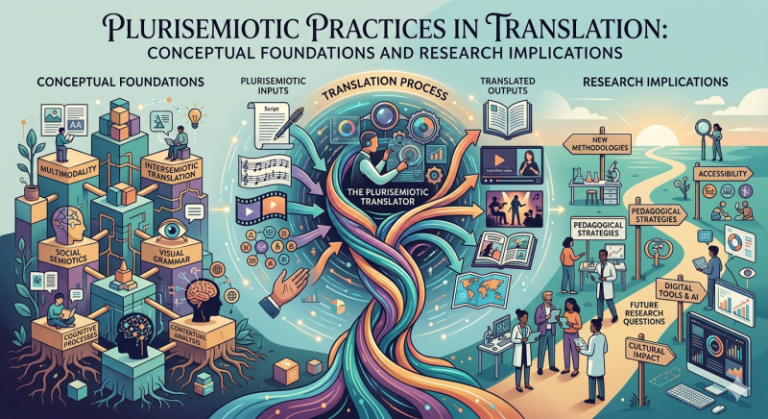
24 April 2026,Bangkok – This article aims to explain and analyze the concept of plurisemiotic practices in translation by situating it within the development of Translation Studies and comparing it with related terms, including multimodality, multimedia translation, and intersemiotic translation. The study employs a theoretical textual analysis to explore conceptual shifts from the 1960s to the digital era.
The findings reveal that while the concept of multimodality has expanded the scope of translation beyond linguistic texts, it has also weakened analytical precision. Meanwhile, audiovisual translation has become a dominant model for multimodal translation. However, this trend has reinforced a persistent language-centered bias.
This article therefore proposes the concept of plurisemiotic practices to emphasize the interaction of multiple semiotic systems within situated contexts, particularly in spatial, participatory, and performative artistic settings that foreground translator visibility. The findings highlight the need to rethink conceptual frameworks and research methodologies in Translation Studies to better account for complex meaning-making processes that extend beyond language.
Introduction
In recent decades, Translation Studies has undergone significant conceptual transformations, particularly in expanding its scope from interlingual translation to forms involving diverse media and semiotic systems (Kaindl, 2013). The concept of multimodality has played a key role in explaining communication as inherently composed of multiple dimensions, such as language, image, and sound (Kress & van Leeuwen, 2001).
However, the widespread use of this concept has led to conceptual ambiguity and reduced its capacity to distinguish among different translational phenomena.
In this context, the concept of plurisemiotic practices has been proposed as an alternative analytical framework capable of capturing the complex interactions among multiple semiotic systems within socio-cultural contexts (Neelsen, 2021). This article therefore aims to explore the conceptual foundations of this term and examine its implications for contemporary translation research and practice.
Literature Review
The concept of multimodality originates from the work of Kress and van Leeuwen (2001), who argue that human communication is inherently multimodal and not limited to language alone. Kaindl (2013) later introduced this concept into Translation Studies, highlighting the need to consider interactions between modes in translation processes.
At the same time, multimedia translation has developed alongside technological advances, particularly in the field of audiovisual translation, which has become a primary domain for multimodal translation research (Perego, 2012; O’Hagan & Mangiron, 2013). However, many scholars argue that this approach remains logocentric, prioritizing language as the central meaning-making system (Boria & Tomalin, 2020).
Intersemiotic translation, proposed by Jakobson (1959), focuses on the transfer of meaning across different semiotic systems, such as from language to image or sound. Although influential in fields such as literary and film studies, it has received comparatively less attention in Translation Studies (Mossop, 2019).
Due to these limitations, Neelsen (2021) introduces the term plurisemiotic to emphasize that both source and target texts inherently consist of multiple semiotic systems. Translation, therefore, is not merely a transfer between systems but a process of managing relationships among them.
Methodology
This study adopts a qualitative research approach based on theoretical textual analysis. The data sources include key scholarly works in Translation Studies from the 1950s onward, including Neelsen (2021).
The analytical approach focuses on conceptual synthesis and historical comparison to identify shifts in definitions, concepts, and theoretical frameworks.
Findings
The analysis reveals several key points. First, while multimodality expands the scope of translation studies, it loses analytical precision because all communication is considered multimodal (Kaindl, 2013).
Second, the dominance of audiovisual translation has led research in this area to prioritize linguistic elements, even within multimodal contexts (Remael, 2001).
Third, plurisemiotic practices offer a new perspective by emphasizing the situated nature of translation. Key characteristics include its occurrence in public spaces, shared audience perception, translator visibility, and the promotion of accessibility and diversity (Neelsen, 2021).
Furthermore, translation in such contexts extends beyond meaning transfer to include emotional, aesthetic, and experiential dimensions.
Recommendations for Future Research
Based on these findings, future research should focus on developing methodological tools for analyzing plurisemiotic translation, which is complex and difficult to document.
Additionally, more studies are needed on audience reception in contexts where multiple semiotic systems operate simultaneously. There is also a need to develop training programs that equip translators with multimodal competencies and the ability to work across media and artistic forms (Taylor, 2003).
Conclusion
This article demonstrates that the concept of plurisemiotic practices has the potential to expand the scope of Translation Studies to encompass more complex and diverse forms of communication, particularly in spatial and socially embedded artistic and performative contexts.
It challenges traditional logocentric frameworks and opens new directions for research and practice that align with contemporary communicative environments.
References
- Boria, M., & Tomalin, M. (2020). Introduction. In M. Boria et al. (Eds.), Translation and multimodality: Beyond words (pp. 1–23). Routledge.
- Cattrysse, P. (2001). Multimedia and translation: Methodological considerations. In Y. Gambier & H. Gottlieb (Eds.), (Multi)Media translation (pp. 1–12). John Benjamins.
- Jakobson, R. (1959). On linguistic aspects of translation. In R. A. Brower (Ed.), On translation (pp. 232–239). Harvard University Press.
- Kaindl, K. (2013). Multimodality and translation. In C. Millán & F. Bartrina (Eds.), The Routledge handbook of translation studies (pp. 257–269). Routledge.
- Kress, G., & van Leeuwen, T. (2001). Multimodal discourse. Oxford University Press.
- Mossop, B. (2019). Intersemiotic translating: Time for a rethink? Translation and Interpreting Studies, 14(1), 75–94.
- Neelsen, S. (2021). What is a plurisemiotic work in translation? The Journal of Specialised Translation, 35.
- O’Hagan, M. (2009). Putting pleasure first. TTR, 22(1), 147–165.
- O’Hagan, M., & Mangiron, C. (2013). Game localization. John Benjamins.
- Perego, E. (2012). Introduction. In Eye tracking in audiovisual translation (pp. 7–11).
- Remael, A. (2001). Some thoughts on multimodal translation. In Y. Gambier & H. Gottlieb (Eds.), (Multi)Media translation (pp. 13–22).
- Taylor, C. (2003). Multimodal transcription. The Translator, 9(2), 191–205.
For professional services, please visit: https://www.seaproti.org/practitioners/
About certified translators, translation certifiers, and certified interpreters associated with SEAProTI.
The Southeast Asian Association of Professional Translators and Interpreters (SEAProTI) has officially shared the qualifications and requirements for becoming Certified Translators, Translation Certification Providers, and Certified Interpreters in Sections 9 and 10 of the Royal Gazette, which was published by the Prime Minister’s Office in Thailand on July 25, 2024. Certified Translators, Translation Certification Providers, and Certified Interpreters
The Council of State has proposed the enactment of a Royal Decree, granting registered translators and recognised translation certifiers from professional associations or accredited language institutions the authority to provide legally valid translation certification (Letter to SEAProTI dated April 28, 2025)
SEAProTI is the first professional association in Thailand and Southeast Asia to implement a comprehensive certification system for translators, certifiers, and interpreters.
Head Office: Baan Ratchakru Building, No. 33, Room 402, Soi Phahonyothin 5, Phahonyothin Road, Phaya Thai District, Bangkok 10400, Thailand
Email: hello@seaproti.com | Tel.: (+66) 2-114-3128 (Office hours: Mon–Fri, 09:00–17:00).
การปฏิบัติแบบพหุสัญญะในการแปล: รากฐานเชิงแนวคิดและนัยต่อการวิจัย
ผู้เขียน: ไกรฤกษ์ กรวยทอง
24 เมษายน 2569, กรุงเทพมหานคร – บทความนี้มีวัตถุประสงค์เพื่ออธิบายและวิเคราะห์แนวคิดเรื่อง “การปฏิบัติแบบพหุสัญญะ” (plurisemiotic practices) ในการแปล โดยจัดวางแนวคิดดังกล่าวภายใต้พัฒนาการของศาสตร์การแปล (Translation Studies) ผ่านการเปรียบเทียบกับคำที่เกี่ยวข้อง ได้แก่ พหุรูปแบบของการสื่อสาร (multimodality), การแปลสื่อมัลติมีเดีย (multimedia translation) และ การแปลข้ามสัญญะ (intersemiotic translation) การศึกษาใช้วิธีการวิเคราะห์เอกสารเชิงทฤษฎี (theoretical textual analysis) โดยมุ่งสำรวจการเปลี่ยนผ่านเชิงแนวคิดตั้งแต่ทศวรรษ 1960 จนถึงยุคดิจิทัล ผลการศึกษาพบว่าแม้แนวคิด พหุรูปแบบของการสื่อสาร จะขยายขอบเขตของการแปลออกจากตัวบทภาษา แต่ก็ประสบปัญหาการลดทอนพลังเชิงวิเคราะห์ ขณะที่ การแปลสื่อโสตทัศน์ (audiovisual translation) ได้กลายเป็นต้นแบบหลักของการแปลเชิงพหุสื่อ อย่างไรก็ตาม แนวโน้มดังกล่าวก่อให้เกิดอคติที่ยังคงให้ความสำคัญกับภาษาเป็นศูนย์กลาง บทความจึงเสนอแนวคิดการปฏิบัติแบบพหสัญญะ เพื่อเน้นการปฏิสัมพันธ์ของระบบสัญญะหลายรูปแบบในบริบทเชิงสถานการณ์ โดยเฉพาะในงานศิลปะที่มีลักษณะเชิงพื้นที่ การรับรู้ร่วมกัน และการทำให้ผู้แปลมีตัวตนอย่างชัดเจน ข้อค้นพบชี้ให้เห็นถึงความจำเป็นในการปรับกรอบแนวคิดและระเบียบวิธีวิจัยในศาสตร์การแปลให้รองรับความซับซ้อนของการสื่อความหมายที่ไม่จำกัดอยู่เพียงภาษา
บทนำ
ในช่วงหลายทศวรรษที่ผ่านมา ศาสตร์การแปลได้เผชิญกับการเปลี่ยนแปลงเชิงแนวคิดอย่างมีนัยสำคัญ โดยเฉพาะการขยายขอบเขตจากการแปลเชิงภาษา (interlingual translation) ไปสู่การแปลที่เกี่ยวข้องกับสื่อและระบบสัญญะที่หลากหลายมากขึ้น (ไคน์เดิล, 2556) แนวคิดเรื่อง พหุรูปแบบของการสื่อสาร ได้เข้ามามีบทบาทสำคัญในการอธิบายธรรมชาติของการสื่อสารที่ประกอบด้วยองค์ประกอบหลายมิติ เช่น ภาษา ภาพ และเสียง (เครส และ ฟาน ลีเวน 2544) อย่างไรก็ตาม การใช้คำดังกล่าวอย่างแพร่หลายกลับทำให้เกิดความคลุมเครือเชิงแนวคิด และลดทอนความสามารถในการจำแนกประเภทของปรากฏการณ์การแปล
ในบริบทนี้ แนวคิด การปฏิบัติแบบพหสัญญะ ได้รับการเสนอขึ้นเพื่อเป็นกรอบวิเคราะห์ทางเลือกที่สามารถอธิบายการปฏิสัมพันธ์ของระบบสัญญะหลายรูปแบบในลักษณะที่ซับซ้อนและสัมพันธ์กับบริบททางสังคมและวัฒนธรรมมากยิ่งขึ้น (นีลเซน, 2564) บทความนี้จึงมีเป้าหมายเพื่อสำรวจรากฐานทางแนวคิดของคำดังกล่าว รวมถึงพิจารณานัยสำคัญต่อการวิจัยและการปฏิบัติในศาสตร์การแปลร่วมสมัย
ทบทวนวรรณกรรม
แนวคิด พหุรูปแบบของการสื่อสาร มีรากฐานมาจากงานของ เครส และ ฟาน ลีเวน (2544) ซึ่งเสนอว่าการสื่อสารของมนุษย์มีลักษณะเป็นพหุรูปแบบโดยธรรมชาติ และไม่ได้จำกัดอยู่เพียงภาษาเพียงอย่างเดียว ต่อมา (ไคน์เดิล, 2556) ได้นำแนวคิดนี้เข้าสู่ศาสตร์การแปล และชี้ให้เห็นถึงความจำเป็นในการพิจารณาปฏิสัมพันธ์ระหว่างโหมดต่างๆ ในกระบวนการแปล
ในขณะเดียวกัน แนวคิดการแปลสื่อมัลติมีเดีย ได้พัฒนาไปพร้อมกับความก้าวหน้าทางเทคโนโลยี โดยเฉพาะในบริบทของการแปลสื่อโสตทัศน์ ซึ่งกลายเป็นพื้นที่ศึกษาหลักของการแปลเชิงพหุสื่อ (เปเรโก, 2555; โอฮาแกน และ แมนจิรอน, 2556) อย่างไรก็ตาม นักวิชาการจำนวนมากชี้ให้เห็นว่าแนวทางดังกล่าวยังคงมีลักษณะ ภาษาเป็นศูนย์กลาง (logocentric) กล่าวคือยังให้ความสำคัญกับภาษาในฐานะศูนย์กลางของการสร้างความหมาย (โบเรีย และ โทมาลิน, 2563) ด้าน การแปลข้ามสัญญะ ซึ่งเสนอโดย (ยาค็อบสัน, 2502) เน้นการแปลงความหมายระหว่างระบบสัญญะต่างชนิด เช่น จากภาษาเป็นภาพ หรือเสียง แม้แนวคิดนี้จะมีอิทธิพลในสาขาอื่น เช่น วรรณคดีและภาพยนตร์ศึกษา แต่กลับได้รับความสนใจน้อยลงในศาสตร์การแปล (มอสซ็อป, 2562)
ด้วยข้อจำกัดของแนวคิดข้างต้น (นีลเซน, 2564) จึงเสนอคำว่า พหุสัญญะ (plurisemiotic) เพื่อเน้นว่าทั้งต้นฉบับและฉบับแปลต่างประกอบด้วยระบบสัญญะหลายรูปแบบอยู่แล้ว และการแปลจึงเป็นกระบวนการจัดการความสัมพันธ์ระหว่างระบบเหล่านั้น มากกว่าการถ่ายโอนความหมายจากระบบหนึ่งไปสู่อีกระบบหนึ่ง
ระเบียบวิธีวิจัย
การศึกษานี้ใช้ระเบียบวิธีวิจัยเชิงคุณภาพ โดยอาศัยการวิเคราะห์เอกสารเชิงทฤษฎี (qualitative theoretical analysis) เป็นหลัก แหล่งข้อมูลประกอบด้วยงานวิชาการสำคัญในศาสตร์การแปลตั้งแต่ช่วงทศวรรษ 1950 เป็นต้นมา รวมถึงบทความหลักของ (นีลเซน, 2564) วิธีการวิเคราะห์มุ่งเน้นการสังเคราะห์แนวคิด (conceptual synthesis) และการเปรียบเทียบเชิงประวัติศาสตร์ (historical comparison) เพื่อระบุการเปลี่ยนแปลงของนิยาม แนวคิด และกรอบทฤษฎีที่เกี่ยวข้อง
สิ่งที่ค้นพบ
ผลการวิเคราะห์ชี้ให้เห็นประเด็นสำคัญหลายประการ ประการแรก แนวคิดพหุรูปแบบของการสื่อสาร แม้จะช่วยขยายขอบเขตของการศึกษา แต่กลับสูญเสียความสามารถในการจำแนกเชิงวิเคราะห์ เนื่องจากทุกการสื่อสารถูกมองว่าเป็น พหุรูปแบบ (multimodal) (ไคน์เดิล, 2556) ประการที่สอง การครอบงำของการแปลสื่อโสตทัศน์ ส่งผลให้การวิจัยในสาขานี้มีแนวโน้มให้ความสำคัญกับองค์ประกอบทางภาษาเป็นหลัก แม้จะอยู่ในบริบทพหุสื่อ (เรมาเอล, 2544)
ประการที่สามการปฏิบัติแบบพหสัญญะ เปิดมุมมองใหม่ที่เน้นลักษณะ “ที่ตั้งอยู่ในบริบท (situated)” ของการแปล โดยมีคุณลักษณะสำคัญ ได้แก่ การเกิดขึ้นในพื้นที่สาธารณะ การรับรู้ร่วมกันของผู้ชม การทำให้ผู้แปลมีตัวตน และการส่งเสริมการเข้าถึงและความหลากหลาย (นีลเซน, 2564) นอกจากนี้ การแปลในบริบทดังกล่าวไม่ได้จำกัดอยู่เพียงการถ่ายทอดความหมาย แต่ยังครอบคลุมมิติทางอารมณ์ สุนทรียะ และประสบการณ์
คำแนะนำสำหรับงานวิจัยในอนาคต
จากข้อค้นพบข้างต้น งานวิจัยในอนาคตควรมุ่งพัฒนาเครื่องมือเชิงระเบียบวิธีสำหรับการวิเคราะห์งานแปลที่มีลักษณะพหุสัญญะ ซึ่งมีความซับซ้อนและยากต่อการบันทึก นอกจากนี้ ควรมีการศึกษาด้านการรับรู้ของผู้ชม ในบริบทที่มีการนำเสนอหลายระบบสัญญะพร้อมกัน รวมถึงการพัฒนาหลักสูตรการฝึกอบรมนักแปลให้มีทักษะด้านพหุรูปแบบของการสื่อสาร และการทำงานร่วมกับสื่อและศิลปะแขนงต่างๆ (เทย์เลอร์, 2546)
สรุป
บทความนี้แสดงให้เห็นว่าแนวคิดการปฏิบัติแบบพหุสัญญะ มีศักยภาพในการขยายขอบเขตของศาสตร์การแปลให้ครอบคลุมรูปแบบการสื่อสารที่ซับซ้อนและหลากหลายมากขึ้น โดยเฉพาะในบริบทของศิลปะและการแสดงที่มีลักษณะเชิงพื้นที่และเชิงสังคม แนวคิดดังกล่าวช่วยท้าทายกรอบภาษาเป็นศูนย์กลาง แบบดั้งเดิม และเปิดโอกาสให้เกิดการพัฒนาแนวทางการวิจัยและการปฏิบัติที่สอดคล้องกับสภาพแวดล้อมการสื่อสารในยุคปัจจุบัน
บรรณานุกรม
- Boria, M., & Tomalin, M. (2020). Introduction. In M. Boria et al. (Eds.), Translation and multimodality: Beyond words (pp. 1–23). Routledge.
- Cattrysse, P. (2001). Multimedia and translation: Methodological considerations. In Y. Gambier & H. Gottlieb (Eds.), (Multi)Media translation (pp. 1–12). John Benjamins.
- Jakobson, R. (1959). On linguistic aspects of translation. In R. A. Brower (Ed.), On translation (pp. 232–239). Harvard University Press.
- Kaindl, K. (2013). Multimodality and translation. In C. Millán & F. Bartrina (Eds.), The Routledge handbook of translation studies (pp. 257–269). Routledge.
- Kress, G., & van Leeuwen, T. (2001). Multimodal discourse. Oxford University Press.
- Mossop, B. (2019). Intersemiotic translating: Time for a rethink? Translation and Interpreting Studies, 14(1), 75–94.
- Neelsen, S. (2021). What is a plurisemiotic work in translation? The Journal of Specialised Translation, 35.
- O’Hagan, M. (2009). Putting pleasure first. TTR, 22(1), 147–165.
- O’Hagan, M., & Mangiron, C. (2013). Game localization. John Benjamins.
- Perego, E. (2012). Introduction. In Eye tracking in audiovisual translation (pp. 7–11).
- Remael, A. (2001). Some thoughts on multimodal translation. In Y. Gambier & H. Gottlieb (Eds.), (Multi)Media translation (pp. 13–22).
- Taylor, C. (2003). Multimodal transcription. The Translator, 9(2), 191–205.
ติดต่อขอใช้บริการนักวิชาชีพของสมาคมได้ที่:https://www.seaproti.org/practitioners/
สมาคมวิชาชีพนักแปลและล่ามแห่งเอเชียตะวันออกเฉียงใต้ (SEAProTI) ได้ประกาศหลักเกณฑ์และคุณสมบัติของผู้ที่ขึ้นทะเบียนเป็น “นักแปลรับรอง (Certified Translators) และผู้รับรองการแปล (Translation Certification Providers) และล่ามรับรอง (Certified Interpreters)” ของสมาคม หมวดที่ 9 และหมวดที่ 10 ในราชกิจจานุเบกษา ของสำนักเลขาธิการคณะรัฐมนตรี ในสำนักนายกรัฐมนตรี แห่งราชอาณาจักรไทย ลงวันที่ 25 ก.ค. 2567 เล่มที่ 141 ตอนที่ 66 ง หน้า 100 อ่านฉบับเต็มได้ที่: นักแปลรับรอง ผู้รับรองการแปล และล่ามรับรอง
สำนักคณะกรรมการกฤษฎีกาเสนอให้ตราเป็นพระราชกฤษฎีกา โดยกำหนดให้นักแปลที่ขึ้นทะเบียน รวมถึงผู้รับรองการแปลจากสมาคมวิชาชีพหรือสถาบันสอนภาษาที่มีการอบรมและขึ้นทะเบียน สามารถรับรองคำแปลได้ (จดหมายถึงสมาคม SEAProTI ลงวันที่ 28 เม.ย. 2568)
สมาคมวิชาชีพนักแปลและล่ามแห่งเอเชียตะวันออกเฉียงใต้เป็นสมาคมวิชาชีพแห่งแรกและแห่งเดียวในประเทศไทยและภูมิภาคเอเชียตะวันออกเฉียงใต้ที่มีระบบรับรองนักแปลรับรอง ผู้รับรองการแปล และล่ามรับรอง
สำนักงานใหญ่: อาคารบ้านราชครู เลขที่ 33 ห้อง 402 ซอยพหลโยธิน 5 ถนนพหลโยธิน แขวงพญาไท เขตพญาไท กรุงเทพมหานคร 10400 ประเทศไทย
อีเมล: hello@seaproti.com โทรศัพท์: (+66) 2-114-3128(เวลาทำการ: วันจันทร์–วันศุกร์ เวลา 09.00–17.00 น.)