



Immigration Enforcement and the Governance of Student Visa Compliance in Thailand: Policy Responses, Institutional Coordination, and the Role of Certified Language Professionals
Author: Griroek Gruaythong
24 April 2026 – This article examines recent immigration enforcement measures in Thailand targeting the misuse of student visas, particularly the large-scale revocation of temporary stay permits. It analyzes the policy response led by the Immigration Bureau and the Ministry of Higher Education, Science, Research and Innovation (MHESI), including the development of a centralized database system for monitoring international students. Using qualitative policy analysis, the study explores structural causes of visa abuse, regulatory gaps, and institutional challenges. It further investigates the role of certified translators, translation certification providers, and certified interpreters—especially those affiliated with regional professional bodies—in ensuring legal compliance, facilitating communication, and supporting procedural fairness. The findings suggest that language professionals constitute a critical yet underrecognized component of immigration governance in multilingual contexts.
Keywords: student visa compliance; immigration enforcement; Thailand; certified translators; interpreting; migration governance
Introduction
Thailand has recently intensified its efforts to regulate non-immigrant visas, particularly student visas, following widespread concerns about misuse by foreign nationals. Reports indicate that up to 10,000 temporary stay permits have been revoked due to non-compliance with visa conditions. While student visas are designed to facilitate access to education, they have increasingly been used as a means of extending residence without genuine academic participation. This situation raises important questions regarding regulatory enforcement, institutional coordination, and compliance mechanisms.
This article situates Thailand’s immigration crackdown within broader discussions of migration governance and policy enforcement. It also introduces an interdisciplinary perspective by examining the role of certified language professionals in immigration processes, an area that has received limited attention in existing research.
Literature Review
Migration governance literature has long emphasized the tension between facilitating international mobility and maintaining regulatory control (Czaika & de Haas, 2013). In the context of international student mobility, visa misuse has been linked to both individual strategies and systemic weaknesses, including insufficient monitoring and fragmented institutional oversight (Findlay et al., 2017).
Within translation and interpreting studies, increasing attention has been given to the role of language professionals in legal and institutional contexts. Jakobson (1959) introduced foundational concepts in translation theory, while later work has expanded into multimodality and complex communicative environments (Kaindl, 2013). Certified translators and interpreters are essential in ensuring accuracy and legal validity in high-stakes domains such as immigration and legal proceedings (Mossop, 2019). However, their integration into immigration compliance systems remains underexplored.
Methodology
This study adopts a qualitative policy analysis approach. Data are drawn from official policy statements, institutional reports, and secondary literature relating to immigration enforcement in Thailand. The analysis focuses on three dimensions: patterns of visa misuse, implementation of regulatory measures, and the role of language services in supporting compliance and enforcement.
Findings and Discussion
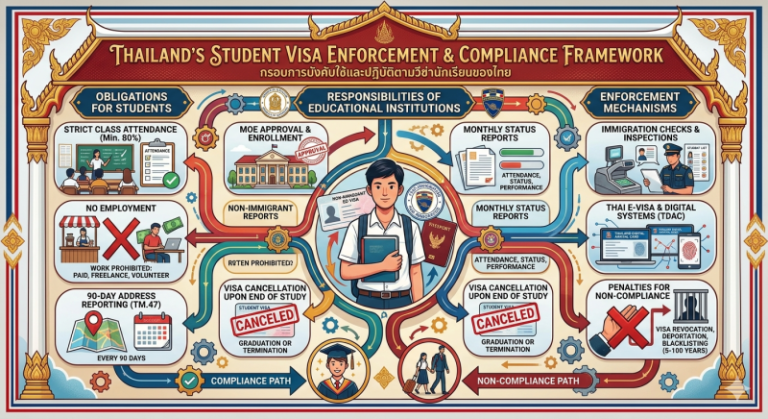
Recent enforcement actions in Thailand reveal systemic vulnerabilities in the student visa framework. A key issue has been the lack of effective monitoring mechanisms, allowing some visa holders to remain in the country without attending classes or participating in legitimate educational activities. In response, authorities have introduced a centralized database system jointly developed by the Immigration Bureau and MHESI. This system requires educational institutions to submit monthly reports on student enrollment, attendance, and participation.
The new system enhances transparency and allows immigration authorities to verify whether visa holders are complying with their stated purpose of stay. If a student’s information is missing or inconsistent, authorities may initiate further investigation, potentially leading to visa revocation or denial of future sponsorship.
The crackdown also addresses concerns regarding corruption and fraudulent practices. Reports of improper approvals linked to bribery have prompted stricter oversight and data integration. By linking institutional reporting with immigration controls, the government aims to reduce opportunities for misconduct and improve accountability.
These enforcement measures have significant consequences for visa holders. Individuals who violate visa conditions may face revocation, deportation, blacklisting, and long-term or permanent bans from re-entering Thailand. Such risks underscore the importance of accurate documentation, compliance, and effective communication throughout the visa process.
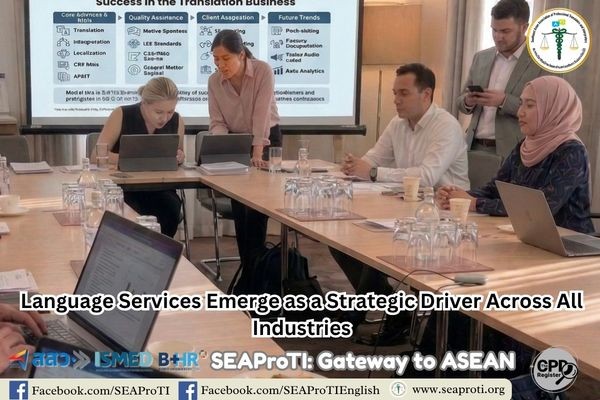
In this context, certified language professionals play a crucial role. Certified translators produce legally recognized translations of key documents, including academic transcripts, enrollment certificates, and financial records. Translation certification providers ensure that these documents meet official standards required by immigration authorities. Certified interpreters facilitate communication between foreign nationals and officials during interviews, legal proceedings, and administrative processes, thereby reducing the risk of misunderstandings that could lead to non-compliance.
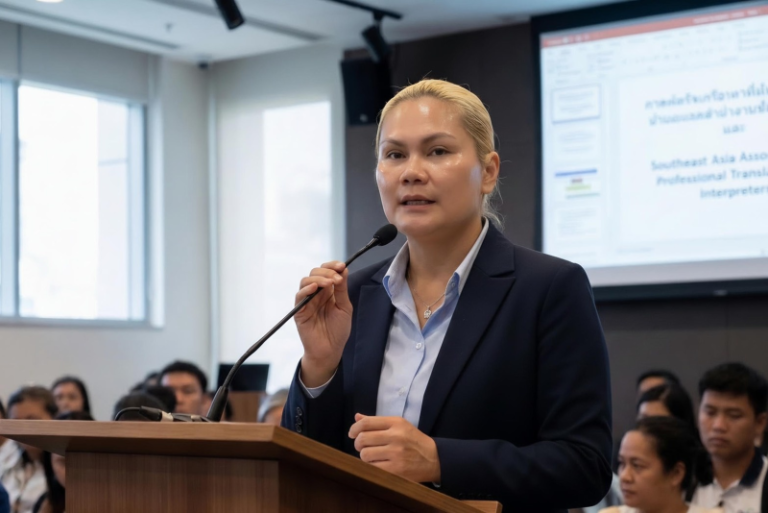
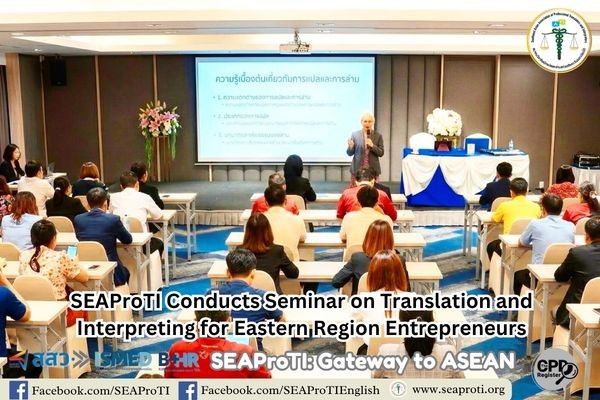
Professional organizations such as Southeast Asian Association of Professional Translators and Interpreters contribute to the standardization and quality assurance of language services. Through accreditation systems, ethical guidelines, and professional training, such organizations help maintain high standards of practice. Their involvement strengthens the reliability of multilingual communication within immigration systems and supports procedural fairness.
Furthermore, immigration processes increasingly operate within complex communicative environments involving written, oral, and digital modes. This highlights the importance of coordinated language mediation to ensure consistency, accuracy, and legal validity across different forms of communication.
Implications for Policy and Practice
The findings highlight the need for a comprehensive approach to immigration governance that integrates enforcement mechanisms with linguistic and institutional support. Policymakers should formally recognize the role of certified translators and interpreters within immigration procedures. Establishing standardized requirements for translation certification and interpreter accreditation would enhance consistency and trust.
Educational institutions must also strengthen compliance systems and ensure accurate reporting. Failure to meet regulatory requirements may affect both institutional credibility and the legal status of international students.
Recommendations for Future Research
Future research should examine the lived experiences of international students navigating immigration systems, particularly in relation to language barriers. Empirical studies assessing the effectiveness of certified translation and interpreting services in reducing visa violations would provide valuable insights. Comparative research across jurisdictions may also identify best practices for integrating language professionals into immigration governance.
Conclusion
Thailand’s recent crackdown on student visa misuse represents a significant development in immigration governance. While the introduction of centralized monitoring systems improves regulatory oversight, the role of certified language professionals remains essential in ensuring accurate communication and compliance. Recognizing and integrating these professionals into policy frameworks can enhance both the effectiveness and fairness of immigration systems in increasingly multilingual contexts.
References
- Czaika, M., & de Haas, H. (2013). The effectiveness of immigration policies. Population and Development Review, 39(3), 487–508.
- Findlay, A. M., King, R., Smith, F. M., Geddes, A., & Skeldon, R. (2017). World class? An investigation of globalisation, difference and international student mobility. Transactions of the Institute of British Geographers, 42(1), 118–131.
- Jakobson, R. (1959). On linguistic aspects of translation. In R. A. Brower (Ed.), On translation (pp. 232–239). Harvard University Press.
- Kaindl, K. (2013). Multimodality and translation. In C. Millán & F. Bartrina (Eds.), The Routledge handbook of translation studies (pp. 257–269). Routledge.
- Mossop, B. (2019). Revising and editing for translators (4th ed.). Routledge.
- Neelsen, S. (2021). What is a plurisemiotic work in translation? The Journal of Specialised Translation, 35.
For professional services, please visit: https://www.seaproti.org/practitioners/
About certified translators, translation certifiers, and certified interpreters associated with SEAProTI.
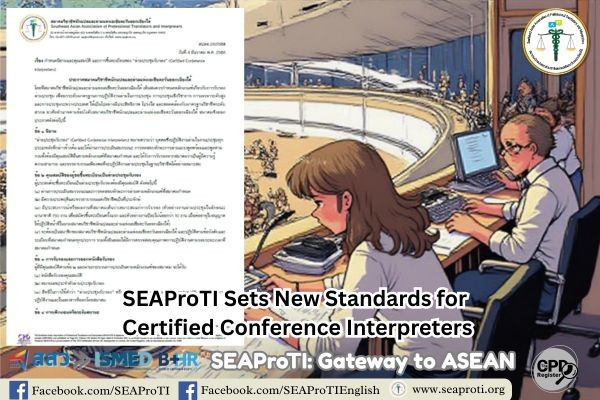
The Southeast Asian Association of Professional Translators and Interpreters (SEAProTI) has officially shared the qualifications and requirements for becoming Certified Translators, Translation Certification Providers, and Certified Interpreters in Sections 9 and 10 of the Royal Gazette, which was published by the Prime Minister’s Office in Thailand on July 25, 2024. Certified Translators, Translation Certification Providers, and Certified Interpreters
The Council of State has proposed the enactment of a Royal Decree, granting registered translators and recognised translation certifiers from professional associations or accredited language institutions the authority to provide legally valid translation certification (Letter to SEAProTI dated April 28, 2025)
SEAProTI is the first professional association in Thailand and Southeast Asia to implement a comprehensive certification system for translators, certifiers, and interpreters.
Head Office: Baan Ratchakru Building, No. 33, Room 402, Soi Phahonyothin 5, Phahonyothin Road, Phaya Thai District, Bangkok 10400, Thailand
Email: hello@seaproti.com | Tel.: (+66) 2-114-3128 (Office hours: Mon–Fri, 09:00–17:00).
การบังคับใช้กฎหมายคนเข้าเมืองและการกำกับดูแลการปฏิบัติตามเงื่อนไขวีซ่านักเรียนในประเทศไทย: การตอบสนองเชิงนโยบาย การประสานงานเชิงสถาบัน และบทบาทของผู้เชี่ยวชาญด้านภาษาที่ได้รับการรับรอง
ผู้เขียน: ไกรฤกษ์ กรวยทอง
24 เมษายน 2569 – บทความนี้มุ่งศึกษามาตรการบังคับใช้กฎหมายคนเข้าเมืองล่าสุดของประเทศไทยที่มุ่งแก้ไขปัญหาการใช้วีซ่านักเรียนในทางที่ผิด โดยเฉพาะการเพิกถอนใบอนุญาตให้อยู่ชั่วคราวในวงกว้าง การศึกษานี้วิเคราะห์การตอบสนองเชิงนโยบายที่ดำเนินการโดยสำนักงานตรวจคนเข้าเมืองและกระทรวงการอุดมศึกษา วิทยาศาสตร์ วิจัยและนวัตกรรม (MHESI) รวมถึงการพัฒนาระบบฐานข้อมูลแบบรวมศูนย์เพื่อใช้ติดตามนักศึกษาต่างชาติ โดยใช้วิธีการวิเคราะห์นโยบายเชิงคุณภาพ บทความนี้สำรวจสาเหตุเชิงโครงสร้างของการใช้วีซ่าในทางที่ผิด ช่องว่างด้านกฎระเบียบ และความท้าทายเชิงสถาบัน นอกจากนี้ยังวิเคราะห์บทบาทของนักแปลรับรอง ผู้ให้การรับรองงานแปล และล่ามรับรอง โดยเฉพาะผู้ที่สังกัดองค์กรวิชาชีพระดับภูมิภาค ในการสนับสนุนการปฏิบัติตามกฎหมาย การอำนวยความสะดวกด้านการสื่อสาร และการส่งเสริมความเป็นธรรมในกระบวนการ ผลการศึกษาชี้ให้เห็นว่าผู้เชี่ยวชาญด้านภาษามีบทบาทสำคัญแต่ยังไม่ได้รับการให้ความสำคัญอย่างเพียงพอในระบบกำกับดูแลการย้ายถิ่นในบริบทพหุภาษา
คำสำคัญ: การปฏิบัติตามวีซ่านักเรียน; การบังคับใช้กฎหมายคนเข้าเมือง; ประเทศไทย; นักแปลรับรอง; การล่าม; การกำกับดูแลการย้ายถิ่น
บทนำ
ประเทศไทยได้เพิ่มความเข้มงวดในการกำกับดูแลวีซ่าประเภทคนอยู่ชั่วคราว โดยเฉพาะวีซ่านักเรียน ภายหลังจากพบข้อกังวลอย่างแพร่หลายเกี่ยวกับการใช้วีซ่าในทางที่ผิดโดยชาวต่างชาติ มีรายงานว่ามีการเพิกถอนใบอนุญาตให้อยู่ชั่วคราวมากถึง 10,000 ราย เนื่องจากไม่ปฏิบัติตามเงื่อนไขของวีซ่า แม้ว่าวีซ่านักเรียนจะมีวัตถุประสงค์เพื่อสนับสนุนการเข้าถึงการศึกษา แต่กลับถูกนำไปใช้เป็นช่องทางในการพำนักระยะยาวโดยปราศจากการเข้าศึกษาอย่างแท้จริง สถานการณ์ดังกล่าวก่อให้เกิดคำถามสำคัญเกี่ยวกับการบังคับใช้กฎหมาย การประสานงานระหว่างหน่วยงาน และกลไกการกำกับดูแลการปฏิบัติตามเงื่อนไข
บทความนี้วางกรอบการวิเคราะห์การเข้มงวดด้านการตรวจคนเข้าเมืองของประเทศไทยในบริบทของการกำกับดูแลการย้ายถิ่นและการบังคับใช้นโยบายในระดับสากล พร้อมทั้งนำเสนอมุมมองเชิงสหวิทยาการโดยพิจารณาบทบาทของผู้เชี่ยวชาญด้านภาษาที่ได้รับการรับรองในกระบวนการตรวจคนเข้าเมือง ซึ่งเป็นประเด็นที่ยังได้รับการศึกษาไม่มากนัก
การทบทวนวรรณกรรม
วรรณกรรมด้านการกำกับดูแลการย้ายถิ่นได้ชี้ให้เห็นถึงความตึงเครียดระหว่างการส่งเสริมการเคลื่อนย้ายระหว่างประเทศกับการควบคุมด้านกฎระเบียบ (ไซไคกา และ เดอ ฮาส, 2556) ในบริบทของการเคลื่อนย้ายนักศึกษาต่างชาติ การใช้วีซ่าในทางที่ผิดมักเกี่ยวข้องทั้งกับพฤติกรรมของบุคคลและจุดอ่อนเชิงระบบ เช่น การขาดกลไกติดตามที่มีประสิทธิภาพและการกำกับดูแลที่กระจัดกระจาย (ฟินด์เลย์ และคณะ, 2560)
ในสาขาการแปลและการล่าม งานวิจัยได้ให้ความสำคัญมากขึ้นกับบทบาทของผู้เชี่ยวชาญด้านภาษาในบริบททางกฎหมายและสถาบัน ยาค็อบสัน (2502) ได้วางรากฐานทางทฤษฎีของการแปล ขณะที่งานวิจัยในระยะหลังได้ขยายไปสู่แนวคิดด้านพหุสื่อ (multimodality) และสภาพแวดล้อมการสื่อสารที่ซับซ้อน (ไคน์เดิล, 2556) นักแปลและล่ามที่ได้รับการรับรองมีบทบาทสำคัญในการรับรองความถูกต้องและความชอบด้วยกฎหมายในบริบทที่มีความสำคัญสูง เช่น กระบวนการตรวจคนเข้าเมืองและกระบวนการยุติธรรม (มอสซ็อป, 2562) อย่างไรก็ตาม บทบาทของบุคลากรกลุ่มนี้ในระบบกำกับดูแลการปฏิบัติตามเงื่อนไขวีซ่ายังคงได้รับการศึกษาอย่างจำกัด
ระเบียบวิธีวิจัย
การศึกษานี้ใช้วิธีการวิเคราะห์นโยบายเชิงคุณภาพ โดยอาศัยข้อมูลจากแถลงการณ์อย่างเป็นทางการ รายงานของหน่วยงานที่เกี่ยวข้อง และเอกสารวิชาการที่เกี่ยวข้องกับการบังคับใช้กฎหมายคนเข้าเมืองในประเทศไทย การวิเคราะห์มุ่งเน้นสามประเด็นหลัก ได้แก่ รูปแบบการใช้วีซ่าในทางที่ผิด การดำเนินมาตรการกำกับดูแล และบทบาทของบริการด้านภาษาในการสนับสนุนการปฏิบัติตามกฎหมาย
ผลการศึกษาและอภิปรายผล
มาตรการบังคับใช้กฎหมายล่าสุดในประเทศไทยสะท้อนให้เห็นถึงช่องโหว่เชิงโครงสร้างในระบบวีซ่านักเรียน ปัญหาสำคัญประการหนึ่งคือการขาดกลไกติดตามที่มีประสิทธิภาพ ซึ่งทำให้ผู้ถือวีซ่าบางรายสามารถพำนักอยู่ในประเทศโดยไม่เข้าศึกษาอย่างแท้จริง เพื่อตอบสนองต่อปัญหานี้ หน่วยงานที่เกี่ยวข้องได้พัฒนาระบบฐานข้อมูลแบบรวมศูนย์ร่วมกัน โดยกำหนดให้สถาบันการศึกษารายงานข้อมูลการลงทะเบียน การเข้าเรียน และการมีส่วนร่วมของนักศึกษาเป็นรายเดือน
ระบบดังกล่าวช่วยเพิ่มความโปร่งใสและเปิดโอกาสให้เจ้าหน้าที่ตรวจคนเข้าเมืองสามารถตรวจสอบการปฏิบัติตามเงื่อนไขของผู้ถือวีซ่าได้อย่างมีประสิทธิภาพ หากพบข้อมูลที่ไม่สอดคล้องหรือขาดหาย อาจนำไปสู่การตรวจสอบเพิ่มเติม การเพิกถอนวีซ่า หรือการปฏิเสธการสนับสนุนวีซ่าในอนาคต
นอกจากนี้ มาตรการดังกล่าวยังมุ่งแก้ไขปัญหาการทุจริตและการกระทำผิด เช่น การอนุมัติวีซ่าที่ไม่ชอบด้วยกฎหมาย การเชื่อมโยงข้อมูลระหว่างสถาบันการศึกษาและหน่วยงานตรวจคนเข้าเมืองช่วยลดโอกาสในการกระทำผิดและเพิ่มความรับผิดชอบ
ผลกระทบต่อผู้ถือวีซ่ามีความรุนแรง โดยผู้ที่ละเมิดเงื่อนไขอาจถูกเพิกถอนวีซ่า ถูกเนรเทศ ถูกขึ้นบัญชีดำ และถูกห้ามเข้าประเทศในระยะยาวหรือถาวร ความเสี่ยงดังกล่าวเน้นย้ำถึงความสำคัญของความถูกต้องของเอกสารและการสื่อสารที่มีประสิทธิภาพ
ในบริบทนี้ ผู้เชี่ยวชาญด้านภาษาที่ได้รับการรับรองมีบทบาทสำคัญ นักแปลรับรองมีหน้าที่จัดทำคำแปลเอกสารที่มีผลทางกฎหมาย เช่น ใบแสดงผลการศึกษา หนังสือรับรองการลงทะเบียน และเอกสารทางการเงิน ผู้ให้การรับรองงานแปลมีบทบาทในการตรวจสอบความถูกต้องและมาตรฐานของงานแปล ขณะที่ล่ามรับรองช่วยอำนวยความสะดวกในการสื่อสารระหว่างชาวต่างชาติกับเจ้าหน้าที่ ลดความเสี่ยงของความเข้าใจผิดที่อาจนำไปสู่การละเมิดเงื่อนไขวีซ่า
องค์กรวิชาชีพ เช่น สมาคมนักแปลและล่ามมืออาชีพแห่งเอเชียตะวันออกเฉียงใต้ มีบทบาทสำคัญในการกำหนดมาตรฐานวิชาชีพ ผ่านระบบการรับรอง จรรยาบรรณ และการพัฒนาวิชาชีพ ซึ่งช่วยยกระดับคุณภาพของบริการด้านภาษาและเสริมสร้างความน่าเชื่อถือในกระบวนการตรวจคนเข้าเมือง
นอกจากนี้ กระบวนการตรวจคนเข้าเมืองในปัจจุบันมีความซับซ้อนมากขึ้น โดยเกี่ยวข้องกับการสื่อสารหลายรูปแบบ ทั้งเอกสารลายลักษณ์อักษร การสื่อสารด้วยวาจา และข้อมูลดิจิทัล จึงจำเป็นต้องอาศัยการประสานงานด้านภาษาอย่างเป็นระบบเพื่อให้เกิดความถูกต้องและสอดคล้องกัน
นัยเชิงนโยบายและการปฏิบัติ
ผลการศึกษาชี้ให้เห็นว่าการกำกับดูแลการย้ายถิ่นอย่างมีประสิทธิภาพต้องอาศัยการบูรณาการระหว่างมาตรการบังคับใช้กฎหมายและการสนับสนุนด้านภาษา ผู้กำหนดนโยบายควรให้การยอมรับบทบาทของนักแปลและล่ามรับรองอย่างเป็นทางการ รวมถึงกำหนดมาตรฐานที่ชัดเจนสำหรับการรับรองงานแปลและการล่าม
ในขณะเดียวกัน สถาบันการศึกษาควรพัฒนาระบบรายงานข้อมูลให้มีความถูกต้องและสอดคล้องกับข้อกำหนด เพื่อป้องกันผลกระทบต่อสถานะทางกฎหมายของนักศึกษาและความน่าเชื่อถือของสถาบัน
ข้อเสนอแนะสำหรับการวิจัยในอนาคต
การวิจัยในอนาคตควรมุ่งศึกษาประสบการณ์ของนักศึกษาต่างชาติในการเผชิญกับระบบตรวจคนเข้าเมือง โดยเฉพาะในประเด็นอุปสรรคด้านภาษา นอกจากนี้ ควรมีการศึกษาผลกระทบของบริการแปลและล่ามต่อการลดการละเมิดเงื่อนไขวีซ่า รวมถึงการศึกษาเปรียบเทียบระหว่างประเทศเพื่อค้นหาแนวปฏิบัติที่เหมาะสม
สรุป
มาตรการเข้มงวดในการจัดการการใช้วีซ่านักเรียนในประเทศไทยถือเป็นพัฒนาการสำคัญในการกำกับดูแลการย้ายถิ่น แม้ว่าระบบฐานข้อมูลแบบรวมศูนย์จะช่วยเพิ่มประสิทธิภาพในการควบคุม แต่บทบาทของผู้เชี่ยวชาญด้านภาษาที่ได้รับการรับรองยังคงมีความสำคัญอย่างยิ่งในการสนับสนุนความถูกต้องของการสื่อสารและการปฏิบัติตามกฎหมาย การบูรณาการบุคลากรเหล่านี้เข้าสู่กรอบนโยบายจะช่วยยกระดับทั้งประสิทธิภาพและความเป็นธรรมของระบบตรวจคนเข้าเมืองในบริบทพหุภาษา
บรรณานุกรม
- Czaika, M., & de Haas, H. (2013). The effectiveness of immigration policies. Population and Development Review, 39(3), 487–508.
- Findlay, A. M., King, R., Smith, F. M., Geddes, A., & Skeldon, R. (2017). World class? An investigation of globalisation, difference and international student mobility. Transactions of the Institute of British Geographers, 42(1), 118–131.
- Jakobson, R. (1959). On linguistic aspects of translation. In R. A. Brower (Ed.), On translation (pp. 232–239). Harvard University Press.
- Kaindl, K. (2013). Multimodality and translation. In C. Millán & F. Bartrina (Eds.), The Routledge handbook of translation studies (pp. 257–269). Routledge.
- Mossop, B. (2019). Revising and editing for translators (4th ed.). Routledge.
- Neelsen, S. (2021). What is a plurisemiotic work in translation? The Journal of Specialised Translation, 35.
ติดต่อขอใช้บริการนักวิชาชีพของสมาคมได้ที่:https://www.seaproti.org/practitioners/
สมาคมวิชาชีพนักแปลและล่ามแห่งเอเชียตะวันออกเฉียงใต้ (SEAProTI) ได้ประกาศหลักเกณฑ์และคุณสมบัติของผู้ที่ขึ้นทะเบียนเป็น “นักแปลรับรอง (Certified Translators) และผู้รับรองการแปล (Translation Certification Providers) และล่ามรับรอง (Certified Interpreters)” ของสมาคม หมวดที่ 9 และหมวดที่ 10 ในราชกิจจานุเบกษา ของสำนักเลขาธิการคณะรัฐมนตรี ในสำนักนายกรัฐมนตรี แห่งราชอาณาจักรไทย ลงวันที่ 25 ก.ค. 2567 เล่มที่ 141 ตอนที่ 66 ง หน้า 100 อ่านฉบับเต็มได้ที่: นักแปลรับรอง ผู้รับรองการแปล และล่ามรับรอง
สำนักคณะกรรมการกฤษฎีกาเสนอให้ตราเป็นพระราชกฤษฎีกา โดยกำหนดให้นักแปลที่ขึ้นทะเบียน รวมถึงผู้รับรองการแปลจากสมาคมวิชาชีพหรือสถาบันสอนภาษาที่มีการอบรมและขึ้นทะเบียน สามารถรับรองคำแปลได้ (จดหมายถึงสมาคม SEAProTI ลงวันที่ 28 เม.ย. 2568)
สมาคมวิชาชีพนักแปลและล่ามแห่งเอเชียตะวันออกเฉียงใต้เป็นสมาคมวิชาชีพแห่งแรกและแห่งเดียวในประเทศไทยและภูมิภาคเอเชียตะวันออกเฉียงใต้ที่มีระบบรับรองนักแปลรับรอง ผู้รับรองการแปล และล่ามรับรอง
สำนักงานใหญ่: อาคารบ้านราชครู เลขที่ 33 ห้อง 402 ซอยพหลโยธิน 5 ถนนพหลโยธิน แขวงพญาไท เขตพญาไท กรุงเทพมหานคร 10400 ประเทศไทย
อีเมล: hello@seaproti.com โทรศัพท์: (+66) 2-114-3128(เวลาทำการ: วันจันทร์–วันศุกร์ เวลา 09.00–17.00 น.)