


Tourist Scams in Thailand: An Analytical Study of Fraud Patterns and Preventive Measures in the Thai Tourism Context
Author: Phakaporn Tanjararak
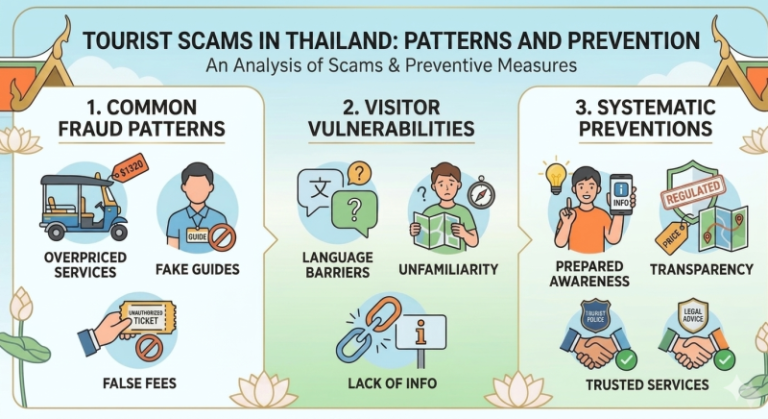
April 24, 2026, Bangkok – This academic article aims to analyze common forms of tourist scams in Thailand, while also explaining the contributing factors that facilitate fraudulent activities and proposing systematic prevention measures. The study is based on a synthesis of information regarding the behavior of offenders and the vulnerabilities of tourists, including language barriers, unfamiliarity with the local context, and a lack of comparative information on prices and services. The findings indicate that awareness and information preparedness are key mechanisms in reducing risks and enhancing safer travel experiences (Tourism Authority of Thailand, 2022).
Introduction
Thailand is one of the world’s major tourist destinations, attracting a large number of visitors each year. However, this popularity is accompanied by various forms of fraud, particularly affecting foreign tourists who lack familiarity with the language, laws, and local culture. These factors make tourists vulnerable to deception and may lead to both financial losses and negative travel experiences (Ministry of Tourism and Sports, 2022).
Analysis of Tourist Scam Patterns
Price-related scams are among the most common, where tourists may be overcharged or given incorrect change due to unfamiliarity with local currency and standard pricing. Although most businesses operate honestly, some exploit these gaps for personal gain (Office of the Consumer Protection Board, 2021).
Additionally, scams involving transportation providers, such as taxi and tuk-tuk drivers, are a significant concern. These may include refusal to use meters, charging inflated fares, or deviating from intended routes to take tourists to affiliated businesses, resulting in wasted time and additional expenses (Department of Land Transport, 2022).
Impersonation of tour guides or the unlawful collection of entrance fees is another common tactic. Fraudsters may offer tours or provide false information regarding entrance fees, then disappear after receiving payment or deliver substandard services (Ministry of Tourism and Sports, 2022).
Benefits and Added Value
Despite the risks of scams, Thailand continues to demonstrate strengths in service quality and tourism infrastructure that support positive travel experiences. Both public and private sectors have worked to improve service standards and information systems to help tourists access accurate information and reduce the risk of exploitation. The use of technology, such as translation applications and online booking systems, also plays a crucial role in enhancing transparency and user confidence (Tourism Authority of Thailand, 2022).
Discussion
The analysis indicates that tourist scams in Thailand are closely linked to structural factors, including information asymmetry, power imbalances between service providers and consumers, and communication barriers. Addressing these issues cannot rely solely on legal measures but must also involve enhancing tourists’ knowledge and awareness. Furthermore, improving regulatory mechanisms and ensuring transparent access to information are essential in reducing the likelihood of fraud (Tourist Police Bureau, 2022).
The Role of Legal and Visa Consultants
In the context of international travel, obtaining advice from legal professionals and related service providers can help reduce the risk of fraud and increase confidence in various activities, particularly those involving contracts, transactions, or legal disputes. Expert guidance in verifying information and providing accurate advice therefore serves as an important support mechanism (Siam Legal International, 2023).
Conclusion
Tourist scams remain an issue that requires continuous management. Although Thailand has strong tourism potential, the risks of fraud may affect its image and tourists’ confidence. Enhancing knowledge, improving regulatory systems, and appropriately utilizing technology can help reduce risks and promote safer and more sustainable travel experiences in the long term.
References
- Department of Land Transport. (2022). Guidelines for public transport services.
- Department of Business Development. (2022). Service business operational guidelines.
- Ministry of Tourism and Sports. (2022). Tourism service standards.
- Tourism Authority of Thailand. (2022). Tourist safety guidelines.
- Office of the Consumer Protection Board. (2021). Consumer rights and protection guidelines.
- Royal Thai Police. (2022). Crime prevention guidelines.
- Tourist Police Bureau. (2022). Safety recommendations for tourists.
For professional services, please visit: https://www.seaproti.org/practitioners/
About certified translators, translation certifiers, and certified interpreters associated with SEAProTI. The Southeast Asian Association of Professional Translators and Interpreters (SEAProTI) has officially shared the qualifications and requirements for becoming Certified Translators, Translation Certification Providers, and Certified Interpreters in Sections 9 and 10 of the Royal Gazette, which was published by the Prime Minister’s Office in Thailand on July 25, 2024. Certified Translators, Translation Certification Providers, and Certified Interpreters
The Council of State has proposed the enactment of a Royal Decree, granting registered translators and recognised translation certifiers from professional associations or accredited language institutions the authority to provide legally valid translation certification (Letter to SEAProTI dated April 28, 2025)
SEAProTI is the first professional association in Thailand and Southeast Asia to implement a comprehensive certification system for translators, certifiers, and interpreters.
Head Office: Baan Ratchakru Building, No. 33, Room 402, Soi Phahonyothin 5, Phahonyothin Road, Phaya Thai District, Bangkok 10400, Thailand
Email: hello@seaproti.com | Tel.: (+66) 2-114-3128 (Office hours: Mon–Fri, 09:00–17:00).
การหลอกลวงนักท่องเที่ยวในประเทศไทย: การศึกษาเชิงวิเคราะห์เกี่ยวกับรูปแบบการฉ้อโกงและมาตรการป้องกันในบริบทการท่องเที่ยวไทย
ผู้เขียน: ภคพร ตันจรารักษ์
24 เมษายน 2026, กรุงเทพมหานคร — บทความวิชาการนี้มุ่งวิเคราะห์รูปแบบการหลอกลวงนักท่องเที่ยวที่พบบ่อยในประเทศไทย พร้อมทั้งอธิบายปัจจัยที่เอื้อต่อการเกิดการฉ้อโกงและเสนอแนวทางการป้องกันอย่างเป็นระบบ โดยอาศัยการสังเคราะห์ข้อมูลเกี่ยวกับพฤติกรรมของผู้กระทำผิดและจุดอ่อนของนักท่องเที่ยว อันได้แก่ อุปสรรคด้านภาษา ความไม่คุ้นเคยกับบริบทท้องถิ่น และการขาดข้อมูลเชิงเปรียบเทียบเกี่ยวกับราคาและบริการ ผลการศึกษาชี้ให้เห็นว่าการตระหนักรู้และการเตรียมความพร้อมเชิงข้อมูลเป็นกลไกสำคัญในการลดความเสี่ยง และช่วยเสริมสร้างประสบการณ์การท่องเที่ยวที่ปลอดภัยยิ่งขึ้น (สำนักงานการท่องเที่ยวแห่งประเทศไทย, 2565)
บทนำ
ประเทศไทยเป็นหนึ่งในจุดหมายปลายทางด้านการท่องเที่ยวที่สำคัญของโลก ซึ่งดึงดูดนักท่องเที่ยวจำนวนมากในแต่ละปี อย่างไรก็ตาม ความนิยมดังกล่าวก็มาพร้อมกับความเสี่ยงจากการฉ้อโกงในรูปแบบต่าง ๆ โดยเฉพาะอย่างยิ่งในกลุ่มนักท่องเที่ยวต่างชาติที่ขาดความคุ้นเคยกับภาษา กฎหมาย และวัฒนธรรมท้องถิ่น ปัจจัยเหล่านี้ส่งผลให้นักท่องเที่ยวมีความเปราะบางต่อการถูกหลอกลวง และอาจนำไปสู่ความเสียหายทั้งในด้านทรัพย์สินและประสบการณ์การเดินทาง (กระทรวงการท่องเที่ยวและกีฬา, 2565)
การวิเคราะห์รูปแบบการหลอกลวงนักท่องเที่ยว
การหลอกลวงด้านราคาสินค้าและบริการเป็นรูปแบบที่พบได้บ่อย โดยนักท่องเที่ยวอาจถูกเรียกเก็บเงินเกินจริงหรือได้รับเงินทอนไม่ครบ อันเนื่องมาจากความไม่คุ้นเคยกับค่าเงินและราคามาตรฐานในท้องถิ่น แม้ว่าผู้ประกอบการส่วนใหญ่จะดำเนินธุรกิจอย่างสุจริต แต่ยังมีบางรายที่อาศัยช่องว่างดังกล่าวในการแสวงหาประโยชน์ (สำนักงานคณะกรรมการคุ้มครองผู้บริโภค, 2564)
นอกจากนี้ การหลอกลวงโดยผู้ให้บริการขนส่ง เช่น รถแท็กซี่และรถตุ๊กตุ๊ก เป็นอีกหนึ่งประเด็นสำคัญ โดยอาจมีการปฏิเสธการใช้มิเตอร์ เรียกเก็บค่าโดยสารเกินจริง หรือเปลี่ยนเส้นทางเพื่อนำนักท่องเที่ยวไปยังสถานประกอบการที่มีการตกลงผลประโยชน์ร่วมกัน ซึ่งส่งผลกระทบทั้งด้านเวลาและค่าใช้จ่าย (กรมการขนส่งทางบก, 2565)
การแอบอ้างเป็นมัคคุเทศก์หรือการเรียกเก็บค่าธรรมเนียมสถานที่โดยมิชอบก็เป็นกลยุทธ์ที่พบได้ทั่วไป ผู้กระทำการอาจเสนอการนำเที่ยวหรือแจ้งข้อมูลเท็จเกี่ยวกับค่าธรรมเนียมเข้าชม และหลบหนีหลังจากได้รับเงิน หรือให้บริการที่ไม่ได้มาตรฐาน (กระทรวงการท่องเที่ยวและกีฬา, 2565)
สิทธิประโยชน์และมูลค่าเพิ่ม
แม้ว่าจะมีความเสี่ยงจากการหลอกลวง แต่ประเทศไทยยังคงมีจุดแข็งด้านการบริการและโครงสร้างพื้นฐานทางการท่องเที่ยวที่เอื้อต่อประสบการณ์ที่มีคุณภาพ หน่วยงานภาครัฐและเอกชนได้พยายามพัฒนามาตรฐานบริการและระบบข้อมูลข่าวสารเพื่อช่วยให้นักท่องเที่ยวสามารถเข้าถึงข้อมูลที่ถูกต้องและลดความเสี่ยงจากการถูกเอารัดเอาเปรียบ การใช้เทคโนโลยี เช่น แอปพลิเคชันแปลภาษาและระบบจองบริการออนไลน์ ยังมีบทบาทสำคัญในการเพิ่มความโปร่งใสและความมั่นใจให้กับผู้ใช้บริการ (สำนักงานการท่องเที่ยวแห่งประเทศไทย, 2565)
อภิปรายผล
ผลการวิเคราะห์สะท้อนให้เห็นว่าการหลอกลวงนักท่องเที่ยวในประเทศไทยมีความสัมพันธ์กับปัจจัยเชิงโครงสร้าง ได้แก่ ช่องว่างด้านข้อมูล ความไม่สมดุลด้านอำนาจระหว่างผู้ให้บริการและผู้บริโภค และข้อจำกัดด้านการสื่อสาร การลดปัญหาดังกล่าวจึงไม่สามารถอาศัยเพียงมาตรการเชิงกฎหมายเท่านั้น แต่ต้องอาศัยการเสริมสร้างความรู้และความตระหนักรู้ของนักท่องเที่ยวควบคู่กันไป นอกจากนี้ การพัฒนากลไกการกำกับดูแลและการเข้าถึงข้อมูลที่โปร่งใสยังมีบทบาทสำคัญในการลดโอกาสการเกิดการฉ้อโกง (สำนักงานตำรวจท่องเที่ยว, 2565)
บทบาทของที่ปรึกษากฎหมายและวีซ่า
ในบริบทของการเดินทางระหว่างประเทศ การได้รับคำแนะนำจากผู้เชี่ยวชาญด้านกฎหมายและบริการที่เกี่ยวข้องสามารถช่วยลดความเสี่ยงจากการถูกหลอกลวงและเพิ่มความมั่นใจในการดำเนินกิจกรรมต่าง ๆ โดยเฉพาะในกรณีที่เกี่ยวข้องกับสัญญา การทำธุรกรรม หรือข้อพิพาททางกฎหมาย การมีผู้เชี่ยวชาญช่วยตรวจสอบข้อมูลและให้คำแนะนำอย่างถูกต้องจึงเป็นกลไกสนับสนุนที่สำคัญ (สยาม ลีเกิล อินเตอร์เนชันแนล, 2566)
สรุป
การหลอกลวงนักท่องเที่ยวเป็นประเด็นที่ยังคงต้องได้รับการจัดการอย่างต่อเนื่อง แม้ว่าประเทศไทยจะมีศักยภาพด้านการท่องเที่ยวสูง แต่ความเสี่ยงจากการฉ้อโกงอาจส่งผลกระทบต่อภาพลักษณ์และความเชื่อมั่นของนักท่องเที่ยว การเสริมสร้างความรู้ การพัฒนาระบบกำกับดูแล และการใช้เทคโนโลยีอย่างเหมาะสม จะช่วยลดความเสี่ยงและส่งเสริมประสบการณ์การท่องเที่ยวที่ปลอดภัยและยั่งยืนในระยะยาว
เอกสารอ้างอิง
- กรมการขนส่งทางบก. (2565). แนวทางการให้บริการรถโดยสารสาธารณะ.
- กรมพัฒนาธุรกิจการค้า. (2565). แนวปฏิบัติด้านธุรกิจบริการ.
- กระทรวงการท่องเที่ยวและกีฬา. (2565). มาตรฐานการให้บริการด้านการท่องเที่ยว.
- สำนักงานการท่องเที่ยวแห่งประเทศไทย. (2565). แนวทางความปลอดภัยสำหรับนักท่องเที่ยว.
- สำนักงานคณะกรรมการคุ้มครองผู้บริโภค. (2564). สิทธิผู้บริโภคและการป้องกันการเอารัดเอาเปรียบ.
- สำนักงานตำรวจแห่งชาติ. (2565). แนวทางป้องกันอาชญากรรม.
- สำนักงานตำรวจท่องเที่ยว. (2565). คำแนะนำด้านความปลอดภัยสำหรับนักท่องเที่ยว.
ติดต่อขอใช้บริการนักวิชาชีพของสมาคมได้ที่:https://www.seaproti.org/practitioners/
สมาคมวิชาชีพนักแปลและล่ามแห่งเอเชียตะวันออกเฉียงใต้ (SEAProTI) ได้ประกาศหลักเกณฑ์และคุณสมบัติของผู้ที่ขึ้นทะเบียนเป็น “นักแปลรับรอง (Certified Translators) และผู้รับรองการแปล (Translation Certification Providers) และล่ามรับรอง (Certified Interpreters)” ของสมาคม หมวดที่ 9 และหมวดที่ 10 ในราชกิจจานุเบกษา ของสำนักเลขาธิการคณะรัฐมนตรี ในสำนักนายกรัฐมนตรี แห่งราชอาณาจักรไทย ลงวันที่ 25 ก.ค. 2567 เล่มที่ 141 ตอนที่ 66 ง หน้า 100 อ่านฉบับเต็มได้ที่: นักแปลรับรอง ผู้รับรองการแปล และล่ามรับรอง
สำนักคณะกรรมการกฤษฎีกาเสนอให้ตราเป็นพระราชกฤษฎีกา โดยกำหนดให้นักแปลที่ขึ้นทะเบียน รวมถึงผู้รับรองการแปลจากสมาคมวิชาชีพหรือสถาบันสอนภาษาที่มีการอบรมและขึ้นทะเบียน สามารถรับรองคำแปลได้ (จดหมายถึงสมาคม SEAProTI ลงวันที่ 28 เม.ย. 2568)
สมาคมวิชาชีพนักแปลและล่ามแห่งเอเชียตะวันออกเฉียงใต้เป็นสมาคมวิชาชีพแห่งแรกและแห่งเดียวในประเทศไทยและภูมิภาคเอเชียตะวันออกเฉียงใต้ที่มีระบบรับรองนักแปลรับรอง ผู้รับรองการแปล และล่ามรับรอง
สำนักงานใหญ่: อาคารบ้านราชครู เลขที่ 33 ห้อง 402 ซอยพหลโยธิน 5 ถนนพหลโยธิน แขวงพญาไท เขตพญาไท กรุงเทพมหานคร 10400 ประเทศไทย
อีเมล: hello@seaproti.com โทรศัพท์: (+66) 2-114-3128(เวลาทำการ: วันจันทร์–วันศุกร์ เวลา 09.00–17.00 น.)