



Top Legal Issues Foreign Businesses Face in Thailand:
A Scholarly Analysis of Regulatory and Compliance Challenges
Author: Phakaporn Tanjararak
April 21, 2026, Bangkok – This article examines the principal legal challenges encountered by foreign businesses operating in Thailand, with a particular focus on regulatory constraints under Thai law, licensing requirements, and labor regulations. It further explores the institutional and professional role of certified translators, translation certification providers, and certified interpreters—especially within Southeast Asian professional associations—in facilitating legal compliance, mitigating cross-linguistic risks, and enhancing procedural accuracy. The study argues that linguistic mediation constitutes a critical yet underexamined dimension of foreign business law compliance in Thailand.
Introduction
Thailand remains an attractive destination for foreign direct investment due to its strategic location and growing economy. However, the regulatory framework governing foreign participation in business activities imposes substantial legal constraints. Foreign entrepreneurs must navigate complex statutory provisions, particularly those relating to ownership restrictions, licensing regimes, and labor laws. These legal complexities are further compounded by linguistic and cultural barriers, necessitating the involvement of professional translation and interpreting services to ensure compliance and procedural integrity.
Foreign Ownership Restrictions under Thai Law
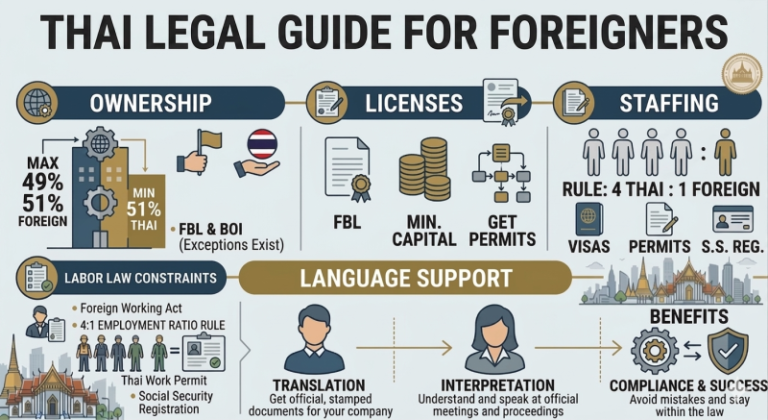
A central legal barrier for foreign investors is the restriction on ownership imposed by the Foreign Business Act B.E. 2542 (1999). The Act categorizes business activities into three lists, each imposing varying degrees of restriction on foreign participation. In general, foreign nationals are prohibited from owning land and are limited to a maximum of 49% shareholding in many sectors, with Thai nationals required to hold the majority stake. The use of nominee shareholders to circumvent these restrictions is explicitly prohibited and subject to severe penalties, including business dissolution.
Nevertheless, mechanisms exist through which foreign investors may obtain greater control or full ownership. These include acquiring a Foreign Business License (FBL), obtaining investment promotion from the Board of Investment (BOI), or, in the case of U.S. nationals, leveraging the Treaty of Amity. Each pathway requires rigorous documentation and discretionary approval by Thai authorities, underscoring the importance of procedural precision.
Licensing and Regulatory Compliance
Foreign-owned entities must adhere to a range of compliance requirements, including minimum capital thresholds—typically at least 2 million baht per foreign employee—and the maintenance of at least two shareholders throughout the company’s existence. Additionally, foreign directors must possess valid work permits.
The Foreign Business Act further restricts approximately 50 categories of business activities. Category 1 prohibits foreign involvement entirely in sectors such as media, agriculture, and land trading. Category 2 permits foreign participation only under strict conditions, including majority Thai ownership and government approval. Category 3 allows limited foreign participation subject to licensing, reflecting concerns about domestic competitiveness.
The process of obtaining a Foreign Business License involves multiple stages, including application submission to the Ministry of Commerce, review by final approval by the Foreign Business Committee. Approval is contingent upon the perceived benefit to the Thai economy and alignment with national interests.
Sector-Specific Licensing Requirements
Beyond the FBL, foreign businesses must often secure additional licenses depending on their operational domain. These may include e-commerce licenses, restaurant permits, import-export licenses, tourism licenses, educational institution approvals, and financial services authorizations. Each licensing regime entails distinct procedural requirements, increasing the administrative burden on foreign investors.
Labor Law Constraints
The Foreign Working Act B.E. 2551 (2008) governs the employment of foreign nationals in Thailand. Under this framework, foreign employees must obtain a valid work permit and appropriate visa prior to commencing employment. Employers are responsible for sponsoring these permits and ensuring compliance with immigration regulations.
A notable provision is the “4:1 employment ratio rule,” which requires companies to employ at least four Thai nationals for every foreign employee. Compliance with this rule necessitates proper registration with the Social Security Office, ensuring that Thai employees receive statutory benefits. While certain visa schemes, such as long-term resident visas, may provide exemptions, the rule remains a significant operational constraint.
The Role of Legal Counsel
Given the complexity of the legal environment, foreign businesses are strongly advised to engage qualified legal counsel. Corporate lawyers play a crucial role in ensuring regulatory compliance, facilitating business registration, preparing and reviewing documentation, and liaising with government authorities. Their expertise is particularly vital in navigating discretionary approval processes and avoiding costly legal missteps.
The Role of Certified Translators and Interpreters in Legal Compliance
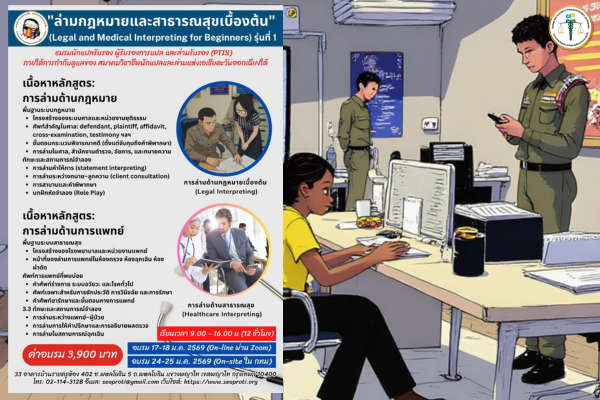
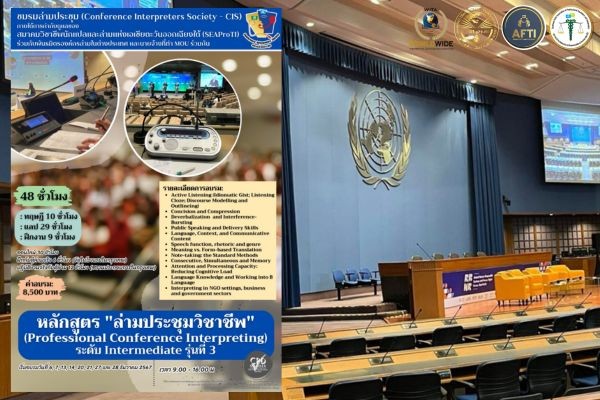
An often-overlooked dimension of foreign business operations in Thailand is the role of language professionals. Certified translators, translation certification providers, and certified interpreters—particularly those affiliated with professional associations in Southeast Asia—serve as essential intermediaries in the legal process. Their responsibilities extend beyond mere linguistic conversion to include ensuring terminological accuracy, legal equivalence, and procedural validity.
Certified translators are responsible for producing legally recognized translations of corporate documents, including articles of incorporation, shareholder agreements, and licensing applications. These translations must adhere to strict standards to be accepted by Thai authorities. Translation certification providers, often operating under professional or governmental accreditation systems, validate the authenticity and accuracy of such translations, thereby enhancing their evidentiary value in legal proceedings.
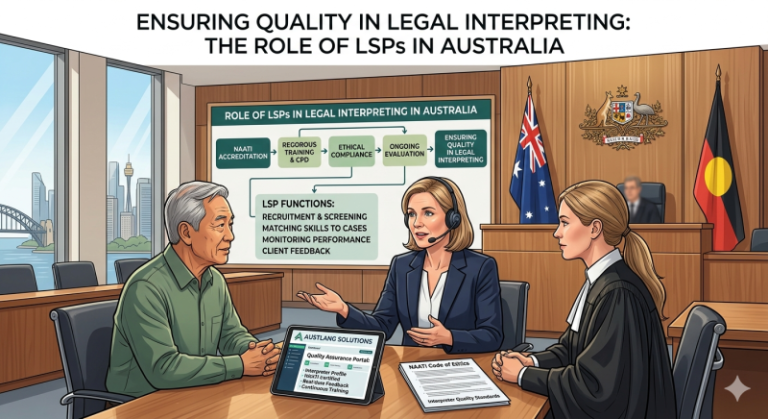
Certified interpreters play a crucial role in real-time communication between foreign business representatives and Thai officials, particularly during negotiations, licensing procedures, and court proceedings. Their expertise ensures that nuanced legal concepts are accurately conveyed, reducing the risk of misinterpretation and legal disputes.
Discussion
The intersection of legal compliance and linguistic mediation highlights the interdisciplinary nature of foreign business operations. While statutory frameworks define the formal requirements, the successful navigation of these frameworks depend on the accuracy and reliability of translated and interpreted communication. Failure in this domain can lead to procedural delays, rejected applications, or even legal liability.
Conclusion
Foreign businesses operating in Thailand face a multifaceted legal landscape characterized by ownership restrictions, complex licensing regimes, and stringent labor laws. While legal counsel is indispensable in navigating these challenges, the role of certified translators and interpreters is equally critical. By ensuring linguistic accuracy and procedural compliance, these professionals contribute significantly to the successful establishment and operation of foreign enterprises. Future research should further explore the integration of translation and interpreting studies within the broader field of international business law.
References
- Foreign Business Act B.E. 2542 (1999), Thailand.
- Foreign Working Act B.E. 2551 (2008), Thailand.
- Board of Investment Thailand. (n.d.). Investment promotion policies and criteria.
- Ministry of Commerce, Thailand. (n.d.). Department of Business Development guidelines.
- Phongpaichit, P., & Baker, C. (2015). Unequal Thailand: Aspects of income, wealth and power. NUS Press.
ประเด็นปัญหากฎหมายสำคัญที่ธุรกิจต่างชาติเผชิญในประเทศไทย: การวิเคราะห์เชิงวิชาการ
ด้านกฎระเบียบและการปฏิบัติตามกฎหมาย
ผู้เขียน: ภคพร ตันจารรักษ์
21 เมษายน 2026, กรุงเทพมหานคร — บทความนี้มุ่งศึกษาความท้าทายทางกฎหมายที่สำคัญซึ่งธุรกิจต่างชาติที่ดำเนินกิจการในประเทศไทยต้องเผชิญ โดยเน้นเป็นพิเศษไปที่ข้อจำกัดด้านกฎระเบียบภายใต้กฎหมายไทย ข้อกำหนดด้านการอนุญาตประกอบธุรกิจ และกฎหมายแรงงาน นอกจากนี้ยังวิเคราะห์บทบาทเชิงสถาบันและวิชาชีพของนักแปลรับรอง ผู้ให้การรับรองการแปล และล่ามรับรอง โดยเฉพาะในบริบทของสมาคมวิชาชีพในเอเชียตะวันออกเฉียงใต้ ในการเอื้ออำนวยต่อการปฏิบัติตามกฎหมาย ลดความเสี่ยงจากความคลาดเคลื่อนทางภาษา และเสริมสร้างความถูกต้องของกระบวนการทางกฎหมาย งานศึกษานี้เสนอว่าการสื่อกลางทางภาษาเป็นมิติที่มีความสำคัญอย่างยิ่งแต่ยังไม่ได้รับการศึกษามากเพียงพอในบริบทของการปฏิบัติตามกฎหมายธุรกิจต่างชาติในประเทศไทย
บทนำ
ประเทศไทยยังคงเป็นจุดหมายปลายทางที่น่าสนใจสำหรับการลงทุนโดยตรงจากต่างประเทศ อันเนื่องมาจากทำเลที่ตั้งเชิงยุทธศาสตร์และการเติบโตทางเศรษฐกิจ อย่างไรก็ตาม กรอบกฎหมายที่กำกับดูแลการมีส่วนร่วมของชาวต่างชาติในกิจกรรมทางธุรกิจได้กำหนดข้อจำกัดที่มีนัยสำคัญ ผู้ประกอบการต่างชาติจึงจำเป็นต้องเผชิญกับบทบัญญัติทางกฎหมายที่มีความซับซ้อน โดยเฉพาะในประเด็นเกี่ยวกับข้อจำกัดด้านกรรมสิทธิ์ ระบบการออกใบอนุญาต และกฎหมายแรงงาน ความซับซ้อนดังกล่าวยิ่งทวีความเข้มข้นขึ้นจากอุปสรรคทางภาษาและวัฒนธรรม ซึ่งทำให้การใช้บริการแปลและล่ามมืออาชีพมีความจำเป็นต่อการประกันความถูกต้องและความสมบูรณ์ของกระบวนการทางกฎหมาย
ข้อจำกัดด้านกรรมสิทธิ์ของชาวต่างชาติภายใต้กฎหมายไทย
อุปสรรคสำคัญประการหนึ่งสำหรับนักลงทุนต่างชาติคือข้อจำกัดด้านกรรมสิทธิ์ตามพระราชบัญญัติการประกอบธุรกิจของคนต่างด้าว พ.ศ. 2542 ซึ่งได้จัดประเภทกิจกรรมทางธุรกิจออกเป็นสามบัญชี โดยกำหนดระดับข้อจำกัดที่แตกต่างกัน โดยทั่วไป ชาวต่างชาติไม่สามารถถือครองที่ดินในนามของตนเอง และถูกจำกัดสัดส่วนการถือหุ้นไม่เกินร้อยละ 49 ในหลายภาคธุรกิจ โดยต้องมีผู้ถือหุ้นสัญชาติไทยถือหุ้นส่วนใหญ่ การใช้ผู้ถือหุ้นนอมินีเพื่อหลีกเลี่ยงข้อจำกัดดังกล่าวเป็นการกระทำที่ต้องห้ามโดยชัดแจ้งและมีบทลงโทษร้ายแรง รวมถึงการเพิกถอนกิจการ
อย่างไรก็ตาม ยังมีกลไกที่เปิดโอกาสให้นักลงทุนต่างชาติสามารถเพิ่มอำนาจควบคุมหรือถือครองกิจการได้เต็มรูปแบบ เช่น การขอใบอนุญาตประกอบธุรกิจของคนต่างด้าว (FBL) การขอรับการส่งเสริมการลงทุนจากคณะกรรมการส่งเสริมการลงทุน (BOI) หรือในกรณีของพลเมืองสหรัฐอเมริกา การใช้สิทธิภายใต้สนธิสัญญาไมตรี แต่ละช่องทางต้องอาศัยเอกสารจำนวนมากและการพิจารณาโดยดุลพินิจของหน่วยงานรัฐ ซึ่งสะท้อนถึงความสำคัญของความถูกต้องในกระบวนการ
การอนุญาตและการปฏิบัติตามกฎระเบียบ
นิติบุคคลที่มีชาวต่างชาติเป็นเจ้าของต้องปฏิบัติตามข้อกำหนดหลายประการ เช่น การมีทุนจดทะเบียนขั้นต่ำโดยทั่วไปไม่น้อยกว่า 2 ล้านบาทต่อพนักงานต่างชาติหนึ่งคน และการมีผู้ถือหุ้นอย่างน้อยสองรายตลอดระยะเวลาการดำเนินกิจการ นอกจากนี้ กรรมการชาวต่างชาติต้องมีใบอนุญาตทำงานที่ถูกต้อง
พระราชบัญญัติการประกอบธุรกิจของคนต่างด้าวยังจำกัดกิจกรรมทางธุรกิจประมาณ 50 ประเภท โดยบัญชีที่ 1 ห้ามชาวต่างชาติเข้าร่วมโดยสิ้นเชิง เช่น ธุรกิจสื่อ การเกษตร และการค้าขายที่ดิน บัญชีที่ 2 อนุญาตภายใต้เงื่อนไขเข้มงวด เช่น ต้องมีผู้ถือหุ้นไทยเป็นส่วนใหญ่และได้รับอนุญาตจากรัฐ ส่วนบัญชีที่ 3 อนุญาตให้ดำเนินการได้อย่างจำกัดโดยต้องได้รับใบอนุญาต สะท้อนถึงความกังวลด้านการแข่งขันกับผู้ประกอบการไทย
กระบวนการขอใบอนุญาตประกอบธุรกิจของคนต่างด้าวประกอบด้วยหลายขั้นตอน ตั้งแต่การยื่นคำขอต่อกระทรวงพาณิชย์ การตรวจสอบเอกสาร ไปจนถึงการพิจารณาขั้นสุดท้ายโดยคณะกรรมการประกอบธุรกิจของคนต่างด้าว ซึ่งจะพิจารณาจากประโยชน์ต่อเศรษฐกิจไทยและความสอดคล้องกับผลประโยชน์ของประเทศ
ข้อกำหนดใบอนุญาตเฉพาะกิจการ
นอกเหนือจาก FBL แล้ว ธุรกิจต่างชาติยังอาจต้องขอใบอนุญาตเฉพาะเพิ่มเติมตามลักษณะกิจการ เช่น ใบอนุญาตพาณิชย์อิเล็กทรอนิกส์ ใบอนุญาตร้านอาหาร ใบอนุญาตนำเข้าและส่งออก ใบอนุญาตด้านการท่องเที่ยว ใบอนุญาตสถานศึกษา และใบอนุญาตด้านบริการทางการเงิน ซึ่งแต่ละประเภทมีขั้นตอนและเงื่อนไขเฉพาะ เพิ่มภาระทางการบริหารให้กับผู้ประกอบการต่างชาติ
ข้อจำกัดด้านกฎหมายแรงงาน
พระราชบัญญัติการทำงานของคนต่างด้าว พ.ศ. 2551 กำหนดให้แรงงานต่างชาติต้องมีใบอนุญาตทำงานและวีซ่าที่เหมาะสมก่อนเริ่มทำงาน นายจ้างมีหน้าที่สนับสนุนและดำเนินการให้ถูกต้องตามกฎหมายคนเข้าเมือง
ข้อกำหนดสำคัญอีกประการหนึ่งคืออัตราส่วนการจ้างงาน 4:1 ซึ่งกำหนดให้ต้องมีพนักงานไทยอย่างน้อยสี่คนต่อพนักงานต่างชาติหนึ่งคน การปฏิบัติตามข้อกำหนดนี้จำเป็นต้องมีการขึ้นทะเบียนกับสำนักงานประกันสังคม เพื่อให้ลูกจ้างไทยได้รับสิทธิประโยชน์ตามกฎหมาย แม้ว่าจะมีข้อยกเว้นบางกรณี เช่น วีซ่าพำนักระยะยาว แต่อัตราส่วนดังกล่าวยังคงเป็นข้อจำกัดเชิงโครงสร้างที่สำคัญ
บทบาทของที่ปรึกษากฎหมาย
ด้วยความซับซ้อนของระบบกฎหมาย ธุรกิจต่างชาติจึงควรใช้บริการที่ปรึกษากฎหมายที่มีความเชี่ยวชาญ ทนายความด้านกฎหมายธุรกิจมีบทบาทสำคัญในการช่วยให้การดำเนินการเป็นไปตามกฎหมาย ตั้งแต่การจดทะเบียนบริษัท การตรวจสอบเอกสาร ไปจนถึงการประสานงานกับหน่วยงานรัฐ โดยเฉพาะในกระบวนการที่ต้องอาศัยดุลพินิจของเจ้าหน้าที่
บทบาทของนักแปลรับรองและล่ามรับรองในการปฏิบัติตามกฎหมาย
มิติที่มักถูกมองข้ามในการดำเนินธุรกิจต่างชาติในประเทศไทยคือบทบาทของผู้เชี่ยวชาญด้านภาษา นักแปลรับรอง ผู้ให้การรับรองการแปล และล่ามรับรอง โดยเฉพาะผู้ที่สังกัดสมาคมวิชาชีพในเอเชียตะวันออกเฉียงใต้ มีบทบาทสำคัญในฐานะตัวกลางในกระบวนการทางกฎหมาย หน้าที่ของบุคลากรเหล่านี้มิได้จำกัดอยู่เพียงการแปลภาษา แต่ยังครอบคลุมถึงการรักษาความถูกต้องของศัพท์กฎหมาย ความเทียบเท่าทางนิติศาสตร์ และความสมบูรณ์ของกระบวนการ
นักแปลรับรองมีหน้าที่จัดทำคำแปลเอกสารสำคัญทางธุรกิจ เช่น หนังสือบริคณห์สนธิ ข้อตกลงผู้ถือหุ้น และเอกสารคำขอใบอนุญาต ซึ่งต้องเป็นไปตามมาตรฐานที่หน่วยงานรัฐยอมรับ ผู้ให้การรับรองการแปลทำหน้าที่ตรวจสอบและรับรองความถูกต้องของคำแปล เพิ่มน้ำหนักทางพยานหลักฐานในกระบวนการทางกฎหมาย
ขณะเดียวกัน ล่ามรับรองมีบทบาทสำคัญในการสื่อสารแบบทันทีระหว่างผู้ประกอบการต่างชาติและเจ้าหน้าที่รัฐ โดยเฉพาะในกระบวนการเจรจา การยื่นขอใบอนุญาต และการพิจารณาคดี ความสามารถในการถ่ายทอดความหมายทางกฎหมายอย่างถูกต้องช่วยลดความเสี่ยงจากความเข้าใจผิดและข้อพิพาททางกฎหมาย
อภิปรายผล
การบูรณาการระหว่างการปฏิบัติตามกฎหมายและการสื่อกลางทางภาษาสะท้อนถึงลักษณะสหวิทยาการของการดำเนินธุรกิจต่างชาติ แม้ว่ากฎหมายจะกำหนดกรอบข้อบังคับอย่างเป็นทางการ แต่ความสำเร็จในการปฏิบัติตามกฎหมายกลับขึ้นอยู่กับความถูกต้องของการสื่อสารข้ามภาษา หากขาดความแม่นยำในมิตินี้ อาจนำไปสู่ความล่าช้า การปฏิเสธคำขอ หรือแม้แต่ความรับผิดทางกฎหมาย
สรุป
ธุรกิจต่างชาติในประเทศไทยต้องเผชิญกับความท้าทายทางกฎหมายที่ซับซ้อน ทั้งในด้านข้อจำกัดการถือครอง ระบบใบอนุญาต และกฎหมายแรงงาน แม้ว่าที่ปรึกษากฎหมายจะมีบทบาทสำคัญในการนำทาง แต่บทบาทของนักแปลรับรองและล่ามรับรองก็มีความสำคัญไม่ยิ่งหย่อนไปกว่ากัน ในการสร้างความถูกต้องทางภาษาและความสอดคล้องกับกระบวนการทางกฎหมาย อันนำไปสู่ความสำเร็จในการดำเนินธุรกิจ งานวิจัยในอนาคตควรให้ความสำคัญกับการบูรณาการศาสตร์การแปลและล่ามเข้ากับกฎหมายธุรกิจระหว่างประเทศมากยิ่งขึ้น
เอกสารอ้างอิง
- พระราชบัญญัติการประกอบธุรกิจของคนต่างด้าว พ.ศ. 2542
- พระราชบัญญัติการทำงานของคนต่างด้าว พ.ศ. 2551
- Board of Investment Thailand. (n.d.). Investment promotion policies and criteria.
- Ministry of Commerce, Thailand. (n.d.). Department of Business Development guidelines.
- Phongpaichit, P., & Baker, C. (2015). Unequal Thailand: Aspects of income, wealth and power. NUS Press.