



The Middle East Conflict and Its Economic and Legal Implications for Thailand: Supply Chains, Tourism Dynamics, and the Role of Certified Language Professionals in Crisis Response
Abstract
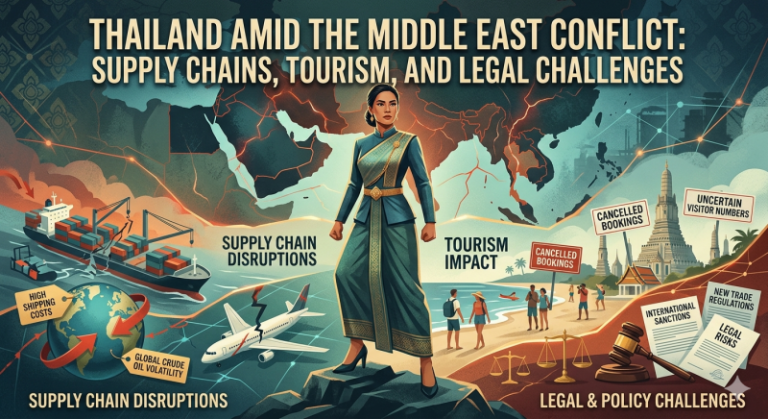
Geopolitical instability in the Middle East has increasingly exerted tangible effects on global economic systems, particularly through disruptions in energy supply chains and international mobility. This article examines the multidimensional impact of escalating tensions around the Strait of Hormuz on Thailand’s economy, with a focus on industrial supply chains, tourism sector volatility, and real estate investment trends. It further analyzes the legal strategies available to businesses navigating such disruptions, particularly within the framework of force majeure under Thai law. Importantly, the article expands the discussion to include the critical yet often overlooked role of certified translators, translation certification providers, and certified interpreters affiliated with professional associations in Southeast Asia. These language professionals contribute significantly to ensuring legal certainty, contractual clarity, and cross-border communication during periods of geopolitical crisis.
Introduction
The intensification of conflict in the Middle East, particularly in proximity to the Strait of Hormuz, has emerged as a critical disruptor of global trade and mobility. As a strategically positioned economy deeply embedded in global supply chains and reliant on international tourism, Thailand is acutely vulnerable to such external shocks (World Bank, 2024). While existing scholarship has explored macroeconomic consequences of geopolitical instability, less attention has been given to the intersection of legal adaptation, linguistic mediation, and professional language services in mitigating these impacts.
Supply Chain Disruptions and Industrial Impact
The Strait of Hormuz serves as a vital conduit for global oil and gas shipments, with a significant proportion of the world’s petroleum transiting through this chokepoint (International Energy Agency [IEA], 2023). Disruptions in this region have led to constrained flows of petrochemical feedstocks, including naphtha and propane, which are essential inputs for Thailand’s manufacturing sector. Empirical observations indicate that major Thai industries—including petrochemicals, construction materials, and food packaging—are experiencing material shortages and rising production costs, thereby undermining production stability and profitability (Asian Development Bank [ADB], 2024).
From a legal perspective, such disruptions necessitate a reassessment of contractual obligations. Businesses must evaluate their exposure to liability arising from non-performance and consider invoking force majeure clauses. Under Thai law, the applicability of force majeure depends on the unforeseeability and inevitability of the event, as well as the causal link between the disruption and contractual non-performance (Poole, 2020). Legal practitioners play a crucial role in interpreting these provisions and restructuring contracts to mitigate financial risk.
Tourism Sector: Decline and Transformation
Thailand’s tourism industry is simultaneously experiencing contraction and transformation. On one hand, disruptions to Middle Eastern aviation hubs have led to significant reductions in long-haul travel, particularly from Europe, the Middle East, and North America. Flight cancellations and increased fuel costs have contributed to declining tourist arrivals and revenue losses (International Air Transport Association [IATA], 2024).
On the other hand, geopolitical instability has repositioned Thailand as a potential “safe haven” destination. Historical patterns, such as increased arrivals from Eastern Europe following the Russia-Ukraine conflict, suggest that crises can redirect migration flows toward stable regions (Organisation for Economic Co-operation and Development [OECD], 2023). In this context, Thailand’s visa policies and domestic stability may attract long-term residents seeking security and investment opportunities.
Real Estate Market Responses
The influx of long-term foreign residents has direct implications for Thailand’s real estate sector. Increased demand for condominium ownership and long-term leases has driven price appreciation in key tourist regions. However, legal restrictions on foreign land ownership necessitate careful navigation of property acquisition frameworks (Phongpaichit & Baker, 2015). Foreign investors must rely on mechanisms such as condominium freehold ownership within statutory limits or structured leasehold arrangements.
Due diligence, including verification of property titles and contractual terms, is essential to mitigate legal risks. This underscores the importance of legal professionals in facilitating secure investment practices during periods of heightened demand and regulatory complexity.
The Role of Certified Language Professionals in Crisis Contexts
Amid these economic and legal transformations, the role of certified language professionals becomes increasingly critical. Certified translators and certified interpreters contribute to ensuring accuracy and reliability in cross-border legal and commercial communication (Pym, 2014; Mikkelson & Jourdenais, 2015).
Certified translators are responsible for producing legally recognized translations of contracts, regulatory documents, and financial statements. Their work is often validated by translation certification providers, who attest to the accuracy and completeness of translated materials. This process is essential in legal proceedings, contract enforcement, and regulatory compliance, especially when disputes arise across jurisdictions (Baker, 2018).
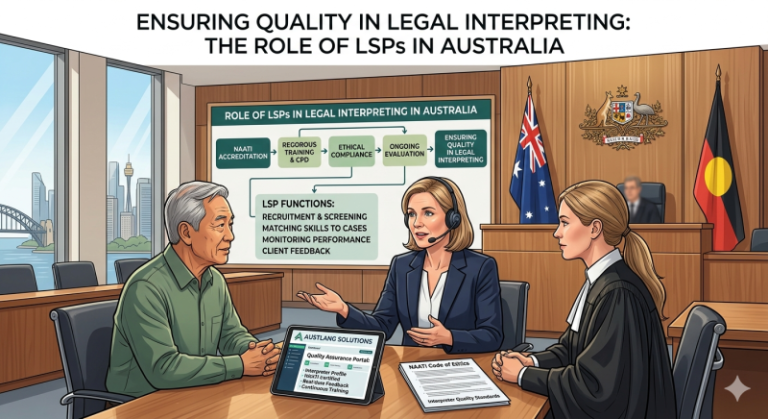
Certified interpreters, particularly those trained in legal and commercial contexts, facilitate real-time communication during negotiations, arbitration, and litigation. In crisis situations where contractual disputes increase, their role becomes indispensable in ensuring that all parties fully understand their rights and obligations (Hale, 2004).
Furthermore, professional associations establish standards of practice, accreditation mechanisms, and continuing professional development frameworks that enhance the quality and credibility of language services. These institutions play a pivotal role in maintaining trust in multilingual legal environments, particularly during periods of heightened uncertainty (Pöchhacker, 2016).
Discussion
The intersection of geopolitical instability, economic disruption, and legal adaptation reveals a complex ecosystem in which language professionals serve as critical intermediaries. Their contributions extend beyond linguistic transfer to encompass legal validation, risk mitigation, and institutional trust-building. As Thailand navigates the economic repercussions of Middle Eastern conflict, integrating certified language services into corporate and legal strategy becomes increasingly important.
Conclusion
The Middle East conflict presents both challenges and opportunities for Thailand. While supply chain disruptions and tourism declines pose immediate risks, shifts in migration and investment patterns may offer long-term benefits. Navigating this landscape requires not only legal and economic expertise but also robust linguistic infrastructure. Certified translators, certification providers, and interpreters play a vital role in ensuring that cross-border interactions remain accurate, enforceable, and trustworthy. Future research should further explore the institutional integration of language services into crisis management frameworks and international business strategy.
References
Asian Development Bank. (2024). Asian economic integration report 2024.
Baker, M. (2018). In other words: A coursebook on translation (3rd ed.). Routledge.
Hale, S. (2004). The discourse of court interpreting. John Benjamins.
International Air Transport Association. (2024). Air transport statistics report.
International Energy Agency. (2023). World energy outlook 2023.
Mikkelson, H., & Jourdenais, R. (2015). The Routledge handbook of interpreting. Routledge.
Organisation for Economic Co-operation and Development. (2023). International migration outlook 2023.
Phongpaichit, P., & Baker, C. (2015). Unequal Thailand: Aspects of income, wealth and power. NUS Press.
Poole, J. (2020). Textbook on contract law (15th ed.). Oxford University Press.
Pöchhacker, F. (2016). Introducing interpreting studies (2nd ed.). Routledge.
Pym, A. (2014). Exploring translation theories (2nd ed.). Routledge.
World Bank. (2024). Global economic prospects.
ความขัดแย้งในตะวันออกกลางและผลกระทบทางเศรษฐกิจและกฎหมายต่อประเทศไทย: ห่วงโซ่อุปทาน พลวัตการท่องเที่ยว และบทบาทของผู้เชี่ยวชาญด้านภาษาที่ได้รับการรับรอง
บทคัดย่อ
ความไม่มั่นคงทางภูมิรัฐศาสตร์ในตะวันออกกลางได้ส่งผลกระทบอย่างเป็นรูปธรรมต่อระบบเศรษฐกิจโลกมากขึ้น โดยเฉพาะผ่านการหยุดชะงักของห่วงโซ่อุปทานด้านพลังงานและการเคลื่อนย้ายระหว่างประเทศ บทความนี้มีวัตถุประสงค์เพื่อวิเคราะห์ผลกระทบหลายมิติของความตึงเครียดที่ทวีความรุนแรงบริเวณช่องแคบฮอร์มุซต่อเศรษฐกิจไทย โดยมุ่งเน้นที่ห่วงโซ่อุปทานภาคอุตสาหกรรม ความผันผวนของภาคการท่องเที่ยว และแนวโน้มการลงทุนในอสังหาริมทรัพย์ นอกจากนี้ยังวิเคราะห์กลยุทธ์ทางกฎหมายที่ภาคธุรกิจสามารถนำมาใช้เพื่อตอบสนองต่อความไม่แน่นอนดังกล่าว โดยเฉพาะหลักเหตุสุดวิสัยภายใต้กฎหมายไทย ที่สำคัญ บทความนี้ได้ขยายการวิเคราะห์ไปยังบทบาทของนักแปลรับรอง ผู้ให้บริการรับรองคำแปล และล่ามรับรอง ซึ่งมีบทบาทสำคัญในการสร้างความชัดเจนทางกฎหมาย ความถูกต้องของสัญญา และการสื่อสารข้ามพรมแดนในบริบทของวิกฤตภูมิรัฐศาสตร์
บทนำ
ความรุนแรงของความขัดแย้งในตะวันออกกลาง โดยเฉพาะบริเวณช่องแคบฮอร์มุซ ได้กลายเป็นปัจจัยสำคัญที่ส่งผลกระทบต่อการค้าและการเคลื่อนย้ายในระดับโลก ประเทศไทยซึ่งมีความเชื่อมโยงอย่างลึกซึ้งกับห่วงโซ่อุปทานระหว่างประเทศและพึ่งพารายได้จากการท่องเที่ยว จึงมีความเปราะบางต่อแรงกระแทกจากภายนอกดังกล่าว (ธนาคารโลก, 2567) แม้ว่างานวิจัยก่อนหน้านี้จะให้ความสำคัญกับผลกระทบทางเศรษฐกิจมหภาค แต่ยังมีช่องว่างในประเด็นที่เกี่ยวข้องกับการปรับตัวทางกฎหมายและบทบาทของการสื่อสารหลายภาษาในการลดผลกระทบจากวิกฤต
2. การหยุดชะงักของห่วงโซ่อุปทานและผลกระทบต่อภาคอุตสาหกรรม
ช่องแคบฮอร์มุซเป็นเส้นทางสำคัญในการขนส่งน้ำมันและก๊าซของโลก โดยมีสัดส่วนการขนส่งพลังงานจำนวนมากผ่านเส้นทางดังกล่าว (สำนักงานพลังงานสากล [IEA], 2566)การหยุดชะงักในพื้นที่นี้ส่งผลให้การจัดหาวัตถุดิบปิโตรเคมี เช่น แนฟทาและโพรเพน ซึ่งเป็นปัจจัยการผลิตหลักของภาคอุตสาหกรรมไทยเกิดความตึงตัว หลักฐานเชิงประจักษ์ชี้ให้เห็นว่าอุตสาหกรรมสำคัญของไทย เช่น ปิโตรเคมี วัสดุก่อสร้าง และบรรจุภัณฑ์อาหาร กำลังเผชิญกับภาวะขาดแคลนวัตถุดิบและต้นทุนการผลิตที่เพิ่มสูงขึ้น (ธนาคารพัฒนาเอเชีย [ADB], 2567)
ในเชิงกฎหมาย สถานการณ์ดังกล่าวทำให้ภาคธุรกิจจำเป็นต้องทบทวนภาระผูกพันตามสัญญา โดยเฉพาะการพิจารณาใช้ข้อกำหนดเหตุสุดวิสัย เพื่อหลีกเลี่ยงความรับผิดจากการไม่สามารถปฏิบัติตามสัญญาได้ ภายใต้กฎหมายไทย การอ้างเหตุสุดวิสัยต้องพิจารณาจากความไม่อาจคาดการณ์ได้ ความหลีกเลี่ยงไม่ได้ และความเชื่อมโยงโดยตรงกับการไม่สามารถปฏิบัติตามสัญญา (พูล, 2563)
3. ภาคการท่องเที่ยว: การหดตัวและการเปลี่ยนแปลง
ภาคการท่องเที่ยวของไทยกำลังเผชิญทั้งภาวะหดตัวและการปรับตัวในเวลาเดียวกัน การหยุดชะงักของเส้นทางการบินผ่านตะวันออกกลางส่งผลให้การเดินทางระยะไกลจากยุโรป ตะวันออกกลาง และอเมริกาลดลงอย่างมีนัยสำคัญ การยกเลิกเที่ยวบินและต้นทุนน้ำมันที่เพิ่มขึ้นทำให้จำนวนนักท่องเที่ยวลดลง (สมาคมขนส่งทางอากาศระหว่างประเทศ [IATA], 2567)
อย่างไรก็ตาม ความไม่มั่นคงทางภูมิรัฐศาสตร์ยังทำให้ประเทศไทยถูกมองว่าเป็น “พื้นที่ปลอดภัย” สำหรับการพำนักระยะยาว รูปแบบนี้เคยเกิดขึ้นแล้วหลังความขัดแย้งรัสเซีย–ยูเครน ซึ่งนำไปสู่การเพิ่มขึ้นของผู้พำนักระยะยาวจากยุโรปตะวันออก (องค์การเพื่อความร่วมมือและการพัฒนาทางเศรษฐกิจ [OECD], 2566)
การตอบสนองของตลาดอสังหาริมทรัพย์
การเพิ่มขึ้นของผู้พำนักระยะยาวจากต่างชาติส่งผลโดยตรงต่อความต้องการในตลาดอสังหาริมทรัพย์ โดยเฉพาะคอนโดมิเนียมและสัญญาเช่าระยะยาว ส่งผลให้ราคาทรัพย์สินในพื้นที่ท่องเที่ยวสำคัญปรับตัวสูงขึ้น อย่างไรก็ตาม ข้อจำกัดทางกฎหมายเกี่ยวกับการถือครองที่ดินของชาวต่างชาติทำให้การลงทุนต้องอาศัยโครงสร้างทางกฎหมายเฉพาะ (ผ่องไพจิตร และ เบเคอร์, 2558)
การตรวจสอบสถานะทางกฎหมายของทรัพย์สินอย่างรอบคอบจึงเป็นสิ่งจำเป็น เพื่อลดความเสี่ยงจากภาระหนี้สินหรือข้อพิพาทที่อาจเกิดขึ้น
บทบาทของผู้เชี่ยวชาญด้านภาษาที่ได้รับการรับรองในบริบทวิกฤต
ท่ามกลางการเปลี่ยนแปลงทางเศรษฐกิจและกฎหมาย บทบาทของนักแปลรับรอง ผู้ให้บริการรับรองคำแปล และล่ามรับรองมีความสำคัญเพิ่มขึ้นอย่างชัดเจน ผู้เชี่ยวชาญเหล่านี้มีส่วนสำคัญในการรับรองความถูกต้องและความน่าเชื่อถือของการสื่อสารทางกฎหมายและธุรกิจระหว่างประเทศ (พิม, 2557; มิคเคลสัน และ เจอร์เดอเนส์, 2558)
นักแปลรับรองมีหน้าที่จัดทำคำแปลเอกสารที่มีผลทางกฎหมาย เช่น สัญญา เอกสารกำกับดูแล และงบการเงิน โดยต้องผ่านการรับรองจากหน่วยงานหรือผู้ให้บริการที่เกี่ยวข้อง เพื่อให้สามารถใช้ในกระบวนการทางกฎหมายได้ (เบเคอร์, 2561)
ล่ามรับรองมีบทบาทสำคัญในการอำนวยความสะดวกในการสื่อสารแบบทันทีในบริบทของการเจรจา อนุญาโตตุลาการ และการดำเนินคดี โดยเฉพาะในสถานการณ์วิกฤตที่มีข้อพิพาททางสัญญาเพิ่มขึ้น (เฮล, 2547)
นอกจากนี้ สมาคมวิชาชีพนักแปลและล่ามในภูมิภาคเอเชียตะวันออกเฉียงใต้ยังมีบทบาทในการกำหนดมาตรฐานวิชาชีพ ระบบการรับรอง และการพัฒนาวิชาชีพอย่างต่อเนื่อง ซึ่งช่วยเสริมสร้างความน่าเชื่อถือของบริการภาษาในบริบทพหุภาษา (เพิคแฮคเกอร์, 2559)
อภิปรายผล
ความเชื่อมโยงระหว่างความไม่มั่นคงทางภูมิรัฐศาสตร์ การหยุดชะงักทางเศรษฐกิจ และการปรับตัวทางกฎหมาย สะท้อนให้เห็นถึงระบบที่ซับซ้อน ซึ่งผู้เชี่ยวชาญด้านภาษามีบทบาทเป็นตัวกลางสำคัญ ไม่เพียงแต่ในด้านการแปลภาษา แต่ยังรวมถึงการสร้างความน่าเชื่อถือ การลดความเสี่ยง และการสนับสนุนกระบวนการยุติธรรมในระดับระหว่างประเทศ
สรุป
ความขัดแย้งในตะวันออกกลางสร้างทั้งความท้าทายและโอกาสสำหรับประเทศไทย แม้ว่าจะมีความเสี่ยงจากการหยุดชะงักของห่วงโซ่อุปทานและการลดลงของการท่องเที่ยว แต่การเปลี่ยนแปลงของรูปแบบการย้ายถิ่นและการลงทุนอาจสร้างโอกาสใหม่ในระยะยาว การรับมือกับสถานการณ์ดังกล่าวจำเป็นต้องอาศัยทั้งความเชี่ยวชาญด้านกฎหมาย เศรษฐกิจ และโครงสร้างพื้นฐานด้านภาษา โดยเฉพาะบทบาทของนักแปลและล่ามที่ได้รับการรับรอง ซึ่งมีส่วนสำคัญในการทำให้การสื่อสารข้ามพรมแดนมีความถูกต้องและมีผลบังคับใช้ทางกฎหมาย
บรรณานุกรม
Asian Development Bank. (2024). Asian economic integration report 2024.
Baker, M. (2018). In other words: A coursebook on translation (3rd ed.). Routledge.
Hale, S. (2004). The discourse of court interpreting. John Benjamins.
International Air Transport Association. (2024). Air transport statistics report.
International Energy Agency. (2023). World energy outlook 2023.
Mikkelson, H., & Jourdenais, R. (2015). The Routledge handbook of interpreting. Routledge.
Organisation for Economic Co-operation and Development. (2023). International migration outlook 2023.
Phongpaichit, P., & Baker, C. (2015). Unequal Thailand: Aspects of income, wealth and power. NUS Press.
Poole, J. (2020). Textbook on contract law (15th ed.). Oxford University Press.
Pöchhacker, F. (2016). Introducing interpreting studies (2nd ed.). Routledge.
Pym, A. (2014). Exploring translation theories (2nd ed.). Routledge.
World Bank. (2024). Global economic prospects.
ติดต่อขอใช้บริการนักวิชาชีพของสมาคมได้ที่: https://www.seaproti.org/practitioners/
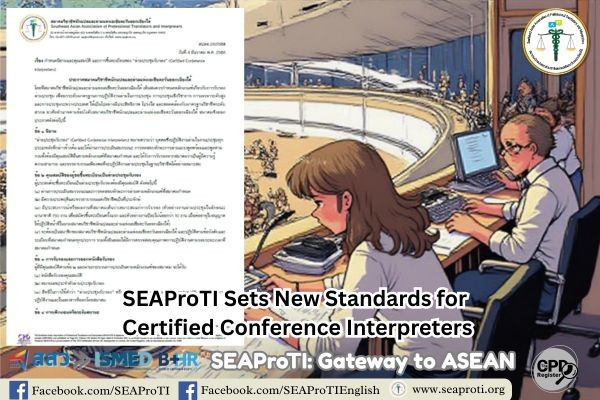
สมาคมวิชาชีพนักแปลและล่ามแห่งเอเชียตะวันออกเฉียงใต้ (SEAProTI) ได้ประกาศหลักเกณฑ์และคุณสมบัติของผู้ที่ขึ้นทะเบียนเป็น “นักแปลรับรอง (Certified Translators) และผู้รับรองการแปล (Translation Certification Providers) และล่ามรับรอง (Certified Interpreters)” ของสมาคม หมวดที่ 9 และหมวดที่ 10 ในราชกิจจานุเบกษา ของสำนักเลขาธิการคณะรัฐมนตรี ในสำนักนายกรัฐมนตรี แห่งราชอาณาจักรไทย ลงวันที่ 25 ก.ค. 2567 เล่มที่ 141 ตอนที่ 66 ง หน้า 100 อ่านฉบับเต็มได้ที่: นักแปลรับรอง ผู้รับรองการแปล และล่ามรับรอง
สำนักคณะกรรมการกฤษฎีกาเสนอให้ตราเป็นพระราชกฤษฎีกา โดยกำหนดให้นักแปลที่ขึ้นทะเบียน รวมถึงผู้รับรองการแปลจากสมาคมวิชาชีพหรือสถาบันสอนภาษาที่มีการอบรมและขึ้นทะเบียน สามารถรับรองคำแปลได้ (จดหมายถึงสมาคม SEAProTI ลงวันที่ 28 เม.ย. 2568)
สมาคมวิชาชีพนักแปลและล่ามแห่งเอเชียตะวันออกเฉียงใต้เป็นสมาคมวิชาชีพแห่งแรกและแห่งเดียวในประเทศไทยและภูมิภาคเอเชียตะวันออกเฉียงใต้ที่มีระบบรับรองนักแปลรับรอง ผู้รับรองการแปล และล่ามรับรอง
สำนักงานใหญ่: อาคารบ้านราชครู เลขที่ 33 ห้อง 402 ซอยพหลโยธิน 5 ถนนพหลโยธิน แขวงพญาไท เขตพญาไท กรุงเทพมหานคร 10400 ประเทศไทย
อีเมล: hello@seaproti.com โทรศัพท์: (+66) 2-114-3128 (เวลาทำการ: วันจันทร์–วันศุกร์ เวลา 09.00–17.00 น.