



Investment Fraud Through Restaurant Impersonation: A Case Study of a 24 Million Baht Loss by a Retiree and the Role of Language Professionals in Cybersecurity
Author: Phakaporn Tanjararak
April 30, 2026, Bangkok – This academic article aims to analyze an investment fraud case involving the impersonation of a restaurant business, which resulted in a retired individual losing over 24 million baht. It examines the operational methods of scammers, psychological factors contributing to victim trust, and preventive measures against online fraud. In addition, it explores the roles of certified translators, translation certification providers, and certified interpreters, as well as the Southeast Asian Professional Association of Translators and Interpreters, in enhancing cross-linguistic accuracy in cybercrime-related cases. The analysis indicates that the complexity of digital fraud is increasing, and cross-language verification plays a crucial role in protecting the public and supporting justice processes.
Introduction
Thailand continues to be an important destination for retirees, investors, and long-term residents seeking financial opportunities. However, the increasing use of online platforms for investment communication has led to a rise in sophisticated fraudulent schemes, particularly impersonation of reputable organizations to create false credibility. Reports from the Digital Economy and Society Agency indicate that cybercrime related to financial fraud has been continuously increasing (Digital Economy and Society Agency, 2024).
Operational Pattern of the Fraud Scheme
According to the Anti-Online Crime Center, a 75-year-old retiree transferred nearly 24 million baht to a group of individuals impersonating representatives of a well-known restaurant chain in Thailand. The scammers used the LINE messaging application to contact the victim and offer unusually high-return investment opportunities (Anti-Online Crime Center, 2024).
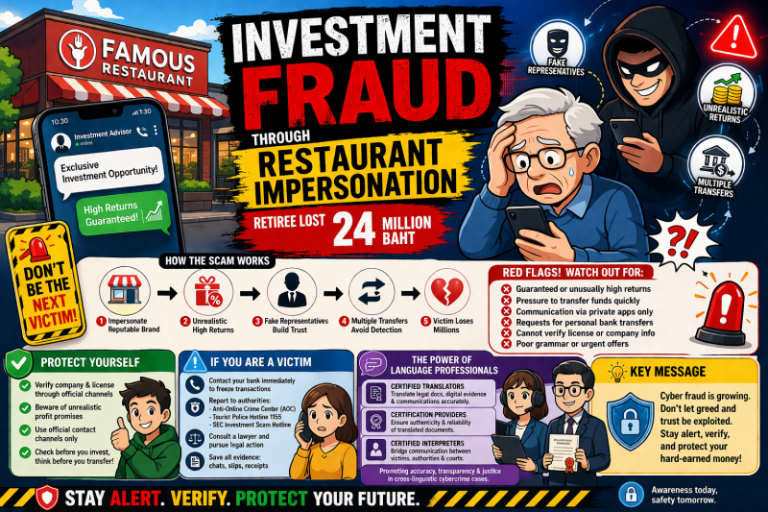
The scheme involved impersonating a reputable brand, offering unrealistically high returns, assigning fake “representatives” to build trust, and conducting multiple fund transfers to avoid detection. These actions gradually increased the victim’s trust, leading to repeated investments.
Factors Contributing to the Effectiveness of Impersonation Scams
Such scams are highly effective because they rely on familiarity with legitimate brands. Foreign nationals are particularly vulnerable due to limited knowledge of Thai business verification systems, language barriers, and reliance on messaging applications for communication. Scammers also exploit urgency and exaggerated profit promises to pressure victims into making decisions without proper verification.
Warning Signs of Investment Fraud
Common warning signs include guaranteed or unusually high returns, pressure to transfer funds quickly, communication exclusively via private messaging apps, requests for personal bank transfers, inconsistent company information, and inability to verify licenses through regulatory authorities (Securities and Exchange Commission of Thailand, 2024).
Legitimate investments never guarantee profits, and licensed financial institutions do not operate solely through private messaging channels.
Preventive Measures Against Online Fraud
Cybersecurity authorities recommend verifying companies before investing, using official license verification tools, avoiding unrealistic profit promises, and confirming information directly through official channels (Anti-Online Crime Center, 2024). Users should also be cautious of poor grammar, unsolicited contact, and unusually urgent investment offers.
Actions to Take When Victimized
When financial loss occurs, victims should immediately contact their bank to freeze transactions and report the incident to relevant authorities, including the Tourist Police hotline, the Anti-Online Crime Center, and the Securities and Exchange Commission investment scam hotline. Legal action may also be pursued through consultation with legal professionals to recover damages through court proceedings.
Roles of Certified Translators, Translation Certification Providers, and Certified Interpreters
In the context of transnational cybercrime, certified translators play a crucial role in translating legal documents, digital evidence, and communication records accurately for judicial proceedings.
Translation certification providers ensure the authenticity and reliability of translated documents, while certified interpreters facilitate accurate communication between victims, law enforcement officers, and courts.
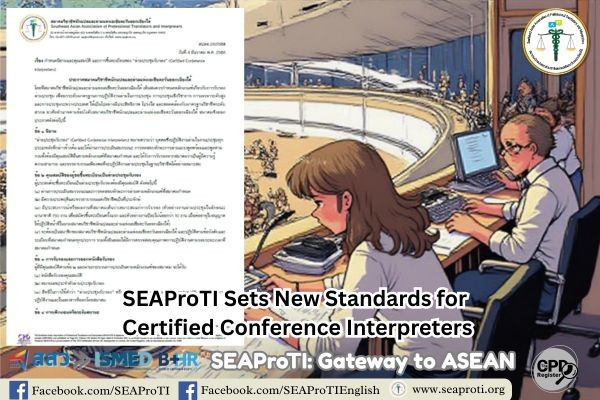
The Southeast Asian Professional Association of Translators and Interpreters plays an important role in establishing professional standards, promoting ethical practices, and enhancing the competence of language professionals. This ensures accuracy, transparency, and consistency in translation and interpretation within cybercrime cases, thereby reducing misinterpretation that may affect judicial outcomes.
Conclusion
The restaurant impersonation investment fraud case reflects the increasing complexity of cybercrime in the digital era and the vulnerability of users lacking systematic verification practices. Strengthening digital literacy, combined with cross-linguistic verification by professional language experts, is essential in reducing financial risks and supporting justice and public protection.
References
- Anti-Online Crime Center. (2024). Cybercrime situation report in Thailand.
- Digital Economy and Society Agency. (2024). Cybersecurity and online user protection.
- Securities and Exchange Commission of Thailand. (2024). Guidelines for preventing investment fraud.
For professional services, please visit: https://www.seaproti.org/practitioners/
About certified translators, translation certifiers, and certified interpreters associated with SEAProTI. The Southeast Asian Association of Professional Translators and Interpreters (SEAProTI) has officially shared the qualifications and requirements for becoming Certified Translators, Translation Certification Providers, and Certified Interpreters in Sections 9 and 10 of the Royal Gazette, which was published by the Prime Minister’s Office in Thailand on July 25, 2024. Certified Translators, Translation Certification Providers, and Certified Interpreters
The Council of State has proposed the enactment of a Royal Decree, granting registered translators and recognised translation certifiers from professional associations or accredited language institutions the authority to provide legally valid translation certification (Letter to SEAProTI dated April 28, 2025)
SEAProTI is the first professional association in Thailand and Southeast Asia to implement a comprehensive certification system for translators, certifiers, and interpreters.
Head Office: Baan Ratchakru Building, No. 33, Room 402, Soi Phahonyothin 5, Phahonyothin Road, Phaya Thai District, Bangkok 10400, Thailand
Email: hello@seaproti.com | Tel.: (+66) 2-114-3128 (Office hours: Mon–Fri, 09:00–17:00).
การหลอกลวงด้านการลงทุนโดยการแอบอ้างร้านอาหาร: กรณีศึกษาการสูญเสียเงิน 24 ล้านบาทของผู้เกษียณอายุและบทบาทของผู้เชี่ยวชาญด้านภาษาในความปลอดภัยทางไซเบอร์
ผู้เขียน: ภคพร ตันจรารักษ์
30 เมษายน 2569 – บทความวิชาการนี้มีวัตถุประสงค์เพื่อวิเคราะห์กรณีการหลอกลวงด้านการลงทุนโดยการแอบอ้างร้านอาหาร ซึ่งส่งผลให้ผู้เกษียณอายุรายหนึ่งสูญเสียเงินกว่า 24 ล้านบาท พร้อมทั้งศึกษารูปแบบการดำเนินการของมิจฉาชีพ ปัจจัยเชิงจิตวิทยาที่ทำให้เหยื่อหลงเชื่อ และแนวทางการป้องกันภัยทางออนไลน์ นอกจากนี้ยังวิเคราะห์บทบาทของนักแปลรับรอง ผู้รับรองการแปล และล่ามรับรอง รวมถึงบทบาทของสมาคมวิชาชีพนักแปลและล่ามแห่งเอเชียตะวันออกเฉียงใต้ในการเสริมสร้างความถูกต้องของข้อมูลข้ามภาษาในคดีอาชญากรรมไซเบอร์ ผลการวิเคราะห์ชี้ให้เห็นว่าความซับซ้อนของการหลอกลวงทางดิจิทัลเพิ่มสูงขึ้น และการตรวจสอบข้อมูลข้ามภาษามีความสำคัญต่อกระบวนการยุติธรรมและการป้องกันความเสียหายทางการเงิน
บทนำ
ประเทศไทยยังคงเป็นจุดหมายสำคัญของผู้เกษียณอายุ นักลงทุน และผู้พำนักระยะยาวที่แสวงหาโอกาสทางการเงิน อย่างไรก็ตาม การใช้แพลตฟอร์มออนไลน์ในการติดต่อด้านการลงทุนที่เพิ่มขึ้นส่งผลให้เกิดการหลอกลวงที่ซับซ้อนมากขึ้น โดยเฉพาะการแอบอ้างองค์กรที่มีชื่อเสียงเพื่อสร้างความน่าเชื่อถือเทียม รายงานจากหน่วยงานพัฒนาเศรษฐกิจดิจิทัลระบุว่าอาชญากรรมทางไซเบอร์ที่เกี่ยวข้องกับการเงินมีแนวโน้มเพิ่มขึ้นอย่างต่อเนื่อง (หน่วยงานพัฒนาเศรษฐกิจดิจิทัล, 2567)
รูปแบบการดำเนินการของขบวนการหลอกลวง
จากรายงานของศูนย์ต่อต้านอาชญากรรมออนไลน์ ผู้เสียหายซึ่งเป็นผู้เกษียณอายุวัยเจ็ดสิบห้าปีได้โอนเงินเกือบ 24 ล้านบาทให้กับกลุ่มบุคคลที่แอบอ้างว่าเป็นตัวแทนของเครือข่ายร้านอาหารชื่อดังในประเทศไทย มิจฉาชีพใช้แอปพลิเคชันไลน์ในการติดต่อและเสนอการลงทุนที่ให้ผลตอบแทนสูงผิดปกติ (ศูนย์ต่อต้านอาชญากรรมออนไลน์, 2567)
รูปแบบการหลอกลวงประกอบด้วยการแอบอ้างแบรนด์ที่มีชื่อเสียง การเสนอผลตอบแทนที่สูงเกินจริง การจัดตั้งตัวแทนปลอมเพื่อสร้างความน่าเชื่อถือ และการโอนเงินหลายครั้งเพื่อหลีกเลี่ยงการตรวจสอบ พฤติกรรมดังกล่าวทำให้เหยื่อเกิดความไว้วางใจและลงทุนเพิ่มขึ้นอย่างต่อเนื่อง
ปัจจัยที่ทำให้การหลอกลวงโดยการแอบอ้างมีประสิทธิภาพ
การหลอกลวงลักษณะนี้มีประสิทธิภาพสูงเนื่องจากอาศัยความคุ้นเคยของเหยื่อกับแบรนด์ที่มีอยู่จริง โดยเฉพาะชาวต่างชาติที่อาจไม่คุ้นเคยกับระบบการตรวจสอบธุรกิจในประเทศไทย มีข้อจำกัดด้านภาษา และพึ่งพาการสื่อสารผ่านแอปพลิเคชันเป็นหลัก มิจฉาชีพยังใช้แรงกดดันด้านเวลาและการให้ผลตอบแทนที่เกินจริงเพื่อเร่งให้เหยื่อตัดสินใจโดยไม่ตรวจสอบข้อมูลอย่างรอบคอบ
สัญญาณเตือนของการหลอกลวงการลงทุน
สัญญาณเตือนที่พบบ่อย ได้แก่ การรับประกันผลตอบแทนสูงผิดปกติ การเร่งรัดให้โอนเงิน การสื่อสารผ่านช่องทางส่วนตัว การโอนเงินไปยังบัญชีบุคคล และข้อมูลที่ไม่สอดคล้องกับองค์กรที่อ้างถึง รวมถึงการไม่สามารถตรวจสอบใบอนุญาตจากหน่วยงานกำกับดูแลได้ (สำนักงานคณะกรรมการกำกับหลักทรัพย์และตลาดทุน, 2567)
การลงทุนที่ถูกต้องไม่รับประกันผลกำไร และสถาบันการเงินที่ถูกกฎหมายจะไม่ดำเนินการผ่านช่องทางส่วนตัวเพียงอย่างเดียว
แนวทางการป้องกันภัยหลอกลวงทางออนไลน์
หน่วยงานด้านความปลอดภัยทางไซเบอร์แนะนำให้ตรวจสอบความถูกต้องของบริษัทก่อนลงทุน ใช้ระบบตรวจสอบใบอนุญาตของหน่วยงานกำกับดูแล หลีกเลี่ยงข้อเสนอที่ให้ผลตอบแทนสูงผิดปกติ และตรวจสอบข้อมูลผ่านช่องทางทางการโดยตรง (ศูนย์ต่อต้านอาชญากรรมออนไลน์, 2567) ควรระวังข้อความที่มีลักษณะผิดปกติ เช่น การสะกดผิด การติดต่อที่ไม่ได้ร้องขอ และข้อเสนอที่เร่งด่วนเกินไป
แนวทางเมื่อเกิดความเสียหาย
เมื่อเกิดความเสียหาย ผู้เสียหายควรแจ้งธนาคารทันทีเพื่อระงับธุรกรรม และแจ้งหน่วยงานที่เกี่ยวข้อง ได้แก่ สายด่วนตำรวจท่องเที่ยว หน่วยงานศูนย์ต่อต้านอาชญากรรมออนไลน์ และสายด่วนตรวจสอบการลงทุนของสำนักงานคณะกรรมการกำกับหลักทรัพย์และตลาดทุน นอกจากนี้ยังสามารถดำเนินการทางกฎหมายเพื่อเรียกร้องค่าเสียหายผ่านกระบวนการศาล
บทบาทของนักแปลรับรอง ผู้รับรองการแปล และล่ามรับรอง
ในบริบทของอาชญากรรมไซเบอร์ข้ามชาติ นักแปลรับรองมีบทบาทในการแปลเอกสารทางกฎหมาย หลักฐานดิจิทัล และข้อมูลการสื่อสารให้มีความถูกต้องและสามารถใช้ในศาลได้ ผู้รับรองการแปลมีหน้าที่ตรวจสอบและยืนยันความถูกต้องของการแปลเพื่อให้เอกสารมีความน่าเชื่อถือในกระบวนการยุติธรรม
ล่ามรับรองมีบทบาทสำคัญในการสื่อสารระหว่างผู้เสียหาย เจ้าหน้าที่รัฐ และศาล เพื่อให้ข้อมูลถูกถ่ายทอดอย่างถูกต้องและไม่บิดเบือนความหมาย โดยเฉพาะในคดีที่เกี่ยวข้องกับผู้ใช้ภาษาต่างชาติ
สมาคมวิชาชีพนักแปลและล่ามแห่งเอเชียตะวันออกเฉียงใต้มีบทบาทสำคัญในการกำหนดมาตรฐานวิชาชีพ พัฒนาจรรยาบรรณ และยกระดับทักษะของผู้ประกอบวิชาชีพด้านภาษา เพื่อให้การแปลและการล่ามในคดีอาชญากรรมทางไซเบอร์มีความถูกต้อง โปร่งใส และตรวจสอบได้ ซึ่งช่วยลดความคลาดเคลื่อนที่อาจส่งผลต่อคำตัดสินของศาล
บทสรุป
กรณีการหลอกลวงการลงทุนโดยการแอบอ้างร้านอาหารสะท้อนให้เห็นถึงความซับซ้อนของอาชญากรรมไซเบอร์ในยุคดิจิทัล และความเปราะบางของผู้ใช้งานที่ขาดการตรวจสอบข้อมูลอย่างเป็นระบบ การเสริมสร้างความรู้เท่าทันทางดิจิทัลควบคู่กับการใช้ผู้เชี่ยวชาญด้านภาษาในการตรวจสอบข้อมูลข้ามภาษาเป็นกลไกสำคัญในการลดความเสี่ยงและปกป้องประชาชนจากความเสียหายทางการเงิน
เอกสารอ้างอิง
- ศูนย์ต่อต้านอาชญากรรมออนไลน์. (2567). รายงานสถานการณ์อาชญากรรมทางไซเบอร์ในประเทศไทย
- สำนักงานคณะกรรมการกำกับหลักทรัพย์และตลาดทุน. (2567). แนวทางการป้องกันการหลอกลวงด้านการลงทุน
- หน่วยงานพัฒนาเศรษฐกิจดิจิทัล. (2567). ความปลอดภัยทางไซเบอร์และการคุ้มครองผู้ใช้งานออนไลน์
ขอใช้บริการนักวิชาชีพของสมาคมได้ที่:https://www.seaproti.org/practitioners/
สมาคมวิชาชีพนักแปลและล่ามแห่งเอเชียตะวันออกเฉียงใต้ (SEAProTI) ได้ประกาศหลักเกณฑ์และคุณสมบัติของผู้ที่ขึ้นทะเบียนเป็น “นักแปลรับรอง (Certified Translators) และผู้รับรองการแปล (Translation Certification Providers) และล่ามรับรอง (Certified Interpreters)” ของสมาคม หมวดที่ 9 และหมวดที่ 10 ในราชกิจจานุเบกษา ของสำนักเลขาธิการคณะรัฐมนตรี ในสำนักนายกรัฐมนตรี แห่งราชอาณาจักรไทย ลงวันที่ 25 ก.ค. 2567 เล่มที่ 141 ตอนที่ 66 ง หน้า 100 อ่านฉบับเต็มได้ที่: นักแปลรับรอง ผู้รับรองการแปล และล่ามรับรอง
สำนักคณะกรรมการกฤษฎีกาเสนอให้ตราเป็นพระราชกฤษฎีกา โดยกำหนดให้นักแปลที่ขึ้นทะเบียน รวมถึงผู้รับรองการแปลจากสมาคมวิชาชีพหรือสถาบันสอนภาษาที่มีการอบรมและขึ้นทะเบียน สามารถรับรองคำแปลได้ (จดหมายถึงสมาคม SEAProTI ลงวันที่ 28 เม.ย. 2568)
สมาคมวิชาชีพนักแปลและล่ามแห่งเอเชียตะวันออกเฉียงใต้เป็นสมาคมวิชาชีพแห่งแรกและแห่งเดียวในประเทศไทยและภูมิภาคเอเชียตะวันออกเฉียงใต้ที่มีระบบรับรองนักแปลรับรอง ผู้รับรองการแปล และล่ามรับรอง
สำนักงานใหญ่: อาคารบ้านราชครู เลขที่ 33 ห้อง 402 ซอยพหลโยธิน 5 ถนนพหลโยธิน แขวงพญาไท เขตพญาไท กรุงเทพมหานคร 10400 ประเทศไทย