


Bridging Cognition and Translation: A Review of Current Paradigms and Future Directions
Author: Phakaporn Tanjararak
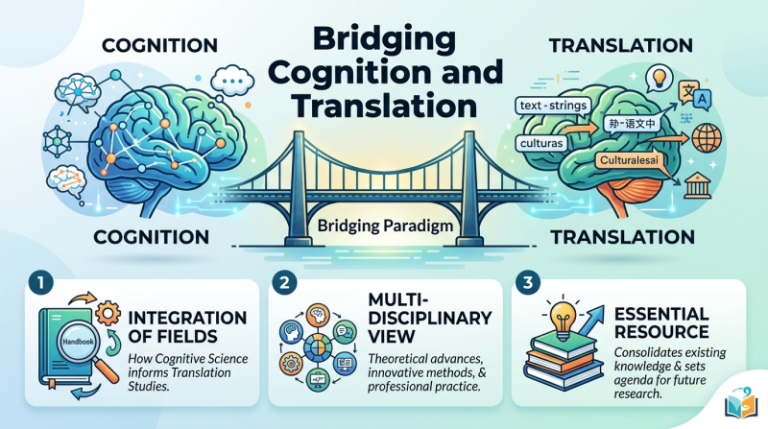
April 30, 2026, Bangkok – This academic article aims to critically analyze and evaluate The Handbook of Translation and Cognition, edited by John W. Schwieter and Aline Ferreira (2017), with a focus on its contribution to the integration of cognitive science and Translation Studies. The analysis reveals that the volume represents a highly ambitious scholarly endeavor in terms of scope, content, and conceptual breadth. Despite the inherent challenges of achieving conceptual and terminological consistency within a rapidly expanding and inherently multidisciplinary field, the book successfully demonstrates how cognitive science informs and enriches Translation Studies. In the context of the growing body of research on translation processes and their psychological underpinnings, the volume constitutes a timely and much-needed compendium.
Introduction
In recent decades, Translation Studies has increasingly incorporated insights from cognitive science, giving rise to the interdisciplinary domain commonly referred to as “translation and cognition.” Within this context, The Handbook of Translation and Cognition represents a remarkably ambitious undertaking. Its scale alone presents significant challenges, particularly in imposing structure and maintaining conceptual and terminological coherence across a body of research that is both multidisciplinary and dynamically evolving in multiple directions (Schwieter & Ferreira, 2017). Nevertheless, the volume succeeds in illustrating how cognitive science contributes to Translation Studies in a systematic and meaningful way.
Literature Review
The surge of interest in translation processes and their psychological foundations is reflected in the increasing number of scholarly publications in this area. Notable contributions include Carl, Bangalore, and Schaeffer (2016), Hubscher-Davidson (2017), and Lacruz and Jääskeläinen (2018), all of which have significantly advanced empirical and cognitive approaches to translation research. Furthermore, the launch of the journal Translation, Cognition & Behavior in 2018 underscores the growing importance of this field. Against this backdrop, Schwieter and Ferreira’s handbook emerges as a timely and essential reference work (Schwieter & Ferreira, 2017).
Content Analysis
The volume comprises 30 chapters organized into six parts. Part I consists of a single introductory chapter authored by the editors, offering a compelling and comprehensive overview of the entire volume.
Part II, entitled “Theoretical Advances,” focuses primarily on the translation process. The chapters vary in scope, ranging from broader topics such as translation process research and cognition and reception to more specialized themes such as directionality in translation and bilingualism in cognitive translation and interpreting studies. This diversity enables a comprehensive, detailed, and contextualized understanding of translational activity.
Part III, “Methodological Innovations,” presents a range of research methods relevant to the field. Although some of these methods are already well established, the section provides valuable insights for readers with varying levels of methodological expertise and is particularly beneficial for those seeking to consolidate their understanding of research methodologies in translation.
Part IV, “Translator and Workplace Characteristics,” addresses contemporary issues at the intersection of translation and cognition, including machine translation, ergonomics, creativity, emotion, cognitive effort, and second-language writing. These topics highlight the complex interaction between human cognition, technological development, and professional translation practice.
Part V, “Competence, Training, and Interpreting,” examines the constructs and activities related to translator and interpreter competence. With cognitive processing as a central concept, the chapters clarify complex terminology and provide a detailed account of a crucial area within translation research.
Part VI, “Research Prospects,” consists of two chapters that offer a forward-looking perspective on the field. This final section provides a clear assessment of achievements to date as well as the challenges that lie ahead in cognitively oriented Translation Studies.
Discussion
Overall, the chapters in the handbook vary in their focus, with some offering more theoretical contributions and others emphasizing practical applications, particularly through the review of multiple empirical studies. These concise yet informative summaries represent a significant strength of the volume, as they not only synthesize existing research but also inspire further scholarly inquiry.
A key contribution of the handbook lies in its emphasis on interdisciplinary integration. It brings together diverse theoretical frameworks, research topics, methodologies, constructs, and models, effectively capturing the breadth and dynamism of the field of translation and cognition. The editors’ achievement in coordinating contributions from a large number of scholars—each an expert in their respective area—further enhances the authority and coherence of the volume.
Conclusion
In conclusion, The Handbook of Translation and Cognition represents a major contribution to Translation Studies, particularly in advancing the integration of cognitive perspectives. The volume not only consolidates existing knowledge but also sets the agenda for future research. Its interdisciplinary scope, methodological diversity, and theoretical depth make it an indispensable resource for scholars and researchers in the field.
References
- Carl, M., Bangalore, S., & Schaeffer, M. (eds.). (2016). New Directions in Empirical Translation Process Research. New York: Springer.
- Hubscher-Davidson, S. (2017). Translation and Emotion: A Psychological Perspective. New York and London: Routledge.
- Lacruz, I., & Jääskeläinen, R. (eds.). (2018). Innovation and Expansion in Translation Process Research. Amsterdam and Philadelphia: John Benjamins.
For professional services, please visit: https://www.seaproti.org/practitioners/
About certified translators, translation certifiers, and certified interpreters associated with SEAProTI. The Southeast Asian Association of Professional Translators and Interpreters (SEAProTI) has officially shared the qualifications and requirements for becoming Certified Translators, Translation Certification Providers, and Certified Interpreters in Sections 9 and 10 of the Royal Gazette, which was published by the Prime Minister’s Office in Thailand on July 25, 2024. Certified Translators, Translation Certification Providers, and Certified Interpreters
The Council of State has proposed the enactment of a Royal Decree, granting registered translators and recognised translation certifiers from professional associations or accredited language institutions the authority to provide legally valid translation certification (Letter to SEAProTI dated April 28, 2025)
SEAProTI is the first professional association in Thailand and Southeast Asia to implement a comprehensive certification system for translators, certifiers, and interpreters.
Head Office: Baan Ratchakru Building, No. 33, Room 402, Soi Phahonyothin 5, Phahonyothin Road, Phaya Thai District, Bangkok 10400, Thailand
Email: hello@seaproti.com | Tel.: (+66) 2-114-3128 (Office hours: Mon–Fri, 09:00–17:00).
การเชื่อมโยงความรู้ความเข้าใจกับการแปล: การทบทวนกระบวนทัศน์ในปัจจุบันและทิศทางในอนาคต
ผู้เขียน: ภคพร ตันจรารักษ์
30 เมษายน 2569 – บทความวิชาการฉบับนี้มีวัตถุประสงค์เพื่อวิเคราะห์และวิพากษ์หนังสือ The Handbook of Translation and Cognition ซึ่งเรียบเรียงโดยจอห์น ดับเบิลยู. ชไวเทอร์ และอลีน เฟร์เรย์รา (พ.ศ. 2560) โดยมุ่งเน้นการประเมินบทบาทของผลงานดังกล่าวในฐานะองค์ความรู้บูรณาการระหว่างศาสตร์ด้านความรู้ความเข้าใจและการศึกษาการแปล ผลการวิเคราะห์พบว่าหนังสือเล่มนี้เป็นผลงานที่มีความทะเยอทะยานในเชิงวิชาการอย่างยิ่ง ทั้งในด้านขอบเขต เนื้อหา และความหลากหลายของแนวคิดที่ถูกรวบรวมและจัดระบบ แม้ว่าจะเผชิญกับความท้าทายด้านความสอดคล้องเชิงแนวคิดและคำศัพท์ อันเนื่องมาจากลักษณะสหวิทยาการของสาขานี้ก็ตาม อย่างไรก็ตาม หนังสือเล่มนี้สามารถนำเสนอภาพรวมที่ครอบคลุมและทันสมัยของการวิจัยด้านการแปลเชิงปัญญา และถือเป็นแหล่งอ้างอิงสำคัญสำหรับนักวิชาการและผู้วิจัยในสาขาที่กำลังเติบโตอย่างรวดเร็วนี้
บทนำ
ในช่วงทศวรรษที่ผ่านมา การศึกษาการแปลได้ขยายขอบเขตไปสู่การบูรณาการกับศาสตร์ด้านความรู้ความเข้าใจอย่างมีนัยสำคัญ ส่งผลให้เกิดสาขาย่อยที่เรียกว่า “การแปลและปัญญา” ซึ่งมุ่งศึกษากระบวนการทางจิตวิทยาที่อยู่เบื้องหลังการแปลและการล่าม ภายใต้บริบทดังกล่าว หนังสือ The Handbook of Translation and Cognition ถือเป็นความพยายามเชิงวิชาการที่มีความทะเยอทะยาน เนื่องจากต้องจัดระบบองค์ความรู้ที่มีลักษณะสหวิทยาการและมีการพัฒนาอย่างต่อเนื่องในหลายทิศทาง (ชไวเทอร์ และ เฟร์เรย์รา, พ.ศ. 2560) ความท้าทายสำคัญประการหนึ่งคือการสร้างความสอดคล้องทั้งในเชิงแนวคิดและคำศัพท์ อย่างไรก็ตาม หนังสือเล่มนี้สามารถแสดงให้เห็นถึงความสัมพันธ์ระหว่างศาสตร์ด้านความรู้ความเข้าใจกับการศึกษาการแปลได้อย่างเป็นระบบ
ทบทวนวรรณกรรม
ความสนใจที่เพิ่มขึ้นในงานวิจัยด้านกระบวนการแปลและพื้นฐานทางจิตวิทยาสะท้อนให้เห็นได้จากจำนวนงานตีพิมพ์ที่เพิ่มขึ้นอย่างต่อเนื่อง อาทิ งานของไมเคิล คาร์ล ศรีนิวาส บังกาลอร์ และมอริตซ์ เชฟเฟอร์ (พ.ศ. 2559) งานของเซเวอรีน ฮับเชอร์-เดวิดสัน (พ.ศ. 2560) และงานของอิซาเบล ลาครูซ และรีอิตตา เยสเคอไลเนน (พ.ศ. 2561) ซึ่งล้วนมีบทบาทสำคัญในการขับเคลื่อนองค์ความรู้ด้านการแปลเชิงกระบวนการและมิติทางปัญญา นอกจากนี้ การก่อตั้งวารสาร Translation, Cognition & Behavior ในปีพ.ศ. 2561 ยังสะท้อนถึงการเติบโตของสาขานี้อย่างชัดเจน (ชไวเทอร์ และ เฟร์เรย์รา, พ.ศ. 2560) ภายใต้บริบทดังกล่าว หนังสือเล่มนี้จึงถือเป็นผลงานที่ตอบสนองความต้องการของวงการวิชาการได้อย่างทันท่วงที
การวิเคราะห์เนื้อหา
หนังสือเล่มนี้ประกอบด้วยทั้งหมด 30 บท แบ่งออกเป็น 6 ส่วนหลัก โดยส่วนแรกเป็นบทนำที่ให้ภาพรวมของเนื้อหาทั้งเล่มอย่างกระชับและชัดเจน
ส่วนที่สองซึ่งมีชื่อว่า “ความก้าวหน้าทางทฤษฎี” มุ่งเน้นการอธิบายกระบวนการแปล โดยนำเสนอทั้งประเด็นในระดับกว้าง เช่น การวิจัยกระบวนการแปล และการรับรู้ของผู้รับสาร ตลอดจนประเด็นเฉพาะ เช่น ทิศทางในการแปล และภาวะสองภาษาในการศึกษาการแปลและการล่ามเชิงปัญญา
ส่วนที่สาม “นวัตกรรมเชิงระเบียบวิธี” นำเสนอวิธีวิจัยที่ใช้ในสาขานี้ แม้ว่าบางวิธีจะเป็นที่ยอมรับมาอย่างยาวนานแล้ว แต่การนำเสนอในรูปแบบที่เป็นระบบช่วยให้ผู้อ่านสามารถทำความเข้าใจและพัฒนาความรู้ด้านระเบียบวิธีได้อย่างมีประสิทธิภาพ โดยเฉพาะสำหรับผู้ที่ต้องการเสริมสร้างพื้นฐานด้านการวิจัย
ส่วนที่สี่ “ผู้แปลและลักษณะของสภาพแวดล้อมการทำงาน” มุ่งเน้นประเด็นร่วมสมัยที่สำคัญ เช่น การแปลโดยเครื่องจักร การยศาสตร์ ความคิดสร้างสรรค์ อารมณ์ ความพยายามทางปัญญา และการเขียนในภาษาที่สอง ซึ่งล้วนเป็นประเด็นที่สะท้อนความเชื่อมโยงระหว่างมนุษย์ เทคโนโลยี และกระบวนการแปล
ส่วนที่ห้า “สมรรถนะ การฝึกอบรม และการล่าม” มุ่งเน้นการวิเคราะห์องค์ประกอบด้านสมรรถนะของนักแปลและล่าม โดยใช้แนวคิดเรื่องกระบวนการทางปัญญาเป็นแกนหลักในการอธิบาย และช่วยคลี่คลายความซับซ้อนของคำศัพท์เฉพาะทางในสาขานี้
ส่วนสุดท้าย “แนวโน้มการวิจัยในอนาคต” นำเสนอภาพรวมของความสำเร็จที่ผ่านมาและความท้าทายที่ยังต้องเผชิญ โดยเน้นให้เห็นทิศทางของการพัฒนาการศึกษาการแปลเชิงปัญญาในอนาคต
อภิปรายผล
จากการวิเคราะห์พบว่าหนังสือเล่มนี้มีความโดดเด่นในการนำเสนอองค์ความรู้ที่หลากหลายและครอบคลุม โดยสะท้อนให้เห็นถึงการบูรณาการข้ามสาขาวิชาอย่างชัดเจน อย่างไรก็ตาม ความแตกต่างในจุดเน้นของแต่ละบททำให้บางบทมีลักษณะเชิงทฤษฎี ขณะที่บางบทมีลักษณะเชิงประยุกต์มากกว่า ถึงกระนั้น การสรุปงานวิจัยในแต่ละประเด็นอย่างกระชับถือเป็นจุดแข็งสำคัญที่สามารถกระตุ้นให้เกิดการวิจัยต่อยอดในอนาคต
สรุป
โดยสรุป The Handbook of Translation and Cognition เป็นผลงานวิชาการที่มีความสำคัญอย่างยิ่งในสาขาการแปลศึกษา โดยเฉพาะในมิติที่เกี่ยวข้องกับกระบวนการทางปัญญา หนังสือเล่มนี้ไม่เพียงแต่รวบรวมองค์ความรู้ที่มีอยู่ แต่ยังช่วยกำหนดทิศทางการวิจัยในอนาคต และเน้นย้ำถึงความสำคัญของการบูรณาการข้ามศาสตร์ในการพัฒนาความรู้ด้านการแปลอย่างยั่งยืน
เอกสารอ้างอิง
- คาร์ล, ไมเคิล; บังกาลอร์, ศรีนิวาส; และ เชฟเฟอร์, มอริตซ์ (บรรณาธิการ). (พ.ศ. 2559). New Directions in Empirical Translation Process Research. นิวยอร์ก: สปริงเกอร์.
- ฮับเชอร์-เดวิดสัน, เซเวอรีน. (พ.ศ. 2560). Translation and Emotion: A Psychological Perspective. นิวยอร์กและลอนดอน: เราท์เลดจ์.
- ลาครูซ, อิซาเบล; และ เยสเคอไลเนน, รีอิตตา (บรรณาธิการ). (พ.ศ. 2561). Innovation and Expansion in Translation Process Research. อัมสเตอร์ดัมและฟิลาเดลเฟีย: จอห์น เบนจามินส์.
ขอใช้บริการนักวิชาชีพของสมาคมได้ที่:https://www.seaproti.org/practitioners/
สมาคมวิชาชีพนักแปลและล่ามแห่งเอเชียตะวันออกเฉียงใต้ (SEAProTI) ได้ประกาศหลักเกณฑ์และคุณสมบัติของผู้ที่ขึ้นทะเบียนเป็น “นักแปลรับรอง (Certified Translators) และผู้รับรองการแปล (Translation Certification Providers) และล่ามรับรอง (Certified Interpreters)” ของสมาคม หมวดที่ 9 และหมวดที่ 10 ในราชกิจจานุเบกษา ของสำนักเลขาธิการคณะรัฐมนตรี ในสำนักนายกรัฐมนตรี แห่งราชอาณาจักรไทย ลงวันที่ 25 ก.ค. 2567 เล่มที่ 141 ตอนที่ 66 ง หน้า 100 อ่านฉบับเต็มได้ที่: นักแปลรับรอง ผู้รับรองการแปล และล่ามรับรอง
สำนักคณะกรรมการกฤษฎีกาเสนอให้ตราเป็นพระราชกฤษฎีกา โดยกำหนดให้นักแปลที่ขึ้นทะเบียน รวมถึงผู้รับรองการแปลจากสมาคมวิชาชีพหรือสถาบันสอนภาษาที่มีการอบรมและขึ้นทะเบียน สามารถรับรองคำแปลได้ (จดหมายถึงสมาคม SEAProTI ลงวันที่ 28 เม.ย. 2568)
สมาคมวิชาชีพนักแปลและล่ามแห่งเอเชียตะวันออกเฉียงใต้เป็นสมาคมวิชาชีพแห่งแรกและแห่งเดียวในประเทศไทยและภูมิภาคเอเชียตะวันออกเฉียงใต้ที่มีระบบรับรองนักแปลรับรอง ผู้รับรองการแปล และล่ามรับรอง
สำนักงานใหญ่: อาคารบ้านราชครู เลขที่ 33 ห้อง 402 ซอยพหลโยธิน 5 ถนนพหลโยธิน แขวงพญาไท เขตพญาไท กรุงเทพมหานคร 10400 ประเทศไทย