



Why Are People with Certain Medical Conditions Unable to Register as Certified Interpreters?
Between Professional Standards and Social Bias
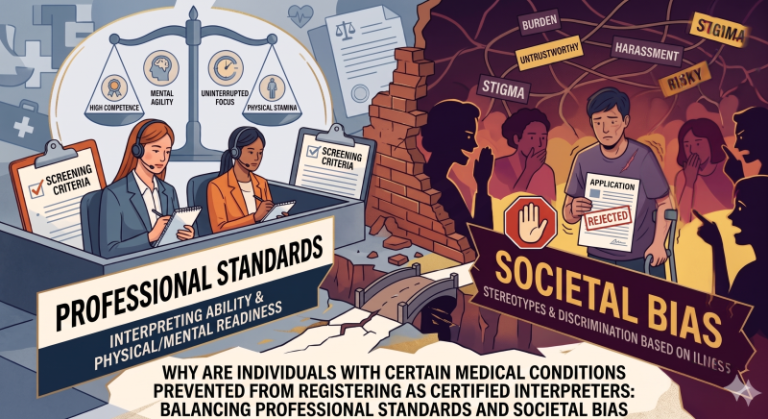
21 April 2026, Bangkok — In the interpreting profession, particularly for “certified interpreters,” who play a critical role in the justice system, healthcare, and high-level business negotiations, standards of accuracy, neutrality, and reliability are fundamental to the job. However, ethical and fairness concerns have emerged: why are individuals with certain medical conditions—such as tuberculosis, bipolar disorder, or depression—sometimes unable to register as certified interpreters with certain professional associations?
This article aims to analyze the issue from multiple perspectives, distinguishing between “professional justifications” and potential “social biases” embedded within these requirements.
1. Nature of Certified Interpreting: High Accuracy and Responsibility
Certified interpreters work in high-stakes environments, such as court testimony interpretation, doctor-patient communication, and high-value business negotiations. Even minor errors can lead to serious consequences.
As a result, professional organizations often impose strict qualifications, including:
- The ability to process information quickly and accurately
- Emotional regulation and neutrality
- Consistent performance under pressure
From this perspective, concerns about the “unpredictability of symptoms” in certain conditions—particularly psychiatric disorders—may be cited as reasons for restricting eligibility.
2. Health Considerations: Between Facts and Generalizations
Some conditions, such as bipolar disorder or depression, can be episodic, potentially affecting concentration, decision-making, or behavior at certain times. However, medical evidence shows that many individuals can effectively manage their symptoms and perform high-responsibility jobs successfully.
The issue, therefore, is often not the condition itself but that some organizations:
- Use diagnostic labels as direct indicators of ability
- Lack of individualized assessment
- Interpret risk in an overly generalized way
These practices may lead to unfair discrimination.
3. Infectious Diseases: Safety Considerations
In the case of infectious diseases such as tuberculosis, restrictions may be more clearly justified. Interpreters often work in proximity with others in enclosed spaces, and if they are in a contagious phase, temporary work restrictions may be necessary.
However, such limitations should be
- Temporary measures
- Based on medical evidence
- Not permanent disqualifications after recovery
4. Professional Image and Public Trust: A Space for Bias
Another factor that cannot be overlooked is “professional image.” Some organizations emphasize that interpreters must appear “credible” in the eyes of the public. However, this notion can allow social biases to infiltrate decision-making, especially regarding mental health conditions, which remain stigmatized in many societies.
Using “public perception” as a criterion may lead to the following:
- Judgments based more on image than actual ability
- Exclusion of capable individuals from the profession
5. Modern Standards: Assessing Actual Competence
Globally, there is a growing trend toward the principle that individuals should be evaluated based on their ability to perform the job, not solely on their health status.
A fair approach should include the following:
- Individualized assessments
- Consideration of whether symptoms are well-managed
- Criteria directly related to job performance
This aligns with widely accepted principles of human rights and non-discrimination.
Conclusion
The exclusion of individuals with certain medical conditions from registering as certified interpreters may stem from legitimate professional standards and safety concerns. However, in many cases, such restrictions may reflect bias and generalization rather than objective assessment.
The future development of the profession should aim to balance the following:
- Maintaining professional standards
- Protecting fairness and equal opportunity
So that the interpreting profession truly upholds both expertise and equity.
For professional services, please visit: https://www.seaproti.org/practitioners/
About certified translators, translation certifiers, and certified interpreters associated with SEAProTI.
The Southeast Asian Association of Professional Translators and Interpreters (SEAProTI) has officially shared the qualifications and requirements for becoming Certified Translators, Translation Certification Providers, and Certified Interpreters in Sections 9 and 10 of the Royal Gazette, which was published by the Prime Minister’s Office in Thailand on July 25, 2024. Certified Translators, Translation Certification Providers, and Certified Interpreters
The Council of State has proposed the enactment of a Royal Decree, granting registered translators and recognised translation certifiers from professional associations or accredited language institutions the authority to provide legally valid translation certification (Letter to SEAProTI dated April 28, 2025)
SEAProTI is the first professional association in Thailand and Southeast Asia to implement a comprehensive certification system for translators, certifiers, and interpreters.
Head Office: Baan Ratchakru Building, No. 33, Room 402, Soi Phahonyothin 5, Phahonyothin Road, Phaya Thai District, Bangkok 10400, Thailand
Email: hello@seaproti.com | Tel.: (+66) 2-114-3128 (Office hours: Mon–Fri, 09:00–17:00).
เหตุใดผู้ที่มีโรคบางประเภทจึงไม่สามารถขึ้นทะเบียนเป็นล่ามรับรองได้: ระหว่างมาตรฐานวิชาชีพกับอคติของสังคม
21 เมษายน 2569, กรุงเทพมหานคร – ในวิชาชีพล่าม โดยเฉพาะ “ล่ามรับรอง” ซึ่งมีบทบาทสำคัญในกระบวนการยุติธรรม การแพทย์ และการเจรจาทางธุรกิจระดับสูง มาตรฐานด้านความแม่นยำ ความเป็นกลาง และความน่าเชื่อถือถือเป็นหัวใจหลักของการปฏิบัติงาน อย่างไรก็ตาม ได้เกิดคำถามเชิงจริยธรรมและความเป็นธรรมขึ้นว่า เหตุใดบุคคลที่มีโรคบางประเภท เช่น วัณโรค โรคอารมณ์สองขั้ว (bipolar disorder) หรือโรคซึมเศร้า จึงอาจไม่สามารถขึ้นทะเบียนเป็นล่ามรับรองของสมาคมวิชาชีพบางแห่งได้
บทความนี้มีจุดมุ่งหมายเพื่อวิเคราะห์ประเด็นดังกล่าวอย่างรอบด้าน โดยแยกแยะระหว่าง “เหตุผลเชิงวิชาชีพ” และ “อคติทางสังคม” ที่อาจแฝงอยู่ในข้อกำหนดเหล่านั้น
1. ลักษณะงานล่ามรับรอง: ความแม่นยำและความรับผิดชอบสูง
ล่ามรับรองต้องทำงานในบริบทที่มีความเสี่ยงสูงต่อผลกระทบ เช่น การแปลคำให้การในศาล การสื่อสารระหว่างแพทย์กับผู้ป่วย หรือการเจรจาทางธุรกิจที่มีมูลค่าสูง ความผิดพลาดเพียงเล็กน้อยอาจนำไปสู่ผลเสียอย่างร้ายแรงได้
ดังนั้น องค์กรวิชาชีพจึงมักกำหนดคุณสมบัติที่เข้มงวด เช่น
- ความสามารถในการประมวลผลข้อมูลอย่างรวดเร็วและแม่นยำ
- การควบคุมอารมณ์และความเป็นกลาง
- ความสม่ำเสมอของสมรรถนะในการทำงานภายใต้แรงกดดัน
ในมุมนี้ ความกังวลเกี่ยวกับ “ความไม่แน่นอนของอาการ” ในบางโรค โดยเฉพาะโรคทางจิตเวช อาจถูกนำมาใช้เป็นเหตุผลในการจำกัดสิทธิ์
2. ประเด็นด้านสุขภาพ: ระหว่างข้อเท็จจริงกับการเหมารวม
โรคบางประเภท เช่น โรคอารมณ์สองขั้วหรือโรคซึมเศร้า มีลักษณะอาการที่อาจเปลี่ยนแปลงเป็นช่วง (episodic) ซึ่งในบางกรณีอาจส่งผลต่อสมาธิ การตัดสินใจ หรือพฤติกรรม อย่างไรก็ตาม ข้อเท็จจริงทางการแพทย์ระบุว่า ผู้ป่วยจำนวนมากสามารถควบคุมอาการได้ดี และสามารถทำงานที่มีความรับผิดชอบสูงได้อย่างมีประสิทธิภาพ
ปัญหาจึงไม่ได้อยู่ที่ “ตัวโรค” แต่เป็นการที่บางองค์กร:
- ใช้ชื่อโรคเป็นตัวชี้วัดความสามารถโดยตรง
- ขาดการประเมินรายบุคคล
- ตีความความเสี่ยงแบบเหมารวม
ซึ่งอาจนำไปสู่การเลือกปฏิบัติอย่างไม่เป็นธรรม
3. โรคติดต่อ: เหตุผลด้านความปลอดภัย
ในกรณีของโรคติดต่อ เช่น วัณโรค เหตุผลในการจำกัดสิทธิ์มีความชัดเจนมากขึ้น เนื่องจากล่ามต้องทำงานใกล้ชิดกับผู้อื่นในพื้นที่ปิด หากอยู่ในระยะที่สามารถแพร่เชื้อได้ องค์กรอาจมีความจำเป็นต้องจำกัดการปฏิบัติงานชั่วคราว
อย่างไรก็ตาม ข้อจำกัดดังกล่าวควรเป็น:
- มาตรการชั่วคราว
- ยึดตามข้อเท็จจริงทางการแพทย์
- ไม่ใช่การตัดสิทธิ์ถาวรหลังการรักษา
4. ภาพลักษณ์และความเชื่อมั่น: พื้นที่ของอคติ
อีกหนึ่งปัจจัยที่ไม่อาจมองข้ามคือ “ภาพลักษณ์วิชาชีพ” องค์กรบางแห่งอาจให้ความสำคัญกับการที่ล่ามต้อง “ดูน่าเชื่อถือ” ในสายตาสาธารณะ อย่างไรก็ตาม แนวคิดนี้มักเปิดช่องให้อคติทางสังคมแทรกซึมเข้ามา โดยเฉพาะต่อโรคทางจิตเวช ซึ่งยังคงถูกตีตราในหลายสังคม
การใช้ “ความรู้สึกของสาธารณะ” เป็นเกณฑ์ อาจนำไปสู่:
- การตัดสินบนพื้นฐานของภาพลักษณ์มากกว่าความสามารถ
- การกีดกันผู้มีศักยภาพออกจากวิชาชีพ
5. มาตรฐานสมัยใหม่: การประเมินตามความสามารถจริง
แนวโน้มในระดับสากลกำลังมุ่งไปสู่หลักการที่ว่า “ควรประเมินบุคคลจากความสามารถในการปฏิบัติงาน ไม่ใช่จากสถานะสุขภาพเพียงอย่างเดียว”
แนวทางที่เป็นธรรมควรประกอบด้วย:
- การประเมินเป็นรายบุคคล
- การพิจารณาว่าสามารถควบคุมอาการได้หรือไม่
- การใช้เกณฑ์ที่เกี่ยวข้องกับงานโดยตรง
หลักการนี้สอดคล้องกับแนวคิดด้านสิทธิมนุษยชนและการไม่เลือกปฏิบัติ ซึ่งได้รับการยอมรับอย่างกว้างขวางในปัจจุบัน
บทสรุป
การที่ผู้มีโรคบางประเภทไม่สามารถขึ้นทะเบียนเป็นล่ามรับรองได้ อาจมีที่มาจากทั้งเหตุผลเชิงวิชาชีพและข้อกังวลด้านความปลอดภัย อย่างไรก็ตาม ในหลายกรณี ข้อจำกัดดังกล่าวอาจสะท้อน “อคติ” และ “การเหมารวม” มากกว่าการประเมินตามความเป็นจริง
การพัฒนาวิชาชีพในอนาคตจึงควรมุ่งไปสู่ความสมดุลระหว่าง:
- การรักษามาตรฐานวิชาชีพ
- และการคุ้มครองความเป็นธรรมของผู้ปฏิบัติงาน
เพื่อให้วิชาชีพล่ามเป็นพื้นที่ที่ยึดทั้ง “ความเชี่ยวชาญ” และ “ความเท่าเทียม” อย่างแท้จริงเหตุใดผู้ที่มีโรคบางประเภทจึงไม่สามารถขึ้นทะเบียนเป็นล่ามรับรองได้: ระหว่างมาตรฐานวิชาชีพกับอคติของสังคม
ในวิชาชีพล่าม โดยเฉพาะ “ล่ามรับรอง” ซึ่งมีบทบาทสำคัญในกระบวนการยุติธรรม การแพทย์ และการเจรจาทางธุรกิจระดับสูง มาตรฐานด้านความแม่นยำ ความเป็นกลาง และความน่าเชื่อถือถือเป็นหัวใจหลักของการปฏิบัติงาน อย่างไรก็ตาม ได้เกิดคำถามเชิงจริยธรรมและความเป็นธรรมขึ้นว่า เหตุใดบุคคลที่มีโรคบางประเภท เช่น วัณโรค โรคอารมณ์สองขั้ว (bipolar disorder) หรือโรคซึมเศร้า จึงอาจไม่สามารถขึ้นทะเบียนเป็นล่ามรับรองของสมาคมวิชาชีพบางแห่งได้
ติดต่อขอใช้บริการนักวิชาชีพของสมาคมได้ที่: https://www.seaproti.org/practitioners/
สมาคมวิชาชีพนักแปลและล่ามแห่งเอเชียตะวันออกเฉียงใต้ (SEAProTI) ได้ประกาศหลักเกณฑ์และคุณสมบัติของผู้ที่ขึ้นทะเบียนเป็น “นักแปลรับรอง (Certified Translators) และผู้รับรองการแปล (Translation Certification Providers) และล่ามรับรอง (Certified Interpreters)” ของสมาคม หมวดที่ 9 และหมวดที่ 10 ในราชกิจจานุเบกษา ของสำนักเลขาธิการคณะรัฐมนตรี ในสำนักนายกรัฐมนตรี แห่งราชอาณาจักรไทย ลงวันที่ 25 ก.ค. 2567 เล่มที่ 141 ตอนที่ 66 ง หน้า 100 อ่านฉบับเต็มได้ที่: นักแปลรับรอง ผู้รับรองการแปล และล่ามรับรอง
สำนักคณะกรรมการกฤษฎีกาเสนอให้ตราเป็นพระราชกฤษฎีกา โดยกำหนดให้นักแปลที่ขึ้นทะเบียน รวมถึงผู้รับรองการแปลจากสมาคมวิชาชีพหรือสถาบันสอนภาษาที่มีการอบรมและขึ้นทะเบียน สามารถรับรองคำแปลได้ (จดหมายถึงสมาคม SEAProTI ลงวันที่ 28 เม.ย. 2568)
สมาคมวิชาชีพนักแปลและล่ามแห่งเอเชียตะวันออกเฉียงใต้เป็นสมาคมวิชาชีพแห่งแรกและแห่งเดียวในประเทศไทยและภูมิภาคเอเชียตะวันออกเฉียงใต้ที่มีระบบรับรองนักแปลรับรอง ผู้รับรองการแปล และล่ามรับรอง
สำนักงานใหญ่: อาคารบ้านราชครู เลขที่ 33 ห้อง 402 ซอยพหลโยธิน 5 ถนนพหลโยธิน แขวงพญาไท เขตพญาไท กรุงเทพมหานคร 10400 ประเทศไทย
อีเมล: hello@seaproti.com โทรศัพท์: (+66) 2-114-3128 (เวลาทำการ: วันจันทร์–วันศุกร์ เวลา 09.00–17.00 น.