


Marriage Registration in Thailand or Australia: Implications for Australian Partner Visa Processes and the Role of Language Professionals
Author: Griroek Gruaythong
29 April 2026 -This article examines the relationship between the place of marriage registration and the process of applying for an Australian Partner Visa, with a comparative focus on Thailand and Australia. It analyzes legal requirements, processing timeframes, costs, and procedural complexity in each jurisdiction. The study further extends its analytical scope to the role of certified translators, translation certification providers, and certified interpreters, particularly within the framework of professional associations in Southeast Asia. These actors play a critical role in ensuring the accuracy, reliability, and legal acceptability of cross-linguistic documentation. The findings suggest that the choice of marriage location not only affects migration timelines but is also closely linked to the quality of document handling and linguistic certification, which are key determinants of visa application success.
Introduction
Marriage-based migration constitutes a major pathway for transnational mobility in the context of globalization. In the case of Australian Partner Visas, the process involves multiple legal and administrative requirements. One often overlooked yet crucial factor is the place of marriage registration, which significantly influences both the duration and complexity of the visa process (Czaika & de Haas, 2013; Findlay et al., 2017). In addition, within cross-linguistic contexts, document translation and certification play a vital role in ensuring compliance with governmental requirements (Mossop, 2019). This article therefore adopts an integrated perspective, combining legal and linguistic dimensions in its analysis.
Literature Review
Migration studies have consistently highlighted that legal procedures are embedded in bureaucratic systems requiring extensive documentation, with variations across national contexts (Czaika & de Haas, 2013). Findlay et al. (2017) emphasize the importance of institutional structures in shaping migration patterns. In translation studies, Mossop (2019) argues that official document translation must prioritize functional accuracy and legal equivalence rather than purely linguistic fidelity. Meanwhile, Kaindl (2013) introduces the concept of plurisemiotic practices, underscoring that cross-linguistic communication involves multiple semiotic modes, including textual, contextual, and socio-cultural dimensions.
Within the Southeast Asian context, professional associations of translators and interpreters play a key role in establishing standards and certifying practitioners. Such institutional frameworks contribute to the credibility and acceptability of translated documents in international legal processes.
Methodology
This study employs a qualitative approach based on document analysis of legal requirements for marriage registration in Thailand and Australia, as well as procedures for applying for Australian Partner Visas. It further applies theoretical frameworks from translation and intercultural communication studies to examine the role of language professionals in these processes.
Findings and Discussion
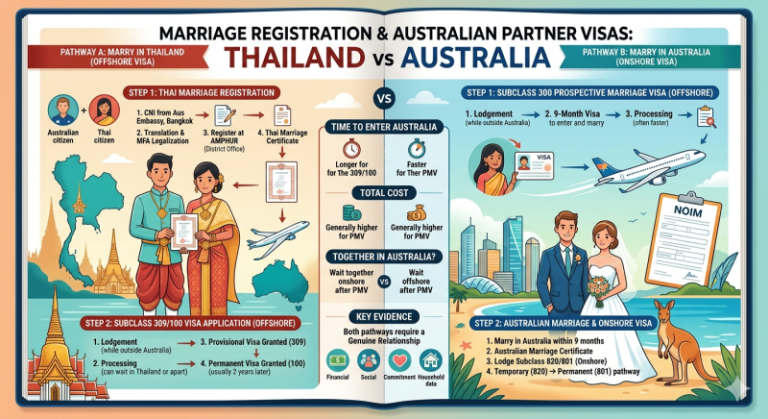
The analysis indicates that marriage registration in Thailand offers advantages in terms of speed and cost efficiency. There is no mandatory waiting period prior to registration, and an official marriage certificate can be issued on the same day. In contrast, marriage registration in Australia requires a minimum one-month notice period and additional post-ceremony administrative procedures before official documentation can be obtained.
From a visa perspective, marriage in Thailand facilitates earlier application for offshore partner visas (Subclass 309/100), whereas marriage in Australia is typically associated with onshore visa pathways (Subclass 820/801), which involve additional preliminary steps prior to marriage.
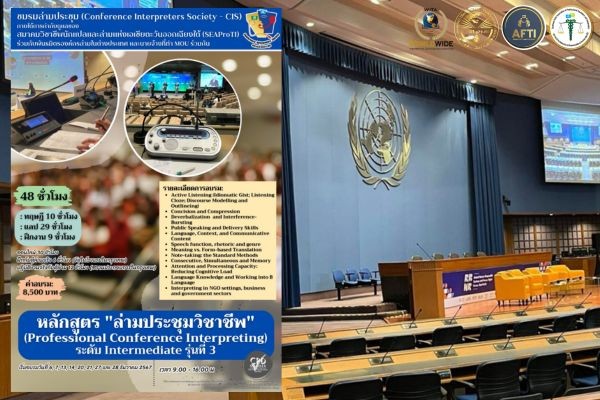
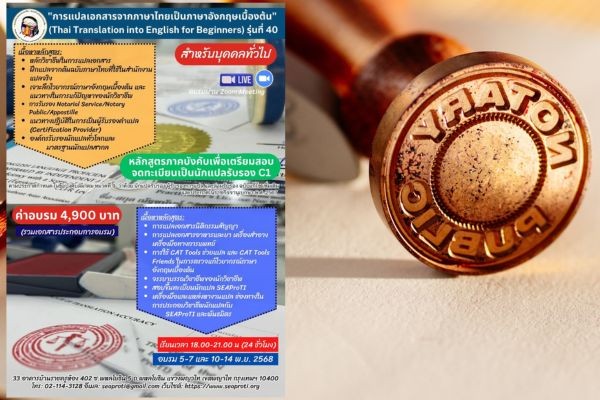
A key contribution of this article lies in highlighting the role of certified translators, translation certification providers, and certified interpreters. These professionals are essential in ensuring that documents such as affidavits of freedom to marry, household registration records, and marriage certificates are accurately translated and formally certified for submission to Australian authorities. Errors or inconsistencies in translation may lead to application delays or refusals (Mossop, 2019).
Within the framework of Southeast Asian professional associations of translators and interpreters, certified practitioners contribute to standardization, quality assurance, and institutional trust. Certified interpreters also play a crucial role in interviews and official interactions, minimizing miscommunication and enhancing procedural transparency (Kaindl, 2013).
Conclusion
The choice between registering a marriage in Thailand or Australia has direct implications for the efficiency, cost, and complexity of the Australian Partner Visa process. Beyond legal and procedural considerations, linguistic factors—particularly translation accuracy and certification—are critical components that should not be underestimated. Certified translators and interpreters, especially those affiliated with professional associations in Southeast Asia, play an indispensable role in ensuring that the process proceeds smoothly and in compliance with legal standards.
References
- Czaika, M., & de Haas, H. (2013). The effectiveness of immigration policies.
- Findlay, A. M., et al. (2017). Migration and institutional structures.
- Kaindl, K. (2013). Multimodality and translation.
- Mossop, B. (2019). Revising and editing for translators.
For professional services, please visit: https://www.seaproti.org/practitioners/
About certified translators, translation certifiers, and certified interpreters associated with SEAProTI.
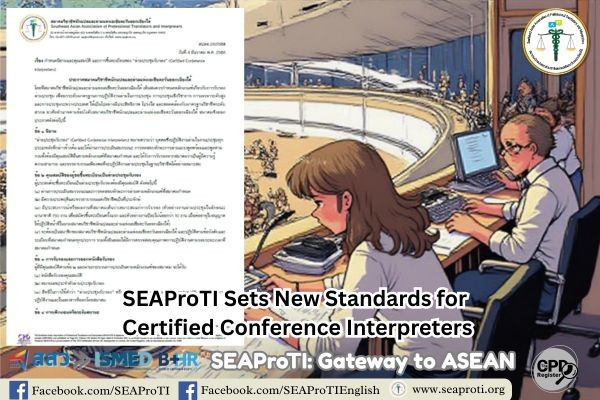
The Southeast Asian Association of Professional Translators and Interpreters (SEAProTI) has officially shared the qualifications and requirements for becoming Certified Translators, Translation Certification Providers, and Certified Interpreters in Sections 9 and 10 of the Royal Gazette, which was published by the Prime Minister’s Office in Thailand on July 25, 2024. Certified Translators, Translation Certification Providers, and Certified Interpreters
The Council of State has proposed the enactment of a Royal Decree, granting registered translators and recognised translation certifiers from professional associations or accredited language institutions the authority to provide legally valid translation certification (Letter to SEAProTI dated April 28, 2025)
SEAProTI is the first professional association in Thailand and Southeast Asia to implement a comprehensive certification system for translators, certifiers, and interpreters.
Head Office: Baan Ratchakru Building, No. 33, Room 402, Soi Phahonyothin 5, Phahonyothin Road, Phaya Thai District, Bangkok 10400, Thailand
Email: hello@seaproti.com | Tel.: (+66) 2-114-3128 (Office hours: Mon–Fri, 09:00–17:00).
การจดทะเบียนสมรสในประเทศไทยหรือออสเตรเลีย: ผลกระทบต่อกระบวนการขอวีซ่าคู่สมรสออสเตรเลียและบทบาทของผู้เชี่ยวชาญด้านภาษา
ผู้แต่ง: ไกรฤกษ์ กรวยทอง
29 เมษายน 2569 – บทความนี้มุ่งวิเคราะห์ความสัมพันธ์ระหว่างสถานที่จดทะเบียนสมรสกับกระบวนการขอวีซ่าคู่สมรสของออสเตรเลีย โดยเปรียบเทียบระหว่างการจดทะเบียนสมรสในประเทศไทยและในออสเตรเลีย ทั้งในมิติของข้อกำหนดทางกฎหมาย ระยะเวลา ค่าใช้จ่าย และความซับซ้อนของกระบวนการ นอกจากนี้ บทความยังขยายกรอบการวิเคราะห์ไปสู่บทบาทของนักแปลรับรอง ผู้ให้บริการรับรองการแปล และล่ามรับรอง โดยเฉพาะภายใต้บริบทของสมาคมวิชาชีพในภูมิภาคเอเชียตะวันออกเฉียงใต้ ซึ่งมีบทบาทสำคัญในการทำให้เอกสารข้ามภาษามีความน่าเชื่อถือและสอดคล้องกับข้อกำหนดของหน่วยงานรัฐ ผลการศึกษาชี้ให้เห็นว่าการเลือกสถานที่จดทะเบียนสมรสไม่เพียงส่งผลต่อความรวดเร็วของกระบวนการย้ายถิ่น แต่ยังเชื่อมโยงโดยตรงกับคุณภาพของการจัดการเอกสารและการรับรองทางภาษา ซึ่งเป็นปัจจัยสำคัญต่อความสำเร็จของการขอวีซ่า
บทนำ
การย้ายถิ่นฐานผ่านการสมรสเป็นหนึ่งในช่องทางสำคัญของการเคลื่อนย้ายแรงงานและครอบครัวในยุคโลกาภิวัตน์ โดยเฉพาะในกรณีของวีซ่าคู่สมรสออสเตรเลีย กระบวนการดังกล่าวมีความซับซ้อนและเกี่ยวข้องกับข้อกำหนดทางกฎหมายหลายประการ หนึ่งในปัจจัยสำคัญที่มักถูกมองข้ามคือ “สถานที่จดทะเบียนสมรส” ซึ่งส่งผลต่อทั้งระยะเวลาและความยุ่งยากของกระบวนการ (ไซกา และ เดอ ฮาส, 2556; ฟินด์เลย์ และคณะ, 2560) นอกจากนี้ ในบริบทของการสื่อสารข้ามภาษา การแปลเอกสารและการรับรองความถูกต้องมีบทบาทสำคัญต่อการยอมรับของหน่วยงานรัฐ (มอสซอป, 2562) บทความนี้จึงมุ่งวิเคราะห์ทั้งมิติทางกฎหมายและมิติทางภาษาอย่างบูรณาการ
ทบทวนวรรณกรรม
งานวิจัยด้านการย้ายถิ่นชี้ให้เห็นว่ากระบวนการทางกฎหมายมีลักษณะเป็นระบบราชการที่ต้องอาศัยเอกสารจำนวนมาก และมีความแตกต่างกันในแต่ละประเทศ (ไซกา และ เดอ ฮาส, 2556) ในขณะที่ ฟินด์เลย์ และคณะ (2560) เน้นย้ำถึงความสำคัญของโครงสร้างเชิงสถาบันในการกำหนดรูปแบบการเคลื่อนย้ายของบุคคล ด้านการแปล มอสซอป (2562) อธิบายว่าการแปลเอกสารราชการต้องให้ความสำคัญกับความถูกต้องเชิงหน้าที่และความเทียบเท่าทางกฎหมายมากกว่าการถ่ายทอดความหมายเชิงภาษาศาสตร์เพียงอย่างเดียว ขณะที่ ไคนด์ล (2556) เสนอแนวคิดเรื่อง plurisemiotic practices ซึ่งชี้ให้เห็นว่าการสื่อสารข้ามภาษาเกี่ยวข้องกับหลายมิติ ทั้งภาษา ตัวบท และบริบททางสังคม
ในบริบทของเอเชียตะวันออกเฉียงใต้ สมาคมวิชาชีพนักแปลและล่ามมีบทบาทในการกำหนดมาตรฐานวิชาชีพ รวมถึงการรับรองคุณภาพของผู้ปฏิบัติงาน ซึ่งส่งผลต่อความน่าเชื่อถือของเอกสารที่ใช้ในกระบวนการทางกฎหมายระหว่างประเทศ
ระเบียบวิธีวิจัย
บทความนี้ใช้วิธีการวิเคราะห์เชิงคุณภาพ โดยอาศัยการวิเคราะห์เอกสารของข้อกำหนดการจดทะเบียนสมรสในประเทศไทยและออสเตรเลีย รวมถึงขั้นตอนการขอวีซ่าคู่สมรสออสเตรเลีย นอกจากนี้ยังใช้กรอบแนวคิดด้านการแปลและการสื่อสารข้ามวัฒนธรรมเพื่ออธิบายบทบาทของผู้เชี่ยวชาญด้านภาษาในกระบวนการดังกล่าว
ผลการวิเคราะห์และอภิปรายผล
ผลการวิเคราะห์พบว่าการจดทะเบียนสมรสในประเทศไทยมีความได้เปรียบในด้านความรวดเร็วและต้นทุน เนื่องจากไม่มีระยะเวลารอคอยก่อนการจดทะเบียน และสามารถออกใบสำคัญการสมรสได้ทันทีหลังดำเนินการเสร็จสิ้น ในทางตรงกันข้าม การจดทะเบียนสมรสในออสเตรเลียต้องผ่านกระบวนการแจ้งความประสงค์ล่วงหน้าอย่างน้อยหนึ่งเดือน และต้องมีขั้นตอนหลังพิธีการก่อนที่จะสามารถขอเอกสารทางการได้
ในมิติของวีซ่า การสมรสในประเทศไทยเอื้อให้สามารถยื่นขอวีซ่าคู่สมรสแบบนอกประเทศ (Subclass 309/100) ได้รวดเร็ว ขณะที่การสมรสในออสเตรเลียเกี่ยวข้องกับวีซ่าภายในประเทศ (Subclass 820/801) ซึ่งต้องผ่านขั้นตอนเพิ่มเติมก่อนการสมรส
ประเด็นสำคัญที่บทความนี้เน้นคือบทบาทของนักแปลรับรอง ผู้ให้บริการรับรองการแปล และล่ามรับรอง ซึ่งมีความสำคัญอย่างยิ่งในกระบวนการดังกล่าว เนื่องจากเอกสารที่ใช้ เช่น หนังสือรับรองสถานภาพโสด ทะเบียนบ้าน หรือใบสำคัญการสมรส จำเป็นต้องได้รับการแปลและรับรองอย่างถูกต้องเพื่อให้หน่วยงานของออสเตรเลียยอมรับ ความผิดพลาดในการแปลอาจนำไปสู่การปฏิเสธคำร้องหรือความล่าช้าอย่างมีนัยสำคัญ (มอสซอป, 2562)
ในบริบทของสมาคมวิชาชีพนักแปลและล่ามแห่งเอเชียตะวันออกเฉียงใต้ ผู้เชี่ยวชาญที่ได้รับการรับรองจากองค์กรเหล่านี้มีบทบาทในการสร้างมาตรฐานและความน่าเชื่อถือของงานแปล โดยเฉพาะในกรณีที่เกี่ยวข้องกับเอกสารทางกฎหมายระหว่างประเทศ นอกจากนี้ ล่ามรับรองยังมีบทบาทในกระบวนการสัมภาษณ์หรือการติดต่อกับหน่วยงานรัฐ ซึ่งช่วยลดความคลาดเคลื่อนในการสื่อสารและเพิ่มความโปร่งใสของกระบวนการ (ไคนด์ล, 2556)
สรุป
การเลือกสถานที่จดทะเบียนสมรสระหว่างประเทศไทยและออสเตรเลียมีผลกระทบโดยตรงต่อความรวดเร็ว ความซับซ้อน และต้นทุนของกระบวนการขอวีซ่าคู่สมรสออสเตรเลีย อย่างไรก็ตาม ปัจจัยด้านภาษาและการรับรองเอกสารเป็นองค์ประกอบสำคัญที่ไม่ควรมองข้าม นักแปลและล่ามที่ได้รับการรับรอง โดยเฉพาะภายใต้กรอบของสมาคมวิชาชีพในภูมิภาค มีบทบาทสำคัญในการทำให้กระบวนการดังกล่าวดำเนินไปอย่างราบรื่นและสอดคล้องกับข้อกำหนดทางกฎหมาย
เอกสารอ้างอิง
- ไซกา, เอ็ม., และ เดอ ฮาส, เอช. (2556). The effectiveness of immigration policies.
- ฟินด์เลย์, เอ. เอ็ม., และคณะ. (2560). Migration and institutional structures.
- ไคนด์ล, เค. (2556). Multimodality and translation.
- มอสซอป, บี. (2562). Revising and editing for translators.
ติดต่อขอใช้บริการนักวิชาชีพของสมาคมได้ที่:https://www.seaproti.org/practitioners/
สมาคมวิชาชีพนักแปลและล่ามแห่งเอเชียตะวันออกเฉียงใต้ (SEAProTI) ได้ประกาศหลักเกณฑ์และคุณสมบัติของผู้ที่ขึ้นทะเบียนเป็น “นักแปลรับรอง (Certified Translators) และผู้รับรองการแปล (Translation Certification Providers) และล่ามรับรอง (Certified Interpreters)” ของสมาคม หมวดที่ 9 และหมวดที่ 10 ในราชกิจจานุเบกษา ของสำนักเลขาธิการคณะรัฐมนตรี ในสำนักนายกรัฐมนตรี แห่งราชอาณาจักรไทย ลงวันที่ 25 ก.ค. 2567 เล่มที่ 141 ตอนที่ 66 ง หน้า 100 อ่านฉบับเต็มได้ที่: นักแปลรับรอง ผู้รับรองการแปล และล่ามรับรอง
สำนักคณะกรรมการกฤษฎีกาเสนอให้ตราเป็นพระราชกฤษฎีกา โดยกำหนดให้นักแปลที่ขึ้นทะเบียน รวมถึงผู้รับรองการแปลจากสมาคมวิชาชีพหรือสถาบันสอนภาษาที่มีการอบรมและขึ้นทะเบียน สามารถรับรองคำแปลได้ (จดหมายถึงสมาคม SEAProTI ลงวันที่ 28 เม.ย. 2568)
สมาคมวิชาชีพนักแปลและล่ามแห่งเอเชียตะวันออกเฉียงใต้เป็นสมาคมวิชาชีพแห่งแรกและแห่งเดียวในประเทศไทยและภูมิภาคเอเชียตะวันออกเฉียงใต้ที่มีระบบรับรองนักแปลรับรอง ผู้รับรองการแปล และล่ามรับรอง
สำนักงานใหญ่: อาคารบ้านราชครู เลขที่ 33 ห้อง 402 ซอยพหลโยธิน 5 ถนนพหลโยธิน แขวงพญาไท เขตพญาไท กรุงเทพมหานคร 10400 ประเทศไทย
อีเมล: hello@seaproti.com โทรศัพท์: (+66) 2-114-3128(เวลาทำการ: วันจันทร์–วันศุกร์ เวลา 09.00–17.00 น.)