



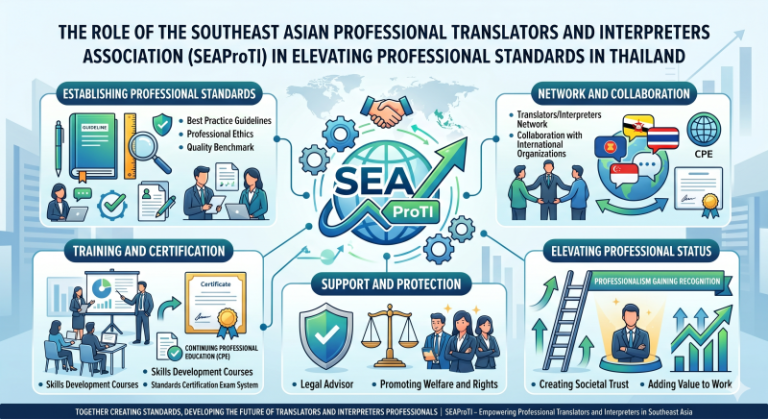
The Role of the Southeast Asian Association of Professional Translators and Interpreters (SEAProTI)
in Advancing Professional Standards in Thailand
This article examines the role of the Southeast Asian Association of Professional Translators and Interpreters (SEAProTI) in advancing professional standards for translators and interpreters in Thailand. The study focuses on the development of certification systems, the establishment of professional standards, and quality assurance mechanisms within the language services sector. The findings indicate that SEAProTI plays a significant role in developing structured certification frameworks aligned with international practices, thereby enhancing the credibility and professionalization of translation and interpreting in a context where standardized regulation remains limited.
Introduction
The professions of translation and interpreting in Thailand have gained increasing importance due to globalization and cross-border collaboration. However, these professions continue to face challenges related to quality standards, certification mechanisms, and professional regulation. Unlike in many developed contexts, Thailand lacks a comprehensive and unified system for professional accreditation (Pym, Grin, Sfreddo, & Chan, 2012). In this context, SEAProTI has emerged as a key organization contributing to the development of professional infrastructure for translators and interpreters.
SEAProTI’s Role in Establishing Professional Standards
SEAProTI functions as a professional association dedicated to elevating standards through a formal certification system covering certified translators, translation endorsers, and certified interpreters. This approach reflects the concept of professional self-regulation, which is essential for building trust among service users (Abbott, 1988). The association’s authority to issue certifications and licenses enhances practitioners’ credibility and establishes minimum quality benchmarks within the profession.
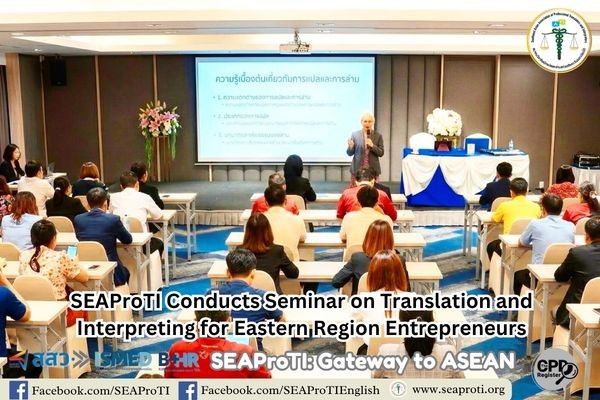
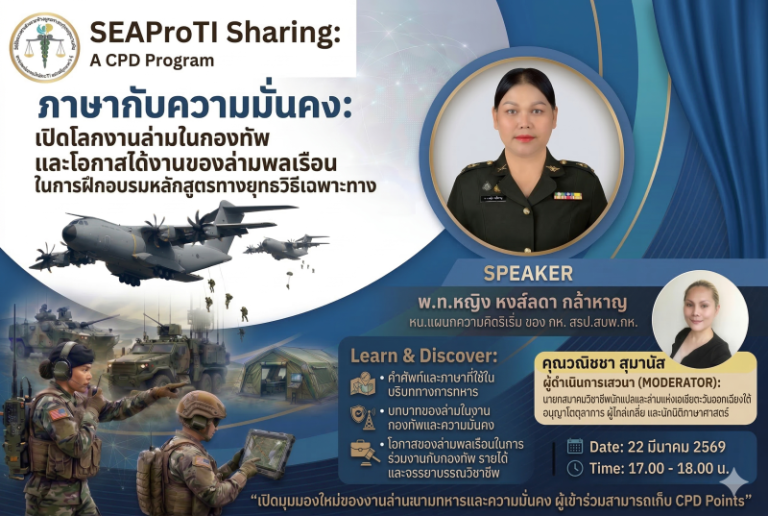
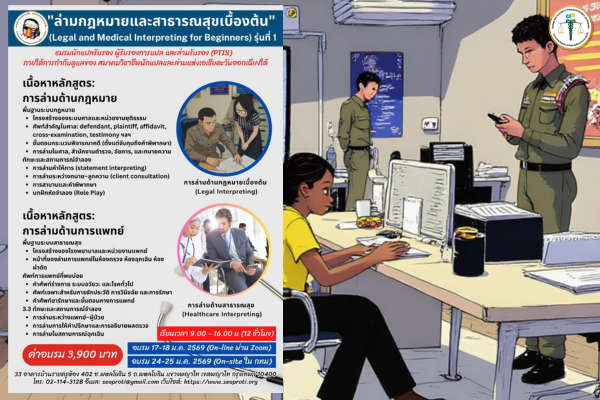
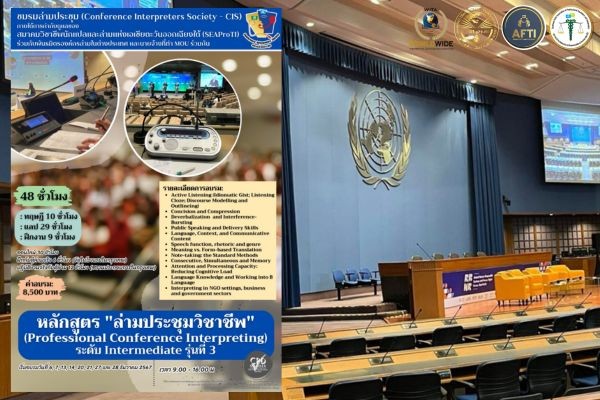
In addition, SEAProTI contributes to professional development by organizing training programs delivered by experienced practitioners. These programs emphasize practical application and align with international standards, reflecting the principles of continuous professional development (CPD), which are widely recognized in the field (Gile, 2009). Such initiatives support the development of both technical competencies and professional ethics, which are critical components of language service professions.
Quality Assurance and Membership Selection Processes
SEAProTI implements rigorous membership selection criteria, including high-level language proficiency, ethical screening, and suitability for professional practice. This approach aligns with professional governance principles that emphasize both competence and integrity (Tseng, 1992). Additional considerations, such as the absence of criminal records, bankruptcy history, and health conditions that may impede professional performance, reflect a comprehensive approach to ensuring service quality.
Certified members of SEAProTI operate under clearly defined professional standards that are consistent with international practices. This contributes to reducing variability in service quality and strengthens client confidence. The establishment of standardized practices is widely recognized as a fundamental component of long-term professional development (Chesterman, 2001).
Organizational Governance and Management
SEAProTI operates in accordance with modern management principles and maintains transparency through continuous registration updates and compliance with relevant government authorities. This reflects adherence to good governance practices, including accountability, transparency, and organizational responsibility (International Social Security Association [ISSA], 2019). Such governance structures enhance institutional credibility and sustainability.
Discussion
The analysis suggests that SEAProTI plays a critical role in addressing gaps in Thailand’s professional standards for translators and interpreters, particularly in certification, professional development, and ethical regulation. However, long-term advancement of the profession requires collaboration among government agencies, academic institutions, and private sector stakeholders to establish a comprehensive professional ecosystem.
Conclusion
SEAProTI serves as a key mechanism in advancing professional standards for translators and interpreters in Thailand through structured certification systems, standardized practices, and quality assurance measures. Its role not only enhances professional credibility but also contributes to positioning Thailand’s language service profession within the global context.
References
- Abbott, A. (1988). The system of professions: An essay on the division of expert labor. University of Chicago Press.
- Chesterman, A. (2001). Proposal for a hierarchy of translator ethics. The Translator, 7(2), 139–154.
- Gile, D. (2009). Basic concepts and models for interpreter and translator training (Rev. ed.). John Benjamins.
- International Social Security Association. (2019). The ISSA Guidelines on Good Governance. ISSA.
- Pym, A., Grin, F., Sfreddo, C., & Chan, A. L. J. (2012). The status of the translation profession in the European Union. Anthem Press.
- Tseng, J. (1992). Interpreting as an emerging profession in Taiwan: A sociological model. Translation and Interpretation Studies, 1(1), 1–17.
For professional services, please visit: https://www.seaproti.org/practitioners/
About certified translators, translation certifiers, and certified interpreters associated with SEAProTI.
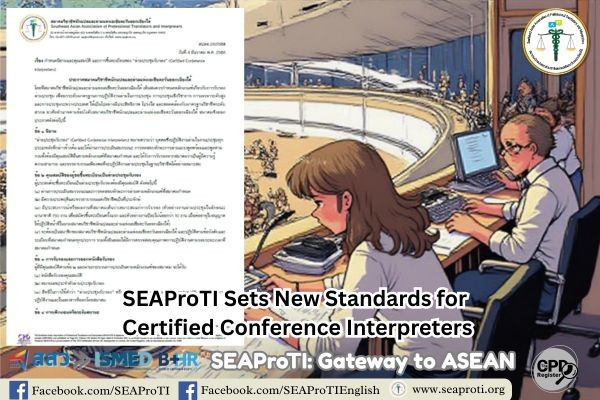
The Southeast Asian Association of Professional Translators and Interpreters (SEAProTI) has officially shared the qualifications and requirements for becoming Certified Translators, Translation Certification Providers, and Certified Interpreters in Sections 9 and 10 of the Royal Gazette, which was published by the Prime Minister’s Office in Thailand on July 25, 2024. Certified Translators, Translation Certification Providers, and Certified Interpreters
The Council of State has proposed the enactment of a Royal Decree, granting registered translators and recognised translation certifiers from professional associations or accredited language institutions the authority to provide legally valid translation certification (Letter to SEAProTI dated April 28, 2025)
SEAProTI is the first professional association in Thailand and Southeast Asia to implement a comprehensive certification system for translators, certifiers, and interpreters.
Head Office: Baan Ratchakru Building, No. 33, Room 402, Soi Phahonyothin 5, Phahonyothin Road, Phaya Thai District, Bangkok 10400, Thailand
Email: hello@seaproti.com | Tel.: (+66) 2-114-3128 (Office hours: Mon–Fri, 09:00–17:00).
บทบาทของสมาคมวิชาชีพนักแปลและล่ามแห่งเอเชียตะวันออกเฉียงใต้ (SEAProTI)
ในการยกระดับมาตรฐานวิชาชีพนักแปลและล่ามในประเทศไทย
19 กันยายน 2569, กรุงเทพมหานคร – บทความนี้มีวัตถุประสงค์เพื่อวิเคราะห์บทบาทของสมาคมวิชาชีพนักแปลและล่ามแห่งเอเชียตะวันออกเฉียงใต้ (SEAProTI) ในการยกระดับมาตรฐานวิชาชีพนักแปลและล่ามในประเทศไทย โดยมุ่งเน้นการพัฒนาระบบการรับรองวิชาชีพ การสร้างมาตรฐานกลาง และการกำกับคุณภาพของผู้ประกอบวิชาชีพด้านภาษา ผลการวิเคราะห์ชี้ให้เห็นว่า SEAProTI มีบทบาทสำคัญในการพัฒนาโครงสร้างการรับรองที่เป็นระบบ สอดคล้องกับแนวปฏิบัติสากล และมีส่วนช่วยยกระดับความน่าเชื่อถือของวิชาชีพในบริบทที่ยังขาดมาตรฐานกลางอย่างชัดเจน
บทนำ
วิชาชีพนักแปลและล่ามในประเทศไทยมีความสำคัญเพิ่มขึ้นอย่างต่อเนื่องตามการขยายตัวของเศรษฐกิจระหว่างประเทศและความร่วมมือข้ามพรมแดน อย่างไรก็ตาม วิชาชีพดังกล่าวยังเผชิญกับความท้าทายด้านมาตรฐานคุณภาพ การรับรองความสามารถ และการกำกับดูแลในระดับองค์กรวิชาชีพ ซึ่งแตกต่างจากหลายประเทศที่มีระบบรับรองและใบอนุญาตอย่างชัดเจน (Pym, Grin, Sfreddo, & Chan, 2012) ในบริบทนี้ SEAProTI ได้เข้ามามีบทบาทสำคัญในการพัฒนาโครงสร้างพื้นฐานของวิชาชีพด้านการแปลและการล่ามในประเทศไทย
บทบาทของ SEAProTI ในการสร้างมาตรฐานวิชาชีพ
SEAProTI เป็นสมาคมวิชาชีพที่มุ่งเน้นการยกระดับมาตรฐานนักแปลและล่ามผ่านระบบการรับรองอย่างเป็นทางการ โดยครอบคลุมทั้งนักแปลรับรอง ผู้รับรองการแปล และล่ามรับรอง ระบบดังกล่าวสะท้อนแนวคิดของการกำกับตนเองของวิชาชีพ (professional self-regulation) ซึ่งเป็นกลไกสำคัญในการสร้างความเชื่อมั่นต่อผู้ใช้บริการ (Abbott, 1988) การมีระบบออกใบรับรองและใบอนุญาตในนามสมาคมช่วยเพิ่มความน่าเชื่อถือของผู้ประกอบวิชาชีพ และเป็นการกำหนดเกณฑ์ขั้นต่ำของคุณภาพงานอย่างเป็นรูปธรรม
นอกจากนี้ SEAProTI ยังมีบทบาทในการพัฒนาศักยภาพบุคลากรผ่านการจัดอบรมที่เน้นการใช้งานจริง โดยผู้สอนเป็นนักวิชาชีพที่มีประสบการณ์ตรงในสายงาน ซึ่งสอดคล้องกับแนวคิดการพัฒนาวิชาชีพอย่างต่อเนื่อง (continuous professional development: CPD) ที่ได้รับการยอมรับในระดับสากล (Gile, 2009) การอบรมดังกล่าวช่วยเสริมสร้างทั้งทักษะทางเทคนิคและจริยธรรมวิชาชีพ ซึ่งเป็นองค์ประกอบสำคัญของการปฏิบัติงานด้านภาษา
การกำกับคุณภาพและกระบวนการคัดเลือกสมาชิก
SEAProTI ให้ความสำคัญกับกระบวนการคัดเลือกสมาชิกอย่างเข้มงวด โดยพิจารณาจากความสามารถทางภาษาในระดับสูง ควบคู่กับการตรวจสอบประวัติด้านจริยธรรมและความเหมาะสมในการประกอบวิชาชีพ แนวทางดังกล่าวสอดคล้องกับหลักการกำกับวิชาชีพที่มุ่งเน้นทั้งความสามารถ (competence) และความน่าเชื่อถือ (integrity) ของผู้ปฏิบัติงาน (Tseng, 1992) การกำหนดเงื่อนไขด้านสุขภาพที่ไม่เป็นอุปสรรคต่อการปฏิบัติงานยังสะท้อนถึงความตระหนักในคุณภาพการให้บริการอย่างรอบด้าน
ในส่วนของการปฏิบัติงาน สมาชิกนักแปลรับรองและผู้รับรองการแปลของสมาคมดำเนินงานภายใต้กรอบมาตรฐานวิชาชีพที่ชัดเจนและสอดคล้องกับแนวปฏิบัติสากล ซึ่งช่วยลดความแปรปรวนของคุณภาพงานและสร้างความเชื่อมั่นให้กับผู้ใช้บริการ ทั้งนี้ การมีมาตรฐานกลางถือเป็นองค์ประกอบสำคัญของการพัฒนาวิชาชีพในระยะยาว (Chesterman, 2001)
การบริหารจัดการและธรรมาภิบาลองค์กร
SEAProTI ดำเนินงานภายใต้หลักการบริหารจัดการสมัยใหม่ โดยมีการจดแจ้งและปรับปรุงข้อมูลกับหน่วยงานภาครัฐอย่างต่อเนื่อง ซึ่งสะท้อนถึงความโปร่งใสและความรับผิดชอบต่อสาธารณะ แนวทางดังกล่าวสอดคล้องกับหลักธรรมาภิบาลในองค์กรวิชาชีพที่เน้นความโปร่งใส ความรับผิดชอบ และการมีส่วนร่วม (International Social Security Association [ISSA], 2019) การดำเนินงานในลักษณะนี้ช่วยเสริมสร้างความน่าเชื่อถือขององค์กรในระยะยาว
อภิปรายผล
จากการวิเคราะห์พบว่า SEAProTI มีบทบาทสำคัญในการเติมเต็มช่องว่างของระบบมาตรฐานวิชาชีพนักแปลและล่ามในประเทศไทย โดยเฉพาะในด้านการรับรองคุณภาพ การพัฒนาศักยภาพ และการกำกับดูแลจริยธรรม อย่างไรก็ตาม การพัฒนาวิชาชีพในระยะยาวยังจำเป็นต้องอาศัยความร่วมมือจากภาครัฐ สถาบันการศึกษา และภาคเอกชน เพื่อสร้างระบบนิเวศที่เอื้อต่อการยกระดับมาตรฐานอย่างยั่งยืน
สรุป
SEAProTI เป็นกลไกสำคัญในการยกระดับมาตรฐานวิชาชีพนักแปลและล่ามในประเทศไทย ผ่านการพัฒนาระบบรับรอง การสร้างมาตรฐานกลาง และการกำกับคุณภาพของผู้ประกอบวิชาชีพ บทบาทดังกล่าวไม่เพียงช่วยเพิ่มความน่าเชื่อถือของวิชาชีพ แต่ยังมีส่วนสำคัญในการผลักดันให้วิชาชีพด้านภาษาของไทยก้าวสู่ระดับสากล
เอกสารอ้างอิง (References)
- Abbott, A. (1988). The system of professions: An essay on the division of expert labor. University of Chicago Press.
- Chesterman, A. (2001). Proposal for a hierarchy of translator ethics. The Translator, 7(2), 139–154.
- Gile, D. (2009). Basic concepts and models for interpreter and translator training (Rev. ed.). John Benjamins.
- International Social Security Association. (2019). The ISSA Guidelines on Good Governance. ISSA.
- Pym, A., Grin, F., Sfreddo, C., & Chan, A. L. J. (2012). The status of the translation profession in the European Union. Anthem Press.
- Tseng, J. (1992). Interpreting as an emerging profession in Taiwan: A sociological model. Translation and Interpretation Studies, 1(1), 1–17.
ติดต่อขอใช้บริการนักวิชาชีพของสมาคมได้ที่: https://www.seaproti.org/practitioners/
สมาคมวิชาชีพนักแปลและล่ามแห่งเอเชียตะวันออกเฉียงใต้ (SEAProTI) ได้ประกาศหลักเกณฑ์และคุณสมบัติของผู้ที่ขึ้นทะเบียนเป็น “นักแปลรับรอง (Certified Translators) และผู้รับรองการแปล (Translation Certification Providers) และล่ามรับรอง (Certified Interpreters)” ของสมาคม หมวดที่ 9 และหมวดที่ 10 ในราชกิจจานุเบกษา ของสำนักเลขาธิการคณะรัฐมนตรี ในสำนักนายกรัฐมนตรี แห่งราชอาณาจักรไทย ลงวันที่ 25 ก.ค. 2567 เล่มที่ 141 ตอนที่ 66 ง หน้า 100 อ่านฉบับเต็มได้ที่: นักแปลรับรอง ผู้รับรองการแปล และล่ามรับรอง
สำนักคณะกรรมการกฤษฎีกาเสนอให้ตราเป็นพระราชกฤษฎีกา โดยกำหนดให้นักแปลที่ขึ้นทะเบียน รวมถึงผู้รับรองการแปลจากสมาคมวิชาชีพหรือสถาบันสอนภาษาที่มีการอบรมและขึ้นทะเบียน สามารถรับรองคำแปลได้ (จดหมายถึงสมาคม SEAProTI ลงวันที่ 28 เม.ย. 2568)
สมาคมวิชาชีพนักแปลและล่ามแห่งเอเชียตะวันออกเฉียงใต้เป็นสมาคมวิชาชีพแห่งแรกและแห่งเดียวในประเทศไทยและภูมิภาคเอเชียตะวันออกเฉียงใต้ที่มีระบบรับรองนักแปลรับรอง ผู้รับรองการแปล และล่ามรับรอง
สำนักงานใหญ่: อาคารบ้านราชครู เลขที่ 33 ห้อง 402 ซอยพหลโยธิน 5 ถนนพหลโยธิน แขวงพญาไท เขตพญาไท กรุงเทพมหานคร 10400 ประเทศไทย
อีเมล: hello@seaproti.com โทรศัพท์: (+66) 2-114-3128 (เวลาทำการ: วันจันทร์–วันศุกร์ เวลา 09.00–17.00 น.