


“Introductory Course on Legal and Healthcare Interpreting”:
A Mechanism for Competency Development and a Pathway to Professional Certification for Translators and Interpreters in Thailand
April 21, 2026, Bangkok — This article aims to analyze the role of the “Introductory Course on Legal and Healthcare Interpreting” as both a tool for developing professional competencies and a gateway mechanism into the certification system for translators and interpreters in Thailand. Drawing upon the conceptual frameworks of specialized interpreting and professionalization, the analysis indicates that the course functions as a mandatory training program directly linked to the certification examination and registration process for Certified Translators and Translation Certifiers at Level 1 (C1). This linkage contributes to raising professional standards, enhancing practitioner credibility, and improving access to high-demand labor markets, particularly in the legal and healthcare sectors.
Keywords: legal interpreting, healthcare interpreting, professional certification, certified translator, competency development
1. Introduction
Interpreting in specialized domains such as law and healthcare is a highly complex activity, as it involves conveying meaning in situations that directly affect individuals’ rights, liberties, and safety (Hale, 2007; Pöchhacker, 2016). In the Thai context, the demand for specialized interpreters has been steadily increasing, particularly due to the expansion of international interactions and foreign access to public services.
However, a key challenge lies in the shortage of professionals who possess not only language proficiency but also domain-specific knowledge, such as an understanding of the legal and healthcare systems. Therefore, the development of structured training programs that are closely linked to professional certification systems is essential.
2. Conceptual Framework and Related Theories
2.1 Specialized Interpreting
Specialized interpreting requires both linguistic competence and domain-specific knowledge, such as legal or medical expertise, which are critical factors for ensuring accuracy in communication (Mikkelson & Jourdenais, 2015).
2.2 Professionalization
The process of professionalization includes key components such as standardized training, competency-based assessment, and formal certification (Tseng, 1992), all of which contribute to establishing credibility and defining professional standards.
3. Structure and Characteristics of the Course
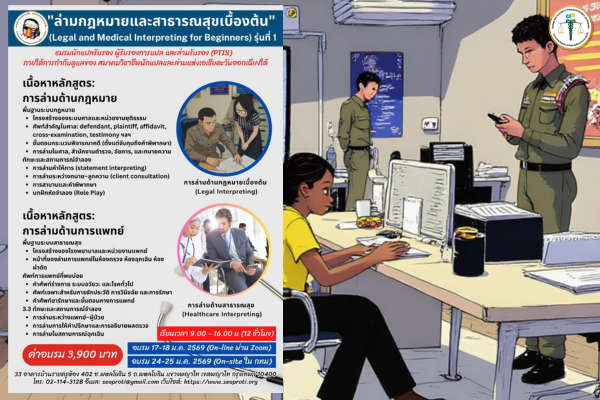
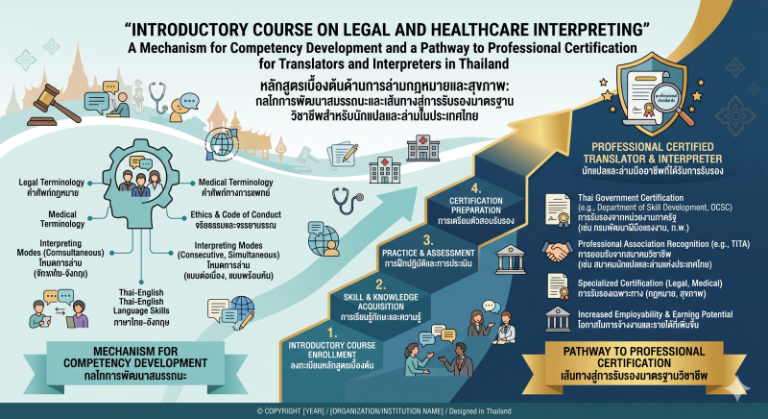
The “Introductory Course on Legal and Healthcare Interpreting” has the following key characteristics:
It is a mandatory course for individuals seeking to take the certification examination for registration as Certified Translators and Translation Certifiers at Level 1 (C1).
It covers two main domains:
- Legal interpreting: court systems, terminology, and judicial processes
- Healthcare interpreting: healthcare systems, medical terminology, and communication in clinical settings
It emphasizes practical training through simulated scenarios (role play), such as courtroom interpreting and interpreter-mediated doctor–patient interactions
These features reflect a blended learning approach that integrates theory and practice, consistent with the experiential learning model widely recognized in interpreting studies (Kolb, 1984).
4. The Role of the Course in the Professional Pathway
The course functions as a gatekeeping and developmental mechanism for entry into the profession, with the following key roles:
4.1 Establishing Minimum Professional Standards
By making the course mandatory, it ensures that all candidates possess a consistent foundational knowledge base, thereby reducing variability in practitioner quality.
4.2 Linking to the Certification System
Course completion qualifies participants to sit for the C1 certification examination, which leads to:
- Obtaining a professional license
- The right to use an official certification stamp
These are essential components of a regulated profession.
4.3 Enhancing Economic Opportunities
Certified professionals gain access to high-trust assignments, such as official document translation, legal work, and medical interpreting, which typically offer higher remuneration than general translation work (Gile, 2009).
5. Discussion
The integration of both legal and healthcare interpreting within a single program reflects real-world practice, where these domains often intersect—for example, in medical litigation cases or in providing services to foreign patients within the justice system.
Furthermore, making the course a prerequisite for certification aligns with quality assurance principles in professional practice, thereby enhancing institutional credibility for translators and interpreters.
However, further considerations should include evaluating long-term outcomes of course participants, such as certification pass rates, employment opportunities, and user satisfaction.
6. Conclusion
The “Introductory Course on Legal and Healthcare Interpreting” plays a crucial role as a bridge between training and professional certification. It contributes to the development of specialized competencies, the establishment of professional standards, and the expansion of career opportunities.
The implementation of such a mandatory course not only improves the quality of practitioners but also strengthens the overall credibility of the translation and interpreting system in Thailand.
References
- Gile, D. (2009). Basic concepts and models for interpreter and translator training (Rev. ed.). John Benjamins.
- Hale, S. (2007). Community interpreting. Palgrave Macmillan.
- Kolb, D. A. (1984). Experiential learning: Experience as the source of learning and development. Prentice Hall.
- Mikkelson, H., & Jourdenais, R. (2015). The Routledge handbook of interpreting. Routledge.
- Pöchhacker, F. (2016). Introducing interpreting studies (2nd ed.). Routledge.
- Tseng, J. (1992). Interpreting as an emerging profession in Taiwan: A sociological model (Unpublished master’s thesis). Fu Jen Catholic University.
For professional services, please visit: https://www.seaproti.org/practitioners/
About certified translators, translation certifiers, and certified interpreters associated with SEAProTI.
The Southeast Asian Association of Professional Translators and Interpreters (SEAProTI) has officially shared the qualifications and requirements for becoming Certified Translators, Translation Certification Providers, and Certified Interpreters in Sections 9 and 10 of the Royal Gazette, which was published by the Prime Minister’s Office in Thailand on July 25, 2024. Certified Translators, Translation Certification Providers, and Certified Interpreters
The Council of State has proposed the enactment of a Royal Decree, granting registered translators and recognised translation certifiers from professional associations or accredited language institutions the authority to provide legally valid translation certification (Letter to SEAProTI dated April 28, 2025)
SEAProTI is the first professional association in Thailand and Southeast Asia to implement a comprehensive certification system for translators, certifiers, and interpreters.
Head Office: Baan Ratchakru Building, No. 33, Room 402, Soi Phahonyothin 5, Phahonyothin Road, Phaya Thai District, Bangkok 10400, Thailand
Email: hello@seaproti.com | Tel.: (+66) 2-114-3128 (Office hours: Mon–Fri, 09:00–17:00).
หลักสูตรอบรม “ล่ามกฎหมายและสาธารณสุขเบื้องต้น”: กลไกการพัฒนาสมรรถนะและเส้นทางสู่การรับรองวิชาชีพนักแปลและล่ามในบริบทประเทศไทย
21 เมษายน 2569, กรุงเทพมหานคร – บทความนี้มีวัตถุประสงค์เพื่อวิเคราะห์บทบาทของหลักสูตรอบรม “ล่ามกฎหมายและสาธารณสุขเบื้องต้น” ในฐานะเครื่องมือพัฒนาสมรรถนะวิชาชีพและกลไกนำเข้าสู่ระบบการรับรองนักแปลและล่ามในประเทศไทย โดยอาศัยกรอบแนวคิดด้านการล่ามเฉพาะทาง (specialized interpreting) และการพัฒนาวิชาชีพ (professionalization) ผลการวิเคราะห์ชี้ให้เห็นว่าหลักสูตรดังกล่าวมีลักษณะเป็น “หลักสูตรภาคบังคับ” ที่เชื่อมโยงโดยตรงกับการสอบและการขึ้นทะเบียนในระดับนักแปลรับรองและผู้รับรองการแปล ระดับ 1 (C1) ซึ่งส่งผลต่อการยกระดับมาตรฐานวิชาชีพ ความน่าเชื่อถือของผู้ปฏิบัติงาน และการเข้าถึงตลาดแรงงานที่มีความต้องการสูง โดยเฉพาะในภาคกฎหมายและสาธารณสุข
คำสำคัญ: ล่ามกฎหมาย, ล่ามสาธารณสุข, การรับรองวิชาชีพ, นักแปลรับรอง, การพัฒนาสมรรถนะ
1. บทนำ
การล่ามในบริบทเฉพาะทาง เช่น กฎหมายและสาธารณสุข เป็นกิจกรรมที่มีความซับซ้อนสูง เนื่องจากเกี่ยวข้องกับการถ่ายทอดความหมายในสถานการณ์ที่มีผลกระทบต่อสิทธิ เสรีภาพ และความปลอดภัยของบุคคล (Hale, 2007; Pöchhacker, 2016) ในบริบทประเทศไทย ความต้องการล่ามที่มีความเชี่ยวชาญเฉพาะทางเพิ่มสูงขึ้นอย่างต่อเนื่อง โดยเฉพาะจากการขยายตัวของการติดต่อระหว่างประเทศและการเข้าถึงบริการของชาวต่างชาติ
อย่างไรก็ตาม ปัญหาสำคัญคือการขาดแคลนบุคลากรที่มีความรู้ทั้งด้านภาษาและความเข้าใจระบบเฉพาะ เช่น ระบบยุติธรรมและระบบสาธารณสุข ดังนั้น การพัฒนาหลักสูตรอบรมที่มีโครงสร้างชัดเจนและเชื่อมโยงกับระบบการรับรองวิชาชีพจึงมีความจำเป็น
2. กรอบแนวคิดและทฤษฎีที่เกี่ยวข้อง
2.1 การล่ามเฉพาะทาง (Specialized Interpreting)
การล่ามเฉพาะทางต้องอาศัยทั้งความสามารถทางภาษาและความรู้เนื้อหาเฉพาะด้าน (domain knowledge) เช่น กฎหมายหรือการแพทย์ ซึ่งเป็นปัจจัยสำคัญต่อความถูกต้องของการสื่อสาร (Mikkelson & Jourdenais, 2015)
2.2 การพัฒนาวิชาชีพ (Professionalization)
กระบวนการพัฒนาวิชาชีพประกอบด้วยองค์ประกอบสำคัญ ได้แก่ การฝึกอบรมมาตรฐาน การสอบประเมินสมรรถนะ และการรับรองอย่างเป็นทางการ (Tseng, 1992) ซึ่งช่วยสร้างความน่าเชื่อถือและกำหนดมาตรฐานของวิชาชีพ
3. โครงสร้างและลักษณะของหลักสูตร
หลักสูตร “ล่ามกฎหมายและสาธารณสุขเบื้องต้น” มีลักษณะสำคัญดังนี้:
เป็นหลักสูตรภาคบังคับ สำหรับผู้ที่ต้องการสอบเพื่อขึ้นทะเบียนนักแปลรับรองและผู้รับรองการแปล ระดับ 1 (C1)
ครอบคลุมสองสาขาหลัก ได้แก่
- การล่ามด้านกฎหมาย: ระบบศาล คำศัพท์ และกระบวนการยุติธรรม
- การล่ามด้านสาธารณสุข: ระบบบริการสุขภาพ คำศัพท์ทางการแพทย์ และการสื่อสารในบริบทคลินิก
เน้นการฝึกปฏิบัติ ผ่านสถานการณ์จำลอง (role play) เช่น การล่ามในศาล การล่ามระหว่างแพทย์และผู้ป่วย
ลักษณะดังกล่าวสะท้อนแนวทางการเรียนรู้แบบผสมผสานระหว่างทฤษฎีและปฏิบัติ (experiential learning) ซึ่งเป็นแนวทางที่ได้รับการยอมรับในงานวิจัยด้านการล่าม (Kolb, 1984)
4. บทบาทของหลักสูตรในเส้นทางวิชาชีพ
หลักสูตรนี้ทำหน้าที่เป็น “กลไกคัดกรองและพัฒนา” (gatekeeping mechanism) สำหรับผู้เข้าสู่วิชาชีพ โดยมีบทบาทสำคัญดังนี้:
4.1 การสร้างมาตรฐานขั้นต่ำของวิชาชีพ
การกำหนดให้หลักสูตรเป็นภาคบังคับช่วยให้ผู้เข้าสอบมีพื้นฐานความรู้ที่สอดคล้องกัน ลดความแปรปรวนของคุณภาพผู้ปฏิบัติงาน
4.2 การเชื่อมโยงสู่ระบบการรับรอง
ผู้ผ่านหลักสูตรมีสิทธิ์เข้าสอบเพื่อขึ้นทะเบียนระดับ C1 ซึ่งนำไปสู่:
- การได้รับใบอนุญาตประกอบวิชาชีพ
- การใช้ตราประทับรับรองเอกสาร
ซึ่งเป็นองค์ประกอบสำคัญของวิชาชีพที่มีการกำกับดูแล (regulated profession)
4.3 การเพิ่มโอกาสทางเศรษฐกิจ
ผู้ที่ได้รับการรับรองสามารถเข้าถึงงานที่ต้องการความน่าเชื่อถือสูง เช่น งานแปลเอกสารราชการ งานกฎหมาย และงานทางการแพทย์ ซึ่งมีค่าตอบแทนสูงกว่างานทั่วไป (Gile, 2009)
5. อภิปรายผล
การออกแบบหลักสูตรที่รวมทั้งการล่ามกฎหมายและสาธารณสุขในโปรแกรมเดียวสะท้อนความเป็นจริงของการปฏิบัติงาน ซึ่งทั้งสองสาขามีความเชื่อมโยงกันในหลายสถานการณ์ เช่น คดีทางการแพทย์หรือการให้บริการผู้ป่วยต่างชาติในระบบยุติธรรม
นอกจากนี้ การกำหนดให้หลักสูตรเป็นเงื่อนไขก่อนสอบยังสอดคล้องกับแนวคิดการควบคุมคุณภาพวิชาชีพ ซึ่งช่วยยกระดับความน่าเชื่อถือของนักแปลและล่ามในระดับสถาบัน
อย่างไรก็ตาม ประเด็นที่ควรพิจารณาเพิ่มเติมคือการประเมินผลลัพธ์ระยะยาวของผู้ผ่านหลักสูตร เช่น อัตราการสอบผ่าน การมีงานทำ และความพึงพอใจของผู้ใช้บริการ
6. สรุป
หลักสูตร “ล่ามกฎหมายและสาธารณสุขเบื้องต้น” มีบทบาทสำคัญในฐานะกลไกเชื่อมต่อระหว่างการฝึกอบรมและการรับรองวิชาชีพ โดยช่วยพัฒนาสมรรถนะเฉพาะทาง สร้างมาตรฐาน และเพิ่มโอกาสทางอาชีพให้แก่ผู้เรียน
การมีหลักสูตรภาคบังคับเช่นนี้ไม่เพียงแต่ยกระดับคุณภาพของผู้ปฏิบัติงาน แต่ยังส่งผลต่อความน่าเชื่อถือของระบบการแปลและการล่ามในภาพรวมของประเทศ
เอกสารอ้างอิง (References)
- Gile, D. (2009). Basic concepts and models for interpreter and translator training (Rev. ed.). John Benjamins.
- Hale, S. (2007). Community interpreting. Palgrave Macmillan.
- Kolb, D. A. (1984). Experiential learning: Experience as the source of learning and development. Prentice Hall.
- Mikkelson, H., & Jourdenais, R. (2015). The Routledge handbook of interpreting. Routledge.
- Pöchhacker, F. (2016). Introducing interpreting studies (2nd ed.). Routledge.
- Tseng, J. (1992). Interpreting as an emerging profession in Taiwan: A sociological model. Unpublished master’s thesis, Fu Jen Catholic University.
ติดต่อขอใช้บริการนักวิชาชีพของสมาคมได้ที่: https://www.seaproti.org/practitioners/
สมาคมวิชาชีพนักแปลและล่ามแห่งเอเชียตะวันออกเฉียงใต้ (SEAProTI) ได้ประกาศหลักเกณฑ์และคุณสมบัติของผู้ที่ขึ้นทะเบียนเป็น “นักแปลรับรอง (Certified Translators) และผู้รับรองการแปล (Translation Certification Providers) และล่ามรับรอง (Certified Interpreters)” ของสมาคม หมวดที่ 9 และหมวดที่ 10 ในราชกิจจานุเบกษา ของสำนักเลขาธิการคณะรัฐมนตรี ในสำนักนายกรัฐมนตรี แห่งราชอาณาจักรไทย ลงวันที่ 25 ก.ค. 2567 เล่มที่ 141 ตอนที่ 66 ง หน้า 100 อ่านฉบับเต็มได้ที่: นักแปลรับรอง ผู้รับรองการแปล และล่ามรับรอง
สำนักคณะกรรมการกฤษฎีกาเสนอให้ตราเป็นพระราชกฤษฎีกา โดยกำหนดให้นักแปลที่ขึ้นทะเบียน รวมถึงผู้รับรองการแปลจากสมาคมวิชาชีพหรือสถาบันสอนภาษาที่มีการอบรมและขึ้นทะเบียน สามารถรับรองคำแปลได้ (จดหมายถึงสมาคม SEAProTI ลงวันที่ 28 เม.ย. 2568)
สมาคมวิชาชีพนักแปลและล่ามแห่งเอเชียตะวันออกเฉียงใต้เป็นสมาคมวิชาชีพแห่งแรกและแห่งเดียวในประเทศไทยและภูมิภาคเอเชียตะวันออกเฉียงใต้ที่มีระบบรับรองนักแปลรับรอง ผู้รับรองการแปล และล่ามรับรอง
สำนักงานใหญ่: อาคารบ้านราชครู เลขที่ 33 ห้อง 402 ซอยพหลโยธิน 5 ถนนพหลโยธิน แขวงพญาไท เขตพญาไท กรุงเทพมหานคร 10400 ประเทศไทย
อีเมล: hello@seaproti.com โทรศัพท์: (+66) 2-114-3128 (เวลาทำการ: วันจันทร์–วันศุกร์ เวลา 09.00–17.00 น.