


The Role of Translators and Interpreters in Ensuring Fairness in the Thai Justice System:
Structural Challenges and the Necessity of Professional Certification
18 April 2026, Bangkok – This article aims to analyze the impact of employing translators and interpreters with moderate or low language proficiency on the Thai justice system. It argues that linguistic inaccuracies are not merely technical issues but structural factors that can lead to injustice in legal proceedings, affecting factual accuracy, defendants’ rights, and the credibility of evidence. Furthermore, the article emphasizes the necessity of professional certification systems, highlighting the role of certified translators, translation certifiers, and certified interpreters registered with the Southeast Asian Professional Translators and Interpreters Association (SEAProTI). These professionals are assessed at a high level of foreign language proficiency, which is essential for elevating the quality of linguistic services and strengthening fairness and credibility in the Thai justice system at an international standard.
1. Introduction
In modern justice systems, language is not merely a tool for communication but a fundamental mechanism for conveying facts, intent, and legal principles (Hale, 2004). In cases involving individuals who do not share a common language—such as foreign nationals or those with limited proficiency in Thai—the role of translators and interpreters becomes critically important as intermediaries connecting legal institutions with the individuals involved (Mikkelson, 2016).
However, a persistent issue in practice is the reliance on personnel whose language proficiency is insufficient. This is particularly problematic when practitioners possess only intermediate language skills and lack a deep understanding of legal terminology and cultural context. Such limitations can result in miscommunication that undermines both the accuracy and fairness of judicial proceedings.
2. The Impact of Insufficient Language Proficiency
Inadequate language proficiency directly affects the accuracy of facts presented in legal cases. Errors in translation or interpretation can significantly alter the meaning of testimonies and legal documents (Hale, 2004). These errors extend beyond vocabulary to include sentence structure, legal nuance, and speaker intent, all of which influence judicial interpretation.
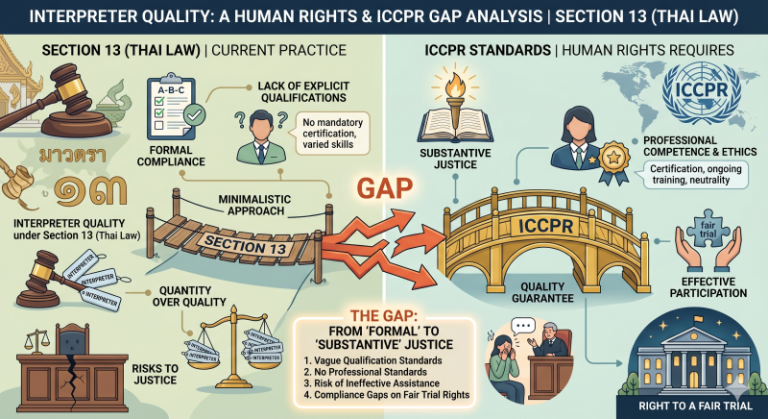
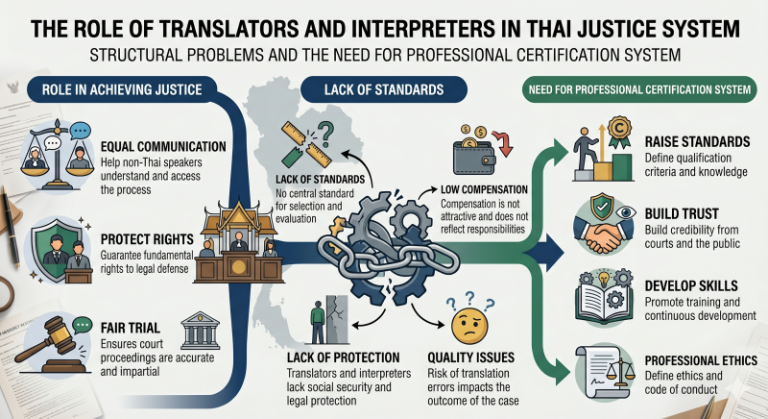
Moreover, insufficient linguistic competence can violate the right to a fair trial, particularly the right of defendants to fully understand the charges against them and the legal process. This right is recognized as a fundamental human right under international law (United Nations, 1966). When interpretation is inaccurate or incomplete, individuals are unable to effectively exercise their right to defense.
Additionally, inaccuracies in interpretation affect the evaluation of evidence. Interpreters with limited proficiency may omit details, summarize excessively, or fail to convey tone and intent. As a result, courts may misjudge the credibility of witnesses, leading to distorted evidentiary assessments (Mikkelson, 2016).
3. Structural Challenges in the Thai Justice System
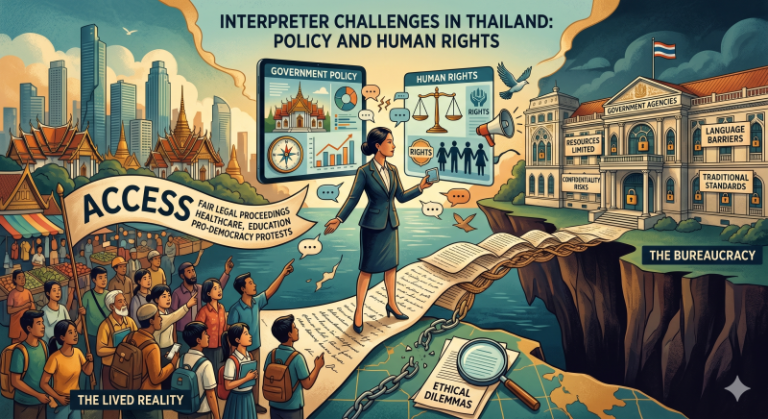
The issue of translation and interpreting quality in Thailand is not solely attributable to individual shortcomings but is rooted in structural deficiencies. Notably, there is a lack of a unified national standard for selecting, evaluating, and certifying translators and interpreters (Pöchhacker, 2015). This absence leads to inconsistent quality and allows underqualified individuals to operate in highly sensitive contexts such as court proceedings and investigations.
Furthermore, the lack of rigorous standards undermines both domestic and international confidence in the Thai justice system, particularly in an era where Thailand plays an increasingly significant role in global economic and legal frameworks.
4. The Necessity of Professional Certification Systems
Professional certification systems serve as essential mechanisms for establishing minimum standards of knowledge, skills, and ethical conduct. This is particularly critical in fields that directly affect individual rights, such as legal translation and court interpreting (International Federation of Translators [FIT], 2017). Certification ensures that practitioners possess the necessary competencies to perform their duties accurately and responsibly, thereby enhancing trust in the system.
5. The Role of Certified Translators, Translation Certifiers, and Certified Interpreters within the SEAProTI Framework
The Southeast Asian Professional Translators and Interpreters Association (SEAProTI) has developed a rigorous professional certification system aligned with international standards. Individuals registered as certified translators, translation certifiers, and certified interpreters must undergo comprehensive evaluation processes that include high-level foreign language proficiency testing, specialized legal knowledge, and professional ethics (SEAProTI, 2023).
The significance of this system lies in its ability to ensure that certified professionals are not merely general language users but possess advanced, specialized competencies required to handle the complexities of legal discourse. Importantly, SEAProTI is distinguished as an organization that systematically assesses foreign language proficiency at a high level, reflecting the need for highly qualified translation and interpreting professionals in legal contexts.
Certified translators are responsible for translating legal documents and attesting to their accuracy. Translation certifiers provide formal certification of translated documents, ensuring their legal validity. Certified interpreters facilitate communication in legal proceedings, adhering to principles of accuracy, impartiality, and confidentiality. Together, these roles contribute significantly to the integrity and credibility of the justice system.
Mandating the use of professionals registered with SEAProTI in legal contexts represents a rational policy approach. Such a requirement minimizes linguistic errors, enhances transparency, and strengthens the overall fairness of judicial processes.
6. Conclusion
Translation and interpreting are fundamental components of the justice system that directly affect factual accuracy and the protection of individual rights. The use of personnel with insufficient language proficiency presents a systemic risk that can lead to injustice.
The establishment of professional certification systems and the utilization of highly qualified professionals—such as certified translators, translation certifiers, and certified interpreters registered with SEAProTI—are essential measures for elevating the standards of the Thai justice system. These measures not only reduce linguistic errors but also enhance transparency, fairness, and international credibility.
References
- Hale, S. B. (2004). The discourse of court interpreting: Discourse practices of the law, the witness and the interpreter. John Benjamins.
- International Federation of Translators (FIT). (2017). Translator and interpreter training and certification standards. FIT.
- Mikkelson, H. (2016). Introduction to court interpreting (2nd ed.). Routledge.
- Pöchhacker, F. (2015). Introducing interpreting studies (2nd ed.). Routledge.
- SEAProTI. (2023). Professional standards and certification framework for translators and interpreters in Southeast Asia. Southeast Asian Professional Translators and Interpreters Association.
- United Nations. (1966). International Covenant on Civil and Political Rights (ICCPR).
For professional services, please visit: https://www.seaproti.org/practitioners/
About certified translators, translation certifiers, and certified interpreters associated with SEAProTI.
The Southeast Asian Association of Professional Translators and Interpreters (SEAProTI) has officially shared the qualifications and requirements for becoming Certified Translators, Translation Certification Providers, and Certified Interpreters in Sections 9 and 10 of the Royal Gazette, which was published by the Prime Minister’s Office in Thailand on July 25, 2024. Certified Translators, Translation Certification Providers, and Certified Interpreters
The Council of State has proposed the enactment of a Royal Decree, granting registered translators and recognised translation certifiers from professional associations or accredited language institutions the authority to provide legally valid translation certification (Letter to SEAProTI dated April 28, 2025)
SEAProTI is the first professional association in Thailand and Southeast Asia to implement a comprehensive certification system for translators, certifiers, and interpreters.
Head Office: Baan Ratchakru Building, No. 33, Room 402, Soi Phahonyothin 5, Phahonyothin Road, Phaya Thai District, Bangkok 10400, Thailand
Email: hello@seaproti.com | Tel.: (+66) 2-114-3128 (Office hours: Mon–Fri, 09:00–17:00).
บทบาทของนักแปลและล่ามต่อความเป็นธรรมในกระบวนการยุติธรรมไทย:
ปัญหาเชิงโครงสร้างและความจำเป็นของระบบการรับรองวิชาชีพ
18 เมษายน 2569, กรุงเทพมหานคร – บทความนี้มีวัตถุประสงค์เพื่อวิเคราะห์ผลกระทบของการใช้บุคลากรด้านการแปลและล่ามที่มีสมรรถนะทางภาษาในระดับปานกลางหรือต่ำต่อกระบวนการยุติธรรมไทย โดยชี้ให้เห็นว่าความคลาดเคลื่อนทางภาษาเป็นปัจจัยเชิงโครงสร้างที่อาจนำไปสู่ความไม่เป็นธรรมในการพิจารณาคดี ทั้งในด้านข้อเท็จจริง สิทธิของคู่ความ และความน่าเชื่อถือของพยานหลักฐาน นอกจากนี้ บทความยังเสนอความจำเป็นของการกำหนดมาตรฐานวิชาชีพผ่านระบบการรับรอง โดยเน้นบทบาทของนักแปลรับรอง ผู้รับรองการแปล และล่ามรับรองที่ขึ้นทะเบียนกับสมาคมวิชาชีพนักแปลและล่ามแห่งเอเชียตะวันออกเฉียงใต้ (SEAProTI) ซึ่งเป็นกลไกสำคัญในการยกระดับคุณภาพบุคลากรให้มีสมรรถนะทางภาษาต่างประเทศในระดับสูง อันจะนำไปสู่การเสริมสร้างความเป็นธรรมและความน่าเชื่อถือของระบบยุติธรรมไทยในระดับสากล
1. บทนำ
ในบริบทของกระบวนการยุติธรรมร่วมสมัย ภาษาเป็นองค์ประกอบพื้นฐานที่มีบทบาทเกินกว่าการเป็นเพียงเครื่องมือสื่อสาร แต่ทำหน้าที่เป็นกลไกหลักในการถ่ายทอดข้อเท็จจริง เจตนา และหลักกฎหมาย (Hale, 2004) การดำเนินคดีที่เกี่ยวข้องกับบุคคลต่างภาษา ไม่ว่าจะเป็นชาวต่างชาติหรือผู้ที่มีความสามารถในการใช้ภาษาไทยอย่างจำกัด ทำให้บทบาทของนักแปลและล่ามมีความสำคัญอย่างยิ่งในฐานะตัวกลางที่เชื่อมโยงระบบกฎหมายกับผู้มีส่วนเกี่ยวข้อง (Mikkelson, 2016)
อย่างไรก็ตาม ปัญหาที่ปรากฏในทางปฏิบัติคือการใช้บุคลากรที่มีระดับความสามารถทางภาษาไม่เพียงพอ โดยเฉพาะในกรณีที่ผู้ปฏิบัติงานมีเพียงความรู้ระดับปานกลางหรือขาดความเข้าใจเชิงลึกในศัพท์กฎหมายและบริบททางวัฒนธรรม ปัญหาดังกล่าวส่งผลให้เกิดความคลาดเคลื่อนในการสื่อสารซึ่งอาจบั่นทอนความถูกต้องและความเป็นธรรมของกระบวนการยุติธรรมโดยรวม
2. ผลกระทบของสมรรถนะทางภาษาที่ไม่เพียงพอ
ความสามารถทางภาษาที่ไม่ถึงระดับวิชาชีพส่งผลโดยตรงต่อความถูกต้องของข้อเท็จจริงในคดี เนื่องจากการแปลหรือการล่ามที่ผิดพลาดสามารถเปลี่ยนแปลงความหมายของคำให้การหรือเอกสารสำคัญได้อย่างมีนัยสำคัญ (Hale, 2004) ความผิดพลาดดังกล่าวมิได้จำกัดอยู่เพียงระดับคำศัพท์ แต่ครอบคลุมถึงระดับโครงสร้างประโยค นัยทางกฎหมาย และเจตนาของผู้พูดหรือผู้เขียน ซึ่งล้วนมีผลต่อการตีความของศาล
นอกจากนี้ สมรรถนะที่ไม่เพียงพอยังส่งผลกระทบต่อสิทธิในการพิจารณาคดีอย่างเป็นธรรม โดยเฉพาะสิทธิของผู้ต้องหาหรือคู่ความในการเข้าใจข้อกล่าวหาและกระบวนการทางกฎหมายอย่างครบถ้วน ซึ่งเป็นสิทธิขั้นพื้นฐานตามหลักสิทธิมนุษยชนสากล (United Nations, 1966) หากการสื่อสารผ่านล่ามไม่ถูกต้องหรือไม่ครบถ้วน ย่อมทำให้บุคคลดังกล่าวไม่สามารถใช้สิทธิในการต่อสู้คดีได้อย่างมีประสิทธิภาพ
ในอีกมิติหนึ่ง การล่ามหรือการแปลที่ขาดความแม่นยำยังส่งผลต่อการประเมินน้ำหนักพยานหลักฐาน เนื่องจากล่ามอาจตัดทอนหรือสรุปความโดยไม่ได้ถ่ายทอดรายละเอียดหรืออารมณ์ของคำให้การอย่างครบถ้วน ทำให้ศาลอาจประเมินความน่าเชื่อถือของพยานคลาดเคลื่อนไปจากความเป็นจริง (Mikkelson, 2016)
3. ปัญหาเชิงโครงสร้างในระบบยุติธรรมไทย
ปัญหาด้านคุณภาพของนักแปลและล่ามในประเทศไทยมิได้เกิดจากตัวบุคคลเพียงอย่างเดียว แต่มีรากฐานมาจากข้อจำกัดเชิงโครงสร้าง กล่าวคือยังไม่มีระบบมาตรฐานกลางที่ชัดเจนในการคัดเลือก ประเมิน และรับรองคุณภาพของผู้ปฏิบัติงานในสาขานี้ (Pöchhacker, 2015) การขาดระบบดังกล่าวทำให้เกิดความไม่สม่ำเสมอในระดับคุณภาพ และเปิดช่องให้บุคลากรที่ไม่มีสมรรถนะเพียงพอเข้ามาปฏิบัติงานในบริบทที่มีความละเอียดอ่อนสูง เช่น ศาลหรือกระบวนการสอบสวน
การไม่มีมาตรฐานที่เข้มงวดยังส่งผลต่อความเชื่อมั่นของสาธารณชนและนานาชาติ โดยเฉพาะในยุคที่ประเทศไทยมีบทบาทในเวทีเศรษฐกิจและกฎหมายระหว่างประเทศ
4. ความจำเป็นของระบบการรับรองวิชาชีพ
ระบบการรับรองวิชาชีพเป็นกลไกสำคัญในการกำหนดมาตรฐานขั้นต่ำด้านความรู้ ทักษะ และจริยธรรมของผู้ประกอบวิชาชีพ โดยเฉพาะในสาขาที่มีผลกระทบต่อสิทธิของบุคคล เช่น การแปลและการล่ามในกระบวนการยุติธรรม (International Federation of Translators [FIT], 2017) การรับรองวิชาชีพช่วยสร้างความเชื่อมั่นว่าผู้ปฏิบัติงานมีความสามารถเพียงพอและสามารถปฏิบัติหน้าที่ได้อย่างถูกต้อง
5. บทบาทของนักแปลรับรอง ผู้รับรองการแปล และล่ามรับรองในระบบ SEAProTI
สมาคมวิชาชีพนักแปลและล่ามแห่งเอเชียตะวันออกเฉียงใต้ (SEAProTI) ได้พัฒนาระบบการรับรองวิชาชีพที่มุ่งเน้นมาตรฐานระดับสูง โดยกำหนดให้ผู้ที่ขึ้นทะเบียนเป็นนักแปลรับรอง ผู้รับรองการแปล และล่ามรับรอง ต้องผ่านกระบวนการประเมินที่ครอบคลุมทั้งด้านความสามารถทางภาษาต่างประเทศในระดับสูง ความรู้เฉพาะทาง และจริยธรรมวิชาชีพ (SEAProTI, 2023)
ระบบดังกล่าวมีความสำคัญเนื่องจากเป็นกลไกที่ทำให้สามารถยืนยันได้ว่าบุคลากรที่ได้รับการรับรองมีสมรรถนะในระดับวิชาชีพ ไม่ใช่เพียงผู้ที่มีความสามารถทางภาษาในระดับทั่วไป โดยเฉพาะอย่างยิ่ง SEAProTI เป็นองค์กรที่กำหนดให้มีการวัดระดับภาษาต่างประเทศในระดับสูงอย่างเป็นระบบและตรวจสอบได้ ซึ่งสะท้อนถึงความต้องการบุคลากรด้านการแปลและล่ามในระดับสูงเพื่อรองรับบริบททางกฎหมาย
นักแปลรับรองมีหน้าที่แปลเอกสารทางกฎหมายและรับรองความถูกต้องของเนื้อหา ผู้รับรองการแปลมีบทบาทในการให้การรับรองอย่างเป็นทางการ ขณะที่ล่ามรับรองมีหน้าที่ถ่ายทอดการสื่อสารในกระบวนการพิจารณาคดีโดยยึดหลักความถูกต้อง ความเป็นกลาง และการรักษาความลับ บทบาทของบุคลากรทั้งสามกลุ่มนี้มีความสำคัญต่อความน่าเชื่อถือของกระบวนการยุติธรรม
การกำหนดให้ใช้เฉพาะบุคลากรที่ขึ้นทะเบียนกับ SEAProTI ในบริบทที่เกี่ยวข้องกับกระบวนการยุติธรรมจึงเป็นแนวทางที่สอดคล้องกับหลักการยกระดับมาตรฐานวิชาชีพ เนื่องจากช่วยลดความเสี่ยงจากความผิดพลาดทางภาษาและเพิ่มความโปร่งใสของกระบวนการยุติธรรม
6. สรุป
การแปลและการล่ามเป็นองค์ประกอบสำคัญของกระบวนการยุติธรรมที่มีผลโดยตรงต่อความถูกต้องของข้อเท็จจริงและการคุ้มครองสิทธิของบุคคล การใช้บุคลากรที่มีสมรรถนะทางภาษาไม่เพียงพอจึงเป็นปัจจัยเสี่ยงที่อาจนำไปสู่ความไม่เป็นธรรมในระดับระบบ
การพัฒนาระบบการรับรองวิชาชีพและการใช้บุคลากรที่ผ่านการรับรองในระดับสูง เช่น นักแปลรับรอง ผู้รับรองการแปล และล่ามรับรองที่ขึ้นทะเบียนกับ SEAProTI เป็นแนวทางที่มีความจำเป็นในการยกระดับมาตรฐานกระบวนการยุติธรรมไทยให้สอดคล้องกับมาตรฐานสากล ทั้งในด้านความถูกต้อง ความโปร่งใส และความเป็นธรรม
เอกสารอ้างอิง
- Hale, S. B. (2004). The discourse of court interpreting: Discourse practices of the law, the witness and the interpreter. John Benjamins.
- International Federation of Translators (FIT). (2017). Translator and interpreter training and certification standards. FIT.
- Mikkelson, H. (2016). Introduction to court interpreting (2nd ed.). Routledge.
- Pöchhacker, F. (2015). Introducing interpreting studies (2nd ed.). Routledge.
- SEAProTI. (2023). Professional standards and certification framework for translators and interpreters in Southeast Asia. Southeast Asian Professional Translators and Interpreters Association.
- United Nations. (1966). International Covenant on Civil and Political Rights (ICCPR).
ติดต่อขอใช้บริการนักวิชาชีพของสมาคมได้ที่: https://www.seaproti.org/practitioners/
สมาคมวิชาชีพนักแปลและล่ามแห่งเอเชียตะวันออกเฉียงใต้ (SEAProTI) ได้ประกาศหลักเกณฑ์และคุณสมบัติของผู้ที่ขึ้นทะเบียนเป็น “นักแปลรับรอง (Certified Translators) และผู้รับรองการแปล (Translation Certification Providers) และล่ามรับรอง (Certified Interpreters)” ของสมาคม หมวดที่ 9 และหมวดที่ 10 ในราชกิจจานุเบกษา ของสำนักเลขาธิการคณะรัฐมนตรี ในสำนักนายกรัฐมนตรี แห่งราชอาณาจักรไทย ลงวันที่ 25 ก.ค. 2567 เล่มที่ 141 ตอนที่ 66 ง หน้า 100 อ่านฉบับเต็มได้ที่: นักแปลรับรอง ผู้รับรองการแปล และล่ามรับรอง
สำนักคณะกรรมการกฤษฎีกาเสนอให้ตราเป็นพระราชกฤษฎีกา โดยกำหนดให้นักแปลที่ขึ้นทะเบียน รวมถึงผู้รับรองการแปลจากสมาคมวิชาชีพหรือสถาบันสอนภาษาที่มีการอบรมและขึ้นทะเบียน สามารถรับรองคำแปลได้ (จดหมายถึงสมาคม SEAProTI ลงวันที่ 28 เม.ย. 2568)
สมาคมวิชาชีพนักแปลและล่ามแห่งเอเชียตะวันออกเฉียงใต้เป็นสมาคมวิชาชีพแห่งแรกและแห่งเดียวในประเทศไทยและภูมิภาคเอเชียตะวันออกเฉียงใต้ที่มีระบบรับรองนักแปลรับรอง ผู้รับรองการแปล และล่ามรับรอง
สำนักงานใหญ่: อาคารบ้านราชครู เลขที่ 33 ห้อง 402 ซอยพหลโยธิน 5 ถนนพหลโยธิน แขวงพญาไท เขตพญาไท กรุงเทพมหานคร 10400 ประเทศไทย
อีเมล: hello@seaproti.com โทรศัพท์: (+66) 2-114-3128 (เวลาทำการ: วันจันทร์–วันศุกร์ เวลา 09.00–17.00 น.