



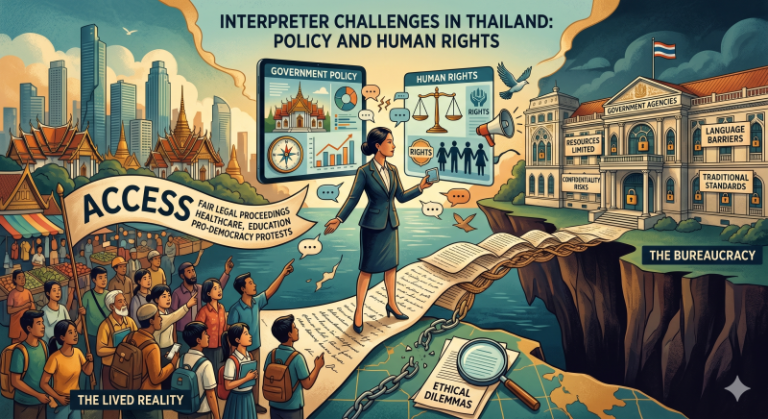
Structural Challenges of Interpreter Use in Thailand: A Policy and Human Rights Analysis
18 April 2029, Bangkok – Interpreter services in Thailand play a critical role in enabling access to fundamental rights within the justice system, healthcare, and public services in a multilingual society. However, the country’s interpreting system continues to face structural limitations, including the absence of professional standards, shortages of qualified personnel, and unclear legal frameworks. This article aims to analyze these challenges within the contexts of the justice system, sign language interpreting, and other service sectors, while proposing policy recommendations to enhance the quality and fairness of cross-linguistic communication in Thailand. The analysis indicates that reforming the interpreting system requires structural-level interventions, including the establishment of a national certification system, the development of specialized training programs, and legal reforms aligned with human rights principles.
Keywords: interpreting, human rights, justice system, sign language, public policy
1. Introduction
In the context of globalization and increasing population mobility, cross-linguistic communication has become an essential component of governance and social administration. Thailand has experienced growing linguistic diversity due to the influx of migrant workers, tourists, and ethnic minority groups. At the same time, a significant number of individuals with hearing impairments rely on sign language interpreters to access information and basic services (Office of the National Economic and Social Development Council [NESDC], 2023). The availability of high-quality interpreting services is therefore a key condition for equitable access to rights and services. Nevertheless, Thailand’s interpreter management system remains fragmented and lacks unified standards, resulting in unequal access to such services (United Nations, 2016).
2. Issues in the Justice System
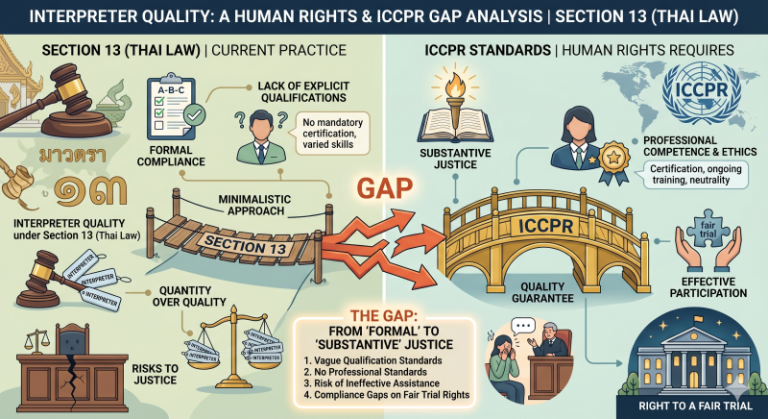
Interpreter provision in Thailand’s justice system is legally grounded in Section 13 of the Criminal Procedure Code, which mandates the provision of interpreters for individuals who do not understand Thai. However, this provision is broadly framed and does not specify qualifications or certification standards for interpreters (Office of the Judiciary, 2022). As a result, different agencies exercise discretion in selecting interpreters, leading to inconsistencies in translation quality.
Interpreter quality represents a significant concern, particularly in legal contexts characterized by specialized terminology and complexity. Interpreters lacking adequate expertise may produce inaccurate or misleading translations, directly affecting the rights of suspects and defendants (Hale, 2004). In some cases, such errors may lead to unjust judicial outcomes.
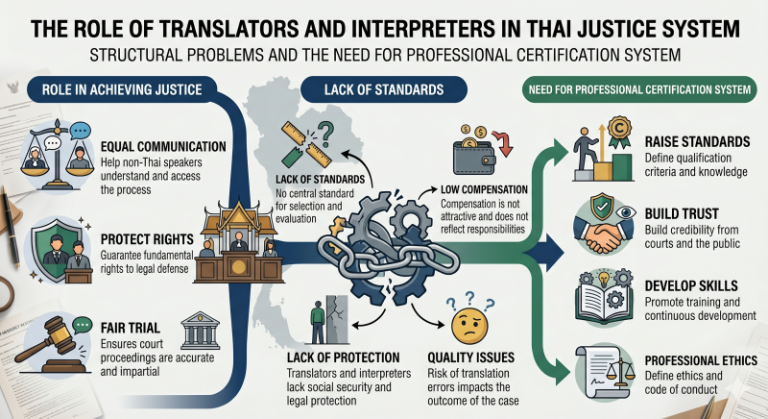
Furthermore, there is a shortage of interpreters, especially in less common languages such as ethnic minority languages or certain Asian languages. Combined with compensation that does not reflect professional expertise, this shortage limits the recruitment of qualified personnel. These issues highlight broader human rights concerns, as the absence of competent interpreters may violate the right to a fair trial, a fundamental principle under international law (United Nations, 2016).
3. Issues in Sign Language Interpreting
The situation of sign language interpreters in Thailand clearly reflects structural shortages. The number of interpreters is insufficient relative to the population of individuals with hearing impairments, and services are heavily concentrated in urban areas (Department of Empowerment of Persons with Disabilities, 2024). Consequently, many regions lack access to sign language interpreting services altogether.
This limitation directly affects access to essential services such as healthcare, education, and the justice system. The absence of sign language interpreters also has serious implications in emergencies, where delayed or inaccurate communication may endanger lives. Additionally, agencies providing sign language interpreting services often face budgetary constraints, limiting the continuity and sustainability of their services.
4. Issues in Other Sectors
In the healthcare sector, effective communication between medical professionals and patients who speak different languages is crucial. Misinterpretation may lead to incorrect diagnoses and inappropriate treatment, directly impacting patient safety (Flores, 2005).
In the business and industrial sectors, particularly in organizations employing migrant workers, the lack of specialized interpreters can result in miscommunication, affecting operational efficiency and workplace safety.
Another critical issue concerns professional ethics and regulation. Thailand currently lacks a formal licensing system for interpreters, allowing individuals to claim professional status without verification. This situation opens the door to fraudulent practices, including the use of forged documents, thereby undermining trust in the system.
5. Structural Causes
The challenges associated with interpreter use in Thailand stem from several structural factors. These include the absence of a nationally mandated certification system, insufficient training programs—particularly in specialized terminology and advanced interpreting skills—inadequate compensation structures, and the rapidly increasing demand for interpreters driven by social and economic changes.
6. Policy Recommendations
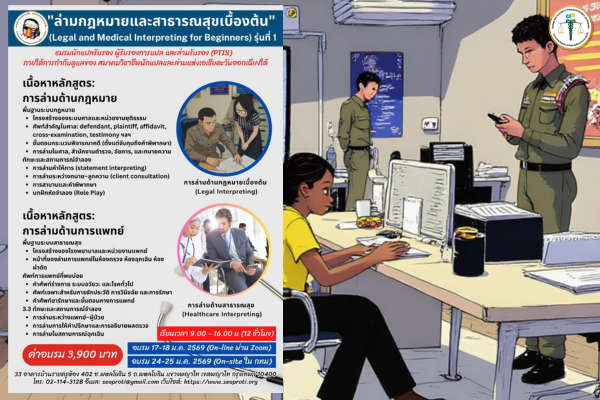
Addressing these challenges requires systematic policy interventions. Establishing a national interpreter certification and licensing system with clearly defined standards and accreditation processes is a critical first step. This should be accompanied by the development of specialized training programs in areas such as legal and medical interpreting.
Improving compensation and creating stable career pathways are also essential to attract and retain qualified professionals. In terms of technology, remote interpreting systems and artificial intelligence can help mitigate shortages in the short term, provided that quality assurance mechanisms are in place. At the same time, legal reforms should explicitly guarantee the right to access qualified interpreters, thereby strengthening protections for fairness and human rights.
7. Conclusion
The challenges of interpreter use in Thailand represent structural issues with wide-ranging implications across legal, social, and economic dimensions. Addressing these challenges requires coordinated efforts from government agencies, academic institutions, and professional bodies to establish a standardized, transparent, and sustainable interpreting system. Improving interpreter services not only enhances communication efficiency but also serves as a crucial mechanism for promoting justice and human rights in Thai society.
References
- Department of Empowerment of Persons with Disabilities. (2024). Situation report on persons with disabilities in Thailand. Bangkok: Ministry of Social Development and Human Security.
- Office of the Judiciary. (2022). Guidelines for interpreter provision in the justice system. Bangkok: Office of the Judiciary.
- Flores, G. (2005). The impact of medical interpreter services on the quality of health care: A systematic review. Medical Care Research and Review, 62(3), 255–299.
- Hale, S. B. (2004). The discourse of court interpreting: Discourse practices of the law, the witness and the interpreter. John Benjamins.
- Office of the National Economic and Social Development Council. (2023). Thailand social outlook report. Bangkok: NESDC.
- United Nations. (2016). International Covenant on Civil and Political Rights (ICCPR). New York: United Nations.
For professional services, please visit: https://www.seaproti.org/practitioners/
About certified translators, translation certifiers, and certified interpreters associated with SEAProTI.
The Southeast Asian Association of Professional Translators and Interpreters (SEAProTI) has officially shared the qualifications and requirements for becoming Certified Translators, Translation Certification Providers, and Certified Interpreters in Sections 9 and 10 of the Royal Gazette, which was published by the Prime Minister’s Office in Thailand on July 25, 2024. Certified Translators, Translation Certification Providers, and Certified Interpreters
The Council of State has proposed the enactment of a Royal Decree, granting registered translators and recognised translation certifiers from professional associations or accredited language institutions the authority to provide legally valid translation certification (Letter to SEAProTI dated April 28, 2025)
SEAProTI is the first professional association in Thailand and Southeast Asia to implement a comprehensive certification system for translators, certifiers, and interpreters.
Head Office: Baan Ratchakru Building, No. 33, Room 402, Soi Phahonyothin 5, Phahonyothin Road, Phaya Thai District, Bangkok 10400, Thailand
Email: hello@seaproti.com | Tel.: (+66) 2-114-3128 (Office hours: Mon–Fri, 09:00–17:00).
ปัญหาเชิงโครงสร้างของการใช้ล่ามในประเทศไทย: การวิเคราะห์เชิงนโยบายและสิทธิมนุษยชน
18 เมษายน 2569, กรุงเทพมหานคร – การใช้ล่ามในประเทศไทยเป็นกลไกสำคัญที่เอื้อต่อการเข้าถึงสิทธิขั้นพื้นฐานในกระบวนการยุติธรรม การแพทย์ และบริการสาธารณะในสังคมพหุภาษา อย่างไรก็ตาม ระบบล่ามของไทยยังเผชิญกับข้อจำกัดเชิงโครงสร้าง ได้แก่ การขาดมาตรฐานวิชาชีพ การขาดแคลนบุคลากร และกรอบกฎหมายที่ไม่ชัดเจน บทความนี้มุ่งวิเคราะห์ปัญหาดังกล่าวในบริบทของกระบวนการยุติธรรม ล่ามภาษามือ และภาคบริการอื่น ๆ พร้อมทั้งเสนอแนวทางเชิงนโยบายเพื่อยกระดับคุณภาพและความเป็นธรรมในการสื่อสารข้ามภาษาในประเทศไทย ผลการวิเคราะห์ชี้ให้เห็นว่าการปฏิรูประบบล่ามจำเป็นต้องดำเนินการในระดับโครงสร้างผ่านการจัดตั้งระบบรับรองวิชาชีพ การพัฒนาหลักสูตรเฉพาะทาง และการปรับปรุงกฎหมายให้สอดคล้องกับหลักสิทธิมนุษยชน
คำสำคัญ: ล่าม, สิทธิมนุษยชน, กระบวนการยุติธรรม, ภาษามือ, นโยบายสาธารณะ
1. บทนำ
ในบริบทของโลกาภิวัตน์และการเคลื่อนย้ายของประชากร การสื่อสารข้ามภาษาได้กลายเป็นองค์ประกอบสำคัญของการบริหารจัดการรัฐและสังคม ประเทศไทยมีความหลากหลายทางภาษามากขึ้นจากการเพิ่มขึ้นของแรงงานข้ามชาติ นักท่องเที่ยว และกลุ่มชาติพันธุ์ ขณะเดียวกันยังมีผู้พิการทางการได้ยินจำนวนมากที่ต้องพึ่งพาล่ามภาษามือในการเข้าถึงข้อมูลและบริการพื้นฐาน (Office of the National Economic and Social Development Council [NESDC], 2023) การมีระบบล่ามที่มีคุณภาพจึงเป็นเงื่อนไขสำคัญของความเท่าเทียมในการเข้าถึงสิทธิและบริการ อย่างไรก็ตาม โครงสร้างการจัดการล่ามในประเทศไทยยังขาดความเป็นระบบและมาตรฐานกลาง ส่งผลให้เกิดความเหลื่อมล้ำในการเข้าถึงบริการดังกล่าว (United Nations, 2016)
2. ปัญหาในกระบวนการยุติธรรม
การจัดหาล่ามในกระบวนการยุติธรรมของไทยมีฐานทางกฎหมายอยู่ในประมวลกฎหมายวิธีพิจารณาความอาญา มาตรา 13 ซึ่งกำหนดให้จัดหาล่ามแก่ผู้ที่ไม่เข้าใจภาษาไทย อย่างไรก็ตาม บทบัญญัตินี้มีลักษณะกว้างและไม่ได้กำหนดมาตรฐานคุณสมบัติหรือกระบวนการรับรองล่ามอย่างชัดเจน (สำนักงานศาลยุติธรรม, 2565) ส่งผลให้แต่ละหน่วยงานใช้ดุลยพินิจในการคัดเลือกบุคคลเป็นล่าม ซึ่งอาจนำไปสู่ความไม่สม่ำเสมอของคุณภาพการแปล
ปัญหาคุณภาพการล่ามเป็นอีกประเด็นสำคัญ โดยเฉพาะในบริบทของกฎหมายที่มีศัพท์เฉพาะและความซับซ้อนสูง ล่ามที่ขาดความเชี่ยวชาญอาจแปลผิดหรือถ่ายทอดความหมายคลาดเคลื่อน ซึ่งส่งผลกระทบโดยตรงต่อสิทธิของผู้ต้องหาและจำเลย (Hale, 2004) ในบางกรณี การแปลที่ผิดพลาดอาจนำไปสู่การตัดสินคดีที่ไม่เป็นธรรม
นอกจากนี้ การขาดแคลนล่าม โดยเฉพาะในภาษาที่ไม่แพร่หลาย เช่น ภาษาชนเผ่าหรือภาษาจากบางประเทศในเอเชีย ยิ่งทำให้ปัญหาดังกล่าวรุนแรงขึ้น ประกอบกับค่าตอบแทนที่ไม่สอดคล้องกับความเชี่ยวชาญ ส่งผลให้การดึงดูดบุคลากรเข้าสู่วิชาชีพเป็นไปได้อย่างจำกัด ปัญหาเหล่านี้สะท้อนถึงความท้าทายด้านสิทธิมนุษยชน เนื่องจากการไม่มีล่ามที่เหมาะสมอาจละเมิดสิทธิในการได้รับการพิจารณาคดีอย่างเป็นธรรม ซึ่งเป็นหลักการสำคัญในกฎหมายระหว่างประเทศ (United Nations, 2016)
3. ปัญหาล่ามภาษามือ
สถานการณ์ของล่ามภาษามือในประเทศไทยสะท้อนถึงปัญหาการขาดแคลนเชิงโครงสร้างอย่างชัดเจน จำนวนล่ามที่มีอยู่ไม่เพียงพอต่อความต้องการของผู้พิการทางการได้ยิน และยังมีการกระจุกตัวในเขตเมืองเป็นหลัก (กรมส่งเสริมและพัฒนาคุณภาพชีวิตคนพิการ, 2567) ส่งผลให้ผู้พิการในหลายพื้นที่ไม่สามารถเข้าถึงบริการล่ามได้เลย
ข้อจำกัดดังกล่าวส่งผลกระทบโดยตรงต่อการเข้าถึงบริการพื้นฐาน เช่น การรักษาพยาบาล การศึกษา และกระบวนการยุติธรรม การขาดล่ามภาษามือยังส่งผลต่อสถานการณ์ฉุกเฉิน ซึ่งการสื่อสารที่ล่าช้าหรือคลาดเคลื่อนอาจนำไปสู่ความเสี่ยงต่อชีวิตและความปลอดภัยของผู้พิการ นอกจากนี้ หน่วยงานที่ให้บริการล่ามภาษามือยังประสบปัญหาด้านงบประมาณ ทำให้ไม่สามารถให้บริการได้อย่างต่อเนื่อง
4. ปัญหาในภาคส่วนอื่น
ในภาคการแพทย์ การสื่อสารระหว่างบุคลากรทางการแพทย์กับคนไข้ที่ใช้ภาษาแตกต่างกันมีความสำคัญอย่างยิ่ง การแปลผิดพลาดอาจนำไปสู่การวินิจฉัยที่คลาดเคลื่อนและการรักษาที่ไม่เหมาะสม ซึ่งส่งผลกระทบโดยตรงต่อความปลอดภัยของคนไข้ (Flores, 2005)
ในภาคธุรกิจและอุตสาหกรรม โดยเฉพาะในองค์กรที่มีแรงงานต่างชาติ การขาดล่ามที่มีความเชี่ยวชาญเฉพาะด้านอาจทำให้เกิดความเข้าใจผิดในการสื่อสาร ส่งผลต่อประสิทธิภาพการทำงานและความปลอดภัยในสถานประกอบการ
อีกประเด็นหนึ่งที่สำคัญคือปัญหาด้านจรรยาบรรณและการกำกับดูแลวิชาชีพ เนื่องจากประเทศไทยยังไม่มีระบบใบอนุญาตวิชาชีพล่ามอย่างเป็นทางการ จึงเปิดช่องให้เกิดการแอบอ้างเป็นล่ามมืออาชีพ หรือการใช้เอกสารปลอม ซึ่งส่งผลกระทบต่อความเชื่อมั่นในระบบโดยรวม
5. สาเหตุเชิงโครงสร้าง
ปัญหาการใช้ล่ามในประเทศไทยมีรากฐานมาจากข้อจำกัดเชิงโครงสร้างหลายประการ ประการแรกคือการไม่มีระบบรับรองวิชาชีพระดับชาติที่มีผลบังคับใช้ ประการที่สองคือการฝึกอบรมที่ยังไม่ครอบคลุม โดยเฉพาะในด้านศัพท์เฉพาะและทักษะล่ามขั้นสูง ประการที่สามคือค่าตอบแทนที่ไม่เหมาะสม ซึ่งไม่สามารถจูงใจบุคลากรเข้าสู่วิชาชีพได้ และประการสุดท้ายคือความต้องการล่ามที่เพิ่มขึ้นอย่างรวดเร็วจากความเปลี่ยนแปลงทางสังคมและเศรษฐกิจ
6. แนวทางเชิงนโยบาย
การแก้ไขปัญหาดังกล่าวจำเป็นต้องดำเนินการในระดับนโยบายอย่างเป็นระบบ โดยเริ่มจากการจัดตั้งระบบรับรองวิชาชีพล่ามแห่งชาติที่กำหนดมาตรฐานคุณสมบัติและกระบวนการรับรองอย่างชัดเจน ควบคู่ไปกับการพัฒนาหลักสูตรฝึกอบรมเฉพาะทาง เช่น ล่ามกฎหมายและล่ามการแพทย์ นอกจากนี้ ควรมีการปรับปรุงค่าตอบแทนและสร้างเส้นทางอาชีพที่มั่นคงเพื่อดึงดูดบุคลากรเข้าสู่วิชาชีพ
ในด้านเทคโนโลยี การนำระบบล่ามทางไกลและปัญญาประดิษฐ์มาใช้สามารถช่วยแก้ปัญหาการขาดแคลนในระยะสั้นได้ แต่ต้องมีการกำกับดูแลคุณภาพอย่างเหมาะสม ในขณะเดียวกัน การปรับปรุงกฎหมายให้ระบุสิทธิในการเข้าถึงล่ามอย่างชัดเจนจะช่วยสร้างหลักประกันด้านความเป็นธรรมและสิทธิมนุษยชน
7. สรุป
ปัญหาการใช้ล่ามในประเทศไทยเป็นปัญหาเชิงโครงสร้างที่มีผลกระทบในหลายมิติ ทั้งด้านกฎหมาย สังคม และเศรษฐกิจ การแก้ไขจำเป็นต้องอาศัยความร่วมมือจากภาครัฐ ภาควิชาการ และภาควิชาชีพ เพื่อสร้างระบบล่ามที่มีมาตรฐาน โปร่งใส และยั่งยืน การพัฒนาระบบล่ามที่มีคุณภาพไม่เพียงแต่ช่วยเพิ่มประสิทธิภาพการสื่อสาร แต่ยังเป็นกลไกสำคัญในการส่งเสริมความเป็นธรรมและสิทธิมนุษยชนในสังคมไทย
เอกสารอ้างอิง (References)
- กรมส่งเสริมและพัฒนาคุณภาพชีวิตคนพิการ. (2567). รายงานสถานการณ์คนพิการในประเทศไทย. กรุงเทพฯ: กระทรวงการพัฒนาสังคมและความมั่นคงของมนุษย์.
- สำนักงานศาลยุติธรรม. (2565). แนวทางการจัดหาล่ามในกระบวนการยุติธรรม. กรุงเทพฯ: สำนักงานศาลยุติธรรม.
- Flores, G. (2005). The impact of medical interpreter services on the quality of health care: A systematic review. Medical Care Research and Review, 62(3), 255–299.
- Hale, S. B. (2004). The discourse of court interpreting: Discourse practices of the law, the witness and the interpreter. John Benjamins.
- Office of the National Economic and Social Development Council. (2023). Thailand social outlook report. Bangkok: NESDC.
- United Nations. (2016). International Covenant on Civil and Political Rights (ICCPR). New York: United Nations.
ติดต่อขอใช้บริการนักวิชาชีพของสมาคมได้ที่: https://www.seaproti.org/practitioners/
สมาคมวิชาชีพนักแปลและล่ามแห่งเอเชียตะวันออกเฉียงใต้ (SEAProTI) ได้ประกาศหลักเกณฑ์และคุณสมบัติของผู้ที่ขึ้นทะเบียนเป็น “นักแปลรับรอง (Certified Translators) และผู้รับรองการแปล (Translation Certification Providers) และล่ามรับรอง (Certified Interpreters)” ของสมาคม หมวดที่ 9 และหมวดที่ 10 ในราชกิจจานุเบกษา ของสำนักเลขาธิการคณะรัฐมนตรี ในสำนักนายกรัฐมนตรี แห่งราชอาณาจักรไทย ลงวันที่ 25 ก.ค. 2567 เล่มที่ 141 ตอนที่ 66 ง หน้า 100 อ่านฉบับเต็มได้ที่: นักแปลรับรอง ผู้รับรองการแปล และล่ามรับรอง
สำนักคณะกรรมการกฤษฎีกาเสนอให้ตราเป็นพระราชกฤษฎีกา โดยกำหนดให้นักแปลที่ขึ้นทะเบียน รวมถึงผู้รับรองการแปลจากสมาคมวิชาชีพหรือสถาบันสอนภาษาที่มีการอบรมและขึ้นทะเบียน สามารถรับรองคำแปลได้ (จดหมายถึงสมาคม SEAProTI ลงวันที่ 28 เม.ย. 2568)
สมาคมวิชาชีพนักแปลและล่ามแห่งเอเชียตะวันออกเฉียงใต้เป็นสมาคมวิชาชีพแห่งแรกและแห่งเดียวในประเทศไทยและภูมิภาคเอเชียตะวันออกเฉียงใต้ที่มีระบบรับรองนักแปลรับรอง ผู้รับรองการแปล และล่ามรับรอง
สำนักงานใหญ่: อาคารบ้านราชครู เลขที่ 33 ห้อง 402 ซอยพหลโยธิน 5 ถนนพหลโยธิน แขวงพญาไท เขตพญาไท กรุงเทพมหานคร 10400 ประเทศไทย
อีเมล: hello@seaproti.com โทรศัพท์: (+66) 2-114-3128 (เวลาทำการ: วันจันทร์–วันศุกร์ เวลา 09.00–17.00 น.