


Guidelines for Professional Development and Certification of Translators
April 22, 2026, Bangkok — The profession of translation plays a crucial role in the era of globalization, particularly in facilitating cross-linguistic and cross-cultural communication. This article aims to analyze approaches to professional development for translators, with an emphasis on distinguishing between training certificates and formal professional certification. It also examines the role of language proficiency standards, such as the CEFR, in enhancing translators’ competencies. The findings suggest that while training programs are essential for building foundational skills and portfolios, professional certification significantly enhances credibility and long-term career prospects.
Keywords: translator, professional certification, CEFR, skill development, certificate
Introduction
In the context of globalization, communication across languages and cultures has become increasingly important. As a result, the translation profession has emerged as a key occupation across various sectors, including business, education, and law (Pym, 2010). Individuals interested in pursuing this career often seek opportunities to develop language and translation skills, as well as obtain certificates to improve employability. However, understanding the distinctions between different types of certification and professional status remains an important consideration.
Skill Development Through Training Programs
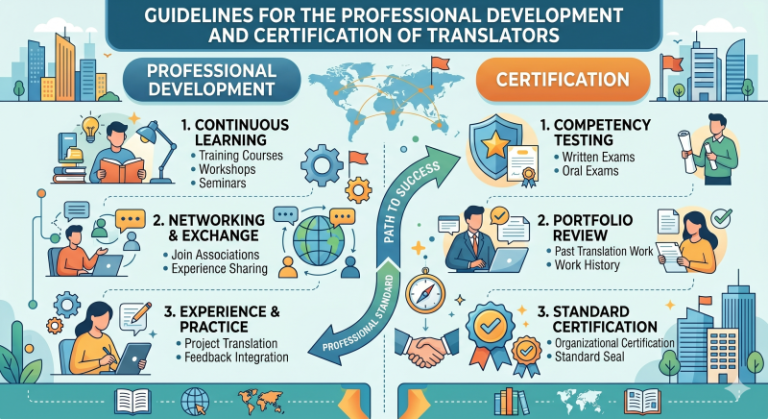
Currently, translation training programs are widely available, particularly in online formats, to accommodate learners with time and location constraints (Kiraly, 2014). These programs are typically offered at multiple levels, including beginner, intermediate, and advanced, and focus on developing language proficiency, translation techniques, and cultural awareness.
Upon completion, participants are usually awarded a Certificate of Achievement, which serves as proof of training and can be included in a professional portfolio. However, such certificates do not constitute formal professional accreditation; they do not certify that the holder is qualified to work as a certified translator (Gouadec, 2007).
Professional Certification of Translators
Professional certification is a more rigorous process requiring candidates to pass examinations and assessments administered by relevant professional organizations, such as regional or international translator associations (Chesterman, 2016). This process is typically overseen by an authorized body, such as a registrar within the association.
Those who meet the required criteria are registered as Certified Translators, granting them the authority to officially certify translated documents and use the association’s official seal. This status reflects a recognized standard of professionalism and credibility.
The Role of CEFR Standards
A key qualification for professional certification is advanced proficiency in a foreign language, particularly at the C2 level according to the Common European Framework of Reference for Languages (CEFR), which represents a level of mastery (Council of Europe, 2001). Individuals at this level can use language fluently, accurately, and appropriately across a wide range of academic and professional contexts.
Achieving C2 proficiency is not only a formal requirement but also an indicator of a translator’s ability to produce high-quality, reliable translations—an essential competency for professional work.
Discussion
The analysis indicates that professional development for translators should involve both skill acquisition and formal certification. Training programs provide essential foundational skills and facilitate entry into the job market, while professional certification enhances standards and credibility.
However, aspiring translators must clearly understand the distinction between “training certificates” and “professional certification” to effectively plan their career development.
Conclusion
The translation profession requires both practical skills and adherence to professional standards. Participating in training programs is an important first step in skill development, while obtaining professional certification is crucial for establishing long-term credibility. Therefore, careful career planning is essential for individuals seeking success in this field.
References
- Chesterman, A. (2016). Memes of translation: The spread of ideas in translation theory. John Benjamins.
- Council of Europe. (2001). Common European Framework of Reference for Languages: Learning, teaching, assessment. Cambridge University Press.
- Gouadec, D. (2007). Translation as a profession. John Benjamins.
- Kiraly, D. (2014). A social constructivist approach to translator education. Routledge.
- Pym, A. (2010). Exploring translation theories. Routledge.
For professional services, please visit: https://www.seaproti.org/practitioners/
About certified translators, translation certifiers, and certified interpreters associated with SEAProTI.
The Southeast Asian Association of Professional Translators and Interpreters (SEAProTI) has officially shared the qualifications and requirements for becoming Certified Translators, Translation Certification Providers, and Certified Interpreters in Sections 9 and 10 of the Royal Gazette, which was published by the Prime Minister’s Office in Thailand on July 25, 2024. Certified Translators, Translation Certification Providers, and Certified Interpreters
The Council of State has proposed the enactment of a Royal Decree, granting registered translators and recognised translation certifiers from professional associations or accredited language institutions the authority to provide legally valid translation certification (Letter to SEAProTI dated April 28, 2025)
SEAProTI is the first professional association in Thailand and Southeast Asia to implement a comprehensive certification system for translators, certifiers, and interpreters.
Head Office: Baan Ratchakru Building, No. 33, Room 402, Soi Phahonyothin 5, Phahonyothin Road, Phaya Thai District, Bangkok 10400, Thailand
Email: hello@seaproti.com | Tel.: (+66) 2-114-3128 (Office hours: Mon–Fri, 09:00–17:00).
แนวทางการพัฒนาวิชาชีพนักแปลและการรับรองคุณวุฒิ
22 เมษายน 2569, กรุงเทพมหานคร – อาชีพนักแปลมีบทบาทสำคัญในยุคโลกาภิวัตน์ โดยเฉพาะในด้านการสื่อสารข้ามภาษาและวัฒนธรรม บทความนี้มีวัตถุประสงค์เพื่อวิเคราะห์แนวทางการพัฒนาวิชาชีพนักแปล โดยเน้นความแตกต่างระหว่างการได้รับใบรับรองจากหลักสูตรอบรมและการรับรองคุณวุฒิในระดับวิชาชีพอย่างเป็นทางการ รวมถึงบทบาทของมาตรฐานภาษา เช่น CEFR ในการยกระดับความสามารถของนักแปล ผลการวิเคราะห์พบว่า การพัฒนาทักษะผ่านการอบรมมีความสำคัญต่อการสร้างพื้นฐานและผลงาน ในขณะที่การรับรองวิชาชีพช่วยเพิ่มความน่าเชื่อถือและมาตรฐานในการประกอบอาชีพในระยะยาว
คำสำคัญ: นักแปล, การรับรองวิชาชีพ, CEFR, การพัฒนาทักษะ, ใบรับรอง
บทนำ
ในบริบทของสังคมโลกาภิวัตน์ การสื่อสารระหว่างภาษาและวัฒนธรรมที่แตกต่างกันมีความสำคัญอย่างยิ่ง ส่งผลให้อาชีพนักแปลกลายเป็นหนึ่งในวิชาชีพที่มีบทบาทสำคัญในหลากหลายภาคส่วน ทั้งด้านธุรกิจ การศึกษา และกฎหมาย (Pym, 2010) ผู้ที่สนใจเข้าสู่วิชาชีพนี้มักแสวงหาช่องทางในการพัฒนาทักษะทางภาษาและการแปล รวมถึงการได้รับใบรับรองเพื่อเพิ่มโอกาสในการจ้างงาน อย่างไรก็ตาม ความเข้าใจเกี่ยวกับประเภทของใบรับรองและสถานะทางวิชาชีพยังคงเป็นประเด็นที่ต้องพิจารณาอย่างรอบคอบ
การพัฒนาทักษะผ่านหลักสูตรอบรม
ในปัจจุบัน หลักสูตรอบรมด้านการแปลมีการเปิดสอนอย่างแพร่หลายในรูปแบบออนไลน์ เพื่อตอบสนองต่อผู้เรียนที่มีข้อจำกัดด้านเวลาและสถานที่ (Kiraly, 2014) หลักสูตรเหล่านี้มักแบ่งออกเป็นหลายระดับ ตั้งแต่ระดับเริ่มต้น ระดับกลาง ไปจนถึงระดับสูง โดยมุ่งเน้นการพัฒนาทักษะด้านภาษา เทคนิคการแปล และความเข้าใจบริบททางวัฒนธรรม
เมื่อผู้เรียนสำเร็จหลักสูตร มักจะได้รับ Certificate of Achievement ซึ่งสามารถใช้เป็นหลักฐานแสดงการผ่านการอบรม และเป็นส่วนหนึ่งของแฟ้มสะสมผลงาน (portfolio) อย่างไรก็ตาม ใบรับรองดังกล่าวไม่ได้มีสถานะเป็นการรับรองคุณวุฒิในเชิงวิชาชีพ กล่าวคือ ไม่ได้ยืนยันว่าผู้ถือใบรับรองมีสิทธิ์ปฏิบัติงานในฐานะนักแปลรับรอง (Gouadec, 2007)
การรับรองวิชาชีพนักแปล
การรับรองในระดับวิชาชีพเป็นกระบวนการที่มีความเข้มงวดมากกว่า โดยผู้ที่สนใจต้องผ่านการสอบและการประเมินจากองค์กรวิชาชีพที่เกี่ยวข้อง เช่น สมาคมนักแปลในระดับภูมิภาคหรือระดับสากล (Chesterman, 2016) กระบวนการดังกล่าวมักอยู่ภายใต้การกำกับดูแลของหน่วยงานที่มีอำนาจ เช่น นายทะเบียนของสมาคม
เมื่อผู้เข้าสอบผ่านเกณฑ์ที่กำหนด จะได้รับการขึ้นทะเบียนเป็นนักแปลรับรอง (Certified Translator) ซึ่งสามารถรับรองเอกสารการแปลอย่างเป็นทางการ และใช้ตราประทับขององค์กรวิชาชีพได้ สิ่งนี้สะท้อนถึงมาตรฐานและความน่าเชื่อถือในวิชาชีพอย่างชัดเจน
บทบาทของมาตรฐาน CEFR
หนึ่งในคุณสมบัติสำคัญของผู้ที่จะได้รับการรับรองวิชาชีพ คือ ความสามารถทางภาษาต่างประเทศในระดับสูง โดยเฉพาะระดับ C2 ตามกรอบมาตรฐาน CEFR ซึ่งถือเป็นระดับความเชี่ยวชาญ (Council of Europe, 2001) ผู้ที่อยู่ในระดับนี้สามารถใช้ภาษาได้อย่างคล่องแคล่ว ถูกต้อง และเหมาะสมในบริบทที่หลากหลาย ทั้งด้านวิชาการและวิชาชีพ
การมีระดับภาษาในระดับ C2 ไม่เพียงแต่เป็นข้อกำหนดเชิงคุณสมบัติเท่านั้น แต่ยังเป็นตัวบ่งชี้ถึงศักยภาพในการแปลที่มีคุณภาพสูง ซึ่งเป็นสิ่งจำเป็นสำหรับงานแปลที่ต้องการความแม่นยำและความน่าเชื่อถือ
อภิปรายผล
จากการวิเคราะห์พบว่า การพัฒนาวิชาชีพนักแปลควรดำเนินควบคู่กันระหว่างการพัฒนาทักษะและการได้รับการรับรองในระดับวิชาชีพ การอบรมช่วยสร้างพื้นฐานและเพิ่มโอกาสในการเข้าสู่ตลาดแรงงาน ในขณะที่การรับรองวิชาชีพช่วยยกระดับมาตรฐานและความน่าเชื่อถือของผู้ประกอบอาชีพ
อย่างไรก็ตาม ผู้ที่สนใจควรตระหนักถึงความแตกต่างระหว่าง “ใบรับรองการอบรม” และ “การรับรองวิชาชีพ” อย่างชัดเจน เพื่อวางแผนพัฒนาตนเองได้อย่างเหมาะสมและมีประสิทธิภาพ
สรุป
อาชีพนักแปลเป็นวิชาชีพที่ต้องอาศัยทั้งทักษะและมาตรฐานวิชาชีพ การเข้าร่วมหลักสูตรอบรมเป็นจุดเริ่มต้นที่สำคัญในการพัฒนาทักษะ ขณะที่การสอบเพื่อรับรองวิชาชีพเป็นขั้นตอนสำคัญในการยกระดับความน่าเชื่อถือในระยะยาว ดังนั้น การวางแผนเส้นทางอาชีพอย่างรอบคอบจึงเป็นสิ่งจำเป็นสำหรับผู้ที่ต้องการประสบความสำเร็จในวิชาชีพนี้
เอกสารอ้างอิง (References)
- Chesterman, A. (2016). *Memes of translation: The spread of ideas in translation theory*. John Benjamins.
- Council of Europe. (2001). *Common European Framework of Reference for Languages: Learning, teaching, assessment*. Cambridge University Press.
- Gouadec, D. (2007). *Translation as a profession*. John Benjamins.
- Kiraly, D. (2014). *A social constructivist approach to translator education*. Routledge.
- Pym, A. (2010). *Exploring translation theories*. Routledge.
ติดต่อขอใช้บริการนักวิชาชีพของสมาคมได้ที่:https://www.seaproti.org/practitioners/
สมาคมวิชาชีพนักแปลและล่ามแห่งเอเชียตะวันออกเฉียงใต้ (SEAProTI) ได้ประกาศหลักเกณฑ์และคุณสมบัติของผู้ที่ขึ้นทะเบียนเป็น “นักแปลรับรอง (Certified Translators) และผู้รับรองการแปล (Translation Certification Providers) และล่ามรับรอง (Certified Interpreters)” ของสมาคม หมวดที่ 9 และหมวดที่ 10 ในราชกิจจานุเบกษา ของสำนักเลขาธิการคณะรัฐมนตรี ในสำนักนายกรัฐมนตรี แห่งราชอาณาจักรไทย ลงวันที่ 25 ก.ค. 2567 เล่มที่ 141 ตอนที่ 66 ง หน้า 100 อ่านฉบับเต็มได้ที่: นักแปลรับรอง ผู้รับรองการแปล และล่ามรับรอง
สำนักคณะกรรมการกฤษฎีกาเสนอให้ตราเป็นพระราชกฤษฎีกา โดยกำหนดให้นักแปลที่ขึ้นทะเบียน รวมถึงผู้รับรองการแปลจากสมาคมวิชาชีพหรือสถาบันสอนภาษาที่มีการอบรมและขึ้นทะเบียน สามารถรับรองคำแปลได้ (จดหมายถึงสมาคม SEAProTI ลงวันที่ 28 เม.ย. 2568)
สมาคมวิชาชีพนักแปลและล่ามแห่งเอเชียตะวันออกเฉียงใต้เป็นสมาคมวิชาชีพแห่งแรกและแห่งเดียวในประเทศไทยและภูมิภาคเอเชียตะวันออกเฉียงใต้ที่มีระบบรับรองนักแปลรับรอง ผู้รับรองการแปล และล่ามรับรอง
สำนักงานใหญ่: อาคารบ้านราชครู เลขที่ 33 ห้อง 402 ซอยพหลโยธิน 5 ถนนพหลโยธิน แขวงพญาไท เขตพญาไท กรุงเทพมหานคร 10400 ประเทศไทย
อีเมล: hello@seaproti.com โทรศัพท์: (+66) 2-114-3128(เวลาทำการ: วันจันทร์–วันศุกร์ เวลา 09.00–17.00 น.)