



A Critical Discourse Analysis of Media Representation:
The Case of “Scambodia” in The Wall Street Journal
Author: Wanitcha Sumanat, President of the Southeast Asian Association of Professional Translators and Interpreters (SEAProTI), arbitrator, mediator, and certified forensic linguist.
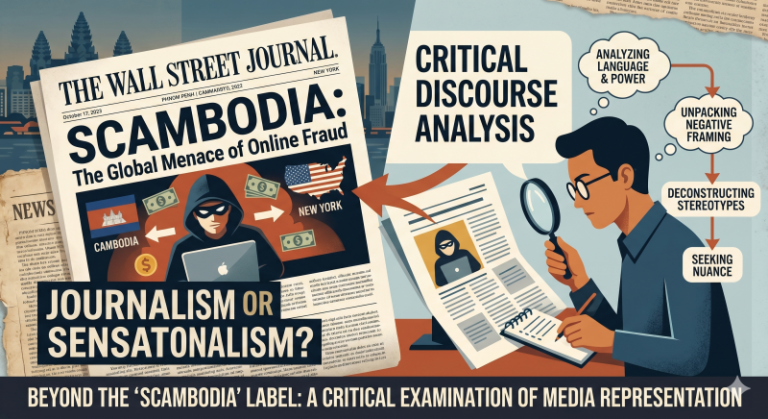
22 April 2026, Bangkok – Language in global media does more than report events; it actively constructs social reality, shapes perception, and reflects underlying power relations. Critical Discourse Analysis (CDA), particularly as developed by Fairclough (1995), provides a useful framework for examining how language operates across three interrelated dimensions: textual features, discursive practice, and broader social practice. This essay applies CDA to analyze a Wall Street Journal (WSJ) article by Steinhauser and Kowsmann (2026), which employs the term “Scambodia,” alongside a critical response that challenges such usage. Through this analysis, it becomes evident that media discourse is neither neutral nor purely descriptive, but instead deeply embedded in ideological processes that influence how countries—especially those in the Global South—are represented.
At the textual level, the WSJ article demonstrates how linguistic choices can shape meaning and perception. The term “Scambodia” is a particularly striking example of lexical construction, combining “scam” and “Cambodia” to create a label that reduces a nation to a singular association with cybercrime. From a CDA perspective, this constitutes a form of negative labeling and stigmatization, which simplifies a complex socio-political reality into a reductive and derogatory identity (Fairclough, 1995). The article further reinforces this framing through metaphorical language, notably in its description of a “gold-hued skyscraper” as a “monument to the spoils generated by transnational cybergangs” (Steinhauser & Kowsmann, 2026). This metaphor symbolically links visible economic development to illicit activities, suggesting a causal relationship without explicitly substantiating it. Such language does not merely describe reality but actively constructs a narrative in which national progress is implicitly tied to criminal enterprise.
In contrast, the response article adopts a markedly different linguistic approach, emphasizing normative concepts such as responsibility, accuracy, and journalistic integrity. It explicitly identifies the term “Scambodia” as a form of mockery and a derogatory distortion, thereby reframing the discourse and challenging the legitimacy of the WSJ’s language. This shift in tone and vocabulary reflects an attempt to reassert ethical standards and restore a more balanced representation. The contrast between the two texts illustrates how different lexical and rhetorical strategies can produce competing interpretations of the same phenomenon.
Moving to the level of discursive practice, the WSJ article reflects a selective and problem-oriented mode of representation. It foregrounds cybercrime and financial exploitation, particularly emphasizing the impact on American victims, while omitting broader contextual factors such as the transnational nature of cybercrime networks and the involvement of multiple actors across jurisdictions. This selective inclusion and exclusion align with what van Dijk (1998) describes as ideological discourse structures, where information is strategically organized to emphasize negative attributes of the “other” while reinforcing the concerns of the primary audience. The focus on Western victims, in particular, suggests an audience-oriented framing that centers Western perspectives and interests.
The response article functions as a counter-discourse, directly challenging the dominant narrative by reintroducing omitted context. It highlights the complexity of cybercrime as a global issue and points to efforts undertaken by Cambodian authorities to address the problem. In doing so, it disrupts the simplified narrative presented in the WSJ article and offers a more nuanced account. This interaction between texts exemplifies a discursive struggle, in which competing narratives attempt to define reality and influence public interpretation (Fairclough, 1995). The presence of such counter-discourse underscores the dynamic nature of media representation, where meaning is continuously negotiated rather than fixed.
At the level of social practice, the analysis reveals broader patterns of power and inequality in global media systems. Western media institutions like The Wall Street Journal hold significant agenda-setting power, enabling them to shape international perceptions of countries and regions (McCombs, 2004). The use of a term such as “Scambodia” reflects not only a stylistic choice but also a broader tendency to associate developing nations with crime, instability, and disorder. This pattern aligns with postcolonial critiques, which argue that media representations often reproduce hierarchical distinctions between the Global North and the Global South (Said, 1978). By framing Cambodia primarily through the lens of cybercrime, the discourse risks reinforcing stereotypes and obscuring the country’s broader socio-economic realities.
The response article explicitly addresses this imbalance by raising the issue of double standards, questioning whether similar derogatory language would be applied to Western nations facing comparable challenges. This critique highlights the implicit biases embedded in global journalism and calls attention to the uneven application of journalistic norms. Furthermore, the discourse has tangible consequences beyond representation. Media narratives influence public opinion, economic perceptions, and even policy decisions, demonstrating what Bourdieu (1991) describes as the power of language to shape social reality. In this sense, the portrayal of Cambodia in global media is not merely symbolic but has real-world implications for how the country is perceived and engaged with internationally.
In conclusion, the application of Critical Discourse Analysis to these texts reveals that the representation of Cambodia in the WSJ article is a constructed narrative shaped by specific linguistic choices, selective framing, and broader ideological forces. The use of the term “Scambodia” exemplifies how language can function as a tool of stigmatization, reinforcing unequal power relations in global media discourse. At the same time, the presence of a counter-discourse demonstrates the potential for resistance and rearticulation, highlighting the importance of critical engagement with media language. Ultimately, this analysis underscores the central insight of CDA: discourse both reflects and shapes social reality, and examining it critically is essential for understanding—and challenging—the power structures embedded within global communication.
References
- Bourdieu, P. (1991). Language and symbolic power. Harvard University Press.
- Fairclough, N. (1995). Media discourse. Edward Arnold.
- McCombs, M. (2004). Setting the agenda: The mass media and public opinion. Polity Press.
- Said, E. W. (1978). Orientalism. Pantheon Books.
- Steinhauser, G., & Kowsmann, P. (2026, April 19). How cybercrime became a leading industry in “Scambodia”. The Wall Street Journal. https://www.wsj.com/world/asia/cambodia-cybercrime-rise-why-2f2c03cc
- Sumanat, W. (2026). A critical discourse analysis of the representation of Cambodia in global media: The case of “Scambodia”. Journal of Forensic Linguistics, Legal Translation and Interpreting, and Medical Translation and Interpreting (SEAProTI), 2(2).
- van Dijk, T. A. (1998). Ideology: A multidisciplinary approach. Sage Publications.
For professional services, please visit: https://www.seaproti.org/practitioners/
About certified translators, translation certifiers, and certified interpreters associated with SEAProTI.
The Southeast Asian Association of Professional Translators and Interpreters (SEAProTI) has officially shared the qualifications and requirements for becoming Certified Translators, Translation Certification Providers, and Certified Interpreters in Sections 9 and 10 of the Royal Gazette, which was published by the Prime Minister’s Office in Thailand on July 25, 2024. Certified Translators, Translation Certification Providers, and Certified Interpreters
The Council of State has proposed the enactment of a Royal Decree, granting registered translators and recognised translation certifiers from professional associations or accredited language institutions the authority to provide legally valid translation certification (Letter to SEAProTI dated April 28, 2025)
SEAProTI is the first professional association in Thailand and Southeast Asia to implement a comprehensive certification system for translators, certifiers, and interpreters.
Head Office: Baan Ratchakru Building, No. 33, Room 402, Soi Phahonyothin 5, Phahonyothin Road, Phaya Thai District, Bangkok 10400, Thailand
Email: hello@seaproti.com | Tel.: (+66) 2-114-3128 (Office hours: Mon–Fri, 09:00–17:00).
การวิเคราะห์วาทกรรมเชิงวิพากษ์ต่อการนำเสนอภาพลักษณ์ของกัมพูชาในสื่อโลก:
กรณีศึกษา “Scambodia” ใน The Wall Street Journal
ผู้เขียน: วณิชชา สุมานัส นายกสมาคมนักแปลและล่ามวิชาชีพแห่งเอเชียตะวันออกเฉียงใต้ (SEAProTI) อนุญาโตตุลาการ ผู้ไกล่เกลี่ย และนักภาษาศาสตร์นิติวิทยาวิชาชีพ
ภาษาในสื่อระดับโลกมิได้ทำหน้าที่เพียงรายงานเหตุการณ์เท่านั้น หากยังมีบทบาทสำคัญในการสร้างความจริงทางสังคม กำหนดการรับรู้ และสะท้อนความสัมพันธ์เชิงอำนาจที่แฝงอยู่ การวิเคราะห์วาทกรรมเชิงวิพากษ์ (Critical Discourse Analysis: CDA) โดยเฉพาะแนวคิดของ Fairclough (1995) จึงเป็นกรอบที่มีประโยชน์ในการศึกษาว่าภาษาทำงานอย่างไรในสามมิติที่เชื่อมโยงกัน ได้แก่ ระดับตัวบท (textual features) ระดับการปฏิบัติทางวาทกรรม (discursive practice) และระดับการปฏิบัติทางสังคม (social practice) บทความนี้นำ CDA มาวิเคราะห์บทความของ The Wall Street Journal โดย Steinhauser และ Kowsmann (2026) ซึ่งใช้คำว่า “Scambodia” ควบคู่กับบทความโต้แย้งที่วิพากษ์การใช้คำดังกล่าว การวิเคราะห์นี้ชี้ให้เห็นว่าวาทกรรมสื่อมิได้เป็นกลางหรือเพียงบรรยายข้อเท็จจริง หากแต่ฝังรากอยู่ในกระบวนการเชิงอุดมการณ์ที่มีอิทธิพลต่อการนำเสนอภาพของประเทศ โดยเฉพาะประเทศในโลกกำลังพัฒนา
ในระดับตัวบท บทความของ WSJ แสดงให้เห็นอย่างชัดเจนว่าการเลือกใช้ภาษาสามารถกำหนดความหมายและการรับรู้ได้อย่างไร คำว่า “Scambodia” เป็นตัวอย่างเด่นของการสร้างคำใหม่ (lexical construction) โดยผสมคำว่า “scam” กับ “Cambodia” ส่งผลให้ประเทศหนึ่งถูกลดทอนให้เหลือเพียงความเชื่อมโยงกับอาชญากรรมไซเบอร์ จากมุมมองของ CDA การใช้ภาษาลักษณะนี้ถือเป็นการติดป้ายเชิงลบและการตีตรา (negative labeling and stigmatization) ซึ่งทำให้ความเป็นจริงทางสังคมและการเมืองที่ซับซ้อนถูกทำให้เรียบง่ายและกลายเป็นภาพลักษณ์เชิงลบ (Fairclough, 1995) นอกจากนี้ บทความยังใช้ภาษาที่เป็นเชิงอุปมา เช่น การอธิบาย “ตึกระฟ้าสีทอง” ว่าเป็น “อนุสาวรีย์ของผลประโยชน์จากแก๊งอาชญากรรมไซเบอร์ข้ามชาติ” (Steinhauser & Kowsmann, 2026) อุปมาดังกล่าวสร้างความเชื่อมโยงเชิงสัญลักษณ์ระหว่างการพัฒนาเศรษฐกิจกับกิจกรรมผิดกฎหมาย โดยแฝงนัยของความเป็นเหตุเป็นผลโดยมิได้มีการพิสูจน์อย่างชัดเจน ภาษาเช่นนี้มิได้เพียงสะท้อนความจริง แต่มีส่วนในการ “สร้าง” ความจริงในลักษณะที่ทำให้ความก้าวหน้าของประเทศถูกผูกโยงกับอาชญากรรมโดยนัย
ในทางตรงกันข้าม บทความโต้แย้งใช้ภาษาในลักษณะที่เป็นทางการและเน้นคุณค่าทางบรรทัดฐาน เช่น ความรับผิดชอบ ความถูกต้อง และจริยธรรมของวิชาชีพสื่อ โดยระบุอย่างชัดเจนว่าคำว่า “Scambodia” เป็นการล้อเลียนและเป็นการบิดเบือนเชิงดูหมิ่น ส่งผลให้เกิดการปรับกรอบความหมายใหม่ของวาทกรรม และตั้งคำถามต่อความชอบธรรมของการใช้ภาษาของ WSJ การเปลี่ยนแปลงน้ำเสียงและคำศัพท์ดังกล่าวสะท้อนความพยายามในการยืนยันมาตรฐานทางจริยธรรมและฟื้นฟูการนำเสนอที่สมดุลมากยิ่งขึ้น ความแตกต่างของสองตัวบทนี้แสดงให้เห็นว่า กลยุทธ์ทางภาษาและวาทศิลป์ที่ต่างกันสามารถนำไปสู่การตีความปรากฏการณ์เดียวกันได้อย่างแตกต่างกัน
ในระดับการปฏิบัติทางวาทกรรม บทความของ WSJ แสดงลักษณะของการสร้างเรื่องเล่าแบบเลือกสรร (selective representation) โดยเน้นประเด็นอาชญากรรมไซเบอร์และการหลอกลวงทางการเงิน โดยเฉพาะผลกระทบต่อเหยื่อชาวอเมริกัน ขณะเดียวกันกลับละเลยบริบทสำคัญ เช่น ลักษณะข้ามชาติของเครือข่ายอาชญากรรมไซเบอร์ การมีส่วนร่วมของผู้กระทำจากหลายประเทศ และความพยายามของรัฐบาลกัมพูชาในการแก้ไขปัญหา การเลือกนำเสนอและละเว้นข้อมูลเช่นนี้สอดคล้องกับแนวคิดของ van Dijk (1998) เกี่ยวกับโครงสร้างวาทกรรมเชิงอุดมการณ์ ซึ่งเน้นการนำเสนอ “ผู้อื่นในเชิงลบ” และตอกย้ำมุมมองของกลุ่มผู้อ่านหลัก ในกรณีนี้ การเน้นเหยื่อชาวตะวันตกสะท้อนการวางกรอบที่มุ่งตอบสนองต่อความสนใจของผู้อ่านในโลกตะวันตก
ในขณะเดียวกัน บทความโต้แย้งทำหน้าที่เป็นวาทกรรมตอบโต้ (counter-discourse) โดยท้าทายเรื่องเล่าหลักและนำบริบทที่ถูกละเลยกลับมา เช่น ความซับซ้อนของอาชญากรรมไซเบอร์ในระดับโลก และมาตรการของภาครัฐในการปราบปราม ปฏิสัมพันธ์ระหว่างสองตัวบทนี้สะท้อน “การต่อสู้ทางวาทกรรม” (discursive struggle) ซึ่งเป็นกระบวนการที่ความหมายถูกแข่งขันและต่อรอง (Fairclough, 1995) การมีอยู่ของวาทกรรมตอบโต้แสดงให้เห็นว่าวาทกรรมมิใช่สิ่งคงที่ หากแต่เป็นพื้นที่ที่เปิดให้มีการท้าทายและตีความใหม่อย่างต่อเนื่อง
ในระดับการปฏิบัติทางสังคม การวิเคราะห์นี้สะท้อนให้เห็นโครงสร้างอำนาจและความไม่เท่าเทียมในระบบสื่อระดับโลก สื่อจากโลกตะวันตก เช่น The Wall Street Journal มีอำนาจในการกำหนดวาระ (agenda-setting power) ซึ่งส่งผลต่อการรับรู้ของประชาคมโลก (McCombs, 2004) การใช้คำอย่าง “Scambodia” มิได้เป็นเพียงการเลือกใช้ภาษาทางสำนวน แต่ยังสะท้อนแนวโน้มที่กว้างขึ้นในการเชื่อมโยงประเทศกำลังพัฒนากับอาชญากรรม ความไม่มั่นคง และความไร้ระเบียบ ซึ่งสอดคล้องกับแนวคิดหลังอาณานิคมที่ชี้ว่าสื่อมักผลิตซ้ำลำดับชั้นระหว่างโลกเหนือและโลกใต้ (Said, 1978) การนำเสนอกัมพูชาผ่านกรอบของอาชญากรรมไซเบอร์เพียงด้านเดียวจึงเสี่ยงต่อการตอกย้ำภาพเหมารวมและบดบังความเป็นจริงทางเศรษฐกิจและสังคมที่หลากหลาย
บทความโต้แย้งได้ตั้งคำถามต่อความไม่สมดุลดังกล่าว โดยชี้ให้เห็นประเด็นมาตรฐานสองชั้น (double standards) และตั้งข้อสงสัยว่าสื่อจะใช้ภาษาลักษณะเดียวกันกับประเทศตะวันตกหรือไม่ ข้อวิพากษ์นี้ช่วยเปิดเผยอคติที่แฝงอยู่ในสื่อระดับโลก และเรียกร้องให้มีการใช้มาตรฐานทางวิชาชีพอย่างเท่าเทียม นอกจากนี้ วาทกรรมยังมีผลกระทบในเชิงรูปธรรม เนื่องจากการนำเสนอของสื่อสามารถมีอิทธิพลต่อความคิดเห็นสาธารณะ การตัดสินใจทางเศรษฐกิจ และนโยบายต่างประเทศ ซึ่งสอดคล้องกับแนวคิดของ Bourdieu (1991) ที่มองว่าภาษาเป็นเครื่องมือของอำนาจเชิงสัญลักษณ์
โดยสรุป การวิเคราะห์วาทกรรมเชิงวิพากษ์แสดงให้เห็นว่าการนำเสนอกัมพูชาในบทความของ WSJ มิใช่การสะท้อนความจริงอย่างเป็นกลาง หากแต่เป็นการสร้างเรื่องเล่าที่ได้รับอิทธิพลจากการเลือกใช้ภาษา การจัดกรอบเนื้อหา และโครงสร้างอุดมการณ์ที่กว้างขึ้น การใช้คำว่า “Scambodia” เป็นตัวอย่างของการใช้ภาษาเพื่อการตีตรา ซึ่งมีส่วนในการตอกย้ำความไม่เท่าเทียมในวาทกรรมสื่อระดับโลก ในขณะเดียวกัน การมีอยู่ของวาทกรรมตอบโต้สะท้อนถึงศักยภาพของการท้าทายและการสร้างความหมายใหม่ การวิเคราะห์นี้จึงยืนยันแนวคิดสำคัญของ CDA ว่า วาทกรรมมิได้เพียงสะท้อนโลก แต่ยังมีบทบาทในการสร้างโลก และการวิพากษ์ภาษาอย่างมีวิจารณญาณเป็นสิ่งจำเป็นในการทำความเข้าใจและท้าทายโครงสร้างอำนาจในสื่อระดับโลก
เอกสารอ้างอิง
- Bourdieu, P. (1991). ภาษาและอำนาจเชิงสัญลักษณ์. สำนักพิมพ์มหาวิทยาลัยฮาร์วาร์ด
- Fairclough, N. (1995). วาทกรรมสื่อ. สำนักพิมพ์ Edward Arnold
- McCombs, M. (2004). การกำหนดวาระ: สื่อมวลชนและความคิดเห็นสาธารณะ. สำนักพิมพ์ Polity Press
- Said, E. W. (1978). โอเรียนทัลลิสม์. สำนักพิมพ์ Pantheon Books
- Steinhauser, G., & Kowsmann, P. (19 เมษายน 2026). อาชญากรรมไซเบอร์กลายเป็นอุตสาหกรรมหลักใน “Scambodia” ได้อย่างไร. The Wall Street Journal. https://www.wsj.com/world/asia/cambodia-cybercrime-rise-why-2f2c03cc
- Sumanat, W. (2026). การวิเคราะห์วาทกรรมเชิงวิพากษ์ต่อการนำเสนอภาพลักษณ์ของกัมพูชาในสื่อโลก: กรณีศึกษา “Scambodia”. วารสารนิติภาษาศาสตร์ การแปลกฎหมายและล่าม และการแปลและล่ามทางการแพทย์ (SEAProTI), 2(2)
- van Dijk, T. A. (1998). อุดมการณ์: แนวทางสหวิทยาการ. สำนักพิมพ์ Sage Publications
ติดต่อขอใช้บริการนักวิชาชีพของสมาคมได้ที่:https://www.seaproti.org/practitioners/
สมาคมวิชาชีพนักแปลและล่ามแห่งเอเชียตะวันออกเฉียงใต้ (SEAProTI) ได้ประกาศหลักเกณฑ์และคุณสมบัติของผู้ที่ขึ้นทะเบียนเป็น “นักแปลรับรอง (Certified Translators) และผู้รับรองการแปล (Translation Certification Providers) และล่ามรับรอง (Certified Interpreters)” ของสมาคม หมวดที่ 9 และหมวดที่ 10 ในราชกิจจานุเบกษา ของสำนักเลขาธิการคณะรัฐมนตรี ในสำนักนายกรัฐมนตรี แห่งราชอาณาจักรไทย ลงวันที่ 25 ก.ค. 2567 เล่มที่ 141 ตอนที่ 66 ง หน้า 100 อ่านฉบับเต็มได้ที่: นักแปลรับรอง ผู้รับรองการแปล และล่ามรับรอง
สำนักคณะกรรมการกฤษฎีกาเสนอให้ตราเป็นพระราชกฤษฎีกา โดยกำหนดให้นักแปลที่ขึ้นทะเบียน รวมถึงผู้รับรองการแปลจากสมาคมวิชาชีพหรือสถาบันสอนภาษาที่มีการอบรมและขึ้นทะเบียน สามารถรับรองคำแปลได้ (จดหมายถึงสมาคม SEAProTI ลงวันที่ 28 เม.ย. 2568)
สมาคมวิชาชีพนักแปลและล่ามแห่งเอเชียตะวันออกเฉียงใต้เป็นสมาคมวิชาชีพแห่งแรกและแห่งเดียวในประเทศไทยและภูมิภาคเอเชียตะวันออกเฉียงใต้ที่มีระบบรับรองนักแปลรับรอง ผู้รับรองการแปล และล่ามรับรอง
สำนักงานใหญ่: อาคารบ้านราชครู เลขที่ 33 ห้อง 402 ซอยพหลโยธิน 5 ถนนพหลโยธิน แขวงพญาไท เขตพญาไท กรุงเทพมหานคร 10400 ประเทศไทย
อีเมล: hello@seaproti.com โทรศัพท์: (+66) 2-114-3128(เวลาทำการ: วันจันทร์–วันศุกร์ เวลา 09.00–17.00 น.)