



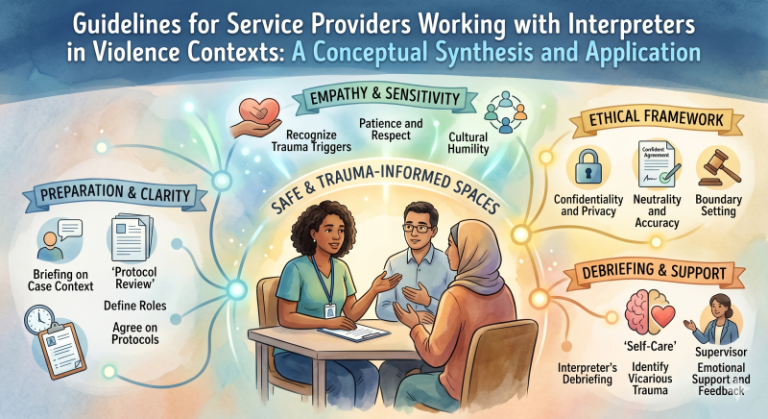
Guidelines for Service Providers Working with Interpreters in Violence Contexts: A Conceptual Synthesis and Application
Interpreting in contexts involving domestic and gender-based violence is a complex process that encompasses linguistic, ethical, and psychological dimensions. This article aims to synthesize guidelines for service providers working with interpreters using documentary analysis as the primary research method, drawing on the Justisigns2 (n.d.) framework and linking it to intercultural communication and professional ethics theories. The findings indicate four key components: (1) preparation, (2) confidentiality and boundary management, (3) understanding the interpreter’s role, and (4) communication with service users. The study suggests that integrating these practices can enhance service quality and reduce ethical risks.
Keywords: interpreters, domestic violence, intercultural communication, ethics, interpreting
1. Introduction
Providing services in violence-related contexts, such as domestic and sexual violence, requires precise and sensitive communication, particularly when language barriers exist. Interpreters play a crucial role as mediators in facilitating communication (Justisigns2, n.d.). However, interpreting in such contexts extends beyond language translation and involves ethical considerations, neutrality, and the safety of all parties involved.
Although guidelines exist, there is a lack of academic synthesis linking these practices with theoretical frameworks. This article seeks to address this gap by analyzing interpreter-related guidelines through both theoretical and applied perspectives (Justisigns2, n.d.).
2. Literature Review
Research in interpreting studies emphasizes that interpreting is not merely word-for-word translation but a process of conveying meaning within social and cultural contexts (Pöchhacker, 2016). This is particularly critical in sensitive settings such as legal or social services.
Furthermore, studies highlight key ethical principles in interpreting, including impartiality and confidentiality, which form the foundation of professional practice (Wadensjö, 1998). Trust is especially important in cases involving victims, as it directly influences the quality of information shared.
The Justisigns2 (n.d.) guidelines align with this body of literature by emphasizing preparation, boundary setting, and mutual understanding among service providers, interpreters, and service users, thereby reducing risks of misinterpretation and ethical dilemmas.
3. Theoretical Framework
This study is grounded in three main theoretical perspectives:
3.1 Intercultural Communication Theory
This theory explains that communication between individuals from different cultural backgrounds requires interpretation of context and meaning, not just language (Hall, 1976). This aligns with the interpreter’s role in mediating understanding (Justisigns2, n.d.).
3.2 Interpreter Ethics
Professional ethics emphasize impartiality, accuracy, and confidentiality as essential to maintaining trust and credibility in communication (Wadensjö, 1998; Justisigns2, n.d.).
3.3 Client-Centered Approach
This approach prioritizes safety, trust, and active participation of service users, requiring transparent and accessible communication (Justisigns2, n.d.).
4. Methods
This study employs documentary analysis, using the “Guidelines for Service Providers Working with Interpreters” as the primary data source (Justisigns2, n.d.). The data were analyzed using content analysis to identify key themes.
The findings were categorized into four main areas: preparation, confidentiality and boundaries, interpreter roles, and communication with service users. These categories were then interpreted through theoretical frameworks to generate academic insights (Justisigns2, n.d.).
5. Results
5.1 Preparation
Providing interpreters with advance information about the nature and duration of assignments, as well as arranging resources such as multiple interpreters and adequate breaks, is essential for maintaining communication quality (Justisigns2, n.d.).
5.2 Confidentiality and Boundaries
Avoiding conflicts of interest and establishing clear professional boundaries—such as not assigning interpreters to both victims and accused individuals—is a key principle (Justisigns2, n.d.).
5.3 Role of the Interpreter
Interpreters are responsible for conveying meaning rather than offering advice or personal opinions. Clarifications may be necessary to ensure accuracy in communication (Justisigns2, n.d.).
5.4 Communication with Service Users
Explaining the interpreter’s role to service users enhances trust and reduces ambiguity in communication (Justisigns2, n.d.).
6. Discussion
The findings are consistent with intercultural communication theory and interpreter ethics, highlighting that preparation and clearly defined roles reduce communication errors (Justisigns2, n.d.).
Emphasizing confidentiality and neutrality also strengthens trust, which is particularly critical in violence-related contexts. However, applying these guidelines requires adaptation to specific cultural and institutional contexts (Justisigns2, n.d.).
A limitation of this study is its reliance on a single document source. Future research should incorporate empirical field studies to further validate these findings.
7. Conclusion
Guidelines for working with interpreters play a vital role in enhancing the effectiveness and safety of services in sensitive contexts. Integrating communication theory, professional ethics, and client-centered approaches can significantly improve overall service quality (Justisigns2, n.d.).
References (APA 7th Edition)
- Hall, E. T. (1976). Beyond culture. Anchor Books.
- Justisigns2. (n.d.). Guidelines for service providers working with interpreters.
https://www.justisigns2.com - Pöchhacker, F. (2016). Introducing interpreting studies (2nd ed.). Routledge. https://doi.org/10.4324/9781315649572
- Wadensjö, C. (1998). Interpreting as interaction. Longman.
For professional services, please visit: https://www.seaproti.org/practitioners/
About certified translators, translation certifiers, and certified interpreters associated with SEAProTI.
The Southeast Asian Association of Professional Translators and Interpreters (SEAProTI) has officially shared the qualifications and requirements for becoming Certified Translators, Translation Certification Providers, and Certified Interpreters in Sections 9 and 10 of the Royal Gazette, which was published by the Prime Minister’s Office in Thailand on July 25, 2024. Certified Translators, Translation Certification Providers, and Certified Interpreters
The Council of State has proposed the enactment of a Royal Decree, granting registered translators and recognised translation certifiers from professional associations or accredited language institutions the authority to provide legally valid translation certification (Letter to SEAProTI dated April 28, 2025)
SEAProTI is the first professional association in Thailand and Southeast Asia to implement a comprehensive certification system for translators, certifiers, and interpreters.
Head Office: Baan Ratchakru Building, No. 33, Room 402, Soi Phahonyothin 5, Phahonyothin Road, Phaya Thai District, Bangkok 10400, Thailand
Email: hello@seaproti.com | Tel.: (+66) 2-114-3128 (Office hours: Mon–Fri, 09:00–17:00).
แนวปฏิบัติสำหรับผู้ให้บริการในการทำงานร่วมกับล่ามในบริบทความรุนแรง: การสังเคราะห์เชิงแนวคิดและการประยุกต์ใช้
20 เมษายน 2569, กรุงเทพมหานคร – การสื่อสารผ่านล่ามในบริบทที่เกี่ยวข้องกับความรุนแรงในครอบครัวและความรุนแรงบนฐานเพศสภาพเป็นกระบวนการที่มีความซับซ้อนทั้งด้านภาษา จริยธรรม และจิตวิทยา บทความนี้มีวัตถุประสงค์เพื่อสังเคราะห์แนวปฏิบัติสำหรับผู้ให้บริการในการทำงานร่วมกับล่าม โดยใช้การวิเคราะห์เอกสารเป็นวิธีวิจัยหลัก อ้างอิงจากแนวทางของ Justisigns2 (n.d.) และเชื่อมโยงกับกรอบแนวคิดด้านการสื่อสารข้ามวัฒนธรรมและจริยธรรมวิชาชีพ ผลการศึกษาพบว่าองค์ประกอบสำคัญประกอบด้วย (1) การเตรียมความพร้อม (2) การจัดการความลับและขอบเขต (3) ความเข้าใจบทบาทของล่าม และ (4) การสื่อสารกับผู้รับบริการ บทความนี้เสนอว่าการบูรณาการแนวปฏิบัติเหล่านี้สามารถยกระดับคุณภาพบริการและลดความเสี่ยงด้านจริยธรรมได้
คำสำคัญ: ล่าม, ความรุนแรงในครอบครัว, การสื่อสารข้ามวัฒนธรรม, จริยธรรม, การตีความภาษา
1. บทนำ (Introduction)
การให้บริการในบริบทความรุนแรง เช่น ความรุนแรงในครอบครัวและความรุนแรงทางเพศ จำเป็นต้องอาศัยการสื่อสารที่แม่นยำและละเอียดอ่อน โดยเฉพาะเมื่อมีอุปสรรคทางภาษา ล่ามจึงมีบทบาทสำคัญในการเป็นตัวกลางในการสื่อสาร (Justisigns2, n.d.) อย่างไรก็ตาม การใช้ล่ามในบริบทดังกล่าวไม่ได้เป็นเพียงการแปลภาษา แต่ยังเกี่ยวข้องกับประเด็นจริยธรรม ความเป็นกลาง และความปลอดภัยของผู้เกี่ยวข้อง
แม้ว่าจะมีแนวทางปฏิบัติอยู่แล้ว แต่ยังขาดการสังเคราะห์ในเชิงวิชาการที่เชื่อมโยงแนวทางเหล่านี้กับกรอบแนวคิดทางทฤษฎี บทความนี้จึงมีเป้าหมายเพื่อเติมเต็มช่องว่างดังกล่าว โดยวิเคราะห์แนวปฏิบัติผ่านมุมมองเชิงทฤษฎีและการประยุกต์ใช้ (Justisigns2, n.d.)
2. การทบทวนวรรณกรรม (Literature Review)
งานวิจัยด้านการสื่อสารผ่านล่ามชี้ให้เห็นว่าการตีความไม่ใช่เพียงการแปลคำ แต่เป็นกระบวนการถ่ายทอดความหมายในบริบททางสังคมและวัฒนธรรม (Pöchhacker, 2016) ซึ่งมีความสำคัญอย่างยิ่งในสถานการณ์ที่มีความอ่อนไหว เช่น คดีความหรือบริการสังคม
นอกจากนี้ งานวิจัยยังเน้นบทบาทของจริยธรรมล่าม เช่น ความเป็นกลาง (impartiality) และการรักษาความลับ (confidentiality) ซึ่งเป็นหลักการพื้นฐานของวิชาชีพ (Wadensjö, 1998) โดยเฉพาะในกรณีที่เกี่ยวข้องกับผู้เสียหาย ความไว้วางใจเป็นปัจจัยสำคัญที่ส่งผลต่อคุณภาพของข้อมูลที่ได้รับ
แนวทางของ Justisigns2 (n.d.) สอดคล้องกับวรรณกรรมดังกล่าว โดยเน้นการเตรียมความพร้อม การกำหนดขอบเขต และการสร้างความเข้าใจร่วมกันระหว่างผู้ให้บริการ ล่าม และผู้รับบริการ ซึ่งช่วยลดความเสี่ยงของการตีความผิดพลาดและปัญหาทางจริยธรรม
3. กรอบแนวคิดเชิงทฤษฎี (Theoretical Framework)
บทความนี้อ้างอิงกรอบแนวคิดหลัก 3 ประการ ได้แก่
ทฤษฎีการสื่อสารข้ามวัฒนธรรม (Intercultural Communication Theory)
อธิบายว่าการสื่อสารระหว่างบุคคลที่มีพื้นฐานทางวัฒนธรรมต่างกันต้องอาศัยการตีความบริบทและความหมาย ไม่ใช่เพียงภาษา (Hall, 1976) ซึ่งสอดคล้องกับบทบาทของล่าม (Justisigns2, n.d.)
จริยธรรมวิชาชีพล่าม (Interpreter Ethics)
เน้นความเป็นกลาง ความถูกต้อง และการรักษาความลับ ซึ่งเป็นพื้นฐานของความน่าเชื่อถือในการสื่อสาร (Wadensjö, 1998; Justisigns2, n.d.)
แนวคิดการให้บริการที่ยึดผู้รับบริการเป็นศูนย์กลาง (Client-Centered Approach)
มุ่งเน้นความปลอดภัย ความไว้วางใจ และการมีส่วนร่วมของผู้รับบริการ ซึ่งต้องอาศัยการสื่อสารที่โปร่งใสและเข้าใจง่าย (Justisigns2, n.d.)
4. วิธีการศึกษา (Methods)
การศึกษานี้ใช้การวิเคราะห์เอกสาร (documentary analysis) โดยใช้แนวทาง “Guidelines for Service Providers Working with Interpreters” เป็นแหล่งข้อมูลหลัก (Justisigns2, n.d.) และนำมาวิเคราะห์เชิงเนื้อหา (content analysis)
ข้อมูลถูกจัดหมวดหมู่ตามประเด็นหลัก ได้แก่ การเตรียมความพร้อม ความลับและขอบเขต บทบาทล่าม และการสื่อสารกับผู้รับบริการ จากนั้นนำไปตีความผ่านกรอบแนวคิดทางทฤษฎีเพื่อสร้างข้อเสนอเชิงวิชาการ (Justisigns2, n.d.)
5. ผลการศึกษา (Results)
5.1 การเตรียมความพร้อม
การแจ้งข้อมูลล่วงหน้าเกี่ยวกับลักษณะงานและระยะเวลา รวมถึงการจัดทรัพยากร เช่น ล่ามหลายคนและเวลาพัก เป็นปัจจัยสำคัญในการรักษาคุณภาพการสื่อสาร (Justisigns2, n.d.)
5.2 ความลับและขอบเขต
การหลีกเลี่ยงความขัดแย้งทางผลประโยชน์ และการกำหนดขอบเขตชัดเจน เช่น ไม่ให้ล่ามทำงานกับทั้งสองฝ่าย เป็นหลักการสำคัญ (Justisigns2, n.d.)
5.3 บทบาทของล่าม
ล่ามทำหน้าที่ถ่ายทอดความหมาย ไม่ใช่ให้คำแนะนำหรือแสดงความคิดเห็น การแปลอาจต้องมีการอธิบายเพิ่มเติมเพื่อความถูกต้อง (Justisigns2, n.d.)
5.4 การสื่อสารกับผู้รับบริการ
การอธิบายบทบาทของล่ามช่วยสร้างความไว้วางใจ และลดความคลุมเครือในการสื่อสาร (Justisigns2, n.d.)
6. อภิปรายผล (Discussion)
ผลการศึกษาสอดคล้องกับทฤษฎีการสื่อสารข้ามวัฒนธรรมและจริยธรรมล่าม โดยชี้ให้เห็นว่าการเตรียมความพร้อมและการกำหนดบทบาทที่ชัดเจนช่วยลดความคลาดเคลื่อนในการสื่อสาร (Justisigns2, n.d.)
นอกจากนี้ การเน้นความลับและความเป็นกลางยังช่วยเสริมสร้างความไว้วางใจ ซึ่งเป็นปัจจัยสำคัญในบริบทความรุนแรง อย่างไรก็ตาม การประยุกต์ใช้แนวทางเหล่านี้จำเป็นต้องปรับตามบริบททางวัฒนธรรมและระบบบริการ (Justisigns2, n.d.)
ข้อจำกัดของการศึกษานี้คือการใช้ข้อมูลจากเอกสารเพียงแหล่งเดียว จึงควรมีการศึกษาภาคสนามเพิ่มเติมในอนาคต
7. สรุป (Conclusion)
แนวปฏิบัติในการทำงานร่วมกับล่ามมีบทบาทสำคัญในการเพิ่มประสิทธิภาพและความปลอดภัยของการให้บริการในบริบทที่มีความอ่อนไหว การบูรณาการแนวคิดด้านการสื่อสาร จริยธรรม และการให้บริการที่ยึดผู้รับบริการเป็นศูนย์กลาง จะช่วยยกระดับคุณภาพของระบบบริการโดยรวม (Justisigns2, n.d.)
เอกสารอ้างอิง
- Hall, E. T. (1976). Beyond culture. Anchor Books.
- Justisigns2. (n.d.). Guidelines for service providers working with interpreters.
https://www.justisigns2.com - Pöchhacker, F. (2016). Introducing interpreting studies (2nd ed.). Routledge. https://doi.org/10.4324/9781315649572
- Wadensjö, C. (1998). Interpreting as interaction. Longman.
ติดต่อขอใช้บริการนักวิชาชีพของสมาคมได้ที่: https://www.seaproti.org/practitioners/
สมาคมวิชาชีพนักแปลและล่ามแห่งเอเชียตะวันออกเฉียงใต้ (SEAProTI) ได้ประกาศหลักเกณฑ์และคุณสมบัติของผู้ที่ขึ้นทะเบียนเป็น “นักแปลรับรอง (Certified Translators) และผู้รับรองการแปล (Translation Certification Providers) และล่ามรับรอง (Certified Interpreters)” ของสมาคม หมวดที่ 9 และหมวดที่ 10 ในราชกิจจานุเบกษา ของสำนักเลขาธิการคณะรัฐมนตรี ในสำนักนายกรัฐมนตรี แห่งราชอาณาจักรไทย ลงวันที่ 25 ก.ค. 2567 เล่มที่ 141 ตอนที่ 66 ง หน้า 100 อ่านฉบับเต็มได้ที่: นักแปลรับรอง ผู้รับรองการแปล และล่ามรับรอง
สำนักคณะกรรมการกฤษฎีกาเสนอให้ตราเป็นพระราชกฤษฎีกา โดยกำหนดให้นักแปลที่ขึ้นทะเบียน รวมถึงผู้รับรองการแปลจากสมาคมวิชาชีพหรือสถาบันสอนภาษาที่มีการอบรมและขึ้นทะเบียน สามารถรับรองคำแปลได้ (จดหมายถึงสมาคม SEAProTI ลงวันที่ 28 เม.ย. 2568)
สมาคมวิชาชีพนักแปลและล่ามแห่งเอเชียตะวันออกเฉียงใต้เป็นสมาคมวิชาชีพแห่งแรกและแห่งเดียวในประเทศไทยและภูมิภาคเอเชียตะวันออกเฉียงใต้ที่มีระบบรับรองนักแปลรับรอง ผู้รับรองการแปล และล่ามรับรอง
สำนักงานใหญ่: อาคารบ้านราชครู เลขที่ 33 ห้อง 402 ซอยพหลโยธิน 5 ถนนพหลโยธิน แขวงพญาไท เขตพญาไท กรุงเทพมหานคร 10400 ประเทศไทย
อีเมล: hello@seaproti.com โทรศัพท์: (+66) 2-114-3128 (เวลาทำการ: วันจันทร์–วันศุกร์ เวลา 09.00–17.00 น.